One Year Later: Has Fallout 76 improved?
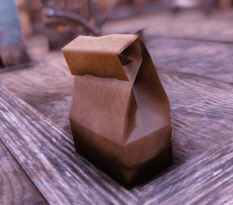 Seeing that Fallout 76 is an online multiplayer game and that Bethesda heavily enjoys its revisionist tendencies, this question arises about not only this game, but about revisionism in video games in general. It’s ironic then that this simple brown paper bag has come to represent everything wrong with Fallout 76. Has Fallout 76 gotten any better in nearly one year since its release? Let’s explore.
Revisionism in Entertainment
There’s something to be said for revisionism. As many entertainment products today are delivered digitally and are now also being created digitally these days, this opens the door to revisionism. The difficulty with changing stuff is that what we initially purchased is not what that thing is today. Whether it be a movie, a book, TV series or even a video game. I’m actually surprised it hasn’t happened in the music industry so far.
Throughout the 50s, 60s, 70s and 80s, visual and literary entertainment was always set in stone. Heck, this idea goes back into the renaissance with such works as the Leonardo da Vinci’s Mona Lisa and Michaelangelo’s Sistine Chapel. Though, even then there were controversies with some clergy deciding that fig leaves needed to be added to certain artworks, thus forcing a revision. These instances were rare and usually happened while the work was in progress. However, sometimes a second artist might be commissioned later to paint fig leaves. What that usually meant was, what you saw when it first arrived is the same thing you’ll still see today. Unfortunately, too many entertainment makers see revisionism as something to make their product better, but does it? Can changing the content of a book, movie or video game a year or two later actually make it better?
This is up for debate. What it does is make the entertainment become a cloudy and murky experience. What you fondly remember about the product and experience could be completely invalidated because a creator later decides to completely rework large portions and change what you remembered most.
In fact, many people remember works for certain specific things that happened within. If revisionist changes remove or alter those specific sections so that they are no longer in the work, you may have modified what people remembered about your product. And this is the fundamental problem. Such revisionism can actually make a product worse. Fallout 76 is a poster child for this problem.
Editing for Correction
Now, I’m not against basic editing. In a written work, if you misspell a word, need to correct grammatical errors or word omissions, these are perfectly acceptable changes. If the dialog in a film is misspoken or acted in a less than professional and convincing way, I’m fine with a reshoot and reedit so long as the dialog and scene remains functionally equivalent. These are all edits that make sense in the context of a body of work. They don’t substantially alter the work, they simply polish it. Polishing a work to make at work the most professional it can be is perfectly acceptable.
However, changing a work by adding substantial content, altering the story, changing the outcome, changing the setups, changing the rules and so on, these are not simple corrections. These change the fundamental story outcome. These substantial changes are considered revisionism and are way outside the bounds of simple corrections. That would be like someone deciding to change the Mona Lisa’s smile on the original painting simply because they think it is too vague. You just don’t do this to the original work. Sure, you can create a derivation of that work and publish it separately, but you should never alter the original work by substantially changing its content.
For this reason in the art community, there’s a lot of controversy about “cleaning up” historical works of art that have layers of dirt, dust and debris on the surface. The “clean up” process could amount to changing the fundamental work rather than being a simple cleanup. The chemicals used might even long term damage the work. It means someone has to take liquids to the work, clean off the “dirty” layers and expose the “clean fresh” layers. The difficulty is, by doing this it may remove original content intended to be there by the original artist. With older works where the artist is no longer living, we cannot consult them for how to best “clean” their works. It’s all best guess. Modifying and cleaning these works may make them look better, but does it fundamentally alter the content? This is the contentious and controversial part… and it is exactly this controversial part that applies to ALL works when they are revised.
Reuse of Assets in Video Games
Video games are both entertainment and works of art. In fact, it takes a lot of graphical art content created by teams of artists to release a video game. Such art includes texture maps which get layered onto 3D objects. These maps make the objects appear naturalistic and real. Granted, some of the art is scanned from actual nature… such as tree leaves scanned in from real trees to create realistic trees in a 3D landscape. Even skin surfaces are likely scanned from actual human skin. However, some texture maps are hand crafted, stylistic art. These are the truest art in every sense of the word.
Revisionism in texture map art isn’t really a big problem in the video game world. In fact, once these “assets” have been created, it’s more likely a video game publisher will overuse these assets rather than modify them. By ‘overuse’ I mean reuse them not only in the original game, but future games also. I’m sure the devs think, “Why recreate the wheel with every new game?” Instead, reusing assets that already exist makes sense in some limited cases. Reuse also costs less development money.
On the other hand, reusing too many assets from a previous work makes your current work seem less than original. That would be tantamount to an author taking whole passages from a novel and copying and pasting them into a new novel. After all, if they worked in the old novel, why wouldn’t they work in the new novel? At least, that’s the thinking. The problem that creators overlook is that consumers can easily spot these reuses. Consumers can overlook small reuses of words and phrases in a novel, particularly if a specific character has a peculiar speech idiosyncrasy when using those words and phrases. In this specific case, it adds to character development. However, there’s a fine line between reusing words and phrases to make a character development point and plagiarizing your own past works. Consumers do recognize large plagiaristic reuses and judge the work’s merit accordingly.
Fallout 76
Here is where we come to the crux of this article and Fallout 76. Fallout 76 is a completely hosted, online video game world. It is also a world almost entirely derived from Fallout 4 with only the terrain, cities and landscape being different, but at the same time entirely reusing nearly every Fallout 4 asset and even the game engine itself.
Fallout 76 is also a world where nothing except assets and visual and audio data exists on your computer device. It is a game where only the rendering occurs on your device. The actual game world itself resides remotely on servers that Bethesda owns and operates. Even your character and saved game exists not on your computer, but on Bethesda’s server. If Bethesda shuts down the Fallout 76 service, so too does your character disappear along with all of the time you spent creating that character. Unlike Fallout 4 where your saved games live on your device and you can reload and play the game years later, Fallout 76 is beholden to Bethesda to remain in business for this game service to continue to exist. If Bethesda were to fold or shut the game down, Fallout 76 would cease to exist along with all of the work and time you spent with your character. All you’ll have left is a bulky game client on your device with no where to connect. Only videos or screen shots you may have of your game progress saved on your local device will be there to remember what that game was. I should point out that in Fallout 4, if you use mods, you should also make sure you have a saved game without mods. If Bethesda shuts down entirely, so too does Bethesda.net. This means that you will not be able to unload or remove mods as long as Bethesda.net remains down. So, make sure you have a vanilla save of your character without any mods loaded in case this eventuality occurs (side note). While Fallout 4 is playable without Internet, Fallout 76 is entirely dependent on it.
What that also means is that because the Fallout 76 engine runs remotely, it means Bethesda can roll out wholesale changes to the product at will and at any time. And, unfortunately, they perform this revisionism regularly. However, they’re not performing this revisionism in a way that makes ‘editing’ sense.
Earlier I discussed simple editing that allows for polishing a product. Unfortunately, that’s not what Bethesda is doing with its Fallout 76 revisionism. Instead of polishing Fallout 76 to fix basic bugs, glitches and improve the basic performance and fundamental user experience, Bethesda is adding large new sections of content and changing the rules of the game. The added content is over and above (and outside) of the context of the original game story as it was released. In fact, most of the additional content that Bethesda has so far added has not impacted the base original game. Even though this is still a form of revisionism, it revises the work by adding new stuff, but at the expense of not correcting basic problems within the original game… and not expanding the game in actually meaningful Fallout-themed ways.
“Where is the game today?”, you ask. Great question. Fallout 76’s original “Adventure Mode’s” fundamental game experience is still the same as it was when it launched (as lackluster as it is), bugs and all. Unfortunately, to add many of the new additions to the game, Bethesda has had to tinker with some of the fundamental game mechanics and rules that operate the base game. What that has meant to the game is broken, changed and altered base game playability. This means that for Bethesda to add these inconsequential new features, it has broken even more pieces of a game which where formerly fully working… in addition to the broken features that have not yet been fixed. They’ve even introduced newly broken features.
And here is where Fallout 76 is today. Instead of Bethesda focusing on simple basic editing to correct fundamental and original game flaws to make the original gaming experience better, it has decided to focus almost solely on adding new content to the game in an attempt to attract new consumers. In that process it has broken even more of the game rather than fixing original broken functionality. It is an entirely flawed rationale.
While Bethesda’s changes may seem to bring in new players for the short term, the difficulty is that these newly added game additions have severely limited play value. In fact, these additions have such limited play value, I’d expect gamers to get tired of playing them within 1-2 weeks at most. Most give up on them in only a few days. The original game might take you a month or two to get through. Yet, these newest additions might hold someone’s interest for a week (usually less) if you’re lucky! Yeah, that’s a lot of work for such a tiny payoff. Worse, these additions do not extend or modify the original story. These are effectively “mods” that add something new, but add no value to the original game’s story or content or, indeed, expand Fallout in consequential ways. These additions are effectively end-game content. They’re tiny and almost entirely inconsequential.
Backpack
I won’t go into discussing every addition, but I will discuss this one because it offers us insight into Bethesda’s thinking. This add-on item gives the player a backpack that offers a little more carry weight based on the character’s level. A level 10 character, for example, would get fractionally more carry weight (10 points). For each 10 levels, your character will get maybe 10 more carry weight, but you’re required to toss the old backpack and recreate a new one to get the updated carry weight, thus applying all new mods again to get your new backpack back to look like your old backpack’s setup.
It’s a lot of work doing this at each 10 levels. This is one of the fundamental design problems with this game. Instead of directly allowing leveling up of existing armor and weapons, you must scrap it and recreate it anew… or find it again. If it’s Legendary, then it is stuck at whatever level it is. Most weapons and armor top out at level 50 and the perk benefits stop there. This effectively means that even if your character is level 150 or 300, you’re still wearing level 50 armor…. which effectively caps the player’s level at 50. The level cap is not based on what your character’s level is, but the maximum of your armor and your weapons. When these max out at level 50, being a level 300 player doesn’t really in any way help you. The only thing it does is means you’ve been playing the game for a long time. But, effectively your level is capped by the highest level armor and weapons you have on you.
The small backpack, I believe, tops out also at level 50 with a maximum of 60 carry weight. You can’t infinitely keep leveling up the backpack. Though, there is a large backpack that doubles this carry weight, but requires even more grinding to achieve. This means that once you reach level 50 and can craft a level 50 backpack, that’s as far as the small backpack perk goes. Sure, you can add on additions like the cooler and other perks, but all of that is still capped at the maximum level of that backpack.
Unfortunately, for the backpack, the situation gets worse. When it was first introduced, the way to get the small backpack was through a series of convoluted quest lines involving a “Boy Scout” badge-like approach. You had to get “badges”. To get these badges, you had to perform any number of varying activities. You only had to have three of a larger number of badges. Once you had three badges, you then presented yourself with your badges and a successfully completed test and you were issued the small backpack plans. So then you graduated to the Possum rank only to start this whole process all over again for a second series of grinds to get the large backpack plans.
However, later, Bethesda in its infinite revisionist tendencies decided that you could simply go find the small backpack plans in a container. No longer did you need to jump through all of the convoluted lengthy tadpole badge hoop quests. Quests, I might add that could be difficult to accomplish without a teammate. For example, to complete one of the quests, you had to “revive an ally”. What that meant is staging it with a teammate. It’s not super easy to die in Fallout 76. Even then, there are two death types. One type is an incapacitated death where a player can stimpak and revive you. The other death type offers no hope of revival. The player simply has to respawn somewhere and start over.
Staging an incapacitated death can be difficult at the best of times. Getting this specific badge meant either grinding until you ‘accidentally’ found someone in that state or staging it to get it done sooner. Staging this is harder than you might think. I’m not even sure why this was required for the badge, yet there we are. Like using liquid flux to create fusion cores, reviving an ally is a questionable requirement for this quest line. I’m not even sure what Bethesda was thinking. Some of these requirements make no sense.
The point is, Bethesda invalidated the need to go to through the long “Boy Scout” quest line allowing you to bypass all of that by simply grabbing the plans, as long as you know where the container is (which is incidentally located in Morgantown Airport in the Overseer’s Cache). Though, if you wanted the backpack extras, you still had to go through the badge quests to earn scout credits to buy these additions (yet another currency type in the game)… as if caps, scrip and atom were not yet enough.
Bugs, Bugs and more Bugs
I’m not talking about the flying kind here. Worse, because Bethesda has chosen to prioritize the addition of new content over pretty much everything else, it likewise means Bethesda’s team has completely ignored fixing even the most basic of flaws in the original base game.
For example, in a video game that relies on shooting mechanics and melee attacks to function, you’d think a AAA developer could at least make these mechanics sound and “just work”. Unfortunately, even in the base game which was released a year ago, these fundamental basics have never functioned correctly. You can literally shoot directly at enemies and the bullets simply won’t connect. Not just once, but many times in a row. Even button presses on the controller aren’t reliable. Press, press, press… and nothing. It might take 5 successive presses for even one press to be registered by the game. This is a actually first in the video game industry. No other game have I ever played where a game’s control is this unresponsive and unreliable. If, as a video game developer, you can’t even register a button press from a controller, perhaps you shouldn’t be in the video game business?
Anyway, while the game consumes the ammo and shows the animation of the gun doing its thing, the game doesn’t recognize the collision on the enemy, even when you’re standing less than arm’s-length next to the enemy.
Oh, but it gets worse. When you spawn into a game world, there’s a huge time delay between the time when your character appears in the game world and when the visual part of the game releases control to you to begin playing. This time discrepancy is not insignificant. It could be upwards of 1-2 minutes before your game is handed control and the world is fully rendered. What that means is that if you spawn into a “hot zone” of enemies, your character could be dead before the loading screen has even disappeared.
Fallout 76 has even more basic problems. For example, when you spawn into a new game world, your character can spawn into a “blast zone”. A blast zone is a zone where another player has set off a nuke and irradiated the area. Irradiated areas in Fallout 76 last for at least 30 minutes to an hour real time, maybe longer. Because you’re spawned into the “last place” where your character formerly was and because you’re not given a choice where to spawn on load in, you could load into an irradiated zone unprepared. This, of course once again, means your player is dead upon spawning in. Worse, because the game force drops all of your junk upon character death, you’ve lost all of the junk you were carrying with little hope of getting it back. If your character does not have the preparation to handle a nuke zone (Hazmat suit or similar), you can’t venture in and get your stuff back. If you choose to hop servers to get out of that blast zone, you definitely can’t get your junk back. Junk drops exist in only one server. If your character dies in one game world and you are forced to hop game servers, your junk is forever gone. One of Todd Howard’s promises of Fallout 76 was that we shouldn’t need worry about ‘servers’. Yet, in this case, we very much do.
These are bugs that shouldn’t exist. These are bugs that should have been solved before the game was ever released. Yet, here we are a year later and they still exist. These are, by no means, the only problems / bugs in this game. In fact, there are so many bugs, I could write a book and still miss some. Anyway, let’s make a small-ish list:
- Looping “stuck” audio out of one or both audio channels
- Random server disconnects
- Random inventory lost
- Random character deaths
- Getting stuck in power armor
- The “wendigo” character problem (character has stretched elongated limbs)
- Getting stuck on scenery (forced to fast travel)
- Spawning inside of objects (stuck)
- VATs doesn’t calculate accuracy correctly
- VATs not working correctly
- Perk cards not working (Storm Chaser almost never works when it’s raining)
- Lack of perk cards for certain basic features (no weight reduction for rifle class?)
- Too many perk cards for some functions (how many rifleman cards do we need?)
- The Scorchbeast Queen event only appears IF another player decides to nuke that area. If not, the event never appears… and it’s the biggest multiplayer event in the game! … and yes, I do consider this a bug.
- Losing junk after character death because of “server disconnect”
- Stupid crafting recipes:
- Fusion Cores — Crafting a fusion core requires only every single version of stable flux? Wait..what? You’re making a nuclear battery. It should require aluminum, copper, nuclear waste, plastic and silver. You can’t make a battery from liquid flux alone! Where does the case come from? The properties of flux, while irradiated, cannot produce an electric current in its liquid form when simply combined, let alone produce a hard shell case that approximates the shape of a fusion core.
- Tick Blood Tequila — This one requires pure crimson flux. What? It’s not named Irradiated Tick Blood Tequila, it’s named Tick Blood Tequila. It shouldn’t require ANY flux.
- Stable Flux — Making stable flux requires components that are only available in nuke zones and, more specifically, only available in very specific nuked zones. And even more specifically, are only dropped from very specific killed enemies in these very specific nuked zones. To craft stable flux requires 10 “raw” flux and 1 each of glowing mass, high radiation fluids and hardened mass. You cannot find raw flux, glowing mass, high radiation fluids or hardened mass on ANY other enemy in the game, in any other containers or in any other non-irradiated locations. The additional components can only be found in irradiated zones on very specific enemies after a kill. Even then, these drops are not guaranteed.. which means you need to kill A LOT of them to find all three of these “extra” components. Stable flux is easily the rarest required item in the game… not including cosmetic outfits (Red Asylum Outfit, Witch’s Costume, White Powder Jumpsuit, etc). Not only are they rare, but they weigh a ton. Each Stable Flux weighs 1 unless you have the perk Pack Rat card which reduces the weight of all junk items.
- Raw Flux — Separate but related to the above, raw flux is only found in nuke zones. It cannot be found anywhere else in the game. This means that every player in the game is beholden to other players to “create” a nuke zone to enable obtaining of not only raw flux, but high radiation fluid, glowing mass and hardened mass. You can obtain flux from the Queen event when it closes, but only if it just happens to drop it at the end and only if the event closes successfully. Raw flux (when refined to stable) is a required component for certain quests and crafting as well (Tick Blood Tequila and Fusion Cores). Note that raw flux is considered ‘Aid’ not ‘Junk’. You’ll have to apply Thru-Hiker to reduce the weight for these.
- Why Raw Flux is Aid and Stable Flux is Junk, I’ve no idea. But, inconsistency abounds in this otherwise mediocre game… thus one big reason why it IS mediocre.
- Any other recipes that require “stable” flux
- There’s not a single recipe that requires “raw” flux. Yet, it’s a huge component in the game. Raw flux is not even worth much anymore (revisionism at its finest).
- Food Recipes — Most food recipes only provide food and nothing else. Sure, you can go find other more fancy recipes, yet they also only provide food. I’m not sure what Bethesda was thinking here, but if you spend the time to go track down a specific advanced recipe, that recipe should provide more than simple food. It should provide a perk increase, such as added luck or agility or improved health or AP regeneration. Yet, most advanced recipes offer none of this. What’s the incentive to find and craft advanced recipes when it provides nothing more than what a basic recipe provides? Sometimes even the most basic recipes offer better perks than the “advanced” recipes.
- DLC — The add-ons that Bethesda has offered beyond the base game have excluded the use of perk cards entirely. For example, the distillery added to the game during a spring DLC addition gave us the ability to craft alcohol using a newly added crafting table. The problem is, none of the existing base game perk cards apply to this new crafting table. And no new perk cards were introduced, either. For example, Super Duper is one of the most widely used base game cards. This card offers the chance to double whatever you craft on crafting tables… except, this card does not apply to the distillery crafting table. While you can sometimes double your output while crafting stimpaks or radaway or when crafting ammo, you cannot double the output when crafting beer, wine or whiskey. It makes no sense, if Super Duper applies to all other crafting tables, it should apply to the distiller crafting table. That Bethesda selectively declines to apply known perk cards to its add-ons is just a jerk move… and, in my opinion, makes the game worse.
And here we come to even more issues:
- Gun ammo is unloaded at every game load-in — Instead of the game remembering which gun was currently being held and how much ammo it has, the game unloads the gun of ammo on login. This means that if the game crashes or you quit and come back later, you must reload your weapon immediately upon login. If you fail to remember to do this MANUALLY, you will ‘click’ and nothing happens.
- Quests fail to progress for nonsensical reasons — Quests can get stuck simply because the game won’t recognize the most basic of things. Some quests requires that you be drunk to complete them. In some cases, the game simply won’t progress even though the UI shows the effect is active. The quest simply chooses to ignore it and not progress.
- Quests disappear — You can be questing along, then have the game crash only to load in and find that quest is no longer part of your quest inventory.
- Quests cannot be abandoned — In previous Bethesda games, you could quit a quest and restart it by going back to the source. That is not possible in Fallout 76. If you pick up a quest, it stays in your quest inventory forever (or until it randomly disappears on its own). This is particularly problematic for quests that reload with incredibly loud voice overs (Grafton and Rose).
- Quest markers do not always appear in the HUD — Quests put up markers in the compass HUD. Yet, at times, these markers are simply not there. Not all quest progressions are easy to locate. Perhaps it’s a specific computer terminal in a building with perhaps 20 terminals. Without a marker, you would have to run to every single terminal in the building and try them all. It’s one thing if a game is based on having no markers. It’s entirely another if the game has quest markers that fail to work reliably… and this is where Fallout 76 lives.
- Music that can’t be muted — There is certain environmental music that cannot be muted. Even though I’ve turned off music in settings, the game insists on still playing music at certain events.
- Paper Bags Drops — For a long while, dropping items into the environment was fraught with peril. You could drop something that should appear in a paper bag, yet no bag would ever appear and your item was entirely lost. While it seems that this issue may have been mostly solved, it still exists occasionally. I have dropped paper bags which never appeared even after it was claimed to have been fixed.
So now, let’s discuss C.A.M.P. bugs. I’d rather not because there’s a huge laundry list of items here, but let’s do it anyway.
- Camp Circumference — When you drop your camp down, a circle is created that outlines the border of your camp’s buildable areas. You can’t see this circle in full. You are limited by seeing this circle from a ground perspective. This mean you must guess as to exactly how this circle fits onto the ground. If you get it wrong, you must pay to move your camp again. Each time you move your camp, you lose more caps. You can’t adjust or fine tune your camp’s circle. It is where it lands. Bethesda could have raised the camera off the ground to show us the circle from above, yet nope.
- Randomly disappearing objects — I’ve had a number of camp objects that I’ve built simply disappear. Sure, someone reading might think, “Oh, it was just damaged and needs to be repaired”. Nope, I’ve checked that. The object is simply gone. I’ve had this bug happen a month after the game launched and I’ve had it happen as recently as a week before writing this article. This is a long standing bug that has basically existed since the game launched… and it still exists today. Worse, when these objects disappear, they still contribute to the camp’s budget. Even deleting everything in your camp will not free up these lost objects. Writing Bethesda support won’t lead to anything fruitful. The Bethesda support team actually does nothing other than write emails about how they can do nothing to help you.
- Camp Budget — Bethesda has increased the camp budget exactly once… when they introduced the Distiller crafting table. Even then, you can’t build much with the allotted camp budget. It’s large enough to create a small structure, but if you want to defend that structure with turrets, expect to make your camp buildings much, much smaller. Turrets still cost a whopping amount of camp budget simply to create a single turret. If you want 5 turrets, expect at least 1/4 of your camp budget gone (perhaps even more than this).
- 24 players per server — It’s crystal clear, this number of players is too many for the way they’ve built their servers. Half this number would make the servers much less laggy, much faster and overall perform much better. Yet, we’re forced to deal with 24 players on a server where even just one player can bring the server to its knees when spamming a crafting table at their camp.
- Portions of objects disappear — If you’ve ever set up a fertilizer resource (a Brahmin Pen) or the new Scavenger Bot (Atom shop item), you can find portions of the object become invisible. I’ve had the hay on the Brahmin resource vanish. I’ve had the scavenger hatch become invisible. And again, no, it wasn’t damaged. When I open the workshop, the only thing that appears is a vibrant green untextured object. It’s most definitely a bug.
These are but many of Fallout 76’s most basic fundamental mechanic flaws and these are not anywhere close to all of them. These problems have existed in the base game… long before Bethesda added their newest add-ons. These are fundamental problems that, for a AAA game title and for an AAA developer like Bethesda, shouldn’t even exist. That these basic fundamental flaws, problems and, yes, bugs, exist means that Bethesda shouldn’t even be in this business.
But, wait there are even more problems afoot.
Graphics
Not only does Fallout 76 add an annoying haze overlay effect onto bright light sources, the graphics of Fallout 76 are actually much, much worse than Fallout 4. The shadows are incredibly low res by comparison. Some images don’t resolve to high res until you’re within arm’s length of the image. You can literally see the 8 bit sized pixels. For example, the GNN poster is a lighted decoration you can put up on your camp. When you approach it from a distance, you can see a very pixelated image. When you move within arm’s length, the pixelated image stays for a moment, then loads to higher res right before your eyes. You can even see the image load in. Sometimes textures will randomly toggle between low res and high res even while standing still.
In Fallout 4, this low res image loading problem never existed. The images were loaded at high res the moment you were within gunshot range. That Fallout 76’s graphics engine is this piss poor tells me Bethesda has no idea how to run a quality MMORPG (massive multiplayer online role playing game). Though, I’d debate that 24 players constitutes an MMORPG. Perhaps MORPG (multiplayer online role playing game) more accurately describes Fallout 76. I digress.
Worse, it’s not limited to image loading. There are many problems with Fallout 76’s graphics including, but not limited to, seeing god rays through rocks, seeing image artifacts on trees when looking downhill, low res textures, poor quality lighting and this list goes on and on. Comparing Fallout 4’s graphics to Fallout 76, there really is no comparison. Fallout 4 looks sharp and crystal clear. Its sun and effects look realistic.
In Fallout 76, the sun disc used to have a horizontal lens flare effect. This was early when the game first released. In later releases, this lens flare effect was inexplicably removed and has never been added back. It’s still not back. The distance effects look bad and I mean really, really bad. The distance effects in Fallout 4 were fair, but looked mostly okay. There are definitely better graphics engines, like Ubisoft’s AnvilNext, but Fallout 4 did a decently respectable job for its engine.
In Fallout 76, the whole graphics system has taken a huge step backwards. The rendering is worse, overall. Some of this I get. The devs needed to reduce how much is required to download over the network. Otherwise, the network chatter would be too overloaded and the game wouldn’t function, particularly with gamers on slower networks. I get that. But, at the same time, it makes the game look amateur. This is one of those times where a AAA developer should have withheld the game and decided not to release it.
You can release junk or you can release nothing. Junk turns your brand sour. Releasing nothing increases expectation of the next product. Bethesda should stick to what they do best. Single player offline video games. Stay way from these online games where not only does Bethesda clearly have no experience, they have learned nothing since launching The Elder Scrolls online. At least use that MMORPG as a learning experience. Nope, they started over from scratch and had to relearn everything they already learned from ESO. Even then, Fallout 76 is still stumbling through mistake after mistake… mistakes that had already been corrected long ago in ESO.
Grinding and more Grinding
Grinding has always been a thing in most MMOs. Grinding is the way for the game developer to keep gamers interested in the game. Developers must ask themselves, “How much grinding is too much?” Bethesda, unfortunately, hasn’t asked itself that question and has firmly led Fallout 76 into the territory of too much grinding.
In fact, in Fallout 76, you’ll spend more time grinding for resources than doing just about any other activity in the game. Even going into final battles is less about the combat and more about grinding for XP, eating food and the loot drops. No one goes into the Queen battle to actually kill the Queen. They go into it because of what they’ll get from her in the end and what they’ll get from when the quest closes successfully. It’s not about the combat, it’s about what drops you get.
That’s not good game design. That’s crap design. You want to design a game for gamers to want to engage in the combat because of the combat, not because of loot drops. Unfortunately, because the combat in Fallout 76 is so exceedingly bad, the only thing we can look forward to at the end of a Queen event is the drops. In fact, I believe all of the loot the Queen drops should stop being dropped period. No more random queen loot drops. Instead, she should drop only caps and scrip (the newest currency you get when you sell Legendary items). This currency can then be redeemed at a vendor in the game world, such as at the legendary vendor Purveyor Murmrgh. This currency can then be obtained in other ways throughout the game. This means that if you choose not to do the Queen event, you can still get the same loot in alternative ways and using alternative means. You’re not beholden to join a combat event simply to obtain flux, legendary items or plans or whatever other things the Queen usually drops. Instead, no matter which role playing choice you choose to follow in the world, you still have equal chance of getting choice weapons, armor and loot drops. An open world RPG should allow for multiple paths to get to the same point.
Open World RPG
An open world RPG is about being able to do things in whatever way the gamer chooses. If the gamer wants to focus on crafting, they should be able to skill-tree up through a crafting system. If the gamer wants to focus on combat, there should be a combat skill-tree. No one skill-tree should become THE skill-tree. In Fallout 76, if you choose not to adopt combat as your skill-tree choice, you really can’t get much from the game. Further, loot drops in the world should not be unique to a specific triggered event. All loot drops should be equally available throughout the world to all skill-trees… perhaps, as I suggested above, by dropping currency rather than weapons and armor. The currency can then be exchanged for weapons and armor.
However, certain “main quest” quests may be required for all players and these required drops should allow all players to access and use certain fundamental items necessary for later main quests. However, all tertiary quest loot drops should be available in differing ways to all player types.
Stable Flux is a good example of this. This resource should be available in ways other than by visiting nuke zones. You should be able to buy this resource in the world from at least one in-game-world vendor. Grahm is a wandering Super Mutant vendor and is a very capable and shrewd vendor. Because he’s constantly traveling the wasteland, he’s the perfect vendor to sell stable flux. Not only does it make sense that he can wander into nuke zones and gather and refine flux, he can then sell it to us. Perhaps not in large quantities, but he should at least always have it on him to buy.
Flux shouldn’t be the one and only one needed resource in the game where the gamer is required to gather it under very limited and specific conditions that rarely occur. This part of the game was entirely a mishandled by Bethesda. Bethesda also needs to recognize that there is more than one play style that can be had in an RPG world. It needs to recognize that not all gamers go into Fallout 76 for the gun combat. Many do, but not everyone does. For those who choose not to go for the combat, the game itself penalizes this style of gamer by not allowing easy access to the rarer items in the game. In other words, you are forced into Fallout 76 for the combat if you want to gain access to the rarest items in the game. To be more balanced with all gamer types, Bethesda needs to rethink this stance.
Power Armor
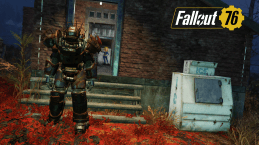 One of the biggest introductions into the Fallout franchise was the addition of power armor. This is heavy armor powered by a fusion core. When you enter the armor, the character is encased entirely in a metal shell covered over by pieces of armor. These armors have specific ratings and have specific attributes.
In Fallout 4, Power Armor was considered the strongest armor in the game, particularly if you wore Legendary pieces. If you had a certain set of power armor, you were practically invincible under most conditions. However, the armor did take damage and break. In Fallout 4, power armor breaks relatively quickly… particularly the legs. While it protects you well, it also damages quickly. The legs were the weakest parts of the whole set.
Unfortunately, in Fallout 76, Power Armor has actually become a joke. It’s easily the weakest armor set in the game. It’s weaker than its corresponding sets in Fallout 4. It’s weaker than even Marine armor found in the game. For example, wearing power armor in Fallout 76 sees absolutely zero protection against a level 52 Colonel Gutsy shooting 5.56 ammo… even if your character is level 150 or 300. A single bullet from a Colonel Gutzy with 5.56 eats straight through the armor and damages at least 1/10th of the HP bar. It might even damage more than this per shot. This is entirely bugged. Certainly, in Fallout 4, 5.56 loaded Gutsy did eat through health rapidly, it’s not nearly as rapid as it is in Fallout 76. The two tertiary benefits to power armor is its radiation protection benefit and its ability to fall from any height without sustaining HP damage. Yet, its armor protection levels are exceedingly weak.
This power armor problem has only gotten worse, not better. Power Armor is now even harder to maintain. When Fusion Core generators used to offer 100% charged fusion cores, Bethesda has changed the rules of the game and they now only provide 50% charged fusion cores. This means you now have to carry double the amount of fusion cores that you formerly had to carry when they were 100% charged. Now if you want 100% charged fusion cores, you need to make them with Flux or hope that the energy power plants still provide 100% charged cores in those workshop generators. Admittedly, those power plant generators used to offer 100% charged cores every 7 minutes, but with Bethesda’s revisionist tendencies, I haven’t tested this to find out if they still do. My guess is that they now provide 50% charged fusion cores.
Worse, most fusion cores randomly found sitting around in the game outside of a generator have a 25% or less charge. I don’t even get this change. Bethesda, do you want us to use Power Armor or not? It clearly seems that by making these silly reductions that Bethesda doesn’t want us to actually use Power Armor. So then, why even include Power Armor in the game? If they want to restrict the use of power armor, simply raise the weight of the fusion cores. Leave them at 100%, but raising the weight means carrying less.
One last thing about Fallout 76 and Power Armor is the lack of legendary armor pieces. While Fallout 4 had multiple legendary pieces of Power Armor (chest, legs, arms, etc), there is not a single piece of legendary power armor in Fallout 76. Not a single piece. Yet there is every type of regular armor in a one, two and three star legendary format. Even worse, for PVP purposes, Power Armor is weaker than level 5 regular armor when the combatant has perk card Tank Killer equipped at maximum. What’s the point in having and wearing Power Armor when a card like Tank Killer is available? Talk about overpowered and needing a rebalance. Tank Killer is one card that needs to go.
It’s crystal clear, Bethesda devs don’t want us using Power Armor. It has no legendary effects, it’s weak overall and the game offers up such stupid perk cards as Tank Killer that bypass armor ratings. So then, what’s the point? Even regular armor is stronger than this. It’s okay to provide a card like Tank Killer if an equal and opposite perk card is available to counteract Tank Killer and strengthen the Power Armor. But, there is no equal and opposing card. Yet another design miss that has never been corrected. In fact, none of these power armor issues have ever been addressed in Fallout 76.
Characters, Loot and Caps and Requested Features
This is another issue that has not ever been discussed or addressed and has existed since release. Fallout 76 allows players to create up to 5 different characters to use in Fallout 76. How we choose to use those characters is up to us. If one of our players has progressed well beyond level 15, yet still has a level 15 set of power armor, it’s stuck in that character’s inventory. How about letting us share the wealth between our characters? What if I want to transfer scrip, caps or pioneer scout credit between characters. Atom is a global currency available to all characters. Why not scrip, caps and pioneer scout credit?
Bethesda has yet to address or even offer a system for transfer of caps, loot, weapons or armor between our 5 characters. Instead, we have to rely on a third party to temporarily hold and then hand back our loot, caps, armor and weapons. I mean, seriously. Why do I have to make friends with a random on Fallout 76 just to impose on them and have them hold my stuff simply to transfer between characters?
Instead of giving gamers what we want from this game, like the above suggested feature, Bethesda spends time creating Biv and Distillers (unnecessary), the backpack (pointless), Fasnacht (stupid), Meat Week (lame), Scrip (really?), Nuclear Winter (not needed), Survival mode (minimally even used) and Atom Shop items (expensive). All of these developments so far are definitely inconsequential and meaningless to the overall Fallout 76 base story.
How about overhauling the perk system and give us perk card load outs? Let us, at one click, rearrange our perk cards without having to go into the perk card system and manually, one-by-one switch them in and out. Note, this feature is heavily needed after reaching level 50 when SPECIAL points are capped. You can’t add or rearrange your SPECIAL points, but you can rearrange perk cards at will. So, why not add something we want, like 5 perk card preset load-outs? This allows us to set our character up for a bloodied build or a shotgun build or an explosives build or even eating food build with one click? Why don’t we have this feature? Why carry around a bunch of equipped random useless perk cards when they’re not needed. Only equip them when they need to be used… like equipping camp cards when in camp or crafting cards when crafting. It’s insane to expect us to spend time rearranging our cards for 5-10 minutes before we can begin an activity. You certainly cannot spend time in the middle of combat doing this. But you could easily single click a favorite perk card load out to load while in the middle of combat… particularly if a gun breaks and you need to switch weapons and combat tactics.
In fact, why aren’t there armor load outs? Why do I have to manually go and load each armor piece manually. Why can’t I create an armor load out and then favorite it? Then, when I need it, simply select the load-out favorite and that set of armor is immediately worn. It makes no sense what Bethesda is doing with this game. How about giving us requested features rather than these mostly stupid additions? How about fixing long standing bugs? How about giving us gamers some love rather than a bunch of hate (banning tons of gamers for duping without actually knowing if they did).
Rebalancing and Revisionism
A revisit to Fallout 76 a year later wouldn’t be complete without discussing Bethesda’s constant and incessant meddling with Fallout 76’s rules. With any game, be it a board game or a video game, a set of established rules must exist when a game launches. These rules govern how the game is to be played. You’ll understand why I bring up board games in just a moment.
With video games, particularly with MORPG games like Fallout 76, the game developer seems to think they can randomly change the rules like they can their hat or their clothes or shoes. It doesn’t work that way. Establishing and maintaining a set of consistent and constant rules in which a game operates is fundamental to learning how to play a game.
Yet, Bethesda has invalidated rules, changed rules, reduced rules, increased rules and mucked with the innards of the rules with each and every release under the guise of “balancing”. Let’s circle back around to board games. If Hasbro decided to rewrite Monopoly’s rules based on the way “many” play Monopoly at home, many people would be rightly angry. The official rules have been established to play the game in a specific “official” way. Sure, some people personally change the official rules for expediency. For example, following every Monopoly rule exactly to the letter could mean an extremely long drawn out game. Therefore, people have changed and simplified the rules to reduce the duration of such a long game. Some people aren’t in it for the long haul, they simply want to play the game in 20 or 30 minutes and end it. There are a number of board games that have alternative rule sets that lead to shorter play times. These alternative rule sets are not official, but they exist to allow players to enjoy the game without all of the minutiae required when using the official rules.
With Fallout 76, a video game, it’s still a game… not unlike a board game. Much of the game is automated, interactive and visual, but it’s still nonetheless a game… a game with an established set of rules. We learn these rules quickly.
However, when a game developer decides to alter the rules continually, it’s difficult to keep up with an ever changing set of new rules. This is why establishing a single set of rules and maintaining that set consistently is the answer. Modifying the rules every month means no one can know what the rules are today, tomorrow or in a month. You can’t adequately play a video game if the official rules are constantly changing. This is why revisionism in video games is ultimately detrimental to a video game and to the video game industry as a whole. Consistency in a video game is the key to success. Variability leads to failure… particularly in a role playing game where rules define what makes an RPG an RPG.
Improvements?
Has Fallout 76 improved since its release? No, it hasn’t. Certainly, Bethesda has added new, but mostly inconsequential features such as backpacks, limited duration events offering cosmetic item drops, liquor that’s worse than the original already in the game, money making cosmetics to its store and a few pay-to-win features (scrap and repair kits). But there is little here that offers solid well crafted, thoughtful additions that make that game world a more compelling play experience. These additions have been weak, shallow experiences lasting short amounts of time and, frankly, leave a bad taste in the mouth. Many of them are not even in keeping in the Fallout universe… I’m looking at you Nuclear Winter.
Slowly and at the same time, Bethesda is gutting the game of its original rules and methodically replacing them with a new rule set. These new rules are intended to slow the player’s progression down, make the game even more grindy, keep the gamer playing longer to potentially visit the Atom store and actually buy something, you know, with real money.
Unfortunately, the actual base game has not improved. It is still the same mess it was when it was released nearly one year ago. The same bugs that existed then still exist today. Sure, a few have been fixed, but far too many are still active. Worse, in Bethesda’s zeal to add new content, they have broken more mechanics than they have fixed. What this means is that while the game has added new content, it’s come with a steep price of even more bugs on top of the existing bugs. It’s a never ending bugfest compounded by even more bugs created by each add-on.
Worse, Bethesda is clearly not using standard code practices. There have been many instances where bugs fixed in one release reappear in the next release. This regression behavior isn’t possible if a company is using industry standard coding, code storage and release practices. Regression bugs are not possible when code is properly documented, when it’s checked in properly and when one person can’t overwrite a previous coder’s changes. It’s crystal clear, Bethesda’s code and release practices for Fallout 76 are an unmitigated disaster. Not only is the game itself a disaster, so are Bethesda’s coding practices. It’s clear, Bethesda hasn’t the first clue how to write and maintain a 24/7 always on service, let alone a video game… let alone software.
As an example of this horrible coding, Bethesda introduced a new bug that caused all red headlamps found in the game world to inexplicably become Atom Shop restricted items. When an in-game item is marked with the Atom Shop symbol, it cannot be dropped or sold to other players. This meant you could no longer sell red headlamps mods or helmets with a red headlamp found or created in the game because the red headlamps became restricted. This meant that you, likewise, couldn’t at all sell power armor sets containing a red headlamp that, you know, you have found in the game world while this bug was active. Bethesda was extremely slow to respond to fix this bug. It took them about 1 month before it was finally addressed… even though they roll patches weekly.
Another bug they introduced in July saw to it that gamers with a large number of power armor sets had to spend a large amount of time reassembling all of these sets of armor. In July, Bethesda separated all of the power armor pieces from their corresponding power armor frames. This meant spending not only the time to reassemble all of the power armor sets one-by-one, it meant being heavily overencumbered. For example, I had at least 10 sets of power armor on my player. Some were also in my stash. When they separated all of the power armor pieces, they all dropped all armor pieces separately into my player’s inventory… even from those that were in the stash box. This meant that my character ended up carrying about 500-600 more in carry weight after that patch. Because my character was not in camp when this occurred, I couldn’t fast travel back there. To reassemble power armor, you have two options. Deploy the power armor and reinsert all of the pieces wherever you are in the world or do it on a power armor station. The former method can be done anywhere, but you’re easily and frequently interrupted by combat. Because the power armor frame only remains out for a maximum of 60 seconds, you don’t have much time to do this… and it’s easy to run out of time. Doing it on a power armor station, there is no 60 second timer as long as you’re crafting.
Because a bunch of my frames were in the stash, I couldn’t get access to those except either at a train station or at my base. Because my base was closer than a train station, I had to spend time hoofing my overencumbered character back to the base so I could reassemble. This probably took 30 minutes because of the AP problem and enemies. Then, when I got there, I had to drop each and every frame down, reassemble and then do it over and over until all were reassembled. All told, this issue took close to 1.5 hours. All so that Bethesda could “rework” the Power Armor which, by the way, is still just as broken as it was before the patch. Whatever they did didn’t do anything to fix the underlying problems. Worse, instead of you know, actually playing the game, I was messing about with fixing up something that I shouldn’t have had to fix. When patches encroach on the user experience, you REALLY need to think long and hard about releasing these patches. Bethesda’s patch could have easily auto-reassembled all of the armors after the patch so that the users didn’t have to spend time doing this. They have access to all of this on their system internally. There’s absolutely no reason why I (and so many other players) had to spend our gaming time screwing about with reassembling power armor sets when we could have been, you know, actually questing… the reason we actually bought this game in the first place.
In short, the game has not improved. In fact, it is pretty much the same exact disaster it was when it released almost one year ago. In many ways, it’s actually worse. The base game has not improved at all.
What has been added to the game is inconsequential and, for the most part, unnecessary. The backpacks are, in fact, entirely pointless and even moreso once they released the plans into the overseer’s cache without the need to go through the convoluted Boy Scout quests. Instead of the backpack, the devs could have simply raised the carry weight on our characters. No, backpack needed. The backpack was simply an Atom shop marketing gimmick to get people to buy into their expensive ‘skins’ to make the backpack more “visually pleasing”. Does it really matter if your backpack looks like a Nuka Cola cooler or a piece of luggage? In fact, most of the Atom Shop skins that have been crafted are actually quite ugly. The basic backpack is functional looking and at least looks like a backpack. The other backpacks are horrendously ugly contraptions strapped to your back. The Nuka Cola cooler could have looked cool if it weren’t completely covered up by a bunch of horrendously ugly straps obscuring most of the Nuka Cola logo. If it had simply been a Nuka Cola branded cooler backpack with no straps at all, that would have been fine. This skin needs a major rework.
Game Modes
As of this article, there three game modes available:
- Adventure Mode — This is the original game mode that was introduced upon release. It still contains nearly all of the same bugs it did when it was released.
Survival Mode— This game mode has been retired as of October 1st, 2019. This mode was introduced early in 2019 and offers what Bethesda claimed to be a more challenging experience. Well, it wasn’t. It’s was simply an annoying experience. It was intended as a PVP environment, but was nothing more than a way for PVP players to run around shooting one another other in a Death Match style playground. In fact, if you tried to actually quest in a Survival Mode server, you wouldn’t get very far before being killed by another player. It was actually worse than that, too. In this PVP environment, there’s was no level based combat. A level 300 player can hang out in newbie territory picking off level 2 players solely for fun. At least Nuclear Winter has leveled the playing field so that level 300 users and level 5 users have similar odds of winning because it’s not about the level, it’s about the strategy.- Nuclear Winter Mode — This game mode is a Battle Royale game (aka, Last Man Standing). Ever user starts out with a new level based on this game mode. Levels, abilities and weapons from Adventure do not work in Nuclear Winter. You must find all of this stuff when playing Nuclear Winter and it only lasts as long as the tournament lasts. Nuclear Winter was introduced entirely to placate Fortnite and Apex Legends players and attempt to attract those same gamers into Fallout. It hasn’t worked. It’s a game mode that does not in any way belong in the Fallout universe. This game mode is not exactly fun, but it is tedious. It’s all about who can find the biggest weapons, best armor, kill the most and hide the best. There’s nothing really challenging here. Fallout needs to drop following industry gaming trends and innovate. Come up with new gaming ideas instead of rehashing old ideas in tired and uninspired ways. Worse, this game mode does not at all fit into the idea of Fallout. If Bethesda wants to create these derivative games, at least create them separately using a newly created franchise with new characters and abilities. Don’t tack it onto Fallout simply because you can.
Overall
Fallout 76’s play value and bugs are very much the same as they were on release day. The exception is, of course, that in Bethesda’s zeal to add a bunch of new stuff, they have broken even more in the process. In fact, I’d say Bethesda has broken at least half as much more stuff than was already broken. Worse, they have broken previously functional and working features. An example is when they added the distillery. For the distillery to work, they added a new mechanic to “spoil” the fermentable liquors to turn them into drinkable liquors. What that meant was a spoil bar on the item that timed down until the liquor was fully fermented and drinkable. Unfortunately, when the devs touched this part of the game code, they screwed up the speed of spoilage for the rest of the food items (and even fusion cores) within the game. This meant that while ‘fermentable beer’ fermented faster, it also meant that meat, veggies and even fusion cores, spoiled at a much faster rate. Whoops. Big bug.
Did Bethesda correct this problem quickly (or at all)? No. Once that bug was introduced it was here to stay. Food and drink still spoils much faster than it did before that game addition. Even fusion cores run out far, far faster than they did before that addition. Does Bethesda care? No. Do they intend fixing the problem? No.
This is why revisionism in the video game industry has no place. This is why a simple brown paper bag, a simplistic container, still barely works properly. When developers don’t care to fix even the most basic bugs let alone new bugs, then why should I (or any other consumer) care to spend money on these lackluster games? Once Bethesda begins to care about its gamer audience again, I might consider returning. Until then, Bethesda, you’re on your own without my money.
Update — Survival Mode
As of October 1st, Survival Mode Beta ironically didn’t survive. Bethesda has removed this mode from the game entirely. Clearly, its adoption rate was minimal and limited. This is an unfortunate turn of events for Adventure Mode players. What that means is that Bethesda is likely to revisit enabling even more PVP activities in Adventure Mode since the disappearance of Survival Mode. That means ganging up what was Survival mode into Adventure Mode again. This is something I’m not anxious to see return to Adventure Mode.
In fact, I wanted Bethesda to remove all PVP elements from Adventure Mode and make Survival Mode 100% PVP. However, since the introduction of Nuclear Winter, it seems they no longer want to focus on Survival Mode considering its lackluster adoption rate. Still, I’m not say to see it go as it did nothing for me. I’m not an active PVP player, so the point to Survival Mode had weak play value. Nuclear Winter is the ‘hot new thing’. If anything, what this shows is the fickleness of the demographic who currently plays Fallout 76. Once players have had their fill of the Nuclear Winter experience, I’d fully expect Bethesda to wind down that game mode also as users stop playing it.
10:50PM Oct. 1st — Updated to reflect that Bethesda has retired Survival Mode.
While this article endeavors to answer what happened to Fallout 76, it hasn’t in any way addressed why it happened. I may consider delving into this topic in the future if there’s enough reader interest. Please comment below if you’d like to see this additional topic explored.
↩︎
Can you make potato chips in the microwave?
Why yes. Yes, you can. In fact, it’s pretty fast to make homemade potato chips. But, the speed does depend on your microwave. Let’s explore.
Slicer
The critical piece of the potato chip puzzle is slicing them the correct thickness. To do this, you need to get a potato chip mandoline. This is the critical first step to making potato chips. They can’t be too thick, but they also can’t be too thin. There’s a perfect thickness to make proper potato chips.
The slicer I recommend is the Akebono Potato Slicer set. Though, you may be able to get the potato chips the proper thickness with this Ronco mandoline or this Mastrad mandoline. The reviews show that these do work.
Baker
All of these sets offer a round plastic baker which holds the chips vertical. I’m not a fan of baking them this way. I prefer my chips flat. If you use the vertical version, the chips will fold and flop over, sometimes on themselves. This can make for odd shaped chips. If you like that about the vertical baker, then by all means go for it. As I said, I prefer my chips flat.
To get absolutely flat chips, you’ll want to microwave them flat on a plate. I use glass plates because the chips stick less and seem to bake faster. There’s also no chance of burning a glass plate, unlike paper which can smoulder and catch fire in the microwave.
It’s up to you to choose which baking method you prefer.
Preparation
- Scrub the potato thoroughly with a vegetable brush under running water.
- Peel potato if you prefer. I prefer them unpeeled.
- Slice the potato on the mandoline and place the slices into water to soak.
- When finished slicing, rinse all of the slices on both sides until the water runs clear (i.e., no starch remains).
- Dry the chips on both sides and lay them on a flat surface.
- Jump to baking instructions immediately below.
Cooking Times
This is the critical part. If you have a 1200-1500 watt microwave, your baking time will be about 5 minutes. You’ll need to add more time if your microwave has less wattage. For example, a 600 watt microwave might take up to 20 minutes. To bake, follow these instructions:
- On a glass plate, lay the chips out flat so that they are not touching one another.
- Place into the microwave and microwave on high for 5 minutes.
- Halfway through the cooking cycle (and while the chips are still just a bit damp), lift them from the plate so they are loose. The plate may be hot, so use an oven mitt.
- Continue microwaving the chips until they are slightly brown in places.
- Remove the chips and let them stand for about 5 minutes to finish crisping.
- Enjoy.
I don’t put salt on my chips and I prefer them unsalted. However, if you like salt, salt them before you begin baking them. You only need to salt one side.
A single potato might yield 5 or 6 small batches. This can be a bit time consuming to cook using the plate microwave method. This means running about 5-6 separate batches through your microwave. At 5 minutes per batch, that’s about 25-30 minutes of baking time to make a single potato’s worth of chips. If you want to do several potatoes, it could take several hours. The flat method may not be optimal for large batches. For large batches, you might want to consider the ring baker which holds more chips.
You might also consider baking them in the oven as you can use multiple cookie sheets to lay them all out flat. Baking them in the oven will likely take 20-30 minutes at 350ºF (or until they are slightly brown).
For making small batches, the microwave is the fastest method and produces chips in as little as 5 minutes.
Doneness
The chips are done when they are both lightly browned uniformly and when they’re fully crispy. If they’re chewy or wet in the center, you’ll need to add more baking time. The chip should be completely dry and crispy when done. The chips will also shrink by about half. If you like monstrous sized chips, you’ll need to buy even bigger potatoes. Average sized potatoes produce smaller sized chips. Be cognizant of this when picking your potatoes at the store. I also suggest russet potatoes because they’re the easiest to slice, wash and bake… and they produce tasty potato chips.
Storage
Store any uneaten (wait.. there are some actually left over?) in a zipper bag and keep in a cool dry place. Moisture may seep back into the chips and make them less crispy. You can crisp them up again by placing them onto a plate and baking them in the microwave for 1 to 2 minutes.
Kettle Chips?
If you’re looking for crispier potato chips, like Kettle type chips, then you’ll need them to be sliced a bit thicker. For this, you’ll need to find a mandoline that provides you with this thickness. However, I’m not certain that the microwave will actually produce kettle style crunchy chips. You might need a fryer for this.
If you’re interested in Kettle style chips, then you’ll have to try it and report back in the comments below for how that went and what you did to make it work.
Healthy Chips
Since these are not fried in any oils, they do not have any of the negative oil benefits of fried foods. However, these are still starchy potatoes and still possess all of the glycemic responses as any other potato products. You’ll want to keep this in mind if you are diabetic or need to restrict your carbohydrate intake.
Happy Snacking!
↩︎
Can I use my Xbox One or PS4 controller on my iPhone?
 This is a common question regarding the two most popular game controllers to have ever existed. Let’s explore.
MFi Certification
Let’s start with a little history behind why game controllers have been a continual problem for Apple’s iOS devices. The difficulty comes down to Apple’s MFi controller certification program. Since MFi’s developer specification release, not many controller developers have chosen to adopt it. The one notable exception is the SteelSeries Nimbus controller. It’s a fair controller, it holds well enough in the hand, has an okay battery life, but it’s not that well made. It does sport a lightning port so you can charge it with your iPhone’s charger, however. That’s of little concession, though, when you actually want to use an Xbox One or PS4 controller instead.
Because Apple chose to rely on its own MFi specification and certification system, manufacturers would need to build a controller that satisfies that MFi certification. Satisfying the requirements of MFi and getting certified likely requires licensing technology built by Apple. As we know, licenses typically cost money paid to Apple for the privilege of using that technology. That’s great for Apple, not so great for the consumer.
Even though the SteelSeries Nimbus is by no means perfect, it really has become the de facto MFi controller simply because no other manufacturers have chosen to adopt Apple’s MFi system. And why would they?
Sony and Microsoft
Both Sony and Microsoft have held (and continue to hold) the market as the dominant game controllers. While the SteelSeries Nimbus may have become the de facto controller for Apple’s devices, simply because there is nothing else really available, the DualShock and the Xbox One controllers are far and away better controllers for gaming. Apple hasn’t yet been able to break into the console market, even as much as they have tried with the Apple TV. Game developers just haven’t embraced the Apple TV in the same way they have of the Xbox One and the PS4. That’s obvious as to why. The Apple TV, while reasonable for some games, simply does not offer the same level of graphics and game power as an Xbox One or PS4. It also doesn’t have a controller built by Apple.
Until Apple gets its head into the game properly with a more suitably named game system actually intended for gaming, rather than general purpose entertainment, Apple simply can’t become a third console. Apple seems to try these roundabout methods of introducing hardware to try and usurp, or at least insert itself into certain markets. Because of this subtle roundabout method Apple chooses, it just never works out. In the case of MFi, that hasn’t worked out too well for Apple.
Without a controller that Apple has built themselves, few people see the Apple TV as anything more than a TV entertainment system with built-in apps… even if it can run limited games. The Apple TV is simply not seen as a gaming console. It doesn’t ship with a controller. It isn’t named appropriately. Thus, it is simply not seen as a gaming console.
With that said, the PS4 and the Xbox One are fully seen as gaming consoles and prove that with every new game release. Sony and Microsoft also chose to design and build their own controllers based on their own specifications; specifications that are intended for use on their consoles. Neither Sony, nor will Microsoft go down the path to MFi certification. That’s just not in the cards. Again, why would they? These controllers are intended to be used on devices Sony and Microsoft make. They aren’t intended to be used with Apple devices. Hence, there is absolutely zero incentive for Microsoft or Sony to retool their respective game controllers to cater to Apple’s MFi certification whims. To date, this has yet to happen… and it likely never will.
Apple is (or was) too caught up in itself to understand this fundamental problem. If Apple wanted Sony or Microsoft to bend to the will of Apple, Apple would have to pay Sony and Microsoft to spend their time, effort and engineering to retool their console controllers to fit within the MFi certification. In other words, not only would Apple have to entice Sony and Microsoft to retool their controllers, they’d likely have to pay them for that privilege. And so, here we are… neither the DualShock nor does the Xbox One controller support iOS via MFi certification.
iOS 12 and Below
To answer the above question, we have to observe Apple’s stance on iOS. As of iOS 12 and below, Apple chose to rely solely on its MFi certification system to certify controllers for use with iOS. That left few consumer choices. I’m guessing that Apple somehow thought that Microsoft and Sony would cave to their so-called MFi pressure and release updated controllers to satisfy Apple’s whims.
Again, why would either Sony or Microsoft choose to do this? Would they do it out of the goodness of their own heart? Doubtful. Sony and Microsoft would ask the question, “What’s in it for me?” Clearly, for iOS, not much. Sony doesn’t release games on iOS and neither does Microsoft. There’s no incentive to produce MFi certified controllers. In fact, Sony and Microsoft both have enough on their plates supporting their own consoles, let alone spending extra time screwing around with Apple’s problems.
That Apple chose to deny the use of the DualShock 4 and the Xbox One controllers on iOS was clearly an Apple problem. Sony and Microsoft couldn’t care less about Apple’s dilemmas. Additionally, because both of these controllers dominate the gaming market, even on PCs, Apple has simply lost out when sticking to their well-intentioned, but misguided MFi certification program. The handwriting was on the wall when they built the MFi developer system, but Apple is always blinded by its own arrogance. I could see that MFi would create more problems than it would solve for iOS when I first heard about it several years ago.
And so we come to…
iOS 13 and iPhone 11
With the release of iOS 13, it seems Apple has finally seen the light. They have also realized both Sony and Microsoft’s positions in gaming. There is simply no way that the two most dominant game controllers on the market will bow to Apple’s pressures. If Apple wants these controllers certified under its MFi program, it will need to take steps to make that a reality… OR, they’ll need to relax this requirement and allow these two controllers to “just work”… and the latter is exactly what Apple has done.
As of the release of iOS 13, you will be able to use both the Xbox One (bluetooth version) and the PS4’s DualShock 4 controller on iOS. Apple has realized its certification system was simply a pipe dream, one that never got realized. Sure, MFi still exists. Sure, iOS will likely support it for several more releases, but eventually Apple will obsolete it entirely or morph it into something that includes Sony and Microsoft’s controllers.
What that means for the consumer is great news. As of iOS 13, you can now grab your PS4 or Xbox One controller, pair it to iOS and begin gaming. However, it is uncertain exactly how compatible this will be for iOS. It could be that some games may not recognize these controllers until they are updated for iOS 13. This could mean that older games that only supported MFi may not work until they are updated for iOS 13. The problem here is that many projects have become abandoned over the years and their respective developers are no longer updating apps. That means that you could find your favorite game doesn’t work with the PS4 or Xbox One controller if it is now abandoned.
Even though iOS 13 will support the controllers, it doesn’t mean that older games will. There’s still that problem to be solved. Apple could solve that by folding the controllers under the MFi certification system internally to make them appear as though they are MFi certified. I’m pretty sure Apple won’t do that. Instead, they’ll likely offer a separate system that identifies “third party” controllers separately from MFi certified controllers. This means that developers will likely have to go out of their way to recognize and use Sony and Microsoft’s controllers. Though, we’ll have to wait and see how this all plays out in practice.
Great News
Even still, this change is welcome news to iOS and tvOS users. This means that you don’t have to go out and buy some lesser controller and hope it will feel and work right. Instead, you can now grab a familiar controller that’s sitting right next to you, pair it up and begin playing on your iPad.
This news is actually more than welcome, it’s a necessity. I think Apple finally realizes this. There is no way Sony or Microsoft would ever cave to Apple’s pressures. In fact, there was no pressure at all really. Ultimately, Apple shot themselves in the foot by not supporting these two controllers. Worse, by not supporting these controllers, it kept the Apple TV from becoming the hopeful gaming system that Apple had wanted. Instead, it’s simply a set-top box that provides movies, music and limited live streaming services. Without an adequate controller, it simply couldn’t become a gaming system.
Even the iPad and iPhone have been suffering without good solid controllers. Though, I’m still surprised that Apple itself hasn’t jumped in and built their own Apple game controller. You’d think that if they set out to create an MFi certification system that they’d have taken it to the next step and actually built a controller themselves. Nope.
Because Apple relied on third parties to fulfill its controller needs, it only really ever got one controller out of the deal. A controller that’s fair, but not great. It’s expensive, but not that well made. As I said above, it’s the SteelSeries Nimbus. It’s a mid-grade controller that works fine in most cases, but cannot hold a candle to the PS4’s or the Xbox One’s controller for usability. Personally, I always thought of the Nimbus controller as a “tide me over” controller until something better came along. That never happened. Unfortunately, it has taken Apple years to own up to this mistake. A mistake that they’ve finally decided to rectify in iOS 13.
A little late, yes, but well done Apple!
↩︎
How do I make my book a bestseller?
 Ah, that age old question. How do you get anything to sell like wildfire? The answer is, it’s a complicated answer. This article assumes a first time published author. Let’s explore.
Going Viral
Let’s start with the elephant in the room. Much of the reason anything becomes a hot seller is ultimately out of the control of the seller. If it’s a book, as suggested by the title, then there are a lot of situations at play.
Sure, the content within the book can make or break a book, but even if the book is the best written, best conceived story and offers entirely fresh ideas, that doesn’t guarantee success. In fact, nothing guarantees success of a book. What makes a book successful is luck (and lots of it) and being in the right place at the right time. You can control your words in the book. You can control where the book is sold. You can control lots of aspects of distribution, paper types (if printed) and so on. But, what you can’t control is how people will receive the book and, ultimately, how many will buy into it. That is a matter of luck.
There are some books that simply become ubiquitous in pop culture. There are others that simply fade into obscurity. There’s no way to know if your book will light the proverbial fire or be eclipsed by someone else’s book. You simply can’t know.
Planning and Control
When considering authoring a novel, there are formulas involved. Such formulas include how many words should be in the book, what genre the book belongs in, how many copies that you can print, how big the font should be in the book and so on. These physical book attributes are within your control. However, it’s doubtful that these physical attributes will play a part in whether book becomes wildfire. Oh, they play a part to be sure, but the biggest factor is still luck. Luck, for example, is entirely out of your control. You can’t force luck, you can only hope that lady luck looks down upon you and smiles.
Your book’s content does play a role in being a bestseller. Meaning, a poorly written, badly conceived novel has no chance of becoming a bestseller. The book content, as I said above, is within your control. What that means is that you need to write your book to the best of your ability and get help whenever your story goes beyond your means of control.
In other words, you need to write your book so that it at least matches the quality of most other bestsellers. No better, no worse. It doesn’t have to be perfect, but it needs to be of a quality that at least gives it a fighting chance at becoming a bestseller. However, with that said, the pieces within your control do not at all guarantee (even if your novel is excellently crafted and written) success. Success of your novel is predicated on whether readers find pleasure in reading your novel and, more importantly, it resonates with enough people to start the viral wildfire.
Viral Wildfires
These types of wildfires can start anywhere. It could be as simple as Oprah Winfrey reading your novel and inexplicably plugging it on her show. It could be helped by having a 10 million viewer YouTube channel mention and review your novel on their channel. It could be a Twitter account with a huge following who incidentally reads and plugs your book on their channel. It could be all of the above.
With that said, you can’t force any of these viral situations. You can only hope they come to pass. They might, they might not. It all depends on your content choice, the situations and if your content resonates with the right set of people at the right moment in time.
However, you can’t write your content with that audience or set of circumstances in mind. There’s no way to know if your novel will be read by someone famous and plugged. Yes, it can happen, but you can’t be guaranteed this outcome.
Book Topics
If you’ve not yet written a book and you’re looking to do so, you should solidify a list of topics that you think you can spend many hours writing about. You have to like your characters for you to remain interested in spending many hours involved in crafting a tale around them.
Write what you know
In addition to writing about likeable characters, you should write about the things where you have knowledge. Sure, if your novel is about space travel, you might need to research such topics as the vacuum of space, exactly how cold space is and how fast it freezes objects solid, but you might also need to research the latest theories on space travel ideas. Of course, you can craft fanciful new propulsion systems that have never before been dreamed, but you might want to ground those systems in at least some measure of Earth physics. Bringing fanciful ideas back to the real is the way to make them seem genuine to the reader.
You’ll also want to determine your books genre, such as romance, fiction, non-fiction, historical, drama, comedy, etc. You can even write a memoir if you think it has some social significance to other people.
Audience
When crafting your manuscript, you’ll want to always keep your audience in mind. Don’t switch audiences in the middle of your book. If you begin the book assuming a general level of adult intelligence, stick with that. For example, if you’re using “big” words and phrases to describe your situations, don’t change halfway through the novel and start using smaller words and phrases. Your readers will notice. Stick to the formula in which the novel began. If you assume a certain level of adult reader intelligence at the open of the novel, stick through this all the way through to the end. Be consistent.
If your character is from the south with a southern drawl, maintain that character’s drawl throughout the novel. Don’t drop the drawl partway through and assume your readers won’t notice. Consistency in writing is the key to keeping the novel thoroughly readable throughout. It’s all about consistency. If you break consistency, it can break the suspension of disbelief and have readers walk away leaving half of the book unread.
How many words?
This is a question many new authors ask. How many words required for a novel is really all dependent on the chosen genre and how much it takes to tell a story.
If you’re writing a novel with 4 short stories, then your short story lengths will be far shorter than a full novel. A short story might contain as few as 7,500 words up to 40,000 words (on the very high side).
A Young Adult fiction genre novel can get away with as few as 45,000 to 55,000 words. However, a fiction novel targeted at an adult audience should contain at least 80,000 words up to 110,000 words. These are, of course, guidelines. Your novel could be much longer than this if you so choose. However, longer novels may turn off some readers (and publishers). Instead, you might want to break it into a multipart series and cap the words per novel. Then, begin writing a new novel in your series with any remaining story ideas that you have.
For children’s books (aged 7 to 12), the maximum number of words is 15,000 to 30,000. These books should be shorter.
For non-fiction adult genre novels, the number of words start with at least 60,000 words and go up from there.
To be considered by a publisher, your novel should have these numbers of words, depending on genre. If you’re unsure and you have an open dialog going with one or more publishers, simply ask them if the length is sufficient to consider publishing. If you get a rejection letter, you should read that carefully to understand what, if any, reasons for rejection are included. However, the publisher may not include any solid reasons.
Planning your Novel
It’s probably not a good idea to go into the act of actually writing a novel before you have story ideas and story progressions fleshed out. This means writing down your ideas, character names, situations and story arcs. You’ll also want to flesh out how you want your characters to grow, learn and what the ultimate goal is for your character. Are they on a path of self-enlightenment? Do they need to be taught a lesson? Do they need emotional guidance? How is their story going to progress?
Stories that are character driven are the most likeable and the most likely to go viral. Use your characters to drive the story forward. They are the ones who hold your story’s keys and who can unlock the story progression. Use characters to drive your story forward.
Imagination is part of this process, but part of it is using characters in ways to logically progress a story. For example, if your main character is a cop who upholds the law, it wouldn’t make sense for them to continually break the law at every turn and not feel remorse or guilt about doing so. Of course, rules are made to be broken, so perhaps that’s your twist?
Speaking of twists. Does every story need to have a twist? No. Stories can be told with or without a twist. A twist is great if it makes sense during a particularly revealing section, but it’s not required. The problem with twists is foreshadowing… which is a very subtle art. If you foreshadow too hard about events to come, people will see your twist(s) coming way in advance, which ruins the setup. If you fail to foreshadow at all, the twist may not have enough impact and may even seem confusing. Planning your novel for a revealing twist can be difficult. Planning is important here. But, so is….
Feedback
It is important to get feedback on your novel. Let someone read your novel and give honest criticism and feedback. If you include a twist, understand your advanced reader’s comments about that twist. You’ll want to know if they guessed it way in advance and, if they did, what you might do to tone down what led them to that conclusion early.
You want to remain in control of your reader’s thoughts about the characters and story all along the way. You don’t want them jumping to conclusions about your story in advance. Have the reader unfold the story as it’s written and don’t give them too much information that could lead their thinking astray or draw early conclusions. If you’re writing a mystery novel, you always want to keep your reader guessing throughout. In fact, you might want to squash any conclusions they might reach too quickly. That way, if your reader jumped to an incorrect conclusion, you can unfold the story and immediately tell them that their conclusion is wrong. Basically, keep the reader on their toes. Don’t let them second guess your novel’s conclusion halfway through the book.
Feedback is your answer. Let people read your novel in advance and be prepared to edit your novel in ways that reduce such conclusion jumping and improve the overall storytelling.
Wildfires and Bestsellers
Let’s return to original question that began this article. Luck is ultimately your answer. While you can write your best novel with your best situations, the novel may still fall flat with readers. Publishers understand this. Authors, likewise, need to understand this. You can’t know how the public (or critics) will respond to your novel.
Some of the best series didn’t start out as bestsellers. It took time for the wildfire to grow. The Harry Potter series is a good example. The first two novels did respectable sales, but it wasn’t really until the third novel released that the viral wildfire started. At that point, her books flew out of the stores with each successive release. It might take two or three entries into a novel series before such wildfires begin. Even still, there are plenty of novel series that do not get that level of attention. They do respectable novel sales, but they don’t get anywhere close to the magic of Harry Potter.
Don’t go into a writing a novel expecting a wildfire. Go into writing a novel to tell your story… to let other people read about your characters and situations. If it grows into a wildfire and becomes a bestseller, then all the better. But, don’t go in expecting this outcome. Instead, focus on the novel and in low expectations of sales. If it does better than you expect, great. If it doesn’t, you aren’t disappointed. You can’t force luck. It either strikes your novel series or it doesn’t. Because such luck is extremely rare and fickle, you can’t expect it. You can hope for it, a little… but with tempered prudence. Again, don’t go into your novel’s release expecting viral things to happen.
Amazon
A discussion about writing and selling books wouldn’t be complete without discussing Amazon. Sure, Barnes and Noble still exists as a brick-and-mortar book retailer. And, there are other physical book sellers to consider. But, Amazon can ultimately make or break your book single-handedly. It is such a large seller of books today that if you don’t leverage Amazon to sell your book, you can’t really make your book a success. Amazon is, in fact, critical to your book’s success. And, so is Amazon’s review system. Amazon’s review system drives its recommendation engine. You’ll want to encourage your readers to review your book on Amazon. Many avid readers need little prompting, but by getting more and more reviews, Amazon is more likely to recommend your book to its customers.
Apple is also a digital book seller, so you may want to leverage them, but to a much lesser degree. They aren’t nearly as big as Amazon, but your publisher should ensure all such digital book sellers like Google Books, Apple, Kobo (the remnants of Borders) and several other smaller digital sellers are supplied with digital copies to sell.
Having a publisher on your side is critical to ensure that your book is distributed as widely as possible. Only a publisher can ensure your novel gets the wide treatment that’s required for it to become a bestseller. Trying to self-publish, you simply don’t have the level of resources needed to make this a reality. A publisher does. This is why a publisher is important to your success.
A publisher will ensure your book is distributed not only through Amazon, but through all other necessary book outlets to ensure your book has the widest exposure and distribution possible to help your book achieve that coveted bestseller ranking.
Publisher?
Publishers are both a blessing and a curse. They are a necessary presence in the book industry. They help authors get their words into the hands of avid readers… readers who can then turn the book into a bestseller. Publishers help you refine your book’s content into the best that it can be, but they also ensure that your book will hit the shelves in all of the necessary places… both physical and digital.
The difficulty with publishers is not to get burned. Publishers will take a cut of your book’s profits to cover their expenses. Those expenses include their salaries, their office rents, printing of the book itself, advertising and so on. Getting a “book deal” means signing away some of your book’s profits to the publisher to help them stay in business. This means you’ll get far less profits from selling the book than you might realize. Oh, you’ll get some money for each copy sold, but don’t expect much. Most of that money goes back to the publisher to keep their lights on, offices open and staff employed. That’s the bane of using a publisher.
On the other hand, self-publishing means you get to keep 100% of the profits. But, good luck in getting your novel printed and into the physical stores like Target, Walmart and Barnes and Noble yourself. Getting that far would be difficult, if not impossible. That’s not to say you can’t self-publish, but don’t expect to get much industry consideration. Using a publisher, your novel may be considered for prestigious industry awards. Using self-publishing, those awards are almost always off of the table. Getting an industry award can help the viral wildfires burn hotter, thus getting even more copies sold. Using a publisher opens a lot of doors. Self-publishing means more profits, but less doors are opened in the industry.
Publishers are a known quantity in the industry and will do almost everything to see that your novel succeeds. For this investment reason, publishers are extremely picky on which novels and authors they are willing to represent. When they accept an author and their novel into their publishing house, they are taking a risk. That risk could mean an expensive failure. Because publishers want to reduce that risk as much as possible, they only accept limited book types and authors. What this all means is…
Expect Rejection
Publishers are rightly skittish. It’s expensive to publish, advertise and widely distribute a book throughout the country or, indeed, the world. Because of that risk, they only want the best books and the best possible prospects. This means that publisher representatives are extremely picky about what they will accept and when and how they will accept it. Randomly sending your manuscript to a publisher without advance notice, you’re sure to be rejected. In fact, they likely won’t even open the manuscript. Many times they won’t even send it back, even if you include a self-addressed stamped envelope. Instead, they’ll trash it without even opening it. They might or might not send you a rejection letter. If the manuscript was unsolicited, you may not even get a response.
For this reason, it’s a good idea to (once your novel is complete) reach out to publisher editors and determine if they’re interested in your manuscript’s content. You do this in the form of a submission letter. If a publisher’s editor shows interest, then you have an opening. This means you may be invited to send your novel in for review. It doesn’t mean they’ll accept or even read it all, but they might. Reading a full 65,000 word manuscript is not an insignificant amount of time. So, respect the editor’s time they are willing to give you. After all, they’re giving you the length of time it takes to read your book. More than likely, the publisher will reject your manuscript. Expect that you will be writing many submission letters and getting rejections. You’ll need to keep trying until you reach a publisher’s editor who takes interest.
Instead of reading your entire manuscript, an editor might request a detailed synopsis from you. A short description of your novel’s story to determine if it’s something they might have time to read and be able to add to their collection of currently published books. Do whatever the publisher’s editor requests, but don’t be willing to give away the farm. Sure, let them read your novel and give feedback, but know that they are human and as humans, they have opinions. That editor is only one opinion in among many, even if their opinion is that they don’t like your novel.
The Acceptance Rejection
If you get a bite from a publisher, take that as a small win. It doesn’t mean they’ll publish your book, yet. But, it is a hopeful sign. At least they’re talking to you.
Don’t be offended by the opinions an editor might offer you. Simply accept their advice for what it is. You may not agree with their assessment, but at least consider it. If you feel adamant that your book is already in its best possible place and changing it would ruin its current story, yet a publisher’s editor is asking you to make substantial changes in tone and story in your book, you might want to think twice. If you have conviction that your book is already the best it can be, then thank them for their time and move on to someone else. Choose a different publisher. However, you owe it to yourself to at least consider that editor’s advice.
For example, if they offer a suggestion to rework large segments to make the book have a larger emotional impact and potentially appeal to a broader audience, at least consider it. Don’t outright discard their advice. They’ve been in the business for a long amount of time, hopefully, and their advice may have some merit. But, as I said above, don’t fall into spending a large amount of time completely reworking your novel solely on the advice of a single editor… particularly if your rework of the novel doesn’t offer some level of commitment from that publisher. For example, if they’re asking you to rewrite a large section of your novel, you should ensure that the publisher will commit to publishing the book if these changes are made to their satisfaction. It’s a give and take situation. Asking for a time commitment from the author to rewrite should come with at least some strings attached to the publisher. Make sure you get those strings attached firmly.
If they give you advice and then offer no strings and expect you simply to make large changes without even the remote possibility of acceptance, you should view that request with a large amount of skepticism. This is ultimately the acceptance rejection. Instead, you should thank them for their time and suggest that if you do have time to rework the novel, you will resubmit it for review at a later date. Then, go find another publisher accepting manuscripts and submit your original manuscript there. Don’t make the changes to your novel unless you personally think that the suggestion(s) actually will improve the novel in substantial ways or that the publisher is on-the-hook to publish the novel contingent on making those changes. If you commit to making changes for them, they should commit to publishing your updated novel. Get that commitment in writing.
First Time Publishing and Contracts
As a first time published author, however, you are at a disadvantage. In addition to being a new author, a publisher may want to see how business shrewd you are. Sure, you can put words to a page, but can you negotiate? Publishers can take advantage of first time authors simply because the author is “green”. This means because you “don’t know any better” they could ask you to jump through hoops and still not publish your book. Or, they could give you such a small pittance percentage that it doesn’t make sense. Don’t fall into traps like this. If a publisher’s editor seems to be toying with you, but not actually providing any commitments for your novel, again, thank them for their time and move on. Don’t allow them to take advantage of your supposed greenness in the publishing industry.
Instead, use Google and try to learn as much about the protocols of getting your novel published as you possibly can. If they offer you a contract, read it thoroughly and understand your commitments to it (and the publisher). You don’t want to get trapped into a contract that has exclusivity clauses, pays you a pittance or requires you write 3 books over the next 3 years. If it took you 5 years to write your original book, being able to write a book a year may not be possible for you. This is why you will need to understand contract negotiation. You would then need to either strike that verbiage from the contract or modify it to allow you more time to write any further required novels.
Don’t let your lack of knowledge in publishing and contracts blind you to what the publisher is requiring. Maybe you aren’t even seeking to write further novels? Such a contract means you would be legally bound to produce those novels. Read contracts carefully and understand what they are asking you to do. If you can’t read contracts for yourself, hire a contract lawyer who can decipher the terms of the contract to you and use that contract lawyer to draft alternative terms that work for you. The publisher may not accept the updated terms, but you can then move on without being bound to that publisher.
Payments
Make sure that any contracts you sign stipulate payment terms. More specifically, how often they will pay you your share of the profits from the sale of your book. Is it monthly? Is it whenever the balance reaches $100? Is it yearly? Is it quarterly? Make sure your payment terms are upheld in the contract. You don’t want to be left in the dark as to when the publisher may cut you a check for your share of the profits. You also need to make sure that the contract terms stipulate the ability to audit sales records from the vendors. Make sure you can call, write or log into a site that will give you updated numbers of your book’s sales wherever it’s being sold. You don’t want to be beholden to the publisher to provide you with accurate statistics. I’m not saying publishers are deceitful, but it’s not out of the realm of possibilities. Make sure you can account for your exact sales from the stores directly and correlate those sales numbers to the amount you have been paid during that period.
Accounting errors happen and you don’t want to be on the receiving end of an accounting error in the publisher’s favor. Nor do you want to have to turn around and sue the publisher for profits they have kept as a result of an “accounting error”. If you have direct access to each store’s sales data, this transparency keeps the publisher honest. They have to provide you with what you are owed. It’s on you to periodically audit and make sure you are getting what you are owed, but the data is there for you to review if you need it.
If you can swing a deal where the stores are paying you directly without going through the publisher, all the better. Middlemen can get in the way and can dilute your payments. However, it’s more likely the publisher will end up paying you the residuals (after they take their cut). You’ll have to negotiate your payments with the publisher and this should be done contractually, not through verbal agreements.
Luck
Coming back around to the original question once again, luck is the biggest factor in whether a book becomes a bestseller. Sure, the content is important. A publisher’s editor, yes, has read many novels and they usually know what story features are most likely to resonate with readers. However, that doesn’t mean that an editor is always correct. They could think that your novel is going to be the next Pulitzer novel, but in fact it barely makes a splash in sales. No one can know what luck has in store. This means that, yes, an editor’s suggestions might be spot on, but it doesn’t guarantee success. It can put the novel on a path towards success, but it can’t guarantee success. Nothing, in fact, can guarantee success of a novel. Luck is one of those fickle things that factors into pretty much any form of entertainment. Whether it’s a movie or a music CD, a video game or a novel. These are all subject to the whims, ebbs and flows of the general population.
If a topic hits at a very salient point in time, it can take the world by storm. Such lightning strikes are rare, but they do happen. For example, Star Wars, Harry Potter and, to some degree, the Marvel universe movies. These became popular by mostly sheer luck and by landing in the marketplace at the right place and the right time. Being in the right place at the right time isn’t something you can guess. It’s a matter of luck. A publisher can help shape your novel into a something that may resemble a bestseller, but it cannot guarantee that luck or, indeed, success. That still requires a certain amount of plain old dice-rolling luck.
↩︎
Did Toys “R” Us have to fail?
 If you’ve read various articles including this Bloomberg article, you might come away thinking that all of what happened to Toys “R” Us began a decade ago (i.e., the early 00s). In fact, you would be so wrong… and so would Bloomberg. Let’s explore.
The 80s
Around 1981 or 1982, I worked at Toys “R” Us. Even at that time, Toys “R” Us ran a questionable business model. A business model that, I might add, even store managers recognized and thought was unsustainable. In fact, after having discussions with store managers at my store, I got an earful about how they thought that the chain would likely fail within a decade if they kept on using that business model. This was the early 80s.
What business model?
Toys “R” Us sowed the seeds of its own destruction at least beginning in the 80s, perhaps as early as the 70s. What questionable business model is this? The model chosen was to operate the stores in the red (otherwise known as losing money) through 80-90% of the year (aka, “90 in the red”). Then, the management hoped to recoup those losses in the final 1-2 months of the year during holiday season sales. It didn’t always work out.
While this model seemed to work to keep most Toys “R” Us stores afloat through the 80s and 90s, it served to keep the company from really turning a solid profit and, ultimately, led to the company’s massive debt load. What that model meant to the stores is fully stocked shelves every day of the year. This was readily apparent walking into any Toys “R” Us store. The stores were not only full, they were positively brimming over with the latest toys. This also meant putting itself into massive debt each year in inventory and then hoping to pay off that debt at the end of the year when most of the stores finally ran “in the black” (read, turning a profit for the year).
Keep in mind that many of the stores didn’t turn a profit, but so long as enough stores did, they could cover for the debt they had been incurred company wide, or at least so that was the idea. Even the store manager at my Toys “R” Us location could see the handwriting on the wall in the early 80s. This store’s business model was not sustainable and I was, even as an standard employee, told this by various managers. These managers didn’t hold back their thoughts.
Bloomberg, Fads and Sustainability
What Bloomberg got right was that even a decade ago, TRU’s debt load had put them underwater. What Bloomberg didn’t address was that this debt began almost 2 decades earlier of overbuying, followed by hoping that a “hit toy” would kick them over the profit line at the end of every year.
“Hit Toys” were Toys “R” Us’s hopeful thing. They needed that Tickle Me Elmo or Nintendo Wii or Lazer Tag or Cabbage Patch Kid fad toy to carry the chain into the new year with profit on the books. Throughout the 80s and 90s, there were a string of these hit toys practically every year. Fad toys which flew off the shelves and brought Toys “R” Us to profitability each year. It was a risky move for Toys “R” Us to bank on a hot fad each year, but there it is.
Unfortunately, relying on this kind of yearly toy fad to sustain a business every year was not only risky, it began to burn Toys “R” Us as these yearly fads began to die off by the late 90s. Even during mid-late 90s, these fads were much less intense than they had been just a few years earlier. By the mid-00s, these fads were practically non-existent. Sure, there were hot toys, but no where near the levels of sales that Tickle Me Elmo or the Cabbage Patch Kid fads offered to Toys “R” Us’s bottom line… particularly when Best Buy, Walmart and Amazon concurrently began diluting the toy profits of TRU.
These fading fads were responsible for killing other toy stores chains as well, such as Kay Bee Toys and even the once high flying, high end FAO Schwarz. These fading fads also left Toys “R” Us holding a huge mound of debt.
Walmart
While Walmart did usurp the title of top toy seller from Toys “R” Us, that’s primarily because Toys “R” Us prices were always on the higher side. Walmart did carry toys, but not all toys. If you wanted something you couldn’t find at Walmart, you went to Toys “R” Us and it was pretty much guaranteed they would carry it (even though it might be out of stock). Walmart didn’t even stock many of these. The toy section in Walmart was always small by comparison. Sure, you could find better deals at Walmart, but only from the toys that they chose to carry.
Walmart was also not very kind to collectors in the 90s. If a collector showed up to buy toys, Walmart would try to do everything to keep that toy item away from the collectors… sometimes even going so far as to banning them from the store simply for buying toys. Does it really matter whose dollars are buying an item? Granted, I wasn’t particularly happy that a collector had gone to Walmart to buy out all of the “good” stock leaving tons of “peg warmers” sitting around that no one wanted. But, that’s how toy collecting worked in the 90s.
The whole collector market kind of died off with the advent of places where collectors could buy case packs, like Entertainment Earth. Instead of having to rummage around Walmart at 3AM (when they stocked new merchandise), you could order a full case of figures, guaranteeing that you’ll get at least one “rare” figure. This meant that the once Walmart and Toys “R” Us shopping locations for collectors became a thing of the past. Collectors took their money online to buy cases and stopped buying at Toys “R” Us. Buying case packs is easier, more convenient and doesn’t require the hassles of dealing with surly underpaid Walmart workers.
Toys “R” Us Kids Grew Up
Kids of the 80s became collectors in the 90s and became families on the 00s. The once popular collector market throughout the 90s fell apart into the 00s because the collector market changed and Toys “R” Us failed to understand this important change. The collector market is (or at least was) also a huge market that kept Toys “R” Us afloat in addition to the end-of-year-fads. However, brands like Hasbro and Mattel didn’t grow with the collector market. Sure, Hasbro tried, but the toys they made were tiny improvements over their (sub)standard toys. Mattel also tried with its collector Barbies, but, again they failed to understand the critical quality needed for what collectors really yearned.
In essence, the toy brands themselves didn’t grow to provide what collectors wanted… which left Toys “R” Us mostly without collector money. However, collector brands did grow up for the collector market outside of Toys “R” Us, including Sideshow and Hot Toys brands. These brands are now considered the premiere collector “toy” brands for adult collectors. These “action figures” are some of the highest end, most expensive, most collectable toys out there, yet these are not sold at Walmart, Target or even Toys “R” Us (before they closed). Though, you can find them on Amazon via third party sellers. This is where Toys “R” Us failed to keep up with the kid-turned-adult collectors. Hot Toys figures cost anywhere between $150-350 per figure; a price point that collectors are more than willing to pay to get that level of craftsmanship. A price point that Toys “R” Us never carried. A quality that not Toys “R” Us nor Walmart nor Target ever carried.
While Toys “R” Us continued to sell these low-end toy products to kids, it failed to grow up and to sell high end collectibles to adults. Ironically, this runs counter to their jingle. The most prestigious type of collectibles that Toys “R” Us sold were the collector Barbies and McFarlane figures, offering price points at $15-40. A price tag that cannot provide the levels of detail, paint jobs and overall craftsmanship that goes into a Hot Toys or Sideshow figure. Adult collectors want high end figures and Sideshow and Hot Toys fill that niche. Toys “R” Us management never recognized this growing trend.
“I don’t want to grow up, I want to be a Toys “R” Us kid”
This jingle is ultimately the rationale that appears to have led Toys “R” Us management down the wrong path. Instead of singing the praises of not growing up, the toy store should have realized that kids grow into adults; adults who still want to buy collectible toys, but who don’t want the junky, low priced Hasbro and Mattel versions. They want premiere brands like Hot Toys offering highly detailed, highly realistic, meticulously crafted and painted figures… not Hasbro’s now antiquated, poorly painted, robot-style 12 inch figures. You might give these cheap toys to your kids, but you wouldn’t display them in a display case.
This collectible market began with highly detailed military figures, but branched out into licenses with Marvel, DC, Star Wars, Warner Brothers and various other large movie franchise brands. Toys “R” Us failed to latch onto this market and, thus, failed to capture the once Toys “R” Us kid who had grown into an adult and now desires these highly detailed collectible toys. As kids grow into adults, tastes change and people want more sophisticated products. Hot Toys and Sideshow found that niche for sophisticated adult tastes. Yet, Toys “R” Us failed to recognize this niche.
If Toys “R” Us had realized this mistake and had added brands like Hot Toys to its shelves, it might have been able to entice the collector’s market back into its stores and pay down some of its debt. Every discount retailer has, so far, failed to realize the adult collectible toy market. However, this lack of foresight hurt Toys “R” Us the most.
Kid Tastes
Additionally, kids tastes have also changed as a result of brands like Hot Toys and products like the iPad. Kids don’t want want to buy Leap or other “toy” or “fake” tablets when they can ask their parents for the real thing. Kids also want the higher end Hot Toys than the poorly crafted Hasbro Ironman figures. While Toys “R” Us did begin carrying Apple products, the stores really thought of these more as a toy rather than treating them as something useful. Best Buy always treated their Apple section with the best possible displays. Toys “R” Us displayed its Apple tablets right next to random other tablets as though they weren’t anything special. I’m not even sure that I’d have felt comfortable buying an Apple tablet from Toys “R” Us. Not only did they have no one versed in this technology on staff, what they carried could have been 2 or even 3 generations old. Toys “R” Us just didn’t treat these products with the respect that they deserved.
As a result of kids changing tastes and higher levels of sophistication, kids really didn’t want much of what was in that toy store after a certain age. This meant that Toys “R” Us was primarily for kids of a certain age and below (probably 8-9 or younger). Even still, these ages were growing up faster.
Toys “R” Us Closure
Did Toys “R” Us have to close? Yes, it did. Without a management team capable of fully understanding the downsides of running its stores using the “90 in the red” model throughout the year (and failing to accommodate the changing tastes of adult collectors), the stores ultimately succumbed to closure. It was inevitable.
What tipped the scale, though, was 2005’s $6.6 billion leveraged buyout of Toys “R” Us by the KKR, Bain Capital, and Vornado Realty Trust; a purchase that saddled the corporation with at least $5 billion in debt, in addition to its already mounting toy inventory debt each operating year. There was simply no way Toys “R” Us could recover from and pay down that debt considering its interest each month.
In fact, it was this very same leveraged buyout that not only trashed Toys “R” Us, it also lost its original private equity investors at least $1.28 billion. Even these private equity firms were ignorant of Toys “R” Us’s “90 in the red” model. You’d think that between three different private equity firms, one would have had brain among them. I guess not. Toys “R” Us was not worth buying strictly because of that business model… and it was especially true when considering saddling an already debt overburdened company with even more debt. It was an insanely stupid buyout made more stupid because of the lack performing even the most basic of fiduciary responsibility. Those private equity firms got exactly what they deserved out of that deal. Make the wrong deal, get the wrong results.
If I had been sitting in the room when this buyout deal was being considered, I would have put the kibosh on that deal pronto. If managers of stores could recognize how badly Toys “R” Us was operating in the 80s, why couldn’t a bunch of suits at three different private equity firms see this before plopping down $6.6 billion?
Overvaluation
If anything, 2005’s TRU sale is a cautionary tale. There are way too many buyouts that are purchased at way too high a value. I’ve seen it happen time and time again. Companies worth maybe $500 million sell for $3 billion? It’s just insane the money that’s being overspent. Would you walk into Walmart and offer to pay $25 for a $5 tube of toothpaste? I don’t think so. So, why do these investors think it’s okay to spend $6.6 billion on a company worth maybe $1 billion at its best… and it was then likely actually worth much less considering the debt that it already carried. Its insane business model should have further reduced its value.
Could Toys “R” Us have been saved?
Probably not. At least, not with its status quo business model. But, it might have been saved IF Toys “R” Us had adopted a more balanced approach to its store sales and more sane merchandise ordering in combination with letting managers actually handle full store merchandising instead of relying on nice looking, but misguided corporate-standard planograms.
Only stock enough merchandise in a specific store that that store can actually sell. Let managers move stock around on shelves and place the merchandise in their store where it’s most likely to sell. Additionally, don’t send stock to a store where the buying demographic isn’t buying that type of merchandise. If Barbies aren’t popular in a particular store’s demographic region, send limited amounts of Barbies there. It’s a waste of money and effort to stock merchandise that doesn’t sell. One of Toys “R” Us’s biggest foibles was its cookie-cutter store approach. That meant it was sending the same stock to all stores regardless of popularity in that local store’s area. It also meant that it way overspent on toys that would never sell at certain stores. Eventually, they simply had to clearance out those toys. Each store’s inventory should have been customized based on buying habits of local consumers and by the local manager. Only the local store team knows what’s the “hot sellers” in their store.
Clearance merchandise is actually a red flag in the retail business. It means that, as a store, you way overspent on merchandise that you couldn’t sell. If you have excessive clearance merchandise, then your merchandise spends are way off. It also means that your buyer is overbuying stuff that isn’t selling. It means you need to rethink your buyer and it means your new buyer needs to rethink how much to spend on similar types of products.
One of Toys “R” Us’s other foibles was its inability to recognize and stock the “hottest toys” rapidly. If you send 5 of something to a store and it sells out in 10 minutes, you need to stock more of it and you need to do it pronto. Yet, it might take Toys “R” Us 30 or more days to get that merchandise back in stock. That’s 30 days of zero sales… sales that could have been had the next day and the day after that. Missed sales were one of TRU’s biggest problems. Having merchandise in stock that you can sell day after day is a huge win. Yet, if the corporate buyers don’t even know to reorder this thing again, the store is blind. This is why the next part was so important to improving TRU.
Instead, this toy chain should have let the local managers have autonomy via cutting merchandise from their store that isn’t selling and placing rush orders on the hottest toys. By letting the managers, you know, actually manage the store’s inventory properly, the stores could have cut costs and raised profits. The managers could have done this by buying more of popular hot sellers in that area, shuffling cold merchandise to other stores that can sell it and cutting non-sellers from the inventory. In fact, managers should have actually had access to every store’s inventory throughout the chain and when that item last sold there. If a particular item is selling hot in one store, but is completely dead in other stores, the hot item store manager should be able to request stock moved from the cold stores to their store. This way, managers could have directly moved inventory from store to store instead of placing orders for more stock, thus causing more debt. Only after the existing in-store inventory was exhausted should a new order need to be placed. The buyers from the chain should have endorsed this manager autonomy.
Unfortunately, that wasn’t a priority for the very rigid corporate run TRU. I could walk into a store in Texas and find specific toys always out of stock. Then walk into a TRU in St. Louis a week later and find twenty of them sitting on the shelf with dust on the top. If stores had been able to request the hottest toys moved from other stores, the chain could have saved a lot of money on new stock orders.
This change in business model could have drastically improved Toys “R” Us’s profitability throughout the year. It probably would have cut down on orders to toy sellers, but something’s got to give when you’re running a retail store chain. If the toy manufacturers had to suffer a little to let Toys “R” Us recover and be a whole lot more profitable, then so be it.
Unfortunately, TRU’s status quo model endured. Even if the leveraged buyout hadn’t occurred in 2005, Toys “R” Us’s fate was pretty much sealed strictly by is “90 in the red” (cookie cutter) mentality. It was only a matter of time before it succumbed to its own debt burden even if it hadn’t incurred a ton more debt after that poor sale. The 2005 unwise sale simply accelerated Toys “R” Us’s already looming demise.
↩︎
Star Force Book Series: A Review
While Audible and Amazon both allow you to review individual books separately, they don’t really offer a way to review a book series as a whole. Let’s explore B.V. Larson’s Star Force book series.
SPOILER ALERT: If you wish to read this book series, this review may contain spoilers.
Book Style
Let’s start by how these books are written. Unlike many books which might jump back and forth between several unfolding story arcs between different characters, this book series is written entirely linear with a single story thread told to us in first person by the protagonist. Unfortunately, this linear unfolding is a bit detrimental to this series of books because there are a number of characters who could have benefited from having their own separate story arc. Seeing these events unfold separately from the main character’s story would have given us deeper depth into this universe and its series of unfolding events.
Instead, the author chose to focus entirely on Kyle Riggs, our protagonist of this series, and his specific circumstances, always from Kyle’s point of view. In fact, the book series is almost written as a fictional memoir… as if Kyle is recounting these stories from some distant future rather than being told to us “in the now”. This aspect was neither confirmed nor denied by the author. It’s simply left open.
Swarm
The Book Swarm starts the series. Kyle’s kids are killed by an unknown UFO when they are summarily nabbed by, then ejected from the UFO. When Kyle himself is nabbed by the same UFO, he is able to solve the riddle and remain alive. This is where the entire series sets its foundation for what comes in every later book… sort of.
Unfortunately, there were many missteps in this series along the way. Well, maybe not exactly missteps, but definitely missed opportunities to delve deeper not only into the Kyle’s psyche, but into the psyche of the machines (and ultimately “The Blues”). “The Blues” being the creators of not only the “nano” tech used to create the nano ships that killed Kyle’s kids, but they also created the “macros”. This one race of beings created the entire series of circumstances that set this entire series in motion… and imparts important technology to humanity that allows it to become space faring.
Kyle meets most of his important contacts in this first book including Sandra and Crowe. Other characters would make appearances later on and remain throughout the series. Some characters are killed for various sometimes unexplained reasons. Swarm is the foundation book that lays the groundwork for all that comes in the remaining 8 other “Kyle” novels.
You might be thinking, “9 total novels? I thought there were 14?” Well, kind of. Beginning with the novel Outcast (book 10), this is the first collaborative novel between B. V. Larson and another author. Usually when I see an extra author name on the cover, the lion’s share of work is likely done by the co-author, not the original series author. This means that beginning at Outcast, I’d consider this the beginning of a new series even though it continues with the same numbering scheme and is under the Star Force label.
In fact, because Outcast begins with Cody Riggs, the offspring of Jasmine and Kyle, at a point in the future when he’s “coming of age”, I’d consider this no longer about Kyle Riggs. His story is done and ended at book 9. For me, I consider the series actually complete at book 9. All books after 9 are intended to carry on in this universe, but with an entirely different cast of characters and years later… even though Marvin, the ubiquitous robot, is still at play and so is Kwan.
Let’s Get Started
With the above story groundwork laid, I can begin this review in earnest. One thing that irks me is when authors abscond with pop culture references in works without really giving due credit to any of the original creators. For example, the transport “Rings” in this novel are almost ripped off entirely from Stargate… and in particular, the Stargate SG1 TV series. Most notably, B. V. Larson’s use of not only the ring itself, but absconding with the idea that ‘Ancients’ created the rings, the exact terms used in Stargate SG1. Whenever I run into such references, I have to shake my head.
While I can’t begrudge B. V. Larson being a fan of SG1… hey, I’m a fan of that series too… I can’t really agree with using such blatant copying of ideas right down to the use of the same names.
Other such references include Star Wars, with Phobos… a moon-like space station with a “gravity canon”, in similar form to the planet killer weapon of the Death Star. These references are quite immediately apparent. Another pop culture reference includes the nano technology used throughout the book series. While B. V. Larson uses these nanites in specific ways to improve humanity, the technology was actually again ripped from both Stargate SG1 and Terminator 2. However, in SG1, the “nanos”, actually the Replicators, were enemies and could not at all be tamed and used from the betterment of humanity. The liquid metal described by Kyle always resonated with me in the same way as the T-1000 terminator in T2.
Kyle Riggs
Within this story, Kyle Riggs is our protagonist. He’s the one we are supposed cheer on. In some cases, his actions are worth cheering. In other cases, his actions are questionable and his motives are not explained. In fact, there are many ideas left unexplained in the series and we’ll come to that section of this review a bit later.
Kyle Riggs begins this tale as a computer science teacher turned farmer and ends this tale as emperor over the known earth… who then steps down and goes back to farming with his new kid, Cody, in tow. Basically, the book ends where it begins. In many ways, it’s a contrived tale that comes full circle. What happens between book 1 and book 9 simply fills in Kyle’s gap between these two bookends. That’s not to say that everything that happens between book 1 and book 9 is uninteresting, but know that if you delve too deeply into its meanings, you’ll definitely come up short changed.
Kyle makes his way from school teacher, to nanoship pilot, to nanotized warrior to colonel of the Star Force fleet. It’s a somewhat slow-ish progression predicated by the fact that we have no other character tales unfolding in the background. We can accept this series of events because we are not told of many other characters seeking similar opportunities in the flying fleet. When such characters do present such as Crowe, Kerr or Miklos, they are summarily and rapidly sidelined by all-too-convenient plot lines. In the beginning of this tale, there were hundreds of nanoships. There had to have been at least one other nanoship pilot capable of performing as well or possibly better than Kyle Riggs. We must, therefore, simply accept what’s happening at face value and not question this series of events at all. That Kyle Riggs was the “smartest” and “brightest” of the bunch was something we simply have to accept to buy into this book series. If you can’t buy this concept, then the books won’t work.
Kyle also acts in all sorts of odd ways throughout the run of the novels. At first, he’s a school teacher trapped in a ship fending for his life. He’s steadfastly against what these ships are doing and pro-humanity (and protector of all “biotics”). Later, he converts into a commander over Star Force… which conveniently more or less disappears until they can rebuild. He then changes his tune a bit. He’s still more-or-less pro-human whenever it suits his fancy. He’s brash, impulsive and reckless. He likes to show us that he’s in charge and that he knows what he’s doing. In fact, he tells us that he doesn’t know what he’s doing over and over and over.
This part was a little overdone. We get it. He’s unsure of himself, but he does whatever thing that seems most logical to him at the moment in time, which usually turns out okay. He’s an okay protagonist with a bit of a streak of meanness built-in. Granted, he is sour over his loss when the story begins, but he seems to quickly forget all about that.
It’s really odd, too. He never properly grieves for his kids, yet he goes way over the top when Sandra dies.
The Blues
During the run of the novels, there comes a time when “The Blues” deliver Kyle a dire warning. The Blues claim that Kyle and his team violated some fundamental universal law that you don’t create or link anything to the existing “ring” system or if you do, you’ll face the wrath of the “Ancients”. Yet, the entire series ends out Kyle’s saga without having this event occur. Why even bring up large such a story event and then not even follow through with the thread?
Worse, the warning from the Blues is entirely illogical. Why? Because the Ancients would go after “The Blues”, not the humans. Why would the Ancients do this? Because “The Blues” gave the technology to the humans that let them hook anything to the ring. The Blues gave humans nanotech and brain boxes. These fundamental tools allowed Kyle, in turn, to create Marvin… who, again in turn, then created technology to hook into the ring system. It is, therefore, the Blues who are at fault for allowing additional things to be hooked into the ring system, not the humans.
Without “The Blues”, none of what happened in any of these books would be possible, let alone hooking up to the rings. The Blues are entirely responsible for the mess that occurs after their own meddling with the universe. It is the Blues whom the ancients would wipe, not humanity.
As smart as the Blues are, I was entirely surprised they couldn’t logically deduce this outcome. Yet, it doesn’t much matter after Kyle’s second bombardment of The Blues home world. A bombardment, I might add, that while it might be satisfying for Kyle, there’s no confirmation it actually did anything to the Blues. The only way to wipe out the Blues would be to reduce the Blues home world to star dust. We never get confirmation that Kyle’s second bombardment did anything at all. It just all ends with Kyle’s retirement from Star Force.
Untold Tales
In among what is spun in these books, there are a number of un-closed threads. Let’s explore some of these now:
- Fate of the Nanoship swarm — When the nanoships leave Earth because they have decided it is no longer of interest to them, they take their captive pilots and disappear. Riggs, however, manages to escape this fate, along with Crowe. Though, we don’t find out about Crowe until a bit later. These, apparently, were the only two nanoships convinced to return to Earth? The rest disappeared into the void and we only hear of them again once more in passing and then they are no longer heard from again. We assume them to all be destroyed, but I got the impression that there were many more nanoships that we never learned of their fate. This thread is left hanging.
- Crowe — After Crowe becomes “emperor” on Earth by using his nano factories to outnumber and outgun the planet, we are left with only questions. How did this happen? Why did it happen? Yes, Crowe was basically a scoundrel, we never get the full details of how this coup was accomplished or even why. We get a minimal tale from Jasmine, whose own personal agenda isn’t really known even at the very end. Yes, Crowe was a money hungry person, but was he the kind of person who would do what he was alleged to do on Earth? I’m not so sure. I was never even much convinced that he had taken the nano injections as he always seemed a bit too skittish about doing that. Yet, he manages to become Emperor? Out of sight, out of mind. This is a story that should have been told properly.
- Crowe as a Cyborg — Eventually, Crowe must have become nanotized (or cyborgnized) because he was able to fight a nanotized Riggs and survive. Still, Crowe seemed goldigging, but timid. This isn’t the worst part of Crowe’s tale. When Riggs comes face to face with Crowe to sign the peace accord much later, it turns out that Crowe was a cyborg. Wait.. what? How do we go from mindless automaton robots with limited human portions which mindlessly attack the Riggs pigs ships to thinking, speaking, walking, talking, fighting, rational human looking cyborgs? I’ll let the cyborgs that attack Riggs’s ships slide. Sure, the nanos might be able to create such an abomination with a limited brain box. I can see that. But, replacing a human being entirely with a cyborg? That story line came out of nowhere with entirely no explanation.
- Crowe escapes? — Assuming Crowe is actually smart enough to invent walking, talking cyborg clones… any cyborg created that appears like Crowe is merely a facsimile of Crowe. Not the real thing. Crowe was way too chicken to actually fight Riggs for real. Yet, at the time when Riggs fights cyborg Crowe, not once does this thought cross the minds of Riggs or, more importantly, Jasmine or even Marvin (who can see many, many steps ahead). Probably one of the biggest oversights in the book series.
- Marvin’s Progression — Marvin was created by Riggs from a data stream that was transmitted to his ship. He thought this transmission originated from the Centaurs. Later, we come to find that that wasn’t entirely true. In fact, Marvin surmises his own reasons for his existence. You’ll need to read the novels to know who and why it was transmitted, even though it was never confirmed. Anyway, Marvin acts in increasingly odd ways as the story progresses. At first, Marvin acts mostly like a computer. In the end, Marvin acts contrary to a computer… making decisions that are, in fact, questionable and problematic. Though, many of Marvin’s actions are questionable and problematic. I’m not entirely sure why Riggs really kept him around.
- Sandra — Sandra was Riggs’s love interest for most of the series until B. V. Larson decided it was time to kill her off. I’m not entirely sure the actual reasoning behind her death as nothing was really accomplished, nor did Riggs really mourn her in any meaningful way… unless you count getting drunk for months on end mourning.
- Cyborgs — This is a story that didn’t get told and also needed to. First, we see the mindless half machine, half flesh cyborgs that come attack Riggs ship and Phobos (the Blues death star). Other than being a somewhat convenient plot device that keeps Tolerance (the Blue aboard Phobos) occupied, the story of these things is never explained. Were they nano constructions? Were they some other tech that Crowe managed to get hold of? Were they something not from Earth? Riggs made a lot of assumptions about these cyborg drones that never got explained. Additionally, when Crowe turns out to be a Cyborg, we have no way of knowing if the Crowe cyborg was the same as or entirely different from what Riggs encountered in space.
- Macros defeated? — Were the Macros truly defeated? Time and time again, the macros showed themselves to be a resilient robot species. Sure, they may have had a base located on the dead sun that Riggs destroyed. But, why was it assumed that that was the only base that the Macros had?
Cody Riggs
At the birth of Cody, the series summarily ends seeing Riggs gallivant off to his farm (where the series started) and become a farmer again… never to command a space fleet again. It’s an odd abrupt transition for a character who was methodical about contemplating all of his options. While this section probably should have been under Untold Tales, I found it questionable to bring Cody’s tales into this series as a successor. This tale was about Kyle. When Kyle ended his reign, to me the series was over. Bringing in Cody to carry the torch just doesn’t work… at least not in Outcast. The Outcast book is all over the place and bungling in all of the most inane and trite ways. It tries hard to rekindle what we liked about novels 1-9, but it fails pretty tremendously throughout. While I found each of books 1 through 9 very worthy, even though they are completely told from a single point of view, I found book 10 hard to get through.
Book 10 is disjointed. It starts off on the wrong foot by killing Cody’s girlfriend as the first major event… an entirely unnecessary random thing. Yes, it brings in some measure of action right out of the gate, but it’s the wrong action. The opening action in Swarm at least made sense for the circumstances. The opening of Outcast didn’t actually make any sense. While Cody is Kyle’s offspring, why would anyone have put a hit out on a kid who hasn’t yet done anything? If anything, they would want to hit Kyle, not Cody. That would have been a more suspenseful book opener. Let Cody rescue his dad from yet another assassination attempt.
There were many ways this Cody series opener could have gone and still involved Jasmine and Kyle in more important ways. Instead, Cody’s first book is all about Cody and his first command… not at all about his family.
Ancients
While I have discussed this above, I want to reiterate how much this part of the series relies on Stargate for its premise. The “rings” are almost identical in complexity and functionality to Stargate’s gate rings… right down to them having been built by “Ancients” (a term used in both Stargate and in Star Force).
In books 1-9, “The Blues” warn Kyle Riggs of impending doom from the “Ancients” which, unfortunately as I said above, never materializes within these books. This to me was a huge miss. If you’re going to tease such a power exists in the universe, you should at least show it to us before Kyle’s retirement. I don’t want to see Cody deal with these ancient aliens. I want to see Kyle do it. It was warned on Kyle’s watch, it should be Kyle who handles it.
I’m also generally okay with limited uses of copying from other science fiction as long as you give a nod (in the form of credit) to the material somewhere. Perhaps naming Kyle’s ship “Samantha”. Just give us a nod to the science fiction universe from where you stole your ideas so we both know what you did, can agree to it, smile at the nod and move on. Without a nod like this, it just looks like theft of ideas… and worse, without credit, it simply looks like you can’t come up with your own original ideas. Sure, the transport ring system used in Stargate was an excellent transport device. But, so was the matter transporter in Star Trek. Why didn’t you use that, too?
If the use of the word “Ancients” was supposed to be the nod to Stargate, it failed. Don’t use an obscure reference when giving a nod. Nod by giving us a tongue-in-cheek reference to a main character such as Samantha Carter, Daniel Jackson, Teal’c or Jack O’Neil. Don’t use “Ancients” which makes your theft look more like a theft than a nod. Make us understand that the reference is intended towards another pop culture icon series. The use of the word “Ancients” doesn’t read as a proper nod.
Overall
Books 1 through 9 are decent reads with the exception of a few eye rolling passages here and there, a few logic errors and a few oddities that were included but never followed through. I’d give the whole series a solid 4 out of 5 stars.
If you’re into science fiction which relies heavily on concepts introduced by Stargate, then you may like the Star Force book series. If you’re looking for more original and cerebral science fiction content, you’ll want to keep looking. This is not the book series for you. The books in no way blaze a new, distinct trail in the science fiction universe. Instead, it retreads many older formulas in sometimes new, but sometimes tired ways. The story is mostly fresh, but the technology concepts have already been introduced by the likes of Star Trek, Stargate and Terminator. In these series cases, many times it was done better.
With that said, I’d call the series quits at book 9. Book 10 effectively starts a brand new series set in the same universe, except with Cody (Kyle’s son) at the helm. Cody is okay, but the author tries way too hard to fit Cody into the same mold as Kyle… to the story’s detriment. The setups in book 10 are contrived, unoriginal and, in many ways, juvenile. As I said above, because Cody is so young, the story just doesn’t read as genuine or fresh. It reads as forced. It also reads as a genre change from mature science fiction to young adult. To me, this genre change almost seems like a slap in the face to the readers. Anyway, why is Cody so gung-ho to follow in Kyle’s footsteps? Why did he want to board a starship and head to the skies? What was the urgent urgency of this decision? This wasn’t set up at all.
It seems to me that Kyle and Jasmine would have brought up Cody with ideals of staying on the farm and helping out there… not gallivanting off into the universe on a starship. Cody’s whole premise simply comes out of nowhere with no explanation. One minute Cody is in a barn with Marvin setting stuff on fire and the next minute Cody is aboard a starship heading off to new adventures. It seems to me that Kyle, as headstrong as he is, would have had something to say about that… but where are dad and mom? No where really. Jasmine only makes an inconsequential appearance, long enough to nurse Cody to health. Kyle doesn’t even really make an appearance. Book 10 starts out so weird and progresses to nonsense in short order.
My advice is to read books 1 through 9 and call it quits. Leave book 10 and the rest unread. If you really want to know what happens to Cody, sure go ahead. But, know that Cody’s stories don’t in any way tie into Kyle’s stories. They’re all new adventures in all new universes with all new friends and foes. Basically, with these stories, they’ve thrown out the baby with the bathwater to start a new series starring Cody. Start and end with the “Kyle” books and you’re set. Only do the “Cody” books if you really want this additional post-story content.
↩︎
Security Tip: Apple ID locked for security?
 This one also doubles as a Rant Time. Having my Apple ID account locked is an issue I face far too often with Apple. Perhaps you do, too? In my case, no one knows my account ID. Yet, I face having to unlock my account frequently because of this issue. I personally think Apple is causing this issue. Let’s explore.
Unlocking an Apple ID
As with far too many things, Apple’s unlocking system is unnecessarily complex and fraught with digital peril after-the-fact… particularly if you enable some of Apple’s more complex security features (i.e., Two Factor authentication).
One of the things Apple hasn’t yet to get correct is properly securing its Apple ID system from intrusion attempts. That doesn’t mean that your account is unsafe. What it means is that your account is unsafe against malicious attacks targeting your account ID. But, there’s an even bigger risk using Apple’s ID system… securing your credentials by using an email address. I’ll come back to this practice a little later.
Once your account becomes locked, there are a number of major problems that present. The first immediate problem is that you need to remember your security questions OR face changing your password (assuming standard security). If you use Apple’s two-factor authentication, you face even more problems. If you don’t use two-factor and you’ve forgotten your security questions, you have the option to contact Apple Support to help you with your security question problems to gain access to your account. On the other hand, if you’ve forgotten your security information set up when enabling two-factor, you’re screwed. Apple can’t help you after you have two-factor set up… one of the major reasons I have chosen not to use two-factor at Apple. Two-factor IS more secure, but by using it you risk losing your Apple ID if you lose a tiny bit of information. That risk is far too great. With all of the “ease of use” Apple is known for, its Apple ID system is too overly complex.
The second problem is that once you do manage to get your account unlocked, you are then required to go touch EVERY SINGLE DEVICE that uses your account ID and reenter your password AGAIN. This includes not only every Apple device, but every device utilizing Apple services such as Alexa’s account linking for Apple Music on the Amazon Echo. If you use Apple Music on an Android, you’ll need to go touch that too. It’s not just the locking and unlocking of your account, it’s the immense hassle of signing into your Apple ID on EVERY SINGLE DEVICE. Own an Apple Watch? Own an Apple TV? Own a Home Pod? Own an iPad? Own a MacBook? Use Apple Music on your Android? You’ll need to go to each and every one of these devices and touch them.
On the iPhone, it’s particularly problematic. You’ll be presented with at least 3 login prompts simultaneously all competing with one another on the screen. Later, you’ll be presented with a few more stragglers over the course of 30 minutes or an hour. Apple still can’t seem to figure out how to use a single login panel to authenticate the entire device and all of its services. Instead, it must request passwords for each “thing” separately. So many prompts pop up so fast you have no idea which one is which because none of them are labeled as to which service they are attached. You could even be giving your account ID and password to a random nefarious app on your device. You’d never know. If you own an Apple Watch, you’ll have to re-enter it separately for that device as well. Literally, every single device that uses your Apple ID must be touched after unlocking your Apple ID. Unlike Wi-Fi passwords which you enter once and it’s shared across every device you own, Apple can’t possibly do that with its Apple ID system so that we enter it once and it populates ALL of our devices. No. We must touch each and every device we own.
Worse, if you don’t do go touch each and every one of these devices immediately upon unlocking your account, you risk having your account locked almost immediately by just one of these devices. Apple’s ID system is not forgiving if even one of these devices hasn’t logged in properly after a security lock. You could face being locked out just a few hours later.
So the rant begins…
Using Email Addresses as Network IDs
Here’s a security practice that needs to stop. Apple, I’m l👀king at you! Using email addresses as an ID was the “norm” during the mid-late 00s and is still in common practice throughout much of the Internet industry. It is, however, a practice that needs to end. Email addresses are public entities easily seen, easily found and, most easily, attacked. They are NOT good candidates for use as login identifiers. Login identifiers need to use words, phrases or information that are not generally publicly accessible or known. Yes, people will continue to use their favorite pet’s name or TV show or girlfriend’s name as login IDs. At least that’s only found by asking the person involved. Email addresses are not required when developing login systems. You can use tie the email address to the account via its profile. But, it SHOULD NOT be used as a login identifier.
When an Apple ID account gets continually locked, Apple Support suggests to change the login ID, but that’s not going to change anything. You’re simply moving the crap from one toilet to another. Crap is still crap. The problem is that it still uses an email address and, to reiterate, email addresses are easily seen, found and attacked. What I need is a login ID that’s of my own choosing and is not an email address. This way, random folks can’t go to Apple’s iCloud web site and randomly enter an email address intentionally to lock accounts. If I can choose my own login identifier, unless I give that information out explicitly to someone, it’s not guessable AT ALL and far less likely to be locked out by random folks entering junk into web based Apple’s login panels.
Oh, and make no mistake, it’s not people on an iPhone or iPad doing this. It’s people going to Apple’s web site and doing it there. There is no other place where it can be happening. And yet, we unsuspecting users are penalized by having to spend a half an hour finding and reentering passwords on all our devices because someone spent 5 minutes at Apple’s web site entering random information incorrectly 3 times. Less than 5 minutes worth of effort triggers at least 30 minutes of work unlocking the account and reentering passwords on many devices and services. And then there are the stragglers that continue to prompt for at least an hour or two after… all because Apple refuses to secure its own web site login panels from this activity. This is not my problem Apple, it’s yours. You need to fix your shit and that’s something I absolutely cannot do for you.
Notifications
Apple prides itself on building its push notification system, yet it can’t even use it to alert users of potential unusual activity on its very own Apple IDs. If someone is incorrectly trying passwords on a web site, they know where this vector is. So then, tell me about it, Apple. Send me an alert that someone is trying to log into the Apple Store or the iCloud.net site. Inform me that my ID is being used in a place that seems suspect. You know the IP address where the user is coming from. Alert me. Google does. You can, too.
Additionally, Apple stores absolutely NO information about bad login attempts. If you attempt to contact Apple Support about your account activity, they don’t have access. They can’t even tell you what triggered your Account ID lock. This level of information is the absolute bare minimum a company using centralized login IDs must offer to its users. If Apple can’t even bother to help you find out why and where your account was locked, why would you trust Apple to store your information? Apple puts all its cards on its functionality side, but it can’t put a single card on this side of the security fence? What the hell, Apple?
Apple Locking Accounts
I also firmly believe that Apple is intentionally locking accounts. When these lockouts occur, it’s not me doing it. I’m not out there entering my account credentials incorrectly. It’s not my devices, either. My devices ALL have my correct password setup. This means that either someone has guessed my email address or, more likely, Apple is intentionally locking the account. I firmly believe Apple is intentionally doing this internally and it’s not incorrect password attempts at all. The more it happens, the more I believe Apple is forcing this. I don’t know why they would want to do this, but I do believe they are. Maybe it’s a disgruntled employee who just randomly feels the need to screw with Apple’s users?
Apple’s Response
I’ve called Apple Support at least twice regarding this issue and gotten absolutely nowhere. They can’t and, more importantly, won’t help with this issue. They claim to have no access to security logs. They can’t determine where, when or why an account was locked. In fact, I do believe Apple does have access to this information, but I believe Apple Support has been told not to provide any information.
If Apple Support can’t give this information, then this information should be offered through the Apple ID account site (appleid.apple.com). This site should contain not only the ability to manage your Apple ID, it should also store and offer security information for when and where your ID was used (and where the account was used when it locked). Yet, Apple offers NOTHING. Not a single thing. You can log into this site, but there are no tools offered to the user. Apple exposes nothing about my account use to me. Google, on the other hand, is very transparent. So transparent, in fact, that they send “unusual activity” alerts whenever your ID is used in an unusual way. Google errors on the side of over-communication. Yet, Apple hasn’t done shit in this area and errors on the side of absolute ZERO communication.
Get your act together Apple. Your Apple ID system sucks. Figure it out!
↩︎
What’s wrong with Quora?
 You might be asking, “What is Quora?” We’ll get into that soon enough. Let’s explore the problems with Quora.
Questions and Answers
Before we get into Quora, let’s start by talking about Google. Many people seek answers from Google for many different questions. In fact, questions are the number one use for Google. You don’t go to Google to seek answers you already know. You go there to search (or question) things you don’t know. Such questions might include:
- Where can I buy a toaster?
- How long do I bake a chicken?
- How do I make Quesadillas?
- What’s the value of my 1974 Pontiac T-Bird?
These are full text questions. And yes, Google does support asking questions in long form such as these above. You can also search Google by using short key words, such as “toastmaster toaster” or “pontiac t-bird” (no, you don’t even need to use the proper case).
These short form questions are solely for use at search engines. When seeking answers to long form questions both Google and other sites can offer responses to your questions. One such site is Quora. Another is Yahoo Answers (a much older platform). Even Google got in on this action with Google Questions and Answers.
Quora
Quora is a recent incarnation of the older Yahoo Answers platform. Even before Yahoo Answers, there was Ask Jeeves. Even Epinions, a product review site (defunct as of 2018), had many answers to many questions. Epinions, in fact, opens a bigger discussion around site closures and content… but that’s a discussion for another article.
The real question (ahem) is whether sites like Yahoo Answers and Quora provide valuable answers or whether they simply usurp Google’s ability to answer questions in more trusted ways. I’m on the fence as to this question’s answer. Let me explain more about Quora to understand why I feel this way.
Quora is a crowdsourced product. By that I mean that both questions and answers are driven by crowds of subscribers. Not by Quora staff or, indeed, Quora at all. Unlike Wikipedia which has many volunteers who constantly proof, correct and improve articles to make Wikipedia a trustworthy information source, Quora offers nothing but the weakest of moderation. In fact, the only moderation Quora offers is both removal of answers and banning of accounts.
Quora has no live people out there reviewing questions and answers for either grammar and mechanics, nor trustworthiness. No one questions whether an answer is valid, useful or indeed even correct. Quora doesn’t even require its answer authors to cite sources or in any way validate what they have written. In fact, Quora’s moderation system is so broken that when answer authors do cite sources, their answer might be flagged and removed as ‘spam’. Yes, the very inclusion of web site links can and will cause answers to be marked as spam and removed from the site. Quora’s insane rationale is that if there’s a web link, it must be pointing to a site owned by the answer author and in which the answer author is attempting to advertise. This stupid and undermining rationale is applied by bots who neither read the content they review nor do they understand that the answer author can’t possibly own Wikipedia.com, Amazon.com or eBay.com.
Indeed, Quora’s moderation is so bare bones basic and broken, it undermines Quora’s own trustworthiness so much so that when you read an answer on Quora, you must always question the answer author’s reputation. Even then, because Quora’s verification and reputation system is non-existent, you can never know if the person is who they say they are. But, this is just the tip of the troubles at Quora.
Quora’s Real Problems
Trustworthiness is something every information site must address. It must address it in concrete and useful ways, ways that subscribers can easily get really fast. Wikipedia has addressed its trust issues by a fleet of moderators who constantly comb Wikipedia and who question every article and every statement in each article. Even with a fleet of moderators, incorrect information can creep in. Within a day or two, that information will either be corrected or removed. Wikipedia has very stringent rules around the addition and verification of information.
Twitter (prior to Musk having bought it) offered a verification system so that celebrities and people of note could send information to Twitter to verify who they say they are to Twitter’s staff. You’ll notice these as little blue check mark’s by the Twitter subscriber’s name. These check marks validate the person as legitimate and not a fake. HOWEVER … After Musk’s takeover of Twitter => X, the blue check has become nothing more than a useless symbol that someone paid a few bucks to X. The former trust that the blue check mark offered prior to Musk became entirely worthless after anyone could buy it with no verification.
Quora, on the other hand, has no such rules or validation systems at all. In fact, Quora’s terms of service are all primarily designed around “behaving nicely” with no rules around validation of content or of authors. Indeed, Quora offers no terms that address trust or truth of the information provided. Far too many times, authors use Quora as a way of writing fanciful fiction. Worse, Quora does nothing to address this problem. They’re too worried about “spam” links than about whether an answer to a question is valid or trustworthy.
Yet, Quora continually usurps Google’s search by placing its questions (and answers implicitly) at the top of the search results. I question the value in Quora for this. It’s fine if Quora’s answers appear in search towards the bottom of the page, but they should NEVER appear at the number 1 position. This is primarily a Google problem. That Google chooses to promote untrustworthy sites at the top of its search results is something that Google most definitely needs to address. Sure, it is a problem for Quora, but it’s likewise a problem for Google.
Google purports to want to maintain “safety” and “trustworthiness” in its search by not leading you to malicious sites and by, instead, leading you to trustworthy sites. Yet, it plops Quora’s sometimes malicious answers at the top of its search results. Google needs to begin rating sites for trustworthiness and it should then push search results to appropriate levels based on that level of trust. Google needs to insist that sites like Quora, which provide consumers with actionable information, must maintain a certain level of trust to maintain high search rankings. Quora having its question results appear in the top 3 positions of the first page of Google search based entirely on weak trustworthiness is completely problematic.
Wikipedia strives to make its site trustworthy… that what you read is, indeed, valuable, valid and truthful information. Quora, on the other hand, makes absolutely no effort to ensure its answers are valid, trustworthy or, indeed, even truthful. You could ask Google for the answer to a question. You might see Quora’s results at the top of Google’s results and click it. Google placing such sites in the top 3 positions implies an automatic level of trust. That the sites that appear in the first 3 results are there because they ARE trustworthy. This implicit trust is entirely misplaced. Google doesn’t, in fact, place sites in the top of its search because they are trustworthy. It places them there because of “popularity”.
You simply can’t jump to this “trustworthiness” conclusion when viewing Google search results. The only thing you can glean from a site appearing in Google results is that it is not going to infect your computer with a virus. Otherwise, Google places any site at the top of its ranking when Google decides to rank in that position. As I said, you should never read any implicit level of trust into sites which appear in the first 3 positions of Google search. Quora proves this out. Quora’s entire lack of trustworthiness of information means that Google is not, in any way, looking out for your best interests. They are looking out for Quora, not you. Quora’s questions sometimes even rank higher than Wikipedia.
Google and AI results
This section has been added in 2025 with new information regarding changes with Google Search. Google formerly relied heavily on Quora for questions and answers, because Google’s own answer site didn’t stack up. With the recent introduction of AI answers at the top of Google’s search results, Google has now pushed Quora out as a useful answer for most searches. Much of what was stated involving Google and Quora within this article has now substantially changed for Quora. No longer are Quora answers being promoted to the top of Google’s search. That spot has been replaced by Google’s AI answers system. That Quora has gotten bumped out of Google is a good thing. Unfortunately, what replaced it isn’t a good thing, at least not yet.
So, be careful. Google’s AI answers are likely to be even more untrustworthy and incorrect than Quora’s answers. Google’s AI answers are speculated to offer wrong information as much as 60% of the time.
Recent studies and user experiences indicate that Google’s AI Overviews can be wrong quite frequently. A study by the Columbia Journalism Review found that AI search tools, including Google’s, provided incorrect answers to over 60% of queries. Google acknowledges these errors and has even admitted to past mistakes, particularly in the early stages of AI Overviews. While Google is working to improve its AI, users should be aware of the potential for inaccuracies, especially with uncommon or complex queries.
Be cautious when relying on Google’s AI answers, but also be just as cautious when reading Quora’s answers. However, because Quora’s answers are more likely to be handwritten by human authors, those answers may end up correct more often than 60% of the time. Though, answer authors can now use AI systems like ChatGPT to craft their answers for Quora. Again, remain cautious. Now back to the regularly scheduled original article.
Quora’s Answers
With that said, let’s delve deeper into the problem with Quora’s answers. If you’ve ever written an answer on Quora, then you’ll fully understand what I’m about to say. Quora’s terms of service are, in fact, counter to producing trustworthy answers. Unlike news sites like CNN, The Washington Post and the L.A. Times, where journalistic integrity is the key driving force, Quora ensures none of this. Sure, Quora’s answer editor tool does offer the ability to insert quotes and references, but doing so can easily mark your answer as ‘spam’.
In fact, I’ve had 2 or 3 year old Quora answers marked as ‘spam’ and removed from view because of the inclusion of a link to an external and reputable web site. Quora cites violation of terms for this when, in fact, no such violation exists. The author is then required to spend time appealing this “decision”.
Instead, its bots will remove reviews from its site based entirely upon reports by users. If a user doesn’t like the answer, they can report the answer and a Quora review bot will then take the answer down and place it under moderation appeal. There is no manual review by actual Quora staff to check the bot’s work. This work is all done by robots. Robots that can be gamed and sabotaged by irate, irrational, upset users who have a vendetta against other Quorans.
The answer takedowns are never in the interest of trust or making Quora more trustworthy, but are always in the interest of siding with the reporting user who has a vendetta or is simply insane. Users have even learned that they can game Quora’s robots to have answers removed without valid reasons or, indeed, no reasons at all. There’s no check and balance with the moderation robots or takedown requests. Quora receives a report, the answer is summarily removed.
Unfortunately, this is the tip of a much larger Quora iceberg. Let’s continue.
Which is more important, the question or the answer?
All of the above leads to an even bigger problem. Instead of Quora spending its development time attempting to shore up its level of site trust, it instead spends its time creating questionable programs like the Partner Program. A program that, in one idea, sums up everything wrong with Quora.
What is the Partner Program? I’ll get to that in a moment. What the Partner Program ultimately is to Quora is an albatross. Or, more specifically, it will likely become Quora’s downfall. This program solidifies everything I’ve said above and, simultaneously, illustrates Quora’s lack of understanding of its very own platform. Quora doesn’t “get” why a question and answer platform is important.
Which is more important to Quora? They answered this question (ha, see what I did there?) by making the question more important than the answer.
That’s right. The Partner Program rewards people monetarily who ask questions, NOT by rewarding the people who spend the lion’s share of their time writing thoughtful, truthful, trustworthy answers. In effect, Quora has told answer authors that their answers don’t matter. You can write a two sentence answer and it would make no difference. Yes, let’s reward the people who spend 5 minutes writing a 5-10 word sentence… not the people who spend an hour or two crafting trustworthy answers. And this is Quora’s problem in a nutshell.
Worse, it’s not the questions that draw people in to Quora. Yes, the question may be the ‘search terms’, but it’s not why people end up on Quora. The question leads people in, it’s the ANSWER that keeps them there. It’s the answers that people spend their time reading, not the questions.
This is the iceberg that Quora doesn’t get nor do they even understand. The questions are stubs. The questions are merely the arrow pointing the way. It’s not the end, it’s the beginning. The questions are not the reason people visit Quora.
By producing the Partner Program, Quora has flipped the answer authors the proverbial middle finger. If you’re a Quora answer author, you should definitely consider the Partner Program as insulting. Quora has effectively told the answer authors, “Your answers are worthless. Only questions have monetary value.” Yes, let’s reward the question writers who’ve spent perhaps less than 5 minutes devising a sentence. Let’s completely ignore the answer authors who have spent sometimes hours or days crafting their words, researching those words for clarity and truthfulness and ensuring trust in each detailed answer.
It’s not the questions that draw people in, Quora staff. People visit Quora for the answers. Without thoughtful answers, there is absolutely no reason to visit Quora.
Indeed, Quora’s thinking is completely backasswards, foolish and clownish. It shows just how much a clown outfit Quora really is. Seriously, placing value on the questions at the expense of answer authors who spend hours crafting detailed answers is the very definition of clownish. That situation would be synonymous to The Washington Post or The New York Times valuing and paying readers to leave comments and then asking their journalists to spend their own time and money writing and researching their articles, only to give the article to the newspaper for free. How many journalists would have ever become journalists knowing this business model?
Qlowns
Whomever at Quora dreamed up this clownish idea should be summarily walked to the door. Dissing and dismissing the very lifeblood of your site, the actual question authors, is just intensely one of the most stupid and insane things I’ve seen a site do in its life.
Not only is the very concept of the partner program qlownish, not only does it completely dissuade authors from participating in Quora, not only is it completely backwards thinking, not only does it reward question authors (which honestly makes no sense at all), this program does nothing to establish trust or indeed, does nothing to put forth any journalistic integrity.
Instead, Quora needs to ditch the question Partner Program and fast. It needs to quickly establish a system that not only rewards the best answer authors, it needs to enforce journalistic integrity on EVERY ANSWER. It needs to implement a validation system to ensure that authors are who they say they are. It needs to make certain that every answer author understands that they are in every real sense a ‘journalist’. And, as a journalist, they should uphold journalistic integrity. That integrity means properly researching sources and properly citing those sources. Yes, it’s a hassle, but it means that Quora’s answers will become trustworthy sources of information.
Right now, the answer authors are mostly random and low quality. In fact, most answers are of such low quality that you simply can’t trust anything found on Quora. Since Quora does not enforce any level of journalistic standards on the answers, there is no way anyone reading Quora should trust what any answer author writes. An answer may seem detailed, but in some cases they are pure fiction. No one at Quora ensures that answers in any way uphold any level of journalistic integrity (there’s that phrase again). It’s an important phrase when you’re writing something that people rely on.
Making a statement of fact for something that seems questionable needs to be cited with a source of reference. Show that at least one other reputable source agrees with your “facts”. That doesn’t mean that that “fact” is true. It’s easy for other reputable sites to be fooled by tricksters. This is why it’s important to cite several reputable sources which agree with your facts. I don’t want to dive deep into the topic of journalistic integrity or what it takes to validate sources, so I’ll leave this one here. This article is about Quora’s inability to uphold journalistic integrity.
Quora’s Backward Thinking
Indeed, the Partner Program’s existence confirms that Quora’s site importance is the opposite of journalistic integrity. Quora’s team values only the questions and the question writers. They do not, in any way, value the journalistic integrity required to write a solid, trustworthy answer. Questions are mere tools. They do not at all imply any level of trust. Here’s another analogy that might make more sense.
A question is simply the key to open a lock. A key is a tool and nothing more. You pay for the lock and key together. You don’t pay only for a key. Paying for a key without a lock means you don’t value (or indeed) even need a lock. You can’t lock anything with only a key. The two are a pair and they both go hand-in-hand. If you lose the key, you can’t open the lock. If you lose the lock, they key has no value. However, it’s easier and cheaper to replace a key than it is to replace the lock. This shows you the value of a ‘key’ alone.
Because Quora chooses to place value only the key and not on the lock, they have entirely lost the ability to protect Quora’s reputation and credibility. Indeed, Quora’s credibility was already in jeopardy before the Partner Program was even a twinkle in someone’s eye. With the Partner Program, Quora has solidified its lack of credibility. Quora has officially demonstrated that it is committed to valuing and paying only for keys and never paying for locks to go with those keys. That means the locks will be the weakest, most flimsiest pieces of junk to ever exist… indeed, the locks won’t even exist.
When you’re trying to secure something, you want the strongest, most durable, most rugged, most secure lock you can afford. You don’t care about the key other than as a the means of opening and securing a lock. Sure, you want the key to be durable and rugged, but a key is a key. There’s nothing so magical about a key that you’d be willing the shell out big bucks solely for a key. You always expect a lock and key to go together. You expect to buy both and you expect them both to work as a cohesive whole. If the key fails, the lock is worthless. If the lock is breakable, then the key is worthless. A lock and key are the very definition of a synergistic relationship. In the lock and key relationship, both have equal importance to the relationship. However, the lock itself is viewed by most people as the most important piece. Locks, however, become unimportant if they can’t secure the belongings they are entrusted to protect. Yes, you do need both the key and the lock for the system to function as a whole.
Likewise, Quora needs both the question and answer to function as a cohesive whole. In the synergistic relationship between the question and an answer, neither is more important in this synergy. Of the two, however, like the lock mechanism, the answer is the most important to the end user because it is what imparts the most information to the reader. It is what must be trustworthy. It is what must contain the information needed to answer the question. The question then holds the same functionality as a key. In fact, it is very much considered a key to Google. That’s why they’re called ‘keywords’ or ‘key phrases’. Using the word ‘key’ when in relation to a search engine is intended to be very much synonymous with a real life key you attach to a key ring. A keyword unlocks the data you need.
Valuing both the Lock and Key
Quora needs a rethink. If there’s any value to be held on data, both the key and the lock, or more specifically the question and answer, need to be valued as a cohesive whole. If you value the question, then you must also value the answer(s). This means revenue sharing. The question author will then receive the equivalent % of revenue that each answer author receives based on work involved. Since a sentence might take you 5 minutes to write and requires no trustworthiness at all, the maximum value a question author might receive would be no more than 10%. The remaining 90% of the revenue would be issued to the answer authors based on traffic driven to the site.
Let’s say that $100 in revenue is driven to that Q&A for the first month. $10 is given to the question asker… always 10% of total revenue. That’s probably a little on the high side, but the question asker did kick the whole process off.
Now, let’s say 3 answers are submitted for the question. Let’s assume all 3 answer authors are participating in the revenue program. The remaining $90 is then spread among the 3 answer authors based on total views. Likes might pump up the percentage by a small percentage. If one answer is fully detailed and receives 2.5k views in 30 days and the remaining two answers receive 500 views each, then the 2.5k views answer author would receive at least 72% of the remaining revenue (2.5k + 1k = 3.5k). 2.5k is ~72% of 3.5k. This means this author would receive 72% of the remaining $90 or a total of $65. The remaining $15 would be split between the other two authors. The more participating authors, the less money to go around per answer. Questions that receive perhaps 200 answers might see only a few dollars of revenue per author.
There must also be some guidelines around answers for this to work. Answer authors must be invited to participate in the program. If the answer author isn’t invited and hasn’t agreed to terms, no revenue is shared. Also, one word, one sentence and off-topic answers disqualify the answer from sharing in revenue. Additionally, to remain in the revenue program, the answer author must agree to write solid, on-topic, properly structured, fully researched and cited answers. If an invited author attempts to game the system by producing inappropriate answers to gain revenue, the author will be disqualified from the program with any further ability to participate. Basically, you risk involvement in the revenue sharing by attempting to game it.
This math incentivizes not only quality questions, but also quality answers. The better an answer is, the more views it is likely to receive. More views means more revenue. The better and clearer the answer, the more likely the author is to not only be asked to participate in the revenue sharing program, the more likely they are to receive a higher share of that revenue. The best answers should always be awarded the highest amounts of revenue possible.
Google vs Quora
As I postulated early in the article, does Quora actually hold any value as a site or does it merely usurp Google’s search results? This is a very good question, one that doesn’t have a definitive answer. For me, I find that Quora’s current answers range from occasionally and rarely very high quality to, mostly, junky worthless answers. This junky aspect of Quora leads me towards Quora being a Google usurper. In other words, most of Quora’s results in Google are trash clogging up the search results. They shouldn’t be there.
Unfortunately, Google returns all results in a search whether high or low quality. Google does offer some limited protection mechanisms to prevent malicious sites from appearing in results. But, Google’s definition of the word ‘malicious’ can be different than mine in many cases. Simply because someone can put up a web site with random information doesn’t automatically make that site valuable. Value comes from continually providing high quality information on an ongoing basis… the very definition of professional journalism. Now we’re back to journalistic integrity. We’ve come full circle.
Unfortunately, because of Quora’s lack of insistence on journalistic integrity, I find Quora to be nothing more than a mere novelty… no better than TMZ or the National Enquirer. I’m not saying TMZ doesn’t have journalists. They do. But, a rag is always a rag. Any newspaper dishing dirt on people I always consider the bottom feeders of journalism… the very dreckiest of tabloid journalism. This type of journalism is the kind of trash that has kept the National Enquirer and other tabloids in business for many, many years. It’s sensational journalism at its finest (or worst). Sure, these writers might aspire to be true journalists some day, but they’ll never find reputable journalistic employment dishing dirt on celebrities or fabricating fiction (unless they begin writing fiction novels).
Unfortunately, many of Quora’s answers fall well below even the standards established by the dreckiest of tabloids. The one and only one thing tabloids and Quora have in common is fiction. Unfortunately, the fiction on Quora isn’t even that entertaining. It’s occasionally amusing, but most of it is tedious and cliché at its most common. Think of the worst movie you’ve watched, then realize that most of these Quora fiction “stories” are even less entertaining than that. There may be a few gems here and there (probably written by professional writers simply exercising their chops on Quora), but most of it is not worth reading.
Worse, the trust level of what’s written is so low (regardless of purported “credentials”), there’s nothing on Quora worth extending a level of trust. Reading Quora for sheer entertainment value, perhaps that can be justified a little. Even then, most answers fall way short of having even entertainment value. Even the worst YouTube videos have more entertainment value. Full levels of trust? No way. Quora has in no way earned that.
Seeking Answers
Yes, we all need questions answered, occasionally. We all need to seek advice, occasionally. Yes, I’m even seeking to answer the question, “What’s wrong with Quora?” Of course, don’t expect to read any answers like THIS on Quora. Oh, no no no. Quora is very, very diligent at removing anything it deems to be anti-Quora in sentiment, such at this article. Anyway, if you choose to seek out Quora for this kind of information, Quora’s immediate problems now become your problems. Considering all of the above, Quora is probably one of the worst ways of getting information. Not only can you be easily deceived by an answer author, you can be taken for a ride down Scam Lane. Trust advice from Quora with the same level of skepticism as you would from a 6 year old child. I’m not saying there are 6 year old children on Quora, but Quora certainly acts like one. Seeking Quora for advice means you could, in fact, be taking advice from 13 year old via a Barbie encrusted iPad.
Should I write for Quora?
I’m sure this is the question you are now contemplating after having read this article. This is a question that only you can answer. However, let me leave you with these thoughts. When you write answers for Quora under the current Partner Program, you are doing so for free. Yet, question authors are being paid for YOUR effort, answer and research. You spend the time, THEY get the dime. It’s an entirely unfair arrangement.
To answer this question more definitively… I personally won’t write any future answers for Quora. Quora currently relies on each answer author’s thoughtful, researched answers to make its a success (and bring in ad dollars). If you do not like this turn of events with the Partner Program, say, “NO” and do not write for Quora.
If enough answer authors stop 🛑 writing for Quora, the questions writers can’t and won’t be paid. This will have Quora scrambling for a new fairer equity system. If you are just as disgusted by Quora’s Partner Program as I am, then walk way from Quora and no longer write answers. I have stopped writing answers and will no longer write any further answers for the site until they come to their senses and compensate both question writers and answer authors equally in a profit sharing arrangement.
↩︎
The Dangers of Social Media
 Social media as a platform can be a good thing, but it can also be dangerous. It all depends on how it is used. Let’s explore the dangers lurking on social media.
Social Media as a Platform
Social Media, as its name suggests, is social in nature. That is, it relies on crowds of people to function. Without crowds of people, social media wouldn’t actually be social in nature. Let’s first talk about a few social platforms and then we’ll move onto the core of this discussion.
Social media platforms include such sites as Twitter, Facebook, Instagram, Snapchat, Discord, Quora, YouNow, YouTube and even the older MySpace. Even such platforms such as Yelp, TripAdvisor, SoundCloud, WordPress and even news sites like DailyMail. Basically, any site that allows you to sign up and comment about what others are doing or saying, that’s considered social media. If you can create your own content on the site and which contains your own opinions that others can comment on, that is considered a form of social media. Some of these comment areas do not allow followers, but some do.
Social Crowds and Controversy
The one thing that has been born out of social media is controversy. Controversy comes in many forms including such topics as gun control, border crossings, politics, political views, LGBTQ, simple stupidity and, yes, racial issues.
Controversy is also what fans the viral fires. If you post something that’s considered a highly controversial topic, it’s very likely to go viral. The more controversial the opinion, the more likely it will go viral. The most controversial topics might even be picked up by news outlets like local TV news or possibly even nationwide news outlets like CNN, CBS, ABC, NBC or Fox News and made to go nationwide or worldwide viral.
Many people mistakenly believe that things go viral because social media subscribers make it go viral. Not exactly. Content goes viral because of its controversial nature, not because people make it go viral. Yes, it does take people to make stuff go viral, but a sufficiently controversial topic doesn’t need much help to spark the viral fire. Simply by posting such a highly controversial topic may be enough for that content to become the newest viral sensation.
Viral Degradation
In the beginning of social media, only the absolute most interesting information went viral. Today, social media has degraded from showing ‘the most interesting’ into ‘the most controversial’. That doesn’t mean that this controversial information is in any way ‘interesting’ or ‘good’. It simply means that it’s viral. By viral, I mean that far too many people share and re-share and re-re-share that content over and over. The more people who share it, the more viral it becomes. Viral doesn’t always equal ‘good’; though an ever diminishing percentage of these viral posts do have worthwhile content.
Viral fires typically die down over a 24 hour period. Sometimes less than that. Something that goes viral might take off and be heavily viral for 3 or 4 hours until ‘the next viral thing’ appears. It’s very much a quick up and down situation.
Because of the recent degradation in the quality of stuff that’s going viral, it shows that people’s tastes are changing from being more sophisticated to being much less sophisticated. This likely can be attributed to cost reduction of smartphone devices (and Internet services) which have allowed access to these apps by more and more people. This means that the ‘less educated masses’ of the world now have access to and can sign up for social media platforms directly on their phone with just a few clicks in an app store.
When phone devices remained at the $500-1000 range and only those devices connected to social media by folks with higher educations, the quality of what came out of social media was much higher. Today, because there are now $50-100 devices using lower cost Internet services (with increased rural coverage) and these devices can run Twitter and Facebook and other social apps, these devices have trickled down to the hands of the less educated of the world.
What does this all mean? It means that more and more folks around the world now have access to making comments on social media sites. As a result, there are now, more than ever, such problems as death threats. Whether those threats can be taken seriously depends on many factors… factors which you should let the police determine.
The Dangers of Social Media
Now we get to the crux of this article. Yes, it took a lot of build up to this section because it took all of the information above to describe why social media danger exists.
When social media began, people were urged to only friend people they actually knew. This suggestion was both prudent and entirely ignored. It’s prudent because friending people you don’t really know can lead to dangerous situations. That’s clear. However, in the resulting years since the birth of Twitter and Facebook, people have ignored that safety tenet. Instead, far too many people have chosen to friend everyone and anyone in hopes of obtaining a massive following.
With sites like YouTube and YouNow, designed to encourage unknown followers from around the world and whom you do not know, these followers typically follow you because they like what you have to say. Because of models like YouTube, people assume the same model applies when joining Facebook or Twitter… basically, just get followers at any cost. And yes, some people even begun to pay money to get people to follow them.
The difficulty with followers isn’t that they follow you. It’s that many of them are psychotic. It is estimated that 1% of the population has Schizophrenia and 3.5% of the population has some form of psychosis. The 2019 U.S. population is right around 329 million people. That means 11.5 million people suffer from some form of psychosis and 3.29 million people, in fact, suffer from schizophrenia. But, it doesn’t stop there. You can get followers from all over the world. The world’s population is estimated to be 7.7 billion. Not all of those people have access to social media, but a large enough percentage of that 7.7 billion do.
Let’s bring that down in size a little to a social media feed. If you have a following of 10,000 people on a social media site, that means that at least 100 people in your feed suffer from schizophrenia and at least 350 people suffer from some form of psychosis. Not all of these people are dangerous, but some are. It only takes one… and it’s guaranteed you have at least one in your following.
Psychosis and Social Media Celebrity
Having psychotic people in your following is something that you will need to consider whenever you post something to your feed. It is these folks who might take your opinion the wrong way and possibly even wish harm on you. Whether these folks are capable of actually performing harm on you is based on many factors out of your control. What is in your control, however, is what you post to your feed.
Posting controversial topics is likely to draw these folks out into the open to either heavily praise or condemn you for your statements. Some might even threaten your life with harm or death. The more controversial the topic, the more likely it is to bring divisive and, potentially, dangerous comments. If you discuss politics with an unpopular opinion, you’re going to get many fanatics who will come at you.
On the flip side, you also have the rest of your following who is likely sane. It’s not the sane people who wish you harm. The sane folks also won’t protect you, but they may help you defend your feed. However, those in your following who are sane are impossible to tell from the potentially insane… that is, until you start receiving extremely disturbing responses to your posts. Controversy does bring in followers, but it also draws out the psychotics. If you post something highly controversial, expect to draw out a number of psychotic people into the open… who may then attack you with words and possibly even threaten you.
Unfortunately, sometimes it’s way too late once you’ve already posted the content to withdraw it. Once something has gone viral, your content may even draw in even more psychotic people disproportionately to your following. Controversy seems to draw in psychotic people.
Trolls, Psychosis and Threats
Many social media site owners dismiss harsh, irrelevant, dangerous or threat comments as ‘trolls’. Some of these folks may be trolls, but being a troll doesn’t make the person harmless. You never know who is intent on harming you. If you receive a threat, you should always take that threat seriously. You should never dismiss a disturbing comment as harmless, particularly if the person seems to know who you are and where you live. If you receive a threat of a personal nature that even seems to know you and where you are, you should immediately contact the police with all of your evidence. It doesn’t mean the person is actually going to carry out the threat, but you can’t be certain of that.
Livelihood and Viral Dissing
There are likely many folks, probably even more than those listed as having psychosis as being borderline psychotic. What that means is that it might only take one thing to push a person over the edge… that thing might be your next post on your social media feed.
For example, if someone visits your home to service your dishwasher and knows exactly where you live, you should never, ever insult or in any way badmouth this person on your social media feed. Not ever! If that person is a repair person or a delivery driver or any similar locally operated profession, never ever photograph or video them in hopes of putting it on your social media feed to humiliate them. Don’t do this. You are asking for a world of hurt by doing this.
As soon as you do, you’re going to regret it in more ways than one. The primary way is that when this person finds your post humiliating them on your page (and they probably will), particularly if it’s gone viral, they (or their friends) can come back to your house and take action against you or your property. Be warned! Anyone who knows where you live is never a candidate for social media humiliation or harassment.
If you have problems with a local service, use Yelp to describe why their service was a problem, but only using professional words about the service itself. If a specific staff person did something to offend you personally, again use Yelp. Always keep it professional discussing only business reasons why it didn’t work out (what about their service failed you) and never humiliate or call out an individual person by name or show them on video. Only describe the service and, if you must call out employee behavior, call out the person by gender only (e.g., female cashier, pool guy, male pizza delivery driver, etc).
As another example, if you’ve visit a restaurant and the waitperson is exceedingly rude or bad at their job, you can write about that person in your review, but never name them. You can describe that employee’s actions, but only describe them by their actions. Only name names or describe the person to the management team of the restaurant chain and only in relation to your poor service. Never name names or post photos of such employees on social media! You can name names via direct message, private chat or via email to a management representative of the company, but never do it on open public forums for followers to see. If you so choose to photograph or video the person in action, don’t post that to your personal feed. You can choose to hand the video off anonymously to media outlets like the AP, Reuters, CNN or even random YouTube news outlets, but posting a video to your own personal social media feed allows that video to be traced directly back to you. This is never a good idea.
What does this have to do with livelihood? Everything. If you call out a person by name, their current and future employers can find this information online and take action against them. Current employers can fire them for “inappropriate” actions. Future employers can deny hiring or fire them later if found. You don’t want your content to be the downfall of someone’s career now or any time in the future. Why? Because, as I said, psychosis is a problem… particularly if someone is borderline. If your social media action causes someone to lose their job, they could come take that out on you and your family.
I’ll also point out that if you choose to fill your social media feed with controversial topics about businesses, you may find your own employer may not like these posts. Derogatory posts against businesses may backfire on your own employment. You should be exceedingly cautious when posting these types of posts into your social media feed. You never know when something you’ve put onto social media might have insulted your CEO, HR manager or even your boss’s best friend.
There’s no need to take that risk by…
Throwing Caution to the Wind
Buy vomiting up everything controversial you possibly can (simply to gain followers) about anyone and everyone you meet, you are putting yourself in very real danger. You never know who is reading your words and, even more than this, who might take action on those words.. perhaps even against you personally. Inciting people to do things is never a good idea on social media. At some point, there will be a Charles Manson-like social media personality who will incite enough people and then who will feign innocence that it’s just words on a screen. Yet, this person will have incited many people to do entirely inappropriate actions towards others. The police and the legal system will have to up their game to cover these inappropriate uses of social media. I guarantee you, this is coming.
However, that’s the most extreme example of using followers to do bad things. Most well meaning folks are simply ignorant of how dangerous their words and videos can be. If what you’re posting is considered a danger to national security, I can guarantee you the NSA will be at your doorstep ASAP. If what you’re saying, on the other hand, simply shows disrespect your local repairman in a very public and ugly way, you’re putting yourself and your family in very real danger. There’s no need for that when you can CHOOSE not to post such content.
You shouldn’t intentionally throw caution to the wind when writing social media posts. Sanity, intelligence and professionalism should always prevail. I do realize that controversy ‘sells’, but it also sells danger. If you choose to ignore this advice, then you must take the consequences of your actions even if that means someone puts you into the hospital or the morgue. Yes, it can and does happen.
Here’s another very recent example of a homicide of a young girl by a stalker after her stalker caught up with her after harassing her on Discord (and via iMessage). You’ll want to click to follow this thread through to Twitter and read all about this:
↩︎
Rant Time: Pinterest
 Pinterest is an image sharing platform using image ‘pins’, which should be interesting. After all, the word “interest” is in its name. You would think that before releasing a platform designed around relevance, the Pinterest team could actually design an engine capable of producing relevant and interesting images. NOT! Pinterest is one of the worst, if not THE worst platform, at displaying relevant ‘pins’ in your feed, not that Tumblr and Instagram are much better at this. Let’s explore.
Search Interests
One of the things that has vexed developers for a long time is how to show you stuff that’s actually interesting and, more importantly, relevant to you. Amazon and Google have done a decent, albeit not any anywhere near perfect, job of implementing such search heuristics, where the results actually offer some measure of interest and relevance to you based on the data they know about you.
This data collection, storage and mining issue is currently a point of privacy contention among many and is even in the news, but ‘search history’ is the primary means of showing you “stuff” that is actually of personal interest. The secondary method, which is less creepy and at least a bit more tolerable, is asking you directly for categories you’re interested in (i.e., sports, fashion, music, your age, single/married, kids, etc). Still, your search history actually contains the most relevant information about you as it’s recent and current. Unlike family relationships that can change (kids grow up, couples separate, graduate from college, move, get remarried, etc), search history implies a lot about your current situation and is way more up-to-date than explicitly given data that gets old even just a month or two after it’s given. Explicit offered data can even be based on lies, because some people roll that way.
As an example of recent search history, searching about baby related stuff (cribs, clothing, formula, diapers) might yield ads from Amazon, Target or Walmart selling baby goods. It only makes sense… and this is an example of ‘relevance targeting’. That is, targeting you with images or ads you have searched for in the recent past. Same for searching for wedding, bridal or other similar information. Same for searching for car buying. Search history is ‘in the now’ information that is clearly relevant to you “right now”. The “right now” portion of search relevance is key to a great relevance engine and to ad targeting.
Unfortunately, it doesn’t work if you share a computer with multiple people; for example, you might have a family of four or have roommates in your dorm. In cases like these, your daughter might have searched for Barbie dolls and now you have a bunch of irrelevant (to you) stuff related to Barbie or toys or kid related items. The search engine simply can’t recognize who is at the keyboard. It currently can only attribute search results to a specific computer. Until search engines can identify who is at the keyboard with each search (i.e., facial or voice recognition), engines must identify based only on the computer itself (a limited recognition system). This is the reason voice assistants like “Ok, Google”, Alexa, Siri and Cortana are so important. Unfortunately, I don’t believe these assistants yet identify the voice itself. They only recognize the words spoken and translate that into text search.
Search relevance definitely isn’t perfect much of the time and doesn’t work at all when using a shared device. Using a shared device, I do get why ‘relevant ad targeting’ doesn’t work. However, if your device is solely used by you, then relevance targeting should work perfectly… or at least as perfectly as today’s targeting algorithms allow. Yet, for Pinterest, it doesn’t.
Pinterest’s Targeting Engine
Why discuss the above? Let’s illustrate exactly how Amazon and Google work ad targeting relevance. If you’ve searched for “men’s clothing” in the recent past, then Google and Amazon will insert these kinds of items into your ‘feed’. A feed is basically a place on the screen where ‘Recommended for you’ stuff appears.
Pinterest doesn’t use a ‘Recommended’ area, instead choosing to intermix it all together in one immediate and immense jumbled mess. If any dictionary needs an example for ‘cluttered’, Pinterest certainly works.
[RANT ON]
Like bread falling butter side down, so this rant begins. Pinterest has one of the worst designed, most sloppy, most cluttered, most inaccurate relevance engines in existence. In fact, I don’t even think Pinterest has a relevance engine. They seem to vomit up all random irrelevant garbage into your Pinterest feed based on who knows what criteria.
Worse, they then attribute that random spewed garbage to being ‘Inspired by’ (a form of ‘Recommend’) to a board you’ve created. I’m sorry. Wait.. what, Pinterest? How does a picture of a baby in a carryall at all relate to men’s fitness? Seriously, I’m a single guy. I am not currently in a relationship. How does a picture of a baby at all interest me or, more specifically, how does that picture of a baby relate to body fitness? Clearly, a baby is not the definition of ‘fitness’. That is, unless Pinterest is actually trying to promote pedophilia?!?
Worse, I also see pictures of fat hipped women that claim to be ‘Inspired By’ a board on men’s bodybuilding and fitness (no women in that board at all). I also see women’s hair styles flooding my feed claiming to be ‘Inspired by’ a board on men’s underwear. I see pins of women in wedding dresses. I see pins of women’s high heeled shoes. I see women wearing random fingernail polish and acrylic nails. These are entirely fashion related and I have not a single board or pin devoted to women, women’s fashion or, indeed, women’s anything. Not a single board. How can you possibly claim attribution of these completely random images to any board in my account?
I’m not against any of these topics. If I want to see them, I’ll go search for them and look at whatever pins are there by searching. However, I DON’T want them in my Pinterest feed. These pins have no place there.
It Gets Worse
From here, Pinterest’s relevance goes into the toilet (literally… yes, bathroom cleaners are there too). I get that Pinterest might think a single guy might have some interest in looking at the female form dressed or coiffed nicely. But, even if that’s true (and in my case it isn’t, at least I don’t want it in my feed), Pinterest insists on throwing all manner of completely irrelevant garbage into my feed.
It’s not simply limited to arbitrary women’s fashion, oh no no no, my reader friends. Pinterest insists on throwing Arabic writing into my feed… a language I not only cannot read, I also have no interest in. I’m sure that whatever is written there is fascinating, too bad it’s wasted on me by throwing it into my feed, an English speaking person.
It gets worse. For at least six months (maybe longer), my feed was entirely littered with page after page of all manner of tattooed body parts… just the parts. These included ankles, wrists, shoulders, backs, butts and torsos. Sometimes the tattooed body part is so close to the camera, I can’t even identify where it is. Worse, the tattoos are downright fugly. They looked like someone had done it themselves DIY at home. A few were professionally done, but many were so horrendous, who would even consider putting such a thing on their body? Anyway, I have no tattoos, have no interest in getting tattoos and don’t want to see tattooed body parts in my feed. I hadn’t searched for tattoos, so Pinterest didn’t get this ‘idea’ from my search history.
These tattoo body part pins were literally clogging up my feed. Nearly every image in my feed was of a body part. I might understand seeing a little of these images occasionally. As I said, it didn’t come from search. However, while I did have a fitness board that incidentally contained some men with tattoos, they were there because of their physique, not because of their tattoo. Pinterest doesn’t get it. It only saw a tattoo and then insisted that I might have some interest in tattooing my body… thus flooding my feed with body part after body part with UGLY tattoos. A completely wrong assumption, I might add.
Assumptions are, in fact, the prerequisite to search relevance. Unfortunately, Pinterest’s assumption engine is entirely wrong nearly 100% of the time. Just because an image contains a tattoo on someone’s shoulder, you can’t assume that to mean I want to tattoo my body and need help by flooding my feed with tattooed body parts. Wrong assumption, wrong results… or as the older computer adage goes, “Garbage In, Garbage Out!”
Pinterest Janitor
Here’s where it turns REALLY ugly. To clean up my feed, I had to play janitor. First, I had to spent valuable time going into all of my boards and clearing out ALL pins that had ANY tattoos in the image. Just gone… out of there. That helped a little, but only a tiny amount. It only helped a little because Pinterest’s engine had already ‘learned’ this ‘interest’ based on an incorrect assumption. Unfortunately, ‘unlearning’ learned stuff can he incredibly difficult… and, in Pinterest’s case, it is! Second, I had to spent time going through each new “tattooed body part” pin appearing in my feed, then following that pin through to the original account who pinned it… and then, you guessed it, block the account. That all sounds easy enough, but because of the way Pinterest works, it’s actually quite time consuming jumping from page to page and waiting for Pinterest to refresh each super long, image laden page.
I spent the better part of a week opening pins, going into accounts and blocking account after account after account. Blocking the account is the only way not to see these pins in the future (well, sort of… this is actually broken, too and I’ll discuss this next).
You’d think that a platform like Pinterest could figure out a way to wholesale remove an interest category from a feed… but you’d be wrong. Nope, there is no way to remove an interest (or should I say, exclude non-interests) from the feed. The only way to remove an interest is to, one by one, block the accounts producing the pins. It’s the only way. Even then, new accounts spawn all the time leading to brand new pins of the same old stuff recycled back into my feed… requiring even more blocking. It’s a never ending janitorial cycle.
Now, you might be asking, “Why not click the … (ellipsis) menu on the pin and report it?” I tried that. It doesn’t work. Reporting the pin as spam does nothing. The pins continue to show up. The only way to stop a pin is to block the account who pinned it. Even then, blocking an account has limited ability to even stop the problem…
When Blocking Doesn’t Work
You might think, once again, that blocking an account would block all pins by that account. Again, you’d be wrong. The only thing that blocking an account does is block pins created directly by that account. If a different unblocked account repins one of a blocked account’s pins, it can still end up in my feed. Repins via unblocked accounts allow pins through from accounts that are blocked. It’s not the pin that’s blocked, it’s the account. This is a huge heuristic mistake for a platform like Pinterest.
Even then, blocking an account doesn’t take effect immediately (or sometimes even at all). Pins that are already in your feed stay in your feed, even after you’ve blocked an account. I’ve blocked accounts and for several hours after continued to see that account’s pins in my feed after refreshing multiple times. A block seems to take up to 24 hours to actually take effect fully. Even then, I’m not entirely certain that blocking does much good because of repinning. Repinning is Pinterest’s version of Twitter’s retweet functionality. It allows any account to pin into their own account. Pinterest will then pull that pin out of that account and shove it into random people’s feed… even if the pin originated from a now blocked account.
Still, blocking an account doesn’t do anything to block Pinterest’s crap relevance engine. Even if I block account by account, Pinterest’s engine insists on filling my feed with all manner of random garbage similar to what was blocked.
Following Accounts
You would also think that by following other Pinterest accounts, Pinterest would be more inclined to show us pins by those accounts whom we follow. Again, you’d be wrong. While Pinterest does show pins by followed accounts in the feed, it also intermixes in accounts not being followed. In fact, I’d say that Pinterest tends to show more account pins not being followed than those who are being followed. Sometimes that may have to do with when those followed accounts are active.
For example, if your followed accounts haven’t been active in the last hour or two, then Pinterest still insists on filling your feed with pins (a feature that is entirely unnecessary). If those I’m following haven’t pinned recently, then show me a blank page. It’s fine if the page has no pins. I’d rather see no pins in my feed than a bunch of random garbage.
Anyway, when pins by accounts you are following don’t appear in the feed, it could simply mean they’re not pinning. Instead, your feed is being cluttered by extraneous random garbage. The trouble is, it is truly garbage and not at all relevant. The weird thing is, there is so much more relevant content on Pinterest that the engine never finds and places into my feed. I have to use Pinterest’s search panel to go find it. It’s this random irrelevant garbage that makes Pinterest completely worthless as a platform.
You’d assume that Pinterest would prioritize followed account pins over random pins, but again you’d be wrong. Pinterest has no interest in trying to make their engine more relevant. They’re simply interested in promoting random accounts’ pins into feeds, even when those pins make absolutely no sense for that particular user (i.e., image of babies shown to grown single men).
The Pinterest Idea
The idea behind the Pinterest platform has merit. Too bad Pinterest’s implementation is such absolute shit. Images can be incredibly powerful, particularly so when that image is actually of interest to the viewer. On the other hand, images shown to people who have absolutely no interest in that subject matter is a wasted opportunity to show much more relevant content.
Pinterest wastes its opportunities every single time you refresh the page. Instead of feeding me actual images of interest, I get images of high heel shoes, of wedding dresses, of women in wedding dresses, of women’s hair, of babies, of smokey eye makeup, of tattooed body parts. I even get images of dog food bowls, dog collars and of dogs. I don’t own a dog. I no have interests in any of that. Yet, image after image after image is shown. It’s entirely frustrating dealing with Pinterest’s garbage.
But, that’s not the problem. Pinterest gives us NO TOOLS to actually wholesale remove these uninteresting photos from our feed. We have to deal with them one by one. We have to block accounts one by one. Even after going through all of the hoop jumping of blocking and reporting and hiding, photos of similar content STILL appear in the feed… day after day. Sometimes even the same pin I’ve reported or hidden STILL appears.
Just when I think I’ve got a handle on my feed, Pinterest re-ups and I get a whole new wave of garbage in my feed. With Pinterest, you simply cannot win that battle of spam photos. It’s a trash platform designed to be trashy. I’m amazed that it even still exists. I’m even more amazed that anyone finds it useful.
The Pinterest Dilemma
And here we come to the point that matters most. This is why Pinterest fails. The platform fails because Pinterest attempts to ‘guess’ what it thinks you want to see. Instead of actually asking you explicitly for interest categories, it attempts to learn what you like by the pins you click on. Unfortunately, it goes even deeper than that. It learns what you like by what those whom you follow click on… and those whom they follow click on. It feeds crap to you based on the interests and clicks of others, not what you specifically click on. It assumes that because somewhere down the line, someone you follow clicks on pictures of babies, you must also want to see pictures of babies or a bridal dress. This “sixth degrees of separation” assumption is entirely wrong for a relevance engine and needs to be removed. Of course, Pinterest also makes wrong assumptions simply by reviewing your activity.
When reviewing your personal activity, Pinterest’s difficulty is, like the tattooed fitness guys, its engine guesses wrong nearly every time. Instead of Pinterest seeing a bodybuilder in a fitness pose with a great physique, Pinterest sees the image as simplistically as a “person with a tattoo”. It then makes the entirely wrong assumption that “tattoo in image = interest in tattoos”. It’s a simplistic, unsophisticated kindergarten assumption. It’s such a basic assumption, only a child could actually jump to that conclusion. Even then, only a child would jump to that conclusion if the parent already had tattoos and invited over a bodybuilder with tattoos. Only then might a child associate tattoo interest.
Having a relevance platform make the wrong assumption and jump to the most wrong conclusion is actually the worst of all possible outcomes for a relevance engine. It then leads your entire results astray and leads to frustration by what’s presented… thus making the platform worthless. It also means that once your “learning” machine learns this entirely wrong data, it’s doubly difficult to “unlearn” it. As I said, “Garbage In, Garbage Out.” In fact, Pinterest has no way to correct these completely incorrect assumptions its engine has made.
Pinterest could fix this by asking direct questions about pins to understand if the assumptions it has made about a specific pin is correct. If the assumption is incorrect, it can “unlearn” a learned assumption. Better, simply ask us what we want to see in our feed and exclude all else. Also, give us exclusion features. See a pin, click to exclude all similar pins from the feed. Even then, Pinterest still needs to get rid of its association algorithm where it associates “women in bridal outfits” or “babies in bassinets” or “doggie treats” with “men’s bodybuilding”… which is probably entirely attributed to its completely incorrect “six degrees of separation” relevance idea.
With all of that said, Pinterest does offer a mechanism to stop seeing pins “Inspired by”, but that’s a sledgehammer approach. Using that feature is all or nothing. It will stop the garbage, but it will also stop relevant pins. This feature is poorly designed and implemented. It’s the wrong approach for a relevance engine. Instead, as I said, as Pinterest users, we need exclusionary features that look at the image and exclude all like-kind images from the feed. Unfortunately, Pinterest just doesn’t get it!
[RANT OFF]
Since this is not only a rant and also doubles as a review of the Pinterest service, I rate Pinterest a solid 1.5 ★ out of 5. Pinterest, you seriously need to get your act together.
If you enjoy reading Randocity articles, please follow, like and share the article on your social media feeds. If you have had similar experiences with Pinterest, I’d like to hear your feedback via a comment below.
↩︎


 Random Thoughts - Randocity!
leave a comment