Why Star Trek Discovery is not canon
A lot of “fans” of the latest Star Trek TV series installment of Star Trek Discovery claim to love the show. They also claim that because the show runners have claimed Discovery is official canon, that the show is canon. But, is it? Let’s explore.
What is Canon?
Canon is previous story and characters that a show must follow so as not to contradict something that has come before. Yet, Discovery has contradicted established canon all along the way. The first contradiction was the Klingons with their … well, let me show a picture:

This is a Discovery Klingon. This Klingon above looks nothing like these 3:

or even this Klingon from a TOS episode:
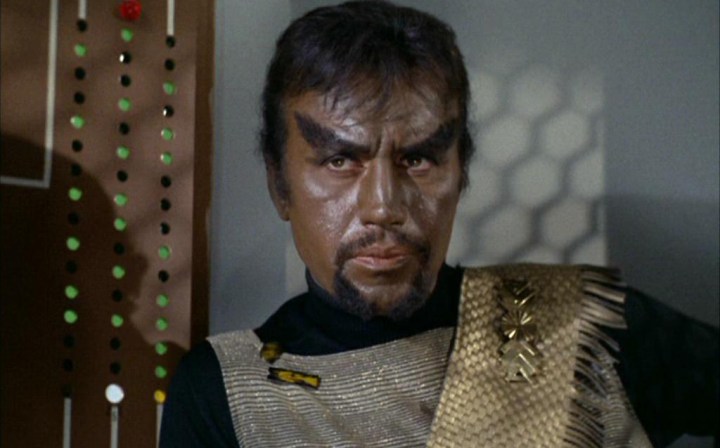
The latter two having been Klingons in The Next Generation and in the Original Series, respectively. The “bonehead” Klingons became the norm from 1979 onward. It was the bonehead Klingon design that Gene Roddenberry himself approved.
With Star Trek Discovery, that all changed and now we have the Klingon pictured in the top most image. The difficulty is, “Where did this Klingon come from?”. It doesn’t match the canon approved and used throughout the 80s and 90s and even into the 00s with Star Trek Enterprise.
Now, Discovery appears and gives us this odd designed Klingon that has never been used in any previous series ever. It doesn’t much resemble a Klingon, even though they’re speaking Klingon and have a kind of “bonehead”. The question remains, what happened? Is this design canon or not? Before I answer that question, let’s talk about how this Intellectual Property has been fractured between studios.
Paramount versus CBS
When Roddenberry was alive and even up until not too long ago, Paramount was the sole rights holder of Star Trek. However, when Viacom bought and then split Paramount and CBS, this all changed who owned what and it fractured the Star Trek franchise in unnecessary and inexplicable ways.
A little history. In 1994, Paramount was purchased by Viacom. In 1999, Viacom agreed to purchase CBS. This means that from 1999 to 2005, Viacom owned both Paramount and CBS. In 2005, Viacom’s then board of directors voted to split Paramount and CBS into separate companies for better “shareholder value”.
When the companies split, CBS was given the rights to the Star Trek TV series universe and Paramount was given the rights to the Star Trek motion picture universe. Ultimately, this now gives two separate entertainment companies the rights to create and make up canon in their respective universes. This is ultimately where the fracturing of the intellectual property comes into play and why Discovery is such a mess when it comes to producing its series based on canon.
This split also means that the canon is now split between two separate companies. A franchise disaster, to be honest.
Motion Pictures versus TV series
The TV series includes Star Trek The Original Series, The Animated Series, The Next Generation, Deep Space Nine, Voyager and Enterprise. These properties up to Enterprise existed at the time of the split. Discovery did not exist then.
The original cast motion pictures include Star Trek The Motion Picture, II, III, IV, V and VI. The Next Generation cast pictures include Generations, First Contact, Insurrection and Nemesis. The Kelvin time line pictures (i.e., J.J. Abrams) include Star Trek (2009 Reboot), Into Darkness, Beyond and there is a possibility of a fourth film which is in limbo as of this article.
This means that CBS owns the rights to the above TV series properties (in addition to Discovery) and Paramount owns the rights to the above Motion Picture properties. It also means that CBS can now ignore motion picture canon and Paramount can ignore TV series canon when producing future works.
Clearly, this is how CBS is proceeding with its latest TV series, Star Trek Discovery. One can argue, the “bonehead” Klingons appear in the TV series. They do. And, to a degree, the design above does appear somewhat like a bonehead Klingon, except without hair, much darker skin, odd shaped facial features and odd shaped outfits. However, no Klingon has ever appeared on screen in any way (TV or Movie) that looks like this Discovery Klingon. This Klingon type is actually the first of its kind… which means, it is NOT Roddenberry canon.
The Trouble with Tribbles
Or, more specifically, the trouble with double ownership of the Star Trek franchise means there is no effective steward maintaining canon. There can’t be. There are two separate companies competing for your almighty Star Trek dollar. One company can make shit up and the other company doesn’t have to use it. This is effectively what CBS is doing… making shit up as they go along because they don’t have to answer to canon placed into the motion pictures. Even then, they’re not following canon established by previous Star Trek TV series either. After all, Star Trek Discovery is clearly set at the same time as The Original Series.
The TV series timeline goes something like (timeline courtesy of Memory Alpha):
2151-2155 -- Star Trek Enterprise (Season 1 thru 4)
2254-2254 -- Star Trek The Original Series: "The Cage" (Episode)
2256-2257 -- Star Trek Discovery (Season 1)
2265-2269 -- Star Trek The Original Series (Seasons 1, 2 and 3)
2269-2270 -- Star Trek The Animated Series (Seasons 1 and 2)
2364-2370 -- Star Trek The Next Generation (Seasons 1 thru 7)
2369-2375 -- Star Trek Deep Space Nine (Season 1 thru 7)
2369-2370 -- Star Trek Enterprise: "These are the Voyages" (Episode)
2371-2378 -- Star Trek Voyager (Seasons 1 thru 7)
As you can see, Star Trek Discovery is actually set BEFORE Star Trek The Original Series, before The Animated Series and before any other series with the exception of one Star Trek TOS episode and Star Trek Enterprise which come before Discovery.
 Basically, the canon that Star Trek Discovery must adhere to is what is seen in Star Trek Enterprise and in one episode of The Original Series (and, of course, anything in later TV series that corroborate Enterprise and TOS). Enterprise and this one episode of Star Trek TOS are both enough to set canon as to how Discovery should run. Discovery also occurs 9 years prior to The Original Series. However, The Original Series only showed the non-bonehead Klingons while Enterprise showed us both styles of Klingons. This means that both Klingon types already existed in the Roddenberry universe when Star Trek TOS existed. This also means that both Klingon types exist at the time when Discovery is operating. One could argue that Enterprise broke canon by showing us the bonehead Klingons that we wouldn’t see until Star Trek The Motion Picture in 1979 (picture to the left). However, Discovery’s Klingon type comes out of nowhere and goes back into nowhere because this Klingon type won’t exist after Discovery ends.
 However, in the Enterprise episode “Affliction” in the 4th season, I guess this episode is supposed to explain the difference between the bonehead and non-bonehead Klingons and the reasons why the non-bonehead Klingons appear in The Original Series. I think it was a cheap cop-out episode, but hey, at least they held true to the TMP and TOS Klingon designs… which is more than I can say for Discovery.
Discovery, on the other hand, doesn’t hold true to either design. They made their own Klingon canon. They made a Klingon design that has never exited before or after… not in ENT, TOS, TNG, DS9, TAS or Voyager. They’re clearly, “making shit up”.
Additionally, there’s the Spore Drive. Yet again, Discovery is found “making shit up”. This drive type has never been discussed either before or since, yet Discovery has introduced this propulsion system as some experimental thing that only existed during Discovery’s existence. I’m sorry, if the spore drive were a real thing in the Roddenberry universe, there would have been talks of it both in Star Trek TOS and likely Star Trek Enterprise and even in TNG, DS9 and Voyager (it would have at least come up, particularly in Voyager when looking for a way home). That no information was ever discussed regarding this drive system, Discovery is simply creating things out of thin air to make their series more watchable (and make more money). However, there may be another reason… so, keep reading.
Because “The Cage” episode shows us that the Federation chain of command already exists in a formalized and hierarchical command structured way, having Discovery show its characters as chaotic, insubordinate and outright informal makes me believe that the Discovery creators had no intention of following established Roddenberry “Federation” canon. In fact, I will go so far as to say that Star Trek Discovery is actually operating in its own universe. Perhaps it exists in the Kelvin universe along side the reboot Star Trek motion pictures, but I believe it lives in its own new CBS universe. But, Discovery does not live in the same universe as the Roddenberry universe TV shows do.
CBS Universe
Because Star Trek Discovery lives in its own universe, the creators of Discovery can literally make up anything they wish and it will be canon. It’s canon because the show isn’t set in the Roddenberry universe. It’s set in a CBS offshoot universe where everything can and does exist if the creators want it to. In this universe, weird shaped Klingons, spore drives and insubordination are all accepted because in this universe it’s all there.
In the Roddenberry universe, Discovery never existed and couldn’t exist. The spore drive doesn’t exist. The weird Discovery Klingons don’t exist. The F-bombs don’t exist. The nonsensical highly sophisticated NCC-1031 starship doesn’t exist with its operating panel designs that don’t exist on the Federation’s flagship Enterprise NCC-1701 just 9 years later.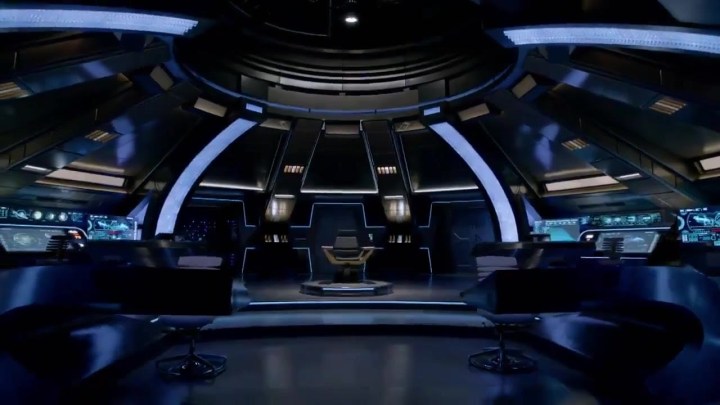 Discovery living in a CBS Universe is the only explanation that can possibly work for this TV show. When a show runner says it’s canon, well it is. But, it’s only canon if you consider that Discovery is a show created in an offshoot CBS universe that has never before existed. It is not canon were it to exist in the Roddenberry universe. Obviously, the show creators aren’t going to make this distinction because they don’t want viewers to understand the difference between the CBS universe and the Roddenberry universe. They just want the viewer to believe it somehow magically exists in the Roddenberry universe when this show clearly cannot.
It’s clear, Discovery does not exist in the Roddenberry universe. It can’t. That universe ended with the close of Star Trek Enterprise. It remains to be seen if the new Patrick Stewart series will be set in Discovery’s CBS universe or if CBS will try to set that series in the Roddenberry universe. My guess is that CBS may want to attempt some type of crossover episodes between Discovery and the as yet unnamed Patrick Stewart series. However, that would be a feat considering that Discovery occurs 98 years earlier from the original TNG series (see timeline). Considering Patrick Stewart’s age now, they’ll have to age forward the new series to have it make sense with Stewart’s current age… which means this new series must occur over 100 years in Discovery’s future. It will then be difficult to have a crossover without time travel. However, they can engineer dual episodes which causes something to happen in Discovery that impacts the Picard series 100 years later. This is akin to a crossover and would establish both series being in the same universe; the CBS universe.
Personally, I’d rather the two series remain entirely independent. No crossovers. No incidental references to prior events in Discovery. This means that Discovery can officially be announced as operating in its own CBS universe and that the Picard series will be set in the Roddenberry universe and no crossovers will be possible.
Kelvin Universe
When J.J. Abrams became part of Paramount’s efforts to reboot the Star Trek movie franchise, he decided to create an entirely new and separate universe. In that effort, he had elder Spock (from the Roddenberry universe) fall through a time hole and land in an alternate universe much earlier in its unfolding life. Elder Spock then meets up with his much younger alternate version of Spock along with younger versions of Kirk, Sulu, Chekov, Uhura, Bones and so on. Basically, these alternate versions of these main characters set the tone of this alternate universe’s ‘Five Year Mission’, set in an alternate Enterprise, set in an alternate timeline known as Kelvin. It’s named after the USS Kelvin, the ship which fell through the time hole with elder Spock. Why is this important?
It’s important to understand this Kelvin alternate universe idea because it appears CBS has done the same exact thing with the Discovery TV series. Instead of trying to disturb and hold true to the Roddenberry universe canon, it’s far easier to create a brand new offshoot universe set in its own time line. This then means the writers can write anything they wish, on any ship they wish, with any technology they wish. Because Paramount has already established their own playground universe for the movies to live in, it appears CBS is also running with this idea and has done the exact same thing with Discovery. Even the name ‘Discovery’ hints at the existence of this alternate universe.
In fact, I believe that this alternate universe will reveal itself and will likely become a big part of Discovery’s future stories. I’m assuming that the writers are holding this point back until just the exact moment when they can reveal a character like Picar… er Spock falling through a time distortion and we can clearly see that Discovery is not set in the Roddenberry universe. It makes for a good plot twist, don’t you think? Holding this point back allows the Discovery writers to craft and unfold an entire season long story arc about this new CBS universe (or whatever name they decide to give it). For now, I’m calling it the CBS universe, but it will likely be named differently after someone from the Roddenberry universe falls into it.
I’d suspect it might be a TNG character who falls through this time. Perhaps Q created this universe? I’d steer clear of Q as using this character always feels like a cop-out. Because Wesley had become a kind of universe traveler, I’d like to see him return a bit older so we can finish out his story arc that never really closed properly in TNG. I might also like to see Kess show up as she also didn’t get proper closure in Voyager. Seeing a new Dax might also be a good way to handle this reveal also. Dax’s immense knowledge and age would allow for some very good stories. Even Guinan might be a good choice to land in Discovery’s alternate universe.
For this reason, I believe that Discovery’s writers and creators are holding back on this idea, but will eventually reveal it. For this reason, the show runners can say that Discovery is canon, because it is, in its own universe. They just haven’t revealed this alternate universe point in the TV series yet. They can string the fans along making them think it’s in the Roddenberry universe when they haven’t yet unveiled the story. It’s still too early in this TV series to reveal a story point this big.
Canon or not?
Because I surmise that Discovery is set in its own CBS universe, which is entirely separate from the Roddenberry and the Kelvin universes, Discovery can be its own bubble show and do whatever it wants with its stories. It doesn’t need to follow any Trek lore or, indeed, anything to do with Trek. It can feel free to “make shit up” however it wishes. I’m fine with that as long as the show runners finally fess up to this. As it is now, trying to shoehorn Discovery into the Roddenberry universe where it doesn’t belong is just stupid.
To answer this Blog’s ultimate question, Discovery is not canon for Roddenberry’s universe. It is canon for its newly created CBS universe. It’s possible that Discovery exists in the Kelvin universe (doubtful) where it may or may not be canon. The difficulty is that, as I said above, the motion picture canon is operated by Paramount. The TV series canon is operated by CBS. This means that never the twain shall meet. This fracturing of intellectual property rights was a horribly bad idea for Star Trek. It has now left this franchise with a fracture right down the middle of its canon. Show producers for Discovery can now claim canon when what they’re doing clearly isn’t canon and cannot possibly be unless the show is set in its own CBS universe (which the CBS universe ultimately has no canon except for what Discovery has created so far).
↩︎
Should I beta test Fallout 76?
 While I know that beta testing for Fallout 76 is already underway, let’s explore what it means to beta test a game and whether or not you should participate.
Fallout 76
Before I get into the nitty gritty details of beta testing, let’s talk about Fallout 76. Fallout 76, like The Elder Scrolls Online before it, is a massively multiplayer online role playing game (MMORPG). Like The Elder Scrolls Online which offered an Elder Scrolls themed universe, Fallout 76 will offer a Fallout themed universe in an online landscape.
How the game ultimately releases is yet to be determine, but a beta test gives you a solid taste of how it will all work. Personally, I didn’t like The Elder Scrolls Online much. While it had the flavor and flair of an Elder Scrolls game entry, the whole thing felt hollow and unconnected to the franchise. It also meant that Bethesda spent some very valuable time building this online game when they could have been building the next installment of the Elder Scrolls.
It is as yet undetermined how these online games play into the canon of The Elder Scrolls or, in Fallout 76’s case, in the Fallout universe. Personally, I see them as offshoots with only a distant connection. For example, The Elder Scrolls Online felt Elder Scrollsy, but without the deep solid connections and stories that go with building that universe. Instead, it was merely a multiplayer playground that felt like The Elder Scrolls in theme, but everything else was just fluff. I’m deeply concerned that we’ll get this same treatment from Fallout 76.
The Problem with Online Games
Online games have, in recent years, gotten a bad rap… and for good reason. The reason that this is so is because the game developers focus on the inclusion of silly things like character emoting and taking selfies. While these are fun little inclusions, they are by no means intrinsic to the fundamental game play of an actual game.
Games should be about the story that unfolds… about why your character is there and how your character is important in that universe. When the game expands to include an online component, now it’s perhaps tens of thousands of people all on the server at the same time. So, how can each of these characters be important to that universe? The answer is, they can’t.
Having many characters all running around doing the “same” things in the universe all being told by the game that they are “the most important thing” to the survival of that universe is just ludicrous.
This leads to the “importance syndrome” which is present in any MMORPG. As a developer, you either acknowledge the importance syndrome and avoid it by producing a shallow multiplayer experience that entirely avoids player importance (i.e., Fortnite, Overwatch, Destiny, etc) or you make everyone important each in their own game (i.e., The Elder Scrolls Online). Basically, the game is either a bunch of people running around doing nothing important at all and simply trying to survive whatever match battles have been set up (boring and repetitive) or the game treats each user as if they are individually important in their own single player game, except there are a bunch of other users online, all doing the same exact thing.
The Elder Scrolls Online fell into the latter camp which made the game weird and disconnected, to say the least. It also made the game feel less like an Elder Scrolls game and more like any cheap and cheesy iPad knockoff game you can download for free… except you’ve paid $60 + DLC + online fees for it.
I’ve played other MMORPG games similar to The Elder Scrolls Online including Defiance. In fact, Defiance played so much like The Elder Scrolls Online, I could swear that Bethesda simply took Defiance’s MMORPG engine and adapted it to The Elder Scrolls Online.
Environments and Users
The secondary problem is how to deal with online users. Both in the Elder Scrolls Online and Defiance, there were areas that included player versus environment (PvE). PvE environments mean that players cannot attack other players. Only NPCs can attack your player or your character can die by the environment (i.e., falling onto spikes). There were also some areas of the online map that were player versus player (PvP). PvP means any online player can attack any other online player in any way they wish.
In The Elder Scrolls Online, the PvP area was Cyrodiil, which was unfortunate for ESO. The PvP made this territory mostly a dead zone for the game. Even though there were a few caves in the area and some exploring you could do, you simply couldn’t go dungeon diving there because as soon as you tried, some player would show up and kill your player. Yes, the NPCs and AI enemies could also show up and kill your player, but so could online players.
The difficulty with Cyrodiil was that if another player killed your player in the PvP area, that player death was treated entirely differently than if they died by the environment. If another player killed your character, you had to respawn at a fort, which would force your character to respawn perhaps half a map away from where you presently were. If your character died by the environment or another NPC, you could respawn in the same location where your character died. This different treatment in handling the character death was frustrating, to say the least.
With Fallout 76, I’m unsure how all of this will work, but it’s likely that Bethesda will adopt a similar strategy from what they learned in building The Elder Scrolls Online. This likely means both PvE areas and PvP area(s). Note that ESO only had one PvP zone, but had many PvE zones. This made questing easier in the PvE zones, but also caused the “importance syndrome”. This syndrome doesn’t exist in single player offline games, but is omnipresent in MMORPGs.
MMORPGs and Characters
The difficulty with MMORPGs is that they’re primarily just clients of a server based environment. The client might be a heavier client that includes handling rendering character and environment graphics, but it is still nonetheless a client. This means that to use an MMORPG, you must log into the server to play. When you login, your character information, bank account, level ups, weapons, armor and so on are kept on the server.
This means that you can’t save off your character information. It also means you can’t mod your game or mod your character through game mods. Online games are strict about how you can change or manage your game and your character. In fact, these systems are so strict that if a new version of the game comes out, you must first download and install the game before they’ll let you back onto the server… unlike standalone games that let you play the game even if networking components are disabled. This means that you cannot play an MMORPG until your client is most current, which could mean 50GB and hours later.
This means that you’ll need an always on Internet connection to play Fallout 76 and you’ll need to be able to handle very large client downloads (even if you own the game disc).
Beta Testing
Many game producers like to offer, particularly if it’s a server based MMORPG, the chance for players to beta test their new game. Most online games allow for this.
However, I refuse to do this for game developers. They have a team they’ve hired to beta test their environments, quests and landscapes. I just don’t see any benefit for my player to get early access to their game environment. Sometimes, characters you build and grow in a beta won’t even carry over into the released game. This means that whatever loot you have found and leveling you may have done may be lost when release day comes. For that early access, the developer will also expect you to submit bug reports. I won’t do that for them. I also don’t want to feel obligated to do so.
Bethesda stands to make millions of dollars off of this game. Yet, they’re asking me to log into their game early, potentially endure huge bugs preventing quest progress, potentially lose my character and all of its progress and also spend time submitting bug reports? Then, spend $60 to buy the game when it arrives? Then, rebuild my character again from scratch?
No, I don’t think so. I’m not about to spend $60 for the privilege of spending my time running into bugs and submitting bug reports for that game. You, the game developer, stand to make millions from this game. So, hire people to beta test it for you. Or, give beta testers free copies of the game in compensation for the work they’re doing for you.
If you’re a gamer thinking of participating in beta testing, you should think twice. Not only are you helping Bethesda to make millions of dollars, you’re not going to see a dime of that money and you’re doing that work for free. In addition, you’re still going to be expected to spend $60 + DLC costs to participate in the final released game. No, I won’t do that. If I’m doing work for you, you should pay me as a contractor. How you pay me for that work is entirely up to you, but the minimum payment should consist of a free copy of the game. You can tie that payment to work efforts if you like.
For example, for each report submitted and verified as a new bug, the beta tester will get $5 in credit towards the cost of the game up to the full price of the game. This encourages beta testers to actually submit useful bug reports (i.e., duplicates or useless reports won’t count). This also means you earn your game as you report valid and useful bugs. It also means that you won’t have to pay for the game if you create enough useful, genuine reports.
Unfortunately, none of these game developers offer such incentive programs and they simply expect gamers to do it “generously” and “out of the kindness of their hearts”. No, I’m not doing that for you for free. Pay me or I’ll wait until the game is released.
Should I Participate in Beta Tests?
As a gamer, this is why you should not participate in beta tests. Just say no to them. If enough gamers say no and fail to participate in beta releases, this will force game developers to encourage gamers to participate with incentive programs such as what I suggest above.
Unfortunately, there are far too many unwitting gamers who are more than willing to see the environment early without thinking through the ramifications of what they are doing. For all of the above reasons, this is why you should NEVER participate (and this is why I do not participate) in any high dollar game beta tests.
↩︎
What does Reset Network Settings in iOS do?
 If you’ve experienced networking issues with your iPad or iPhone, you may have called Apple for support. Many times they recommend that you “Reset Network Settings.” But, what exactly does this operation do? Let’s explore.
What’s included in this Reset Network Settings process?
This is a complicated answer and how it affects you depends on several factors. What this process does, in addition to resetting a bunch of locally stored device settings on the iOS device itself, it also deletes network settings stored in your iCloud Keychain. If you have only an iPhone and own no other devices (i.e., no iPads, no Macs, no iPods, no Apple Watches, no Apple TVs, nothing else), resetting these settings will likely work just fine for you.
However, if you own or use multiple Apple devices and these devices participate in iCloud Keychain, things can get complicated… very, very complicated. The “or use” statement is the one that makes this process much more complicated. If you have a work Mac computer that’s hooked up to your Apple ID and is participating in iCloud Keychain, performing “Reset Network Settings” on an iPhone can become problematic for your work computer. How? First, let’s find out more about iCloud Keychain.
iCloud Keychain
What is iCloud Keychain? This is an iCloud network service that stores sensitive passwords and credit card information in a secure way. This iCloud service also lets multiple iOS, MacOS, tvOS and WatchOS devices participate and use this data as part of your Apple ID. If you own multiple Apple devices, they can all share and use this same set of sensitive data without having to enter it individually on each device (convenience).
Your iCloud Keychain is specific to your Apple ID which is protected by your Apple ID login and password. The iCloud Keychain was created as both a convenience (all devices can share data), but also secure in that this data is protected behind your Apple ID credentials.
When you “Reset Network Settings” on any iOS (or possibly even MacOS, tvOS or even WatchOS) device and your devices participate in iCloud Keychain synchronization, a “Reset Network Settings” can cause networking issues for all of your devices. Why?
The iCloud Keychain stores WiFi access point names (SSIDs) and passwords. Not only that, it also stores credit cards that you might use with Apple Pay (this becomes important later). When you run “Reset Network Settings” on any iOS device, it will wipe all access point SSIDs and Passwords from your iCloud Keychain.
You might be asking, “Why is this a problem?” This will become a problem for all devices participating in iCloud Keychain. All of your Apple devices share in using this SSID and password data from your iCloud Keychain. This important to understand. Because of this level of sharing, it only takes one device to learn of an access point for all Apple devices to use that network when in range. For example, if you bring your Mac to a convention and log it into an access point at the convention, your Mac logs this access point data to the iCloud Keychain. Your phone will immediately pick up on this new access point addition and also connect to that access point using the newly stored password as soon as it finds it… automagically.
Likewise, it only takes one device to wipe an access point and all devices lose access to it. It’s a single shared location for this networking data. One device adds it, all can use it. One device deletes it, all devices forget about it. Is this a good idea? You decide.
Reset Network Settings and Multiple Devices
Here’s where things get complicated with iCloud Keychain. If you are having network troubles with your iPhone, you might be requested by Apple Support to “Reset Network Settings”.
If all of your MacOS, tvOS, iOS and WatchOS devices participate in iCloud Keychain and you actually perform “Reset Network Settings” on your iPhone, it will wipe not only the current access point, but every access point that every device is aware of. It returns your network settings on iOS (and in iCloud Keychain) to a clean slate to start it over. It does this to try and clear out any problematic network settings. It also deletes known access points from the iCloud Keychain. This wipes access to this data for ALL of your Apple devices, not just the one you performed “Reset Network Settings” on.
What this means is that every device participating in iCloud Keychain will lose access to ALL access points that had previously been known because they have been deleted as part of “Reset Network Settings”. If your iOS device knew of all access points, they will ALL be wiped from iCloud Keychain. This means that every device will immediately lose access to its current access point. It also means that every Apple device you own must now be touched to reselect a new access point requiring you to reenter the password for that access point… On. Every. Apple. Device!
For example, I own two Macs, two iPads, three iPhones and two iPod Touches. A “Reset Network Settings” from a single device means I will need to go and manually touch 9 different devices to reconnect them to WiFi after a single iOS device performs a “Reset Network Settings” operation. It requires this because every device has lost access to even its home network which means no access to iCloud Keychain… which means, touching every device to get them back onto a WiFi network.
For me, it was even more complicated than the mere hassle of setting up WiFi on every device. It wiped known access points created by my employer on my Mac which were put into my iCloud Keychain… access points where I didn’t know the name or passwords. Thankfully, I was able to recover this data from another co-worker’s Mac and get back onto my corporate network. Otherwise, I’d have been down at my IT team’s desk asking for them to fix my Mac… and all as a result of performing “Reset Network Settings” on my iPhone.
Horrible, horrible design.
Avoiding This Problem
Can this problem be avoided? Possibly. If you turn off iCloud Keychain on your iOS device BEFORE you perform “Reset Network Settings”, it may avoid wiping the data in the iCloud Keychain. I say “may” because after you take the device out of iCloud Keychain, then reset the network settings and then rejoin it to iCloud Keychain, it may propagate the differences at the time the device rejoins. Hopefully, not. Hopefully, the newly reset device will ONLY download the existing data in the iCloud Keychain without making any modifications to it. With Apple, you never know.
The secondary issue is that removing your iPhone from iCloud Keychain may remove stored credit cards. This may mean reentry of all of your credit cards after you have “Reset Network Settings” and after you have rejoined your device to the iCloud Keychain. This may also depend on iOS version. I just tried removing iCloud Keychain, then performed “Reset Network Settings”, then rejoined iCloud Keychain and all my cards are still intact on the device. If you’re on iOS 11 or iOS 10, your results may vary.
Why is this a problem?
First off, I don’t want to have to go touch many devices after a single device reset. That’s just stupid. Second, removing the device from iCloud Keychain to perform “Reset Network Settings” will wipe all of your current credit card data from the device and likely from the iCloud Keychain. Third, Apple needs to fix their shit to allow more granularity in what it wipes with “Reset Network Settings”. In fact, it shouldn’t even touch iCloud Keychain data. It should wipe only locally stored information on the device and then see if that works. If that doesn’t work, then wipe the data on iCloud Keychain, but only as a LAST RESORT!
I understand that Apple seems to think that wiping all network data (including what’s in iCloud Keychain) might solve “whatever the problem is”, but that’s just a sledgehammer. If what’s stored in iCloud Keychain were a problem, my 8 other devices should be experiencing the same issue as well. It’s basically, stupid Apple troubleshooting logic.
As I mentioned, disabling iCloud Keychain may unregister your credit cards from your device (and from the Keychain). I know this was the case in iOS 11, but in iOS 12 it seems to not require this any longer. I definitely don’t want to have to rescan all of my credit cards again onto my iOS device to restore them. It takes at least 30 minutes to do this with the number of cards I have to input. With the Apple Watch, this process is horribly unreliable and lengthy. It can sometimes take over an hour diddling with Bluetooth timeouts and silly unreliability problems to finally get all of my cards back onto the Watch (in addition to the iPhone).
Such time wasting problems over a single troubleshooting thing that should be extremely straightforward and easy. Horrible, horrible design.
Representatives and Suggestions
If you’re talking to an Apple representative over the phone about a networking problem and they suggest for you to “Reset Network Settings”, you should refer them to this article so they can better understand what it is they are asking you to do.
Neither Apple Support, nor will any of your phone carrier support teams warn you of this iCloud Keychain problem when requesting “Reset Network Settings.” They will ask you to perform this step as though it’s some simple little step. It’s not!
Whenever Apple asks me to perform the “Reset Network Settings” troubleshooting step, I always decline citing this exact problem. Perhaps someone at Apple will finally wake up and fix this issue once and for all. Until then, you should always question Apple’s troubleshooting methods before blindly following them.
How to disable iCloud Keychain
To disable the iCloud Keychain on your iOS device, go to …
Settings=>Your Name=>iCloud=>Keychain
… and toggle it off. Your Name is actually your name. It is located at the very top of settings. Once toggled off, it will likely unregister your credit cards stored on your iOS device, but I guess it’s a small price to pay if you really need to reset these network settings to your restore networking to 100% functionality. Of course, there’s no guarantee that “Reset Network Settings” or jumping through any of these hoops will solve this problem. There’s also the possibility that “Reset Network Settings” could still screw with your iCloud Keychain even if you disable it before performing “Reset Network Settings”.
With Apple, your mileage may vary.
How to Reset Network Settings
Settings=>General=>Reset=>Reset Network Settings
If you own multiple Apple devices and they are using iCloud Keychain, don’t perform this step first. Instead, disable iCloud Keychain first (above), then perform this step. If you only own one Apple device, there is no need to disable iCloud Keychain.
Network Problems and Quick Fixes
In my most recent case of being prompted to “Reset Network Settings”, my phone’s Wi-Fi calling feature simply stopped working. I first called T-Mobile and they referred me to “Reset Network Settings” (based on Apple’s documentation) and they also referred me to Apple Support. Because I already knew about the iCloud Keychain problem from a previous inadvertent wipe of all of my network access points, this time I opted to turn off iCloud Keychain before attempting “Reset Network Settings.” Suffice it to say that “Reset Network Settings” didn’t do a damned thing, as I full well expected.
In fact, I tried many options prior to “Reset Network Settings”. These included:
- Disabling and enabling Wi-Fi calling
- Joining a different access point
- Restarting my Comcast modem
- Restarting my network router
- Restarting my Apple Airport
- Restarting my phone
- Hard restarting my phone
- Disabling and enabling Wi-Fi
- Dumping Sysdiagnose logs and digging through them
- Killing and restarting the Phone app
I tried all of the above and nothing resolved the issue. No, not even “Reset Network Settings”.
Then it dawned on me. I had recalled reading a year or two back that sometimes Airplane Mode can resolve many network connectivity issues. I’m not sure exactly what Airplane Mode actually does under the hood in detail, but it seems to modify and/or reset a bunch of config files after disabling all networking including Cellular, Wi-Fi, Bluetooth and anything else that performs networking.
Once Airplane Mode is enabled, allow the phone to sit for 30 seconds to make sure all components recognized Airplane Mode. Then, disable Airplane Mode. Almost immediately, the phone’s menu bar now shows ‘T-Mobile Wi-Fi’. Wow, it actually works.
If you’re having networking problems on your iPhone, I strongly suggest enabling then disabling Airplane Mode instead of using the very sledgehammery “Reset Network Settings”. At least, it’s worth a try before resorting to disabling iCloud Keychain followed by “Reset Network Settings”.
If you’re having a specific problem with Bluetooth or WiFi, then I suggest taking a step back and trying this next idea. For example, if Bluetooth is having troubles, turn off Bluetooth, reboot the phone, then turn it back on after a reboot. This troubleshooting step is somewhat less reliable than using Airplane mode. Airplane mode doesn’t necessarily require a reboot also and works more often than this single device troubleshooting.
iOS 11 vs 12
The first time I experienced my issue with the iCloud Keychain and “Reset Network Settings”, I was using iOS 11. I’m firmly of, “Once Bitten, Twice Shy.” This means, I haven’t tested this on iOS 12 to see if Apple has changed their ways. It’s very doubtful they have and very likely this problem still persists even in the most current version of iOS.
iCloud Keychain and Passwords
One last caveat about the iCloud Keychain. Ever more and more credentials and passwords are being stored in the iCloud keychain, including Safari’s credentials, possibly even other browsers and even app credentials. As we become more and more dependent on using TouchID or FaceID to unlock access to our favorite apps and sites, the credentials behind these unlocks are stored in the iCloud Keychain. If you use ‘Reset Network Settings’ without first removing the phone from the iCloud Keychain, you may find all of your browser and app passwords have also been deleted.
This then means having to go into all of your favorite websites in Safari and phone apps and reentering usernames and passwords all over again. If you don’t remember these passwords, you may end up having to reset a bunch of them. Be very careful when using ‘Reset Network Settings’. This feature doesn’t yet warn you of these dangers and it also doesn’t offer to remove the device from the iCloud Keychain before proceeding.
This may go even deeper. As stated above, iOS apps also store their user credentials in the iCloud Keychain. These apps may also require reentering credentials after performing ‘Reset Network Settings’.
In fact, even Apple phone reps don’t fully understand the dangers here. They tell you that you need to ‘Reset Network Settings’, but then fail to warn you of the consequences of not removing your device from the iCloud Keychain first. Since this is a critical step, Apple needs to not only warn you of the dangers of not disabling iCloud Keychain, the ‘Reset Network Settings’ mechanism needs to suggest the user disable the iCloud keychain before proceeding.
Beware!
Design Rant Mode On
Apple seems to be under the delusion that we’re still living in a one-device-ownership-world. We’re not. We now own Macs, Apple TVs, Watches, iPhones and iPads that all rely on their multi-device services, such as iCloud Keychain. To design a feature that can wipe the entire data shared by multiple devices is not only the very definition of shit software, it’s also the very definition of a shit company that hasn’t the first clue of what the hell they’ve actually built.
If this article is helpful to you, please leave a comment below.
↩︎
How to iCloud unlock an iPad or iPhone?
 A lot of people seem to be asking this question. So, let’s explore if there are any solutions to the iCloud unlock problem.
Apple’s iCloud Lock: What is it?
Let’s examine what exactly is an iCloud lock. When you use an iPhone or iPad, a big part of that experience is using iCloud. You may not even know it. You may not know how much iCloud you are actually using (which is how Apple likes it) as it is heavily integrated into every Apple device. The iCloud service uses your Apple ID to gain access. Your Apple ID consists of your username (an email address) and a password. You can enable extended security features like two factor authentication, but for simplicity, I will discuss devices using only a standard login ID and password… nothing fancy.
iCloud is Apple’s cloud network services layer that support service synchronization between devices like calendaring, email contacts, phone data, iMessage, iCloud Drive, Apple Music, iTunes Playlists, etc. As long as your Apple ID remains logged into these services, you will have access to the same data across all of your devices. Note, your devices don’t have to use iCloud at all. You can disable it and not use any of it. However, Apple makes it terribly convenient to use iCloud’s services including such features as Find my iPhone, which allows you to lock or erase your iPhone if it’s ever lost or stolen.
One feature that automatically comes along for the ride when using iCloud services is an iCloud lock. If you have ever logged your iPhone or iPad into iCloud, your device is now locked to your Apple ID. This means that if it’s ever lost or stolen, no one can use your device because it is locked to your iCloud Apple ID and locked to Find my iPhone for that user (which I believe is now enabled by default upon logging into iCloud).
This also means that any recipient of such an iCloud locked device cannot use that device as their own without first disassociating that device from the previous Apple ID. This lock type is known as an iCloud lock. This type of Apple lock is separate from a phone carrier lock which limits with which carriers a phone can be used. Don’t confuse or conflate the two.
I should further qualify what “use your device” actually means after an iCloud lock is in place. A thief cannot clean off your device and then log it into their own Apple ID and use the phone for themselves. Because the phone is iCloud locked to your account, it’s locked to your account forever (or until you manually disassociate it). This means that unless you explicitly remove the association between your Apple ID and that specific device, no one can use that device again on Apple’s network. The best a would-be thief can do with your stolen phone is open it up and break it down for limited parts. Or, they can sell the iCloud locked device to an unsuspecting buyer before the buyer has a chance to notice that it’s iCloud locked.
Buying Used Devices
If you’re thinking of buying a used iPhone from an individual or any online business who is not Apple and because the iCloud lock is an implicit and automatic feature enabled simply by using iCloud services, you will always need to ask any seller if the device is iCloud unlocked before you pay. Or, more specifically, you will need to ask if the previous owner of the device has logged out and removed the device from Find my iPhone services and all other iCloud and Apple ID services. If this action has not been performed, then the device will remain iCloud locked to that specific Apple ID. You should also avoid the purchase and look for a reputable seller.
What this means to you as a would-be buyer of used Apple product is that you need to check for this problem immediately before you walk away from the seller. If the battery on the device is dead, walk away from the sale. If you’re buying a device sight unseen over the Internet, you should be extremely wary before clicking ‘Submit’. In fact, I’d recommend not buying used Apple equipment from eBay or Craigslist because of how easy it is to buy bricked equipment and lose your money. Anything you buy from Apple shouldn’t be a problem. Anything you buy from a random third party, particularly if they’re in China, might be a scam.
Can iCloud Lock be Removed?
Technically yes, but none of the solutions are terribly easy or in some cases practical. Here is a possible list of solutions:
1) This one requires technical skills, equipment and repair of the device. With this solution, you must take the device apart, unsolder a flash RAM chip, reflash it with a new serial number, then reassemble the unit.
Pros: This will fix the iPad or iPhone and allow it to work
Cons: May not work forever if Apple notices the faked and changed serial number. If the soldering job was performed poorly, the device hardware could fail.
Let’s watch a video of this one in action:
2) Ask the original owner of the device, if you know who they are, to disassociate the iDevice from their account. This will unlock it.
Pros: Makes the device 100% functional. No soldering.
Cons: Requires knowing the original owner and asking them to disassociate the device.
3) Contact Apple with your original purchase receipt and give Apple all of the necessary information from the device. Ask them to remove the iCloud lock. They can iCloud unlock the device if they so choose and if they deem your device purchase as valid.
Pros: Makes the device 100% functional.
Cons: Unlocking Apple devices through Apple Support can be difficult, if not impossible. Your mileage may vary.
4) Replace the logic board in the iPad / iPhone with one from another. Again, this one requires repair knowledge, tools, experience and necessary parts.
Pros: May restore most functionality to the device.
Cons: Certain features, like the touch ID button and other internal systems may not work 100% after a logic board replacement.
As you can see, none of these are particularly easy, but none are all that impossible either. If you’re not comfortable cracking open your gear, you might need to ask a repair center if they can do any of this for you. However, reflashing a new serial number might raise eyebrows at some repair centers with the assumption that your device is stolen. Be careful when asking a repair center to perform #1 above for you.
iCloud Locking
It seems that the reason the iCloud Lock came into existence is to thwart thieves. Unfortunately, it doesn’t actually solve that problem. Instead, it creates a whole new set of consumer problems. Now, not only are would-be thieves stealing iPads still, they’re selling these devices iCloud locked to unsuspecting buyers and scamming them out of their money. The thieves don’t care. The only thing this feature does is screw used device consumers out of their money.
Thieves
That Apple thought they could stop thievery by implementing the iCloud lock shows just how idealistically naïve Apple’s technical team really is. Instead, they created a whole new scamming market for iCloud locked Apple devices. In fact, the whole reason this article exists is to explain this problem.
For the former owner of an iPad which was stolen, there’s likely no hope of ever getting it back. The iCloud lock feature does nothing to identify the thief or return stolen property to its rightful owner. The iCloud lock simply makes it a tiny nuisance to the thief and would-be scammer. As long as they can get $100 or $200 for selling an iCloud locked iPad, they don’t care if it’s iCloud locked. In fact, the fact that this feature exists makes no difference at all to a thief.
It may reduce the “value” of the stolen property some, but not enough to worry about. If it was five finger discounted, then any money had is money gained, even if it’s a smaller amount than anticipated. For thieves, the iCloud lock does absolutely nothing to stop thievery.
Buyers
Here’s the place where the iCloud lock technology hurts the most. Instead of thwarting would-be thieves, it ends up placing the burden of the iCloud lock squarely on the consumer. If you are considering buying a used device, which should be a simple straightforward transaction, you now have to worry about whether the device is iCloud locked.
It also means that buying an iPhone or iPad used could scam you out of your money if you’re not careful. It’s very easy to buy these used devices sight unseen from online sellers. Yet, when you get the box open, you may find the device is iCloud locked to an existing Apple ID. At that point, unless you’re willing to jump through one of the four hoops listed above, you may have just been scammed.
If you can’t return the device, then you’re out money. The only organization that stands to benefit from the iCloud lock is Apple and that’s only because they’ll claim you should have bought your device new from them. If this is Apple’s attempt at thwarting or reducing used hardware sales, it doesn’t seem to be working. For the consumer, the iCloud lock seems intent on harming consumer satisfaction for device purchases of used Apple equipment… a market that Apple should want to exist because it helps them sell more software product (their highest grossing product).
Sellers
For actually honest sellers, an iCloud lock makes selling used iPad and iPhone devices a small problem. For unscrupulous sellers, then there is no problem here at all. An honest seller must make sure that the device has been disassociated from its former Apple ID before putting the item up for sale. If an honest seller doesn’t know the original owner and the device is locked, it should not be sold. For the unscrupulous sellers, the situation then becomes the scammer selling locked gear and potentially trafficking stolen goods.
It should be said that it is naturally assumed that an iCloud locked device is stolen. It makes sense. If the owner had really wanted the item sold as used, they would have removed the device from iCloud services… except that Apple doesn’t make this process at all easy to understand.
Here’s where Apple fails would-be sellers. Apple doesn’t make it perfectly clear that selling the device requires removing the Apple ID information fully and completely from the device. Even wiping the device doesn’t always do this as there are many silent errors in the reset process. Many owners think that doing a wipe and reset of the device is enough to iCloud unlock the device. It isn’t.
As a would-be seller and before wiping it, you must go into your iPad or iPhone and manually remove the device from Find my iPhone and log the phone out of all Apple ID services. This includes not only logging it out of iCloud, but also logging out out of iTunes and Email and every other place where Apple requires you to enter your Apple ID credentials. Because iOS requires logging in multiple times separately to each of these services, you must log out of these services separately on the device. Then, wipe the device. Even after all of that, you should double check Find my iPhone from another device to make sure the old device no longer shows up there. In fact, you should walk through the setup process once to the point where it asks you for your Apple ID to confirm the device is not locked to your Apple ID.
This is where it’s easy to sell a device thinking you’ve cleared it all out, but you actually haven’t. It also means that this device was legitimately sold as used, but wasn’t properly removed from iCloud implying that it’s now stolen. Instead, Apple needs to offer a ‘Prep for Resell’ setting in Settings. This means this setting will not only wipe the device in the end, but it will also 100% ensure an iCloud unlock of the device and log it out of all logged Apple ID services. This setting will truly wipe the device clean as though it were an unregistered, brand new device. If it’s phone device, it should also carrier unlock the phone so that it can accept a SIM card from any carrier.
Apple makes it very easy to set up brand new devices, but Apple makes it equally difficult to properly clear off a device for resale. Apple should make this part a whole lot easier for would-be sellers. If need be, maybe Apple needs to sell a reseller toolkit to scan and ensure devices are not only iCloud unlocked, but run diagnostic checks to ensure they are worthy of being sold.
If you like what you’ve read, please leave a comment below and give me your feedback.
↩︎
Software Engineering and Architecture
 Here’s a subject of which I’m all too familiar and is in need of commentary. Since my profession is technical in nature, I’ve definitely run into various issues regarding software engineering, systems architecture and operations. Let’s Explore.
Software Engineering as a Profession
One thing that software engineers like is to be able to develop their code on their local laptops and computers. That’s great for rapid development, but it causes many problems later, particularly when it comes to security, deployment, systems architecture and operations.
For a systems engineer / devops engineer, the problem arises when that code needs to be productionalized. This is fundamentally a problem with pretty much any newly designed software system.
Having come from from a background of systems administration, systems engineering and devops, there are lots to be considered when wanting to deploy freshly designed code.
Designing in a Bubble
I’ve worked in many companies where development occurs offline on a notebook or desktop computer. The software engineer has built out a workable environment on their local system. The problem is, this local eneironment doesn’t take into account certain constraints which may be in place in a production environment such as internal firewalls, ACLs, web caching systems, software version differences, lack of compilers and other such security or software constraints.
What this means is that far too many times, deploying the code for the first time is fraught with problems. Specifically, problems that were not encountered on the engineer’s notebook… and problems that sometimes fail extremely bad. In fact, many of these failures are sometimes silent (the worst kind), where everything looks like it’s functioning normally, but the code is sending its data into a black hole and nothing is actually working.
This is the fundamental problem with designing in a bubble without any constraints.
I understand that building something new is fun and challenging, but not taking into account the constraints the software will be under when finally deployed is naive at best and reckless at the very worse. It also makes life as a systems engineer / devops engineer a living hell for several months until all of these little failures are sewn shut.
It’s like receiving a garment that looks complete, but on inspection, you find a bunch of holes all over that all need to be fixed before it can be worn.
Engineering as a Team
To me, this is situation means that software engineer is not a team player. They might be playing on the engineering team, but they’re not playing on the company team. Part of software design is designing for the full use case of the software, including not only code authoring, but systems deployment.
If systems deployment isn’t your specialty as a software engineer, then bring in a systems engineer and/or devops engineer to help guide your code during the development phase. Designing without taking the full scope of that software release into consideration means you didn’t earn your salary and you’re not a very good software engineer.
Yet, Silicon Valley is willing to pay “Principal Engineers” top dollar for these folks failing to do their jobs.
Building and Rebuilding
It’s an entirely a waste of time to get to the end of a software development cycle and claim “code complete” when that code is nowhere near complete. I’ve had so many situations where software engineers toss their code to us as complete and expect the systems engineer to magically make it all work.
It doesn’t work that way. Code works when it’s written in combination with understanding of the architecture where it will be deployed. Only then can the code be 100% complete because only then will it deploy and function without problems. Until that point is reached, it cannot be considered “code complete”.
Docker and Containers
More and more, systems engineers want to get out of the long drawn out business of integrating square code into a round production hole, eventually after much time has passed, molding the code into that round hole is possible. This usually takes months. Months that could have been avoided if the software engineer had designed the code in an environment where the production constraints exist.
That’s part of the reason for containers like Docker. When a container like Docker is used, the whole container can then be deployed without thought to square pegs in round holes. Instead, whatever flaws are in the Docker container are there for all to see because the developer put it there.
In other words, the middle folks who take code from engineering and mold it onto production gear don’t relish the thought of ironing out hundreds of glitchy problems until it seamlessly all works. Sure, it’s a job, but at some level it’s also a bit janitorial, wasteful and a unnecessary.
Planning
Part of the reason for these problems is the delineation between the engineering teams and the production operations teams. Because many organizations separate these two functional teams, it forces the above problem. Instead, these two teams should be merged into one and work together from project and code inception.
When a new project needs code to be built that will eventually be deployed, the production team should be there to move the software architecture onto the right path and be able to choose the correct path for that code all throughout its design and building phases. In fact, every company should mandate that its software engineers be a client of operations team. Meaning, they’re writing code for operations, not the customer (even though the features eventually benefit the customer).
The point here is that the code’s functionality is designed for the customer, but the deploying and running that code is entirely for the operations team. Yet, so many software engineers don’t even give a single thought to how much the operations team will be required support that code going forward.
Operational Support
For every component needed to support a specific piece of software, there needs to be a likewise knowledgeable person on the operations team to support that component. Not only do they need to understand that it exists in the environment, the need to understand its failure states, its recovery strategies, its backup strategies, its monitoring strategies and everything else in between.
This is also yet another problem that software engineers typically fail to address in their code design. Ultimately, your code isn’t just to run on your notebook for you. It must run on a set of equipment and systems that will serve perhaps millions of users. It must be written in ways that are fail safe, recoverable, redundant, scalable, monitorable, deployable and stable. These are the things that the operations team folks are concerned with and that’s what they are paid to do.
For each new code deployment, that makes the environment just that much more complex.
The Stacked Approach
This is an issue that happens over time. No software engineer wants to work on someone else’s code. Instead, it’s much easier to write something new and from scratch. It’s easy for software engineer, but it’s difficult for the operations team. As these new pieces of code get written and deployed, it drastically increases the technical debt and burden on the operations staff. Meaning, it pushes the problems off onto the operations team to continue supporting more and more and more components if none ever get rewritten or retired.
In one organization where I worked, we had such an approach to new code deployment. It made for a spider’s web mess of an environment. We had so many environments and so few operations staff to support it, the on-call staff were overwhelmed with the amount of incessant pages from so many of these components.
That’s partly because the environment was unstable, but that’s partly because it was a house of cards. You shift one card and the whole thing tumbles.
Software stacking might seem like a good strategy from an engineering perspective, but then the software engineers don’t have to first line support it. Sometimes they don’t have to support it at all. Yes, stacking makes code writing and deployment much simpler.
How many times can engineering team do this before the house of cards tumbles? Software stacking is not an ideal any software engineering team should endorse. In fact, it’s simply comes down to laziness. You’re a software engineer because writing code is hard, not because it is easy. You should always do the right thing even if it takes more time.
Burden Shifting
While this is related to software stacking, it is separate and must be discussed separately. We called this problem, “Throwing shit over the fence”. It happens a whole lot more often that one might like to realize. When designing in a bubble, it’s really easy to call “code complete” and “throw it all over the fence” as someone else’s problem.
While I understand this behavior, it has no place in any professionally run organization. Yet, I’ve seen so many engineering team managers endorse this practice. They simply want their team off of that project because “their job is done”, so they can move them onto the next project.
You can’t just throw shit over the fence and expect it all to just magically work on the production side. Worse, I’ve had software engineers actually ask my input into the use of specific software components in their software design. Then, when their project failed because that component didn’t work properly, they threw me under the bus for that choice. Nope, that not my issue. If your code doesn’t work, that’s a coding and architecture problem, not a component problem. If that open source component didn’t work in real life for other organizations, it wouldn’t be distributed around the world. If a software engineer can’t make that component work properly, that’s a coding and software design problem, not an integration or operational problem. Choosing software components should be the software engineer’s choice to use whatever is necessary to make their software system work correctly.
Operations Team
The operations team is the lifeblood of any organization. If the operations team isn’t given the tools to get their job done properly, that’s a problem with the organization as a whole. The operations team is the third hand recipient of someone else’s work. We step in and fix problems many times without any knowledge of the component or the software. We do this sometimes by deductive logic, trial and error, sometimes by documentation (if it exists) and sometimes with the help of a software engineer on the phone.
We use all available avenues at our disposal to get that software functioning. In the middle of the night the flow of information can be limited. This means longer troubleshooting times, depending on the skill level of the person triaging the situation.
Many organizations treat its operations team as a bane, as a burden, as something that shouldn’t exist, but does out of necessity. Instead of treating the operations team as second class citizens, treat this team with all of the importance that it deserves. This degrading view typically comes top down from the management team. The operations team is not a burden nor is it simply there out of necessity. It exists to keep your organization operational and functioning. It keeps customer data accessible, reliable, redundant and available. It is responsible for long term backups, storage and retrieval. It’s responsible for the security of that data and making sure spying eyes can’t get to it. It is ultimately responsible to make sure the customer experience remains at a high excellence standard.
If you recognize this problem in your organization, it’s on you to try and make change here. Operations exists because the company needs that job role. Computers don’t run themselves. They run because of dedicated personnel who make it their job and passion to make sure those computers stay online, accessible and remain 100% available.
Your company’s uptime metrics are directly impacted by the quality of your operations team staff members. These are the folks using the digital equivalent of chewing gum and shoelaces to keep the system operating. They spend many a sleepless night keeping these systems online. And, they do so without much, if any thanks. It’s all simply part of the job.
Software Engineer and Care
It’s on each and every software engineer to care about their fellow co-workers. Tossing code over the fence assuming there’s someone on the other side to catch it is insane. It’s an insanity that has run for far too long in many organizations. It’s an insanity that needs to be stopped and the trend needs to reverse.
In fact, by merging the software engineering and operations teams into one, it will stop. It will stop by merit of having the same bosses operating both teams. I’m not talking about at a VP level only. I’m talking about software engineering managers need to take on the operational burden of the components they design and build. They need to understand and handle day-to-day operations of these components. They need to wear pagers and understand just how much operational work their component is.
Only then can engineering organizations change for the positive.
As always, if you can identify with what you’ve read, I encourage you to like and leave a comment below. Please share with your friends as well.
↩︎
Cytokine Storm Syndrome: The Drug Trial That Went Wrong
Here’s a story about six men, in 2006, who endured the fight for their lives after a drug trial went horribly wrong. The above program runtime is 58m 15s. Let’s explore.
Method of Action
As soon as the method of action of this drug was revealed in this documentary, my first thought was, “Uh oh”. Trying to teach the immune system to do anything is somewhat akin to attempting to steer a flood away from a town. The immune system attacks foreign invaders. That they injected this drug not knowing exactly how many receptors it might bind to was a severe “UH OH” moment before I even watched this. I already know how unpredictable the immune system can be. To intentionally try to tame the immune system to solve a medical problem is essentially playing with fire.
Too Many Mistakes
There were a number of mistakes made during this trial as well.
- Not enough separation between patient injections
- When reactions began to occur, the trial should have been halted until determining each injections patient’s reaction extent. Isn’t the point to document the reactions?
- Waiting too long to determine the problem and attempt countermeasures.
- The trial doctor was horribly uninformed of reaction possibilities
- Because doctor was uninformed of side effects, the facilities were ill prepared to handle what came after
- Not enough drugs or equipment handy to handle medical complications
Trial Paradigm Failure?
The 10 minute separation between the patients was far too quick a succession, particularly when you’re screwing with the immune system, to fully understand how the drug might react. When the first patient began experiencing problems, the trial should have halted further injections to assess the already injected patients. This trial simply threw caution to the wind and endangered all of its trial participants even when they had huge red warning flags from patient 001.
That the doctor wasn’t self-informed on the possible reactions and had to spend valuable time to seek information later, “Wow”. If that’s not the very definition of uninformed, I don’t know what is. Before a single vial was injected, the doctor should read and understood each and every possible manufacturer side effect including having enough known remedies handy. You can’t know what you don’t know, but you can know what is written down by the manufacturer. Not reading and comprehending that literature fully before starting the trial is a huge mistake. If he had fully understood the ramifications of cytokine storm syndrome before injecting a single patient, he could have had started countermeasures much, much sooner in these patients.
If he wasn’t proficient in cytokine storm syndrome, he should have had a doctor on standby should the patients need another opinion.
The almost fatal mistake here was the attending doctor bought fully into the hype of the manufacturer that “nothing bad” would happen after injection. That’s called taking things for granted. Trial drugs are experimental for a reason and must be treated with all of the seriousness and respect they deserve.
Patient Trials
While it’s critically important to trial medicines in humans, it’s equally important to perform those trials in as safe a manner as humanly possible. This includes performing these trials in facilities capable of handling the load of every patient in the trial potentially crashing. If there’s not enough equipment in the hospital facility to handle that number of simultaneous crashes, then the trial needs to be moved to a hospital that can handle this patient load.
No trial clinic should be waiting for ambulances, equipment and medicines to arrive from around the city. All of this should be immediately on-hand, ready and waiting. To me, that’s a huge failing of the company that scheduled this trial. That company should definitely be held accountable for any problems that arise from being ill prepared at its clinic facilities.
Cytokine Storm Syndrome
One of the possible side effects after the doctor read the manufacturer’s literature of the trial drug TGN-1412 was a cytokine storm. He only read this after the trial had started and patients were already suffering. Cytokine storm is when the body’s immune system reacts systemically over the whole body. It can cause basically rapid shutdown of organs including fever, nausea, redness (heat) because the body’s immune system is attacking… well basically everything. That this reaction was fully documented in the drug’s literature is telling. It says that the manufacturer knew this was a possible complication, yet the trial doctor didn’t look at this literature until it was nearly too late.
Of course, by that time other doctors had been consulted in the midst of crashing patients, these other doctors felt the need throw their own wrenches into the works by claiming the drug itself may have been tainted or improperly stored, prepared or handled… possibly causing these patients to have an systemic infection. Throwing this wrench into the works was also reckless by those additional doctors who joined in on the action. Perhaps they needed to also ready the manufacturer’s literature before jumping to that conclusion.
It’s good that someone finally decided the correct course of action was to treat for cytokine storm as the manufacturer’s reactions suggest, but not before one of the trial patients had ended up with dry gangrene losing his fingertips and parts of his feet. A horrible ending to a drug trial that was ill prepared and improperly staffed for that kind of a drug reaction.
Hindsight
I know it’s easy to both see and say all of this in hindsight. But, I have worked at many companies where the all mighty buck is rules… basically, “Do it for as cheaply as possible”. The saying, “You get what you pay for” applies in every situation. I’ve worked for many organizations that blaze ahead with projects without fully evaluating all consequences of their actions. They do this simply because they want the product out the door fast for the least amount of money. They don’t care what problems might arise. Instead, they deal with the problems along the way. If that means throwing more money at it later, so be it. Just don’t spend it now.
To me, that’s reckless. Thankfully, I have never worked for a medical organization at all. I’ve chosen to stay away from that line of work for the simple reasons of what this level of recklessness can do when put into the hands of medical organizations. This trial should be considered the very definition of reckless and what can happen when the all mighty buck is more important than patient’s lives. Thankfully, the NHS stepped in on behalf of the patients and treated them as the sick patients they were, not guinea pig trial participants.
I encourage you to watch the program in full. Then please leave a comment below if you agree or disagree.
↩︎
Rant Time: PlayStation Store Return Policy

Looking for that elusive PlayStation Store return policy? A lot of people have been asking, “Where and what is the PlayStation store’s return policy?” Let’s explore.
PlayStation Store Digital Goods vs Retailers
When you buy digital goods from an online store, you expect a similar return policy to what you find in a standard retail store. Retailers today mostly offer 15-30 days to return your purchase for a full refund. However, there are rules to boxed content such as video games and Blu-ray or DVD movies. If you crack open the shrink wrap, you own it. Once you crack that shrink wrap, you can only exchange the item for another like item. If the entertainment item remains wrapped (i.e., movie or video game), you can return it for a full refund so long as it’s still within the stated return window. Other physical items have usual refund windows of usually no less than 14 days and usually no more than 90 days. Still, these are reasonable return windows.
For digital goods, there is no such concept as a shrink wrap or even a plastic box. For these sales, you’re limited to whatever return policies the store offers. For Apple and Amazon, if you mistakenly make a digital purchase, they’ll happily refund you so long as you do so right away. For Sony’s PlayStation store, the waters here are much more murky.
Where is the PlayStation store refund policy?
That’s a really good question and, unfortunately, there’s not a good answer that covers the entire world. Sony has intentionally fractured the PlayStation store rules into world territories. This means that there is not a single return policy that covers the globe. Instead, return policies are by region.
In the US, Sony doesn’t actually publish an actual Return Policy. Instead, they rely on their “Terms of Service” agreement to cover their for their returns on digital good purchases.
Return Policy
I’m going to rant just a little bit on this topic before getting to the meat where to find the information you’re looking for. A Return Policy is just that. It’s a clear, concise, non-technical, non-legal statement that explains exactly what a store provides for after a sale. For example, Target’s return policy states:
Most unopened items sold by Target in new condition and returned within 90 days will receive a refund or exchange. Some items sold by Target have a modified return policy noted on the receipt, packing slip, Target policy board (refund exceptions), Target.com or in the item department. Items that are opened or damaged or do not have a receipt may be denied a refund or exchange.
Then, Target breaks this statement down into types of items and their specific return policy details such as…
Returns and exchanges without a receipt may be limited. Other restrictions may apply.
- If you’re not satisfied with any Target Owned Brand item, return it within one year with a receipt for an exchange or a refund.
- Target REDcard℠ debit and credit card holders will receive an extra 30 days to return nearly all items purchased with their REDcard at Target and Target.com. See Target.com/REDcard for full details and exclusions.
- All electronics and entertainment items must be returned within 30 days for a refund or exchange. For these items purchased between 11/1 – 12/25, the 30-day refund period will start on 12/26.
- All mobile phones must be returned or exchanged within 14 days. All items purchased with a carrier contract at a Target store must be returned or exchanged within 14 days and may be subject to early termination fees per carrier contract. Contract items and carrier plans must be sold and returned by a Target Tech Rep.
- All Apple® products, excluding mobile phones, must be returned within 15 days. For these items purchased between 11/1-12/25, the 15-day refund period will start on 12/26.
- … more
And so on… This is a short example of a Return Policy, this is not Target’s complete return policy. Please click the link if you’re really interested in reading that.
Anyway, this is to show exactly how a Return Policy should be written. It is written in clear, concise, everyday language. It is not written in legalese jargon that requires interpretation. Let’s compare this to what Sony considers a return policy for its digital goods.
Sony’s Return Policy which isn’t
The difficulty with Sony is that Sony US chooses not to create an actual store return policy and instead chooses to rely on its “Terms of Service” to cover for the lack of an actual return policy. When you ask someone on the chat service to give you a link to the PlayStation store’s U.S. return policy, they give you the following link.
Here’s the link to Sony’s “Terms of Service” agreement:
As you can see from this link, it is a legal document labeled “Terms of Service”. This is a legal agreement, not a Return Policy. Buried within this Terms of Service legal agreement, there is a section labeled Wallet. Here is where the return options are listed, but in fact, they aren’t really listed at all. Under the section Wallet, begins the information about purchases, which is about as clear a mud. But, let’s examine this mess they call a policy.
WALLET
Your Account has an associated wallet, and all purchases made on PSN Services, including purchases funded from an outside payment source (e.g., a credit card or PayPal account) at the time of the purchase, are made through the wallet. Your children’s Accounts that are associated with your Account do not have a separate wallet, and all purchases made by them will be made through your wallet. Wallet funds have no value outside PSN and can only be used to make purchases through PSN Services and certain Third Party Services. You can only hold a certain maximum amount of funds in your wallet as determined by us (“Limit”), using either (i) a credit or debit card; (ii) a prepaid card or promotional code with a specified value where available; or (iii) other payment methods approved by us and made available from time to time in each specific country. FUNDS ADDED TO THE WALLET ARE NON-REFUNDABLE AND NON-TRANSFERABLE EXCEPT WHERE THE LAW REQUIRES THAT WE TAKE THOSE ACTIONS. WE HAVE NO OBLIGATION TO REVERSE OR REFUND UNAUTHORIZED CHARGES MADE USING ANY PAYMENT METHOD TO FUND THE WALLET. WALLET FUNDS THAT ARE DEEMED ABANDONED OR UNUSED BY LAW WILL NOT BE RETURNED OR RESTORED.
blah blah blah… a bunch of legalese jargon that no one wants to read. But wait, there’s more to read….
TRANSACTIONS All transactions made through your Account or an associated Account of your child are solely between you and SIE LLC. By completing a transaction through your Account or allowing a transaction to take place through an associated Account of your child, you are (i) agreeing to pay for all transactions made by you or your children, , including recurring charges for subscriptions that are not cancelled; (ii) authorizing SIE LLC to deduct from the wallet and charge your credit card or other applicable payment instrument or payment mechanism all fees due and payable for all your transactions; and (iii) agreeing to any applicable Usage Terms and terms associated with use of the particular PSN Service. All transactions are final upon their completion and may be deemed to be governed by law and regulatory requirements applicable at the time the transaction was completed. PAYMENTS FOR ACCESS TO CONTENT OR SERVICES ARE NOT REFUNDABLE EXCEPT WHERE THE LAW REQUIRES THAT THEY ARE REFUNDABLE.
Pre-orders and Bundles. You may have the option to order a license for certain content in the form of bundles (such as seasons of television series) or a pre-order. We reserve the right to deduct funds from your wallet for any pre-order or bundle order at the time you order the content, but some or all of the content may not be available until it is released for license via the PSN Services.UNLESS OTHERWISE REQUIRED BY LAW, YOU MAY NOT CANCEL OR OBTAIN A REFUND FOR A PRE-ORDER OR AN ORDER FOR A CONTENT BUNDLE ONCE YOU PLACE YOUR ORDER, AND PRE-ORDERED CONTENT OR CONTENT INCLUDED IN A BUNDLE MAY BE CHANGED WITHOUT NOTICE.
Aha… here’s the meat of it!
Notice the ‘UNLESS OTHERWISE REQUIRED BY LAW’ provision. This is Sony’s legalese for telling you that they are leaving their return policy requirements in the hands of U.S. federal, state and local laws (if applicable). This means, it is your responsibility to understand and determine exactly what the laws govern returns in your jurisdiction. This is convoluted statement because most people aren’t knowledgeable or familiar with the laws that govern such returns in their jurisdiction. I have to assume Sony’s lawyers naively thought that no local jurisdictions legally covered this part of their “Terms of Service”.
Before I jump into what this statement means to you if you live in the U.S., let’s rant about why this is NOT a return policy. This document is a “Terms of Service” agreement. It is a legal document that governs your use of services. While it might cover some of what a return policy does, it in no way considered a comprehensive return policy. Compare this document to Target’s clearly written, concise, plain language readable policy above which clearly lays out classes of items and their respective return periods in explicit detail. A return policy is supposed to be written in plain language that anyone can understand. Sony’s “Terms of Service” document is anything but clear, concise and plainly readable. Sony’s document is designed to be read and interpreted by a lawyer, not a layman. Meaning, it is on you, the buyer, to understand all laws where you live.
Federal and State Laws
Before I begin here, I will state that I am not a lawyer and nothing in this article is intended to be construed as legal advice. If you have questions about laws in your jurisdiction, you should contact a lawyer where you live.
With that out of the way, because Sony has chosen to leave returns up to the laws in the buyer’s jurisdiction, thankfully it appears the US federal government has such a law that governs returns in these cases.
This federal rule that at first glance may be applicable to PlayStation store purchases seems to be the 3 day Cool-Down law. This is a contract law that states that you have the right to return anything within 3 days and receive your money back as long as you cancel the contract before midnight on the third day. However, it seems that this FTC rule doesn’t cover online sales, although in my opinion it should cover it. Regardless, it doesn’t mean you can’t make a complaint to the FTC regarding Sony’s refund policies.
State laws are a different matter. Because there are effectively 51 states (I’m including Puerto Rico as a state even though they haven’t yet gone through the statehood process), there are too many states to list each one’s return laws in this article. I will point you to this Findlaw article which has very concise information on the state by state laws regarding refunds and returns.
FTC Complaints and Consumer Protection
The primary methods that you have as a consumer for refund redress is 1) asking the company for a refund, 2) using the 3 day Cool-Down rule when applicable and 3) disputing the charge with your credit card company. Sony has control over all 3 of these. Because Sony has complete control over refunds, they can always deny them. Because the PlayStation’s stores sales are online, the 3 Day rule doesn’t apply. And finally, because a chargeback will lead Sony to terminate your PSN account in retaliation, you can’t perform chargebacks without losing all of your purchased content.
This is an unfair situation for the consumer. All of the possible consumer avenues to get a refund cannot be used against Sony. Sure, you can dispute with your credit card company if you’re willing to lose your PSN account. Most gamers are not willing to lose all of their digital content they’ve purchased over a single refund. This is really a scam that Sony has going here. Thankfully, state laws may apply.
California
I will cover California here simply because I have enough knowledge after reading California’s specific law regarding this issue. Keep in mind that all laws are open to interpretation such that a judge can interpret the subtleties and applicability of those laws to any circumstances and in any way that he or she deems appropriate. That means my interpretation isn’t necessarily the interpretation a court of law might rule for a given case. However, Sony does have a presence in California which strengthens California’s laws against Sony.
It seems that while physical presence retailers are bound by California law to post and maintain a comprehensive Return Policy within their place of business, this law appears to have not been updated to explicitly cover businesses performing online sales and which also have a presence in California. This means that online retailers may or may not have a loophole with regards to posting and maintaining a Return Policy. Though, if the law requires physical businesses to post a Return Policy, I don’t see any reason why it wouldn’t apply to online storefronts who also have a presence in California.
According to Findlaw, California law states that:
Retailers are required to clearly post their refund policy unless they offer a full cash refund, exchange, or store credit within seven days of the purchase date. Retailers failing this requirement are required to accept full refunds within 30 days of purchase.
Assuming that the word “Retailers” applies to online sellers who have a presence in California, this law may extend your refund rights to 30 days as Sony clearly doesn’t post an actual refund policy anywhere visible on either their storefront or on their main web site. If “Retailers” only applies to stores with a physical presence and this law does not apply to online retailers, then this provision wouldn’t apply. California seems a little behind on explicitly stating its laws also apply to online sellers doing business in California. This means that assuming California’s law applies to PlayStation store sales, it does so implicitly through interpretation of the law.
For this reason, you would have to talk to a lawyer and ask them to interpret California’s law and whether or not it applies to Sony’s online storefront. Personally, I’d interpret that this provision applies, but I am not a lawyer. I’d certainly argue that the law does apply when arguing for a refund with Sony when you also live in California. I also happen to know that Sony has a business presence within California in San Mateo which makes a difference when dealing with legal matters of business in California. If your state doesn’t have a Sony business presence, any laws governing “retailers” might not apply to Sony.
Not all states have consumer refund policy laws such as those in California. You’ll need to review that Findlaw article and look for your state to determine if such a law applies that might extend your refund rights.
Sony’s Cancellation Policy
You might be saying, “I just Googled and found this Cancellation Policy on Sony’s web site”. Remember when I said the return policies for Sony are fractured around the world? Well, here’s the example of this. While this web published Cancellation Policy is visible to the world (including U.S. residents), apparently it only applies the UK (even though it makes no mention of this in the article body itself).
Simply reviewing Sony’s Cancellation Policy, it states a refund policy of 14 days so long as the digital item has not been downloaded or streamed. It’s a reasonable policy if they enforced it in the U.S. However, they apparently do not offer this policy to U.S. buyers. Instead, if you talk to someone on Sony’s U.S. PlayStation Store chat service, they will point you to the above “Terms of Service” document for their return provisions. The U.S. PlayStation store reps claim the Cancellation Policy does not apply to U.S. store purchases.
By making this claim, it does two things, 1) it says Sony does not publish a comprehensive return policy anywhere on its web sites for U.S. buyers and 2) it states definitively that the published Cancellation Policy does not apply to U.S. buyers. This means that the “Terms of Service” provisions rule. This also means that if you live in a state with a law that states that failing to establish a visible return policy in a store front results in a 15-30 day return period. That also means Sony is obligated to uphold the legal requirements of that state. This is why the “UNLESS OTHERWISE REQUIRED BY LAW” statement is important to understand your return period for Sony PlayStation store digital goods.
This “Terms of Service” document squarely puts the burden on you the buyer to understand the laws in your jurisdiction governing Return Policies. Assuming your state extends your rights, you might have 15-30 days to return the item unopened.
Unopened Digital Items?
It’s best to follow the “Unopened” rule when asking for a refund of a digital item. What does “Unopened” mean on digital goods? It means you haven’t downloaded or streamed the product. Effectively, it is the same definition that’s in Sony’s UK-only Cancellation Policy. If you have downloaded or streamed the item, then the federal and state laws likely may not apply to the refund. To be safe and avoid arguments with Sony, stick to the unopened rule when attempting refunds. Pre-orders would automatically be considered unopened while still a pre-order.
Disputing Charges with your Card Issuer
Assuming you’ve bought your purchase directly with a credit card and not with wallet credit you bought via a gift card, you can always dispute this transaction with your card issuer. However, Sony has a provision in their “Terms of Service” for this:
Fees and Other Charges. We reserve the right to deduct from the wallet all bank fees related to any transactions or failed transactions (e.g, chargebacks from your bank or credit card provider) initiated by you or your children, including domestic and international transaction fees. We reserve the right to terminate your Account and any associated Accounts of your children for failure to complete transaction payments. In lieu of termination of your Account, we may elect to provide a mechanism by which you fund the wallet associated with your Account to prevent your Account (and any associated Accounts of your children) from being terminated.
What this says is Sony reserves the right to terminate your account over service fees or chargebacks. If you dispute a charge with your card issuer and your bank accepts your dispute, they will force a chargeback to Sony. This means Sony will likely retaliate against that chargeback and close your PlayStation Network account. If Sony does this, you will lose any wallet credit and any purchases that were linked to your account. If you had any significant amount of digital goods purchased, they’ll be gone. Weigh carefully the decision to dispute a charge through your bank. If you buy through PayPal, you do have PayPal’s buyer’s protection, but Sony may still retaliate against your PSN account if you dispute a charge via PayPal.
If you do choose to try a dispute, I’d suggest unlinking the card from your PSN account before you begin the dispute process with your bank. This may prevent Sony from easily tying the card back to your PSN account.
Buying Digital Goods
When you buy digital goods from stores like Apple, Amazon, Google, Microsoft and Sony, you need to carefully read and understand their rules. You’ll also need to understand the laws that govern where you live. Most digital sellers are reasonable for mistake purchases. However, Sony appears to be ruthless in not wanting to issue refunds at this point. In addition, they have the power to hold your PSN account hostage against your only means of consumer protection via credit card dispute. I’d complain to the FTC on this one alone. This is an entirely unethical business practice.
My point here is that you shouldn’t ever buy any digital goods from Sony. At least, not until they come to their senses and offer a reasonable return policy and publicly publish it on their PlayStation Store web site in a visible location.
If you get caught in a situation where you bought something you didn’t intend, try your best to get a refund. There are no guarantees Sony will honor any federal or state laws. If they choose to ignore these laws, report them to the FTC and to your state Attorney General’s office. If you don’t care if they close your PSN account, then by all means contact your credit card issuer and request a dispute against that charge. Good Luck.
Sony’s Corporate Legal Compliance and Responsibility
The “UNLESS OTHERWISE REQUIRED BY LAW” provision should be Sony’s legal responsibility. Legal compliance and maintaining compliance with all laws has always been and should remain a corporate burden. Since Sony has taken it upon themselves to state “UNLESS OTHERWISE REQUIRED BY LAW”, Sony should be required to keep a list of all laws in all jurisdictions and uphold those laws with regards to digital returns on PlayStation store purchases.
This means that when you call or chat into a Sony representative asking for a return, it should be the representative’s responsibility to ask you the city and state where you live, then pull up a reference document containing the laws for that jurisdiction. Then, determine if those local return window laws apply to your return before outright denying the return.
It should not be the buyer’s burden to inform the representative of local laws that apply in that jurisdiction. By forcing the buyer to inform the representative of applicable laws, it then forces the representative to make a decision regarding that return. If Sony has told their representatives to reject all such arguments as invalid, then Sony is in willful in violation of some state and federal laws. It also means that the burden of upholding laws has been left in the hands of phone or chat reps.
Sony, do you really want some of your lowest paid staff making corporate legal decisions for Sony and potentially putting Sony at legal risk?
As most corporations today are trying their best to mitigate legal risk, Sony seems to be willfully instigating legal risk at their own peril. Get with the program Sony and write a real Return Policy and post it on the checkout screen. It’s not hard! Otherwise, you need to take on the legal responsibility of informing your reps of which jurisdictions have laws that apply to digital returns.
To PlayStation Store Employees
If you work for the PlayStation Store as a chat or phone rep, you need to understand your own personal legal risks. Because you are being made to decide the fate of a return based on “UNLESS OTHERWISE REQUIRED BY LAW”, you could face personal legal penalties because Sony has placed you into this legally risky position. I’m pretty sure you didn’t sign any legal indemnity clauses when you hired onto the PlayStation Store. As an employee, it is not your responsibility to decide legal matters over the phone or via chat. If you make the wrong decision and that decision is illegal, you can be held personally liable for breaking that law in addition to Sony. Do you really need legal fines and jail time?
As a representative for Sony, you need to take this article to your management team and explain to them that you no longer wish to be legally responsible for Sony’s actions. Explain that you don’t want to be fined or jailed for making the wrong decision on the phone. That’s not part of your job. Your job is to answer the phone and perform returns. But, it is not your job to take on personal legal responsibility for Sony.
As a representative, you need to insist on corporate legal compliance. This means that you need to insist that it is Sony’s responsibility to provide you with all necessary legal information to ensure you always comply with federal, state and local laws for each and every return. Sony hires lawyers. Sony can get their lawyers to provide you with this legal compliance information. After all, those lawyers are getting paid a whole lot more than you as a representative. Let’s make those lawyers do some real work for a change. Better, ask your management team to publish an actual Return Policy on the checkout page of the PlayStation store, which fully describes return windows and avoids this entire legal problem.
I welcome comments regarding your personal experiences with Sony’s PlayStation U.S. store return policies. I’m also always interested in hearing any tricks you may have used that helped you get a refund.
↩︎
Whole Foods: Everything wrong with Amazon in a store.
When Amazon bought Whole Foods in 2017, I wondered exactly what that meant for Whole Foods as a brand and as a store. In 2018, I have found out, and so have the store employees. It’s not exactly what you might have predicted. Let’s explore.
Drastic Changes on the Aisles
One thing is clear, Amazon isn’t keeping Whole Foods stagnant. No, sir. However… are the changes being made inside the stores great? In many cases, no.
At one time, Whole Foods had a huge aisle of bulk tea ingredients. Today, they have maybe 10-15 jars total. Most of the jars are of the caffeinated varieties. Other than loose Rooibos, there was very little in the way of herbal tea ingredients. Whole Foods was the only real place where you could go get bulk tea ingredients. I was sadly disappointed at the state of affairs in visiting Whole Foods this weekend. The sad handful of jars seemed off, but I guess that’s what Bezos wants. In fact, the whole store seemed a little off.
Another department that has undergone drastic remodeling is the health and beauty area. Where they once carried clothing, scarfs, plush toys, mounds of loose organic soaps and various other eclectic HBA goods, today the area is nearly barren with only tiny amounts of certain items. They’ve also decided to do away with the HBA counter and rebuild a new kiosk for Customer Service there, so they can put in more cash registers. As if they need more registers… they barely man the ones they already have.
One other area of HBA (and other products) is product reformulations. I had been using the Whole Foods house brand of 365 glycerin bar soaps. Recently, I purchased new bars only to find a new label. After opening one of the soap bars I noticed a change in the fragrance. Clearly, Amazon is trying to cut costs by changing manufacturing of some of their house brands to new manufacturers.
I’ve also found other brands of products which have now changed. Where once Whole Foods had carried specific brands for years, these are now gone, no where to be found. Whole Foods was really the only place that stocked these brands. I can’t imagine what this has done to those brand sellers. Whole Foods was likely their lifeblood. Without Whole Foods, they’re dead in the water. Safeway has never considered ordering those brands and likely never will. Good luck trying to find those brands ever again as those manufacturers are likely out of business.
Also, Amazon has started adding in small lockup rollabouts stocking Echos, Fire Tablets and Kindles, among other electronic and gadgety things. This is a grocery store, not Best Buy.
Checkout Lanes
Another change is that the Express lanes were always open with at least 1 or 2 people manning them. In the last 2-4 months, this no longer is true. I’ve walked in in the morning or in the evening and the Express lanes are always closed. Now they are keeping a few regular registers open. Not sure what’s going on with this change, but it seems odd considering the majority of people unloading their carts had less than 10 items to buy. Express lanes make more sense.
Not All Changes Are Good
I never performed my whole house grocery shopping at Whole Foods. It was always too expensive for full cart shopping. I only visit Whole Foods for very specific items that I cannot find at Safeway or other supermarkets. Today, I do most of my grocery shopping at Target, to be honest. Since Target has fully built out a respectable grocery section, when combined with Cartwheel discounts and the extra 5% RedCard discount, it’s usually worth my while to grocery shop at Target. They may not be the cheapest at everything, but considering the amount of discounts I get there, it’s more than worth it in the end.
Why this diversion about Target? Because Amazon and Whole Foods are trying something similar, except they’re mostly failing at it. Certain sale items and items with blue cards give extra discounts if you’re an Amazon Prime member. Considering how few items actually end up on actually discounted with Prime, it’s really not worth it. If Amazon could see fit to offer something like Target’s 5% off the entire basket + extra discounts like with Cartwheel, it might be worth it. Even then, I still find Whole Foods prices to be well above where they should be and nowhere near competitive with Target.
Worse, while Amazon seems to have cut some quality products down in an attempt to make even more money, nearly all of the dry goods still suffer from what I call, “highender syndrome”. What that means is that these items are sold at prices that are intended to entice buyers of a certain affluence level or above and feel make them “special”. However, what I’ve personally found after trying these products is while the price is well above where it should be, these packaged foods when prepared are lackluster and mostly taste of cardboard. Anyone willing to shell out that kind of dough for cardboard food, I got a bridge to sell ya.
As this section began, not all changes are for the best. The changes that Amazon has been making to Whole Foods have been questionable and seemingly geared toward selling Amazon products in a retail store environment. Amazon, if you really want to open an Amazon store, then just open one. Don’t ruin Whole Foods to make it a platform for Amazon products.
Workers Seem Disenchanted
I spoke with one worker at Whole Foods recently who is just as disenchanted with Amazon’s changes as I am. One thing he mentioned was that before Amazon’s purchase, the store could restock individual items as necessary. This meant that items were almost never out of stock and aisles were always full. I certainly noticed this change recently. When I visited to buy my glycerin bars, I noticed the unscented bars were out of stock. I purchased a couple of the other bars to hold me over for a bit. I then visited a day later and they were still out of stock. I’d say all told, I visited the store about 3-4 times before I finally found them in stock.
This employee told me that after Amazon took over, Amazon’s changes stopped allowing individual item reorders. This leaves shelves bare of products until the next whole shipment arrives. This is one of the things I always liked about Whole Foods before Amazon. I could walk into the store and nearly be 100% certain that the item would be in stock. In fact, I can’t even remember a single time when I visited Whole Foods and those soap bars (or pretty much anything else.. especially house brand items) were out of stock before Amazon’s involvement.
Hot Food Bar Changes
At the hot food area, I spoke with another worker who was disenchanted to see the home cooked prepared meals area has disappeared. No longer can you find the hot foods like mashed potatoes, cooked lamb shanks, meat loaf, grilled veggies and other staple foods they carried there every day. Now they’re gone and have been replaced by a Pizza display area. If the food isn’t on the hot food buffet area, too bad, so sad. I always liked buying those mashed potatoes there. They were the best in the store. The mashed potatoes on the buffet bar were plain and flavorless, as is most of that hot food bar food. The home cooked food they made at the food counter was much, much tastier.
Shopping at Whole Foods
Amazon has made no efforts to reduce Whole Food’s overall prices. But, Amazon has done much to remove, change, reduce and limit availability of items. I’m uncertain of this chain’s longevity. One of the things about operating a higher end gourmet grocery store like Whole Foods is attention to customer service and attention to product detail. Amazon doesn’t get it. Draeger’s gets it. Piazza’s gets it. Bianchini’s gets it. I realize these are SF Bay Area high end gourmet markets, but I’m sure you have some like these in your area, too. Whole Foods used to get what it meant to be classed as a gourmet grocery store, but since Amazon, they don’t.
As for the store proper, the reduction in products, the change in brand formulations and removal of mainstay brands doesn’t say Amazon knows what Whole Foods is really about. You can’t just begin gutting the fundamentals that made this gourmet grocery store and expect it to survive. Amazon is playing with fire making these changes to Whole Foods this fast. So far, I still see a fair amount of people shopping here. With each and every product removal or switch, the store will lose more and more customers. Those customers who once frequented looking for that specific item only available at Whole Foods will end up over at Draeger’s, Bianchini’s or Piazza’s (or any of a number of smaller high end markets).
I know I’m not the only person who stops shopping at places when they kill my favorite brands and products that I relied on. Amazon hasn’t yet fully killed my last remaining reasons to visit Whole Foods, but changing soap manufacturers doesn’t bode well for at least one of those products. Let’s hope I can use the new formulation without skin problems. We’ll see. They’ve also changed their brand of unsweetened ketchup. Yes, they still carry it, but the new brand jar seems quite a bit smaller for the same price. So far, they still carry the Stevia liquid brand that I use and at a “reasonable” price.
Feedback and Thank You
If you’ve gotten this far into this article, I’d like to thank you for spending your time here reading Randocity articles. In this YouTube age with people putting their faces out there as hosts, I have also contemplated setting up a channel for Randocity. Each time I have considered this, I realize that writing this blog is what I enjoy about blogging. Vlogging has its own set of constraints, time sucks and technical problems that to me don’t seem very enjoyable, particularly buying all of the necessary equipment and spending hours editing videos together.
If your shopping experiences have changed as a result of Amazon’s purchase of and changes to Whole Foods stores, please leave a comment below explaining what problems you have encountered in your shopping experiences. I will consider extending this article to include quotes from various reader’s recent shopping experiences. I’m always interested in hearing reader feedback. If you work at Whole Foods and are willing to speak up, please leave a comment below.
If you would like to be notified whenever new Randocity articles are published, please click the Follow button in the upper right corner of the screen.
Lost with Apple’s iPhones for 2018?
 You might be asking, “What is an iPhone Xr? Why would I want that model?” Well, let’s dive right in to discuss what these phone models are and how they stack up. Let’s explore.
iPhone X models for 2018
What new models iPhones are there for 2018? Well, there are several new models this year. Here’s the rundown of these models. The new models include the iPhone Xs, iPhone Xs Max and the iPhone Xr. Yep, that’s it. No new iPhone 8. No iPhone 9. Nothing else for phones.

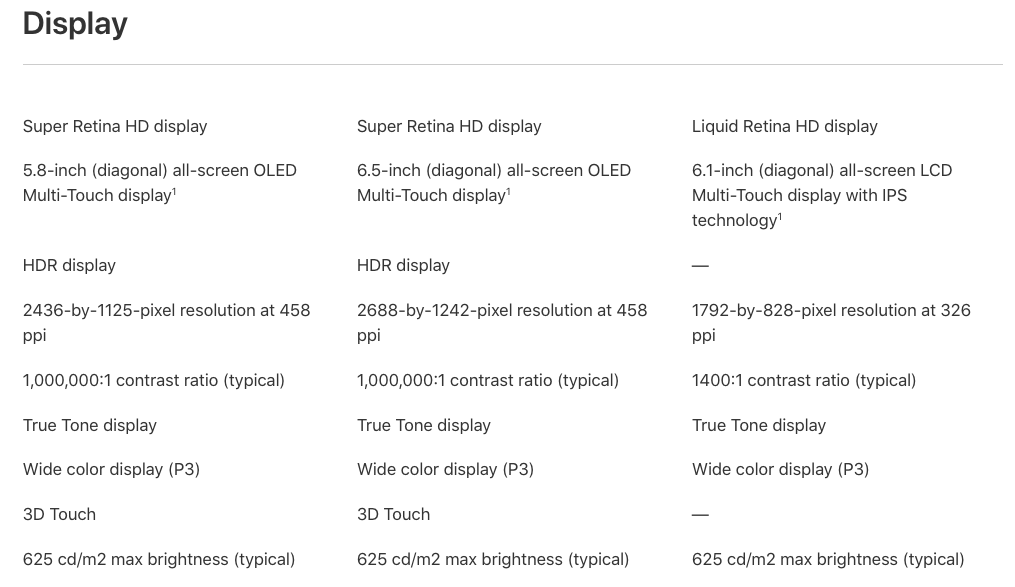
Let’s Talk Models
- iPhone Xs Max — This is by far the biggest iPhone X model so far. It sports a 6.5″ OLED display. It is about the same physical size as an iPhone 8 Plus.
- Pricing:
- 64GB = $1099
- 256GB = $1249
- 512GB = $1449 (really, Apple?)
- Pricing:
- iPhone Xs — This is the same size as the former iPhone X, its earlier sibling. This phone sports a 5.8 inch display, the same as earlier iPhone X.
- Pricing:
- 64GB = $999
- 256GB = $1149
- 512GB = $1349
- Pricing:
- iPhone Xr — This is a “brand new” model in the iPhone X lineup. It sports a 6.1″ sized display. It’s slightly smaller than an iPhone 8 plus. With the iPhone Xr, instead of using the more costly OLED tech, Apple has redesigned this model with a LCD screen. Unfortunately, as with most cost cutting measures, Apple has reduced the resolution by a LOT.
- Instead of resolution in the thousands, now it’s back in the hundreds at 1792 x 828. These are resolutions we’ve not seen since the iPhone 8 at 1334 x 750. Somewhat higher than the iPhone 8, yes, but this phone is a huge step backward for Apple.
- OLED has a contrast ratio of 1 million to 1 where LCD has a contrast ratio of 1400:1. This means that when viewing the iPhone Xr screen, you’re going to see that dull grey background whenever the screen is black.
- This model is also missing the following features:
- No 3D Touch
- 2 meter water resistance reduced to 1 meter
- No 512GB model.. tops out at 256GB
- No HDR display (not that this matters much as Apple has dumbed down the OLED display intentionally)
- No Dual Cameras — Single camera only
- Pricing:
- 64GB = $749
- 128GB = $799
- 256GB = $899
What it comes down to is that if you’re looking for a less expensive version of the iPhone X and you’re willing to forgo the above features, the iPhone Xr is probably what you want. Personally, I still want TouchID, which is still missing from these newest X models.
 There’s nothing really new here for me to jump for joy over. These models are entirely expected as next versions, though the prices are excessively high. Seriously, $1449 for a 512GB iPhone Xs Max? That’s the price of a notebook computer which has twice the features, twice the power and twice the number of applications. I shake my head at this pricing. Apple has completely lost it.
I still have my iPhone 7 Plus and it’s working like a champ. I’ve no need to jump into the X with that stupid black brow. I was hoping Apple would have gotten rid of that by the second generation. Nope. Apple, what the hell is going on over at 1 Infinite Loop? Are you guys too busy building circular buildings instead of focusing on actually building new innovative products?
Apple Watch
 Probably the most innovative thing that has come out of Apple for 2018 is the newest Apple Watch, with its somewhat larger display and a back that’s supposed to improve LTE service quality. That’s not saying much. Unfortunately, the larger size has the downside of actually making the watch even bigger. Do they think we really want to wear BIGGER watches? Though, a bigger watch may mean a slightly bigger battery and perhaps slightly longer run times. This is important for those of you who actually use the LTE feature. I don’t.
I was hoping for an actual round watch this time around. After all, Android has had these for years now. Where is Apple with a round watch? No idea, they keep focusing on these silly rectangular watches and adding stupid battery hungry technologies like LTE. You can’t really use a watch as a phone, so why bother with that? I guess someone finds the LTE part useful, but I don’t.
MacBook Pro
I’ll make this next 2018 intro short and sweet. It’s about friggin’ time Apple introduced the 32GB version of the MacBook Pro. Of course, the 2018 MacBook Pro also offers 6 core processors. That’s nice, but the 32GB of RAM is much more interesting. Though, by now these computers should be sporting 128GB of RAM, not a piddly 32.
Apple, where’s the touch screen on the MacBook Pro? Why the hell doesn’t this computer have a touch screen in 2018?
iPad 9.7″
 Apple reintroduces this size yet again. This size existed several years ago in the Pro format (supported Apple Pencil) and was discontinued. Now they’re introducing it again as though it’s some new thing. The only thing that makes this ‘new’ iPad special is that it now supports the Apple Pencil. Every iPhad… er iPad should have had Apple Pencil support the year after the Pencil was launched. In fact, every touch surface that Apple now produces should support the Apple Pencil including the iPhone, iPod touch, iPad, Watch and the MacBook Pro. By limiting which products support the Pencil is entirely stupid. Apple, don’t you want to sell your products?
What Apple chooses to do with its product lineup is always questionable, but in reality nothing truly innovative has come out of Apple since the first gen Apple Watch and the Airpods. Everything else has been limited extensions of existing products including “The new 9.7-inch iPad”, which is effectively a reintroduction of the 9.7″ iPad Pro sans the edge connector for the Smart Keyboard.
Lateral Innovation
I don’t consider extending an existing product as true innovation. I consider it lateral innovation. Lateral innovation is defined as copying the design of an existing product and then adding small features that don’t significantly improve the design. True innovation means new products that have never before existed. Apple hasn’t launched a truly new product since the Apple Watch and that was in April 24, 2015. That was over 3 years ago. Apple hasn’t launched a truly new product in over 3 years!
Man, get with the program Apple. Your relevance is waning. If you, the reader, want to find pricing of any of the other (ahem) “new” products, mosey on over to Apple.com and take a look for yourselves. You might be surprised… and not for the better.
↩︎
Rant Time: Apple Music vs Twitter
 I know I’ve been on a tirade with the number of rants recently, but here we are. I rant when there’s something to rant about. This time it’s about sharing Apple Music playlists on Twitter… and just how badly this feature is broken. Worse, just how Apple itself is broken. Let’s explore.
Twitter Cards
Twitter has a feature they call Twitter cards. It’s well documented and requires a number of meta tags to be present in an HTML page. When the page is shared via Twitter, Twitter goes looking at the HTML for its respective Twitter meta tags to generate a Twitter card.
A Twitter card comes in two sizes and looks something like this:
Small Twitter Card

Large Twitter Card

What determines the size of the Twitter card seems to be the size and ratio of the image. If the image is square in size (144×144 or larger), Twitter creates a small card as shown at the top. If the image ratio is not square and larger than 144×144, Twitter produces a large Twitter card. The difference between the cards is obvious:
- Small card has an image to the left and text to the right
- Large card has image above and text below
It’s up to the person sharing on Twitter to decide which size is most appropriate. Personally, I prefer the larger size because it allows for a much larger image.
Apple Music Playlist Sharing
Here’s where the RANT begins… hang onto your hat’s folks. Apple’s engineering team doesn’t get Twitter cards…. AT. ALL! Let me give an example of this. Here’s a playlist I shared on Twitter:

What’s wrong with this Twitter card? If you guessed the image is way too tiny, you’d win. Apple doesn’t understand the concept of producing a 144×144 image properly. Here’s the fundamental problem. In iTunes, my playlist image is uploaded with a 1200×1200 size image. This image is well large enough for any use on the net. Here’s how it looks in iTunes, albeit scaled somewhat small:

Note, iTunes retains the full image size, but scales the image as needed. If you look at the playlist on the web, it looks like this with a much larger scaled image:
As you can see, the image scales properly and still looks good even larger. Yes, even large enough to produce a 144×144 image on a Twitter card.
Here’s the Twitter card metadata on that Apple Music Preview page:
meta id="1" name="twitter:title" content="AstroWorld Pioneer by Klearnote" class="ember-view"
meta id="2" name="twitter:description" content="Playlist · 22 Songs" class="ember-view"
meta id="3" name="twitter:site" content="@appleMusic" class="ember-view">
meta id="4" name="twitter:domain" content="Apple Music" class="ember-view">
meta id="5" name="twitter:image"
content="https://is5-ssl.mzstatic.com/image/thumb/SG-S3-US-Std-Image-000001/v4/a2/c6/6f/a2c66fc6-a63b-f590-c6db-e41aebfc327c/image/600x600wp.png"
class="ember-view"
meta id="6" name="twitter:card" content="summary" class="ember-view"
You’ll notice that the text in red above is the piece that is relevant. Let’s look at that image now…

You’ll notice that the playlist image content is centered at 213×213 pixels in size centered in a light grey box that’s 600×600. Yes, that thick light grey border is part of the image. This is actually how the image is being produced by Apple on their servers. That would be okay if the image were scaled to the full 600×600 pixels. Unfortunately, it isn’t. Twitter will scale any image to its preferred size of 144×144 pixels for small Twitter cards. Here’s what a 144×144 image looks like when scaled by WordPress:
Small, but reasonably clear. Here’s Twitter’s crap scaled and unreadable version:

I have no idea what Twitter is using to scale its images, but it looks like absolute trash. The bigger problem isn’t that Twitter has scaled this image down, it’s that Apple has provided Twitter with such an already small and crap looking playlist image. Why have a 144×144 image if you’re only going to use 1/9th of the entire space? Apple, why wouldn’t you not want to use the entire 144×144 image space to make the image look like this:

That sized image would make the Twitter card look like this…

… instead of this absolute shit looking card…

How the Mighty Have Fallen
Apple used to be a well respected company who always prided itself on doing things correctly and producing high quality products. Today, they’re a shadow of their former selves. Producing products as crap as this only serves as a detriment to all of the other products they now offer. It’s clear, Apple Music is an afterthought and Apple seems to have only one engineer assigned to this software product… maybe none.
It’s also clear, Apple doesn’t respect the standards of anyone, not even themselves. I consider this absolute crap attention to detail. Seriously, who wants their images to be scaled to the point of being unreadable? No one!
Yet, when I called Apple Support to report this issue, I was told, “This is expected behavior”. Expected by whom? Who would ever expect an image to be scaled the point of nonrecognition? No one. If this is the level of software development effort we’re now seeing from Apple, then I don’t even want to think what corners are being cut on their hardware products.
What’s next? Apple watches catching on fire and exploding on people’s wrists? Phones taking out people’s ears? If I can no longer trust Apple to uphold the standards of high quality, then the mighty have truly fallen. There is no hope for Apple no matter how much crap they try to peddle.
Apple, Hear Me!
If you are serious about your business, then you need to be serious about all aspects including offering high quality products, services and features. This goes all the way to playlist sharing on Twitter. My experience with dealing with Apple in this matter was so amateur, including the way Apple Music itself is being handled, why should I continue to use your products? Give me a reason to pay you $99 for such shit service! Seriously, in addition to the above, I’m also finding what appear to be bootlegged music products on Apple Music and yet you’re pawning it off as official releases?
And as suggested by your representative, why should I contact Twitter for this issue? Twitter’s features work properly when provided with the correct information. As has been stated for years in software engineering, “Garbage In, Garbage Out”. It is you, Apple, who are providing Twitter with garbage information. It’s not a Twitter problem, it’s an Apple problem. Also, because this is an Apple engineering problem to solve, why should I contact Twitter on Apple’s behalf? I don’t work for you. You need to have YOUR engineering team contact Twitter and have them explain to you the errors of your ways.
This is just the tip of the iceberg here. There’s so much wrong at Apple, if you continue to entrust your family’s safety into Apple’s products, you may find one of your family members injured or dead. Apple, wake up and learn to take quality seriously.
The next time you are shopping for a computer or a watch device, you need to ask yourself, “Do I really trust Apple to provide safe choices for me or my family?”
Apple has now officially and truly reached the level of shit!
Broken Apple Image credit: The King of The Vikings via DeviantArt
↩︎


 Random Thoughts - Randocity!
leave a comment