Rant Time: Is Apple protecting our devices better than Google?

While many people believe that Google’s App store is a far inferior store to Apple’s app store, there is also a misplaced belief that Apple’s store offers more propriety than Google’s Play store. We need to understand more about both ecosystems to better understand the answer to this article’s question. Let’s explore.
App Protection
Certainly, iOS appears to be more resilient to malware on the surface, but is it? Google’s Android also appears way more prone to malware on its surface, but is it? We need to understand more about both of these operating systems and each OS’s overall ecosystems.
Let’s understand better how and why Apple has garnered its appearance of propriety, with “appearance” being the operative word. The first reason that Apple appears to have a better system in place is primarily because iOS doesn’t allow side loading of apps. What is side loading? Side loading is the ability for the user to load apps outside of the Android app store, for example using a USB cable or, more importantly, by downloading an ‘APK‘ file directly to your device from any web site.
While there are means and methods of side loading apps on iOS, it can only be done through Apple’s developer toolkit. You cannot perform this process directly on a phone in the wild. You can’t even do it with iTunes. If you had even wanted to side load an app, you’d have to jump through some fairly complicated hoops to make that happen on iOS. Because of this one thing, this forces you to download ALL apps from the App store.
On Android, you can not only use the App store to download apps, but more importantly, you can side load them. Side loading an app on Android does require some security setting changes, but this change is easily done in about 3 simple steps.
Does side-loading account for all of Google’s malware?
No, it doesn’t. After all, there are many who likely haven’t changed the necessary side-loading parameters and have still been hit by malware. So then, how did the malware get onto their phone? Likely, through the App store directly.
One App Store
Here we come to the second reason why propriety seems to prevail at Apple. With Apple, there is one and only one app store. With Google, there are many, too many. Google not only runs Google Play, but there are many other App stores including:
- Amazon
- Samsung Galaxy Apps
- Aptoid
- Sony Apps
- Huawei App Store
- F-Droid
- GetJar
- AppBrain
- SlideMe
- 1Mobile
- Opera Mobile Store
- Appolicious
- NexVa
- Kongregate
- Appland
- Itch.io
These stores are all independently owned and operated. This is not a complete Android app store list, but it gives you an example of how many different app stores are available for Android. This is significantly different from Apple’s iOS, which only supports one app store and that store is operated by Apple and Apple alone.
There is no such thing as a third party app store for iOS. It simply doesn’t exist.
Multiple App Stores
Because of Google’s insane choice to allow many app stores to operate simultaneously by different companies, Android users are at the mercy of each of those app store’s propriety. The difficulty is, there’s no rhyme or reason or protection afforded by many of these app stores, let alone Google Play. The secondary problem is that some of these app stores come preloaded as the primary download store on some Android devices.
Clearly, Google branded devices come shipped with Google Play set up. Amazon devices some shipped to use the Amazon app store. However, no-named brand Android devices likely come shipped with one of the above non-Google stores installed. In fact, it could even be set up to a store not in the above list… a store operated by the manufacturer of the device.
Careful with that App
The difficulty with multiple app stores is one of, you guessed it, propriety. What I mean by using this specific word ‘propriety’ is the app store’s ability to police its content for completeness, functionality and, yes, malware. In short, propriety is a company’s ability to protect its download users from malware or dangerous software.
The difficulty is that while Google might have enough money to throw at App vetting to ensure higher quality apps reach its stores, not every store in that list has the money to afford that level of commitment.
What this means for consumers is, when you use a random app store, you take your chances with malware. Multiple stores combined with side loading is nearly the sole reason why Android gets a bad rap for malware. These two things are something Apple doesn’t do in its ecosystem. For Android, it’s worse still. As a consumer of a device, you don’t really know which app store is the default on your device. Most app store manufacturers properly label their apps, but cheaper devices made by random Chinese manufacturers tend to play games with naming and might name their app store app Goggle Play or Gooogle Play or even simply Play Store. There are many ways that manufacturers of cheap phone devices can trick you into thinking that you’re getting your apps from Google’s store… when, in fact, you’re not.
Not only are there too many app stores that can provide questionable apps, Android has been licensed by so many random Chinese manufacturers (okay, so perhaps licensed isn’t necessarily the correct word here… it’s more like, ripped off). Anyway, if you buy into any of these super cheap Chinese phone brands, you have no idea where your apps are really coming from. Although, because it’s Android, you should be able to load Google’s Play store (the real thing) and use those apps instead… with should being the operative word. The device manufacturer could have instituted a block to prevent the use of the Google Play store.
However, replacing a crap store with Google Play typically takes effort on the part of the consumer… that and knowledge that they must take this step. Most consumers are oblivious to this aspect of their phone’s use and naturally assume the included app store is looking out for their phone’s well-being and their own best interest. You should never assume this, not even with Apple devices.
Apple’s App Store
Here we circle back around to Apple. We are beginning to see why Android is in the state that it’s in, but how much better is Apple’s ecosystem of devices?
A lot of people believe that because there’s only one iOS app store and because Apple is the sole operator of that store that this somehow makes Apple devices safer to use.
“Security through Obscurity“
This is a phrase tossed around in the security communities. What it means is that because a platform is more obscure (more exclusive and closed), that that somehow makes the platform safer to use. Security through obscurity works maybe 10% of the time. Maybe. The other 90% of the time it’s less about obscurity and more about best practices.
For example, you should never load random apps from any store. It doesn’t matter if it’s Android or Apple. If you don’t know anything about the developer, you shouldn’t trust them. Why?
App Store Approval Process
Apple’s app store approves apps for release into the store based on specific usability criteria. For example, that the developer is not including terms-of-service restricted content or features. Restricted content being whatever Apple or Google or that specific app store deems off limits within an application.
The developer must verbally or on a written form affirm that their app does not contain such restricted content when submitting it for approval. Even then, Apple may or may not be able to verify such an affirmation. Basically, developers can lie and say their app doesn’t do something that it does, in fact, do. Apple and/or Google may not be able to see the app doing it until that specific set of code in the app is triggered. In other words, the app may appear totally genuine enough to pass Apple’s and Google’s store submission criteria.
We have seen some apps which have been released into the app store as a result of such affirmations only to be pulled from the store when it is found that the developer lied about what was affirmed and stated to have not been included in the app. Apple doesn’t take kindly to lying about app features, particularly when you can see the app doing things it shouldn’t be doing.
Apple is relatively quick on removals of offending content from its app store. Google Play and other Android stores may not be quite so nimble in this process. In fact, many of the third party stores may not even police their apps at all. Once it’s in the their store, it may be there more-or-less permanently. Apple is much more active and selective with maintaining that their apps are upholding developer agreements. However, there is a limit to even Apple’s propriety.
Epic Games
This is a recent fight between Apple and Epic Games. Epic Games apparently decided to change the way it utilized in-game purchases, which has since culminated in Apple rescinding Epic Games’s license to use Apple’s developer tools. Both Apple and Google have since removed Fortnite from their respective app stores citing violation of the store’s terms.
In-app payments require that developers hand over a portion of their profits to Apple and Google. However, there are ways of circumventing that by including outside payment systems in apps. I don’t know exactly what was included by Fortnite that triggered this specific problem, but apparently Epic wasn’t satisfied by Apple’s greedy in-app payment system and decided to take a stand.
Some may think this is about consumer protection. It’s not. It’s about Apple profiteering protection. Apple cites its terms that apply equally to all developers, but in fact, this specific condition is intended to maintain Apple’s profits. Yes, it does apply to all developers (well, almost all developers… see Amazon below), but it is also a condition that is unfavorable to developers and extremely favorable to Apple’s bottom line.
Ramifications
Apple picked a fight with the wrong company in this “epic” (ahem) fight. Epic Games also happens to be the developer of the Unreal game engine. This is a very widely used game engine throughout the gaming industry. It’s probably one of THE most commonly used engines, particularly on gaming consoles.
Without access to Apple’s iOS developer tools, this engine is effectively dead on iOS (and MacOS) devices. Worse, developers who rely on Unreal to drive their own iOS games may soon find that they have to find another game engine. These Unreal engine users may wake up to find their Unreal-based game removed from Apple’s app store as a side effect of Epic Games’s removal.
If Unreal can’t be supported, then neither can the games that utilize this engine. This Epic Games fight has deep reaching ramifications for not only Apple, but also impacts every iOS device owner and every developer that uses Unreal to drive their game. If that game you love was built around Unreal, you may find that app no longer available in just a few weeks.
If you have the app downloaded onto your device, you can still use it. Bought a new Apple device? Well, don’t expect to cloud download that app again if it’s been removed. You’ll need to rely on iTunes backup and restore instead of Apple’s cloud storage… which relies on downloading the app again from the app store. If it’s been removed, the app will be unavailable. Only backing up and restoring through iTunes will recover apps you presently have on your phone device and which are no longer in Apple’s app store. Didn’t do this? Oh, well. That app is gone.
Apple’s Ramifications
Apple’s once burgeoning gaming section may soon become a ghost town. Maybe this is an exaggeration, but maybe not? Let me explain. The loss of the Unreal engine from the iOS platform is a huge blow to iOS game developers worldwide. It means game developers must either now build their own engine instead (to avoid such engine removals in the future) or rely on another gaming engine that supports iOS (at the peril of it being removed in the future).
Apple is effectively “Cutting off its nose to spite its face”. In other words, Apple has most likely done more long term damage to its own brand and products than it has done in short term damage to Epic Games. Sure, Epic’s loss of Fortnite on iOS is a big loss to Epic, but Apple’s loss of the Unreal engine is a much, much bigger problem for Apple.
If developers can no longer turn to the Unreal engine for use on iOS, then that means fewer games will be developed for iOS… at a time when iOS doesn’t need this gaming speed bump. Fewer games developed means fewer game apps in the app store. Fewer game apps means less revenue for Apple. Basically, Apple’s loss of revenue from cutting off developer access to the Unreal engine will come back to bite Apple hard in the ass.
Apple relies on that in-app revenue for its continued operation of the App store. If that revenue dries up, well so too will iOS devices while also undercutting MacOS notebook sales. It’s not just about Fortnite here. It’s about every iOS game using Unreal that also uses in-app payments legitimately. People won’t buy into a mobile platform when they can no longer find and play their favorite games, particularly if those games are on other platforms. The loss of the Unreal game engine is a big deal to Apple. Considering Apple’s paltry 10-13% mobile device market share as of 2019 (and shrinking), killing off development tools that bring revenue to the platform should be a big deal to Apple, one would think.
However, there are still other game engines that developers can use, such as Unity, BuildBox and AppGameKit. With the loss of the Unreal engine, of which many, many games are built on consoles, that means straight ports of well recognized and popular console games to iOS will become almost impossible. Very few console developers choose Unity and none use BuildBox or AppGameKit.
If Apple was hoping to pull over the bigger console titles onto iOS, they’ve just lost that opportunity by kicking Epic Games off of their platform. No console developer will spend several years porting their Unreal based game to Unity or one of the other game development kits. Without Unreal on iOS, the much larger money making console games will forever be locked out of iOS, simply because of Apple’s stupidity.
Instead of trying to work through a compromise with Epic Games over this issue, they simply pulled the plug. They’ve “thrown the baby out with the bathwater”. They’ve as I said above, “Cut off their nose to spite their face.”
Apple’s Stupidity
This is a huge blow to iOS devices and to consumers alike. Within the next year or so without Epic Games support on iOS, Apple’s gaming community is likely to dry up. Games like Fortnite can no longer come to exist on Apple’s platform because of the loss of the Unreal engine.
There is a bigger danger to using a third party game engines for iOS games. If you, as a developer, settle on a third party game engine and that engine developer has a fight with Apple thus causing their developer licenses to be rescinded, just like Epic Games, you could see your game pulled from the store or, more importantly, obsolete by the next yearly iOS release. This whole Epic fight has some serious ramifications to the gaming industry.
I guarantee that with Epic Games being pulled from the Apple platform and if this is allowed to stand going forward, Apple’s usefulness as a gaming platform will greatly diminish. Not instantly, but definitely over time. It will definitely erode confidence in iOS and MacOS as a gaming platform.
Lest you think I’m being overly dramatic, I suggest you look at this very long Wikipedia page and see the list of games produced using Unreal for consoles, specifically Unreal Engine 4. Every single one of these games had the potential of making their way to iOS or even MacOS. This hope is now lost. The loss of the Unreal engine on Apple’s ecosystem is a loss to the entirety of Apple’s devices.
If Apple had designs of getting into gaming, they summarily lost that hope in one fell swoop. What’s worse is that other game developers may follow suit and voluntarily pull their engines from Apple’s devices as well, leaving only the smallest and crappiest of game development engines available for iOS devices… firmly dragging Apple’s devices back into the stone age for gaming. The best you can hope are the silly finger swipe games that leave you bored in less than 15 minutes.
Sure, Bethesda, Ubisoft and Activision may continue to maintain their proprietary engines on iOS and MacOS for their specific games, but up-and-coming and existing Unreal console developers alike have lost any iOS portability inroads they might have seen on the horizon.
Though, I suppose this situation is a win for Sony’s PlayStation and Microsoft’s Xbox consoles… and consoles in general.
Epic Games Ramifications
I would be remiss without discussing the ramifications to Epic Games, also. Certainly, Epic Games has lost a huge platform for both Fortnite and the Unreal engine … well, two with the additional loss of Google’s Play store. Though, I don’t think that Google has yet rescinded Epic’s developer license for Android. As a result, would-be game developers considering which engine to choose will not choose Unreal if they have eyes on iOS, MacOS or possibly Android (depending on how far Google takes this). For game developers who’ve already chosen Unreal, it’s probably too late to undo that choice. Game developers in the planning stages can reconsider which engine to choose.
Epic Games Unreal engine may not fall out of favor with the game development community. It was formerly an engine developers could rely on, more specifically for a wide range of platform support. With the loss of iOS and Android, that leaves a big hole for the Unreal engine, and Epic Games. That’s basically the loss of every mobile platform! Epic Games chose this battle by not wanting to follow Apple’s greedy rules.
Honestly, I don’t blame Epic. Amazon fought with Apple over these very same rules a long while back. Amazon chose to remove all ability to buy anything via their apps. Though, the Amazon app seems to have regained its ability to purchase junk, but I’ve no idea how they’ve worked this with Apple. Epic should cite Amazon app’s ability to purchase products using a third party payment processor. If Amazon can do this, Epic should be able to as well. It seems that even Apple isn’t following its own “all developers are equal” rules.
Tim Sweeney, Epic Games CEO, should call out this incongruity in Apple’s “equal” application its app store terms and conditions. If Epic Games is violating Apple’s purchasing rules, then so is Amazon… and so is any other company who is able to offer purchases using their own third party payment processor.
However, that doesn’t leave Epic Games without problems. Without iOS and Android for not only Fortnite, that leaves a huge revenue stream hole for Epic Games. That’s the downside for Epic. That and the loss of being able to license the Unreal engine to would-be iOS and potentially, depending on how far Google takes this, Android developers.
TikTok and WeChat
Beyond Epic, there are other problems brewing at Apple. The problem with Apple’s app store is that it will accept and publish apps from any developer from any part of the world. Yes, even communist bloc countries like China and Russia.
What does this mean for you as a consumer? It could mean spying, malware and theft of your data. Apps like WeChat and TikTok originated in China. These are apps that were intentionally designed and released by Chinese people who live in China and who have no ties to the U.S. and who don’t care about data privacy, your data or anything else about you. They don’t even have to follow United States laws. They want your money and they’ll do whatever they can to get it. They don’t care if they have to step on your toes (or turn on your camera and microphone at inappropriate times) to do it.
Apple has been entirely remiss in this area of vetting apps. Can we trust apps developed and produced entirely in China or Russia? Yet, Apple has published these apps to the App store and still allows them to remain in the store. But… Epic Games, a U.S. based game developer, can’t keep their app in the store because of silly in-app purchases? It’s perfectly okay to allow apps to spy and steal data for communist bloc countries, but it’s not okay for a U.S. developer to want to use a third-party payment processor. Yeah, Apple’s priorities are entirely effed up.
Apple’s values at this point are entirely suspect. What Apple has done to Epic is retaliation. It has nothing to do with propriety or consumer safety. It has to do with ensuring Apple’s revenue remains intact. If it were about consumer safety, Apple would have not only re-reviewed WeChat and TikTok for appropriateness the moment the President called them out, they would have been removed from the store.
This is where we learn Apple is not about propriety, it’s about making money. Losing the ability to make money from Fortnite (and by extension the Unreal engine) is way bigger of a deal than allowing Tencent and ByteDance to use their respective apps to potentially spy on U.S. consumers.
Here’s where consumers get lost in the mire and murk of it all. Apple’s silly hide-everything-from-everyone ideals allow this sort of behavior from developers to fester. Developers get to hide behind Apple’s veil of secrecy and “wall of friendliness” so that apps like WeChat and TikTok can flourish without consumers being the wiser.
Yet, here we are. Chinese and Russian apps are infiltrating Apple’s store with careless abandon, some of these are taking the Internet by storm, like TikTok. ByteDance rolled the big one with TikTok and now they can roll out spying measures if they wish, assuming they haven’t already.
I look on anything coming out of China as suspect. Most products coming out of China are third rate products that fall apart as soon as you sneeze on them. Many are counterfeit or are a stolen designs from an original product created outside of China. Clearly, China’s ability to innovate is limited. Instead, Chinese engineers must reverse engineer an existing design that originated outside of China only then to build their thing based on that existing design. Copying is said to be the highest form of flattery, but in this case it’s intellectual property theft.
With products that don’t need the Internet, such as a toaster oven or a microwave or a fridge, other than their possibility of falling apart or harming you physically, they can’t steal personal data or spy on you. Like physically harming you with junk appliances from China, downloading apps from an app store can be equally harming to you. They can steal keyboard input, turn on microphones and cameras at inappropriate times, grab your photos… they can even monitor which apps you use and watch your movement around the city via GPS on your phone. There’s so much data they can collect about you, including the contacts in your phone book.
By installing one of these communist bloc apps, there’s literally a mountain of data they can learn about you from your device. Spying? That’s literally an understatement.
Apple has given the communist bloc countries carte blanche access to U.S. owned devices through iOS. Google has done the same with Android. Worse, both Apple and Google are doing absolutely NOTHING about this. Treason by U.S. companies? That’s an understatement. They not only allow these apps to be published, they’re endorsing them… and some of Apple’s and Google’s own developers may even be using these apps personally. Talk about inception.
Spying
Spying was formerly thought to be about covert operatives running around gathering intel with crude and rudimentary devices in black garb. Today, it can be done in broad daylight using every person’s very own cell phone right in their hand.
Need access to listen in on a conversation at a specific GPS point… I can just hear someone say, “Let’s see which of our apps are on devices close to that location.” Yeah, this is a real thing. Simply enable the microphone and possibly even the outward camera and BOOM, you’ve got access to immediate intel relayed instantly back to you in real-time.
Yeah, that’s the danger of social apps like TikTok and WeChat. They can be used to eavesdrop on anyone anywhere. You only need to give access to the camera and microphone and boom, they’ve got access anywhere the app owners wish.
Apple can thwart this possibility potentially, but only if they add some heavy restrictions for when and how these devices may be used. Like, for example, these devices can only be enabled when the app is the front most active app and the screen is on (i.e., the user is accessing the screen). Even then, access to these devices should always require positive confirmation to use them every single time. Without positive confirmation, these devices cannot be enabled remotely.
Otherwise, spying is already here. Nefarious apps can listen in on what you are doing without your knowledge. They may even be able to switch on the camera and stream video data back to whomever. Yeah, bad news here.
Malware
Many people think malware means software that intends to cause malicious harm to your device. It doesn’t only mean that. Malware covers a lot of territory including spyware, malicious software, ransomware and many, many other types.
Any type of software designed to subvert your device for someone else’s use is considered malware. Don’t limit your thoughts to only software that intends to erase or destroy data. It doesn’t end there. It begins there. It ends with any software of malicious intent, including any software that is designed to spy on you, steal your data, copy data from your device or attempt to get you to do things that might compromise not only your phone, but also your personal finances.
However, the days of overt malware are firmly over. Now we’re seeing a new wave of software that makes itself appear legitimate by offering seeming legitimate services, but which have malware belying that happy-go-lucky façade. It’s the software version of social engineering. They trick you in believing you’re getting a real legitimate app, but underneath, these apps are doing things they shouldn’t be doing.
This is a new wave of bad news rolled into one app. No one can know the ultimate intentions of an app producer. Hopefully and trustingly, we put our faith into the developers hands to “do the right thing”, to be upstanding and give us an app that does only what it claims.
Unfortunately, we’ve moved into an era that’s now firmly gone beyond this. If you’re getting an app from a U.S. developer, you can pretty much be assured that what the app says that it does, it actually does do… and nothing beyond that. That’s a given because U.S. companies must follow U.S. laws. With apps coming from China or Russia or Cuba or Vietnam or even North Korea (don’t kid yourselves here), you have no idea what their ultimate motives for producing that app are. Worse, they are not required to follow United States laws. Yeah, and that’s the problem in a nutshell.
Apple and Google’s trusting nature
These communist countries not only see the dollar potential wrapped up in these apps, but they also see the spying potential above the dollars. Not only can they divert U.S. dollars outside of the country to fund who-knows-what, they can steal your data and spy on you, too.
Why? Because Apple and Google are far too trusting and let them do it. They believe that developers will be good neighbors and not do untrustworthy things. Apple and Google are both trapped into believing that everyone will follow United States laws. Naïve! Unfortunately, that trusting nature is now being used against both Apple and Google… though, Google more than Apple by these communist countries. Google devices way outpace Apple’s devices in market share. In 2019, Apple’s devices made up just ~13% of the market, where Google’s Android devices made up a whopping 87%! Together, Apple and Google make up close to 100% of the market, with the small remaining percent running other mobile operating systems (yes, there are a few).
For Google’s saturation reason, it’s no wonder why malware authors are targeting Google over Apple. It’s a simple matter of low-hanging fruit. Google’s fractured stores and litany of device problems has led to where we are. Malware authors can have a field day with Google’s devices because they can take advantage of these tinier stores with much reduced release restrictions. It’s easy, then, for small indie developers to release malware onto Android… far too easy. It’s much more difficult to do this same thing on Apple devices. That is, until you realize exactly how developers are outwitting Apple’s far-too-trusting nature.
Once not-so-upstanding developers understand they can disguise malware underneath a legitimate service, they can then push that service out to app stores (with Apple’s blessing) and get people to use it, in similar form to TikTok. In fact, perhaps the app was even released without the malware to have the appearance of propriety (and to pass Apple’s initial scrutiny). Then, after enough momentum has been reached, the app developer can then slowly release updates containing bits of malware at a time. As far as I know, Apple doesn’t put the same level of scrutiny into app updates as it puts into new app listings. Apple’s hands off approach to updates means the author can slip bad features into updates under Apple’s and our noses and none will be the wiser.
Security Considerations
You always have to really think 🤔 about what apps you have installed and why you’ve installed them. More than that, you need to find out who specifically is developing your apps and where they are in the world. You might be surprised to find that the author doesn’t live in the country where you reside. If the author isn’t in your country of residence, they don’t have to follow your country’s laws for, well, anything.
Of course, you never know what an app author intends by writing and releasing an app. Even the money making aspect on the surface may not be the actual agenda. Hopefully, the app’s purported use case (making money) is the only reason the app exists. Unfortunately, subversion seems to be becoming more and more common in apps, particularly those that may not be developed in the same country where you reside.
For example, someone who develops an app in China doesn’t have to follow the laws of any other country than China. Meaning, if the app developer decides to include spyware, no laws will apply to that developer other than Chinese law. Even then, since they weren’t spying on Chinese citizens, they likely won’t be seen as having violated any Chinese laws… even when spying on citizens in other countries. Because the U.S. can’t apply laws to Chinese citizens, any spying that may have taken place is damage already done. The only action that can be taken is banning the app entirely from the U.S., just as Trump had wanted to do with TikTok.
Every mobile device user must remain on their toes. You can’t assume that Apple’s closed store nature will protect you from spying or data theft (all forms of malware). Apple is way too naïve for that. Instead, you must do the research yourself. Determine who develops an app you intend to install. Find out where they live in the world. If they live in a country where you do not, your local laws will not apply if the developer includes illegal activities in your place of residence. This means they can do a lot of nefarious things and never be caught at it, particularly if they live in a country like China.
If you want to safeguard your own data, don’t install apps without knowing where the author lives. No, not Android and not even on iOS devices. No, not even on… and especially not on company owned devices.
In this day and age of anyone and everyone who can design and build an app basdd anywhere in the world, we’ve firmly come to a time where our devices can be used to spy on us and those around us simply because we’ve installed a random app.
It’s now only a matter of time before government policies catch up with this technology trend and new laws begin emerging which intend to hold device owners responsible for treason when an app spies on and funnels data outside of your country of residence.
In answer to the article’s primary question. No, neither Google nor Apple is better at protecting our devices from malware. However, while the overt malware may be less common on Apple devices, Apple’s and Google’s trusting nature is now firmly subverting our devices for foreign spying activities… particularly when these apps are designed to intentionally use the camera and microphone.
↩︎
Gaming Breaking Bugs Series #1: Fallout 76

With this series, I intend to start calling out video gaming’s game-breaking-bugs as I find them and boy are there a lot to report with Fallout 76. Here is report I recently filed with Bethesda. Let’s explore.
Report
Re: Enemies not dying after multiple shots.
It is truly becoming impossible to play Fallout 76. That’s not an exaggeration. I’m using various ranged weapons and it can literally take 2, 3 even sometimes 4 (or more) shots to actually kill an enemy that should die in 1 shot. This MUST be solved. Combat is intrinsic to this game. When combat doesn’t work, then the game is broken.
How this problem manifests…
It begins when you attempt to VATS shoot an enemy. It doesn’t matter where you shoot the enemy, but the head is usually the place where combat fails most often. I have a bloodied Lever Action and a bloodied Pipe Bolt Action Pistol. I’ve also had this problem occur with various melee weapons. So, it’s not limited to any specific weapon or type.
You begin by using VATS on the head using Concentrated Fire. Take the shot. The shot connects. The thud sounds. The enemy’s health bar drops to 0. Then, inexplicably, the health bar instantly recovers to full health and the enemy is alive to lunge or shoot at you. Not only that, the failed shot alerts the enemy to your presence. You can perform this action multiple times in a row to the same effect. It doesn’t matter if it’s a Ghoul, insects, a Super Mutant, dogs or a robot. This broken combat mechanic affects every weapon type and every enemy type.
To 100% reproduce this bug, sneak your way into The Whitespring Golf Club, head to the left on the upper level. Then as you come through the door, there is an enemy that spawns right near the back left window in a corner.
Once you have cleared the rest of the ghouls in that room, stand by the entry hall area and attempt to VATS shoot this specific Ghoul in the head. It may take 2, 3, 4 or more shots before it will die. Targeting the limbs or torso sometimes works around this game breaking bug, but sometimes it doesn’t. Sometimes using a scope instead of VATS works, sometimes it doesn’t.
It’s one thing if the shot misses entirely, it’s completely another when the shot connects, makes a thud noise, shows a 1200 damage number also showing the enemy health bar dropping to zero and then the enemy’s health bar magically recovers fully? No, these are NOT legendary enemies.
This combat issue needs to be resolved pronto as this is literally a game breaking combat bug.
Expected Behavior
When you shoot an enemy and the bullet is recognized by the game engine as connecting, then the enemy needs to take the required amount of damage and/or die if health reaches zero. This combat bug is entirely unacceptable.
Enjoy this bug as this series has many more coming. If you have experienced this specific combat bug, please leave a comment below.
Why Fallout 76 sucks badly
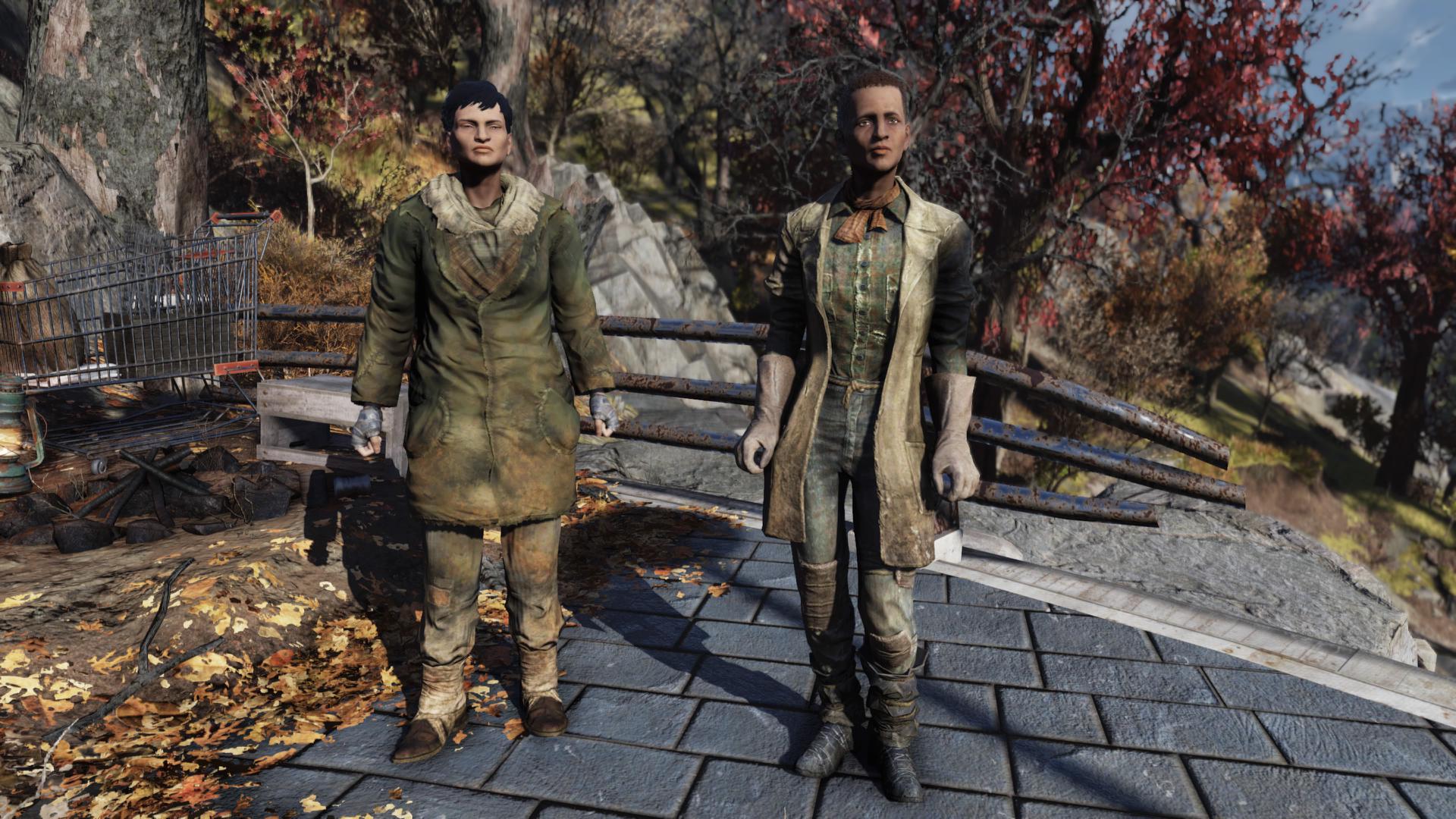 Whenever I play Fallout 76, I just want to pull my hair out. This game is so fraught with bugs, poor design, piss poor consistency and overall crap gameplay, it’s a wonder anyone wants to actually play this turd of a game at all. And, it gets worse with every release. Let’s explore this crap game in all of its crap glory.
Bugs Bethesda Won’t Fix
One of the most infuriating things about this game is its incessant bugs which Bethesda has consistently refused to fix. Some of these bugs have existed since before the release in the Beta (if you can even call one week of early play “beta testing”).
Here’s a non-exhaustive list of gameplay bugs I’ve run into with this game (in no particular order):
- Getting in and out of power armor breaks mutations, specifically Speed Demon. This bug persists until you log out and back in. If you use power armor at all, this mutation remains broken while both IN and OUT of power armor. This is a new regression bug and didn’t exist early in the game’s life.
- When playing sneaky while crouching, the game will sometimes overload the fire gun action onto the run button and fire your weapon when you attempt to run from the crouching position. This happens with any weapon. Not only does this waste ammo, you may be forced to reload your weapon, wasting time. This is an older bug and has existed for at least 6-9 months.
- Getting stuck in power armor. While this bug has supposedly been fixed, I have run into occasions where it is impossible to exit power armor. It clearly is not fixed. This bug has existed since Beta.
- Getting stuck in VATS. This is a new bug that sees you pull VATS only to find that the game won’t let you exit it, while allowing the enemies to attack you without any resistance. This is a recent bug, but existed before Wastelanders.
- Enemies staggering the player. This is a new bug that sees enemy stagger your player for longer amounts of time. Like getting stuck in VATS, you are unable to move or fire your weapon for up to 5-10 seconds, all while letting hordes of creatures attack and kill you. This may have been introduced in Wastelanders.
- Camp over budget after update. This one begins after you buy and install Atomic Shop items into your camp. After an update, Bethesda will raise the budget of SOME item(s) in your camp substantially causing your camp’s budget to go WAY over. There’s no way to know what is causing the issue or resolve it without randomly deleting camp items one by one.
- Toxic Goo fails to work. After your character dies and respawns, Toxic Goo doesn’t work for up to 1 minute (or longer) after a load-in or respawn. You’ll end up wasting goo after goo after goo trying to get it to work. This affects Bloodied builds.
- Loss of certain perks, but not all, after your character dies. Yes, I consider this a bug. There is no reason why this exists in the game. The Well Rested and Well Tuned perks disappear after the character dies and respawns. You are forced back to your camp to sleep and play an instrument again to refresh these. This is a bug that, I think, has been in the game since the start.
- Can’t choose respawn point after character death. This bug has been in the game since day one. Under certain conditions, if your character dies, the game will give you zero respawn points on the map. You are forced to log out and log back in… losing any dropped loot and any other benefits you may have had coming. Day 1 bug.
- VATS accuracy…. When the game first arrived, VATS could reach 100%. After a ‘balancing’ update, this has been visually reduced to a maximum of 95% at all times (no matter how close the enemy is to you). This is a ridiculous change. However, during this ‘rebalance’, Bethesda introduced two VATS percentages (one you see visually and one you don’t). The one you don’t see is the one that determines whether the bullet will hit. This has caused VATS to become mostly unusable, particularly when combined with bug #4 and specifically with certain weapons. It fares even worse when attempting to use the Concentrated Fire perk card.
- After loading into the game world, the game client runs a background process to synchronize the game to the remote game world server. This process takes at least 5-10 minutes to complete. It’s very slow. While this background process is running, you can’t craft on a workbench as the workbench stutters on and off while this synchronization process runs. This is a new bug introduced within the last 6-9 months. It existed before Wastelanders. This bug prevents using workbenches for at least 10 minutes after you’ve loaded into the game world.
- In-Game Music can’t be controlled with volume settings slider. A volume slider for music was introduced into the game client, but it has been selectively applied to only certain music. For example, music inside of Whitesprings, inside of Valley Galleria and with musical instruments are not covered by this volume slider. You must endure this music in the world regardless of your settings.
- Main Menu Music Slider settings. This one is also broken. While it does not play music on the main menu on the PS4, it does not at all work on the Xbox One. Worse, after a few minutes inside of the Atomic Shop and after the music changes, the music will begin playing at full volume in the Atomic Shop. This slider is only minimally effective at doing what it’s supposed to do.
- Challenges don’t work. This is an ongoing problem. If you’ve bought into Bethesda’s Fallout 76 challenge system, then that means doing whatever convoluted activities are needed to win that challenge. Some challenges require you to perform multiple activities to win the challenge. Because of these multiple activities, if one of them does not register after completion, the entire challenge fails. This is one way challenges don’t work.
The second way challenges fail to work is if you do perform all of the actions successfully and receive a check mark, but the overall challenge doesn’t reward its bounty to you. Both of these are firmly broken. Even the newest update to the Legendary Run suffers from this same bug. You can perform everything required of the challenge and still not see the 1000 score you’re supposed to receive. Bethesda support won’t help with these failures. You’re just shit-outta-luck. Bethesda simply doesn’t support the game or gamers who are playing this game. These are Day 1 bugs. - Blue Screen Crash… yes, these still exist. I regularly experience these crash-to-the-dashboard bugs about once every day or so. They are about as frequent as they were when the game was released. This is partly because of the memory issues.
- Level of Detail Image Rendering… this bug as existed since day one. As you approach objects, the game won’t load in the higher res texture version until you’re standing on top of the object (literally). Even then, it may take 1 minute before the higher res texture loads in. It’s a cosmetic bug, but who wants to look at blurry 8 bit textures?
- Fast Travel Bug — Here’s a bug that has existed since day one. You open the map and select a travel point, choose to pay the caps and then …. nothing. The map exits and you’re back in the game. You haven’t fast traveled and nothing has happened. Worse, you try again and it does the exact same thing. This bug is annoying, frustrating and shouldn’t even exist.
- Workshop Bug — Here’s a regression bug. This bug existed a week or so after release. It was gone for a long time, but now it’s come back in the latest update: v1.3.2.9. Under some conditions, the workshop icon reverts to the older “regular” icon. As a result, the game requires you to pay caps to travel to your owned workshop.
- Bethesda Math — Here’s a bug (several actually), but this one’s very very subtle with the perk cards and with damage multipliers. Bethesda sucks really hard at math and they hope that players won’t notice. Too late, we have. When Bethesda calculates damage multipliers, it rarely does so accurately. For example, a multiplier card might say “does 30% more damage”, but in reality it may calculate out 28% more or 25% more or some random value way less than 30%.
You can see this in action after enabling damage numbers on your weapon. If you calculate out the number shown, you’ll find that the damage is far, far less than what the gun claims to offer with the damage multipliers. This is just one way that Bethesda reduces the damage level of weapons without showing that reduced damage in the weapon info panel.
This further continues in the weapon info panel as well by not accurately calculating the damage multipliers within this panel. While some perk cards offer exact damage multipliers, many of these cards offer nebulous increases like, “does more”, “does even more”, “does substantially more” without stating any numbers. This allows Bethesda to modify these nebulous cards at their whims on each release, so you never know exactly what those nebulous cards are actually giving you. In many cases, they don’t give you anything. As for the hard number cards, it only stacks these multipliers by calculating from the gun’s base damage level. For example, if you put on cards each offering 10% damage, it will be stacked like so:
Gun base damage = 197
Gun + 10% damage = 197 + 19.7 = 217
Gun + 20% damage = 217 + 19.7 = 237
Gun + 30% damage = 237 + 19.7 = 257
and so on…
Basically, Bethesda calculates the value based on the current gun value + the % to be applied. It doesn’t add by stacking. If it added by stacking, 60% more damage would stack like this:
Gun base damage = 197
Gun + 10% damage = 197 + 19.7 = 217
Gun + 10% more damage = 217 + 21.7 = 239
Gun + 10% more damage = 239 + 23.9 = 263
Gun + 10% more damage = 263 + 26.3 = 289
Gun + 10% more damage = 289 + 28.9 = 318
Gun + 10% more damage = 318 + 31.8 = 350
and so on… but this is not how Bethesda does math during stacking.
Worse, guns with +30% damage to Scorched (Zealots) or 30% damage to animals (Hunter’s) never see these percentages reflected in the gun’s damage information panel. You have no idea if the gun is actually giving you that extra % damage.
Even worse, when you kill something with damage multipliers on, you almost never see the damage level of the gun reflected in the damage number seen on the enemy. For example, with the 257 damage listed above, if this is an Instigating rifle, it would do double damage to an enemy with full health. This means that at 2x, Instigating damage should do 514 damage to an enemy. With sneaking, it should double that to 1028. However, shooting an enemy with sneak might show way less than that damage inflicted. Damage to an enemy should reflect actual gun damage. - VATS + Accuracy … this bug has been ongoing since day one, but affects some weapons more than others. For example, neither has the Tesla nor the Gauss rifle ever properly worked with VATS. Using these weapons is more likely to miss than hit. You waste so much ammo using VATS with these weapons, it’s not even worth considering. For every one shot that hits, you might have 10 that fail… even with high accuracy, even if you have the +33% VATS accuracy legendary perk, even with all of your best perk cards equipped, these electric weapons are the worst for VATS.
Even the Pipe Bolt-Action Pistol fares poorly with VATS. This weapon when set up correctly can have an accuracy of 108, yet it acts as if it as an accuracy of 2. It misses way more often than it hits. This is a VATS problem. In fact, I find that using the scope fares way better than relying on VATS. - Gauss Rifle Wind Up and Misfire — this bug has been ongoing since a week or so after release. You can press and hold the trigger to power up the Gauss, but upon release, you only hear a sad sputter and then nothing. The rifle misfires. This is the only weapon in the game that misfires. I’ve given up using the Gauss rifle entirely because of this one bug that Bethesda refuses to fix.
- Bullet Connects, Does 1000+ Damage, Health Wiped, Enemy Lives — this is a new bug, but I believe has existed for quite some time and is a regression from early in the game’s life. You can shoot an enemy point blank in the head, the heath bar is reduced to 0, but the enemy’s health bar goes back to full and lives to fight. This is not a legendary enemy. I’ve run into this bug with Ghouls and Robots alike. There is nothing you can do but shoot again and hope it will kill the enemy. This bug seems specific to shooting the enemy in the head, but can occur shooting any body part. Collision detection on this game is piss poor, to say the least.
- Delbert’s Traditional Chitlins Recipe — Here is a bug that has most definitely existed since day one and before. This recipe is supposed to exist on a piece of notebook paper sitting on a picnic table at Spruce Knob Lake, next to a blue cooler. The note paper is sitting there on the table, but it cannot be retrieved from the table. Bethesda has had this bug reported probably hundreds of times and at least twice by me since launch, yet they have still not yet fixed this very long standing bug. There are supposed to be 13 Delbert’s recipes in this game, but this one is not retrievable, leaving only 12 in the game. It’s anyone’s guess as to what this recipe offers.
- Backpacks — In a recent update, Bethesda decided to change how backpack skins work. Instead of selling individual backpacks as they had been formerly doing, they set it up to place skins on top of the generic backpack. In doing so, they introduced two fundamental bugs:
1) We had to pay to reskin our already skinned backpack, using up more resources again. We had to do this for every backpack we own.
2) The backpacks no longer sit correctly on the character’s back. Instead of sitting properly on the back, they are now embedded in the back and look crappy when wearing certain bulkier outfits. The original packs adjusted their placement on the back to accommodate outfits and the size of the pack. This new system doesn’t. It inherits the placement of the original skin and assumes that placement is correct for all packs. One of the worst cosmetic bugs in the game.
Perk Card Bugs
Under this section, I call out bugs specific to perk cards that have gone unfixed. They are just as numerous.
- Tenderizer — This Charisma perk card simply doesn’t work, it’s as simple as that. It’s supposed to afford an up to 7% bonus damage (3 star card) on every hit after the first, but it doesn’t do anything. Don’t bother equipping this card. I’m not certain if this card has ever worked. Day 1 bug.
- Concentrated Fire – This is a card that is supposed to not only allow you to target individual body parts of your enemy, it’s supposed to give bonus damage when you hit that body part. This card performs only one of its two stated perks. While it does allow you to target body parts individually, it does not offer any bonus damage. Day 1 bug.
- Super Duper – Lots of bugs here. This card is supposed to offer you a chance to duplicate whatever you are crafting on any crafting bench. This card has multiple problems. Its primary problem is that a 3-Star version is supposed to afford you your best chance at receiving a duplicate. However, ranking this card up to 3 does not increase your chances for a duplicate any more than using a rank 1 card. This card formerly functioned correctly for a short time after the game’s launch, but after a subsequent rebalance, it has been broken since.
Additionally, this card is entirely selectively applied to certain crafted items and in specific amounts when it does work. For example, attempting to combine a 2 star Ammosmith with 3 star Super Duper doesn’t yield a duplicate number when crafting certain ammo on the Tinker’s Bench. For example, Ammosmith increases the Mini Nuke x3 count to x5. Yet, Super Duper doesn’t provide 10 Mini Nukes when Super Duper fires. Instead, it provides perhaps 6 Mini Nukes, not 10.
Further, Super Duper formerly alerted us every time it fired letting us see how often it fired and how much extra we might expect. At some point during a ‘rebalance’, Bethesda stopped this every-time notification. Instead, now it only notifies us once inside the bench and once on the way out, no matter how many times it has fired. In other words, you have no way to know exactly how much extra you may have received. If you want to know, you are forced to exit the bench each time Super Duper fires so you can see exactly how many times it has fired while crafting… infuriating.
I believe this much reduced notification change is because Bethesda reduced the frequency with which Super Duper fires (even at 3 stars) and they didn’t want people to see this lowered fire rate.
Super Duper has also never been applied to the Brewing Station crafting bench. You can craft whatever you want on the Brewing Station and Super Duper will never duplicate it. This bug has existed since the Brewing Station was introduced. Some of these above are Day 1 bugs including this Brewing Station bug. - Butcher’s Bounty / Scrounger / Cap Collector / Can Do! / Pharma Farma design change. Yes, I also consider this one a bug. Butcher’s Bounty (and the rest of these scrounging cards) formerly allowed us to search containers at any time and, most importantly, after the fact. Can Do! and Pharma Farma and some of the others still do allow after-the-fact searching, but it is now hands off with no button presses. You must look at the container with the card equipped to get the benefits. Before this change, you were forced to pressed a button. After the change, it works simply by looking at the container.
However, unlike the rest of the cards, Butcher’s Bounty has some severe restrictions placed for how and when it works. It has also seen new bugs introduced. Unlike the rest of these scrounger cards, Butcher’s Bounty no longer allows after-the-fact usage.
Butcher’s Bounty now requires that you must have killed the creature yourself to be able to search a dead creature and to activate this perk card. Even still, searching a dead animal doesn’t really yield more meat. You hear the chime, but no additional meat seems to appear on the body. You only get what was originally dropped. Butcher’s Bounty is firmly broken. This bug was introduced during the Wastelanders release.
Additionally, Butcher’s Bounty no longer searches Bloodbugs or Ticks and will not produce any additional bounty from these creatures. There may be other creatures it also fails to search. Ticks contain Tick Blood and this ingredient is important in crafting Stimpaks. Without being able to search Ticks for Tick Blood, this means of crafting Stimpaks is lost.
Bloodbugs offered Bloodbug meat. Unfortunately, without Butcher’s Bounty, you could rarely ever find Bloodbug meat on a dead Bloodbug. You were nearly always forced to search them with Butcher’s Bounty. Unfortunately, this is another creature whose meat is now entirely extinct. There is no way to craft Bloodbug Pepper Steak… and this now entirely useless in-game recipe is rendered worthless by this specific bug. - Storm Chaser — This perk card is supposed to see you have health regeneration during rain storms. I’ve used this card multiple times in rain storms with no effect. This card is broken.
Regressions
So many of the bugs from the past are actually returning from the past. Particularly duplication bugs. I have grown exceedingly tired of the 12 and 13 year olds whose sole goal is to find some overpowered weapon and dupe the hell out of it so they can make a few caps, caps that don’t make a difference to their game play.
Instead, Bethesda needs to counter these problems by removing this problem from the game. In fact, I’d prefer if Bethesda removed vending entirely from the game. No more sales at all. What you own is yours to keep forever. If you don’t want it, scrip it, scrap it or send it to the game’s void. Nothing at all good has come from player vending. Nothing. The world is not a better place. Vending is a form of pay–to–win. It’s solely used as a way for players to buy their way into better weapons without having earned those weapons or armor.
The point in Fallout is to earn your weapons from your game play experience… not to buy the weapon from someone else.
Bethesda is already considering doing away with future item vending anyway. As more and more new items are introduced into the game, Bethesda is putting the no-vending restriction onto these newer items. You can’t sell them, you can’t drop them and you can’t transfer them to others. These newly introduced items are yours to keep, but not to sell.
I believe Bethesda is slowly introducing these items into the game to get players used to this new no trading concept. Then, at some point in the future, every new item in the game will be marked as player restricted. At some point, the newest great weapon will not be obtainable by buying it from another player. This change IS coming. Bethesda WILL introduce this in the future. It’s not a matter of IF, it’s a matter of WHEN. Don’t believe me? Just you wait.
Even more bugs
This next bug is one that has existed since the game’s release. The game has completely unresponsive button controls at the most inopportune times. You are forced to press a button twice, three times or more simply to get the game to respond to a button press. Infuriating. You press the button expecting VATS to trigger and it doesn’t. You press it again and again it does nothing. You press it again and it finally triggers. This multiple press issue sees the enemies getting ever closer or out of range. It’s entirely frustrating to have the perfect shot had VATS consistently worked. Instead, you’ve lost that shot because you were forced to press VATS multiple times to get it to activate, way too late to make that perfect shot.
This button press unreliability problem isn’t limited to VATS. It affects all manner of button presses from crafting, to firing your weapon to jumping to running. It doesn’t matter which button it is, they are all equally affected by this unreliability of the game’s controller input system.
I’ve never ever played a game with this amateur level of button unreliability. Never. I’ve been playing games since the Atari 2600 and this is the actual first time I’ve encountered a game with this bad of a controller interface. I cannot believe a top tier developer is putting out games with this low level of quality.
I believe this problem stems from multiple problems. I believe the game is giving priority to the back end synchronization with the server over front end input. This means that the game is willing to sacrifice controller button presses to ensure the game client is properly synchronized with the server. Ultimately, I believe this has to do with using a 20 year old engine and trying to retrofit it into a multiplayer system over the Internet. This engine was not designed for this purpose and the signature of this unreliability is in this game’s random and sporadic failure to read input from the controller.
This leaves the game with an increasingly problematic gameplay experience. This situation has only gotten worse with the game’s age. With each successive update and expansion, Bethesda keeps taxing the game engine more and more. As the game engine becomes more and more overtaxed, the controller input is given increasingly less and less polling time… to the point where button presses are entirely lost.
This problem is not a problem that should exist in a top tier game. No game should ever be released with this level of controller problems, let alone with all of the additional problems listed above.
Overpowered Enemies
With the addition of Wastelanders, the balance in the game has been lost. I do classify this as both a design failure and a bug. The human enemies that have been added into the game have not only begun overtaxing the already taxed game engine, but Bethesda has chosen to give level 15 enemies weapons that do the damage of level 98 enemies with similarly equipped armor.
A level 15 Blood Eagle with an automatic laser pistol can kill any level player (even over 200) with just handful of shots. If that’s not the very definition of overpowered, I don’t know what is. This isn’t limited to Blood Eagles, it works for Settlers and Raiders alike. All human enemies have these way overpowered weapons and overpowered armor.
Whether this was intentional design or simply janky happenstance, I’ve no idea. Bethesda has proven time and time again that they simply don’t care about the gamer. With every update, they make it increasingly harder to even play this game, let alone want to like or play it.
In fact, the joy I formerly found in playing some parts of this game is quickly evaporating with the ever mounting bugs, regressions and frustratingly poor design choices.
Atomic Shop and Camp Budget
Worse, I can no longer even build in my camp… which runs entirely counter to buying Atomic Shop items. If Bethesda wants us to buy Atomic Shop camp items, then they’ll need to understand this point of contention. We can’t buy anything for our camps that require budget if we can’t build in our camps. Camp budget maxed = no more sales!
Bethesda, however, doesn’t seem to get this fundamental concept. Bethesda relies on people buying Atom, yet no one will run out to buy Atom if there’s no camp budget available to build. It’s a Catch-22, Bethesda!
You can’t have your cake and eat it too. If this game is failing, it’s because of your short sighted management of this property.
Instead of throwing in NPCs because everyone complained about the lack of them, you should have focused on fixing these long standing bugs. Instead, you focused your time adding new and unnecessary features that are further overtaxing this game’s antiquated engine which exacerbates these existing bugs at the expense of actually useful and fun gameplay.
It’s getting almost impossible to play this game at times… just as it’s getting impossible to type this article into WordPress’s editor with its incredibly bad input lag.
Bethesda needs to wise up rapidly. The Fallout 76 team needs to focus on overcoming these listed shortcomings rather than spending more time crafting unnecessary items for the Atomic Shop which fewer and fewer people can buy with the updated daily challenges no longer giving out Atom. So, let’s talk about the ‘new’ ….
Legendary Run
This is supposed to be the replacement challenge system for Fallout 76. It was promised to be an improvement to help people perform the challenges more in-line with their daily play.
In reality, what this is is a junky and janky mess of a system. Not only are the rewards some the crappiest I’ve seen in this game, they are duplicated all over the place. Need Ghillie armor for Marine Armor? How about Robot? How about Secret Service? Well, Bethesda has littered the board with so many duplicate Ghillie armors that it’s entirely pointless. How many Ghillie armor types do you think that we need? It’s stupid and pointless.
We only need one Ghillie cosmetic suit that we can wear over the top of any armor we wish. We don’t need to own the plan to craft Ghillie skins on every type of armor in existence. We only need ONE cosmetic item we’re done. So many board spaces wasted with this single skin item, the same as the Atomic Onslaught paints.
Worse, handing out these skins runs entirely counter to the way the Atomic Shop wants us to play. This point has been hammered home, oh I don’t know, since the game launched… to wear cosmetic items over the top of our armor. So now suddenly you want us to not wear cosmetics and start crafting Ghillie armor pieces instead? This game is sending us such mixed signals. Show your armor, hide your armor, don’t wear armor, do wear armor. The messaging in this game is not only a mess, it’s a disaster. No wonder everyone is always so confused by this game.
Not a Fallout Game
And here is where we come to the crux of this article. This game is not a Fallout game. It is a cartoony representation of how someone who’s never ever played a Fallout game might think a game like this works. Fallout 76 only pretends to be a Fallout game. It certainly has the skins, the weapons, the armor and the rusted environments, but the game itself is just a hollow, vapid, pointless shell. It barely even resembles Fallout. Further, its lore is so weak and so shallow in storytelling, nothing even matters.
Beyond this, Bethesda has introduced new items into the universe that have never before existed in Fallout New Vegas, Fallout 3 or Fallout 4… games with world environments and stories that exist long after Fallout 76. Games that should have seen traces of many of these new Fallout 76 items.
That’s the danger in creating a prequel… introducing new items into a world where previously existing worlds you’ve already built won’t have these items. Not seeing these items in Fallout 4, for example, means major continuity problems… yet another reason Fallout 76 is a crappy installment.
It’s not just the continuity issues that are a problem, however. It’s how weakly handled the entire world concept is. You exit the vault with the hopes of rebuilding Appalachia, yet the 24 vault dwellers who exit the vault are limited to building tiny crappy camps in remote areas of Appalachia? That’s not rebuilding, that’s junk. That’s not coming together as a team, that’s every-person-for-themselves. That’s not how rebuilding should be envisioned or handled.
In fact, after all of the quests are done and all of the smoke clears, Appalachia remains the same old decrepit place with the same old enemies roaming it and so many of the old bugs present. The presence of vault dwellers did absolutely nothing to make Appalachia, or indeed, Fallout 76 a better place. For a multiplayer game, it’s hard to believe a top tier developer like Bethesda failed so spectacularly at producing a compelling and fun experience… but here we are. Even the combat fails mostly because of all of the bugs that remain unfixed. Bleah.
↩︎
Disney to reopen amid COVID surge

According to reports, Disney intends to reopen its parks despite the current growing COVID-19 surge. Let’s explore.
Irresponsible
Let’s understand that Disney operates its parks to comfortably sport anywhere between 30,000 to 50,000 guests (on average) in the park at any one time. Though, it is stated the park is designed to hold up to 100,000 people. Though, if 100,000 people are in attendance, the lines will be massively long, the park will be intensely crowded and affords a situation that becomes ripe for COVID transmission that no amount of “planned” virus reduction measures can mitigate. In short, overcrowding and COVID-19 cannot work together.
Even at 10,000 people in the park (assuming Disney decides to self-limit), that’s still well enough people milling around that transmission will be exceedingly easy and inevitable. We already know that COVID-19 lingers on some surfaces, like metal, for several days. That means that riding a ride containing metallic surfaces, after someone infected has ridden, greatly increases your chances of getting COVID-19 through touch.
Open Air

Disneyland, Disney World and The Magic Kingdom are mostly open air environments. This means that aerosolized virus droplets can’t linger for too long, but they can land on surfaces. However, when you get inside of closed environments, such as restaurants, merchandise shops and dark rides, virus droplets can linger for quite a long time in the air (without proper ventilation)… and these droplets can also land on and infect merchandise, paper cups, utensils and particularly open condiments. It can also land on your ride’s seat cushion, handles, lap belts and the lapbar restraints.
In short, open air won’t necessarily mean your trip to Disney will be virus free. In fact, because Florida is presently having some of the highest cases in the nation, the chances of catching COVID-19 by visiting Disney World is exceedingly high… if even simply by staying in a hotel.
Trust in Disney
Disney hasn’t been the most trustworthy company in recent years. Of Disney’s reopening plans, Ron DeSantis (Governor of Florida) states:
We have to have society function. You can have society function in a way that keeps people safe. And when you have all of the different procedures that they have in place, people are going to be—it’s a safe environment. Disney, I have no doubt is going to be a safe environment.
No one, not a Governor, not a health official, not anyone can make an assertion that Disney will be a “safe environment”. The nature of amusement parks is taking risks. That’s why people attend amusement parks and ride rides. The thrill of the ride is worth the risk.
Though, there’s a big difference between being able to control the forces of inertia and being able to control an invisible virus you cannot even see. No, DeSantis is towing the line that Disney wants to hear (and that Florida’s economy needs). DeSantis wants the park open, not because it’s truly safe and virus free, but because Florida’s economic future depends on it… and in general, because tourism drives much of Florida’s income. Without tourism, portions of Florida won’t have much of a future.
DeSantis also stated the following of both Universal and Disney’s reopening plans:
I’m really impressed with what Universal’s done, and I’ve looked at Disney’s plan and it is very, very thorough.
Thorough won’t protect everyone all of the time. Disney may disinfect the park nightly, but that won’t help the interim times when perhaps thousands of people have ridden a ride or eaten at a table or sneezed on cups immediately before you arrived.
Amusement and Health
If your personal amusement is more important to you than your health and well being (and the health of those around you), then by all means head to Disney and ride the rides and indulge in the eats. If, however, you value your own health and the health of your loved ones, you should avoid visiting any amusement parks no matter what “plans” Disney or Universal may have made to help combat a virus that no one can see.
Plans have a way of unraveling, particularly when we don’t even know all of the factors which must be managed. Disney’s plans are probably, at best, 25% complete. That means that 75% of things that can happen to infect you haven’t even been addressed.
Judging the health and safety of the public is not something a governor should be doing. That should be the health department.
Pandemic Surge and Reopening
In the midst of a surging pandemic, planning to reopen a business that’s sole intent is to draw large crowds the size of Disney parks is not only reckless, it’s completely irresponsible. Large close crowds are exactly the vector for virus transmission. There is absolutely no way Disney has planned for every contingency or vector of infection… particularly because Disney can’t plan for how large the crowds may get. In fact, it’s entirely counter for Disney to turn away crowds which help drive revenue into the park. They’re not going to do this.
Turning on UVC lights every now and then or limiting attendance can only do so much. This virus is, at best, unpredictable. We already know that COVID-19 has a days-long no-symptom period when the virus makes the person heavily contagious, but the person shows no outward symptoms. It will be these very contagious carriers who will visit Disney World and Disneyland and not only carry in the virus, but they will spread it throughout the park by infecting everything they touch and the people around them. Even a simple sneeze or cough can carry the virus throughout an environment for a lengthy period of time and infect any number of people or land on surfaces which can be touched.
There is nothing Disney can do to plan for keeping their park virus free. The only way Disney can reduce or eliminate Disney parks as a source of COVID-19 infection is to test every visitor on the way into the park and deny entrance to any visitors who test infected. Even then, that’s not feasible because testing is very slow (hours) before results are back. Even then, there’s a high probability of both false positives and false negatives. Disney can’t (and more importantly, won’t) spend the time or money to do this for every visitor.
Ride Disinfection
Let’s understand the basics of how Disney could plan for ride disinfection management.
If Disney were to truly want to reduce exposure to COVID-19 on rides, every ride must close down and disinfect after every single ride. The ride cars would have to be put through a UVC light bath for approximately 5 minutes after each and every ride. This is not feasible for a park like Disney where getting riders through as fast as possible is the goal.
To further this line of reasoning, Disney would need to require reservations for all rides in advance. No lines would be present on any ride. Queue lines and queue houses must remain closed. At ride time, riders will gather and stand in a 6 foot enforced distanced line wearing masks, but of course that line couldn’t be shielded from passers by… a source of infection.
Riders are loaded onto the ride, one by one… distanced by one car between each rider. That means half as many riders per ride. At the end of the ride, the ride will pull into the station and each car must exit, one by one separately ensuring 6 foot distance between each rider.
After the car is empty, the ride is summarily closed. The car is then backed into a UVC light bath and disinfection commences for 5 minutes. Then Disney repeats for the next set of riders. Can you say, “cumbersome” and “time consuming”?
Let’s understand that even with all of these measures in place, you can still catch COVID from a rider in front of you. If the front most rider ahead of you is infected and sneezes, their droplets can carry onto you and infect you. Even if Disney enacts very strict ride disinfection measures, there’s still no guarantee you’ll walk away without COVID-19 after riding. The only way that would work is to fill the car with one party per ride. Yeah, that’s not feasible in a park the size of Disney’s.
Above all of this, operating an amusement park ride this way will ensure that very few people get to enjoy the ride in a day… way fewer than is otherwise normal for Disney. Disney is all about pushing through as many riders as possible. Performing such a thorough disinfection after every ride is entirely counter to this and will result in much lost revenue. A park can’t (and won’t) operate like this.
Restaurant Disinfection
Here’s an infection vector that’s even more difficult to manage than rides. The only way restaurants can work at Disney is to deliver your food to you directly. In fact, you should be required to order your food in the Disney app for delivery to your present phone’s location (using location tracking). All food must be delivered inside of sealed bags and the items inside the bags must only have been handled by Disney employees.

Restaurant seating becomes an issue, though. We all want to eat inside some place comfortable and air conditioned. The problem is that this type of communal seating environment cannot be controlled… not by Disney, not by anyone. If Disney wishes to use sit-down style restaurant seating, then the tables must be completely UVC disinfected after every use.
It is very doubtful that Disney has had the time to build any kind of automated system to blanket a table and UVC disinfect it. In fact, to do this, you would need to build a carousel type system with two seats back-to-back, where the seats attach to a turntable and spin around to a non-visible side. One table seating is disinfected, the other spun around to the non-visible side and is in the process of being disinfected.
Though, UVC light is caustic to humans. Any UVC light leakage would need to be strictly controlled.
It is very doubtful that Disney or Universal have taken disinfection this seriously or to this level. No company is going to invest a million or more dollars into equipping their restaurants for such a sophisticated UVC disinfection system. Instead, they’re going to rely on the use of dirty towels and bus staff to wipe down seating and tables. A towel is simply going to move the virus around, not kill it. It’s almost impossible to perform proper disinfection of tables and seats prior to seating a new party.
A new restaurant party will be lucky if a table is even properly bused after the last party has departed. If it’s a large party, 10-20, good luck with getting anything disinfected.
Merchandise Stores
The final place where Disney will need to address is merchandise. Because people want to touch and feel the things they’re about to buy, this must stop. The touchy-feely time is over. Merchandise stores must only sell like the restaurant example above. You order the merchandise you want through an app and an attendant stops by to deliver your items in a sealed bag that has only been touched by Disney employees. If you wish to return an item, you’ll have to do that through an automated returns system and by dropping the returned item into a slot at the front gate.
Disney Employees, Testing and Infection
Disney park employees, otherwise known as “Cast Members” (a cutesy moniker to be sure), must be properly tested daily prior to entering a shift. If any Disney employee tests positive, they must be sent home for a mandatory quarantine period and will not be allowed to work.
Disney employees are clearly a vector of transmission that Disney can’t control. I seriously doubt that Disney has procured enough tests to test every single “Cast Member” daily, prior to their shift. There will be a number of Disney employees who will actually become the vector of infection and transmission for COVID-19… simply being a ride loader, being a merchandise seller or by selling foods to guests. It’s inevitable. You can’t prevent “Cast Members” from transmitting COVID-19 to guests in the park. You can’t do it without daily testing. Even then, testing is only as accurate as the test type you’re using.

If Disney decides on simplistic symptom tests (i.e., temperature), then that ensures park employees will not only infect guests, they will also infect other employees. Eventually, Disney may have to close its parks again when the number of infected “Cast Members” impacts the ability of Disney to operate its parks.
Health and Safety
Disney’s only choice, particularly during this heavy resurgence, is to postpone opening of the park until later… much, much later. I get why Disney is pushing to reopen. Disney is losing money by not reopening. To them, it’s more about the money than it is about keeping you, the guest, healthy and COVID free.
You must choose to trust Disney or not. You must choose whether to visit the park or not. Only you can look at this situation and decide whether it’s worth the risk. If you believe that your risk of infection is low, then by all means head there and visit.
Having worked at an amusement park for 7 years at one point in my life, I can definitively state that no matter what measures Disney claims to be putting in place, it’s all for show. None of it will last. It’s entirely health theater. They’ll state they’re doing all of these things, but at the end of the day none of it will get done because it’s too costly, too problematic and, most of all, too time consuming for staff. Disney may put up a good show for a week so that reporters can visit and “see” the theater, but after the reporters are gone, so too will all of their theatrical “planned measures”.
If you want to put your health at risk over Disney’s health theater, then be my guest. Book a trip, stay in the hotel and indulge in all of the buffets. Make sure you get a good large dose of COVID all along the way. When you get home and the symptoms hit, you can head to the hospital right away. After that, it’s up to your body to do the work (or not).
Consider this final question. Is it really worth risking your own life AND spending $1-2k per person merely to buy yourself COVID-19? That’s an awfully expensive Disney virus.
↩︎
Should Kathleen Kennedy be fired from Disney?

I’ve seen many, many YouTubers commenting on this very topic. In fact, this topic has had so many commentary videos, it’s probably consuming at least 10% of YouTube’s traffic. Just take a look for yourself. Anyway, because this topic is so widely being discussed, let me take the time to write an article here that describes most likely why she hasn’t yet been fired.
Contracts and Obligations
The biggest elephant in the room is also the most obvious, contractual obligations. It’s clear that most YouTubers really don’t understand the business of hiring executives. Executive leaders are always hired under contract. Contracts require both parties to fulfill their obligations as listed within the contract. It’s how employment contracts work.
However, there’s a snag here. Disney didn’t hire Kathleen Kennedy directly. Ms. Kennedy was already an employee of LucasFilm when Disney acquired the LucasFilm property… and this is the snag.
LucasFilm hired Kathleen Kennedy before the purchase took place. This meant that Kathleen was brought on board to Disney as an existing executive of LucasFilm. Why is this important?
Two Contracts
There are actually two contracts at play here with regards to Kathleen’s employment under LucasFilm.
- The 2012 $4 billion George Lucas and Disney buyout contract
- Kathleen Kennedy’s own employment contract with LucasFilm
In fact, it’s important to understand that George likely put Kathleen in charge of LucasFilm for the expressed intent of keeping the property sane after Disney purchased it. With that goal in mind, it’s very likely that LucasFilm hired Kathleen into a very long (and open ended) employment contract. What that means is that it is likely Kathleen’s choice whether the contract continues. As long as terms are written into the contract that allow this, Kathleen can remain at LucasFilm possibly for as long as she wishes.
The second side of this is the purchase contract. If George was smart enough to hire Kathleen for a very long stay at LucasFilm under Disney, then he likely also included provisions for her to stay employed for a specified period of time within the purchase contract also.
To do this, he likely wrote in a poison pill rider… probably written into both Kathleen’s employment contract and into the purchase agreement.
Putting this all together
With two contracts reinforcing each other, that means that should one or the other be breached, both contracts then fail to meet their obligations… which means that both contracts are breached and then outs for the contracts apply.
For the purchase contract, that could mean that the LucasFilm property (and any new work under it) reverts to ownership by George. This is a pretty big poison pill rider. I wouldn’t put this one past George. Not only would he get to walk away with $4 billion from Disney, he could also walk away with LucasFilm also. I’m pretty sure Disney wouldn’t find that poison pill attractive.
With Ms. Kennedy’s contract breached, Disney would likely have to pay her out a hefty golden parachute. A golden parachute rider requires the employer to pay out a huge sum of money upon failure to live up to contractual obligations. Because it’s very possible that both contracts are legally bound together, this means Disney is being held over a barrel with Kathleen Kennedy.
Not only might LucasFilm return to ownership under George, Kathleen may also get a huge payout (perhaps millions of dollars) if Disney fires her. It’s a very tough poison pill, but one I could easily see George requiring.
In other words, Disney can’t fire her. Should Disney fire her, both contracts dissolve and then penalties from both contracts apply against Disney.
Legal Obligations
Because contracts are very specific, should Kathleen personally breach the terms of her LucasFilm employment contract, then Disney may have cause to fire her.
Unfortunately, George probably wrote extremely loose and favorable terms for Kathleen and extremely unfavorable terms for LucasFilm into her employment contract intentionally. He did this knowing he would soon be selling LucasFilm to Disney. That means that Disney is in a very unfavorable situation with Kathleen. It means that Disney likely can’t fire her without a whole lot of legal things happening all at once.
Kathleen can breach the terms of her contract by doing something illegal. For example, if she’s accused and found guilty of inappropriate sexual misconduct, almost every employment contract allows releasing executives for breaking laws. That means Kathleen would need to violate laws for Disney to release her without Disney breaking any other terms of any other contracts.
Even then, George might still attempt to recover LucasFilm citing a breached purchase agreement.
Disney and Agreements
Disney likely agreed to the terms of both agreements more or less because they didn’t have a choice if they wanted LucasFilm. To get LucasFilm, they not only had to agree to the terms in the purchase agreement, they also had to agree with Kathleen’s employment terms as part of acquiring LucasFilm.
Kathleen’s Tenure
There could be an end in sight to Kathleen’s employment contract. It seems that in 2012, George may have set her employment terms to 6 years with the ability to extend. In 2018 and according to the Hollywood Reporter, she exercised her right to extend her employment contract and extended it by 3 years to 2021.
In 2021, Disney and Kathleen would again renegotiate her LucasFilm contract, which (depending on contract terms) could allow Disney to rewrite her contract to Disney favorable terms, place her directly under Disney and get rid of any poison pill riders in the process. A new employment contract would then allow Disney to fire her with impunity. Extending an existing contract doesn’t get rid of any poison pill riders.
It is entirely possible that Kathleen can extend her employment contract indefinitely with LucasFilm. However, it’s also possible that George did put a hard date limit on the type and number of extensions. Once her ability to extend ends, she will be required to strike up a new contract with Disney directly and those contract terms won’t be as favorable to her situation.
However, Disney could choose not to renew her contract at all and allow it to expire… at which point Disney could dismiss her. However, the unfavorable terms in the purchase contract could prevent that. It depends on what was written into the purchase agreement terms.
If George placed a timer on the purchase terms such that Disney can’t dismiss Kathleen while that timer is in place, then that means Disney must extend her contract until that purchase agreement timer runs out.
A contract timer works like this. The purchaser must remain in good faith under the terms of the agreement for a specified period of time, such as 10 years. The good faith part may include a bunch of agreed upon stipulations, such as keeping certain people employed during that period of time. If any of the stipulations are breached, the good faith terms no longer apply and the contract is considered breached.
What this means for Disney is that George Lucas could reacquire ownership of LucasFilm if Disney breaches these timer’s terms… and that is contingent on Kathleen’s employment contract. Even if Kathleen’s contract expires, Disney may be forced to craft a brand new contract to continue to employ her until the purchase agreement timer expires.
If Disney, again, extends her contract in 2021 for another 3 years, then this timer situation is likely the case. They can’t afford to lose LucasFilm and let it revert back to George Lucas ownership… and on top of this, pay Kathleen a huge sum of money from her Golden Parachute. Not only does that give George Lucas a potful of money, he also gets his former property back with new films in the portfolio to boot and Kathleen gets even more money.
Disney’s Response
Basically, a situation like what I surmise above (while a bit legally convoluted) may very well exist between George, Kathleen and Disney. Contractual terms can sometimes be unwieldy beasts and no side wants to breach those terms, particularly when looking at the downsides.
If any of what I suggest actually legally exists, this is why Kathleen Kennedy is still employed at LucasFilm cum Disney and cannot be fired. That doesn’t mean Disney can’t sideline her or take her off projects because these things may not be specified on the contracts, but those specifics which are in the contracts must be adhered to.
Only Disney, Kathleen, George and all of the lawyers involved understand the minute details of both the purchase contract and Kathleen’s LucasFilm employment contract (and how they both interrelate).
YouTubers
I get why YouTubers rail on Ms. Kennedy. I get why they want her fired. I get why they produce their videos stating all of this. However, these naïve YouTubers really don’t understand business or contractual obligations in the business world, particularly when it comes to executives and acquisitions.
While fans can continually call for Kathleen to be fired over her handling of the Star Wars property, it’s very unlikely to happen while contractual obligations are still in play. Kathleen herself would be stupid not to sit back and let the money roll in while she pretends to do a job for Disney. With such convoluted contracts, Kathleen is sitting pretty no matter what she does… short of breaking the law. She can completely turn LucasFilm and Star Wars inside out and pretty much Disney can do little to stop her, at least until any timers expire.
Once Ms. Kennedy understood the extremely favorable situation (if similar to what’s described above) that George arranged for her, she could pretty much torch Star Wars and Disney couldn’t really do anything about it. What Kathleen has done for Star Wars isn’t at all pretty. But, it’s not illegal and it’s possible there’s very little Disney can do to kick her out of the organization. Granted, she has turned a tidy sum for Disney, at least for the latest trilogy films, even as bad as they are. Disney can’t fault her for not making Disney money. As a result, Kathleen is likely still living up to her end of the employment agreement with LucasFilm.
Should Disney fire Kathleen Kennedy?
As long as unfavorable contractual obligations exist for Disney, no. Disney and Disney’s lawyers fully understand the ramifications of firing her. Until they can fire her without tripping contractual clauses, they’re going to let her sit in her comfy Disney office, using her comfy Disney chair pretending like she knows what the hell she’s doing.
↩︎
Did Daisy Ridley and Adam Driver have on-screen chemistry?

I’ve recently come across this question on social media and I decided to answer this one in a full length blog article as I have much to say on this topic. Let’s explore.
On-Screen Chemistry
Whether two characters have any on-screen chemistry is a riddle that has plagued casting directors for many years. Putting two or three actors together on screen can make or break a film.
What factors go into on-screen chemistry? There are lots of factors including:
- Looks
- Acting prowess (when together)
- Camaraderie
- Ease of being together
- Friendship
- Believeability
There are way more factors than the above, but these are the primary contributing factors that make or break an on-screen relationship. When you see one, two or more characters together, you need to believe that these characters actually know one another and that they have an ease that says they can rely on one another and be friends.
There have been many exceptional on-screen chemistries. From Harry Potter’s Emma Watson, Rupert Grint and, of course, Daniel Radcliffe to the original lineup of Charlie’s Angels with Farrah Fawcett, Jaclyn Smith and Kate Jackson to Moonlighting’s exceptional casting choice of Bruce Willis and Cybill Shepherd and, of course, this list wouldn’t be complete without mentioning Star Wars’s “Golden Trio” ensemble of Mark Hamill, Carrie Fisher and Harrison Ford.
Not all movie and TV productions get it right, however. There are many that, in fact, don’t even know they’ve gotten it wrong until it’s too far into the production. For TV shows, they can solve this blunder by recasting. For a movie series, that’s a bit more difficult.
The Force Awakens
When Star Wars: The Force Awakens opened, there was no way to easily judge the on-screen chemistry for most of the cast throughout much of this film. The scenes involving the primary characters together were few and far between… with the exception of Rey and Finn. These two had exceptional on-screen chemistry together… which is likely why the first half of the film involved these two actors almost exclusively.
Even the second half of this film heavily involves these two characters, again when romping through Han Solo’s cargo ship, The Eravana, after accidentally releasing Rathtars from the cargo hold.
However, we do get to see glimpses of Rey with Kylo together in TFA, but this scene only lasts a very short time before he leaves her alone. Even then, this is their first encounter, so it’s very hard to judge their chemistry together because of their entirely adversarial relationship, for the moments that they are on screen together. At this juncture, we aren’t really getting a sense that these two belong together… part of the reason I believe this scene with them together was so short. Let’s talk about Kylo, for a moment.
Kylo Ren
This character was introduced in the beginning of the film along with Poe Dameron. These two characters have limited screen time together. The amount of screen time they get is limited to Poe cracking jokes at Kylo’s expense. Even then, Kylo has still not yet unmasked. We’re not even sure who’s in that suit. There’s no way to judge any chemistry between these two characters.
When Poe and Finn meet, these two bond almost instantly. This pair, like Rey and Finn, again have tremendous and instant on-screen chemistry. Again, their scenes are short, but it’s easy to see exactly how Poe and Finn will get along in future scenes. Alas, though, meaningful scenes between these two is not meant to be in this film. Yes, there are a few more exchanges later in the film between Poe and Finn, but their screen time together is exceedingly short in duration.
Rey and Finn obviously get the maximum amount of screen time together.
The Force Awakens Part II
I’m focusing on this film to the exclusion of all others because this is the film that sets the tone for success or failure of future franchise installments. It is also this film that tells us if on-screen chemistry works or doesn’t. The then future films, The Last Jedi and The Rise of Skywalker would continue to show us character dynamic growth, but it is The Force Awakens that tells us if on-screen chemistry works.
Unfortunately, because the scenes between the primary characters were of such short duration, it’s exceedingly hard to gauge the effectiveness of most of the on-screen chemistries in this film. The only character relationships we effectively get to see is that of Rey and Finn. We don’t really get to see the chemistry between Poe and Rey, Poe and Finn (much) or, especially, Rey and Kylo (a key element of The Last Jedi carried into The Rise of Skywalker).
I’m not considering on-screen chemistry with scenes between a primary character and someone dressed in full concealing armor, such as Phasma and Kylo. You can’t judge actor chemistry when one is clad head to toe in concealment. I’m only counting scenes where actors faces are fully visible, when the audience can judge facial expressions and body language… very important to on-screen chemistry.
What it comes down to with The Force Awakens is that there were not enough scenes between the primary cast to actually determine if the primary character chemistry works for all three characters when together. For example, in Star Wars: A New Hope, all three characters are together for an extended amount of time when they need to escape the Death Star. Not only do we get to see these three work together, we get to see it for a long segment of the film. They do split up at times with Luke and Leia doing their swing across scene. With Chewie and Han doing their thing diverting attention away from Luke and Leia. Before that, they all work together in the dumpster scene.
We get to see these three characters many, many times over the course of all three films: A New Hope, Empire Strikes Back and Return of the Jedi. It’s also very easy to see the chemistry between these three actors. On screen, their chemistry just works, and boy does it ever.
With Poe, Finn and Rey at the end of The Force Awakens, we’re left wondering if these three truly do have any chemistry. The only two where we get to see any chemistry is, again, Finn and Rey… and they most certainly do have it. Unfortunately, the TFA story didn’t lend itself to a trio situation, leaving the audience wondering if this is truly about a trio or just a bunch of characters thrown together.
By The Last Jedi, we completely understood the answer to that question. It’s just a bunch of characters thrown together. It’s not really a trio. Luke, Leia and Han acted as a team much of the time. Unfortunately, in Disney’s trilogy, Poe, Rey and Finn didn’t act as a trio. Occasionally, these three would pair off and work in twos, but never did they work together as a team of three towards a common goal, like Luke, Leia and Han or even the prequel team of Qui-Gon, Obi-Wan and Padmé.
This is where the Disney series learns a harsh lesson. This is also why the Disney trilogy just didn’t congeal with the fans of the series. More about this at the end. I digress.
Reylo
A lot of fans were so adamant that Rey and Kylo had some kind of thing going on. Oh sure, they had a thing, but it was forced by the hand of Snoke. When Kylo and Rey were both together, the scenes always felt awkward and uncomfortable, like a brother and sister kissing. This lasts from their first lightsaber duel in the snowbound forest to the red guard scene in The Last Jedi to pretty much any scene in The Rise of Skywalker. With ‘uncomfortable’ being the operative word. When two actors are on screen together, ‘uncomfortable’ denotes bad chemistry, not intentional design.
I can’t recall one scene between Rey and Kylo that didn’t feel ‘icky’. By ‘icky’, I mean disturbing and uncomfortable. It’s like oil and water. The two don’t mix. That’s how every scene I watched between Kylo and Rey felt. It felt like these two didn’t belong together in the same scene. THAT is a primary hallmark of bad (or zero) chemistry. These two effectively have no on-screen chemistry.
Let’s explore this a bit further…
Miscasting
Kylo Ren, played by Adam Driver, was entirely miscast for the part of this series primary villain. Some observers have claimed that Adam was playing the part conflicted. Let’s understand internal conflict.
Both Anakin Skywalker and Darth Vader (Anakin dressed in concealing garb) played this character conflicted. Yet, not once did Hayden Christensen nor did David Prowse resort to exhibiting a temper tantrum to get his “conflicted” point across. Brooding solace is much more effective at displaying conflict than lashing out at consoles in a fit of childish anger. Every actor must choose how to portray certain aspects of their character. Unfortunately, Adam Driver’s choice (or perhaps the script’s choice) was too infantile. This didn’t happen just once in the first film. It happened several times throughout the film and the series.
Infantile screaming outbursts don’t say conflicted, they say spoiled man-child. Let’s not even consider how Ben Solo managed to get this way. Spoiled brat behavior doesn’t convey internal conflict. Darth Vader, for example, learned to hold his anger in check and focus it towards the times when he needed to focus it. Anakin, before he became Darth, wasn’t great at holding in his anger, but didn’t resort to childish outbursts… mostly because Obi-wan was there to guide him.
Did Kylo and Rey have good chemistry?
The simple answer to this question is, no. Daisy Ridley and the miscast Adam Driver simply had zero chemistry when on-screen together. It was always awkward and uncomfortable when these two were acting in a scene together. Their scenes only moderately worked, but always felt unconvincing. The characters didn’t feel conflicted at all. When they were together, the scenes felt empty and contrived… again, both hallmarks of lack of chemistry.
I know a lot of people feel that these two had on-screen chemistry. I urge you to rewatch these films and examine for yourself how you feel when you watch these two together. Do you feel happy and elated or uncomfortable and unconvinced? Examine how you feel when you watch. That’s how you determine if chemistry works or doesn’t.
When chemistry works, you know it right away. You can see it. You can feel it. It’s an intangible, but very real sensation. When chemistry doesn’t work, you can also feel that too. You might be revulsed, indifferent, empty or you might even feel ‘icky’.
Let me give you different examples of exceedingly bad chemistry, weak chemistry and good chemistry so you can understand these differences:
Exceedingly Bad Chemistry
- Hayden Christensen and Natalie Portman in The Star Wars Prequel Trilogy
- Toby McGuire and Bryce Dallas Howard in Raimi’s Spiderman
- The entire “cabin” cast of Joss Whedon’s The Cabin in the Woods
- Farrah Fawcett, Kirk Douglas and Harvey Keitel in Saturn 3
- Adam Driver and Daisy Ridley in the Disney Star Wars Trilogy
- Jaclyn Smith, Cheryl Ladd and Shelley Hack or Tanya Roberts in Charlie’s Angels
- Mariska Hargitay and Adam Beach in Law and Order SVU
- John Boyega and Kelly Marie Tran in The Last Jedi
- Marjoe Gortner and Caroline Munro in 1978’s horrendous Starcrash
Weak Chemistry
- Toby McGuire and Kirsten Dunst in Raimi’s Spiderman
- Patrick Stewart and Gates McFadden in Star Trek TNG
- Bryce Dallas Howard and Chris Pratt in Jurassic World
- Jeff Goldblum and Julianne Moore in The Lost World
- Blake Lively and Ryan Reynolds in The Green Lantern
- Harrison Ford and Karen Allen in Raiders of the Lost Ark
- Kate Jackson, Cheryl Ladd and Jaclyn Smith in Charlie’s Angels
- Mariska Hargitay, Ice-T, Kelli Giddish and Peter Scanavino in Law and Order SVU
- Laura Dern, Sam Neill and Jeff Goldblum in Jurrasic Park (all 3 together)
- The entire cast of the original Blade Runner
- The entire cast of The Abyss
Brilliant Chemistry
- Jenny Agutter and Michael York in Logan’s Run
- Barbara Bain and Martin Landau in Space 1999
- William Shatner, Leonard Nimoy and DeForest Kelly in OG Star Trek
- William Frakes and Mirina Sirtis in Star Trek TNG
- Mark Hamill, Carrie Fisher and Harrison Ford in Star Wars
- C-3PO and the rest of the Star Wars cast
- Kate Jackson, Farrah Fawcett and Jaclyn Smith in Charlie’s Angels
- Bruce Willis and Cybill Shepherd in Moonlighting
- John Ritter, Joyce DeWitt and Suzanne Sommers in Three’s Company
- Mariska Hargitay and Christopher Meloni in Law and Order SVU
- Laura Dern and Sam Neill in Jurassic Park
- The entire cast of both Alien and Aliens films
- The entire cast of Gilligan’s Island
- The entire cast of The Brady Bunch TV series
Charlie’s Angels
Here’s a case study in both casting and chemistry. The late 1970’s TV series is a shining example of how cast changes can see chemistry range from brilliant to piss poor. When Kate Jackson left the series in 1979, the remaining cast chemistry between Cheryl and Jaclyn fizzled out. Because Cheryl Ladd didn’t bring with her the same level of chemistry as Farrah Fawcett, the show relied on Kate and Jaclyn to carry the chemistry. For the most part, this worked… until 1979 when Kate departed.
After that, Kate’s role was recast with a new angel. First, Shelley Hack, then the following season by Tanya Roberts. Neither of these two lovely ladies brought with them any semblance of chemistry or cohesion to the series or the cast. In fact, any remaining chemistry between Jaclyn Smith, Cheryl Ladd and either of these two ladies fizzled out entirely by series end. The series was merely pulled along by its premise, not by the cast chemistry.
The too early departure of Farrah Fawcett left a gaping chemistry hole in the cast with huge shoes to fill. Cheryl stepped in and did a respectable job and she looked great in a bathing suit, but the cast chemistry was much, much weaker with her there. If anything, this cast change is what ultimately did the series in… not because of Cheryl specifically, but simply because her chemistry between the other two leads was much, much weaker.
Another series that also suffered cast changes which weakened its cast…
Law and Order: Special Victims Unit
Dick Wolf’s SVU series began with brilliant casting and the show has since been running for 21 seasons and counting. The best seasons, however, still feature Mariska Hargitay as Olivia Benson and Christopher Meloni as Elliot Stabler. These two were the perfect team and had perfect chemistry. The series was on point with these two together. Apparently, Christopher’s contract ran out at the end of season 12 and it was not renewed. As a result, Christopher didn’t return for season 13 and Stabler was written off as retired. I won’t get into exactly how poorly Dick handled his departure, but suffice it to say that Christopher’s departure would disrupt the chemistry of the cast (and show) for many seasons to come. In fact, the season when Adam Beach joined is clearly the lowest chemistry point of the entire series.
It wouldn’t be until Dick settled on Mariska Hargitay, Ice-T, Kelli Giddish and Peter Scanavino before SVU got back some semblance of its chemistry, however small. Unfortunately, like Charlie’s Angels before it, this cast’s chemistry is much, much weaker than when Mariska and Christopher were together. Those two just exuded chemistry like Bruce Willis and Cybill Shepherd before them.
The Magic of Chemistry
You can’t predict chemistry when casting. It happens or it doesn’t. Sometimes, you don’t even know how well it has worked until the production has wrapped and you see the final product. With a TV show like Charlie’s Angels, where episodes are weekly, it’s much faster to see chemistry because time to completion of the final product is only a few weeks. With a film, it could be months before you see the end result, before you know if the chemistry has worked.
For this reason, films like The Force Awakens must take risks and assume cast chemistry works. Unfortunately, sometimes the chemistry between all of the actors just doesn’t congeal, but that was more a problem with the story than the cast. If the story had put these three together sooner, including Kylo, we could have seen that it didn’t work. In the case of Daisy Ridley and Adam Driver, it really doesn’t work. These two are like oil and water. They just don’t mix. The same can be said of Hayden Christensen and Natalie Portman. Together, Hayden and Natalie were unbelievable as a couple. Trying to believe they were actually in love was about as convincing as watching two WFC wrestlers in the ring. The same can be said for Rey and Kylo.
Miscasting vs Chemistry
Both kind of go hand-in-hand, but both are separate things. Miscasting can lead to bad chemistry, but sometimes it doesn’t. When a character is miscast, it’s difficult to believe that actor is portraying that character. However, that actor might still work okay with other cast members. It may be weak chemistry, but it can still work.
Miscasting is when the wrong actor is cast for a part. It could be that the actor just doesn’t have the acting depth to properly portray the character or it could simply be that the character needs to be way more mature than the actor’s looks allow. For example, casting a 20something who looks 18 into a part designed to be a 35 or 40 year old is usually ripe for miscasting. If the character’s age is 40something, then a 40something (or someone who looks like a 40something) should be hired. Unfortunately, casting the correct age into the role doesn’t necessarily solidify good chemistry.
As I said, these two concepts are separate. To determine chemistry, the actors need to be put together and filmed in test scenes to determine if they have any chemistry at all. Chemistry is the magic of filmmaking. It is the heart of a blockbuster or a bomb. If the cast doesn’t work, then the film won’t work. If the cast works perfectly, then so too does the film… usually. Though, there’s no guarantee in filmmaking. You never know if the story being told is something people will embrace or discard. While chemistry makes the cast work properly, the story makes the film work. Both need to align for a project to succeed.
Even then, it’s still up to the fickle nature of the audience. If the material rubs the audience the wrong way, no amount of cast chemistry can make up for this situation.
As an example, there’s 1969’s Hello Dolly, starring Barbra Streisand and Walter Matthau. While at least one of these two might be considered miscast, one cannot deny that these two together had a chemistry that worked. Barbra was definitely miscast as the middle aged meddling matchmaker Dolly Levi, but even still, Barbra’s and Walter’s charm came through boldly on screen… even when together. Unfortunately, another pair’s chemistry in this film wouldn’t fare quite so well… Michael Crawford and Marianne McAndrew, which both sported a very weak chemistry. Though, Danny Locklin and E.J. Peaker’s chemistry was brilliant.
This is a film that I expected to feel badly for this casting pair, but surprisingly their chemistry works… even though apparently Barbra and Walter didn’t get along on set.
Unfortunately, Hello Dolly came at a time when musicals were on the way out. The time of breaking into song randomly in the middle of a park singing about love had passed. Those days ended around the early to mid 60s. We would see a brief resurgence of musicals around 1980 (Grease and Victor/Victoria) which would later turn into single individual musical films that occasionally worked for audiences.
Hello Dolly, however, would become one of the first casualties of the audience’s fickle nature, causing this musical film to ultimately bomb at the box office. It would make up that loss much later in rentals and sales long into the future… but in 1969, it bombed hard… not because it wasn’t a good musical, but because 1969 audiences had grown tired of the genre.
Chemistry and the Problems of Star Wars
Star Wars has had a mixed bag of chemistry when it comes to actors. The original trilogy arguably offered the most brilliant casting choices of any of the films. The prequels probably had some of the worst casting choices, particularly the casting of a child actor. The Disney Trilogy’s casting choices were ultimately better than the Prequels, but still worse than the original trilogy. The “Golden Trio” as the original cast is sometimes called is actually the perfect description. It would have been more difficult to find three better actors than the actors chosen for Star Wars: A New Hope.
This casting set the tone for the future films. The sheer brilliant actor chemistry in the three original films carried these films through to conclusion even as the stories weakened. If George had made even one casting change prior to filming, the original Star Wars might not have done as well in the box office. Everything in the original films congealed perfectly to create a juggernaut that couldn’t be stopped… at least, not until the prequels.
Disney’s Questionable Choices
Disney hasn’t helped this series much by creating flaccid and vacuous stories that really don’t say anything significant and, yet, rehash the same tired tropes of the original series. It’s one of the biggest problems with the films. The cast works okay, with the aforementioned chemistry problems. However, the least of Disney’s worries was the casting and chemistry. It was the poor quality stories. These film’s stories are so derivative as to be pointless rehashed film exercises.
There’s nothing truly original in any of the Disney trilogy films. We’ve seen everything in it before and it’s been done better. As the saying goes, “Let sleeping dogs lie”. Disney should have bought LucasFilm and focused on producing new TV series. Leave the film universe alone. Everything that’s been done has already been done better. Disney forcing films down our throats that simply don’t tell us anything new are not films, they’re clones. We’ve already had enough clones in The Clone Wars, we don’t need yet more film clones of the original films.
Disney needed to have brought something new to the table with the Disney trilogy, but unfortunately they failed and they failed hard. That’s not to say that Disney’s films didn’t make money, because they did. Making money and being good quality films are two disparate things. You can make money from a crappy product. Many companies do this everyday with their As-Seen-On-TV junk. Disney is no different. They figured they could shove random rehashed stories down our throats wrapped in a new coat of paint and that it would go unnoticed and be well-received. Well, we noticed.
The films are done and locked. There’s nothing we can do about that. Disney can decanonize them, but that doesn’t make sense. Why would you invalidate a product you spent perhaps a billion to produce and made billions off of? No. The only way Disney can salvage the disaster that is presently Star Wars is to sell the film rights (and the canon) off to Sony, Warner Brothers, Fox or another large studio. Let them right this ship. Only a new studio can truly right the wrongs of Disney. Only they can rewrite the stories over. Only a new studio can decanonize Disney’s efforts and claim it doesn’t exist and do it with impunity.
Chemistry may have caused small problems in Disney’s films, but it is ultimately the crappy stories, the rehashed tropes and the poor writing that did these films in. That’s all on the writers, directors and producers. If these folks can’t understand what crap is, then perhaps they need a new job in a new industry.
Under Disney, the Star Wars brand is not salvageable. Under another studio, it can be salvaged. Disney must sell off LucasFilm to another studio so Star Wars can start anew. There really is no other way. In answer to the original question that began this article regarding chemistry between Daisy Ridley and Adam Driver, no. Just, no.
↩︎
Wink to shut down free services, requires subscription
 If you own a Wink home automation system, including a Wink hub, you’ll want to pay attention to Wink’s upcoming changes on May
 13th 20th, 2020 (deadline extended). Let’s explore.
Shutting Down Free Service
Wink is clearly in some kind of financial trouble and they’re trying one last ditch effort to save their (f)ailing company. In that effort, on May 20th, 2020, Wink intends to shut down all free services and move to a $5 a month subscription pay model.
While this reeks of ransom and extortion, it’s also got some other issues that are even more serious.
On May 20th, all Wink hubs without a subscription will be summarily cut off from use. This means no more app access, no more API access, no more controlling your smart lights, smart plugs or anything else you presently own that is operated by Wink. Here’s the seriousness. During the Pandemic, some people may be relying on smartplugs to operate home medical devices. Cutting off these devices could cause serious complications to some people.
Effectively, they’re going to brick your Wink hub unless you fork over their extortionary $5 a month.
Bad Service
Wink’s troubles have been brewing for a while. Over the last 6 months, I have regularly seen my Wink hub go offline for hours at time. The most recent was on May 7th, 2020 from early in the morning until after midday. Yes, the hub was completely non-functional for at least 6 hours. If this were a one time problem, I might forgive Wink its outage. Unfortunately, this has been a regular occurrence about every other day for the last 3 months. Literally, there are times where the lights cannot be used because the Wink hub cannot connect to Wink’s service.
Premium Service
This is where I look at Wink and think, “What the hell?” You’re seriously thinking that anyone will pony up $5 a month to continue to have daily outages? No no no. Think again Wink. Your service attached to the hub is already trash. There’s no way I have an intention of paying you $5 a month to reward you for such bad service.
Too Little, Too Late
Unfortunately, by cutting off millions of smart hubs, this will be Wink’s undoing. Forcing people to pay up won’t lead to anything good. If Wink had attempted to roll out a for-pay subscription service 3-6 months ago by offering something better than what we’re presently getting, like dedicated support services or unique discounts on devices, I might think twice.
But, to pay for a service (a very crappy service at that) that we were getting for free without anything premium about it? Uh, not gonna do it.
I know a lot of people have sunk money into devices for their Wink hubs. Thankfully, I didn’t do that. I only have two lamps controlled by my Wink. After I realized just how crappy Wink’s service and hub actually was, I decided not to invest any further money into devices for the Wink. Instead, when I invest money in a smart home system, I’m doing it with Philips Hue, which so far is still a free service and offering a near rock solid uptime track record. However, Philips may not continue its Hue service for free forever, either.
The Wrong Way

Unfortunately, Wink has chosen the absolutely most wrong way to handle this roll out of a new subscription service. Not only did Wink offer a pittance 7 day notice for this drastic change, they didn’t even bother to attempt to widely notify users of this change. Consider that there are are probably 1.5 million of these devices in service, yet very limited notifications have been sent. Instead, they have relied on a Tweet, a Blog article and for some, an email.
There are correct ways and incorrect ways of handling such a service change, but it is clear that Wink is almost assuredly inches from going out of business. Some users have attempted to call Wink’s support line only to find that the number has been disconnected. Yeah, disconnected numbers are not hallmarks of a successful company. Quite the opposite, in fact.
Do you own a Wink?
If you own a Wink hub, you will need to understand what this means for you. You think, “I’ll still be able to control my lights”. Uh, no you won’t. After the deadline, the ability to use the app, the API (Alexa) or any other means (i.e., automation) will be shut off. In fact, I’d expect Wink to roll out a new app update to all smart phone devices that will force you onto a signup page to subscribe to their new for-pay service.
Don’t roll out of bed on the deadline and expect your lights or smart switches to work as they always have… at least, not unless you fork over that $5 a month.
Still, even if you do pay for that service, they’re likely to raise it to $10 a month, the $15 a month and keep raising up to some incredibly expensive amount in probably 4 months. The $5 a month is simply a ruse… a ruse to rope you in, then once they’ve got you hooked, raise that price to completely gouge you in the near future.
It’s up to you if you want to pay for service. You don’t really need to, though, when you can buy other smart hubs, like Samsung’s SmartThings that doesn’t require a subscription fee. Apparently, Samsung’s SmartThings hub is also fully compatible with most or all of Wink’s devices. So, there’s that. Unfortunately, Philips Hue’s hub isn’t that compatible. Hue will work with some non-Philips devices, but it clearly works best with Philips’s devices.
Critical News
Because this is pretty much timely news that needs to arrive in your inbox today, I’m publishing this without too much proofreading. If there are errors in this article, I will fix them in time. I just want to get this article pushed out quickly because of the clock ticking towards that deadline.
↩︎
COVID and Air Travel
 Air travel is something we sometimes find as necessary. The problem with air travel and viruses is that the airline industry was (and still is) ill prepared to handle a medical crisis like COVID. Sure, they’re sanitizing surfaces on planes, but that’s a limited response. That doesn’t mean the airlines aren’t trying. Let’s explore the pitfalls of air travel in the new post-COVID world.
Airline Sanitizing Efforts and Virus Safety
In an effort to quell fears and get people traveling, airlines have been making more and more concessions towards COVID. For example, they are more frequently wiping down surfaces of panels touched by passengers, they’ve removed communal magazines from seat pockets, they are seating people apart in a small token way, they are sanitizing the airplanes relatively rigorously between flights, but that doesn’t mean these efforts will be fruitful for passengers and crew.
COVID has been proven to linger on surfaces for sometimes days, depending on the surface material. WebMD states:
The coronavirus can live for hours to days on surfaces like countertops and doorknobs. How long it survives depends on the material the surface is made from.
WebMD then gives a list of materials and number of days COVID can live on that surface:
Metal
Examples: doorknobs, jewelry, silverware
5 daysWood
Examples: furniture, decking
4 daysPlastics
Examples: packaging like milk containers and detergent bottles, subway and bus seats, backpacks, elevator buttons
2 to 3 daysStainless steel
Examples: refrigerators, pots and pans, sinks, some water bottles
2 to 3 daysCardboard
Examples: shipping boxes
24 hoursCopper
Examples: pennies, teakettles, cookware
4 hours
While copper isn’t commonly found in our environment, except for coinage, we do regularly encounter plastic, wood and metals. In fact, these three materials primarily comprise what airplane seats, and indeed much of what all airplanes, are made of.
For this reason, sanitization efforts within an airplane are limited. There’s just no way to spend enough time to get into every nook and cranny of a plane’s surfaces to wipe it all down before the next flight. What this means for you is to not touch any portion of the plane that you don’t have to. If you do touch a plane’s surface, make sure to use hand sanitizer immediately afterward or head to the lavatory and wash your hands, making sure to use the towel to open the door and toss the towel on the floor or ask the attendant to take it from you as they are likely wearing gloves.
If you have disposable gloves to use while in the airport and while boarding, keep them on until in your seat and then remove them only when you’re ready to consume any food. The biggest problem in planes isn’t really surfaces, though. So, have a mask ready to use while flying on a plane.
To that end, I’d recommend refraining from consuming any food while on board your flight as that means you’ll have to remove your mask to do so. You should keep your mask on for the duration of the flight. Here’s the primary reason why airline sanitization efforts are most likely to fail…
Recirculated Air
Let’s get directly to the heart of every airline’s biggest in-flight problem. Commercial airliners are designed and built to recirculate air throughout the cabin. It is this closed recirculated air flow system that is at the heart of why no matter what airlines do to distance people or enforce the wearing of masks or even wipe down surfaces, it will never be enough.
Why? Because recirculated air recirculates cough and sneeze particles throughout the entire plane’s cabin. If a cough can travel 6 feet, it can travel far enough to reach the intake vent of the aircraft, which can then spread throughout the rest of the plane. It can even deposit these particles on the ducting of the plane which can come loose later, even while still active. It’s doubtful that airlines are scrubbing or disinfecting the airplane’s internal ducts between flights. There’s just not enough time.
What that means is, distancing, masks and disinfectant won’t matter if even ONE contagious person boards an airliner, but who also shows no obvious symptoms. This means that even one cough from that person could spread the virus throughout the entire plane, causing additional infections regardless of distancing. You could even be sitting an entire fuselage away from that person and still become infected simply due to recirculated air. That’s the danger of recirculated air. It’s also a design problem that needs to be solved.
Design Changes
Since the arrival of COVID-19, there has been no time for aircraft design changes to be implemented to offer safer measures against viral propagation. What this means to would-be travelers is that the airplanes which are presently in service are the same planes that were in service before COVID-19.
This leaves any passenger open for infection regardless of face masks, distancing measures or any other in-plane disinfection. In fact, this recirculated air system leaves the entire plane open for infection. How can this be resolved? By making specific design alterations to every commercial aircraft’s air conditioning system.
Instead of recirculating the in-cabin air, there are two effective choices. One is more complicated than the other, but both are not without risks to the plane.
Here’s the first. Cabin air can be expunged from the plane in the rear. Fresh (cold) air from the outside can intake from the front of the plane. The air is then warmed by passing near the engines and blown into the plane at an appropriate temperature, making sure not to mix the fresh incoming air with any exhaust or other air contaminants. In fact, the air intake should also be run through a series of HEPA filters to ensure any particulate or allergens are removed.
Here’s the fundamental problem with this approach. At high altitudes, the outside air will be thin and hold less oxygen. This means the need to supplement the air system with additional oxygen and other gases to ensure a proper mix of air for the entire cabin while attempting to use outside air. This requires planes to carry oxygen systems to perform this air mixing. Otherwise, you’ll have a lot of hypoxic passengers and attendants. These systems add more weight to the plane.
The second alternative is UVC treatment. This one is probably the more practical of these two ideas. According to this Quora article, it is possible to treat air within seconds and achieve a 99% disinfection rate. That means it would be possible to move the air through a long series of transparent ducts surrounded by UVC light. When it emerges from the far end of the duct, the air would be disinfected for reuse within the cabin. This solution is probably the most optimal solution for commercial airlines to retrofit onto their planes.
While UVC is a great solution for disinfecting air, it doesn’t mean that plane (and you as a passenger) won’t remain at risk from other sources around you. It does mean that air coming out of that tiny round vent above your head is clean of pathogens. It doesn’t mean your seatmate can’t cough in your general direction or that you can’t pick it up from your tray table.
Why recirculated air?
Airlines reuse air strictly because of the high altitude (less oxygen rich) and cold outside air such that recirculating interior air makes the most sense and is least costly to achieve. It’s more problematic and expensive for an aircraft to heat outside air, but also enrich it with oxygen to mimic ground oxygen levels. The design choice was then to recirculate ground air using a closed system for the duration of the flight. That choice, unfortunately, didn’t take into account the ease of pathogen transmission.
On the ground, oxygen levels are about 20%. Above 30,000 feet (5.68 miles), oxygen levels drop below 6.9%. Many jetliners cruise at an altitude above 43,000 feet (8.14 miles above the ground). At these low oxygen levels, humans will become starved for oxygen. It’s called hypoxia. Hypoxia leads to all sorts of problems such as:
- Confusion
- Euphoria
- Nausea
- Tunnel Vision
- Shortness of Breath
- Rapid Heart Rate
- Disorientation
- Fainting
This means that attempting to repopulate the air from outside of a plane requires additional design considerations including proper heating and oxygenation. Carrying oxygen mix canisters that can resupply oxygen into the plane’s air for an extended period of time means more weight in the plane. UVC lighting may or may not be the less weighty solution.
I’d suggest one of the two above ideas for reducing an airplane’s ability to transmit pathogens throughout a plane. However, UVC light must be fully blocked from accidental exposure to humans while in operation. Any exposure to UVC light for even just a few seconds can be enough to cause eye or skin problems. Disinfecting air by using a UVC light system would need to be mounted and used in the bowels of the plane where these lights are fully contained and cannot be accidentally happened upon by humans. It also means these lights must remain in operation throughout the duration of the flight.
I have no idea how long these lights last, though some speculate these lamps last as long as 12 months at which time their disinfection power diminishes. That means a regular maintenance schedule must apply to replacing these lamps when they are close to out of date. It also means backup set of lamps in case one set of lights fails to illuminate during the flight. Of course, many airlines may treat such a UVC disinfectant system as non-critical. Meaning, if the system is broken, it won’t prevent the plane from taking off and flying… thus this leaves passengers right back at square one, with no in-plane protection from pathogens.
Whichever choice that airlines choose make to their air conditioning system, it will need to be made before airplanes can be deemed safe from transmitting pathogens within the confines of their closed air systems.
Airlines and COVID

Airlines face huge problems simply stemming from fewer and fewer people flying during the COVID pandemic. With this post COVID era and fewer seats occupied, airlines will balk at paying for expensive additions to their planes. They can barely afford to keep their airline afloat, much less add a new expensive critical system to stem the tide of COVID aboard their planes.
This means that the government would have to step in and mandate such a system be installed on older planes and that all new planes under construction must contain an air UVC disinfectant system before it goes into service.
Governmental health authorities would also need to deem such an airliner’s internal disinfectant system as critical such that the plane cannot takeoff if the system is non-functional.
Today, commercial jets are a haven for pathogen transmission. Of the last 20 flights I have taken, at least 85% of them have led me to a cold or flu within 10 days of that flight. You can even hear the people on the flight sneezing and coughing all along the way.
Since airlines have no way to restrict sick passengers from boarding, the airline must to consider other options in protecting its passengers from infection while aboard long flights.
The new post-COVID reality within the airline industry is to block seats off and keep passengers apart. However, this only does so much considering the distance between seats is far less than 6 feet. Unless you place only 1 person per every 3 rows in addition to installation of UVC air disinfectant systems on all jetliners, there is no way airlines are doing enough to protect their passengers from COVID. Masks only go so far. Even then, people will take them off mid-flight to drink, eat and go to the bathroom. The effectiveness of a mask won’t work on long-haul flights.
On one hour flights where food and drink is not supplied and people are required to wear their masks the entire time, this may work. For 4, 5 and 6 hour flights across country or 11-13 hour flights across the world, other measures need to be taken to limit exposure, including in-flight air UVC disinfectant systems.
Flying Today
If you choose to fly in a post-COVID world, and someone aboard your flight is COVID infected, but not showing symptoms, you could find that you have incidentally contracted COVID from that flight. Be sure to read your airline ticket stub carefully, though. I’m quite sure that airlines have rewritten and updated their terms and conditions to indemnify themselves from all claims arising out of their use of air recirculating systems on board their airplanes. This leaves you firmly responsible for your health while captive aboard a commercial jetliner. You likely won’t be able to make any claims against that airline, even though it was their jet that was at fault for infecting you.
You may or may not be able to get COVID insurance, though. You should check with your travel insurance carrier to determine their rules. Many travel insurance carriers exclude a pandemic as part of insurance claims… again, leaving you on your own. Basically, you travel at your own risk. Should you become infected even through no fault of your own and even if you can trace it back to negligence of the airline itself, you may have no recourse.
Your best bet, then, is to avoid air travel until such time as the airline industry is willing to accept some measure of responsibility for each passenger’s health while being held captive aboard their planes… by updating their planes to add an in-flight UVC disinfecting system to their closed recirculated air system.
↩︎
Is Google running a Racket?
 In the 1930s, we had crime syndicates that would shake down small business owners for protection money. This became known as a “Racket”. These mob bosses would use coercion and extortion to ensure that these syndicates got their money. It seems that Google is now performing actions similar with AMP. Let’s explore.
AMP
AMP is an acronym that stands for Accelerated Mobile Pages. To be honest, this technology is only “accelerated” because it strips out much of what makes HTML pages look good and function well. The HTML technology that make a web page function are also what make it usable. When you strip out the majority of that usability, what you are left with is a stripped down protocol named AMP… which should stand for Antiquated Markup Protocol.
This “new” (ahem) technology was birthed by Google in 2016. It claims to be an open source project and also an “open standard”, but the vast majority of the developers creating this (ahem) “standard” are Google employees. Yeah… so what does this say about AMP?
AMP as a technology is fine if it were allowed to stand on its own merit. Unfortunately, Google is playing hardball to get AMP adopted.
Hardball
Google seems to feel that everyone needs to adopt and support AMP. To that end, Google has created a racket. Yes, an old-fashioned mob racket.
To ensure that AMP becomes adopted, Google requires web site owners to create, design and manage “properly formatted” AMP pages or face having their entire web site rankings be lost within Google’s Search.
In effect, Google is coercing web site owners into creating AMP versions of their web sites or effectively face extortion by being delisted from Google Search. Yeah, that’s hardball guys.
It also may be very illegal under RICO laws. While no money is being transferred to Google (at least not explicitly), this action has the same effect. Basically, if as a web site owner, you don’t keep up with your AMP pages, Google will remove your web site from the search engine, thus forcing you to comply with AMP to reinstate the listing.
Google Search as Leverage
If Google Search were say 15% or less of the search market, I might not even make a big deal out of this. However, because Google’s Search holds around 90% of the search market (an effective monopoly), it can make or break a business by reducing site traffic because of low ranking. By Google reducing search rankings, this is much the same as handing Google protection money… and, yes, this is still very much a racket. While rackets have been traditionally about collecting money, Google’s currency isn’t money. Google’s currency is search rankings. Search rankings make or break companies, much the same as paying or not paying mobsters back in the 1930s.
Basically, by Google coercing and extorting web site owners into creating AMP pages, it has effectively joined the ranks of those 1930 mob boss racketeers. Google is now basically racketeering.
Technology for Technology’s Sake
I’m fine when a technology is created, then released and let land where it may. If it’s adopted by people, great. If it isn’t, so be it. However, Google felt the need to force AMP’s adoption by playing the extortion game. Basically, Google is extorting web site owners to force them to support AMP or face consequences. This forces web site owners to adopt creating and maintaining AMP versions of their web pages to not only appease Google, but prevent their entire site from being heavily reduced in search rankings and, by extensions, visitors.
RICO Act
In October of 1970, Richard M. Nixon signs into law the Racketeer and Influenced Corrupt Organizations Act… or RICO for short. This Act makes it illegal for corrupt organizations to coerce and extort people or businesses for personal gains. Yet, here we are in 2020 and that’s exactly what Google is doing with AMP.
It’s not that AMP is a great technology. It may have merit at some point in the future. Unfortunately, we’ll never really know that. Instead of Google following the tried-and-true formula of letting technologies land where they may, someone at Google decided to force web site owners to support AMP … or else. The ‘else’ being the loss of that business’s income stream by being deranked from Google’s Search.
Google Search can make or break a business. By Google extorting businesses into using AMP at the fear of loss of search ranking, that very much runs afoul of RICO. Google gains AMP adoption, yes, but that’s Google’s gain at the site owners loss. “What loss?”, you ask. Site owners are forced to hire staff to learn and understand AMP because the alternative is loss of business. Is Google paying business owners back for this extortion? No.
So, here we are. A business the size of Google wields a lot of power. In fact, it wields around 90% of the Internet’s search power. One might even consider that a monopoly power. Combining a monopoly and extortion together, that very much runs afoul of RICO.
Lawsuit City and Monopolies
Someone needs to bring Google up in front of congress for their actions here. It’s entirely one thing to create a standard and let people adopt it on their own. It’s entirely another matter when you force adoption of that standard on people who have no choice by using your monopoly power against them.
Google has already lost one legal battle with COPPA and YouTube. It certainly seems time that Google needs to lose another legal battle here. Businesses like Google shouldn’t be allowed to use their monopoly power to brute force business owners into complying with Google technology initiatives. In fact, I’d suggest that it may now be time for Google, just like the Bell companies back in the 80s, to be broken up into separate companies so that these monopoly problems can no longer exist at Google.
↩︎
Should I allow a team work-from-home day?
 [Updated: April 26, 2020] In hindsight and knowing all of what’s going on in the world with COVID-19, I wouldn’t have written this article. Seeing as working from home may now become the new “norm” in business, I am leaving this article here as a testament to the fact that no one, not even me, can foresee how world events can change how a society or how businesses function. Realize that the information contained below is now mostly “out of date” and is here solely as a snapshot as to how the world existed prior to social distancing and stay-at-home orders. Ironically (and in spite of this article), working from home now seems to be the new norm. Please continue reading this article from this perspective.
Article Begins
I previously worked at a company which, at the team leader level, endorsed a once-a-week work-from-home day. I can now definitively state, “No, you shouldn’t allow or offer full team work from home days.” Let’s explore why.
Day Off?
The biggest reason not to allow such a work-from-home day is that it is typically treated as a “day off”. This is even true of the managerial staff. At the business where I worked and on this specific day, after we had our “morning teem meeting”, everyone went their separate ways doing whatever they pleased… and it was usually not work related.
This becomes a very difficult situation for those who are consigned to pager duty for that week. When you need to get in touch with someone to resolve a problem, it can become nearly impossible to reach them while during office hours on “work from home” day.
Work from home days should be limited to individuals rather than teams, assuming you wish to allow this perk at all. For example, allow an individual to choose a work from home day and allow that single individual to work from home on that day. That leaves the rest of the team in the office performing their daily routines. This allows for timely problem resolution in almost every case. Even then, if the team member who is at home is needed, they can typically be reached. It also allows other teams to get in touch with your team should the need arise.
Rant
The biggest problem I personally experienced with a “work from home” perk day was that I had no choice in it. If I showed up in the office on the work-from-home day, no one was there. The desks were all empty. Even if I were at the office, I still had the same problem.  Everyone else was running around in their cars or doing something other than work. This meant that even after spending a long time locating a co-worker, trying to get someone’s mind wrapped around a work problem might take ages longer than normal.
Their thoughts were on driving their car or picking up groceries or ferrying their kids or whatever their assumed “day off” tasks entailed. Their minds were clearly not focused on work. This meant that waiting for people to get back in front of their computers and get into the correct mindset might take an hour or longer. That’s an hour that a problem is not getting resolved. It’s an hour that’s causing delays because they are not doing what they are being paid to do.
This is a big work ethic problem. If I’m handling the pager and I’m expected to resolve problems, some of which I have no first hand knowledge how to resolve, I’ll need someone else’s involvement to help me understand the system that’s broken. Yet, the person with the expertise is out running around instead of working at the their computer at home (where they are supposed to be).
Knowledge Transfer
Some of this might be considered a documentation problem or a knowledge transfer problem. I agree, it is. But, there are many, many companies where selective staff choose to keep their knowledge close to the vest rather than documenting it. This is usually a sign of job security… that this person believes that if they openly document what they are doing, that they will have no value to the company.
This situation is particularly a problem if the person also happens to be the team leader. As a subordinate, I’m not tasked to manage a manager. Though, I can strongly urge them to document. However, that’s not the working relationship. I can ask, but they don’t have to comply. In many cases, they don’t and won’t comply. This leaves me back at square one. I’ll need their help to resolve the problem… every time until I can reverse engineer what they know. What they know about the systems is in their brain and in no one else’s. Until I spend hours reverse engineering that system to understand what they know, I’ll always need their help. That’s job security.
Worse, many times, these folks have PGP locked all of the doors. This means that even were I to try and reverse engineer what they did, I can’t even resolve the problem because I’m led to a PGP locked door. This means that they hold the literal key and they must be the one to open it. For this reason, teams must be in the same office together through the work day… rather than separated across city distances at various dwellings. Businesses rent office spaces for a reason. By having a team “work from home”, it means that the office rental space isn’t being used and the monthly rental money is being, at least on that day, wasted.
Work from Home
I will, however, state that work from home CAN work, if it’s implemented properly. A manager can allow one of their subordinates to work from home IF they are properly monitored. Monitoring means keeping in contact with the person via chat servers, email and pagers. Communication is your friend. That doesn’t mean pestering the person, but it does mean regularly staying in touch when the need arises. Clearly, if there is no need of this person, then let them work in silence. But, pinging them occasionally via email, chat or messaging will give you (as a manager) a sense that the person is at home in front of their computer doing work, not running around in their car taking care of non-work business. At the same time, there’s the “out of sight, out of mind” problem. If a person is out of the office, the optics from other staff might cause issues. Allowing one person to work from home means they’ve gotten a perk no one else may be getting. Offering this to one person means offering it to all staff.
Working from home is, however, a double edged sword. While on the receiving end, I did find the freedom itself is nice enough and not having to spend for the gas and wear and tear on my vehicle is cool. The difficulty is that when the team isn’t together, it kills a work day where things could have gotten done. That forces doubling up on work the following day when we all, again, meet in the office. Doubling up on work is difficult at the best of times, but moreso if that day happens to be Friday.
Teams should work together every day, each week. They should work on projects together, manage the business together and functionally be a team IN the office. You can’t be a team when the team isn’t together.
HR Advice
If a manager or executive approaches you about having a team “work from home” day, you should seriously discuss these downsides with them. The biggest problem is that it kills productivity between team members.
For example, we had our team “work from home” day on Thursday. In fact, it was the worst of all possible days to offer this. It’s the day before Friday… the day when everyone has mostly “checked out”. Friday is one of the worst days for productivity because people are concerned with the bar or a party or the weekend. Their minds are not on the work day at hand. Their minds are on the end of the day and the weekend.
By having the team “work from home” day set to Thursday, this means that it will effectively be a 3 day work week. There is Monday, Tuesday and Wednesday which supports solid team efforts. Then there’s a break on Thursday which means a huge loss of productivity for the final two work days of the week. Some people may even schedule Friday off which effectively offers a 4 day weekend breaking productivity even further.
If a manager or leader is thinking of a setting up “work from home” day, the only two days where it’s feasible is Tuesday or Wednesday. I wouldn’t allow any other days… definitely not Friday or Monday and definitely not Thursday. I also wouldn’t allow a work from home day every week. That’s too frequent.
Working from Home
Don’t get me wrong, being able to work from home is nice on the surface, but it’s horrible for business logistics. You hired your team to be in your rented office space and work together as a team. Having that team work from home can be difficult to keep track of people… particularly when other teams need access to these staff members. Other teams must put requests on hold when a full team is out of the office.
In fact, it’s almost unheard of to allow an entire team out of the office for a single day, let alone every single week. Business must be conducted every day, not just the days when people feel inclined to show up.
The difficulty, however, comes when a VP or executive proposes a “work from home” effort. While I understand there might be a personal issue requiring this VP to be at home on a specific day, he could have simply set up his own personal work from home day solely for himself. Keep the rest of the team in the office. Instead, he endorsed an entire team work from home day… a mistake.
Personally, that (and a number of other problems surrounding this person and another manager) didn’t work for me and I had to leave that job. Jobs are already difficult enough without throwing in these unnecessary wrenches. I felt the team didn’t get enough done throughout the week, partly because of this incorrectly placed “work from home” day, but also because of sheer lack of team bonding. The manager over the team really did nothing to attempt to bond the team together… instead leaving us to our own devices. This is a separate problem, just like the knowledge transfer issue above, but it definitely compounded with the work from home issue to create a large set of problems which made working for this company much more difficult than it should have been.
Team Bonding
 Let’s talk about team bonding for a moment. Every work team is effectively “thrown together”. It’s a bunch of people who don’t know one another initially, but must find common ground to get work done as a team. To that end, the team must have the occasional get together to allow some time away from work to talk and mingle, but that time can also be used by managers to discuss how overall work efforts are progressing.
Team outings need to offer, first, a work related meeting that discusses ongoing metrics that affect the team. If the team is in charge of keeping the servers functioning, then the meeting should discuss these efforts. If there are efforts to secure the servers, then it should discuss the security efforts. Whatever projects are currently underway, these should also be discussed so that all team members are aware of who is doing what projects and who might be needed to help these projects succeed.
Then, after the formalities of work related discussions end, the team will be free to mingle, talk and eat dinner or play video games or whatever fun team bonding activities have been scheduled. At the office, there’s limited time to bond with your co-workers other than at lunch. Having out of the office team bonding events is important to make give the team time to talk about things other than work.
When a workplace offers “work from home”, this activity completely disrupts the ability of co-worker bonding in the workplace. Without a monthly or quarterly team bonding event, there’s no way for co-workers to functionally bond… leaving a scattered team.
Team bonding is important to ensure that work efforts proceed efficiently and normally. Otherwise, you get conflict between team members who refuse to work with one another because each person thinks that their project is the most important… when all projects are important, but no more important than the next person’s project. Still, the projects are all for the benefit of the employer, thus it is the manager’s responsibility to make sure the staff manage the priorities of those projects accordingly.
Team Perks
As a team leader, consider the perks you offer your team carefully. Don’t choose perks like “work from home” because eventually (yes, even you) will abuse it. But, that’s not the real problem. The real problem is that a work from home day sacrifices productivity for that and the following day. Be careful when choosing perks that sacrifice two or more days of team productivity. If you plan to allow a work from home perk, choose to allow it for a one-on-one basis so that you can control who is out of the office when.
By making this change, you be in better control over when key people are in and out of the office. Full team “work from home” days should not be permitted or offered. If you currently support such a one-day-a-week perk, you should rethink this stance.
If you are a manager over a team that already has a once-a-week work from home day, you should stop this perk immediately! Be careful to offer a compensating perk once you get rid of this one, such as individual work from home days which are scheduled well in advance. Or, alternatively, allow team members to arrive late, leave early or have flex shifts on specific days as long as their in-office hours offer a minimum of 3-4 hours of overlap with other team members. With such a retooling of this perk, the team will work together in the office every day, offering much more weekly productivity and provide better team bonding.
If this article helped your situation, please leave a comment below letting me know how you managed your work situation.
↩︎


 Random Thoughts - Randocity!
leave a comment