Analysis: Jack Smith’s 2020 Election Indictment
 Let me start this article out by saying that I am not a Republican, nor do I much like Donald Trump either as a politician or as a person. He’s a vile, pathological lying, bigoted and overall crass person. The man literally has almost no redeeming values. With that said, I also don’t like when even the vilest of persons, like Donald Trump, isn’t getting a fair shake. Let’s explore.
Jack Smith’s 2020 Election Indictment
I recently published a news article discussing this very indictment. I’ve withheld making any comments over this indictment solely because that information was newsworthy. Meaning, passing along this information timely to Randocity’s readers was important. Yes, it is important. However, there are some problems with this indictment that few news channels are discussing. The first and biggest problem is…
Presidential Immunity
Many of the statements included in Jack Smith’s indictment were made while then President Trump was still a sitting President. He made the statements while officially holding the office of President of the United States.
The President of the United States is entitled to Absolute Presidential Immunity, shielding the President from lawsuits while performing business as President. However, some in the judicial system believe that Presidential Immunity is not absolute, meaning that criminal conduct performed by the President (outside of Presidential job responsibilities) may not be immune from prosecution.
I’m not convinced that that’s the correct course for the United States. While I don’t want rogue Presidents performing illegal criminal actions, I also don’t want the DOJ able to apply spurious lawsuits on either a sitting President or, more importantly, a former President after-the-fact.
The question remains, were the statements that President Trump made regarding January 6th and those involving the placement of fake electors considered within the job role of President? While I would love to say, “No”, I am not in a position to make that judgement. Only a court can. That means it’s the responsibility of Jack Smith to have a court determine if Trump’s statements are admissible towards the case he is bringing. Meaning, many of the statements made by Trump included in Jack Smith’s indictment were made while Donald Trump was still President.
The question is then whether the statements are protected by Presidential Immunity. Jack Smith would need to first establish if any or all of Trump’s statements can be admitted as evidence or if they must be excluded as part of Presidential Immunity that Trump held at the time.
“At the time”
Here’s another problem that is born out of the above. Presidential Immunity is clearly active while a person is actively holding office as President of the United States. Once a person leaves office and becomes a former President, all of the acts performed AS PRESIDENT should still remain protected under Presidential Immunity. If not, it means that as a former President, all actions made by a then President can, at the time they become an ex-President, become fodder for criminal litigation.
If America starts trying and convicting each and every President as soon as they leave office, where are we as nation? More than this, does Presidential Immunity really exist? No. Actions performed by a President during his or her tenure in office must remain sacrosanct even after leaving office. Those actions were performed while faithfully executing the duties as President. Even when the person leaves office and becomes an ex-President, those Presidential years remain a sacrosanct bubble protected by Presidential Immunity in perpetuity. That means that an ex-President cannot be tried for actions performed WHILE President after becoming an ex-President.
This should go without saying. If America allows the justice system to begin prosecuting every former President for actions performed while in office, who would ever want to become President?
However, any person who is not President CAN be tried and convicted for actions performed while NOT President, either before being elected or after becoming an ex-President.
Jack Smith is Barking up the Wrong Tree
There were many ways a lawsuit could manifest against Donald Trump involving January 6th, such as involving Treason and Sedition, neither of which are named in Jack’s current lawsuit as charges. Both Treason and Sedition are high enough and serious enough crimes that these charges would easily negate Presidential Immunity by a landslide. After all, no President should need to ever perform Sedition or Treason in the execution of Presidential duties and responsibilities.
On the other hand, the four counts levied by Jack Smith are as follows:
- 18 U.S.C. § 371 — Conspiracy to Defraud the United States
- 18 U.S.C. § 1512(k) — Conspiracy to Obstruct an Official Proceeding
- 18 U.S.C. §§ 1512(c)(2), 2 — Obstruction of and Attempt to Obstruct an Official Proceeding
- 18 U.S.C. § 241 — Conspiracy against Rights
These obstruction and plain-old conspiracy charges don’t instantly negate Presidential Immunity. In fact, these charges are a bit open for being contested. These above crimes are not necessarily serious enough to warrant dropping Presidential Immunity over them and can also be interpreted in ways that make the prosecutor appear prejudicial (i.e., biased) towards the defendant.
Thus, the indictment Jack Smith has brought is fraught with problems, specifically around statements and actions made and also the specific charges being levied, all while Donald Trump still actively held Presidential Immunity.
Unnamed co-conspirators hold no such immunity from prosecution. These people should be brought up on charges for the actions they performed and statements they made around the 2020 Election, including newscasters and congressional members. However, Donald Trump’s statements and actions shouldn’t be used to prosecute Donald Trump while Trump still held Presidential Immunity, at least not until Jack Smith has a court determine which statements (and actions) ARE and ARE NOT protected by that Immunity. Until the Presidential Immunity issue is resolved, Jack Smith is barking up the wrong prosecutorial tree.
In fact, Jack’s whole indictment now actually does look like a witch hunt as Donald Trump suggests. Without first resolving whether Trump’s statements were protect by Presidential Immunity, transcribing those statements into an indictment is extremely risky and premature AND makes Jack Smith look like he’s rushing to get this lawsuit done, but quite improperly and with prejudice.
A prosecutor can’t simply dismiss steps because they’re inconvenient or slow the process. Unfortunately, making missteps like this only serves to weaken Jack’s case against Donald Trump, probably giving Trump the opportunity to have the entire case dismissed based on prejudicial treatment.
Instead, I would have preferred if Jack Smith had had a court first determine whether the statements transcribed are or are not, in fact, protected by Presidential Immunity. Let’s resolve this issue first. If some or all statements are protected by Presidential Immunity, then the statements cannot be held as evidence against Donald Trump or against Donald Trump’s alleged actions for the charges being levied.
Better, revise the charges to include Sedition and Treason so that there is no question as to whether Presidential Immunity is involved.
↩︎
News: Donald Trump Indicted over 2020 Election
Donald J. Trump is, once again, criminally indicted on 4 counts for his participation involving the 2020 election and in attempting to overturn the peaceful transition of power. Jack Smith says everything he needs to say about Mr. Trump’s indictment. Let’s listen.

Below is the full text of the Department of Justice’s most recent indictment. If your device is unable to read the embedded PDF inline, please click the link to download and read it separately.
↩︎
Is Canola Oil Safe?
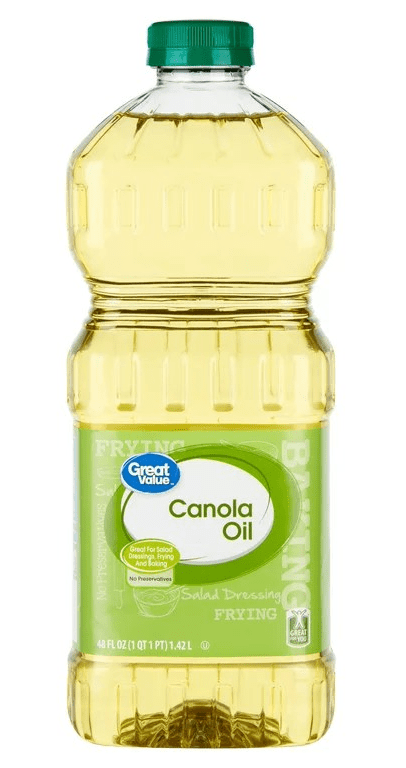 This question has been asked many times and in this article, we’ll seek to discover the unique qualities of this oil; an oil which is now quite frequently used in cooking and prepackaged products. We’ll also examine if this oil has any potentially unsafe aspects. Let’s explore.
Rapeseed Oil vs Canola Oil
Both Rapeseed and Canola Oils are derived from the same flowering plant; the Rapeseed plant. It is a yellow flowering plant that is became commonly planted in Canada, where Canola oil was discovered. Hence, the contraction of the two smaller wordlets “Can” for Canada and “ola” for oil.
From Wikipedia:
Rapeseed, also known as rapeseed oil, is a bright-yellow flowering member of the family Brassicaceae, cultivated mainly for its oil-rich seed, which naturally contains appreciable amounts of erucic acid.
Source: Wikipedia
 “What exactly is erucic acid”, you ask? Good question. According to Wikipedia, “Erucic acid is a monounsaturated omega-9 fatty acid.”
Among scholars and researchers, the debate rages whether erucic acid is toxic to humans. According to the FDA, the amounts of erucic acid in Canola oil have been sufficiently reduced to be labeled as GRAS (generally recognized as safe). Does that mean erucic acid is safe for human consumption? As stated above, the debate still rages.
For example, from Wikipedia’s erucic acid page:
Studies done on laboratory animals in the early 1970s show that erucic acid appears to have toxic effects on the heart at high enough doses. However, more recent research has cast doubt on the relevance of rat studies to the human health of erucic acid. Rats are unusual in their inability to process erucic acid, and the symptoms in rats caused by a diet with high levels of erucic acid have not been observed in pigs, primates, or any other animals. An association between the consumption of rapeseed oil and increased myocardial lipidosis, or heart disease, has not been established for humans. While there are reports of toxicity from long-term use of Lorenzo’s oil (which contains erucic acid and other ingredients), there are no reports of harm to people from dietary consumption of erucic acid.
Breaking the above down, there have apparently been multiple studies going as far back as the 1970s. However, apparently more recent studies have concluded that erucic acid may or may not be toxic to humans in the same way it has been shown to be toxic in rats. This is allegedly supported by the fact that pigs, primates and “any other animals” (left undefined in this Wikipedia article [and study?]) have not been associated with the same effects as those observed in rats.
Clinical Studies
The above clearly opens more cans of worms than it closes. Studies that conflict with one another generally mean something is up with one or more of the studies. What this generally means is that either the test conditions were not the same and/or the testing protocol was substantially altered between one study and the next. Studies, like many things in life, are created, implemented and, most importantly, paid for by humans with an agenda.
Many of these erucic acid studies are actually produced by money-making food producers with a vested interest in ensuring their products remain viable, saleable commodities in the marketplace. How that typically manifests in clinical studies is by performing clinical tests with extremely narrow constraints so as to eliminate potential conflicting data from surfacing during the testing protocol.
Specifically, new studies have learned from the older more broad studies, which the newer studies then typically exclude testing for factors that would conclude negative outcomes. In other words, it’s not what they’re saying to you about their test conclusions, it’s what they hide from you about the operation of that clinical test outcome. Excluding negative testing outcomes from the testing method only serves to mislead the public.
This hiding of information is tantamount to lying. Testing methods shouldn’t be so narrow focused that they allow consumers (and researchers) to jump to the wrong conclusions about the test results. Yet, that’s the state of clinical testing being performed today. It’s not about performing clinical tests that produce broad results, but about producing clinical tests that produce very specific, very narrow, but very beneficial test results to the benefactor. In other words, the buyer of the clinical test can game the test results in their favor.
Levels of Erucic Acid in Rapeseed vs Canola Oil
In life, all things in moderation. Generally, most consumables don’t kill you… at least not instantly. For example, minuscule amounts of lead and arsenic exist in our food supply. These very tiny amounts aren’t short-term toxic to humans. Thus, this is why the FDA can label foods with these tiny amounts as GRAS. The same likely holds true for erucic acid. In large quantities, erucic acid likely does become toxic to humans, in the same way as ingesting large quantities of arsenic and lead can.
The rapeseed plant contains between 20 to 54% erucic acid. This means that crushing the seeds and extruding the oil directly from the rapeseed plant will produce an oil that contains between 20% to at least 50% erucic acid.
Newer studies attempt to refute the earlier 1970s studies, which generally found that the levels of erucic acid in rapeseed oil was toxic to humans… extrapolated from their rat testing. The newer studies now believe, apparently, that erucic acid in the percentages found in rapeseed oil are not apparently toxic to humans, because it was not found to be toxic to pigs, primates or “other animals” (whatever those are) even though rats exhibit a different, apparently more toxic outcome.
Let me just say that erucic acid is an acid. Acids in larger quantities are generally not great for the human body when consumed. If you want to know erucic acid’s chemical formula or other sciency details, feel free to head on over to Wikipedia to check it out.
The Business of Science
Consumer products are a business; a very lucrative business to be specific. When that business falls into consumables such as foods, supplements and drugs, the United States government gets involved. Such oversight involvement includes agencies like the FDA (Food and Drug Administration), USDA (United States Department of Agriculture) and even such agencies as the CDC (Center for Disease Control). Each of these departments defines protocols for handling certain aspects of how businesses may operate safely with regards to human consumables within the United States.
The FDA, for example, defines specific requirements for food and drug producers when introducing new products to market. Many of these requirements include clinical testing and clinical trials. These clinical studies determine potentially ill effects as well as positive benefits from a food or drug consumption. The requirements of using clinical studies opens up a new business; the business of science.
You might be thinking, “Aren’t such narrow studies which choose to hide important details a form of gaming the system?” You’re not wrong. The problem is, as long as a study is performed in a technically complete way using proper scientific methods, the FDA must accept it as a genuine study. The FDA doesn’t determine if the study was gamed or if the person(s) paying for the study biased the study in a way that misled the FDA (and ultimately consumers).
It gets worse. If multiple studies are needed and each are gamed in the same way, this situation makes it even more difficult for the FDA to claim a problem. In other words, the FDA must accept all studies presented as genuine and valid so long as the studies employ proper protocols, including reaching conclusions… even when those conclusion are intended to mislead or are, indeed, invalid.
Yes, the FDA’s system can and has been gamed. We’ll need to understand how and why it happens. When millions, if not potentially billions of dollars are on the line, gaming the science is the least of that business’s worries. In other words, if a business doesn’t choose to game the science, their product might not ever be sold.
I can hear all of those who work in the scientific testing professions groaning now over “conspiracy theories” in these statements. To those people I say, look around more closely. Are you really that naïve and idealistic? While there are some businesses who actually intend to hold onto business ethics, there are many businesses that absolutely do not and will not. Even for those (plausibly deniable?) naïve CEOs of businesses that claim they are ethical, it only takes one bad actor in the management ranks to ruin all of that. Anyone who truly believes a CEO’s purported “rogue manager theory” did all the scummy business work alone is deluded. The orders for this kind of bad business comes from the top, but this scheme is simply a way to afford the CEO plausible deniability. Swallowing this plausible deniability junk from a CEO is stupid, actually. Who truly believes that any CEO doesn’t know exactly what their underlings are doing? If he or she doesn’t, then he or she shouldn’t be and isn’t a CEO.
Unfortunately, as businesses (or, more specifically, CEOs) put more pressure on managers to produce, managers find ways to cut corners to get things done quicker and faster. That can mean gaming systems to get past certain hurdles to complete processes faster and, more importantly, successfully. Thus, business ethics are entirely at the whim of various managers within an organization. If the pressures of getting something done fast and successfully outweighs the business ethics of the actual situation, then out the window go ethics. No employee wants to be the one to put their job on the line because they were the person who upheld business ethics, choosing to do something in the ‘right way’. When such an employee is slow in producing results, a CEO hears all about it.
In the science world, that likely means gaming a study (or set of studies) to get it (them) done faster and with the intended results. Instead of studying all aspects of a specific food product’s features and safety, the science might be geared to look at only a very tiny part of it. From here, it gets worse. Because study producers are PAID by businesses holding a conflict of interest, studies are likely to be rarely free of tampering and bias in the client’s favor. What service organization taking money for services rendered intentionally chooses to upset a buyer? That’s not good for a business reputation. This is the business of “buying” science.
Theranos as an Example
While Theranos’s tiny blood vial testing idea might seem like an outlier for medical business ethics, the reality is that Theranos simply got caught at it. Many other unethical businesses never get caught, primarily because they pay politicians (to hide their tracks well) to keep from getting caught. Theranos’s execs simply failed to understand the game they were playing; a game that led to their demise.
The one place where Theranos was exonerated was against the patients who had their lives put at risk by Theranos’s unethical and unsafe testing practices. The court said no on that charge, but instead caught Theranos’s executives in a web of fraud against investors. Oh no, mustn’t hold Theranos accountable to patient safety, but by all means let’s pay the investors back. America’s priorities are entirely screwed up. Again, money.
Money vs Safety
And that’s exactly where we are today. The food and drug area of business in the United States is all about making money at the expense of human safety. That’s clear. Watch any of the TV advertisements for any drug. You’ll notice somewhere in the middle of the advertisement, the announcer will list off a litany of dangerous side effects, many including death.
The same goes for foods and supplements. Because the supplement industry is entirely unregulated, anything can be placed into these supplements. There’s no efficacy or safety studies required at all for these products, yet more and more so-called MD doctors are advocating and even advertising for such supplements. Again, money.
As for food stuffs, they fall under the same pitfalls as drugs, but it all unfolds in a different way. For example, if a food contains only sugar alcohols, it can be claimed to be sugar free. That sugar free label is the way the game is played. Even though a sugar alcohol is still a type of sugar and is acted on the body as though it were sugar AND because the product does not specifically contain sucrose, the product, according to the FDA, can be labeled as sugar free. The FDA essentially doesn’t class sugar alcohols as “sugar”. THIS RIGHT HERE is the game.
Because the FDA allows for and endorses deceptive labeling, it allows food producers to play games with their ingredient labels, allowing them to place such deceptive labels that make their foods appear to be more healthy than they actually are.
There are many, many such labeling games available to food producers. Some of these labeling games make it seem like the food product is “organic” or “sugar free” or “healthy”, when in fact the product is none of those things, making the situation quite the opposite.
Why does this game exist? Again, money. Food producers stand to lose millions, if not billions, if these ambiguous labeling games were to become honest instead of snake oil. If the government were truly looking out for public’s safety, these labeling ambiguity games wouldn’t exist for manufacturers to play against consumers. Yet, they do exist… and here we are.
Is Canola Oil Safe?
Because conflicting studies exist, some of those studies conclude that one of Canola Oil’s ingredients, erucic acid, isn’t safe for human consumption. The conflicting studies choose to claim that because negative reactions have occurred only in rats and not in pigs, primates and “other animals”, that erucic acid should be safe for human consumption.
Of course, that conclusion is a leap. If limited human testing has been performed, then the studies are all best guess. Humans are not pigs, not apes, not “other animals” and definitely not rats. Studies tested on animals may suggest the possibility that a causal link exists, but there’s no definitive way to know until or unless adequate testing has been conducted on humans.
Though, testing has been conducted on humans, but not in a study. Because the FDA has granted GRAS status to Canola oil based on these conflicting studies, that means that we consumers of this oil are now a live, real world rats for a study. Unfortunately, because we’re consuming Canola oil without proper or adequate human studies, there’s no way to know how much, if any, erucic acid is safe for human consumption. Again, the previous animal studies only suggest that erucic acid MAY be safe for humans… potentially based on false logic.
For more answers on this topic, we’ll need to reach out to our friends in Australia to read a monograph on this subject:
Rats were fed rapeseed oils at up to 70% of the calorie content of their diet. The rats were reported to have developed myocarditis.
[…]
It has been suggested that the rat is not an appropriate model for determining whether erucic acid may pose a risk to human health (Corner 1983). A number of reasons have been put forward for this. Firstly, most of the rat studies involve feeding oils at a concentration of around 20% or more by weight in the diet. A level of 20% approximates human lipid consumption. It has been suggested that rats are physiologically incapable of metabolising such concentrations of oil in the diet (Grice and Heggtveit 1983).
But, then the monograph makes this assertion:
The toxicity of erucic acid is virtually always considered in the context of the toxicity of rapeseed and mustard seed oils, which can contain high levels of erucic acid. Most humans would be exposed to erucic acid by the inclusion of these oils in the diet.
What this states is that erucic acid is not a natural component of pretty much any other food in the human diet. Meaning, consuming Canola oil is the sole way to actually consume erucic acid. As a result, humans wouldn’t consume erucic acid in any way other than via consuming Canola oil. But, the monograph also goes on to make this sort-of disclaimer:
This, however, can complicate the interpretation of the study results, making it difficult to ascertain whether the observed effects are directly attributable to erucic acid, or to some other component (or combination of components) in the oil.
No, actually what this disclaimer is truly attempting to say, but doesn’t outright say, is that because the oil is consumed with many other foods at the same time as the oil, there’s no way to know what food may have caused any issue in any specific human. In other words, there’s no way to nail down that any specific malady is associated with the consumption of erucic acid.
It’s a standard disclaimer argument made by “scientific” people and more specifically, by businesses when they need to sell their product to consumers. Basically they use weak logic, “Our product is safe because even if you do choose to consume it, there’s no way to ascertain if our product actually caused your malady.” Why is that? Well duh… because it hasn’t been adequately tested on humans using similarly detailed studies applied to rats and other animals.
With that said, of the human testing that has been done, the monograph does state this:
In humans, the digestibility of erucic acid containing oils is 99% (Deuel et al 1949, Vaisey et al 1973). In the adult female rat, however, the digestibility of HEAR oil is only 77% (Deuel et al 1948).
Okay. Human digestion of oil containing erucic acid is 99%, way more than the 77% digestion in rats. That could be an overall bad thing. It would mean digesting more of this oil, faster. Digesting more of the Canola oil means that more erucic acid is now available for potential damage. BTW, the HEAR oil acronym means high erucic acid rapeseed oil. Canola oil is considered low erucic acid rapeseed or LEAR oil.
Canola oil should contain around 2% erucic acid by volume compared to rapeseed oil which contains 30-60% erucic acid by volume. Let’s keep going.
The paper goes on to state:
Erucic acid is poorly oxidised by the mitochondrial β–oxidation system (reviewed in Sauer and Kramer 1980).
[…]
In humans, it has been shown that isolated heart mitochondria metabolise erucic acid more slowly than oleic acid (Clouet et al 1974), confirming that rates of erucic acid oxidation are decreased in humans, similar to experimental animals.
[…]
In [the] liver, the presence of erucic acid appears to induce the peroxisomal β-oxidation system (Lazarow 1994).
What this portion is saying is that because erucic acid is poorly oxidised in some human tissues, particularly in the heart, the erucic acid can hang around longer and potentially cause more damage. Oxidation from tissues means that there are processes to break down and eliminate the component from the human body faster, such as this speed being faster in the liver than in heart tissues, according to this monograph.
The paper concludes, after a lot of discussion around rats, pigs and monkey research, which you can read for yourself, with the following statement:
The heart appears to be the principal target organ for toxic effects following short-term
exposure to edible oils containing erucic acid. The most common observed effect, among
rats, pigs and monkeys, is myocardial lipidosis.
Myocardial lipidosis is a condition where fats accumulate in the heart reducing the force by which the heart can contract… or, in essence, it weakens the heart muscle’s ability to pump blood through the system. Oils containing erucic acid, then, stick around longer in the heart muscle. How long it remains in the heart is a question unanswered by this paper. Some studies do suggest that it does oxidize over time and will eventually work its way back out of the heart. The question is, how long will that take
Is that weeks? Months? Years? Better testing would need to be done.
Fast and Junk Foods
Easy and quick bagged and boxed meals, such as potato chips or mac-and-cheese may contain small traces of Canola oil. Food manufacturers can and do use Canola oils as part of producing bagged, frozen and boxed meals and other grocery store foods.
For these types of prepackaged foods, you’ll need to read the label closely. Most labels are required to list Canola oil as an ingredient. However, because most potato chips today are manufactured with varying oils including soybean, corn, peanut, palm kernel or canola oils, you won’t know which oil was used when the bag or box says “vegetable oil with one of the following:”. Because manufacturers leave the door open to using multiple oils to craft such foods, you don’t know if Canola oil is in the bag.
If you’re buying a bottle labeled as “Vegetable Oil”, you should read the ingredients to find out what it contains. It’s most likely to be soybean oil, but it could be a mix of various oils including corn, soybean and/or canola.
The point is, when you see “vegetable oil” on any package label, you should avoid buying that product if you don’t want to potentially consume Canola oil.
Is Canola Oil Genetically Modified?
One final aspect which hasn’t been discussed as yet, besides the erucic acid potential toxicity, is that Canola oil also exists as a genetically modified organism (GMO) to be herbicide resistant and bug unfriendly. This allows for bigger crop yields and, of course, higher amounts of money when sold.
There is also another GMO aspect, but is used in limited manufacturing use cases. There is also a high laurate genetically modified rapeseed plant version. The high laurate component gives the oil a quality not unlike cocoa butter, which means this version of the Canola oil can be used in replacement where cocoa butter might be used as an ingredient, typically in confectionery uses. If you’re searching to buy candy and the ingredient list shows “Laurical” as an ingredient, the confection contains Canola oil and, by extension, erucic acid.
If you’re concerned over eating GMO based foods and wish to eliminate GMOs from your diet, Canola oil is worth removing for this reason alone, let alone that it also contains erucic acid.
Of course, Canola oils being placed into products for external use purposes, such as in body lotions or cosmetics, these don’t get internally consumed. It’s up to you whether you wish to apply such to your skin. Though, some people have found it very difficult to wash Canola oil out of stained clothing, which may have to do with the erucic acid.
Should I Eat Canola Oil? Is it safe?
As we circle back around to this article’s original question, these answers are really left up to you to decide. Should you choose to consume oils without erucic acid (i.e., peanut, corn, olive, avocado, soybean), you don’t need to worry about possible myocardial lipidosis consequences from erucic acid causing oil build up in the heart tissues. That doesn’t mean that peanut or corn or soybean oils don’t come with their own myocardial consequences. As said above, all things in moderation.
The question is, just how myocardial toxic is erucic acid? Studies are inconclusive. However, studies do suggest that oils containing erucic acid do build up in the heart, which is never a good thing. If your family has a known genetic predisposition to heart conditions, then avoiding Canola oil is probably your best long term health strategy involving Canola oil.
In addition to myocardial lipidosis, other heart affects may as yet be unknown. Building these lipids up in the heart could cause other later issues such as heart arrhythmia or other medical complications over time. There are not yet enough long term human studies on the affects of erucic acid in the body. The lack of these studies is partly due to the intentionally narrow-focused positive-benefit studies produced by Canola oil producers. These same producers have no incentive to produce negative studies; studies which might cause their products to be removed from the market. Thus, any further studies would have to be paid for independently of these food producers. Clearly, no one outside of these oil producers has any incentive to perform these additional erucic acid studies on behalf of the consuming public.
With that said, I choose to avoid Canola oil as much as possible because there are too many unknowns with this oil product, including the fact that can be a GMO product. In other words, if it has Canola oil on the ingredient list, I don’t buy the product. Unfortunately, many popular potato chip manufacturers these days list Canola oil as a possible ingredient. The same goes for many prepackaged food items found in the grocery store.
The best choice is to buy the oil you prefer to use, such as olive oil, and make your own foods from scratch at home using your own choice of oil. When I fry or bake, I prefer to use olive oil.
When buying from fast food restaurants, there’s no real way to know for sure if a food contains Canola oil. You can ask a staff person for the oils the restaurant uses to fry its foods, but there’s no way to know if Canola oil may used in other ways. For example, when you buy a salad and they hand you a packet of salad dressing or even when they hand you extra packets of mayonnaise. These packets might contain Canola oil. If the salad dressing comes already on the salad, then you really won’t know what’s in it. The ingredients lists on these packets are so small as to be practically unreadable without a magnifying glass. While fast food restaurants are now beginning to offer up calorie amounts, they are not yet listing ingredients for the foods they serve.
As non-Canola oils do not contain erucic acid, cooking with these oils is one less potential health problem to worry about. The issue, though, is that it can be difficult to avoid consumption of Canola oil entirely as it is becoming more and more ubiquitous, with prepackaged foods and with fast food restaurants. With that said, the less often you consume Canola oil containing products and then only in very small quantities, such long term health consequences may be drastically reduced or possibly even avoided.
Why risk your health over conflicting studies and a questionable oil when you don’t have to?
↩︎
Rant Time: Twitter’s Rebrand Suicide
 In an odd move, Elon Musk has now officially thrown out the baby with the bathwater in Twitter’s rebrand to ‘X’. Yes, Elon Musk has officially rebranded Twitter to the single letter ‘X’. This will be short and sweet. Let’s explore.
X as a brand
Let’s jump right into this extremely questionable change. Twitter, as its former brand, had built extremely strong brand loyalty. From the cute and very much G-rated iconic blue bird to the light featured microblogging interface of the platform itself. Arguably, that small blue bird told you everything you needed to know about Twitter at first glance. There was no brand confusion between Twitter, the Twitter bird icon and any other platform or industry. Twitter was (and is) an entirely unique brand. Twitter even went so far as to define a new word in our vernacular as ‘tweet’ to signify the small microblog conversations on the platforms. Twitter was (and perhaps still is) about as strong a brand identifier as anyone could ever hope to produce for a product… and now it’s being totally thrown away.
On the other hand, ‘X’ has too many other uses and connotations in both the technology industry and in other industries, such as within Motion Pictures. Yeah…
I mean, why would you abscond with a single letter as a brand; a letter that, within the porn motion picture industry signifies adult content? X is also used by operating system designers for X11 or simply X for short, the graphical user interface server. Even Mac OS X’s branding could be conflated… and that’s perhaps what Elon is hoping. Between X-rated movie content and X utilized in the operating systems including with Mac OS X, the branding of ‘X’ is ripe for confusion and conflation. It’s even the middle letter in the word toXic, which Twitter has fully become since Musk’s takeover.
X also signifies crossing letters, words or phrases out and it sometimes even means ‘deletion’. Twitter was always about creating new content, never about deleting it or marking it out. It’s an odd play to buy a domain and rebrand when ‘X’, in terms of writing prose, has always signified deletion, hiding or marking something out. Again, this is a completely negative general connotation when applied to writing prose.
In other words, X is probably the worst brand identifier anyone could possibly choose for any site, least of all for Twitter!!??
Flipping the Bird
Elon Musk seems intent on flipping the bird at all things Dorsey. In that vein, Musk has questionably decided to rebrand Twitter to something other than Twitter. Um… Okay. However, rebranding is not necessarily a smart idea, but so be it. It even seems that Elon has thrown away yet more money to obtain the one letter domain x.com to support the rebranding (which this domain purchase probably cost him no less than $50k, but probably closer to $1 million or more), which at this moment redirects to Twitter.com.
(Note: Not linkifying any of Twitter’s domains in this article is entirely intentional. If you wish to visit any of the domains stated, you will need to type the domains into your browser manually.)
Clearly, Elon seems intent on replacing twitter.com with x.com at some point in the future. There are probably too many technologies within Twitter’s own internal software stack which reference the twitter.com domain name to change to x.com instantly. Redirection is the easiest (and laziest) first step.
Branding Difficulties?
The problem with this ‘X’ branding is not only its bad connotations around the porn industry, the colors chosen also embolden a very dark look. Dark grey and black brandings don’t say light and cheery. X’s color choices and even the letter itself say “dark and sinister.” Because X looms large with already existing, huge negative connotations, attempting to apply that to a site which is intended to offer a small, light microblogging interface that’s intended to be both fun and informational only serves to change the meaning and tone of this site in the negative.
Twitter has already embodied negative connotations ever since Musk took over. With his questionable foray into allowing the MAGA extremists back onto the site, allowing those bad actors to spew both conspiratorial and provably false rhetoric, Twitter is no longer a safe space. Twitter’s once light, safe environment disappeared the instant Musk took over, now solidified by this ‘X’ branding change.
Since Musk, Twitter has become an unsafe haven for negative, false and useless information. It is also a new toXic cesspool of hate and violence speech. If that’s what Musk was going for with the X branding, then well done. You’ve succeeded in turning Twitter into a toXic cesspool of false rhetoric, hate and violence.
Death Knell
With this rebranding to X, the only thing I expect to see is the final remaining advertisers to abandon what’s left of Musk’s quickly sinking website. Why would you, as an advertiser, want to associate your advertising brand with a brand identity that appears to be associated with negative adult content? Yeah. Not smart, but then we already knew that Elon Musk’s intelligence was limited to salesmanship, not in operating technology sites.
With this extremely questionable rebranding, I fully expect Twitter to wind down operations within 6-9 months… closing its doors soon after. There’s honestly no way to bring a modicum of safety or even the idea of safety to a site branded as ‘X’.
X doesn’t say, “safe.” On the contrary, this new branding says, toXic, adult porn content. If Musk wanted an intense uphill battle to try and change this letter’s already mired past uses, changing to X is the perfect way to get that challenge; a challenge I don’t think Musk is smart enough to win. Here you had a perfect branding with Twitter and the blue bird. Then, the current owner abandons it over a single letter that appears dark and sinister and which is mired in both adult content connotations and other technology uses. Nope, Musk is not very smart at all!
↩︎
Should I install Instagram’s Threads?
 If you’re looking for guidance on installing any new software, you should always review the privacy policies, data retention policies and methods of deleting that data for any company providing a service. Let’s explore.
Instagram and Meta
Meta, the parent company of Facebook, wholly owns Instagram and now the new companion app released for Instagram called Threads. Threads is not a new app. It is, in fact, an old Instagram app that was discontinued in 2021… only to be born anew in 2023 with a new Twitter-like interface.
The problem with this app isn’t that it looks and feels like Twitter, but that is a problem which might born legal issues for Meta. No, the problem with Threads is who owns and operates this app.
If you already have an Instagram account and you enjoy using it, adding on Threads is likely not a problem. You likely already understand the pitfalls of owning an Instagram account.
On the other hand, if you have dropped using Facebook and Instagram and WhatsApp and all other apps produced by Meta, then downloading Threads is out of the question.
Data Retention and Data Removal
We already know that Meta never removes any data on request. The best that Meta will ever do is disable an account. That’s it. Data stored on Meta’s servers remains there forever. Meta never purges data not even upon request.
What that means is that if you’re on the fence about installing Meta’s new Threads, you should be extremely cautious about installing this app and agreeing to those services. Threads may look like Twitter and act like Twitter, but the data you input into Threads will be stored and collected by Meta forever.
Even users who have attempted to delete Threads data or their account have already run into a roadblock over this issue.
Another, who already apparently signed up, was similarly displeased: “We can’t delete our threads account without deleting our Instagram? They knew people would instantly hate it so they made it a saw trap.”
Source: Fortune
What that means is that if you already have an established Instagram account, you cannot delete anything you write into Threads without also deleting your Instagram account. Be cautious when thinking about installing Threads.
Knowing Who You Are
Because Meta acts much like LexisNexis in data gathering involving its users both on and off Meta’s sites, Meta can easily correlate all of their stored data and know exactly who you are just by having their app installed on a specific phone device. This means that there is no way to hide who you are from Meta. Meta’s data aggregation and collection goes way beyond normal and into the frighteningly dangerous territory.
It’s even worse than it sounds. Meta collects data on everyone it possibly can, whether they have an account on Meta’s platforms or not. What this means is that if you become a new user to Facebook, Meta will find and link any previously collected data about you to your new Facebook profile. You may think your account is new, but in reality Facebook might have years worth of purchase history, web browsing history and other rather creepy, stalking data about you now attached to your brand new account profile. All of this data you have absolutely no control over. You might not even know that it’s attached as Meta is great at hiding the fact that they perform data collection and aggregation in the first place.
What does this mean for Threads?
Threads may seem like an innocent application to install, but because of the sheer ugly way that Meta handles its user’s data, it could actually turn into a nightmare for you. It only takes one “problematic” Threads message and you may end up with real world consequences. Attempting to delete your Thread data seems impossible at the moment.
Deactivation
What Meta typically tends to offer is hiding of data. What that means for you is that if you deactivate your account, the best that Instagram offers at this moment is that your Threads data should no longer remain visible to the Internet through Meta’s interfaces. However, your data still sits on a Meta server somewhere for a data breach to occur and be leaked to the public.
What deactivation means is no security at all. It simply covers Meta’s method of wanting to retain all data it collects, but at the same time attempts to placate users by hiding that data from prying eyes, at least for this moment in time.
Data Value and Threads
Unfortunately, Meta values its storage and aggregation of data more highly than it does user privacy. This means that should you choose to install and use Threads, you’re at the mercy of Meta’s lack of data privacy. As I said above in the deactivation area, it’s all about placating the user instead of actually doing the correct thing and expunging data on request.
It’s clear that Meta never expunges data. In fact, asking to have your Facebook account deleted doesn’t work. A Facebook account is never deleted. It is simply deactivated. Even if you fill out the correct forms and request a total data purge from Meta’s servers, Meta simply won’t do it.
How do I know? Because I still, to this day, receive emails from Meta requesting that I reactivate my Facebook account. If Meta had actually purged all of my data, that would include purging my email address from their system. Yet, they STILL haven’t done so in the 8 years since I requested my Facebook account deletion. Facebook still sends me emails!
Threads
What exactly is Threads? Threads is a reincarnated and redesigned version of an older app that Instagram had formerly released, but that shut down in December of 2021. This older Threads app was pulled from the platform and, or so we thought, was gone until today. Today, July 6th, 2023, Threads has been reborn as a Twitter clone.
I have never used the older Instagram version of Threads, so I cannot tell you how it worked or how close it might have been to Twitter’s interface. However, this 2023 version of Threads, by all accounts, mimics Twitter far too closely. Threads is actually so close to working like Twitter that Elon Musk is now threatening Meta with lawsuits over the release of Threads. I have no sympathy for Elon or Twitter as of now. I dumped Twitter months ago and haven’t looked back. If Elon is suffering at the hands of Meta’s Threads app, that’s really a problem of Elon’s making.
If Elon had continued to produce a robust, safe, trustworthy social networking application, Threads couldn’t succeed. Clearly, Elon’s Twitter is completely failing at being a “safe space.” Thus, Threads is taking off like wildfire.
This statement about Twitter’s lack of safety is not meant to imply that Threads is a “safe space”. Oh, no no no. It’s way too early to know exactly where Threads will land on the safety spectrum as yet, but I have my doubts.
Data Grab Twitter Clone
Twitter clones are not a new thing. Truth Social looks and acts far too much like Twitter. I don’t know why Musk hasn’t chosen to sue Donald Trump over Truth Social. Yet, Elon Musk feels the need to throw down the gauntlet on Meta? Unfortunately, since Musk’s takeover, Twitter has become a toxic cesspool of hate with right wing MAGA extremists.
Further, it also seems that Musk has slowly fallen into the MAGA right wing extremist camp himself, to the detriment of Twitter remaining a “safe space”. Musk had originally proclaimed to be mostly center politically, but his MAGA conspiracy actions have spoken far louder than any of his hollow words when claiming Twitter is a safe social space. To be honest, Twitter will remain an unsafe social space so long as Musk remains at the helm.
Twitter Killer?
Will Threads be the Twitter killer? Perhaps in a short term. Users flock to anything that’s new, particularly when the current mainstay is so completely toxic, inappropriately managed and is effectively being run into the ground. Anything that seems more stable and less toxic is likely to garner a lot of attention. Unfortunately, toxicity exists everywhere, including within Meta’s app spaces.
Jumping out of Elon’s Twitter dumpster fire and into Threads; this is simply just another dumpster fire in the making. It’s new, yes, but it’ll just as quickly become a toxic cesspool of hate speech. It remains to be seen if that toxic cesspool becomes a liberal hate ground or a conservative hate ground. The only way Threads can avoid the hate speech outcome is to ban political speech entirely on Threads.
If people want to talk politics, they would need to go somewhere else. Unfortunately, Meta doesn’t have the ambition to do that. Removal of political speech would remove too many people from their platform. Meta can’t afford to alienate that many people. Thus, it’s only a matter of time before Threads becomes the new place for political hate speech. That kind of hate speech is likely to come to Threads sooner rather than later. It’s highly unlikely that the Instagram team is prepared for the onslaught of garbage speech, moderation and removals required for what will become the new toxic application to hang out on.
Dumpster Fire
Unfortunately, Threads is already a dumpster fire and it doesn’t even yet know it. Meta understands what it takes to operate a large platform, but it clearly doesn’t understand how to properly manage social discourse. If the moderation tools in Threads are anything like Twitter… moderation which requires involvement of an Instagram staffer, then Threads will fail as spectacularly as Twitter.
The only way Twitter, or at least a platform like Twitter, can survive is to change the entire way it handles microblogging. Instead of requiring Meta’s staffers to handle removal requests, Meta should push the burden and consequences of moderation success or failure onto the thread creator. What this means is that as soon as a person creates a top level thread, it becomes that producer’s responsibility to police what’s said in that thread.
Of course, there will be reporting options to report clearly violating speech to Meta. However, the thread creator will need to handle the burden of dealing with any comments. If a user in the thread begins spewing hate speech, the thread creator should be responsible for taking care of that user’s speech and removing it, not Meta. If the thread creator fails to manage the thread, then the thread creator will get penalized for that lack of management… meaning, throttling, banning and ultimately suspension.
If you write microblog texts that elicit such negative user interactions and you choose to do nothing about those responses, then you as thread creator take equal blame when those comments are reported and removed by Meta. This forces the burden onto you, the thread creator, to limit who can comment on your threads to avoid such negative engagements.
Additionally, moderation tools need to drastically improve. Meaning, if a user comments, the comments should be held in a moderation queue until the thread creator can approve, delete or report the comments. If the thread creator must take the burden of comments in a thread, then moderation tools are required to help the thread creator manage those comments.
Unfortunately, I’m fairly certain that Threads didn’t design their app this way. Instead, it likely works just like Twitter, where Meta staff are required to manage bad actors.
Real Names
One thing that Meta does that Twitter doesn’t do is require the use of real names on its platforms. This means that if you sign up for any Meta service, you are required to supply your real name. This means that when using Meta’s services, your real name is easily seen. Whether Threads allows the user to hide this information is currently unknown, but I’d guess not.
Will this blog author sign up for Threads?
No. I’ve already pulled myself out of Meta’s universe of apps. I have no intention of signing up for Instagram simply to use Threads…. only to put myself right back into Meta’s garbage system all over again? No, I will not sign up for Threads.
Would I recommend anyone else to sign up for Threads?
No. Meta’s application universe is so majorly problematic (you can’t delete your Threads account without deleting your Instagram account), I can’t recommend anyone to sign up for or use any services that Meta supports, especially if you value your family’s privacy. Meta’s top apps to avoid include:
- Threads
- OculusVR
- Onavo
- Beluga
It’s also worth noting that Meta owns many, many small subsidiaries that you should avoid as well. Check out this list to see what other apps you should avoid. If you’re really, really interested in testing what Threads is all about, then I’d strongly recommend signing up for a brand new Instagram account under a different email address. Unfortunately, Instagram may determine that you already have another Instagram account and link them together. Be careful.
However, it should now be crystal clear that Meta’s newest Threads is a must avoid.
↩︎
Biden: Supreme Court Packing
 If Joe Biden has ever had a strong incentive to add more seats to the Supreme Court, the recent Supreme Court decision against Joe Biden’s loan forgiveness program is just that incentive. Let’s explore.
Legal Merit and Standing
The Supreme Court is, at this point, simply going through the motions. This once seemingly impartial entity is simply pretending to be a fair and just body, but is now an almost completely Republican owned and partisan entity targeting the Democrats (and Democracy) at every turn. It can do this because of the way the court is now packed across party lines, in a highly partisan way.

However, it’s easy for these Republican Justices to pretend to use legal jurisprudence in the guise of their fully partisan agenda. It’s sickening and disheartening that people who have been put in a significant position of supposedly unbiased power in the United States can become yet another pawn of biased politics; wielding their judicial power like a weapon and targeting it firmly against the opposing political party and ultimately using their power against the very American people they swore to protect. That’s not justice.
If anyone has weaponized anything, it’s Donald Trump. With his court packing of the Supreme Court, this is exactly where the United States firmly sits. The Republicans have now firmly weaponized the Supreme Court against the Democrats and, more importantly, against the American people. It’s a sickening turn of events. It also signifies, once again, the destruction of the American people, America’s Democracy and the further erosion of America’s constitution.
Democrat Party
I’m not a Democrat by any stretch. I am also not a Republican. I’m a non-partisan writer who sits somewhere in the middle. I also don’t identify with either of these current two political parties. I don’t like how either of these two entities operate; neither of which actually perform their services on behalf of the American people for which they were elected. Both parties certainly make bold claims about what they are doing is “for the American people”, but the reality is, they do not and they haven’t worked for the betterment of America in a very, very long time.
With the above said, I can sniff out partisan politic antics instantly. This recent Supreme Court ruling against Biden’s loan forgiveness has the guise of seeming legit and above board, but underneath that legal facade, this SCOTUS ruling is 100% driven by partisan politics and is about as far against American betterment as one can get.
The Democrats don’t deserve to be harangued by Republicans any more than Republicans deserve to be harangued by Democrats. However, Republicans have been much more actively on the offensive against the Democrats (and ultimately against America) than vice versa. The Democrats have mostly been attempting to stay out of the Republican’s childish fray. Yet, the Republicans constantly keep pushing the Democrat-bad buttons, with Fox News Network taking this Republican button pushing to entirely unnecessary extremes.
Being nasty and vile towards anyone else is not what politics is about. It’s not what America is about. Yet, here we have supposedly conservative Christians taking this “nasty game” as far as they possibly can. How can ANYONE proclaim to be a conservative Christian and hold these nasty, vile and disgusting behaviors dear? Disgusting.
Both parties have lost sight of the true agenda of elected (and appointed) representatives. Instead of spending inordinate amounts of time in-fighting with one another, that time could be better spent actually producing legitimate, workable fixes for America, America’s Economy and the American people. Instead, we have the SCOTUS, who incidentally should have even declined to accept this case entirely, is instead poking their mostly Republican heads into a case were they have no business… and worse, making biased political statements with their actions.
Biden’s Supreme Court Revision
It’s time for Joe Biden to wake up. He can’t afford to sit idly by while Republicans run roughshod all over America, the American people and America’s constitution. Instead, Biden has a way to bring balance back to the Supreme Court. I’m not saying that the Supreme Court will be in any way fixed by Biden packing this court. Oh, no no no. That will take much more effort and changes. However, giving equal balance back to both liberals and conservatives alike on this court will at least make this court’s rulings much more fair and take this now unfair balance of power back out of the hands of the now Republican packed Supreme Court.
Right now, the court has 9 justices. However, there are 13 Federal circuit courts that sit directly under the Supreme Court. At the time when 9 justices were implemented, there were 9 circuit courts. This meant there was 1 justice for every circuit court. Since the circuit courts have increased to 13, our justices are now out of alignment against the circuit courts. This means that to put the SCOTUS back into balance against our now 13 circuit courts, 4 more justices must be added to the Supreme Court.
If Joe Biden pushes to have 4 new justices added to this court, he may even choose to nominate these justices, making the balance of the court change to 6 Republicans and 7 Democrats. That could possibly bring some semblance of balance back to the court, but also possibly push it back over to the Democrats. That’s a small price to pay to get this court out of its current heavy Republican imbalance. One extra Democrat justice is way more balanced than the current 3 extra Republican justices.
But the Court Isn’t Partisan?
No court should be partisan or hold with any partisan politics. Yet, we know that every person in the United States has their own opinions and must be allowed to vote in elections. This means that, yes, even these Supreme Court Justices have their own political affiliations… if even just at the moment of entering the ballot booth. Unfortunately as humans, we are fallible and subject to subjective personal whims. Sometimes those whims are of our own making and sometimes those whims are of others making.
Unfortunately, because these justices are appointed by politically affiliated and motivated Presidents, this places a political burden on top of the person being appointed to that judicial role. Meaning, if a Democrat President appoints a Justice, this likely means that that appointed person is also of a Democrat leaning persuasion and vice versa with the Republicans and conservatism. It may further mean that the Justice may feel the need to repay that appointment over time. This further means that as this person rules in their position as Justice, their political persuasion is likely to become part of that thought process when producing judicial opinions; thought processes that might actually help out the person who appointed that Justice to the bench.
Joe Biden’s Debt Absolution
I would be remiss by not bringing up this point. Some have argued that Joe Biden, as President, didn’t (and doesn’t) have the authority to forgive student loans in that large of a quantity; that the amount of money being forgiven by the government should have needed Congressional approval.
I won’t get into the nitty-gritty of this argument here because that’s an argument that cannot be decided by an independent blog. Suffice it to say, however, that as President of the United States, the person elected to this position has tremendous power over the American people. Whether that extends to forgiving student loans or other types of debt relief, that will have to be up to the courts to decide.
Clearly, though, if Franklin D. Roosevelt was given the broad authority to implement his “New Deal” to reinvigorate the then flagging economy, then Joe Biden should have had similar authority to implement his “Student Loan Debt Relief” program for the same reason amidst COVID. Let’s move on.
Re-balancing The Court
It’s clear that without a rebalance of the Supreme Court that this so-called conservative court will continue to run roughshod all over the United States of America and America’s Constitution. If we’re trying to heal this partisan divide, then the only way to do this is through bringing balance back to this court.
Thus, the only way forward is then by increasing the number of seats by 4. This increase also makes more sense when looking at the now 13 Federal Circuit courts that exist just below the Supreme Court. As stated above, increasing the number of SCOTUS seats to 13 would be firmly in-line with the current number compared to the 9 justices we was had when there were only 9 circuit courts. One Justice should exist for every circuit court that exists. That also means expanding the SCOTUS each time a new circuit court opens.
Biden must seriously consider rebalancing the court so that four new Justices are added to offset the conservative imbalance now held on this court. The only way the American people can be properly served is if the balance of conservative justices and liberal justices is near equal. This way, opinions written (even if of a specific political persuasion) cannot imbalance justice in the favor of one side or the other.
Taking Bias Out of the Justices
This is actually impossible. There is no way to do this short of forcing Justices to give up their ability to vote after they take their oath as Justice; that and having nominations come from anonymous sources, not the President. When Justices can’t vote in elections they shouldn’t be swayed by political actors. Unfortunately, that’s never likely to fly with the Justices. Even then, they’ll have spouses and children who can vote and who can sway the thoughts and minds of these Justices at home.
Political influence is everywhere. Even were Justices to give up their right to vote simply to take their seat as Justice, that wouldn’t remove years of ingrained political persuasion before they ever took their seat. It also won’t remove outside influences from those nearest to these Justices. It also won’t remove undue influence by those in political power near to the SCOTUS, including the President, Vice President and Congress.
Further Court Balance
One idea that clearly needs to be implemented is term limits. If four additional seats are added to the bench, these new seats should come without lifetime appointment. In fact, all of the current seats’ lifetime appointments should end after the next person is appointed. Lifetime appointments for the Supreme Court need to end completely.
How long should Justices be allowed to serve? They should be allowed to serve no longer than 10 years or until they are aged 65. If a Justice is appointed to a seat and they are aged 58, they will only have until age 65 to serve. After that, forced retirement and a new appointment is required.
More than this, every four years each Justice (including the Chief Justice) must be brought before Congress for a reconfirmation hearing. This allows Congress to vacate a Justice seat should the need arise. If a specific Justice has made rulings in inappropriate ways and/or having taken inappropriate largesse, having reconfirmation hearings every four years would allow Congress to vacate that seat, giving better checks and balances over inappropriate situations.
Once a seat is vacated, it is on the President to find and appoint a new person. If a Justice is forcibly vacated from their seat, they are no longer allowed to hold a seat on the Supreme Court Justice again nor serve in any other Federal court. They may join lower non-federal courts as a judge, but may no longer hold other federal judicial roles. Once removed, it’s permanent removal from all federal judicial positions. This is effectively federal disbarment for judges.
Such reconfirmation hearings should further entice the current Chief Justice to both police and take internal action against inappropriate Justices instead of waiting for Congress to take action. If Congress is forced to vacate that seat, that person cannot serve nor be appointed to work in the Federal judicial system again.
Such actions above may seem punitive, but that’s clearly what’s needed. Right now, only the Supreme Court can police and punish itself and clearly that is not happening. Leaving it up to people to police themselves clearly means no policing at all. This means that, as has been shown, the SCOTUS is unwilling to take action against its own. This same goes for Congress as Congress is also unwilling to take action against their own (an article for another day).
Fair and Balanced Court
Bringing all of these changes to the SCOTUS means a much more fair and balanced court. If there are ramifications to wrongdoing, making the wrong choices or, indeed, taking actions of malicious intent, there should be severe consequences.
Today, there are no consequences. It means that enterprising hackers can hack this court and use its lack of governance against it. This is exactly what’s going on right now. Hackers have infiltrated this court and are using the lack of checks and balances, lifetime appointments in coupling with this court’s lack of internal governance against not only the court, but against the American people. This was not intended by the framers of the Constitution.
The Constitution intended and “trusted” for appointees to be of highly upstanding, moral and ethical fiber in taking on these roles. Unfortunately, it didn’t foresee people of ill intent and of questionable morality and ethics to be appointed to these roles. A person who is willing to sit in a grey area of intent can subvert and use the court’s “trust” against it, particularly when there are multiple Justices colluding in this nefarious role. Worse, the court’s highly lax internal punishment structures when combined with lifetime appointments makes it ripe for this kind of abuse. In other words, it only takes one person of criminal intent to become a Justice on that court and the United States can crumble from within.
Again, none of this was intended, nor foresaw by the framers of the Constitution. Yet, here we are and here we sit. Court reform is in order and the above is a good, solid way of getting this ball rolling. Unfortunately, the current lifetime appointees seem guaranteed in their roles. However, eventually they will retire, relinquishing their seat. Until then, adding four more seats all serving without lifetime appointments and with forced reconfirmation every four years ensures that at least the newest seat-holders should remain of upstanding moral and ethical fiber, else their seat can be vacated and reassigned to someone who is willing to uphold the highest ethics and values.
↩︎
Is DealDash a Scam?
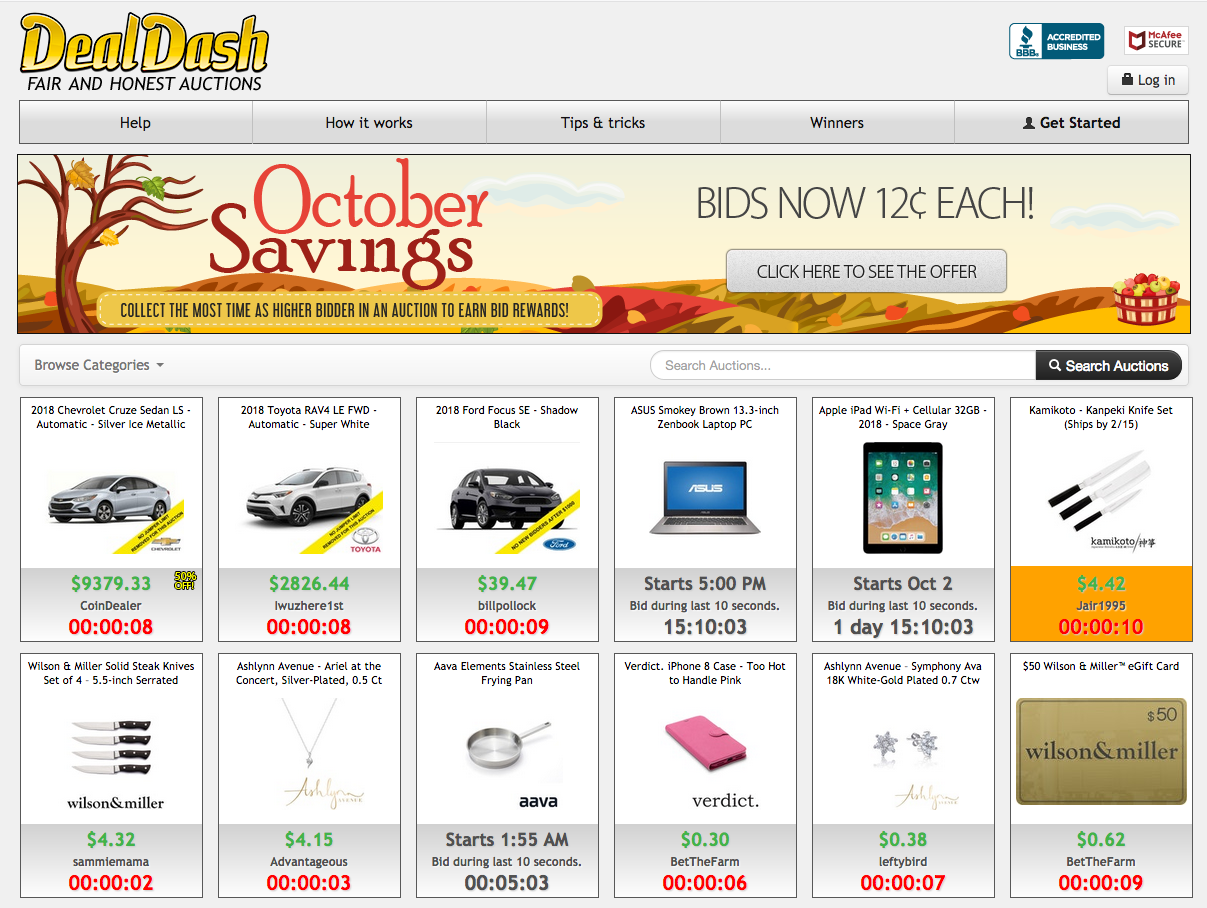
Updated for 2023. I’ve always been fond of online auctions, until I found DealDash several years ago. I’ve also seen a number of people who have complained about DealDash and how it operates. Let’s explore if it’s a scam.
Auctions and Bidding
In a traditional auction, you’re actually buying from a seller who has put an item up for consignment to the auction house. This is how eBay works it. The seller uses the eBay platform to pay for their auction. If the item sells, eBay gets a cut of the profit. This is a typical auction from a typical auction house.
Bidders pay nothing to bid at eBay. You simply join the platform and off you go on your merry bidding way. You will pay for any auctions you win or any Buy-It-Nows you buy, but if you bid and don’t win, you pay nothing. This is important when understanding the difference between a site like eBay and DealDash.
At eBay, auctions have a finite end. If the auction closes at 6PM today, then it’s over at 6PM. Whomever was the highest bidder at 6PM is the winner of that auction.
DealDash Auctions

With DealDash, the auctions here work a bit differently. Instead of joining and bidding for free, you must pay for your bids. The bid cost can range between 12¢ and 60¢ per bid. In order to get started on DealDash, you’ll be required to pay for some initial bids. Sometimes DealDash offers bid sales for as low as 12¢ per bid.
As for the auctions themselves, they work quite a bit differently from eBay. Unlike eBay’s fixed close time, DealDash has no fixed auction close. Their auctions infinitely run and continue to extend until the 10 second countdown timer runs out without any further bids. As long as even one bid happens within that 10 second countdown, the auction extends with another 10 second countdown timer. Basically, an auction can run infinitely or until no one else places a bid. Bids also increment the item cost at 1¢ per bid. You spend 12-60 cents to raise the bid on an item by 1¢. Admittedly, that means the item cost goes up very slowly, but it also means that the bidding can go on for days with enough bidders.
Bid Extensions
You’re probably wondering about how people can manage to bid within 10 seconds. To answer your question, they don’t. Bidders use a feature that DealDash offers known as Bid Buddy. See below for more details. Suffice it to say that DealDash’s automated system continues punching in those bids in an automated way so users don’t have to. You’ll also notice that many of those bids are made right at the last moment of second 9. There’s no way a human could time a bid that precisely.
However, there has been some speculation that some of the bidding is rigged by DealDash. That speculation alleges that DealDash itself has its own set of automated bidders driving up auction prices and bringing attention to those auctions. I can’t tell one way or another if this is true. I’ll leave that speculation alone because of Bid Buddy and how it works.
Buy-It-Now
Both eBay and DealDash offer a Buy-It-Now option. However, these work entirely differently between DealDash and eBay. The eBay Buy-It-Now feature can be standalone or attached to an auction. If it’s standalone, you can only buy that product through Buy-It-Now. If it’s attached to an auction, you can only use Buy-It-Now before the auction begins. Once an auction has a first bid, the Buy-It-Now option disappears for that item.
With DealDash, if you bid on an auction, you are eligible to Buy-It-Now when the auction finally closes. You’ll buy the item at whatever price that DealDash offers, which they claim is usually at a substantial discount. In addition to buying the item, you’ll also get all of your bids back for free. This means you can reuse those bids again on future auctions. It’s not a bad deal if you really want that item. However, if you decline the Buy-It-Now purchase, you lose all of your bids. There’s a big incentive to bid on items where you are likely to buy it when the auction closes no matter the price.
Bid Buddy
DealDash offers an automated bidding service called Bid Buddy. It continues to bid on your behalf even when you’re not around to do so. eBay also has a similar feature, but it’s tied to the actual bidding process and doesn’t have a name. If you put in your maximum bid on an eBay auction, eBay will continue to bid on your behalf at the current bid increment until your maximum bid is reached. After that, you’d be responsible for upping your maximum bid or bidding manually.
Bid Buddy works in a similar way. It continues to bid on your behalf until you’ve run out of bids or reached the maximum number of bids set on that auction. The reason to use Bid Buddy is clear. Those who are using Bid Buddy get priority over those who are manually bidding. It is in your best interest to set up and use Bid Buddy rather than manually bidding. Otherwise, your manual bid will always be last in line.
So far, So good
So far, there’s nothing here extraordinarily bad about how DealDash works. Other than the infinitely open auction which I don’t personally like, it’s pretty straightforward in how it all works.
Products and Quality
Here’s where this site falls down hard. Do you go to DealDash to buy merchandise for a great deal or to spend time gambling to win? If it’s the former reason, then you might run into problems considering all of the below. If it’s for the latter reason, you might want to seek gambling help.
DealDash claims to offer overstocked products at “discount” prices. The difficulty with this business model is that DealDash is in this business to make money off of bidding with the side effect of an eventual sale of a product. They are not a retailer, not a discounter and definitely not in any way a reputable store. They are an auction house and that’s how they run it.
As a buyer, you’ll notice there’s nothing mentioned about a Return Policy or what to do if you receive damaged or unacceptable goods. Indeed, there’s nothing on any of DealDash’s auction listings that even mention the quality or authenticity of the merchandise that you will receive if you buy or win the bid.
The products purport to be genuine, but are they? Also, unlike eBay where there’s a seller behind each and every product, with DealDash, DealDash is the seller. This means that if you have a question about the sale of a product, you have to go to DealDash to get it answered. Worse, buyers have tried doing this with no response from DealDash.
If you’re actually wanting the product you’re bidding on, you might want to consider that what you’ll receive may entirely differ from the listing. In other words, the trust level with DealDash’s merchandise is very, very low. If you really want that merchandise, you can probably find it cheaper from a more reliable seller on eBay or Amazon without the bidding fees. On eBay, both the sellers and the products themselves have a reputation score. You can see what buyers are saying about both the product in the listing and of the seller’s reputation. You’ll notice that on DealDash, there is no reputation information about the seller nor reviews from buyers about the product or what they received. DealDash is a black box.
Being the black box that it is, unfortunately, DealDash is about as scammy as it can get from a site like this. If you can’t readily see what other buyers have received from a listing, then how do you know that you’ll receive anything of value? You don’t.
Additionally, because DealDash is not a traditional store, returning any merchandise may be next to impossible, particularly when you can’t get in touch with anyone at DealDash. If the item you receive is damaged, misrepresented or outright garbage, you’re stuck with it. Otherwise, you’ll have to dispute the credit card charge. The only other thing you can do is complain about DealDash… and many people have done exactly that on RipOff Report. However, other than venting your frustrations to the world or forcing a chargeback, you may not be able to get your money back.
Jumpers and No Jumper Auctions
Here’s where DealDash also gets just a little bit more scammy with their auction site piece. A jumper is a person who jumps in at the last minute and begins bidding on an auction when they think the auction time is about to run out. Unfortunately, jumpers on DealDash effectively mean nothing. A “No Jumper Auction” is simply a way to allow early bidders not to be outbid by someone who wants to jump in at the last minute. With DealDash, there is no such thing as a ‘last minute’. On eBay, there is a ‘last minute’ because auctions have a hard close time. On DealDash, the auction is infinitely extended so long as even one person continues bidding.
A “No Jumper Auction” sets a minimum bid point that after that no new bidders are allowed to enter the auction. If the no jumper point is set to $5, that means new bidders attempting to bid after $5 will be unable to do so. Only bidders who placed at least one bid below $5 will be able to continue bidding on that auction.
This then excludes users from auctions after the no jumper bid price has been met. On eBay, this is called ‘sniping’ or ‘snipers’. A sniper is a little different from a jumper in that because the auction close time is finite, snipers join in during the last 30 second countdown to try and outbid the current high bidder. With DealDash, a “No Jumper” feature is entirely pointless and just gives DealDash a way to manipulate auctions and who can bid. This feature only serves to force people into auctions early or wait for another one to start. This feature is simply a way to lower competition and allow early birds to win the auction more quickly without extra folks jumping in and keeping the auction open much longer. That seems to go against the idea of DealDash making more money. It’s kind of a weird feature for DealDash to add such a limit to their auctions and prevent even more bidding, losing DealDash even more money in this process. As I said, it’s weird.
The scammy part of this is that apparently these “No Jumper” auctions don’t work properly, or DealDash is able to manipulate the “No Jumper” price randomly against would-be bidders. Some bidders have claimed to join in on standard “No Jumper” auctions with the default threshold set to $5. Yet, the auction price never reached $5 and they were unable to bid with DealDash claiming they were a jumper. Fishy. It seems this feature is being manipulated by DealDash in a way that prevents certain bidders (new or not) from bidding on that “No Jumper” auction.
Is DealDash worth it?
DealDash is ultimately an addictive form of legalized gambling, but it actually feels much like playing slot machines in Vegas. Mostly you lose, rarely you win and you spend a lot of money doing it…. which is how DealDash likes it. It’s what keeps them in business. If you’re willing to Buy-It-Now, you can buy back some of your bids at the cost of the product stated in the listing. But, don’t expect the price of the Buy-It-Now merchandise to be any less expensive than what you’ll find in a retail store, according to many who have done this.
Some complainants who’ve used the Buy-It-Now option have been quite disappointed in the process. One user claimed that instead of getting their bids back as promised, the “total value” of the bids was deducted from the price of the Buy-It-Now item. However, the “total value” of the bids applied to the reduction in the item’s cost were substantially lower than what the user paid for the actual bids. They might deduct at 12¢ per bid when the user paid 60¢ for the bids. Assuming you can actually get your bids back instead of this deduction thing, that’ll buy you a little more time to bid on new items and addict you further to this form of legalized gambling. This getting-bids-back idea is a little like losing $500 at BlackJack and then winning back $100. You’ve still lost $400. It’s simply a way to make you feel a little better about having lost $400 instead of $500.
If you get a high off of gambling, DealDash may be worth it… particularly if you don’t care about whatever it is you might win.
If you do happen to win the bid on item, then you’ll lose all of your bids plus whatever the winning cost of the item. If you happen to win a bundle of bids, then you’ll lose your bids only to gain some back. If you win the bid on a pair of earrings, you’ve lost however many bids it took to win that bid plus the cost of those earrings.
Consider if you don’t do Buy-It-Now often and you continually keep losing bids, you need to keep track of how much money you’ve spent there. You need to keep track because all of your lost bid money adds up when you finally do win a bid. For example, if you’ve spent $500 buying and losing bids for a while, then win a $50 coffeemaker, technically you’ve spent $550 for that coffeemaker. That’s not such a great deal. You could have bought 11 coffeemakers for the amount of money you spent to win that bid at DealDash. You simply can’t ignore all of the money you’ve spent on bids as non-existent. Those bid costs add into the cost of any items you bid and win. This means you can’t claim you got a toaster for $5. It was $5 plus the cost of however many bids it took you to get there.
Scam or Not?
The idea behind the site is fine, the execution of it is poor. If DealDash had partnered with legitimate sellers to back each of the auction products and if DealDash had allowed buyers to review the product listings for quality and authenticity and if DealDash offered a buyer’s protection plan and an actual Return Policy like a legitimate store, I might be more inclined to say it’s not a scam.
As it is, because DealDash doesn’t act like a legitimate store and also doesn’t offer feedback from buyers nor is there a buyer and seller relationship to ask questions, I cannot recommend the use of this site for any purpose… not for buying products and definitely not for getting a gambling fix.
There’s too much of a chance to lose far too much bid money and very slim chances you’ll actually win a bid. Of course, you’ll be given the option to Buy-It-Now and get your bids back on auctions where you lost the bids, but that’s of little consolation if the merchandise you receive is trash, assuming you receive anything at all. Between the bids you pay for and the Buy-It-Now, this is how DealDash makes money. The rest is all an addictive game.
Testimonials in TV Ads
DealDash has been recently running heavy TV advertising for their site in 2023. Don’t be fooled by those advertisement folks holding up a piece of merchandise that they claim to have received from winning an auction at some insanely low price. There’s no guarantee those “winners” are legitimate. You also have no idea if the merchandise received is legitimate, counterfeit, refurbished, used, hot or in any other condition.
Even if the “winners” are legitimate and not just staged by actors, you don’t know how much those people actually spent in buying DealDash bids over many months or years to “win” the privilege of buying that item at that price. They could have been bidding for years and may have already spent a ton on bids before they finally won that iPad for $35. In fact, they could very well have spent more money in bids + cost of product than simply going to the Apple store and paying full price for an iPad. Even then, when buying from the Apple store, you know you’ve purchased a legitimate iPad backed by an official Apple return policy. Getting that same device from DealDash, you don’t know what you might get; it could even be an old generation iPad from years ago.
DealDash is just like being in a Casino. When you hear the bells ring and see the lights flash on a machine because someone has hit the jackpot, you really don’t know if that’s a true win or if someone is simply making back a little money towards money they’ve already lost.
Recommendation
Site Recommendation: 👎 Avoid!
Reasons:
- Highly Addictive
- Form of gambling
- Not a store
- No Return Policy listed
- No Product Reviews
- No User Reviews
- No Seller Reviews
- Auction items don’t describe authenticity or condition
- Pay to bid
- Pay to win (separate from item cost)
- Costly
- Difficult to Communicate with DealDash
- Mostly a scam to separate you from your money
- Doesn’t operate like a legitimate store
- May be less costly to shop elsewhere
- Questionable business practices
The bottom line is, DealDash has a very scammy business model.
As always, if you find Randocity a fascinating read, please leave a comment below and please click the Follow button in the upper right under the Search bar to be notified of any new Randocity articles.
↩︎
Why does anyone watch Fox News Network?

I don’t get it. Why does ANYONE watch Fox News Network? In fact, the Fox News Network channel is honestly more aptly named the Faux News Network. Literally, their news anchors just make shit up on the spot. Let’s explore.
Faux News
I don’t even fully understand how we got here. Back in the 1970s and 1980s, news channels were well respected because the majority of those news networks held themselves to a relatively high standard of journalistic ethics. Today, journalistic ethics has become mostly a thing of the past. While some video news channels (and newspapers) typically hold their reporters accountable to journalistic standards, clearly some of them do not. Fox News doesn’t appear to impose ANY journalistic ethics or integrity on its staff at all.
Fox News, in fact, appears to let their news anchors say whatever they damned well please. In fact, I believe the (mis)management at Fox News encourages these completely unethical behaviors at Fox News Network.
You may be saying, “I don’t see Fox News lying much at all”. To that I respond with, “In denial much?” Fox News Network anchors lie about as often as they possibly can. In fact, Fox News ended up firing Tucker Carlson over his massive voter fraud allegation lies, which those lies cost Fox News $787.5 million. Once a real dollar value ends up being placed onto an anchor’s basket of lies, that’s when the shit really hits the fan… or more specifically, someone gets fired.
Trump gets Indicted for a Second Time
Donald Trump recently released a statement on Truth Social that he had again been indicted for 37 counts under the Espionage Act. Here’s his thread quoted from Truth Social.
Page 1: The corrupt Biden Administration has informed my attorneys that I have been Indicted, seemingly over the Boxes Hoax, even though Joe Biden has 1850 Boxes at the University of Delaware, additional Boxes in Chinatown, D.C., with even more Boxes at the University of Pennsylvania, and documents strewn all over his garage floor where he parks his Corvette, and which is “secured” by only a garage door that is paper thin, and open much of the time.
Donald Trump: https://truthsocial.com/@realDonaldTrump/110511161240386878
Page 2: I have been summoned to appear at the Federal Courthouse in Miami on Tuesday, at 3 PM. I never thought it possible that such a thing could happen to a former President of the United States, who received far more votes than any sitting President in the History of our Country [false], and is currently leading, by far, all Candidates, both Democrat and Republican, in Polls of the 2024 Presidential Election [too early to tell]. I AM AN INNOCENT MAN!
Donald Trump: https://truthsocial.com/@realDonaldTrump/110511177469281373
Page 3: This is indeed a DARK DAY for the United States of America. We are a Country in serious and rapid Decline, but together we will Make America Great Again!
Donald Trump: https://truthsocial.com/@realDonaldTrump/110511183630692974
I’m including Donald Trump’s thread here simply for reference and for completion’s sake. I don’t want someone claiming that Randocity is making shit up here. Fact checked information in [brackets] added by Randocity. This is real, folks.
Read the Full Indictment here:
I won’t get into the ramifications of both the above indictment and Donald Trump’s ramblings as this unnecessary rabbit hole goes far too deep for this article. However, I urge you to read the text of the above indictment. If you’re interested in hearing valid legal analysis of Donald Trump’s federal criminal indictment, I urge you to watch any OTHER network than Fox News Network, News Max or OAN (One America Network). Such valid news networks include C-SPAN, ABC, NBC, CBS, MSNBC, CNN, Associated Press, Reuters, NPR and [NewsNation].
Suffice it to say that Trump’s sycophants are not happy with Donald Trump’s latest criminal indictment and are, once again, back on the “Donald Trump as a victim” warpath by making shit up… specifically about Joe Biden. Worse, Fox News Network management is eating up this false garbage about Joe Biden and is choosing (against journalistic ethics) to spew these lies to its viewers. This leads right into…
Why?
I thought that Fox News had given up coverage of Donald Trump entirely? I guess this was just another in so many lies that Fox News continually tells. More than this, why do viewers continue to put up with Fox News’s lying bullshit? How many times can you watch a news program that willfully and intentionally tells you lies straight to your face?
You don’t put up with lies from your co-workers or your friends or your boss or even your own kids! Why are you so willing to be hoodwinked and lied to by your “favorite” news channel?
Example…
Let me give a concrete example based on the fact that Donald Trump has been federally criminally indicted. Keep in mind, Trump hasn’t yet fully been indicted because he has yet to turn himself in. Apparently Donald Trump, or more specifically his lawyer, has only been informed that an indictment is forthcoming. He’ll be indicted when he actually receives the indictment paperwork. He and his lawyers can read it. Then, only after he’s received the official paperwork will he be officially indicted. Once he’s been told the charges in a federal court, he’ll then have also been arraigned. We digress.
The point in this digression is to try and explain why Donald Trump’s sycophants and MAGA cult followers are now up in arms over HIS federal criminal indictment.
Instead of Fox News Network covering Donald Trump’s pending indictment as more-or-less front page news, just as every other mostly centered news network has done, Fox News has decided it has chosen to parrot a fabricated accusation being levied at Joe Biden about some alleged bribery scheme. Yet, once again with Fox News, no details about that accusation are presented… which means, it’s a lie. Without any details presented, there’s nothing to back up the MAGA alleged accusation.
This accusation, however, gives Fox News a false smoke screen cover story for its front page news so it can avoid having to cover Donald Trump’s actual and factual indictment. Instead of telling the Fox News viewers the truth about Donald Trump’s indictment, a truth that even Donald Trump was willing to tell on Truth Social, Fox News won’t discuss it on Fox News. Instead, Fox News Network is now resorting to telling its viewers to yet more lies about Joe Biden as a diversion to avoid telling you actual news. Why do you watch this made up garbage?
This lie is just the tip of the iceberg at Fox News. Fox News’s lies landed them with a $787.5 million settlement to Dominion… and this iceberg is just getting started. Smartmatic is likely to need a whole lot more of a cash settlement than Dominion, assuming that Smartmatic is even willing to settle. The point here is that the lies that Fox News continues to tell are only digging this news channel into an even deeper monetary hole.
Again, why does ANYONE continue to watch ANY news network that intentionally and willfully chooses to lie to you, to all of us?
Silence as a Lie
At Fox News, it get even worse. Fox News withholds valuable legitimate news from you because they don’t think you can handle it. Actually, they believe that if they tell you the real news, you’ll tune out and find another news network. Instead, they spew fabricated information, usually made up by Republicans, but perpetuated by Fox News as truths. This fabricated news is simply to have a story to tell all while hiding actual news from you.
Better to get hurt by the truth than comforted with a lie
—Khaled Hosseini, “The Kite Runner”
By not telling you the news that you need to know, you’re being misinformed (which is another form of a lying). News channel charter is to report on news, not hide it from you. That Fox News is willing to withhold actual news from you tells you just how unethical and morally bankrupt the Fox News Network is. You watch a news channel to become informed, not to be left in the dark about current events. Worse, they withhold truthful, factual information and fill in the gaps with lies. When they withhold that news, they do so by using illegitimate and usually false narratives… blowing that fabrication all so way out of proportion, it looks like satire.
If you want satire, you should visit The Onion. At least The Onion has the decency to tell you that what they write is entirely satire and is intended as comedy. With Fox News, you simply don’t know because Fox News won’t take a stand on their reporting shenanigans. Instead, Fox News Network attempts to make itself look like a legitimate news reporting agency, yet they continually fail to report on legitimate news. To cover that lack of real news, they choose to perpetuate fabricated and unsubstantiated information as truth.
Why would you let this amount of lying into your home? If you’re a conservative evangelical Christian, what would the Bible say about a news channel that intentionally tells you lies? “Wolf in sheep’s clothing”, perhaps?
Lying and Conservatism
These two concepts do not go hand-in-hand any more the lying goes hand-in-hand with liberalism. No political affiliation’s mantra is to lie to you. For some reason, Republicans have recently latched onto lies as their new “Yellow Brick Road”, or so misguided MAGA Republicans think, simply to make all other parties look bad. Yet, if you’re smart (and I know that you are), you’ll see right through that stupidity.
Being a conservative whether evangelical or not, you don’t deserved to be lied to. Likewise, being liberal, you don’t deserve to be lied to. No one deserves lies told to their face. Not conservative, not liberal, not middle of the road. Lying most definitely is NOT the answer. Lying, however, embodies moral and societal decay. It says that as a society, we can’t be bothered to tell the truth anymore; that truth doesn’t matter.
It also says that news media has now become a perpetrator and facilitator of lies. While not all news outlets lie to you and not all do it all of the time, many lie frequently. Fox News Network chooses to lie to you more often than most, usually under the excuse of parroting top MAGA Republicans, “See, he said it first! 👉” Yeah, that argument didn’t work when you were a child and it doesn’t work now.
Most news outlets don’t typically lie as often as Fox News does, however. Fox News Network, as a video news channel, is the absolute most egregious, most blatant and offers the most outrageous lies of any news channel, bar none… other than perhaps the National Enquirer… and who willfully believes anything written in that rag sheet? For video news, maybe OAN lies nearly as much, but they also don’t get nearly the viewership that Fox News has.
Treachery comes in many forms and Fox News Network has proven that they are as treacherous and as lecherous as they come, lecherous with their news hosts painted to look like street corner hookers. Yes, let’s spout all of these lies from so-called “news anchors” painted to look like common hookers… all with the (lack of) brains to match. Clearly, you must be brainless to work at the Fox News Network.
Why these lies?
Simple answer: Donald J. Trump. Donald Trump is not just a habitual liar, he is pathological. Many have taken Donald Trump to be some kind of anti-role model. Donald Trump is actually the antithesis of a positive role model! No one should model their own personal behaviors after Donald Trump, that is unless you want to land in prison.
No one should idolize Donald Trump as a positive role model, least of all American news hosts. Yet, here we are. Fox News Network practically idolizes all things Donald Trump. When Donald Trump gets a lawsuit thrown at him, in Donald Trump’s eyes, it’s never because of what Donald Trump has actually done to trigger that lawsuit. Instead, it’s always about how the Justice Department (or some other Democrat) is in the wrong for bringing that lawsuit down upon poor, pitiful, little innocent Donald. There is absolutely nothing innocent about Donald Trump.
Donald Trump is to blame for Donald Trump
No one can be blamed for Donald Trump’s stupidity and bad conduct except Donald Trump. In fact, Donald Trump could likely have avoided all of this if he had just done what NARA had originally requested… which was to return the documents the first time they asked him to return them. Instead, Donald Trump decided to play games. When you play stupid games, you win stupid prizes. If lawsuits and indictments are being brought down onto Donald Trump, it’s because of what Donald Trump has done. Yet, Republicans want to blame the DOJ and Joe Biden and every other Democrat for Donald Trump’s actions.
Let me ask some basic questions. Did Joe Biden hold Donald Trump’s hand when Trump decided to foment the insurrection on January 6th? Did Joe Biden coach and egg on Trump when he decided to take documents from the White House upon exiting his role as President? Did Joe Biden tell Donald Trump to remain silent while the Capitol rioters continued their violent rampage? The answer to these questions is an emphatic, “NO!”… he did not.
Joe Biden had no hand in Donald Trump’s conduct, behaviors or decisions. Yet, the MAGA Republicans would have you believe that Joe Biden had some hand in these legal actions against Trump. Joe Biden is the President, yes, but he doesn’t control the Department of Justice. That’s an entirely separate branch of government.
Weaponizing the DOJ
The MAGA Republicans using the Fox News Network as a mouthpiece would also have you believe that Joe Biden has weaponized the Department of Justice against Donald Trump. Just the opposite, in fact. Donald Trump has performed questionable behaviors in retaining and possibly disseminating top secret government documents. The DOJ seeks to determine whether those claims are, in fact, true. If anyone has weaponized the DOJ against Donald Trump, it is Donald Trump and the MAGA Republicans.
The only way to get to the bottom of Donald Trump’s alleged illegal wrongdoings is through the legal system. That’s why we HAVE a legal system. If Donald Trump didn’t want to be indicted, he shouldn’t have performed actions that led to this outcome. The DOJ is not being weaponized by the Democrats. Instead, the legal system is being used appropriately to investigate Donald Trump’s actions after his alleged wrongdoing has been both extensively investigated and uncovered.
The MAGA Republicans would have you believe that this investigation began yesterday and that it’s all unjustified. It didn’t. Donald Trump’s problems began the day he left the oval office. Donald Trump’s actions have led to this outcome. Yet, that’s not what the Fox News Network is telling you.
Fox News Networks Perpetuation of Lies
Fox News Network knows exactly what both Donald Trump and, more importantly, that Fox News Network is doing is wrong. Yet, FNN intentionally and willfully continues its perpetuation of lies on its viewers. The question is, if you’re an avid viewer of this treacherous and deceptive news network, why do you continue to watch? More importantly, do you actually believe the literal shit they are slinging at you every single night?
What Fox News is doing is absolutely not news. There’s nothing “newsworthy” about being told lies, deceptions and misinformation. News is telling you fact based truths that exist. News isn’t telling you falsehoods that others have perpetuated. Yet, here we are.
It gets even worse because the Fox News Network regularly invites “guests” onto its programs to not only spew their own lies without basis, they spew them and then the Fox News host fully agrees with those lies and helps spouts even more lies based on those “guest” lies… all without any supporting facts. It is exactly this “without basis in facts” problem that led to the $787.5 million settlement that Fox News Network paid to Dominion voting systems. And yet, that settlement has clearly not changed Fox News Network’s mode of operation to be more upstanding and offer more ethical journalism. In fact, it seems that Fox News Network has paid that $787.5 million solely so the owners of Fox News Network can double down on even more lies.
You must make your own decisions about networks that willfully lie to you. I can’t tell you what to watch. It is your choice to make. If you choose to willfully allow liars to lie to you and then you choose to believe those lies, then what comes out of that is on you.
“A lie begets a lie” –proverb
Instead of these lies, we must fight for truth! Only truth will keep us free.
↩︎
Why Lying is Bad for America
 Lying, a ubiquitous aspect of human behavior, has been a long-standing issue in societies worldwide. While deception may seem harmless in certain situations, its detrimental effects on trust, democracy, and social cohesion cannot be overstated. In the United States, a nation founded on principles of transparency and honesty, the prevalence of lies poses significant risk to America’s fabric.
This article explores the multifaceted reasons why lying is detrimental to America, spanning political, social, and moral spheres. Let’s explore.
Let’s establish exactly how lying poses a threat to America:
- Erosion of Trust
Trust is the foundation of any healthy relationship, be it personal, professional, or societal. Lying fundamentally undermines trust, making it difficult for individuals and institutions to rely on one another. In the political realm, when elected officials deceive the public, it creates a sense of cynicism and disillusionment among citizens. This erosion of trust weakens the bond between the government and the governed, hindering effective governance. Moreover, mistrust fueled by lies can lead to conspiracy theories and the spread of misinformation, further polarizing the population. - Deterioration of Democracy
Democracy relies on the informed participation of citizens. When lies are perpetuated, the truth becomes obscured, impeding the ability of people to make well-informed decisions. Political campaigns based on false promises and misleading information undermine the democratic process, manipulating voters and distorting election outcomes. Additionally, lying can hinder accountability, as it allows politicians to evade responsibility for their actions. A healthy democracy requires transparency and honesty to ensure the will of the people is properly represented. - Weakening of Social Cohesion
Lying erodes social cohesion, the glue that holds a society together. When lies become pervasive, individuals become suspicious of one another, leading to a breakdown in social bonds. In a diverse nation like the United States, trust and understanding among different groups are vital for societal harmony. When lies and deception permeate the social fabric, it deepens divisions, exacerbates prejudice, and fuels social unrest. Open and honest communication fosters empathy, cooperation, and a sense of shared purpose, all of which are crucial for a united and inclusive society. - Moral and Ethical Implications
Lying carries profound moral and ethical implications. It violates the principles of honesty, integrity, and respect for others. When lying becomes normalized, it weakens the moral fiber of a society. By condoning or tolerating deception, we create a culture where honesty is undervalued, undermining the ethical foundations that guide our actions. Furthermore, lying can have severe consequences for individuals and communities. False accusations, damaged reputations, and shattered relationships are all byproducts of deceit, causing immeasurable harm.
Lying, in all of its forms, is deeply harmful to America. The erosion of trust, deterioration of democracy, weakening of social cohesion, and moral implications of lying have far-reaching consequences. Addressing this issue requires a collective effort from individuals, institutions, and leaders; necessitating promoting a culture of honesty, fostering open dialogue, and holding accountable those who perpetuate falsehoods. Individuals must also cultivate critical thinking skills, fact-check information, and reject deceptive narratives.
Media outlets also have a responsibility to prioritize truth and objectivity over sensationalism and misinformation. Political leaders must lead by example, upholding the principles of transparency and integrity. Finally, education plays a vital role in fostering a society that values truth and rejects deception. By recognizing the detrimental impact of lying, we can work towards restoring trust, strengthening democracy, fostering social cohesion, and upholding the moral fabric of America.
Better to get hurt by the truth than comforted with a lie
—Khaled Hosseini, “The Kite Runner”
Truth Disclosure: Most of this article was written using ChatGPT. This article is simply an experiment to determine if ChatGPT has value in crafting articles that seem genuinely written by a human. The jury is still out, yet ChatGPT nails this topic. Leave a comment below with your thoughts.
↩︎
No Man’s Sky: Guide to Galaxy Collecting


There are 255 galaxies in No Man’s Sky as of this article. Hello Games, however, could unlock more galaxies in the future. There are various ways to unlock each of the current 255 galaxies within No Man’s Sky. Let’s explore all of the ways and see which one is best.
Galaxy Center
The primary way that has been designed by Hello Games to unlock new galaxies within No Man’s Sky is to reach the center of each galaxy using a series of quests. Once you reach the center, your ship will be catapulted to the next galaxy in numerical order. From 1 through 255. If you’re in galaxy 1, then the next galaxy unlocked should be galaxy 2, then galaxy 3 and so on.
To unlock each galaxy, you will need to follow a very long, convoluted and involved Atlas quest line along with using black holes to hyperjump ever closer to the galaxy center. Performing this method to reach the galaxy center could take literal months to unlock just one galaxy. Attempting to get through all 255 galaxies in this way could take you years, assuming you follow Hello Games’s designed path.
Once your ship reaches the new galaxy, some of your ship’s technology will be broken and in need of resources to repair along with some of the technology in your Multitool. If you’re planning to use this (as designed) approach to unlock galaxies, it is strongly recommended to pick up a throw-away ship right before reaching the center. It also recommend to equip a throw-away Multitool. Then, when in the new galaxy on the other side, switch ships and then sell that broken ship and free up that slot. Then, switch back to your primary unbroken Multitool. This means you don’t have to worry about repairing any of that broken ship junk or a broken Multitool.
If you know you’re going to be doing this often to unlock many galaxies, then you’ll need to buy a super low priced functional ship each time and also equip that broken Multitool before proceeding to each galaxy center. You just need to make sure the ship you buy has enough hyperdrive distance to get to the center, which might mean buying and equipping distance mods.
However, thankfully there are much easier and faster methods to unlock galaxies that avoid this whole long tail quest and broken technology problem, but these involved using multiplayer.
Friends
After multiplayer was added to the game, Hello Games allowed you to follow your friends or a group out of the Anomaly station and into their system. This allows you to follow a friend into their system and their galaxy.
If you have a friend who has already unlocked a number of galaxies, you can unlock each of those same galaxies by using the Anomaly to follow a friend into them.
This method requires friends who already have galaxies unlocked. If you don’t have any friends like this, there is the another method below.
To use the friend method, you will need to have Internet and, if using a console, access to PlayStation Plus or Xbox Live to connect with your friends using multiplayer. The Nintendo Switch version of No Man’s Sky does not currently offer multiplayer, so this method is presently not available for those playing on the Nintendo Switch.
Anomaly Terminus
This is the fastest and recommended method to unlock galaxies, but again this doesn’t work on the Nintendo Switch. It also doesn’t require broken ships or spending months traveling to the galaxy center. However, it does take time to collect the galaxies in this way. When you do, it’s way faster, easier and doesn’t require having any friends online. In fact, this method doesn’t involve friends at all. It does, however, require multiplayer, so you will need to have multiplayer and crossplay enabled to unlock this method and offer you the best chances at finding galaxies to unlock.
As stated, if you’re playing on the Switch, this method is unavailable. This means when playing on the Switch, you’ll need to rely on the first method (galaxy center) described above to unlock galaxies. It is presently the only method for those playing on the Switch or for others who are playing the game in offline mode. If you are playing on a platform that supports multiplayer, then the Anomaly Terminus method works exceptionally well.
On the second floor of the Anomaly station is a giant Terminus that allows you to warp to your bases, other space stations and even to bases of people who are currently visiting the Anomaly at that moment. It is this latter part that is how you find galaxies to unlock.
Method
- After visiting the Anomaly station, head up to the giant Terminus
- On the Terminus, select ‘Space Anomaly’. This isolates the screen to only bases by other players actively visiting the Anomaly at that moment.
- Click on each base listing to see if the base is in a galaxy other than Euclid (or whatever galaxy you are presently in). Note that bases that don’t list a galaxy in the base information means that it is in the same galaxy where you presently are. If you’re in Euclid, it means that that base is also in Euclid. If you’re in Eissentam, then it means the base is also in Eissentam.
- If the base information doesn’t list a galaxy name, then move onto the next. Keep clicking on each base listing until you find one that contains a galaxy other than the one you’re in. If you don’t see any bases with a new galaxy, jump to step 8.
- Once you find a base that is in a different galaxy, you may be forced to wait while it downloads. If it fails to download, back out and click on the base name again. It sometimes takes 2 or even 3 attempts to load before it allows you to warp to that base.
- When ‘Warp to [Base Name]’ appears, click it and warp to that base.
- Now you’re in that new galaxy. All you need to do is establish a base in that galaxy and you can visit it at any time. If you’re really lazy, you can visit the space station in that system and that will allow you to return to that galaxy through the space station. I don’t recommend the space station collection as a method because space stations have chances of dropping off of the list. Built bases never disappear from your list.
- If you fail to find any galaxies in the Anomaly Terminus list, don’t fret. You have two options: 1) wait for more players to show up (could take a while) or 2) (faster method) Go to your ship, fly out of the Anomaly, turn around and fly back in. Flying out and back in will put you into a brand new lobby with brand new players. At this point, rinse and repeat beginning at step 1. It could take as many as 3 fly-out-and-in attempts to find a player with a base in a new galaxy. If you try more than 5 times without success, take a break and try later.
There are some tricks here. There are times where in step 5 the game simply refuses to download the base. This either means the player has left the game entirely for that session or there’s a connectivity problem. You’ll simply need to skip that base and try to find a different base to that same (or a different) galaxy. I’ve lost several possible galaxy collects as a result of failing to download the base. Don’t be discouraged as there are plenty of players and plenty of chances to find it again or even new galaxies to add to your collection. After all, there are 255 of them.
You’ll also need a relatively good memory to see and recognize galaxies you have already collected. Once you collect about 20 or more, you may not recall all of the galaxies you presently have collected. If you see a base in a galaxy you don’t recognize, warp to that base anyway. It’s better to be there and not need it, than skip and and find that you do. Once you reach the new galaxy, you can spend the time to dig through your own bases in a Terminus to find out if you already have base there. If you already have it, then fly into space and call the Anomaly and start over at Step 1.
Mix and Match [Updated: 5/30/2023]
I’ve decided to add a few more thoughts about galaxy collecting. There’s no need to constrain yourself to one type of collecting. If you like the idea of using the galaxy center at times, then by all means use that. If you like the thought of being able to find galaxies using other player bases, then use that.
One thing I didn’t mention is that you can use glyphs as a shortcut to reach the galaxy center of each universe, assuming that you want to use the galaxy center approach. This will help players on systems without multiplayer, like the Nintendo Switch. If you’re constrained to using the galaxy center approach, then you’ll need to search Google to find shortcut glyphs that will lead you to the galaxy’s center.
You’ll first need to know all of the names of the galaxies to search Google for the galaxy center glyphs. Know that there are a few legacy galaxies that appear to not be collectable using the galaxy center approach. These are galaxies 256 (Odyalutai) and 257 (Yilsrussimil). Once you reach the center of galaxy 255 (Iousongola), you will be taken back to galaxy 1 (Euclid).
If you are using the galaxy center approach and after reaching a brand new galaxy, you’ll further need to find a portal in that new galaxy with which to use glyphs. This will take some time to locate a portal. For this reason, the Anomaly approach can be faster, assuming you have access to multiplayer.
Future Expansion?
Note that there is at least one special numbered galaxy named Hacolulusu. It is numbered both +MAX32INT+1 and -MAX32INT+1 at the same time… or, in number, +2147483648 AND -2147483648 simultaneously. It is likely that Hello Games reserved this galaxy endcap placeholder to prevent accidentally assigning it. The bigger tell with using this 32 bit sized integer is that it suggests that 255 isn’t the maximum number of galaxies possible. In fact, it seems Hello Games may have reserved the possibility of at least 2,147,483,647 (2.1 billion) galaxies (unsigned) or up to 4,294,967,294 (4.2 billion) galaxies (signed), while artificially constraining the number to 255 at this moment.
The fact that the galaxies Odyalutai (256), Yilsrussimil (257) and Hacolulusu (+/-MAX32INT+1) exist strongly suggests the possibility of offering more galaxies than 255. Further, it suggests the game is artificially constraining itself into using an 8 bit integer value when No Man’s Sky is very likely using a 32 bit signed integer to store the galaxy ID values.
What this all means is that Hello Games could open up more galaxies in the future, possibly expanding it to 512 or 1024 or some similarly lower and more manageable value. It’s unlikely Hello Games would open up the full 4.2 billion galaxies, though.
Etiquette Suggestion
If performing the Anomaly Terminus method (using strangers) for collecting galaxies, I recommend leaving the system to finding your own system for setting up your first base in that new galaxy. However, if you find a planet that is so overwhelmingly good in that player’s system that you can’t pass it up, then by all means establish a base there. For example, were I to find a spot on a planet with 20 Mold Balls, I’d have no problem establishing a base around that.
However, as a matter of etiquette and courtesy, I recommend establishing bases in systems that you have unlocked yourself rather than encroaching onto that person’s system that you leeched from the Anomaly.
If you happen to land in a galaxy and system with hundreds of bases already, then it won’t matter if you establish a base there. There are a number of these out there that have been used for both Expeditions and for Weekend events.
Good Luck and Happy Galaxy Hunting!
↩︎


 Random Thoughts - Randocity!
leave a comment