Donald Trump indicted?

Yes and this is likely to be the first of many indictments to come. Should Donald Trump be indicted for anything? Clearly, the MAGA Republicans say, “No.” Let’s explore.
Note, I’ve typically avoided political and controversial topics like this one on Randocity. Not because they’re not worth writing about, but because these topics are mostly useless. However, this topic is so urgent that it must be said.
MAGA Republicans
Let’s lead with the elephant in the room. Clearly, these MAGA Republicans are bad for the United States. They’re bad for United States Citizens. They’re bad for the world. Yet, here we are once again. With these MAGA cultists jumping to Donald Trump’s defense, not even knowing if the indictment has merit.
Donald Trump is a sleazy, off-kilter, man-child wannabe politician. There’s no doubting this. The man certainly appears to be successful by all measures, but that’s only because he uses his alleged victimhood to raise money every single time someone acts against him.
Worse, the MAGA Republican base always seems to rally around this man as if he’s some kind of cult leader messiah. Yes, MAGA is literally a cult; the cult of Donald Trump.
Liberal Democrat?
I can hear all of the MAGA Republicans groaning over this article at this point claiming this author is liberal Democrat. You don’t know me. You don’t know my views. As an author, it is a journalist’s prerogative and, indeed, obligation to call out that a duck is a duck. You and Donald Trump can’t waddle your way out of this. Be upset. Fine. But, that doesn’t change the facts above. Donald Trump’s cult IS a cult. There is no way around that.
You don’t see liberal democrats rallying around Joe Biden carrying flags with Biden’s face on it as if he were some kind of messianic figure. Just the opposite, in fact. A lot of liberal democrats don’t like what Joe Biden is doing as President of the United States either and are more than willing to call out each and every fact or action they don’t like. Yet, these liberal democrats also don’t stand on street corners waving flags with Biden’s face when he’s being persecuted. On the other hand, the MAGA Republicans rarely ever speak ill of their messiah, Donald Trump, even when Donald Trump called for people to inject bleach into themselves to rid themselves of COVID-19. A truly medically dangerous suggestion. Yet, they’re so willing to drag out the messianic flags and stand on street corners calling Donald Trump the best President ever. That’s a delusional cultist.
Intelligence vs Not
One of the things that much of Donald Trump’s base has proven time and time again is that they’re far less educated than the average liberal democrat. This lack of education may be what’s feeding the gullible nature of MAGA people, leading them to becoming cultists for Trump. When you can’t exactly think for yourself, letting other people think for you seems like bliss. Sure, as a MAGA Republican, you may think you’re good at trying to make arguments, but most of those arguments end up stupid and don’t work out for you. This is the reason Fox News is so bad at it. They hire moronic TV hosts (and lame piece writers) and then expect intelligence out of each and every one of them. You (don’t) get what you (don’t) pay for. You can’t pay dumb people to instantly become intelligent.
It’s quite clear that Laura Ingraham, Sean Hannity and Tucker Carlson check their education at the Fox News’ door every day on the way in, even though all three claim to be college educated. If I worked at the colleges where these three allegedly attended, I’d summarily revoke their degrees. Of course, these three aren’t required to have an education to work at Fox News. A comb, a suit and a dusting of makeup in the makeup artist’s chair and they’re good to go. The teleprompter and remedial reading skills do all of the rest. You don’t need a college education to read from a teleprompter.
It’s sad that Fox News has had to stoop to such (uneducated) lows to try to gain (and retain) its ratings… ratings, I might add, that come from the bottom 10-30% of the uneducated percentile of the United States.
Once again, I can hear the MAGA Republicans groaning. Stop groaning and go get an education. That or stop reading and go listen to your (sym)pathetic “friends” over at Fox News or News Max so you get today’s fix of unreality.
Donald Trump Indicted in New York
Donald Trump formerly lived in New York and has operated businesses in and out of New York while living there and since departing the state. It’s actually relatively recently that Donald Trump moved out of New York state, first to be President when he lived in the White House and then later to Florida to live full time at Mar-a-Lago. Simply because Donald Trump WAS President at one time and just because he now lives in Florida does not mean Donald Trump didn’t perform illegal activities while residing and operating businesses in New York prior to his Presidency.
Clearly, since the Manhattan District Attorney, Alvin Bragg, has brought an indictment, Bragg (and a grand jury) believes that there is sufficient evidence of wrongdoing on the part of Donald Trump.
Donald Trump claims it’s all a political witchhunt and all politically motivated, but Trump knows what he has done both prior to and after leaving New York. Because nearly every single person who is indicted of a criminal offense initially pleads “Not Guilty”, that doesn’t mean that they truly are innocent. Only a trial will uncover if this is true.
Considering that there are 30+ charges pending under Donald Trump’s New York indictment, that sheer volume doesn’t say “petty misdemeanor.” If there had been one or two charges, a petty misdemeanor might sound more reasonable, but 30 or more? No. 30+ charges definitely says something larger is at work… something that can only be decided via a judge, courtroom and jury.
Yes, it’s entirely possible that Donald Trump could be acquitted of all charges, but we won’t know that until or unless the charges and the evidence have been presented and a trial jury has decided.
Trial by Jury
One thing that Donald Trump and his cult following (including cult members Kevin McCarthy and Lindsay Graham) have continually put forth is his innocence. More than this, they have put forth that the DA has “weaponized” the judicial system against politicians, or more specifically, against Donald Trump as a politician. Again, I say, “No.” Instead, I’ll strongly counter that Trump has weaponized his cult following against the United States’ sovereignty.
A District Attorney’s job is to find wrongdoing and prosecute it. Clearly, Trump has at least left a trail of wrongdoing that has now been uncovered… in part with the help of Donald Trump’s former attorney and now convicted felon, Michael Cohen. Regardless of Cohen’s conviction and release, and regardless of Cohen’s disbarment as lawyer, that doesn’t discredit or discount his statements as to what Cohen did for and while in the employ of Donald Trump… especially when those statements can be fully corroborated using physical evidence.
Trump conferred many, many of his own personal and legal matters onto Cohen as his attorney. Trump then threw Cohen under the bus to serve prison time over those very same matters. What did Donald Trump think would happen after? Did Trump think that Cohen would step out of prison and jump right back into Trump’s good graces? No. Cohen is doing what anyone who gets thrown under the bus does. Whistleblow. Cohen just so happened to whistleblow right into the Manhattan DA’s ear… and clearly Bragg has listened intently. Cohen has likely managed and presided over many, many shady dealings with Donald Trump’s affairs, not just the Stormy Daniels “affair.”
You don’t see 30+ charges (and request to see Michael Cohen 20+ times for testimony) over of a single night’s affair requiring one single hush money payment to porn star Stormy Daniels. There’s a whole lot more that’s been uncovered about Donald Trump’s New York affairs than a single hush money payment. Clearly, Michael Cohen has been spilling the beans about everything with Trump’s dealings while Cohen was Trump’s attorney.
This extensive situation must be resolved by using a trial with a jury. There is no other way to resolve this. However, time always seems to be on Trump’s side. Meaning, Trump can delay, delay, delay until a later day. Trump also hopes that that later day is much more inconvenient for Bragg, or better, a day when a Republican appointee has taken office and these charges can be dropped against Trump. At least, that’s what Donald Trump is hoping. This situation sucks for the United States, but it is our legal system (not) at work.
Were this any person other than Donald Trump, these legal shenanigans would not work against a DA. However, Trump seems to be able to slip out of these situations with all due ease (wielding time, loopholes and his MAGA cultists as weapons).
Further Indictments and Trump’s Future
Let’s hope that Donald Trump’s potential federal trials are not so easily skirted. I’m not fully writing off Bragg’s trial yet, but I’m also not holding out much hope that this trial will land in a court before 2024, the Presidential election year. If this trial lands at any point during 2024, Bragg will likely be forced to postpone the trial until the election is over, pending the election outcome. This means even longer waiting and possibly no trial at all.
Unless Alvin Bragg can bring this to trial before the end of 2023, his hopes of actually seeing the charges in the indictment stick to Trump are fading rapidly. Along side Trump’s false, but very noisy “witchhunt” rhetoric, which is also being parroted by his MAGA cult followers, we could also end up waiting 2 years or longer for a trial to convene. This lengthy wait may even cause the charges to completely evaporate. I’m all for holding people legally accountable, but in Trump’s case, it must be performed as rapidly as possible; from indictment to trial in no more than 3 months. If that’s not feasible, then bringing an indictment might be fruitless because of Trump’s inevitable delaying tactics.
It’s nearly guaranteed that if Trump can delay this New York trial for long enough, the charges are likely to disappear. This is why any attorney seeking to bring charges against Trump must plan to execute not only the indictment and the charges carefully, but they must also weigh the delay games Trump is likely to play. If Trump can successfully delay 6 months, 12 months, 24 months or even longer, it might exceed the statute of limitations and it could allow Trump to retake Presidential office (or see another Republican become elected) to get out of the charges entirely. The longer a trial takes to convene, the less likely Trump is to even see a trial at all. Bragg needs to weigh all of this carefully.
Could Bragg continue to levy these charges if Trump is re-elected as President? Probably not. If Trump is re-elected President, these New York charges along with any federal charges are also likely to evaporate under Trump’s change in cabinet. However, Bragg’s charges could remain, but New York State could be pressured out of existence should Trump’s feds place extraordinary (retaliatory) federal pressure on the state of New York. Thus, forcing the charges to be dropped. Worse, how would it look for Alvin Bragg to bring state criminal charges against a newly elected President?
This is why it’s nearly impossible to run these indictments at this late date. In fact, any Federal indictments should have already been levied by the DOJ in 2021 or 2022 so that Trump could potentially be on trial by the end of 2023. It’s actually too late to levy any federal DOJ charges via indictment against Trump due to the upcoming 2024 election. If a federal indictment were to be levied at this point in 2023, there is likely no possible way a federal trial could occur before November 2024 (the Presidential election). At this point, the feds are going to be forced to wait until after the 2024 election to have any hope of indicting Trump, assuming he’s not re-elected. The prospect of the DOJ indicting Trump actually fades every day that goes by without an indictment at this point. Once 2024 arrives without a DOJ indictment, there very likely won’t be an indictment until after November of that year.
If ANY other Republican candidate takes Presidential office and replaces Joe Biden, all federal indictments (or investigations) against Trump are likely to be wiped away with a single pardon. State charges don’t get wiped with a pardon, but potential federal charges (and federal crimes) do. The Department of Justice likely fully understands this ticking-clock-dilemma, particularly at this late date. At this point, it is likely far too late for the DOJ’s special counsel, Jack Smith, to hand down a Department of Justice indictment over the charges of Insurrection or the classified documents case. The only way these cases would still be possible is if Jack Smith uses his ties to the ICC to levy charges under the ICC, which is entirely separate from and outside of the Department of Justice. This “dual counsel” aspect of Jack Smith may actually be the subtext for why Merrick Garland “hired” Jack Smith as special counsel to handle Trump’s case. Merrick Garland wouldn’t stand in the way of Jack Smith were he to levy an ICC indictment against Donald Trump and then hold an international trial against Trump’s espionage charges at the Hague.
Further, if the United States changes to a Republican led President and even if that newly elected President (assuming it is not Trump) chooses to pardon Trump, any ICC indictments still remain. The ICC acts outside of the United States jurisdiction. The United States is not a current signatory on the ICC, but that situation acts entirely in Merrick Garland’s favor, even if Garland ends up ousted from office as the DOJ’s head. For all of the jurisdictions that are signatories to the international court, they may have enough pressure over the United States to force the US to hand over Trump for an ICC indictment and international trial regardless of Trump’s present political office held (or not).
In other words, with Jack Smith as counsel, all may not be copacetic for Donald Trump even after the 2024 election ends. By Garland allowing Jack Smith to deep dive into Donald Trump’s DOJ investigation, this may see the ICC weigh in on Trump’s legal situation after the DOJ is unable. Garland knew the stakes of Trump’s situation and it appears that Garland may have used Jack Smith as an ICC insurance policy if the DOJ is unable to bring a proper indictment timely.
Republican Readers
If you are a Republican and you’re still reading up to this point, I applaud you. It means that you want to better understand Donald Trump’s predicament. Donald Trump is most definitely skirting laws that the rest of us would never be able to skirt. What it ultimately says is that Donald Trump is above the laws of the nation… and that situation is not right. No man is above the law. Yet, Donald Trump firmly believes that he is… and so do his sycophant cult members.
Why MAGA Republicans continue to endorse a man who wishes avoid legal consequences by becoming a dictator over the United States solely to make sure no laws ever apply to HIM, but then happily apply laws to everyone else, why would you as a Republican want that, not just for you and your family, but for the rest of the United States?
Democracy keeps the United States whole. The rule of law glues our democracy together. Dictatorship ensures neither remain and that the United States falls. Your very livelihood, family and indeed everything you hold dear is at stake. You may think that this man’s MAGA ideals are worthy, but Trump’s ideals are only worthy of collapsing the United States and turning the United States back into a third world nation.
If Donald Trump or any of his sycophant ilk including Kevin McCarthy, Lindsey Graham, Mitch McConnell, Marjorie Taylor Green, Ron DeSantis, Gregg Abbott, Josh Hawley or any other doofuses manage to become President, democracy is likely to end.
The End of Democracy?
What does it mean if democracy ends? It means you won’t have a job. It means millions won’t have a job. It means the loss of income. It means the loss of whatever money or savings you have. It means the loss of your home. It means no more public schools for your children. It means no more food. It means restaurants close. It means that the United States as you know it is over. It means those with guns survive a bit longer than those without. It means the medical system serves those who are favored by the dictator, but affords those to die who aren’t.
What comes in Democracy’s place is no more elections. No more law enforcement, except against you if you speak out against the current regime. No more free press. No more constitution at all. It effectively means the situation that now exists in China and Russia, except it’ll be under Donald Trump in the United States. Puerto Rico will likely withdraw its involvement with the United States as many other US territories are likely to do (e.g., Guam, US Virgin Islands, American Samoa, etc). Even Hawaii might try to become a territory of another nation since it’s a set of islands in the Pacific and not physically connected to the 48 state continent.
Further, it means the loss of allies and the loss of NATO status. The military will become, well who really knows? There’s no way to know what a dictator might do with a military the size of the United States Military nor the nukes under his control. It also means that those who live on or near a border, such as Mexico, will see the very real possibility of Mexican military takeovers of that border land and property. 50 states? Not anymore, with Russia firmly moving to take back Alaska and Mexico likely taking over border states.
Let’s just say that the life that you have come to know and understand is over. You won’t live under the rule of law, you will live under the rule of a supreme leader… one who will just as quickly kill you as look at you. Death will likely become the means to solve all legal problems. If you break the law, you die… even for a simple matter of theft of food simply to feed yourself or your family… even if that food was grown by you in your backyard. Once democracy is lost, your land is no longer yours and no longer is anything that sits on it.
Once democracy ends and a dictator comes into power, what you knew of the United States is gone. You can’t vote someone out of office if you’re not allowed to vote. What is the first thing that Donald Trump does if he’s re-elected president? He halts all future elections indefinitely, state or federal. An elected person cannot be voted out of office when elections don’t take place. Don’t think that Trump won’t do this. Further, Democrat led states will be either disbanded or new state leaders will be appointed by Trump, pushing out any remaining Democrat control.
This is who and what you’re endorsing and wanting to vote back into office as a MAGA Republican. You’re not voting in freedom. You’re voting out the ownership of everything you own. You’re voting out your very family’s well being. You’re voting out America’s future.
Vendetta
Why didn’t this happen in 2016? It didn’t happen in 2016 because Donald Trump didn’t have a vendetta against the United States. Today, Donald Trump has a very strong vendetta; a vendetta so strong that he’ll do anything once he regains power to ensure that vendetta is fulfilled and that he remains in power indefinitely. That includes shutting down democracy.
Once that happens, the rest of the world will retaliate by cutting off the United States from, well, just about anything and everything (imports and exports alike). No more imported food, clothing, oil, energy, products and various other stuff that keeps America economically rolling. No more exports will be accepted. That will collapse both Main Street and Wall Street alike. America’s dollar will become so devalued and worthless as to become worth less than the value of one Mexican Peso. Mexico’s money will likely become worth more than what will be left of the USD. Trump will have to seek new allies and trading partners. Better buy up some gold and horde it in your house. It’ll be the only thing you can buy stuff with… assuming Trump doesn’t force the military to go on raids and take everything you own away from you.
At this point, the United States will have to be renamed to something else… probably something like Trump Nation… or whatever naming whim Trump dreams up. What this also means is a major exodus of people flooding out of what’s left of the United States and into Canada or Mexico or other locations. Some will leave and head to Europe, but Europe (and the rest of the world) will suffer dearly from the collapse of the United States.
Staple products like cars and other big ticket items will disappear. Manufacturing will cease because there will be no money to buy these products by anyone in the United States. Grocery stores and most forms of commerce will cease. Barter will take hold, assuming Trump doesn’t annex the entirety of the United States land (and everything on it) into one big land mass ownership for himself, leaving no borders, no ownership and no more need for state legislators or state capitols. Meaning, you won’t be left with anything other than perhaps the clothes on your back with which to barter. A post Trump dictatorship economy will make the Great Depression decade between 1929-1939 seem like a pin prick by comparison.
The only people who will serve Trump directly are those who continue to lick his boots. The rest will be thrown to the curb and/or arrested and possibly disappeared (read killed). As for jails and current inmates, who really knows? Trump will deal with these institutions at his own fancy. Perhaps moving some military to manage and keep certain penitentiaries open and closing down others by releasing inmates back into what’s left of society or possibly executing them all. There’s no way to know exactly what Trump as a full out dictator might do here. Trump will have a huge bodyguard detail, but the rest of “America” will be left to fend for itself. Those in Trump’s employ who backstab Trump will summarily disappear.
There will also be no more press or TV channels or radio, except for radio and TV channels devoted solely to the Trump propaganda, which will run 24/7 on big screens around big cities. Trump’s still gotta stroke his fragile ego. No more free press or freedom of speech. Try to protest? The military will see to that.
Make America Great Again? Yeah, this is not so great is it? If you think this is all just alarmist rhetoric, then you really don’t know what Trump is capable of doing. Of course, if you want to live under the thumb of a dictator in squalor and poverty worse than what we have today, then by all means vote for Donald Trump again.
Donald Trump isn’t a Republican. Donald Trump isn’t even a Christian. Donald Trump is a nihilist; probably the exact type of nihilist that the author Fyodor Mikhailovich Dostoevsky warned us about.
A nihilist, by believing that laws and morals are useless, is also a person who would place the ultimate importance of life on material things. To this person, family, religion, and laws would have no purpose. This would make them a materialist, someone who believes the only things which have any value are those which are physical.
Does this quote sound just a little too familiar?
Trump actually doesn’t care about you or your family or anyone, let alone laws, religion, family or any other thing he professes to claim. He doesn’t care about the United States, religion or anything else… other than money and power (which gets him the things he wants… materialism). Trump pretends to care about such social topics, but only to the point that Trump hopes to convince you just enough so you as a Republican will vote for him. Once Trump lands back in power, his vendetta sees to it that the United States ends and so too with it do the Republicans, the Democrats, religion and the economy. After Donald Trump gets done with the United States, there will be nothing left united about it.
Let’s hope that before this happens that an indictment and a court finds Donald Trump criminally guilty and puts him away in prison for a very, very long time. The world is not ready for a petty nihilist dictator like Donald Trump practicing his petty dictatorship on American soil. Donald Trump cannot be allowed to be re-elected to any position. There are also plenty of non-MAGA Republican candidates who are actually willing to do the right thing for Democracy, who can kick these MAGA extremists to the curb, who can put this morally bankrupt Republican period behind us and bring respect and sanity back to the Republican party. Republicans need to finally wake up and stop defending a man who is so clearly morally bankrupt and in no way worth defending. Let Donald Trump be indicted; it’s his problem, not yours. It’s long past time to shut up and leave Donald Trump to his own fate.
Donald Trump Indictment Text
For your reading pleasure and enjoyment, here is the full text of Donald Trump’s New York indictment.
If you’re on a phone or tablet, you may need to click the link for the document to open. Donald Trump’s team is also still calling this a politically motivated prosecution from Alvin Bragg. There’s nothing in this indictment that seems politically motivated in nature. Though, the charges are also not surprising or unexpected considering Donald Trump’s activities stated by Michael Cohen. All of the counts are based on falsifying business records. Whether these counts are valid and have merit are for the courts to decide, not for Donald Trump or his sycophants or CNN’s analysts to decide. Donald Trump can file motions to dismiss in a legal format, but again it’s up to the courts to decide whether to consider if those motions are valid.
Analysis
I hadn’t really wanted to include an analysis section of this indictment, so I’ll include a short one. CNN legal pundits are heavily leaning in Donald Trump’s favor. It’s clear, CNN has become much more right leaning in its views. Thus, CNN’s legal analysts have basically treated Bragg’s indictment as nothing more than a mere, but very weak nuisance. Donald Trump’s lawyers echoed this same sentiment immediately upon leaving the arraignment court building. These Donald Trump sycophants and CNN alike have decided that Trump will likely to be able to dismiss the entire set of charges.
MSNBC, however, has taken a more balanced approach in its view; an approach to which I agree. There are 34 counts present in the indictment (this sheer number is important to realize). If the case had zero merit, it would have never been accepted by a judge to arraign Trump over. Thus, the counts are most definitely strong enough to arrest and arraign Trump. What MSNBC’s analysts postulate is that while many of the counts may be dismissed as weak, not all of them are likely to be dismissed. That reduction in counts reduces Trump’s criminal exposure, to be sure, but it is not eliminated. If even 10 counts remain after Trump’s move to dismiss, that’s still 10 counts to which Donald Trump must be held to criminal account.
I do agree that Trump may be able to get some or even a larger number of the counts dismissed. I also agree that Trump may not be able to dismiss every single count. Trump understands this. Even just 1 count is enough to take it to trial. Though, I believe there will be well more than just 1 left over after whatever is dismissed is dismissed.
False Rhetoric
One thing I do not agree with is that Bragg’s indictment is in any way politically motivated. Bragg has every right as the Manhattan District Attorney to bring anyone and everyone to justice for perpetrating illegal activities. If Bragg has uncovered evidence that Donald Trump has, in fact, perpetrated illegal activities… and according to this indictment he has… then Bragg has a legal obligation under New York Law to seek prosecution against the accused. It does NOT say witchhunt. It does NOT say politically motivated. It DOES say that District Attorney Alvin Bragg is doing his job for the state of New York. Donald Trump and the Republicans will spin this as political, only because they think it will help Donald Trump skirt responsibility for the laws that he has allegedly broken. To that I counter, if you break the law and you are exposed, you take the consequences; ex-president or not. No man is above the law.
↩︎
Wink to shut down free services, requires subscription
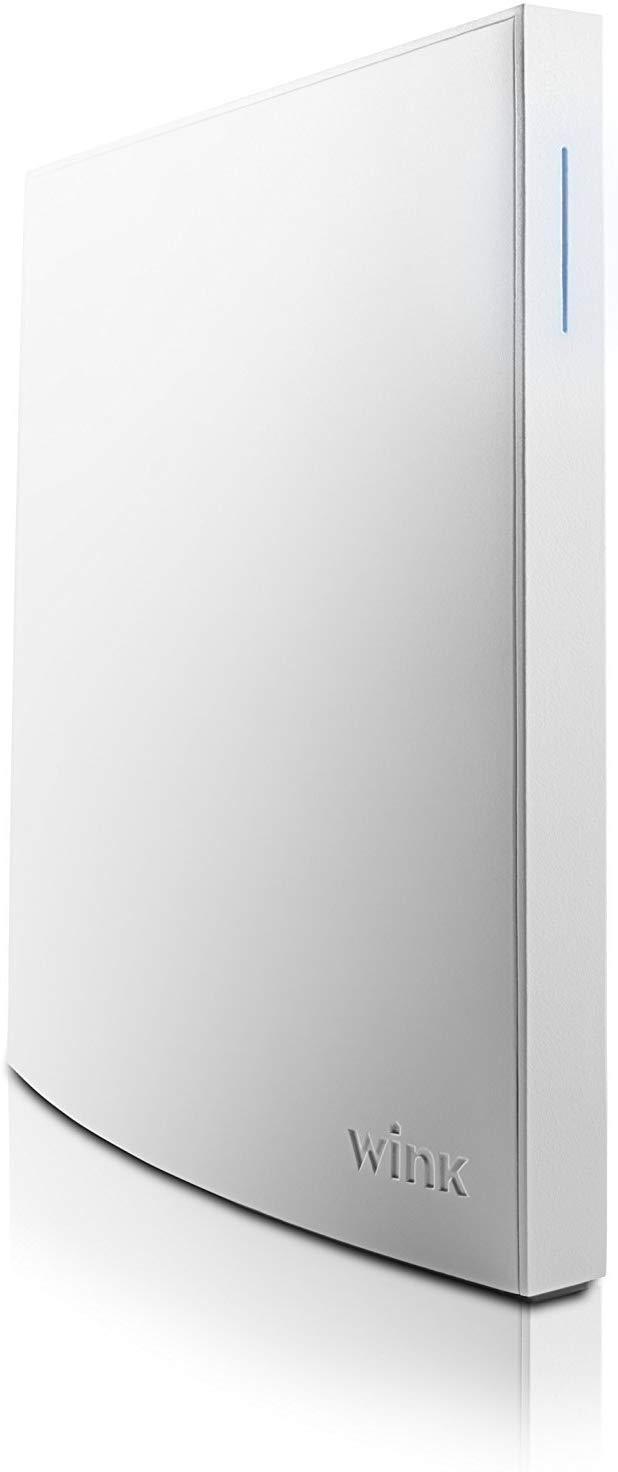 If you own a Wink home automation system, including a Wink hub, you’ll want to pay attention to Wink’s upcoming changes on May
 13th 20th, 2020 (deadline extended). Let’s explore.
Shutting Down Free Service
Wink is clearly in some kind of financial trouble and they’re trying one last ditch effort to save their (f)ailing company. In that effort, on May 20th, 2020, Wink intends to shut down all free services and move to a $5 a month subscription pay model.
While this reeks of ransom and extortion, it’s also got some other issues that are even more serious.
On May 20th, all Wink hubs without a subscription will be summarily cut off from use. This means no more app access, no more API access, no more controlling your smart lights, smart plugs or anything else you presently own that is operated by Wink. Here’s the seriousness. During the Pandemic, some people may be relying on smartplugs to operate home medical devices. Cutting off these devices could cause serious complications to some people.
Effectively, they’re going to brick your Wink hub unless you fork over their extortionary $5 a month.
Bad Service
Wink’s troubles have been brewing for a while. Over the last 6 months, I have regularly seen my Wink hub go offline for hours at time. The most recent was on May 7th, 2020 from early in the morning until after midday. Yes, the hub was completely non-functional for at least 6 hours. If this were a one time problem, I might forgive Wink its outage. Unfortunately, this has been a regular occurrence about every other day for the last 3 months. Literally, there are times where the lights cannot be used because the Wink hub cannot connect to Wink’s service.
Premium Service
This is where I look at Wink and think, “What the hell?” You’re seriously thinking that anyone will pony up $5 a month to continue to have daily outages? No no no. Think again Wink. Your service attached to the hub is already trash. There’s no way I have an intention of paying you $5 a month to reward you for such bad service.
Too Little, Too Late
Unfortunately, by cutting off millions of smart hubs, this will be Wink’s undoing. Forcing people to pay up won’t lead to anything good. If Wink had attempted to roll out a for-pay subscription service 3-6 months ago by offering something better than what we’re presently getting, like dedicated support services or unique discounts on devices, I might think twice.
But, to pay for a service (a very crappy service at that) that we were getting for free without anything premium about it? Uh, not gonna do it.
I know a lot of people have sunk money into devices for their Wink hubs. Thankfully, I didn’t do that. I only have two lamps controlled by my Wink. After I realized just how crappy Wink’s service and hub actually was, I decided not to invest any further money into devices for the Wink. Instead, when I invest money in a smart home system, I’m doing it with Philips Hue, which so far is still a free service and offering a near rock solid uptime track record. However, Philips may not continue its Hue service for free forever, either.
The Wrong Way

Unfortunately, Wink has chosen the absolutely most wrong way to handle this roll out of a new subscription service. Not only did Wink offer a pittance 7 day notice for this drastic change, they didn’t even bother to attempt to widely notify users of this change. Consider that there are are probably 1.5 million of these devices in service, yet very limited notifications have been sent. Instead, they have relied on a Tweet, a Blog article and for some, an email.
There are correct ways and incorrect ways of handling such a service change, but it is clear that Wink is almost assuredly inches from going out of business. Some users have attempted to call Wink’s support line only to find that the number has been disconnected. Yeah, disconnected numbers are not hallmarks of a successful company. Quite the opposite, in fact.
Do you own a Wink?
If you own a Wink hub, you will need to understand what this means for you. You think, “I’ll still be able to control my lights”. Uh, no you won’t. After the deadline, the ability to use the app, the API (Alexa) or any other means (i.e., automation) will be shut off. In fact, I’d expect Wink to roll out a new app update to all smart phone devices that will force you onto a signup page to subscribe to their new for-pay service.
Don’t roll out of bed on the deadline and expect your lights or smart switches to work as they always have… at least, not unless you fork over that $5 a month.
Still, even if you do pay for that service, they’re likely to raise it to $10 a month, the $15 a month and keep raising up to some incredibly expensive amount in probably 4 months. The $5 a month is simply a ruse… a ruse to rope you in, then once they’ve got you hooked, raise that price to completely gouge you in the near future.
It’s up to you if you want to pay for service. You don’t really need to, though, when you can buy other smart hubs, like Samsung’s SmartThings that doesn’t require a subscription fee. Apparently, Samsung’s SmartThings hub is also fully compatible with most or all of Wink’s devices. So, there’s that. Unfortunately, Philips Hue’s hub isn’t that compatible. Hue will work with some non-Philips devices, but it clearly works best with Philips’s devices.
Critical News
Because this is pretty much timely news that needs to arrive in your inbox today, I’m publishing this without too much proofreading. If there are errors in this article, I will fix them in time. I just want to get this article pushed out quickly because of the clock ticking towards that deadline.
↩︎
Holiday Shopping Tip: GameStop Closures
 Beware of shopping at GameStop during the 2019 holiday season. Like the Toys R Us closure shopping tips I wrote during the 2018 Toys R Us closure, this same set of rules now applies to GameStop. GameStop presently plans to close at least 200 stores this year alone, and who knows how many more stores will close in 2020? *shrug* They could end up closing all stores under bankruptcy. You should proceed with your holiday shopping as if GameStop is completely closing every store. After all, they very likely will completely close based on how quickly these closures have been coming. You also don’t know if they will close the store where you plan to purchase your items. As a consumer shopping tip, let this be a warning to not shop stores under imminent closure. Let’s explore.
Store Closures
GameStop is now proceeding with many store closures during this 2019 holiday season. Why is this important to you? Because if you’re a regular customer there, you will need to reconsider ANY holiday shopping at this chain. Let’s highlight a few problems with shopping at stores where threat of closure is imminent.
Even if your local GameStop doesn’t yet know about its own closure, that doesn’t mean that that store won’t be closed just a week or two later. Let’s understand the very real dangers of buying from a chain under imminent threat of closure… particularly during the ever important holiday shopping season. Don’t get duped by this company. There are also too many other stores where this holiday video game shopping problem doesn’t exist.
- Returns — Buying even a week before the store puts up a “Store Liquidation” banner may invalidate your ability to return a purchased item to that (or any) store if your item is defective. GameStop isn’t a store known for its ethical business practices already. Because you purchased that item from a store targeted for closure, any sales you made there may end up becoming “All Sales Final”. Will other stores honor that closed store’s receipt? That’s questionable. Again, GameStop isn’t the most ethical store chain out there. Corporate could tell all other stores which remain open to reject returns from stores which are in the process of closing or have already closed.
- Game Reserves — GameStop allows consumers to place “money down” as a deposit to hold a game (or other merchandise) until it finally arrives for sale. If you have any money reserved for any upcoming games or any other items, you will need to head over to the store and ask for a refund of that money as quickly as you possibly can. You should insist on having that money returned in the form of cash or as a refund to your credit card. Do not fall for allowing the staff to place the money onto a gift card. I’ll discuss the reasons why Gift Cards are a bad idea next. If you have any $5, $10 or $25 reserves left standing, you will lose that money when the store closes. They will not transfer that money to another store or refund it to you after closure. Even still, you DO NOT want to request a transfer of your reserves to another store as that other store could also close. Request your reserve deposits to be returned to you in cash, never on a store card.
- Store Gift Cards — Proceed here as if the whole GameStop chain is closing. DO NOT purchase any gift cards from GameStop at this time. When stores begin closing, they tend to no longer honor ANY locally purchased gift cards or indeed honor any money left on gift cards. Laws in some states may still require GameStop to honor cards as long as even 1 outlet remains open. However, that may mean you might need to travel hundreds of miles to redeem it. Though, you may or may not be able to redeem it on GameStop.com. If you have any remaining store gift card credit for GameStop, you need to run, don’t walk, to your nearest GameStop which is still open and use it up on purchasing anything in that store, assuming they haven’t yet invalidated gift cards. This is a situation of use-it-or-lose it. Note that store credit can also be placed onto GameStop’s PowerUp loyalty card. So be sure to double check that no credit remains on that card either. Again, proceed here as if the chain is closing. Don’t risk your money on GameStop store gift cards.
- Gift Purchases — Don’t consider purchasing any merchandise from GameStop which will be used as a gift unless you are absolutely certain that you fully understand that neither you nor the gift receiver WILL be able to return that item to GameStop once that local store closes (and it probably will). When purchasing a gift for someone else, you’ll want to ensure they can return that gift to a retailer for replacement or refund. Choose a retailer that still plans on being in business January 1 of next year.
- GameStop Rewards Points — As with any store that starts store closure proceedings (a precursor to bankruptcy), one of the first things that is dumped is loyalty cards and point programs. As of now, GameStop has not yet fully disbanded or dumped its loyalty card program, but they have recently reduced it. If you have any remaining points, you will need to use them up pronto by using the Rewards app to convert points into store credit and using that store credit as fast as you can. You can’t ask for rewards points be converted to cash, but you can use these points towards in-store merchandise. Again, this is a use-it-or-lose it situation. Proceed as if ALL of GameStop is closing and use up any remaining rewards points you have outstanding in your rewards account. It’s very likely this rewards program will be cancelled soon, so do this as fast as you read this article. As of this article, GameStop’s rewards system is still functioning (Dec 8, 2019).
- In-Store Warranties — Do not purchase ANY GameStop store warranties (or any other store chain’s store warranty) when under threat of closure. If you presently own an in-store warranty with GameStop, you may want to call your local GameStop to inquire how future service will be handled if your store closes. But, be fully prepared to have the manager not give you all the information you need. If the warranty you’ve purchased is through a third party, like SquareTrade, these warranties should remain in effect until they expire. However, any warranties sold and honored solely by GameStop are likely to become null-and-void after closure. You shouldn’t rely on what a manager tells you about its current store warranty programs as they may not have all information about GameStop’s full store closure plans.
- Disc Replacement Plan — This is GameStop’s own in-store disc warranty plan. They allow one replacement per plan. If you have any games under this plan, you should take advantage of this plan and replace your discs. This plan is very likely to not be honored after the store closes… not even by stores that remain open. You may also find that stores that remain open are too far away to take advantage. If you buy a game from GameStop and are offered this in-store plan, refuse it. It’s a waste of money for a store chain under threat of closure.
- Defective Items — If you have any purchases you’ve already made with GameStop and you intend to return defective items, do it now. Don’t wait. You should also call the store where you plan to return to make sure they are not already in liquidation closure. If they are already liquidating, they have likely suspended returns. You will then need to locate another store location that isn’t presently under closure to return your item. Be quick, though. That store might get the word to close down at any time.
Store Liquidations
In concert with the above, you may be able to pick up a marked-down deal or two in your local store if it is closing. However, proceed with caution here. Know that whatever you purchase is likely “All Sales Final”. It may even say that on the receipt. If it does, you WILL NOT be able to return any purchased items to this or any other store that remains open.
If you intend shopping for holiday gift giving during a liquidation sale, I strongly recommend not. Unless you know the person receiving the gift never returns items, it is never a smart choice to shop store liquidations for holiday gift giving. The person receiving the gift will likely not be able to return the item to the store. However, if it’s a video game system, you may be able to get warranty work performed through the manufacturer (or SquareTrade if you bought such a plan).
Clothing and apparel items, while also not returnable, are likely safe choices during a liquidation if these items are for your own personal use. However, again, when purchasing for gift giving, you need to make sure that the person you’re planning on gifting the item to understands that they cannot return the item to a store which has since closed. I’ve said this several times throughout this article, but it’s always worth saying again. Choose gift giving items carefully and from stores that plan to remain in business.
GameStop Closing
It is as yet unknown how many stores will ultimately close. It is also unknown if GameStop will honor returns in any stores that remain open on behalf of the closed stores that sold that merchandise. As I said, GameStop’s ethics and business practices have always been questionable at best. GameStop is not required to honor receipts for merchandise sold in now closed stores. Be cautious when doing business with GameStop throughout the holiday season for this reason alone.
You should proceed with your holiday purchases as if the entirety of GameStop is closing. Better, don’t even shop there. However, if you have store credit, gift cards or rewards coming to you, you will want to use that store credit up as fast as possible. Know, though, that anything you purchase may not be returnable.
If you want to give a gift card to someone that could be used at GameStop, you should buy a Visa, MasterCard or American Express branded card where that credit can be used at any store that accepts these credit cards. Do not buy a GameStop store gift card as the store may not exist by the time the person gets around to using the card and other stores may not honor that gift card’s credit.
GameStop Exclusive Items
Here’s the one and only one place where I recommend purchasing items from stores which are closing. GameStop has exclusive controllers and toys. Because these exclusives only exist at GameStop, you’ll want to quickly get there and buy those exclusives. Once this chain closes, it may be difficult to locate these exclusives again. You won’t be able to return these items, but you also won’t be able to find them after the stores are closed. GameStop exclusives are really the only investments that are worth the purchase during store liquidation sales.
Laws and Closures
While there are laws about how retail business must act while in business, once a business begins closing locations, some of these laws become murky. For example, one such murky situation is Gift Cards. When you buy a store gift card and a store goes bankrupt, you become an unsecured creditor to the company’s bankruptcy proceedings behind shareholders. This means that if any money is forthcoming from bankruptcy liquidation, it will be distributed to those ahead of unsecured creditors first. What that ultimately means is that gift card holders likely won’t see any money back.
Instead, if you have a gift card to a store in imminent danger of closure or bankruptcy, you should immediately head to the store and use that gift card while they still honor them. Don’t wait on this one.
GameStop hasn’t announced any bankruptcy proceedings as yet, but that could still be just a matter of time. Right now, GameStop is performing self-closures in hope of righting their financially listing ship. That doesn’t mean that closing these stores will ultimately succeed in this goal, but that’s their hope. Cutting out stores immediately cuts their losses, but may cost them money in paying out long term leases for stores which close. These lease payouts may push the chain over the top towards full bankruptcy.
Duping Holiday Shoppers
It is rumored that GameStop’s holiday store closure game plan is to rope in as many unsuspecting holiday sales while the remaining stores remain open. Yet, when January 1 rolls around, it seems this chain plans to have a massive set of store closures. This action alone will thwart holiday returns. This means that you may literally be left holding your holiday bag from GameStop. Once stores close for good on December 31st, it typically means that this chain was simply in it to dupe consumers out of their holiday money without any possibility for returns.
Don’t get suckered in by GameStop’s less than ethical business practices. Choose to shop for your gaming needs at stores without imminent closures, such as Walmart, Target, Best Buy and Amazon. At least with these latter stores, they will remain in business come January 1 allowing you to return any items that are defective or were simply awful holiday gifts.
Best Judgement
When a store chain begins closing down stores, it’s always worth using your best judgement. Most of what I have written above is pretty much shopping common sense, IF you know that stores are closing. For those oblivious to the woes of a chain not in the best of financial condition, this may be a wake-up call and warning.
When a store chain is under threat of closure, you should always heed this same exact advice as above. Avoid buying from the chain, if at all possible. During the holiday season, it can be tempting to visit any store because you may be having trouble finding a video gaming item. Don’t be temped. Choose Best Buy, Amazon, Target or Walmart before heading to a GameStop. Nothing is more disheartening than gifting an item to someone only to realize that it was the wrong item and it can’t be returned.
While heeding this consumer advice won’t help GameStop turn itself around, they brought this situation on themselves (which is a rant for another day). When stores begin to close, you lose your ability to exercise certain fundamental store rights (like store returns, gift cards, loyalty programs and so on). Once a chain begins to have financial troubles, it’s usually a downward spiral that doesn’t end. Not shopping there helps them fail faster, but it’s better to be safe with your holiday dollars than throw it away on a store where you have no recourse and no returns.
Good Luck and Happy and Safe Holiday Shopping!
↩︎
Rant Time: What is a Public Safety Power Shutoff?
 Here’s where jurisprudence meets our every day lives (and safety) and here is also where PG&E is severely deluded and fast becoming a menace. There is actually no hope for this company. Let’s explore.
California Fire Danger Forecasting
“Officials” in California (not sure exactly to which specific organization is referred here) predicted the possibility of high winds, which could spark wildfires. This happened earlier the week of October 7 (or possibly earlier). As I said, these are “predictions”. Yet, as far as I can see, no strong winds have come to pass… a completely separate issue, but it is heavily tied to this story.
Yet, PG&E has taken it upon themselves to begin powering off areas of Northern California in “preparation” for these “predictions”… not because of an actual wind event. If the high winds had begun to materialize, then yes, perhaps mobilize and begin the power shut offs. Did PG&E wait for this? No, they did it anyway.
What exactly is Public Safety?
In the context of modern society, pretty much everything today relies on electric power generation to operate our public safety infrastructure. This infrastructure includes the likes of traffic lights to street lights to hospitals to medical equipment to refrigeration. All of these need power to function and keep the public safe. To date, we have come to rely on monopoly services like PG&E to provide these energy delivery services. Yet, what happens when the one and only one thing that PG&E is supposed to do and they can’t even do it?
Granted, what PG&E has done is intentional, but the argument is, “Are the PG&E power outages in the best interest of public safety?” Let’s explore this even further.
PG&E claims that these power outages will reduce the possibility of a wildfire. Well, that might be true from a self-centered perspective of PG&E as a corporation. After all, they’ve been tapped several times for legal liability over recent wildfire events. They’ve even had to declare bankruptcy to cover those costs incurred as a result. We’ll come to the reason behind this issue a little bit later. However, let’s stay focused on the Public Safety aspect for the moment.
PG&E claims it is in the best public safety interest to shut down its power grid. Yet, let’s explore that thought rationale. Sure, this outage action might reduce the possibility of sparking from a power line, but what it doesn’t take into account is the reduction in and lack of public safety from all of the other normal-everyday-public-safety mechanisms which have also had their power cut. As I said, street lights, traffic lights, hospitals, medical equipment, 911 services, airports and refrigeration.
The short term effect of shutting the power off might save some lives (based on a fire prediction that might not even come true), but then there are other lives which might be lost as a result of the power being shut off for days. Keep in mind that PG&E claims it might take up to 5 days to restore power after this scheduled power off event. That’s a long time to be without standard regular public safety mechanisms (simply ignoring the high wind advisory).
If PG&E has been found responsible for wildfires, then why aren’t they responsible for these incidental deaths that wouldn’t have occurred if the power had remained on. Worse, what about medical equipment and refrigeration? For people who rely on medical equipment to sustain their lives, what about these folks? How many of these could die from this outage? If it truly takes 5 days to get the power back on, what about the foods being sold at restaurants and grocery stores? If you do trust it, you might get sick… very, very sick… as in food poisoning sick. Who is responsible for that? The retailer or the restaurant?
Sure, I guess to some degree it is the retailer / restaurant. They should have thrown the food out and replaced it with fresh foods. Even then, perhaps the distributors were also affected by the outage. We can’t really know how far the food spoilage chain might go. At the root of all of this, though, it is PG&E who chose to cut the power. How many people might die as a result of PG&E force shutting off the power grid versus how many might potentially die if a wildfire ignites?
I’ve already heard there have been a number of traffic accidents because the power has been cut to traffic lights. It’s not a common occurrence to have the power out on intersections. When it does happen, many motorists don’t know the rules… and worse, they simply don’t pay attention to follow them. They just blast on through the intersection. Again, who is responsible for this? The city? No. In this case, it is truly PG&E’s responsibility. The same for food poisoning as a result of the lack of refrigeration. What about the death of someone because their medicine spoiled without refrigeration?
Trading One Evil For Another
Truly, PG&E is playing with fire. They are damned if they do and damned if they don’t. The reality is, either way, shutting off electricity or leaving it on, PG&E risks the public’s safety. They are simply trading one set of public safety for another. Basically, they are “Robbing Peter to pay Paul.” By trying to thwart the possibility of setting an accidental wildfire, the outage can cause traffic accidents, deaths in hospitals, create food poisoning circumstances and this list goes on and on. When there is no power, this is real danger. Sometimes immediate danger, sometimes latent danger (food poisoning) which may present weeks later.
The reality is, it is PG&E who is responsible for this. PG&E “thinks” (and this is the key word here) that they are being proactive to prevent forest fires. In reality, they’re creating even more public safety issues by cutting the power off indiscriminately.
Cutting Power Off Sanely?
The first problem was in warning the public. PG&E came up with this plan with too short of a notice. The public was not properly notified in advance. If this outage scenario were on the table of options for PG&E to pursue during the wildfire season, this information should have been disseminated early in the summer. People could have had several months to prepare for this eventuality. Instead of notifying months ahead, they chose to notify at a moment’s notice forcing a cram situation when everyone floods the stores and gas stations trying to keep their homes in power and prepare. At the bare minimum, PG&E should be held responsible for inciting public frenzy. Instead, with proper planning and notification, people could have had several months notice to buy generators, stock up on water, buy a propane fridge, buy a propane stove, prep their fridges and freezers, and so on.
With a propane fridge, many people can still have refrigeration in their home during an extended (up to 7 day) power outage. This prevents both spoilage of foods and of medicines. Unfortunately, when it comes to crunch time notices, supplies and products run out quick. Manufacturers don’t build products for crunch time. They build for limited people to buy over a short period of time. Over several months, these manufacturers could have ramped up production for such a situation, but that can’t happen overnight. PG&E was entirely remiss with this notification. For such drastic knee-jerk actions to public safety, it needs to notify the public months in advance of this possibility. This is public menace situation #1.
Indiscriminate Power Outages
Here’s a second big problem with PG&E’s outage strategy. PG&E can’t pick and choose its outages. Instead, its substations cover whole swatches of areas which may include such major public safety issues as traffic lights and hospitals, let alone restaurants and grocery stores whose food is likely to spoil.
If PG&E could sanely turn off power to only specific businesses and residences without risking the power to hospitals, cell phone infrastructure, 911 and traffic infrastructure, then perhaps PG&E’s plan might be in a better shape. Unfortunately, PG&E’s outage strategy is a sledgehammer approach. “Let’s just shut it all down.”, I can almost hear them say. Dangerous! Perhaps even more long term dangerous than the possibility of not setting a wildfire. Who’s to say? This creates public menace situation #2.
Sad Infrastructure
Unfortunately, this whole situation seems less about public safety and more about CYA. PG&E has been burned (literally) several times over the last few wildfire seasons. In fact, they were both literally and monetarily burned so hard that this is less about actual public safety and more about covering PG&E’s legal butt. Even then, as I said above, PG&E isn’t without legal liability simply because they decided to cut the power to thwart a wildfire. In fact, while the legal liability might not be for causing a wildfire, instead it might be for incidental deaths created by outages at intersections, by deaths created in hospitals and in homes due to medical equipment failure, by deaths created via food spoilage in restaurants and grocery stores… and even food spoilage or lack of medical care in the home.
The reality behind PG&E’s woes is not tied to its supposedly proactive power outage measures, it is actually tied to its aging infrastructure. Instead of being proactive and replacing its wires to be less prone to sparking (what it should have been doing for the last 10 years or more), it has done almost nothing in this area. Instead of cutting back brush around its equipment, it has resorted to turning the power off. Its liability in wildfires is almost directly attributable to relying on infrastructure created and installed decades ago by the likes of Hetch Hetchy (and other early electric infrastructure builders) back in the early 1900s. I’m not saying that every piece of this infrastructure is nearly 100 years old, but some of it is. That’s something to think about right there.
PG&E does carry power from Hetch Hetchy to its end users via Hetch Hetchy generation facilities, but more importantly, through PG&E’s monopoly electric lines to its end users. PG&E also generates its own electricity from its own facilities. It also carries power from other generation providers like SVCE. The difficulty with PG&E is its monopoly in end user delivery. No other company is able to deliver power to PG&E’s end user territory, leaving consumers with only ONE commercial choice to power their home. End users can opt to install their own in-home energy generation systems such as solar, wind or even diesel generators (when the city allows), but that’s not a “commercial” provider like PG&E.
Because PG&E has the market sewn up, everyone who uses PG&E is at their mercy to provide solid continuous power… that is, until they don’t. This is public menace situation #3.
Legal Troubles
I’m surprised that PG&E has even decided to use this strategy considering its risky nature. To me, this forced power outage strategy seems as big a liability in and of itself as it does against wildfires.
PG&E is assigned one task: Deliver Power. If it can’t do this, then PG&E needs to step aside and let another company more experienced in to replace PG&E’s dominance in power delivery. If PG&E can’t even be bothered to update its aging equipment, which is at the heart of this entire problem, then it definitely needs to step aside and let a new company start over. Sure, a new company will take time to set it all up, but once it’s going, PG&E can quietly wind down and go away… which may happen anyway considering both its current legal troubles and its bankruptcy.
The state should, likewise, allow parties significantly impacted by this forced power outage (i.e., death or injury) to bring lawsuits against PG&E for its improperly planned and indiscriminately executed power outage. Except, because PG&E is still in bankruptcy court, consumers who are wronged by this outage must stand in line behind all of those who are already in line at PG&E’s bankruptcy court. I’m not even sure why the bankruptcy judge would have even allowed this action by PG&E while still in bankruptcy. Considering the possibility of significant additional legal liabilities incurred by this forced outage, the bankruptcy judge should have foreseen this and denied its action. It’s almost like PG&E execs are all, “F-it, we’ll just turn it all off and if they want to sue us, they’ll have to get in line.” This malicious level of callous disregard for public safety needs much more state and legal scrutiny. The bankruptcy judge should have had a say over this action by PG&E. That they didn’t, this makes public menace situation number 4, thus truly making PG&E an official public safety menace and a nuisance.
Updated 10/11/2019 — Clarification
I’ve realized that while one point was made in the article, it wasn’t explicitly called out. To clarify this point, let’s explore. Because PG&E acted solely on a predicted forecast and didn’t wait for the wind event to actually begin, PG&E’s actions egregiously disregarded public safety. As I said in the main body of the article above, PG&E traded one “predicted” public safety event for actual real incurred public safety events. By proceeding to shut down the power WITHOUT the predicted wind event manifesting, PG&E acted recklessly towards public safety. As a power company, their sole reason to exist is to provide power and maintain that public safety. By summarily shutting down power, not only did they fail to provide the one thing they are in business to do, they shut the power down for reasons other than for fire safety. As I stated above, this point is the entire reason that PG&E is now an official menace to the public.
↩︎
Did Toys “R” Us have to fail?
 If you’ve read various articles including this Bloomberg article, you might come away thinking that all of what happened to Toys “R” Us began a decade ago (i.e., the early 00s). In fact, you would be so wrong… and so would Bloomberg. Let’s explore.
The 80s
Around 1981 or 1982, I worked at Toys “R” Us. Even at that time, Toys “R” Us ran a questionable business model. A business model that, I might add, even store managers recognized and thought was unsustainable. In fact, after having discussions with store managers at my store, I got an earful about how they thought that the chain would likely fail within a decade if they kept on using that business model. This was the early 80s.
What business model?
Toys “R” Us sowed the seeds of its own destruction at least beginning in the 80s, perhaps as early as the 70s. What questionable business model is this? The model chosen was to operate the stores in the red (otherwise known as losing money) through 80-90% of the year (aka, “90 in the red”). Then, the management hoped to recoup those losses in the final 1-2 months of the year during holiday season sales. It didn’t always work out.
While this model seemed to work to keep most Toys “R” Us stores afloat through the 80s and 90s, it served to keep the company from really turning a solid profit and, ultimately, led to the company’s massive debt load. What that model meant to the stores is fully stocked shelves every day of the year. This was readily apparent walking into any Toys “R” Us store. The stores were not only full, they were positively brimming over with the latest toys. This also meant putting itself into massive debt each year in inventory and then hoping to pay off that debt at the end of the year when most of the stores finally ran “in the black” (read, turning a profit for the year).
Keep in mind that many of the stores didn’t turn a profit, but so long as enough stores did, they could cover for the debt they had been incurred company wide, or at least so that was the idea. Even the store manager at my Toys “R” Us location could see the handwriting on the wall in the early 80s. This store’s business model was not sustainable and I was, even as an standard employee, told this by various managers. These managers didn’t hold back their thoughts.
Bloomberg, Fads and Sustainability
What Bloomberg got right was that even a decade ago, TRU’s debt load had put them underwater. What Bloomberg didn’t address was that this debt began almost 2 decades earlier of overbuying, followed by hoping that a “hit toy” would kick them over the profit line at the end of every year.
“Hit Toys” were Toys “R” Us’s hopeful thing. They needed that Tickle Me Elmo or Nintendo Wii or Lazer Tag or Cabbage Patch Kid fad toy to carry the chain into the new year with profit on the books. Throughout the 80s and 90s, there were a string of these hit toys practically every year. Fad toys which flew off the shelves and brought Toys “R” Us to profitability each year. It was a risky move for Toys “R” Us to bank on a hot fad each year, but there it is.
Unfortunately, relying on this kind of yearly toy fad to sustain a business every year was not only risky, it began to burn Toys “R” Us as these yearly fads began to die off by the late 90s. Even during mid-late 90s, these fads were much less intense than they had been just a few years earlier. By the mid-00s, these fads were practically non-existent. Sure, there were hot toys, but no where near the levels of sales that Tickle Me Elmo or the Cabbage Patch Kid fads offered to Toys “R” Us’s bottom line… particularly when Best Buy, Walmart and Amazon concurrently began diluting the toy profits of TRU.
These fading fads were responsible for killing other toy stores chains as well, such as Kay Bee Toys and even the once high flying, high end FAO Schwarz. These fading fads also left Toys “R” Us holding a huge mound of debt.
Walmart
While Walmart did usurp the title of top toy seller from Toys “R” Us, that’s primarily because Toys “R” Us prices were always on the higher side. Walmart did carry toys, but not all toys. If you wanted something you couldn’t find at Walmart, you went to Toys “R” Us and it was pretty much guaranteed they would carry it (even though it might be out of stock). Walmart didn’t even stock many of these. The toy section in Walmart was always small by comparison. Sure, you could find better deals at Walmart, but only from the toys that they chose to carry.
Walmart was also not very kind to collectors in the 90s. If a collector showed up to buy toys, Walmart would try to do everything to keep that toy item away from the collectors… sometimes even going so far as to banning them from the store simply for buying toys. Does it really matter whose dollars are buying an item? Granted, I wasn’t particularly happy that a collector had gone to Walmart to buy out all of the “good” stock leaving tons of “peg warmers” sitting around that no one wanted. But, that’s how toy collecting worked in the 90s.
The whole collector market kind of died off with the advent of places where collectors could buy case packs, like Entertainment Earth. Instead of having to rummage around Walmart at 3AM (when they stocked new merchandise), you could order a full case of figures, guaranteeing that you’ll get at least one “rare” figure. This meant that the once Walmart and Toys “R” Us shopping locations for collectors became a thing of the past. Collectors took their money online to buy cases and stopped buying at Toys “R” Us. Buying case packs is easier, more convenient and doesn’t require the hassles of dealing with surly underpaid Walmart workers.
Toys “R” Us Kids Grew Up
Kids of the 80s became collectors in the 90s and became families on the 00s. The once popular collector market throughout the 90s fell apart into the 00s because the collector market changed and Toys “R” Us failed to understand this important change. The collector market is (or at least was) also a huge market that kept Toys “R” Us afloat in addition to the end-of-year-fads. However, brands like Hasbro and Mattel didn’t grow with the collector market. Sure, Hasbro tried, but the toys they made were tiny improvements over their (sub)standard toys. Mattel also tried with its collector Barbies, but, again they failed to understand the critical quality needed for what collectors really yearned.
In essence, the toy brands themselves didn’t grow to provide what collectors wanted… which left Toys “R” Us mostly without collector money. However, collector brands did grow up for the collector market outside of Toys “R” Us, including Sideshow and Hot Toys brands. These brands are now considered the premiere collector “toy” brands for adult collectors. These “action figures” are some of the highest end, most expensive, most collectable toys out there, yet these are not sold at Walmart, Target or even Toys “R” Us (before they closed). Though, you can find them on Amazon via third party sellers. This is where Toys “R” Us failed to keep up with the kid-turned-adult collectors. Hot Toys figures cost anywhere between $150-350 per figure; a price point that collectors are more than willing to pay to get that level of craftsmanship. A price point that Toys “R” Us never carried. A quality that not Toys “R” Us nor Walmart nor Target ever carried.
While Toys “R” Us continued to sell these low-end toy products to kids, it failed to grow up and to sell high end collectibles to adults. Ironically, this runs counter to their jingle. The most prestigious type of collectibles that Toys “R” Us sold were the collector Barbies and McFarlane figures, offering price points at $15-40. A price tag that cannot provide the levels of detail, paint jobs and overall craftsmanship that goes into a Hot Toys or Sideshow figure. Adult collectors want high end figures and Sideshow and Hot Toys fill that niche. Toys “R” Us management never recognized this growing trend.
“I don’t want to grow up, I want to be a Toys “R” Us kid”
This jingle is ultimately the rationale that appears to have led Toys “R” Us management down the wrong path. Instead of singing the praises of not growing up, the toy store should have realized that kids grow into adults; adults who still want to buy collectible toys, but who don’t want the junky, low priced Hasbro and Mattel versions. They want premiere brands like Hot Toys offering highly detailed, highly realistic, meticulously crafted and painted figures… not Hasbro’s now antiquated, poorly painted, robot-style 12 inch figures. You might give these cheap toys to your kids, but you wouldn’t display them in a display case.
This collectible market began with highly detailed military figures, but branched out into licenses with Marvel, DC, Star Wars, Warner Brothers and various other large movie franchise brands. Toys “R” Us failed to latch onto this market and, thus, failed to capture the once Toys “R” Us kid who had grown into an adult and now desires these highly detailed collectible toys. As kids grow into adults, tastes change and people want more sophisticated products. Hot Toys and Sideshow found that niche for sophisticated adult tastes. Yet, Toys “R” Us failed to recognize this niche.
If Toys “R” Us had realized this mistake and had added brands like Hot Toys to its shelves, it might have been able to entice the collector’s market back into its stores and pay down some of its debt. Every discount retailer has, so far, failed to realize the adult collectible toy market. However, this lack of foresight hurt Toys “R” Us the most.
Kid Tastes
Additionally, kids tastes have also changed as a result of brands like Hot Toys and products like the iPad. Kids don’t want want to buy Leap or other “toy” or “fake” tablets when they can ask their parents for the real thing. Kids also want the higher end Hot Toys than the poorly crafted Hasbro Ironman figures. While Toys “R” Us did begin carrying Apple products, the stores really thought of these more as a toy rather than treating them as something useful. Best Buy always treated their Apple section with the best possible displays. Toys “R” Us displayed its Apple tablets right next to random other tablets as though they weren’t anything special. I’m not even sure that I’d have felt comfortable buying an Apple tablet from Toys “R” Us. Not only did they have no one versed in this technology on staff, what they carried could have been 2 or even 3 generations old. Toys “R” Us just didn’t treat these products with the respect that they deserved.
As a result of kids changing tastes and higher levels of sophistication, kids really didn’t want much of what was in that toy store after a certain age. This meant that Toys “R” Us was primarily for kids of a certain age and below (probably 8-9 or younger). Even still, these ages were growing up faster.
Toys “R” Us Closure
Did Toys “R” Us have to close? Yes, it did. Without a management team capable of fully understanding the downsides of running its stores using the “90 in the red” model throughout the year (and failing to accommodate the changing tastes of adult collectors), the stores ultimately succumbed to closure. It was inevitable.
What tipped the scale, though, was 2005’s $6.6 billion leveraged buyout of Toys “R” Us by the KKR, Bain Capital, and Vornado Realty Trust; a purchase that saddled the corporation with at least $5 billion in debt, in addition to its already mounting toy inventory debt each operating year. There was simply no way Toys “R” Us could recover from and pay down that debt considering its interest each month.
In fact, it was this very same leveraged buyout that not only trashed Toys “R” Us, it also lost its original private equity investors at least $1.28 billion. Even these private equity firms were ignorant of Toys “R” Us’s “90 in the red” model. You’d think that between three different private equity firms, one would have had brain among them. I guess not. Toys “R” Us was not worth buying strictly because of that business model… and it was especially true when considering saddling an already debt overburdened company with even more debt. It was an insanely stupid buyout made more stupid because of the lack performing even the most basic of fiduciary responsibility. Those private equity firms got exactly what they deserved out of that deal. Make the wrong deal, get the wrong results.
If I had been sitting in the room when this buyout deal was being considered, I would have put the kibosh on that deal pronto. If managers of stores could recognize how badly Toys “R” Us was operating in the 80s, why couldn’t a bunch of suits at three different private equity firms see this before plopping down $6.6 billion?
Overvaluation
If anything, 2005’s TRU sale is a cautionary tale. There are way too many buyouts that are purchased at way too high a value. I’ve seen it happen time and time again. Companies worth maybe $500 million sell for $3 billion? It’s just insane the money that’s being overspent. Would you walk into Walmart and offer to pay $25 for a $5 tube of toothpaste? I don’t think so. So, why do these investors think it’s okay to spend $6.6 billion on a company worth maybe $1 billion at its best… and it was then likely actually worth much less considering the debt that it already carried. Its insane business model should have further reduced its value.
Could Toys “R” Us have been saved?
Probably not. At least, not with its status quo business model. But, it might have been saved IF Toys “R” Us had adopted a more balanced approach to its store sales and more sane merchandise ordering in combination with letting managers actually handle full store merchandising instead of relying on nice looking, but misguided corporate-standard planograms.
Only stock enough merchandise in a specific store that that store can actually sell. Let managers move stock around on shelves and place the merchandise in their store where it’s most likely to sell. Additionally, don’t send stock to a store where the buying demographic isn’t buying that type of merchandise. If Barbies aren’t popular in a particular store’s demographic region, send limited amounts of Barbies there. It’s a waste of money and effort to stock merchandise that doesn’t sell. One of Toys “R” Us’s biggest foibles was its cookie-cutter store approach. That meant it was sending the same stock to all stores regardless of popularity in that local store’s area. It also meant that it way overspent on toys that would never sell at certain stores. Eventually, they simply had to clearance out those toys. Each store’s inventory should have been customized based on buying habits of local consumers and by the local manager. Only the local store team knows what’s the “hot sellers” in their store.
Clearance merchandise is actually a red flag in the retail business. It means that, as a store, you way overspent on merchandise that you couldn’t sell. If you have excessive clearance merchandise, then your merchandise spends are way off. It also means that your buyer is overbuying stuff that isn’t selling. It means you need to rethink your buyer and it means your new buyer needs to rethink how much to spend on similar types of products.
One of Toys “R” Us’s other foibles was its inability to recognize and stock the “hottest toys” rapidly. If you send 5 of something to a store and it sells out in 10 minutes, you need to stock more of it and you need to do it pronto. Yet, it might take Toys “R” Us 30 or more days to get that merchandise back in stock. That’s 30 days of zero sales… sales that could have been had the next day and the day after that. Missed sales were one of TRU’s biggest problems. Having merchandise in stock that you can sell day after day is a huge win. Yet, if the corporate buyers don’t even know to reorder this thing again, the store is blind. This is why the next part was so important to improving TRU.
Instead, this toy chain should have let the local managers have autonomy via cutting merchandise from their store that isn’t selling and placing rush orders on the hottest toys. By letting the managers, you know, actually manage the store’s inventory properly, the stores could have cut costs and raised profits. The managers could have done this by buying more of popular hot sellers in that area, shuffling cold merchandise to other stores that can sell it and cutting non-sellers from the inventory. In fact, managers should have actually had access to every store’s inventory throughout the chain and when that item last sold there. If a particular item is selling hot in one store, but is completely dead in other stores, the hot item store manager should be able to request stock moved from the cold stores to their store. This way, managers could have directly moved inventory from store to store instead of placing orders for more stock, thus causing more debt. Only after the existing in-store inventory was exhausted should a new order need to be placed. The buyers from the chain should have endorsed this manager autonomy.
Unfortunately, that wasn’t a priority for the very rigid corporate run TRU. I could walk into a store in Texas and find specific toys always out of stock. Then walk into a TRU in St. Louis a week later and find twenty of them sitting on the shelf with dust on the top. If stores had been able to request the hottest toys moved from other stores, the chain could have saved a lot of money on new stock orders.
This change in business model could have drastically improved Toys “R” Us’s profitability throughout the year. It probably would have cut down on orders to toy sellers, but something’s got to give when you’re running a retail store chain. If the toy manufacturers had to suffer a little to let Toys “R” Us recover and be a whole lot more profitable, then so be it.
Unfortunately, TRU’s status quo model endured. Even if the leveraged buyout hadn’t occurred in 2005, Toys “R” Us’s fate was pretty much sealed strictly by is “90 in the red” (cookie cutter) mentality. It was only a matter of time before it succumbed to its own debt burden even if it hadn’t incurred a ton more debt after that poor sale. The 2005 unwise sale simply accelerated Toys “R” Us’s already looming demise.
↩︎
How not to run a business (Part 10.3) — Case Study: Sears Holdings
Back in late 2004 when Kmart and Sears merged to create Sears Holdings, I had to wonder what one failing retail chain could do to help another failing chain. However since 2004, the one thing this new company has proven is that these brands die hard. In 2017, however, I think the answer has come back to conclusively nothing has been gained. Let’s explore.
Back in 2004, I didn’t really dig deep into the $11B dollar merger deal to get the nitty gritty details mostly because I had no interest in two failing retail chains (where I personally never shopped). Though, I already knew the handwriting was on the wall for both of these chains. It was just a matter of time before both chains closed their doors. That they’ve managed to hang on another nearly 17 years is a testament to the cash infusions from a billionaire. I digress.
After deciding to finally dig into this merger deal, however, I have come to find that this deal was instrumented by a former Wall Street darling Eddie Lampert. A wiz bang former Goldman Sachs employee who started his own hedge fund and apparently made mad cash. Though, I’d have questioned why a Wall Street darling would have any interest in the failing retail space. It’s clear, though, Lampert still has no knowledge of retail even after 17 years of floundering with Sears Holdings. Lampert pretends he wants to be the next Jeff Bezos with this investment, but is failing at this for two really big reasons: 1) Lack of innovation and 2) Lack of involvement.
According to his executive staff, Eddie spends most of his time at his home on a private island community in Florida. A community of apparently 86 residents and a staff of private police to ‘protect’ the island. Based on his executive meetings, he literally phones in his CEO job day in and out. He rarely, if ever, makes an appearance in the office.
Running a company by remote control
It’s one thing to be an individual contributor who works remote. Typically, these are task oriented jobs which can be easily monitored for task completion. However, as CEO, there is no possible way you can run a company from behind Skype. However, if Lampert had had substantial previous retail management experience, he might be able to get away with this. Because Lampert has no knowledge of retail after merging Kmart and Sears, he’s effectively flying blind. Even nearly 17 years later doesn’t automatically impart knowledge of retail. It’s clear, Lampert has no business operating this company. Unfortunately, whatever is left of the Sears Holding company is entirely dependent on Lampert for his continual cash infusions (up to $1B) which have kept this listing barge from sinking. However, some boats are best left to sink.
It’s crystal clear, when you buy into a business you know nothing about, you have two choices. One, sit on your arse and assume you’ll figure it out eventually (which usually doesn’t work). Two, dive in head first and learn everything you can about running a retail business. I think it’s a relatively safe bet that Lampert is in the former camp rather than the latter. Instead of being available and actively engaging in the day to day affairs of the business, he sits comfortably at his private island home and dictates policy from a Skype conference call. It’s no wonder this business is being slowly driven into the ground.
For any would-be business owner
As an owner / CEO, you need to be actively engaged in and have passion to drive your business forward, whatever that business is. You can’t sit behind a computer screen at home literally phoning in your CEO day job. That may work for a short period of time, but it won’t work forever. It’s clear, Kmart and Sears are both on the brink of collapse. Why? Because the merger of two ailing turned failing companies was a foregone conclusion without an engaged leader. A CEO / owner is there to drive and guide the business forward. To make the tough choices and ensure the business remains viable and becomes / remains profitable. Your underlings won’t do this on your behalf. They’ll do whatever it is to take their paycheck home, but they won’t go out of their way to run your business. That’s your job.
The takeaway from this case study is that you cannot sit on your arse and expect others to do your work for you. You need to be available in the office often to drive your business. If you don’t take your business seriously, no one around you will either. You need to understand your sales numbers, what’s selling and what isn’t. You need to make strategic partnerships to bring exclusive merchandise (as in the case of a retailer) onto your shelves at a low price as a way to drive customers into your store. You also need to be shrewd to get costs down and profits up. You need to hire a kick-ass marketing team who can bring the demographics into your store. In short, learn your business, understand it, live it, breath it and make it your passion. Own your business’s problems and own its solutions. Also, you need to think outside the box to continue driving all demographics into your establishment(s).
Yes, it would be nice to sit on the beach sipping margaritas all day or behind a gated community in a big mansion and also be a successful CEO of a profitable corporation. That’s a pipe dream that doesn’t happen. You only get that beach time after you’ve done your in-office time and made your money. Retail doesn’t just automatically make money for you. It requires active involvement. You need to actively drive new business into your business. It’s not like your hedge fund where you crunch numbers at a desk and move out bad performers. You need to be in the office driving your staff. You will need to reinvent your business, brand and ideas every so often to remain ‘the place to go for cool new stuff’. Once your retail business is thought of as a mom and dad store, your store is considered antiquated. The mom and dad demographic does make some money, but it isn’t the only demographic spending money and that single demographic will not convert your company from a million dollar company into a multi-billion dollar company.
Why phoning in as CEO doesn’t work
If you aren’t showing up to the office day in and out, you are missing critical verbal queues, having meaningful conversation with your staff and learning the problems that face your business. Keep in mind that some problems are outside problems. Like, for example, the threat to Kmart and Sears has been the internet retailers like Amazon. This means you need to spend quality in office time hammering through new plans to counter growing trends, like Amazon’s quick ship, quick deliver model… like Amazon’s Kindle services. If you don’t keep-up-with-the-joneses, your business is lost. Sometimes the problems are internal problems, like horribly outdated decor and fixtures. Sometimes they are supply chain related.
Since the merger in 2004, Kmart and Sears have both failed to change anything substantial with their store merchandising or, indeed, updating their store look and feel to accommodate new growing trends. Instead, they left their stores looking like something out of the 80s. Who wants to shop in a place with horribly dirty floors, drab coffee stain colored walls and fixtures with chipped paint and rust? Not to mention, that horrid glaring 80s fluorescent lighting job. You want to make your stores inviting and modern, not be a turn off. This is where it takes regularly entering and visiting stores to see how they look, how they feel to a shopper and how the merchandise is being faced. Then draw up plans to remodel your stores.
Being a Billionaire
Not everyone has this luxury. As with Lampert, he’s apparently got lots of money to spend. But, that doesn’t make it spending money smart. The saying, “throwing good money after bad” actually applies here. Why would you want to continue to invest more and more money into a chain not producing returns on your investment? That’s not a good investment strategy. For a Wall Street darling, it really makes no sense at all. Use your gift of understanding good investments and then apply that knowledge to Sears and Kmart. You’ll quickly see your error. It just takes an outside party looking in from the outside to see what someone so close to the matter can’t.
Can Kmart and Sears be turned around? While anything is possible, I’d personally say, “not at this point”. If Lampert had started the turn around back in 2004, he might have been able to pull this listing ship up right. However, because he has become a complacent mostly home bound recluse for many of the last 17 years, a turnaround for this venture is likely impossible with this leadership team. It’s too bad, too. Sometimes we just need to say goodbye to some beloved old brands to let newer brands take us to the next level.
Using time (and lighting) wisely
As a business owner, don’t let your business become a victim of complacency. Expect to reinvent your business every few years to not only keep your business fresh, but also to keep people coming in to see what’s new. Customers value companies that invest in making their stores better. Having a refreshed store means you care about your business. It also means you care about how your merchandise looks on the shelves. If your stores look old and trashy, so will your merchandise. If your store looks new, fresh and well lit, so will the merchandise. It’s literally all about creating the proper mood and perspective in your stores. Lighting has a huge amount to do with this. So, expect to replace old outdated fluorescent lighting with updated LED lighting concepts.
It just comes down to investing money in the right things for your business. It’s clear, Eddie has no clue where to have Sears and Kmart use the money he’s investing. Instead of just throwing good money after bad, ensure that that money is being used to remodel stores, being used to draw consumers in and being used to buy merchandise that fits with the store’s branding.
Unfortunately, both Kmart and Sears haven’t been ‘goto’ places in a very long time. That’s primarily because these chains have not focused on any one area to be proficient at any. For example, Target has revamped its 80s retail-only stance into becoming a neighborhood grocery as well. So, not only can you go to Target to get the latest blu-ray movie, you can also pick up some hamburger and fixings to go with it. It’s a well rounded shopping experience. However, heading into Kmart, for example, yields many deficiencies. For example, the electronics area doesn’t even carry video games any longer. How can you possibly operate a general merchandise store and not carry any video games?
Takeaway
Drive your business smart. Invest money into your business wisely. Remain focused on your goals. Most of all, remain engaged and passionate in everything you do. If you don’t do all of the things that continue to make your business a success, you may end up with a failure. Unlike Eddie Lampert with seemingly endless funds, you may find your doors shut. Though, I believe at some point soon, even Eddie’s pet project of Sears Holding will close. However, if you find yourself as wealthy as Eddie, spend your money however you feel. It’s your money. For the rest of us, driving your business smart is the obvious answer to eventual success. Though, I will say that even as passionate as you may be about your business and as much work as you may put in, there’s still the possibility that your business may fail. Predicting success or failure in any new business venture is tricky as there are so many unpredictable market forces outside of your control. For the things that you can control, you most can certainly guide your business success in the right direction and reduce your chances for failure.
Sears Bankruptcy
I would be remiss at not updating this article in 2018 to add in the recent bankruptcy and closure of the 146 Sears stores. On October 15, 2018, Sears announced it has entered chapter 11 bankruptcy protection while it attempts a reorganization. It will close these 146 stores in this reorganization process to help reduce its massive debt load.
Whether this signifies the last few breaths of a dying chain or whether this chain can actually reorg in some meaningful way and survive is yet to be determined. In my view, this is the last dying gasp of an organization that is about to close. I would highly suggest that you plan to visit a Sears near you for one last nostalgic view before this chain becomes a mere memory. If there are any Sears specific brands that you like and buy, I highly recommend that you stock up now as they are likely to forever become a memory.
← Part 10 | Chapter Index | Part 11 →
If you like what you’ve read here or disagree, please leave a comment below.
↩︎
Film Review: The Warning – PBS / Frontline Documentary
Rated: 4/5 stars.
PBS’ The Warning Documentary
The Warning is a PBS documentary discussing a warning from Brooksley Born, an attorney and a former Commodity Futures Trading Commission (CFTC) chairperson. She explained that derivatives were extremely risky insurance vehicles and sent a warning that these vehicles needed regulation during her tenure as CFTC chairperson, but her warnings went unheeded. She resigned in 1999 from the CFTC position after legislation was passed preventing her agency from regulating derivatives.
Vision of this Documentary
While I would like to rate The Warning higher, its take is pretty much tunnel vision on the derivatives markets. While the derivatives markets did melt down and did, to a large degree, spur the meltdown onward, the meltdown was not started because of derivatives. The derivative meltdown was a casualty of and was exacerbated by the sub-prime mortgage meltdown. Had the mortgage industry bubble not burst, the derivatives market might have gone unchecked for many more years. The warning was and should have been about placing regulations onto mortgage lending practices. The mortgage lending industry is the industry that failed and sent the economy into a tailspin, let’s make that perfectly clear. The derivatives (insurance) market, which speculated on the mortgage industry, single-handedly sent Wall Street into a tailspin (along with several large insurance companies like AIG).
Derivatives and the Mortgage Meltdown
Anyone with half a brain in their head could see that using questionable lending vehicles like interest only loans for the first two years or adjustable rate mortgages were ticking time bombs. When the actual monthly payments came due years later after rates went up to where they should have been, people couldn’t afford pay. This was especially true when lenders were handing these loans to people who could barely afford the ‘introductory period’ payments. So, loans came due, people defaulted and the rest is history. The derivatives (insurance policies) that were issued also came due because of the en masse foreclosures. Insurance companies that issued derivative policies speculating people wouldn’t default en masse began to fail because their speculation was wrong. So then, these insurance companies couldn’t pay off on the insurance claims. So, when consumers defaulted, so did the insurance companies offering derivatives.
It wasn’t as if warnings weren’t being issued regarding the inevitable mortgage meltdown, it’s just that Brooksley Born (the focus of this film) was not one of the people issuing the mortgage warning. Her warning was strictly about the highly risky derivatives. More specifically, the black box non-transparent nature of them. The danger, of course, is that derivatives can be placed on any speculative and risky investment as insurance. The reason derivatives need to be regulated is to prevent companies the size of AIG from making stupid decisions about such risky vehicles. However, from a consumer perspective, banks should never have gotten into the position of issuing such risky mortgages like water to people who couldn’t afford them. This was the single mistake that led to where we are today and that mistake has nothing to do with derivatives and everything to do with Government and the Federal Reserve making stupid decisions.
Overall, the movie is worth watching, but also understand its information’s place in the larger meltdown that was at work in our economy.
Is Obama hostile towards big business?
To answer this question, we need to delve a little deeper. Note, I am neither condoning nor praising Obama’s handling of his regulatory efforts. However, I would like to point out certain corrections that do need to be made.
“The truth is that not even the Franklin Roosevelt administration was as hostile to and ignorant about free enterprise as this [Obama’s] administration is.”
–Steve Forbes.
But, is Obama really hostile towards business? Or, is he making needed corrections? There is a fine line here. This issue also points out a serious problem in politics today. That problem is, you guessed it, money. Without money, the world doesn’t work. Without money, candidates don’t get elected. Without money, businesses don’t sell things and make money. Back up the train.. Businesses make plenty of money without governmental help. The trouble is that businesses want to be able to make laws that enable their businesses to make more money and then have the government be lenient with them when issues arise.
The reality, though, is that like the separation of church and state, the government now needs separation of business and state. The two are oil and water, they don’t mix. Government needs to be able to make law without interference from any party. But, businesses have deep pockets and hefty lawyers. These two elements help elect officials and help sway these same officials into making good on promises they made towards these businesses during the election.
Obama’s corrections
While I don’t agree with every single thing Obama has done, I do agree that change is necessary. The change that he is making is intended to correct the issues that led to the economic downturn. The trouble comes with statements from people like Steve Forbes. Mr. Forbes believes that he is the end-all-be-all-know-it-all when it comes to all-things-business. The trouble is, he doesn’t. Yes, he runs a successful magazine, but that doesn’t make him an authority. That makes him a successful business owner.
Obama is walking that fine line. A fine line that shouldn’t even be necessary. But, there it is. The line that’s there to help Obama help the economy, help spur business and growth and reduce the chances of a repeated failure. At the same time, the line is there to show that government values business, but isn’t there to socialize it. The trouble is, this economic downturn was of our own making. By our, I mean Wall Street. The housing bubble was just that, a bubble. Bubbles eventually burst and this bubble was no exception. It’s not as if analysts and intelligent minded people couldn’t see the handwriting on the wall. When the mortgage interest rates got down to 1% and all of those ARM and specialty loans were being issued like water flowing down the Mississippi, trouble was inevitable. We just didn’t know that banks and insurance companies were tying their financial soundness to these extremely risky loans using credit default swaps.
Until the bubble burst, no one really knew just how deep the rabbit hole went. Then, everything came crashing down and all of the nasty subprime mortgage and credit default swap issues came into view in their all fugly detailed glory. The first evidence of that was Bear Stearns followed by AIG (and the subsequent governmental bailout). I still think they should have let AIG fold, I digress.
Government and Business
It’s high time that government distanced itself from corporate businesses. It’s high time congress made laws to separate government from business (including political support). It’s high time that government stopped being a pawn for corporate businesses. Forbes clearly seems to think that Free Enterprise requires socialism to function. Free Enterprise is not part of and does not need socialism. Free Enterprise means that businesses can do whatever they need to do (within the limits of the laws) to make their business succeed. Clearly, there have not been laws enabled that have dramatically impacted Free Enterprise. The laws that have been enacted have been placed there to prevent corporations from producing risky investment vehicles with a high likelyhood of crashing down again. If businesses are now floundering, it’s not because of laws. It’s because corporations have lost their way and are still expecting handouts. Well, you can keep your hand out, but don’t expect the government to be dropping any coin in it.
Corporations have relied, no… depended on the US Government for handouts. That time needs to end. Subsidies for business need to go away. Businesses need to fend for themselves just like Free Enterprise mandates. If a business can’t make it on its own, then let it fail. I’ll repeat, LET IT FAIL. Failure is also part of Free Enterprise. Businesses that will succeed, will succeed because they produce a good product or service. Businesses that fail, will fail because they don’t produce good products or services.
Lost our way
America, and specifically corporate enterprises, have lost their way. For far too long have big corporations depended on favorable governmental conditions (sounds like a weather report) to help them stay in business. Well, that train has left (and must leave). It should be solely up to you and your business practices alone to make or break your company. It is the quality of your products, services and support that makes people want to buy your products or invest in your company. Nothing has changed about this aspect of Free Enterprise.
We need to go back to a time when quality was the key. When providing a superior product was the answer to getting people to buy things. If that also means deflation, then so be it. Businesses need to find their way by learning how to do more with less. How to manage their staff better and stop over-hiring. At the same time, many of them need to stop under-hiring and also value the employees that they have right now.
The key to keeping your business flowing is by keeping your employees active, productive and happy. Morale is a big problem in companies during any downturn. Once fear sets in over the next reduction in force (RIF), then morale falls to all-time-lows. No, taking the employees on an outing doesn’t boost morale. The way to boost morale is to stop RIFing the staff out the door. Yes, I know it gives a temporary boost to the stock price and makes the shareholders happy, but that’s a temporary fix with limited effects. Once the dust settles, the employees who are left become disgruntled, unhappy and produce less. This is completely backwards thinking. Which is why business has lost its way.
Shareholder value vs quality products
I know, someone’s going to say that it is all about ‘shareholder value’. That may be the way things seem now, but it is wrong. Currently accepted actions that lead to improved shareholder value tend to undercut production, stifle innovation, reduce profit margins and lower productivity. Why would you intentionally do this to your business? So, while these measures may seem to help the stock price, it does nothing to help the company improve its quality of products and services. In fact, in the long run, these actions almost always negatively impact the bottom line. So, the fundamental question is, are you in business to make the shareholders happy or are you in business to sell quality products and services? This fundamental question must be answered.
The true answer to this question also shows that Free Enterprise priorities today are all wrong. It used to be that the customer is #1. Now, shareholders are #1 and customers are #2. This is both wrong and stupid. Until businesses go back to the idea that the customer is #1, corporations will continue to fail and need governmental subsidies. While shareholders are considered #1, there is really no such thing as Free Enterprise when it comes to multi-million dollar corporations… which is why they always need a handout from the government.
Newest Scam: Law enforcement agencies target unsuspecting motorists with bogus citations
I’ve long suspected that this is happening, but now I’ve been a victim of this exact situation. In the state of the economy, especially here in California, local law enforcement agencies are apparently under the budgetary microscope. As a result, it now appears that law enforcement agencies have now joined the ranks of the scam artists… with one exception, they are legally sanctioned entities. In my case, my car was stated to have been located near an expired parking meter and cited for this parking infraction when it was no where near the location on that date. I do drive near that parking structure. Near yes, but almost never closer than 2-3 miles near it. Close enough that a local cop could have written down my plate number, seen the make, model and color and then used that information to create the scam citation. Yes, I could have contested the ticket, but the main issue is that the citation had nearly every bit of information about my vehicle correct except the body style (which was conveniently absent from the notice to pay). On top of that, the citation was issued so late in the contest process, I basically didn’t have time to contest it. However, the license plate number was correct, plate expiration year correct, make correct, color correct. The only thing that wasn’t correct and, of course, wasn’t written on the notice to pay the citation was the body style… how convenient. The other two things that were conveniently missing from their ‘system’.. the VIN and the month of the plate expiration. Two bits of information that would have conclusively proven my vehicle wasn’t there, but this information was conveniently absent.
Worse, law enforcement agencies can dig through the state’s plate database and simply choose license plates at random, write a citation based on some random vehicle incident, throw the ticket away and collect the money. That is assuming you don’t contest. The issue, though, is that if the officer is thorough enough about the make, color and license specifics, then they have you regardless of what the body style says to be or where you claim to have been at the time. Of course, if you happen to have conclusive proof that your vehicle wasn’t where the officer claims it was on the citation.. like a date stamped photograph of your vehicle at that moment in time (and how likely is that to happen) or some other proof your vehicle was locked up, then you’re likely going to end up paying the scam citation. Even contesting it, you may still end up paying. As long as the vehicle is in your name and the citation is tied to your plate, you’re liable period.
Honestly though, would you actually be able to successfully contest this? I mean, you can, yes. But, is it worth the effort? Sure, you could retain a lawyer, but that would cost you much more than the $45-$90 just to pay the citation. You could do it yourself and go to court. Again, they know this is a hassle and they are apparently exploiting this fact. They know you’ll pay because the amount is too small for all that hassle.
Incidents like these are exactly what government and law enforcement don’t need or want right now. Setting up scams to bring in cash isn’t the answer. But yet, it is happening.. likely every day. Note that in my case and because my car actually wasn’t where the officer claimed it was, I never received an initial citation. The only notice I received was from the collection agency. One officer stated to me when I called about this issue. “It might have just blown away”. Uh-huh.. riiiight. Maybe I didn’t receive it because my vehicle wasn’t actually there. But, that doesn’t matter. As long as the officer is thorough enough to go through the license database or write down your vehicle as you drive around town, they can easily set up scam citations to collect between $45 and $90 for the city, county (or the University in this case). And worse, as long as it’s in your name and the majority of the information is correct, even a judge may still find you liable for the fine.
Government problems just beginning
These issues are the beginning of the end of the government as we know it. When cops are now involved in state legalized racketeering, then there’s really no hope that this government can continue to exist. We are about to head back to the old west of lawlessness. If the police can no longer be trusted not to scam individuals out of their hard earned money, the no one can be trusted. This is the era in which the US and local governments will collapse. It will collapse under its own weight and ungainly methodologies. By unscrupulously taking advantage of its own infrastructure for illicit monetary gain, the end of this government draws near. It’s only a matter of time.
Government was initially designed to serve the people. Unfortunately, now it’s just the opposite. It now looks like people are now forced to serve the government. As long as these scams continue unabated, there is no hope for law enforcement agencies to gain any respect or trust from the people, let alone the government. And then they wonder why people no longer trust cops. Hello? Looks like the lights are on but no one’s home.
Our governments were designed to help us (the people). Unfortunately, now government appears to be helping itself more than the people. Of course, this issue is not the beginning. In reality, we can consider sales tax, use taxes, income tax all forms of legalized monetary scams. Ways to part you from your money. Sure, it’s supposed to help us through programs, but the only thing it really does is help government remain in power. If the American people stood up and finally said no to paying government fees, taxes and assessments in mass, it would be all over for government agencies. They simply would not be able to function. But, that’s not going to happen. Too many Americans believe that government is still necessary. But, do we need a government like this? A government that is no better than your average street thug dealing dope?
I’m not saying that government deals in dope, but don’t they? Just look at the FDA. It’s supposed to help protect us. But then, big pharma companies just use the FDA to put their expensive and hazardous drugs onto the market. Some of these drugs make us highly addicted or, worse, the drugs become lethal. Again, it’s another ‘legalized’ form of controlled chaos. I guess it’s all really a point of view at this point. It can only be called protection, though, if people don’t die. When people begin to die because big pharma decides to push the latest pill, then that isn’t any better than the drugs being shipped in from outside the US. So, how is the FDA really any better than a big drug cartel?
Government rethink
I think it’s time to rethink our governmental system. It is now time to realize that what our forefathers put in place is now collapsing under its own weight. Is there a governmental system that could work? Good question. We already know that other governmental forms like socialism and communism don’t really work. A democracy could work, but I think we’ve put so many laws into place that it’s now simply collapsing. I think there’s a point at which there are too many laws and I think we’ve already reached and exceeded that number. Worse, our governments have bastardized the bill of rights to fit the criteria of their point of view instead of what they actually mean. So, for example, you can claim the right to bear arms as long as you’re in a state where it’s legal to do so. Huh? How is that possible? The right to bear arms is a given right and cannot be revoked by any state. Again, as for the fourth amendment, what’s actually considered an ‘unreasonable search and seizure’? Because our forefathers weren’t more specific on this aspect, it is left open to interpretation. Interpretation leads to modification. Modification leads to the law only being valid under specific conditions. These modifications were not sanctioned by the bill of rights. Of course, so when it comes down to whether or not it violates the Bill of Rights, then it has to go in front of the Supreme Court. And, oh yes, this court is appointed by the President. If that is not conflict of interest, I don’t know what is.
Yes, it’s time to consider a new government. One that goes back to our roots. One that doesn’t try to save every business in the US. One that focuses on the people as people, not as a business. Free enterprise and entrepreneurship will survive no matter what. Businesses can fend for themselves. We no longer need businesses putting politicians in their back pockets simply to help keep the revenue flowing. This isn’t a nanny state, yet I believe that’s where we are fast heading, if not already there. Businesses don’t need any government officials ‘on their team’. But, big business will always argue that it does. That’s only because they want laws passed that benefit their ability to continue to make money. Truth is, no one looks out for an individual. Why should any third party look out for a company?
Government has sewn the seeds of its own destruction with situations such as all of the above. It’s now time for us to find another fundamental way to continue our society (and the human species). In the grand scheme of things, the government is probably the least important thing we have today. What’s most important is Earth and ours, the human species. Clearly, where we are today isn’t the answer.
73 AIG Execs get over $160 million in Bonus Payouts: Oversight?
Ok, so I know this story has been covered ad nauseaum in the press, but I also have some comments about this issue. My question isn’t that they received these bonuses, it’s about the contracts they cling to that they MUST fulfill.
Contracts and Bonuses
As far as I know, unless AIG is just completely stupid at writing contracts, most bonuses written into contracts and, later, given to employees are issued based on performance. That means, as long as you perform your duties properly, then the company will pay you at least part of the bonus. And note that ‘properly’ could be intentionally left vague or it could be specifically defined through a set of criteria. The criteria is the unknown factor in these employment contracts. If it was intentionally left vague, though, even my argument still applies. Further, to get paid the entire bonus, the employee and the company both have to perform in an outstanding way. I don’t exactly consider bankruptcy outstanding. Next in this debacle, why would you pay out 11 ex-employees? Contracts usually terminate once employment ceases and this should include bonus clauses. Again, stupidly written contract? I don’t think so. Clearly, there are flaws in AIG’s contract arguments.
Why would you pay out ANY performance bonuses to any executives in a company that came within millimeters of (and is still within) the brink of destruction? Clearly, not one single executive performed properly. Not one. Based on the fact that the company is clearly bankrupt, that the government now owns an 80% stake in it and that it as been bailed out with Government (come Taxpayer) money, it is crystal clear that there is not one single executive in AIG who deserves a performance bonus. Not one.
Check those contracts over
Since the government now owns an 80% stake in AIG, someone in the government needs to sequester their contracts and read them closely. Seriously, why would checking the contracts over not have been the FIRST thing that was done when these bonuses were announced? Someone needs to obtain a copy of each of these 73 employees’ contracts and read through the bonus section. I cannot even fathom that AIG crafted the bonus contractual obligations as 100% payout no matter what happens. If this is true, then AIG deserves to go out of business. If they can’t even write employee contracts correctly, how can they POSSIBLY write insurance policies correctly?
AIG executives need to return the money
I am almost 98% sure that these bonuses were based on performance. Someone would have to read their employment agreements to know for sure.. but, based on the assumption of a performance clause, these execs need to return this money. AIG is clearly stepping beyond the bounds and this issue proves that the executives currently operating AIG need to be terminated. Yes, every last one of them. If nationalization is the key, then that’s what needs to happen. Perhaps it needs temporary nationalization just long enough to clean house and then rehire the positions with executives who can actually run AIG properly.
If AIG did actually write employment contracts with mandatory bonus payouts, then this company is far beyond the help of a bailout. This company has serious internal problems where the only resolution is termination of everyone involved.
Closing AIG and starting over…
At this point, the only real hope is to force other solvent insurers to take exisiting insurance contracts away from AIG. Move as many as possible. For the ones that cannot be moved, force the closure of the contracts by a certain date. For the credit default swaps, too bad. These don’t need to be insured. These are the things that cost AIG its livelyhood. If another insurer is solvent enough and willing to take the risk to support the credit default swaps, those contracts can go there.
Once all of the insurance contracts have been moved, this company needs to be quietly wound down and closed so we can be done with AIG. There have to be other insurance firms that can take the existing insurance contracts from AIG and honor them. In fact, I’m quite sure there are plenty of other insurance groups that would be grateful to have the cash flow. The American public needs to be done with AIG once and for all.


 Random Thoughts - Randocity!
leave a comment