Installing Mac OS X (Snow Leopard) in VMWare Player 3

With this article, I’ll start by saying.. please purchase your copy of Mac OS X desktop software from Apple. It’s $29 and you get the original media (which is always good to have on hand).
To start, here are the softwares you will need:
- VMWare Player 3 (need to create login to download)
- Empire EFI 1.3.2 for VMWare
- Snow Leopard Install Media (Disk or ISO)
- 7zip (for opening Empire EFI archive)
- ImageBurn (for making ISO images from CD Media)
Installing Mac OS X on VMWare Player is a pretty simple install, but note that there are some important issues that aren’t yet resolved. I’ll explain the issues, however, after the install steps.
Installation
Inside the Empire EFI 1.3.2 archive, you will see the following files:

You will see that the extracted ‘Snowy_VM’ folder contains several files besides just the EFI media. Inside the Mac OS X Server*.vmwarevm directory, you’ll see it contains two .vmx templates for VMWare. Use the .vmx file without the underscore at the beginning. Note, you’ll need to use this template to get the install going. It’s far simpler to use their existing template than trying to figure out all the proper VMWare Player settings. So, use what’s given rather than trying to reinvent the wheel. If you absolutely feel you want to reinvent, then I’ll leave that for you to determine what’s necessary.
To begin, inside VMWare Player, select File->Open a Virtual Machine. Find the .vmx file mentioned just above and open it. Once opened, it will appear as ‘Mac OS X Server 10.6 (experimental)’ in the VMWare Player selection panel. From here, you will need to modify the settings for the CDROM device under this machine. Choose the ‘Mac OS X Server 10.6 (experimental)’ imported machine and choose ‘Edit virtual machine settings’ on the bottom right of the window. Now click the on the CDROM device and under ‘Connection’ change it to ‘Use ISO image’ and browse to and select the darwin_snow.iso image inside the Snowy_VM directory’. Click ‘OK’.
You’re now ready to boot. So, click ‘Play Virtual Machine’. Once the machine has started and the system begins searching for a CDROM (read the text on the screen), you will need to change the CDROM to the Mac OS X Snow Leopard media. I recommend using an ISO media to install. So, I will assume you are using an ISO image here. At the bottom of the active VM Window, right click the CDROM icon which may now be greyed out (disconnected) and choose ‘Settings’. Locate the Snow Leopard media on your hard drive and click ‘OK’ to accept it. Check the box next to ‘Connected’ at the top of the window and click ‘OK’ at the bottom.
The system should recognize the disk change and begin to boot the media in about 10 seconds. Once the install begins, you are now installing Mac OS X. Follow the steps to install Mac OS X. Once Mac OS X is installed, reboot. Note the hard drive given in this Snowy_VM archive is ‘ready to go’. So you don’t need to format it.
Booting issues with VMWare Player and Mac OS X
Let’s pause and explain this. When you reboot the first time, the system may or may not boot up. There are two behaviors you should watch for. The first behavior is that you get to the Apple Logo screen with the spinning lines. If it never progresses beyond this grey screen, then you will need to reboot and try again.
The second behavior is that it may get past the grey screen, but then Finder never appears and you see a forever spinning cursor. If you see this, you will need to reboot and try again.
These issues are annoying, but that’s why this is ‘experimental’. So, we live with these issues.
The third issue is that you will need to continually leave the darwin_snow.iso image in the drive all of the time to boot up Mac OS X. Hey, at least it works. Leaving it in the drive is really not a problem as it boots up so quickly. Perhaps they can create a standalone booter later, but for now this works.
Note, I recommend setting up a second CDROM drive inside your Mac OS X virtual machine’s settings. This way, you leave one CDROM always set up with darwin_snow.iso and you use the second one to load/unload other ISO images. If you like, you can set the second one up to your physical drive also so you can pop real CDs in the drives as you need. Note that if you change the darwin_snow.iso image to something else, you have to remember to set it back when you’re done. If you don’t do this, Mac OS X won’t boot. So, this is why I recommend setting up a second drive for loading ISO images.
Booting up successfully
After getting through any unsuccessful boot attempts (or not), you should get to the registration screen. After going through all of the registration screens you will be at the standard Finder desktop. At this point, you might want to change things like Sound and Display. Note that the sound and display drivers are just about as good as what’s in Virtual Box. In fact, Virtual Box’s resolution setup is a bit more complete than this. So, don’t expect a whole lot here.
Suffice it to say that you will need to follow editing of the apple.com.Boot.plist file as in the ‘Installing Mac OS X on VirtualBox‘ article on Randosity. Add in the lines related to the graphics. Once you have done this, edit the virtual machine in VMWare player and choose the Display setup. Under ‘Monitors’ change it to ‘Specify Monitor Settings’ and manually change the maximum resolution to ‘1366×768’. When you reboot, Mac OS X should go into this mode. If it doesn’t work, then you may have to fiddle with the apple.com.Boot.plist file until it works. Note that the resolutions here are limited, so don’t try to set up some odd resolution as it won’t work.
Note, this is the best resolution I could find. Note that in the above directory, you’ll see the file ‘EnsoniqAudioPCI.mpkg.tar’. This is a Mac OS X driver for audio. I have tried installing this without success. But, your mileage may go farther. The trick is in getting this into the Mac. So, you’ll need to start a browser and download the EFI file again on the Mac. Then extract it, find this file and install it.
At this point, you should be all set. You may run into the booting issues from time to time, just reboot until it boots up. Hopefully this booting issue will be fixed at some point. Good luck and happy installing.
If you’re looking for something that boots consistently for Mac OS X, has better video mode support and working sound, then I would suggest setting up Mac OS X on VirtualBox. The setup for VirtualBox is a little more complex, but it boots consistently every time, has its own standalone boot loader and offers a few more features.
If you have questions, please leave a comment below.
Are electric cars really good for our environment?
 On the surface, this question seems like it has a simple answer. And that simple answer is ‘Yes’… or is it? Let’s explore.
Green or Brown?
Electric cars seem like such a great idea until you realize that you have to plug it into the power grid to recharge the thing. So, how is this car greener than, say, its gasoline counterparts? On the one hand, the car itself runs clean. No fossil fuels to burn so no emissions to speak of. This is a good thing. The bad thing is that it has to pull from fossil fuel derived electrical energy to recharge. This ultimately means that while the electric car itself is no longer the gross polluter, that pollution has been pushed off onto the electrical suppliers. So they, in turn, have to ramp up more fossil fuel production to handle the added load to charge these 240v batteries in electric cars.
So, how did that exactly save us anything? Maybe it makes the buyer of the electric vehicle feel more environmentally conscious until we consider where and how the power was generated to recharge that electric vehicle.
I should point out here, though, that the tires, the plastic parts and the moving parts are all derived from or utilize fossil fuels. For example, nearly all lubrication is almost always fossil fuel derived.
Alternative energy sources
As more and more electric vehicles are deployed onto the nation’s roads, the power grids will have to be enhanced to support the power generation needed to recharge these cars. That means, ultimately, more fossil fuels being burned to create that energy to send it down the line to recharge your car to let you go to work.
We need to rethink this entire process. We need to find a way to get clean power generation from nature. Unfortunately, energies derived from solar, wind or water are temperamental and, at times, impractical. That is, we can’t rely on solar, wind and water derived energy to support the numbers of people who want to buy into electric vehicles let alone power the entirety of people living in the US. So, the grid suppliers have to dip into fossil fuel derived energy generation to provide electricity across the board. As more and more of these vehicles hit the road, the grid may eventually become overtaxed by the cars and we may, once again, end up in rolling blackouts.
So, we need more stable forms of energy that are renewable for a lot longer than fossil fuels.
Running out
It has already been predicted that we are on the downward slope of fossil fuel supplies on earth (i.e., peak fossil fuel supplies). Those rich abundant supplies that were once everywhere are slowly drying up. If we, as a society, don’t find more clean renewable power generation, our information age may come to a halt leaving us squarely back at a time without electric power or natural gas. A time when there were no cell phones, no cars and no grocery stores.
If you think about the things that are all around you every day that derive their existence from fossil fuels, you begin to understand the scope of a society where fossil fuels have run out. That means, no new plastic, no gasoline, no fossil fuel generated power, no oil for motors, no computers, no iPods and no cell phones. In fact, there won’t be much of our present society left if the earth runs out of fossil fuels. This also includes lack of medicine and all that that implies, but let’s stay focused on energy sources.
Clean burning, natural, renewable energy sources
Are there any? Sure, if you count water, wind and solar. But, as I said, these are temperamental. What other power generation tools do we have? Well, there’s also atomic energy that heats water to steam and turns turbines. Unfortunately, the safeguards necessary to prevent another Chernobyl are too prone to human error. Atomic energy generation is just too risky. So, are there any others? Yes.
Thermal energy
Not just any thermal energy, the earth is home to lots of geothermal energy. The difficulty with geothermal energy is getting to it and, secondarily, preventing the creation of accidental volcanoes and eruptions. So, where could we utilize geothermal energy and maximize the energy generation? In the ocean, of course. There’s plenty of water to steam and turn turbines. There are plenty of open geothermal pockets under the ocean that lead into the water. So, we should be able to figure out a way to take advantage of these open pockets to turn ocean water to steam and generate electric power. The trouble, of course, is getting the power from the ocean floor back to a distribution grid to send the power out.
Geothermal energy is about the only energy on the planet that can be easily harnessed, that exists on its own and that is completely renewable. Unless the Earth dies, geothermal energy is about the only source that we can rely on as constant. Just look at Old Faithful to see just how stable geothermal energy can be. The only difficulty is in trying to find a reasonably consistent geothermal vent that can be reliably used to generate energy using steam turbines. However, once enough of these are found, these can be used to eventually replace burning of fossil fuels to generate heat to generate steam to to turn turbines to create energy.
Energy deficit
Fossil fuel sources should be considered as previously stored energy pockets. Energy that was created by the sun. The sun first fostered the growth of plants and animals here and then these plants and animals died, decayed and converted into fossil fuels. These fuels from many many years ago are now being used today to operate our economy. The trouble is, these fossil fuels are finite and we are using them very rapidly. In fact, we may have used more than half of all of what’s on Earth to operate our economy from day to day. Consider when we drilled our first oil well vs how much fossil fuel we use today. As a result and because these resources are finite, we will eventually run out of it. Since we really have no idea how much more we have until it all ends, we should now consider that we are living in an energy deficit, and on borrowed time. That is, we are using more energy now than we should in order to allow for support of future generations.
So, while people continue to have babies, they aren’t asking when these babies become adults will they have a future? And, what of these kid’s babies? Where will they be? This is why we are now living on borrowed time at the expense of our future generations who may find themselves looking back at us thinking how selfish we were. And they will be living at a time when they may be burning candles, eating locally grown foods and doing subsistence farming just to keep food on the table. They may have our technology, but no energy to run it. What will become the currency of that day? Perhaps seed. Once the world ends up as local economies without contact to other remote economies, the government won’t be able to keep order. So, the government as we know it will cease to exist. Without cars, then there’s no need for driver’s licenses or car license tags or any other governmental taxes or fees as they won’t make sense in a local economy.
Without thinking ahead for renewable energy sources, our future generations may have no future. At least, not the future we see today. In fact, their future may not resemble anything of our information society. This is very likely where we will end up without finding a new fuel source for power generation. This is the importance of finding clean renewable energy that is synergistic with the Earth.
Electricity is not a power source
Electricity generation is the end result of the work from some other device (i.e., burning fossil fuel turns turbines that generate power). Electricity is not a power source itself, however. But, electricity is what drives every part of our economy today. Just think what the world would be without electric power. Without locating and instituting a replacement for fossil fuel electric power generation, the world’s economy will likely end as we know it when our fossil fuel supplies dry up. Our dependence on fossil fuel power generation is nearly 70% of all power generation in the US as of 2009 (and it is likely similar if you look at the world overall).
Full circle
So, that electric car you buy today borrows against fossil fuel power generation (coal, natural gas & petroleum) to recharge your brand new electric car. Obtaining power from the local power grid ensures that at least 70% of the energy placed into your electric vehicle was generated by coal or natural gas, both of these resources are finite and coal does not burn clean. So, a renewable synergistic power generation source is a must for the Earth and the future of humanity, let alone the electric vehicle which is only truly green once we have this renewable power source.
In addition to regenerative braking, we also need to consider more car regenerative power sources to keep the car from requiring recharging nearly as often and to allow for farther traveling distances. For example, someone could invent a paint that acts as a huge solar panel. So, every inch of the external painted surface could double as a huge solar power generation panel while driving in the sun. Additionally, alternating polarity magnets could be placed below highways to generate current as you drive over them which continually recharges your car’s batteries as you drive. Thus, drastically increasing the mileage of an electric vehicle with far less need to recharge as often. Also, fans could be placed behind the grill of the vehicle to capture wind energy as you drive. Again, all of these techniques add even more power generation to the vehicle that increases mileage while also keeping that car aesthetically pleasing.
Looking at today’s electric vehicles, these designs seem so infantile compared to what could be achieved with proper governmental infrastructure support of electric vehicles. Right now, electric vehicles look green, but really aren’t. Once we harness truly clean renewable energy sources (like geothermal energy) combined with more extensive regenerative power sources, we might finally be able to call the electric vehicle green.
Movie Dissection: Tron Legacy
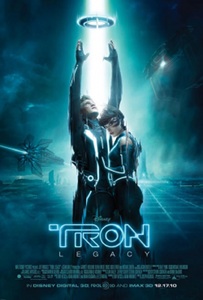 To start off, I am a reasonably big fan of the original Tron film. Yes, the first Tron story was a bit of a letdown, but it worked for what it was. After all, it was the first film to use computer graphics to that level within a film. Definitely a ground breaker.
Achievements
Tron Legacy is also a ground breaker once again, but much less so. Its technological advancements in film are much more subtle. A lot of people may not have thought about this, but Tron Legacy is the first film to use an actual actor’s likeness in a film to play the actor at a younger age using a CG head and real body. I had predicted that this would happen eventually, and here we are. Tron Legacy now opens doors up to creation of new films by Marilyn Monroe and Elvis Presley. Granted, the animation on the face is a bit stilted and unnatural, but it works for the CLU character. It doesn’t work so much for Kevin Flynn’s younger self. Nevertheless, the character works in most instances. If they had spent just a bit more time on the face, they could have made it look and act even better. Avatar is proof of that.
Story
While I really wanted this story to work well, it doesn’t come together as I had hoped. Basically, the CG is so strong that the story has to be twice as strong to overcome the incredible visuals. The trouble is, it doesn’t. But then, the same can be said of the first Tron film.
However, the two main problems with this film are 1) lack of a formidable villain and, by association, lack of a real payoff at the end and 2) Tron is not the main character and is visibly absent most of the film. After all, this film is named ‘Tron’. Tron is the character we expect to see. We do see him in flashbacks and, without spoiling the film, in other places as well. However, for 95% of the film, Tron is absent. In the small parts he’s in, Tron really contributes little to the overall story.
I realize that this one is about the ‘Legacy’ aspect of Kevin Flynn (i.e., Sam Flynn). So, Sam takes the front stage in this production. That’s okay were Sam Flynn a super likable character. Unfortunately, he’s not. I liked him well enough, but not nearly as much as I liked Kevin Flynn in Tron. In the first Tron film, we the viewers felt just like Kevin who was plopped into this fantasy world unexpectedly. So, we’re experiencing it all for the first time just like he is. With Tron Legacy, the audience already understands much about the world having seen the first film. So, wasting time on the introductions of the world isn’t really necessary. To their credit, the producers/writers did try to skip much of it. But, the whole clothes cutting and redressing scene was a bit overkill and kind of showed us just how cheesy the costumes were. Like the first film, it would have worked better and saved lots of time if Sam had awoken in the world fully costumed. That whole costuming scene could have been skipped (which was awkward anyway). I understand the setup between him and one of the female dressers, but that meet-and-greet could have happened in a different way.
Tron original film rules ignored
I also keep thinking more and more about Tron Legacy vs Tron and I keep coming up with more and more holes. Holes that are big enough to drive a truck through. It’s really very obvious that the writers (former writers from Lost, I might add) just didn’t consult the original film before writing this story. Without consulting the original film, they just arrived at an idea that didn’t really take into account all of the previous rules that had been established in Tron. Worse, it seems like the writers and producers thumbed their noses at the fans by not following these rules. Following the rules, however, would have made Tron Legacy much more complete and true to the original film. It would have also made Tron Legacy far better than it is now. And, it would have shown that the writers were committed to providing a full experience to not only the casual viewer, but also to the die-hard fans of Tron. Instead, this film only appeals to the casual viewer and completely ignores and, worse, insults the die-hard fan.
First example, the whole reason the game grid exists in Tron is as a result of the arcade video games in real life. The game grid is a virtualized, but identical active game as what the gamer sees on the arcade CRT. Just as the gamer plays the game in real life in an arcade, so the game progresses identically in the virtual world with 3D people. As a result, the game grid exists because of real life gamers. As the gamers play games, so too do the game grid games. In 2010, with games like World of Warcraft, Halo 3 and Assassin’s Creed, the writers could have had a field day with such an updated game grid. Yes, it might have ruined the aesthetic of the game world to see people dressed as Master Chief or Ezio, but it would have made Tron Legacy far more true to what’s going on today in gaming and, at the same time, make Tron Legacy a lot more fun to watch.
In Tron Legacy, this entire arcade to game grid aspect was either forgotten or intentionally dropped. The trouble is, this rule has already been established. So, the movie should have at least popped out to the real world to see gamers playing on mobile phones, computers and Xbox 360s to show that the virtual game grid is still tied to a real world game.
Second issue… although, I have to admit I didn’t initially think of this one and don’t necessarily agree with the thinking behind it. Some people have surmised that the Encom mainframe had been shut off the whole time between Tron and Tron Legacy and thus the virtual world wouldn’t have existed. The reality is, there was a computer in Flynn’s Arcade that appeared to contain the virtual world. So, while Encom’s computers may have been shut off, it appears Flynn had moved the entire world into his own personal server. So, while some people seem to find this part of the film a problem, I don’t. Flynn was the CEO of Encom and easily had enough money and power to build a hugely powerful computer system in the basement of Flynn’s arcade to manage this world. Sure, it might have been shut down for a time, but it certainly appears that Flynn had successfully transferred both the world and the computer into the arcade’s basement. He certainly had enough money to do this. It also appears that this computer is fully functional when Sam arrives at the arcade. So, I don’t see an issue with this part of the movie.
Third issue (see Encom below for more of this). When Flynn took control over Encom after Tron defeated the MCP and released the files incriminating Ed Dillinger, I full well expected Flynn to drive Encom to become a game development company. In fact, had this premise been realized, this would strengthen the idea behind the game grid and the existence of the virtual world. Instead, for whatever reasons, the writers decided to turn Encom into an operating system company like Microsoft. Now, that doesn’t mean that Encom doesn’t make video games, but it does mean that it is not Encom’s core business. If that whole board room meeting had been related to a new video game title, the whole Tron Legacy story would have been dramatically strengthened. Also, in Tron, Encom was an R&D group think tank. That is, they designed extremely cutting edge prototyping products, like the digitizing laser. The very same laser technology that digitizes and transports both Sam and Kevin into the virtual world. Again, the writers ignored this part of Encom’s business completely to the detriment of Tron Legacy. Considering that that digitizing laser was designed in 1982, I would have expected to see that digitizing system being sold on the market and people entering into their own virtual worlds (separate from Flynn’s world) by 2010. Yet another lost opportunity for the writers to create an interesting spin on what happened with Encom.
Fourth issue, after Sam ends up back in the real world at the end of Tron Legacy, he’s fully dressed in street clothes. As far as I know, he didn’t pack an extra set of clothes. So, the whole costuming process inside the virtual world (where his clothes were cut off and discarded) doesn’t make sense. Worse, Quorra, who isn’t even human, also pops out into the real world fully clothed in street clothes. Again, where did these clothes come from? I’m quite sure that Sam didn’t expect to be leaving Flynn’s with a female companion. So, I’m quite sure that an old dusty arcade wouldn’t have such clothes stashed away. So, again, this is a problem. Although, some people surmise that Quorra didn’t actually make it out. Instead, Sam is somehow having a delusion or an hallucination of Quorra and she’s not actually there. I don’t know that I agree with this. I have my suspicions as to what’s going on, but I’ll leave that for Tron 3 to fully explain.
[Updated 1/16/2011]
Fifth issue is that the original digitizing laser consumed the space of at least 2-3 building stories and at least one football field. This is a huge laser equipment laboratory. In Tron Legacy, this digitizing laser is now located in the basement of Flynn’s Arcade? Unfortunately, I just don’t think that this sized laser equipment fit within Flynn’s arcade basement space. So, the question is, where is the rest of the huge laser infrastructure? Just not thought out well enough. However, if one of Encom’s newest products had been a self-contained USB digitizing laser (for home use) and that had been what was being discussed in the board room, then having this laser in Flynn’s basement would have made a lot more sense. And, it would have made sense from a time perspective (all technology gets smaller). But no, this issue was not addressed at all.
Sixth issue.. this is not so much an issue, but an observation about how the laser works. According to the first film, the molecules are digitized and then suspended in the laser beam. When the molecule model is played back, the object reintegrates. With Quorra, it actually does make sense that she could end up in the real world. How? Well, there were two users in that world: Kevin and Sam. Two real world users with real world molecules. Kevin’s molecules would still have been suspended in the laser beam. When Kevin explodes after reintegrating with CLU, those molecules are still trapped in the laser beam. There’s nothing that says that those molecules have to play back out as Kevin. In fact, Quorra could use Kevin’s suspended molecules to play back into her form and become human. Of course, that would leave no more suspended molecules for anyone else to exit the grid. That also means that for someone to leave the grid with a real form, that a real person would have to enter the virtual world. I’m assuming that as long as that person lives, those molecules are tied to that individual. If the user dies in the grid, then an ISO or another program could exit into the real world using that dead user’s molecules. Another issue is that Kevin’s molecules would be suspended in Kevin’s form when he went in. It would take at least Yori to reconfigure the laser beam protocol to play out Kevin’s molecules into Quorra’s form. Yori was the program designed by Lora to manage parts of the digitizing system. Unfortunately, Yori isn’t in Tron Legacy. So, Quorra should have exited the virtual world in Kevin’s form and clothing.
Encom 2010
Other than the bored room meetings (pun intended), we really get very little of what Encom does in the present. With technologies like the digitizing system that are displayed in Tron, I would have expected Encom to be a lot farther along in technological breakthroughs than selling ‘the latest greatest operating system’ (ala Microsoft). Clearly, this part of the film is an afterthought. It wastes screen time without really telling us much about Encom. It is really used as a vehicle to set up Sam Flynn’s character. However, even that vehicle falls flat. Honestly, the film would have been served better by not knowing or seeing that specific Sam Flynn escapade.
Villainy
Unfortunately, CLU isn’t the appropriate ‘Program’ to be a villain. First, CLU is supposed to be Kevin Flynn’s helper program. So, it seems odd that he has gone rogue anyway. Secondarily, he isn’t really designed to be a villain. So, turning him into one just seems somehow wrong. Worse, he really isn’t a worthy adversary in the games. If he is as good as he is supposed to be (along with his black guard henchman), they both should be able to best Sam Flynn easily. So, this whole part of the film just doesn’t really work. But then, Quorra interrupts the games early. Kind of convenient, but at the same time gives us no payoff.
Adversary
Unlike Tron, which has the MCP, we have no such villain in Tron Legacy. CLU is it, but CLU just doesn’t come across as a proper villain. He seems more like a henchman for something bigger. Yet, that something bigger just never materializes. I actually expected to see Kevin Flynn emerge as the villain in this film. That would have been something. It would have really justified the ending of this film, showed us a completely different side to Kevin and, at the same time, have given us a huge payoff at the end. Alas, that doesn’t happen.
Action
The movie definitely starts the pacing off on the right foot and continues at a pretty solid pace until just after Sam Flynn exits the game grid. After that, the story comes to a crawl, as does the action. So, unfortunately too, this leads to a lack of payoff. It also doesn’t give Sam Flynn any screen time to kick butt and take names which this film so desperately needs. The wins we see with Sam are more out of luck and accidents than out of skill. Sam never does get enough screen time to show that he has any skills that are translated from the real world. Even his lightcycle skills don’t show through no matter how much Ducati footage is included in the opening. We need to see Sam win at something where the stakes are substantial. Something that at the end of it, we cheer for him and his win.
Visuals and Audio
What’s to say about the visuals other than, “stunning”. The music by Daft Punk and the audio effects are superb at doing what movies do best: set the mood and tone.
Payoff
In the end, there really is no payoff. In the first film, Tron’s first goal is to get a message to his user. So, Tron fights his way through to a communication tower. In Tron Legacy, Sam’s and Kevin’s only objective is to get to the exit portal (not unlike the communication tower in Tron). When they finally get to the portal, it seems trivially easy. There is really no opposition along the way. Just a quick trip with a Solar Sailer and they’re basically there. No grid bugs, no hidden Mickey Mouse heads, no Recognizer chases, etc. Just a trip without any incidents. In Tron, getting to the communication tower is only half the way through the story. Tron still must battle the MCP. At the end of Tron Legacy, there was no battle. In fact, there was nothing to battle at all, other than Kevin’s own guilt.
Unfortunately, the ending was really explained by Quorra about 20 minutes before the end. So, I won’t give it away, even though Quorra does. But at the portal, there is no real payoff with CLU or Tron. In fact, there is no real positive payoff at all. The ending leaves more questions than answers. So, unless Disney plans on Tron 3, we may never know what happens. This really feels like half of a film. It feels like we’re missing the other half of this film.
Overall
The story could have been far better. However, the producers rely on the visuals and the music (which, granted, both were very impressive) to carry this film. Again I say, the plot could have been far far better. We need at least one payoff and we don’t get it. I was even hoping for a little payoff with Sam on the game grid, but even that doesn’t happen. Sam, like Kevin in Tron, also needed to befriend someone in the virtual world besides Quorra. He needed another companion to travel around the virtal world and show him the ropes. For a split second, I thought it might actually happen when one of his lightcycle mates almost gets his bike wand back. That is until CLU runs him over and Quorra steps in.
Also, there are lots of subtle things that just don’t work or are missing. For example, as a user in Tron (first film), Kevin is able to absorb energy and use it in unusual ways. Clearly, he is still able to do that to create CLU in Tron Legacy. He also uses this power to steal a non-working Recognizer in Tron. However, the writers don’t explore this aspect with Sam at all. It could have helped out in several instances and would have made for a more cohesive film. There was also no comic relief element like the ‘bit’ in the Recognizer in Tron. Not that we need ‘bit’ in this film, but I think that humor could have helped in places.
Even though the story is a bit weak in the film, the story for Tron Evolution (video game) is much stronger than this film. In fact, it has many of the elements and payoffs that the movie lacks, including a proper villain with Abraxas. However, that doesn’t mean that it’s the best game of 2010. Far from it. However, the story is definitely better than the Tron Legacy story. If you’re really into Tron lore, you should check out Tron Evolution to fill in the story gaps that the movie doesn’t fully explain (i.e., the ISOs). I am disappointed that the film glosses over the ISO storyline and, instead, leaves it to the video game to fully explain these concepts.
I like the film, but the story really needed to be far stronger to match the visuals. Overall, I rate this film 7.5 out of 10 stars.
Online ordering: Some companies just don’t get it
In the past week, I’ve run into two different companies that obviously haven’t the first clue about running their online presence. I’ll bet that this is just the tip of the iceberg, but there it is.
Online ordering with store pickup
Fry Electronics doesn’t get it. The point to online ordering with store pickup is to save time. Unfortunately, using Fry’s store pickup by ordering online saves you no time. In fact, it takes more time than just buying directly in the store and leaves more questions than answers.
I found an item on Frys.com web site that I wanted to buy and noticed they now offered store pickup. I thought, “Great”. So, I proceeded to place the order online. Unfortunately, I didn’t have a profile with Frys.com, so I had to create one along with entering shipping and billing info, credit card number and various other information they required. So, this usually takes about 5 minutes to complete. Granted, it doesn’t take that long to enter this information, but you’ll soon see that this time was completely wasted.
So, I enter the information they require, choose my store for pickup and click ‘Place Order’ like you normally do on any e-commerce site. So, the order is all placed, I have my receipt in hand and on the receipt it says to to remember to bring the card you used to the store. I think, “No problem”. I ordered after hours. So, I knew that I would have to pick up the order the next day.
The next day I take my printed receipt with the order number to the store, like they request. I walk into the store and ask where to pick up online orders.
First mistake
The door greeter tells me to get in line and pick up the online ordered item at any cashier in the front. I thought, “Uh oh, this is not starting off well”. No dedicated desk means the cashiers will be completely inexperienced in this process and, to my lack of surprise, they were inexperienced. Anyway, I step up to the cashier and hand her the online receipt. She proceeds to type something into the register, looks confused about something and then tells me to hold on while she goes and locates the order.
Second mistake
Twenty minutes later, after wandering around and disappearing, she finally comes back with the item in hand. I could have wandered the store, found the item, visited a cashier and exited Fry’s in the time it took her to locate the item.
Third mistake
With item in hand, she proceeds to tell me that I need to finish paying for the order at her station. I’m thinking, “What?” I had thought I already paid on the Frys.com web site as I was given fully completed receipt for the order with a valid order number. So, I attempt to validate this information and ask, “I have to pay again? I thought I already paid on the web site”. She proceeds to explain that it’s not actually an order but a ‘reservation’ for an item. I asked, then why do I have to give fully detailed information (billing, shipping, credit card, CVV, etc) for a reservation? Of course, she’s a non-native English speaker and plays dumb like she didn’t understand what I said. So, I try to verify this again and she says that I won’t be double-charged (which is, of course, my first thought considering I had to provide my CC card info full and complete).
So, not only did they waste my time online asking for information they didn’t need to create a ‘reservation’, the cashier wasted 20 minutes trying to locate the item in the store which wasn’t picked and stored properly from my order. Worse, after walking out of the store, I still have no idea if my card is to be charged twice.
I head home and call Frys.com to clarify what the hell went on. I explained that what they are doing is less than clear and the whole process is time wasteful. Every other online order with store pickup system I’ve used at other stores charges for the order online and then only requires identification to pickup at the store. They might or might not even print a receipt. But, you definitely don’t pay for the item in the store like Fry’s requires.
Fry’s made major mistakes in this process. Wasting my time by making me enter all of that information, not properly picking the the item requiring the cashier to wander the store in search of the item, and then requiring the consumer to pay at the register for an item that already appears to have been paid. The additional mistake that Fry’s made was not having a dedicated pickup desk to handle online pickups. There is no reason to require the consumer to stand in line for a cashier. Online ordering with store pickup is supposed to save time. In fact, I probably doubled the amount of time that was needed to get the item. I would have been better off just heading to the store, finding the item and heading up to the cashiers to pay. What a waste.
Out of stock ordering
Virgin Mobile doesn’t get it. This issue isn’t limited to Virgin mobile, it just happens to be the most recent example of this problem. So, I decide want to buy one of Virgin Mobile’s MiFi 2200 devices. I visit the site and try to place the item in my cart. Instead, I see a red error message that says ‘Sorry, that item is currently unavailable’. It doesn’t say anything about being out of stock. Just that it is unavailable (whatever that means). Ok, here’s the issue. If the item is ‘Out of Stock’, that’s fine. Just tell us this. No cryptic messages.
First Mistake
Even if the item is out of stock, but you know you’ll have more back in stock tomorrow, then take the order against the future stock. The mistake here is that Virgin has lost a sale. I may not come back tomorrow and purchase. I want to purchase today. I made the decision to purchase today. Tomorrow I may change my mind and go with something else. In fact, I may go with something else simply from the stupid fact that Virgin mobile wouldn’t sell it even when it’s ‘Out of Stock’.
Second Mistake
I called the sales line and the ‘sales rep’ proceeded to transfer me to the ‘Broadband help desk’. Where they transferred my call is not an order line. It’s a help desk / customer service portal. No where on the line does it say ‘Press 1 for sales’. In fact, it doesn’t mention sales anywhere on the line. So, I press on and get through to an operator. The first time I call, the representative on the ‘help desk’ tells me that there is web site trouble and I should order tomorrow (see Virgin Mobile first mistake above). I call back and the second person says the item is ‘Out of Stock’ and they should have them in ‘tomorrow’.
So, I’m at a loss. If you’re in a company selling online, an item is out of stock but you know it will be back in stock tomorrow, why would you want to prevent taking orders against that future stock? I mean, seriously, this is stupid. Just tell the consumer when they should be back in stock. The consumer can make the decision to wait or not. If you prevent ordering altogether, you’re losing sales.
You would think companies the size of Fry’s and Virgin Mobile would have their act together, but they don’t. Companies wonder why their sales suck, yet they don’t look at these convoluted processes that don’t work and that throw roadblocks in front of the buyer. So, instead of the buyer buying, we walk away and don’t buy.
Retailers, wake up. Just because you think a process is working for you, you need to reevaluate just how it impacts the consumer.
Useless excess: Fashion Victim Edition
For whatever reason today, a lot of people can’t seem to temper their purchasing of useless things. I have to admit that I’ve been guilty of this on occasion myself, but I try to exercise restraint with purchases by asking, “Do I have a real need?”
Purchasing excess
I see lots of people buying things where they haven’t really justified a need in their lives. I’d say the most egregious example of this useless excess is the iPad. So many people walked into the purchase of this device not knowing how it would enrich their lives, how they might use it or what it benefits it might offer. Is the iPad useless excess? I’d say so. I still haven’t yet fully justified the purchase of this device for myself. The only justification I have right now is the larger screen and reading email in a portable way. Those are the justifications I’ve been able to come up with. Since a I don’t avidly read digital books, that part isn’t really overall that useful me. I do have an iPod Touch and have found this device to immensely enrich my life, though. It solved my portable music need, it has a browser, a Kindle app and email and a few admin apps for in-a-pinch situations. It has a long battery life so I have something to use pretty much anywhere, again, in-a-pinch. So, the cost and use for this isn’t useless excess for me. On the other hand, the iPad isn’t that portable, so really doesn’t work for things like portable music.
Is an iPad worth $500? Not yet for me. However, there are times where I’m walking around the office and having an iPad in hand could come in handy for spot email reading or forwarding an email. Since it also supports some administrative tools, I might even be able to justify it for the use of those tools. On the other hand, a netbook is a more powerful hardware tool (i.e., usb ports, networking ports, SD card slot, etc). So, hardware-wise, a Netbook is much more justified for what I do. They’re just a bit more cumbersome to use than an iPad. On the other hand, composing email on an iPad is basically useless. I’d much rather have a real keyboard, so I’d definitely need a dock for extended use of an iPad.
Keeping up with the Jones’
A lot of useless excess stems from ‘social’ reasons. Some people just want to show off their money. The reality is, I find this disturbing. Why would you want to buy something just to walk around and flaunt it? I really don’t relish the thought of being robbed or mugged. I mean, I can somewhat understand fashion. Not so much fashion excess (i.e., diamond studded bling), but wearing fashion to accentuate yourself we have become accustomed to. I don’t personally go for high fashionista, though. Useful fashion yes, excess fashion no. Unfortuantely, an iPad is not a fashion accessory. No computer or electronic device is (other than those trashy flashing earrings). So, why must people treat Apple products (and some computers and phones) as fashion when it clearly isn’t. You should always buy a computer for a need in your life, not because your next door neighbor has one or you ‘think’ it might be useful.
Coffee table paperweights
Now that the iPad has been out for about 9 months, I’m still not finding a solid use for the iPad in my personal life. For business use, I have a couple reasons (cited above), but these reasons are not yet enough to justify a $500 expense. In fact, I would think there’s going to be a growing used market for iPads very quickly here. People will realize they don’t need or use them and will need the money more. Especially when it is no longer the ‘chic’ device (and that’s quickly approaching). Right now is also the prime time to get rid of your iPad, not before it goes out of ‘fashion’. Additionally, it’s almost guaranteed that by spring 2011, Apple will have a new model iPad ready to ship. This will majorly devalue the resale value of the 2010 iPad. So, if you want to sell your iPad for any decent amount of change, you should consider doing it now. Otherwise, sitting on it will only devalue it down to probably the $150-200 range by end of 2011 and less then that by 2012.
By now, people should really know if the iPad has a use in their life. Only you can answer that question, but if the most you do is turn it on once a week (or less), it’s a paperweight. You should probably consider selling it now before the new iPad is released if you want any return on your investment. Granted, you may have paid $500, but you’re likely only to get about $200-250 (16GB version) depending on where you sell. If you put it on eBay as an auction, you might get more money out of it ($450, if you’re lucky). By this time next year, though, you probably won’t get half that amount on eBay.
As another example, see the Wii. Now that the Wii has been out for several years, it is no longer the ‘chic’ thing to own. Today, people are likely purchasing it because they want to play a specific game title. And, that’s how it should be. You should always buy computer gear for the software it runs, not because it’s the ‘thing to have’. Wii consoles are now in a glut and easy to find. So, if you want one today, it’s very easy to get them.
Gift excess
I know people who buy gift items not because it’s a useful gift, but because it’s the thing to have. Worse, though, is that the person who receives the gift doesn’t even use it or carry it. In this example case, it’s an iPad 64GB version. Yet, this person doesn’t carry it around or, indeed, even use it. Instead, they prefer to use their 2-3 year old notebook. What does that say about the usefulness of such useless excess?
Is the iPad considered useless excess? At the moment, yes. There may be certain professions that have found a way to use the iPad as something more than a novelty, but I’ve yet to see a business convert to using iPads as their sole means of corporate management. For example, it would say something if FedEx would adopt the iPad is their means of doing business. Instead of the small hand scanners, they could carry around the iPad to do this work. Oh, that’s right, there’s no camera on the iPad, so scanning isn’t even useful.
While this article may seem to specifically bash the iPad, it isn’t intended to focus solely on them. The iPhone is another example of useless excess. You pay $200 just to get the phone, you’re locked into a 2-4 year contract with at least $80 a month. And, the worst part, the iPhone isn’t even a very good phone. Dare I say, Nokia and Motorola still make better quality phone electronics than Apple ever has. Apple is a computer maker, not a phone maker. So, they still haven’t the experience with phone innards. So, when talking to people on the iPhone, the voice quality, call quality and clarity suffer over better made handsets. Again, people justify the purchase of an iPhone 4 because of the ‘Apps’, not because of quality. Worse, though, is that many people buying iPhones are doing so because it’s ‘the thing to have’, not because it’s actually useful in their lives. If the only thing you find yourself doing with the iPhone is talking on the phone, then you’re a victim of useless excess.
How to curb useless excess
Ask yourself, ‘How will this thing make me more productive, or solve a problem?’ If you cannot come up with an answer, it’s useless excess. Once you find at least one real need for a device, then the purchase is justified. If you just want it to have it, that’s useless excess. Just having something because you can doesn’t make you a better person. It just makes you a victim of useless excess. Simply because you can afford something doesn’t mean you should.
How do you justify an iPad purchase? For example, if you intend to mount it into a door of your kitchen as an internet recipe retrieval device and you bake or cook every day, that would be one way it could enrich your life. Although, it’s also not impervious to water or other wet ingredients, so you might want to cover it to avoid those issues. In other words, for a computer to not be considered useless excess, it would need to be used every day to provide you with useful information you can’t otherwise get.
If you’re looking for a holiday gift, don’t just buy an iPad because you can, buy it because the person will actually use and actually needs it to solve a problem.
Film Review: The Warning – PBS / Frontline Documentary
Rated: 4/5 stars.
PBS’ The Warning Documentary
The Warning is a PBS documentary discussing a warning from Brooksley Born, an attorney and a former Commodity Futures Trading Commission (CFTC) chairperson. She explained that derivatives were extremely risky insurance vehicles and sent a warning that these vehicles needed regulation during her tenure as CFTC chairperson, but her warnings went unheeded. She resigned in 1999 from the CFTC position after legislation was passed preventing her agency from regulating derivatives.
Vision of this Documentary
While I would like to rate The Warning higher, its take is pretty much tunnel vision on the derivatives markets. While the derivatives markets did melt down and did, to a large degree, spur the meltdown onward, the meltdown was not started because of derivatives. The derivative meltdown was a casualty of and was exacerbated by the sub-prime mortgage meltdown. Had the mortgage industry bubble not burst, the derivatives market might have gone unchecked for many more years. The warning was and should have been about placing regulations onto mortgage lending practices. The mortgage lending industry is the industry that failed and sent the economy into a tailspin, let’s make that perfectly clear. The derivatives (insurance) market, which speculated on the mortgage industry, single-handedly sent Wall Street into a tailspin (along with several large insurance companies like AIG).
Derivatives and the Mortgage Meltdown
Anyone with half a brain in their head could see that using questionable lending vehicles like interest only loans for the first two years or adjustable rate mortgages were ticking time bombs. When the actual monthly payments came due years later after rates went up to where they should have been, people couldn’t afford pay. This was especially true when lenders were handing these loans to people who could barely afford the ‘introductory period’ payments. So, loans came due, people defaulted and the rest is history. The derivatives (insurance policies) that were issued also came due because of the en masse foreclosures. Insurance companies that issued derivative policies speculating people wouldn’t default en masse began to fail because their speculation was wrong. So then, these insurance companies couldn’t pay off on the insurance claims. So, when consumers defaulted, so did the insurance companies offering derivatives.
It wasn’t as if warnings weren’t being issued regarding the inevitable mortgage meltdown, it’s just that Brooksley Born (the focus of this film) was not one of the people issuing the mortgage warning. Her warning was strictly about the highly risky derivatives. More specifically, the black box non-transparent nature of them. The danger, of course, is that derivatives can be placed on any speculative and risky investment as insurance. The reason derivatives need to be regulated is to prevent companies the size of AIG from making stupid decisions about such risky vehicles. However, from a consumer perspective, banks should never have gotten into the position of issuing such risky mortgages like water to people who couldn’t afford them. This was the single mistake that led to where we are today and that mistake has nothing to do with derivatives and everything to do with Government and the Federal Reserve making stupid decisions.
Overall, the movie is worth watching, but also understand its information’s place in the larger meltdown that was at work in our economy.
Create custom ringtones from mp3s in iTunes
You might think that creating ringtones from imported music in iTunes is complex. It’s not. It’s pretty simple and it’s free. Assuming that you’ve imported your music from CD as mp3, it’s easy. Note, this doesn’t work for AAC files (files downloaded from the iTunes store). For this reason, it’s really a better idea to rip your music as mp3 format. I recommend this anyway strictly because not all mp3 players can play AAC. Yes, AAC may be a slightly better format, but it’s less compatible across the board. There are no digital music players that I’m aware of that don’t understand mp3 files. Should you decide to get rid of your iPhone or iPod and go with another digital player, your AAC files may not work on your new player. Worse, if you’ve purchased any DRM protected AAC files, these definitely won’t play. So, buying music from the iTunes store basically locks you into an Apple music player. Anyway, I digress.
Steps to creating ringtones
- Identify the music files you want to convert and ensure they are not in AAC format (use right-click Get Info and look at Where under the summary tab)
- Listen to the track and determine the start and end points you want for your ringtone. You might want to choose the chorus of the song, but make sure it totals less than 40 seconds.
- Use right-click Get Info and then under the Options tab, type in the start and end times. Times are mm:ss.frame format. If you supply mm:ss only, it assumes the frame is 0 (zero).
- Click OK to save your start and end settings on the song. Double click the song to ensure proper start and end.
- Right-click the song again and this time choose ‘Create AAC version’. If this option is missing from the menu, you will need to change your import settings to import as AAC (to allow creation of ringtones) through the iTunes’ Preferences menu (Edit->Preferences).
- Once iTunes is done creating the AAC version, drag the song from iTunes and drop it on the Desktop
- Now, rename the song from song.m4a to song.m4r
- Move song.m4r into a ringtones folder somewhere on your hard drive where you remember. Place all your created ringtones here. From that folder, drag and drop ‘song.m4r’ onto iTunes.
- A ‘Ringtones’ folder will now appear in iTunes. This ringtone will now be available on your iPhone or iPod Touch under ‘Custom’ once you sync.
For example, to create Aqua’s Barbie Girl ringtone, you would set the start to 0:26.2 and ending to 0:41. Note the .2 frame. The frame part allows you to fine tune exactly where the ringtone begins and ends. This part is a little bit fiddly if you want an exact start and end. Note, after you have set the start and end times, you should double click to listen to ensure the ringtone is starting and ending exactly where you want before you convert and rename the file and before syncing with your device.
When you’re done creating the AAC file, renaming it and dropping it on iTunes, be sure to right-click the original song (not the ringtone) and choose ‘Get Info’. Under options, uncheck start and end so the track goes back to the song’s real beginning and ending. You’ll want to do this before syncing your device again. Otherwise, your music will end up clipped on your device as well. So, don’t forget to reset the start and end times. Yeah, there’s more than a few steps, but it’s easy once you’ve done it a few times and it’s also a whole lot cheaper than buying ringtones.
If you import CDs regularly, don’t forget to change your Preferences back to mp3 when you go to import. Otherwise, the music will import as AAC.
That’s pretty much it. If you have questions, please leave a comment below.
iTunes 10 and Windows 7: We’re Back (stupid fixable problems)
In an earlier randosity article, I discuss permissions issues related to iTunes 8. We’ll, these issues have now returned with a vengeance in iTunes 10. Does Apple not actually test their software on Windows? I mean, seriously, it’s not that hard to fix this issue when installing.
Apple’s weak Windows developers
Clearly, Apple only focuses on Apple. When it comes to Windows, they just vomit out the software without thought to what crap it really is. Come on Apple, fix your crap. I’m tired of dealing with these issues that are so easily resolved.
How can Apple permanently fix this problem? Simple, the iTunes installer needs to uninstall iTunes fully and clean up all iTunes registry entries completely. Then, the installer should reinstall iTunes from a clean setup. Apple should NOT do the install-over-whats-existing-thing and hope it all works. This clearly doesn’t work.
Anyway…
If you are an iTunes 10 user and you continually keep seeing THIS WINDOW when launching iTunes:

Stupid iTunes 10 Startup Window
… and that says “Please wait while Windows configures iTunes” …
Then, follow these instructions in my earlier randosity article to fix the registry permissions for iTunes.
Ok, so the earlier fix doesn’t work. But, you can read the article as it has some relevant information about what causes the issue. Anyway, this word doc attached contains the commands necessary to reset the registry permissions on iTunes and QuickTime registry keys.
Note, since WordPress doesn’t allow attaching functioning scripts as part of the media, I have created this Word doc with the commands. You will need to use the following steps to create the script. Note you will need to quit out of iTunes before you run this command.
Steps to create the reset.cmd command from resetit.doc:
- Save the ResetIt.doc file to your hard drive
- Open it with MSOffice or OpenOffice
- Press ctrl-a to select everything in the doc, ctrl-c to copy it
- Launch Notepad (Start->All Programs->Accessories->Notepad or Windows Button->All Programs->Accessories->Notepad)
- In the Notepad window, press ctrl-v to paste
- In Notepad, File->Save As… and save the file as Reset.cmd in a location you can easily find*
- Launch a command prompt with Start->All Programs->Accessories->Command Prompt using right-click selecting ‘Run As Administrator’
- In the command prompt, cd to where you saved Reset.cmd
- Type in ‘reset.cmd’ into the command shell
Note that this script will take a few minutes to run. Once the script completes, try starting iTunes. If you no longer get this panel, it’s fixed. If you do, then you may need to run this reset script 2 or 3 times more to fully repair the permissions. The reason is that subinacl (the command that’s used to reset each key in the registry) doesn’t continue locating more keys and repairing them once an error occurs (even when it’s successful at changing things). Make sure your login account in Windows 7 is an administrator account.
I have found that the permissions were relatively easy to fix, but the difficulty is with Microsoft’s subinacl.exe command. This command doesn’t seem to work properly to drill down to keys below. This is why you will see lots of duplication in the script. The script needs to run the command multiple times to drill down and get all of the keys. This is also why you may need to run the script several times. If you find you don’t have subinacl.exe, you will need to download subinacl.exe from Microsoft.
Second Note, uninstallation of iTunes and reinstallation may not resolve this issue as the registry keys may not be deleted on uninstallation (due to permissions problems). Therefore, uninstalling and reinstalling probably won’t work. Even still, the new keys may install with the crap permissions that the existing ones already have and you’ll be right back in the same boat. The fix is to make the keys readable and writable by the current user and the administrator.
Come on Apple, fix your crap software.
*Make sure that notepad saves the file as reset.cmd and not reset.cmd.txt. To do this, in the Save As requester, make sure to type in only reset.cmd. Double check to make sure it didn’t append the .txt extension. If it does, you will need to rename this file and remove the .txt portion to run the script.
Disclaimer: The script described above modifies registry keys and is used at your own risk. These keys have been checked against what Apple uses, but following the steps above and modifying the registry is not without risk. Therefore, each user who follows these instructions assumes all risk when creating and running the above reset.cmd script.
Don’t rent at Blockbuster Express Kiosks
[Updated: 04/15/2017 — In 2012, Redbox purchased all of the remaining Blockbuster Express kiosks which have now become Redbox kiosks. The original article follows.]
I’ve rented at both Redbox and now Blockbuster. I’ve never had any difficulties renting or returning at Redbox. However, at Blockbuster I had the worst experience when returning my movie. Note, this was the first time I’d ever used Blockbuster’s machine. Note, Blockbuster’s machine sucks.
Poor Vending Machine Design
I’ll start by saying that DVD rentals via vending machine, not the best idea. Yes, that includes Redbox. The issue isn’t renting, it’s returning. If you rent at a store, returning the DVD is actually simple… drop it off in the bin. At a vending kiosk, you’re have to wait to turn in the movie because you have to use the screen to initiate the return function. This means, you have to stand in line and wait until everyone else is done. Stupid.
These machines are monstrous, yet they can’t even provide a proper return mechanism. My experience with Blockbuster returning a rented DVD was horrible. I stood in line 20 minutes waiting to return my movie (singular). After all that, the time was a couple minutes past 9 and Blockbuster still charged the extra $1 fee. Seriously, there is no grace period at all?
The worst part is, however, that when I called customer service, they refused to refund the money. They offered a promo code instead. Hello, no, I want a refund, not a promo code. After the debacle that is the returns process, I don’t intend to rent from their shoddy vending machine ever again. I’d already made that decision right after they charged me the extra day’s fee. This is why I didn’t want a promo code. The bad customer service experience was just the topper that capped it all.
Return Mechanism
These hulking machines are huge. There should be no reason why there isn’t a simple return and go slot (i.e., no waiting). It’s completely ludicrous that you need to wait for someone else to finish their long transaction before you can return a movie. It seriously needs a drop and go slot. A slot that always accepts returns no matter what someone may be doing on the rental side. Their computer already knows that that specific movie copy is tied to my account. There is no reason to have to initiate anything. An always-active returns slot is a no-brainer. Yet, these kiosks don’t have one. Neither does Redbox. However, there are far more Redbox kiosks around. If one is that occupied, I could just drive to another. Unfortunately, with the Blockbuster kiosks, you had to return your discs to the one where you rented. You couldn’t return at just any kiosk even if you did know where another one was.
In this case, the kiosk should shutdown all new purchases for 20 minutes prior to 9PM to allow for express returns. This would put the system into return only mode and allow those only needing to return to push their way through before the 9PM deadline. This prevents those people who want to spend 15-20 minutes hogging the kiosk reading every movie synopsis and hemming and hawing over ever title in the unit from doing immediately before return time.
Blockbuster go boom
It’s no wonder Blockbuster’s kiosks are now a thing of the past. They really had no idea of customer service or how to operate such a rental service to the public. I’ll stick with Redbox, thank you very much. I’ve had no issues with customer service or returns at Redbox. Yet, on my very first call to Blockbuster customer service (I waited on hold for at least 10 minutes), they were unwilling to even do what I requested (refund the extra day fee that they don’t rightly deserve).
So, I called the bank and the bank reversed the charges. Too bad Blockbuster.
Here’s your word of warning. If you want to rent from Blockbuster’s kiosk, you may experience something very similar with returns. Not only is customer service an atrocious process, they won’t even issue refunds when appropriate. Worse, if you go even 1 minute past 9PM when returning, they will stick you for that extra day’s fee (no grace period). I have no respect for Blockbuster and I do not intend to rent anything further from either their stupid kiosk or any store they own.
While these rentals are cheap enough, it’s not worth the hassle when you want to get a refund for ill gotten charges. Believe me, Blockbuster needs to shutter the doors and go away. Let’s hope Redbox makes that happen (and they did) and oh, Blockbuster, you should really take a look at Redbox to see what customer service really is, m’kay?
[03/15/2017 Comment: This article was written before the Blockbuster kiosks were bought out by Redbox in 2012. Thankfully, these Blockbuster kiosks no longer exist. They have all been replaced by Redbox kiosks which are much more abundant and easy to locate and use… thanks to the Redbox app. I leave this article up as a history of how Blockbuster kiosks functioned and as a testament to how bad Blockbuster’s customer service was at the time.]


14 comments