Do sunscreen chemicals cause cancer?
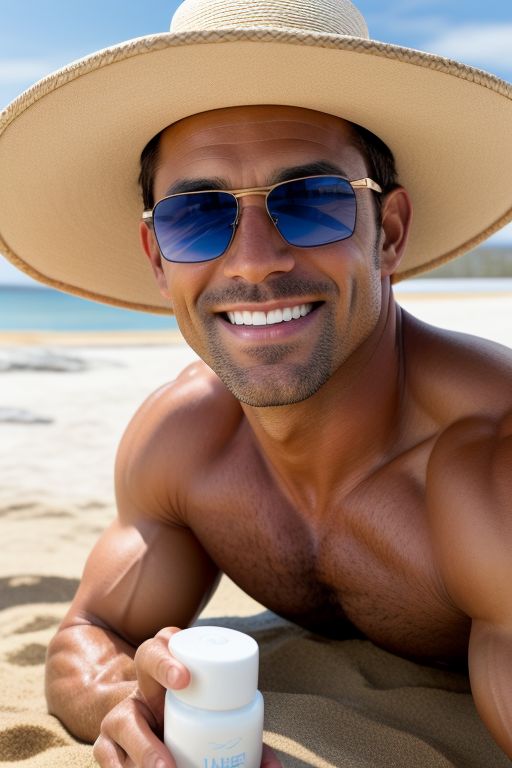 As we move into the heart of summertime, let’s check out sunscreens once again. While many medical professionals including a notible cancer hospital, the sunscreen industry and researchers all purport that the artificial compounded chemicals included and used within sunscreens do not cause cancer, the question remains, do they actually cause cancer? Let’s explore.
Which chemicals are used in sunscreen?
There are many compounds and chemicals that can be added to a lotion base that can reduce and absorb exposure to UV rays, but the chemicals don’t just stop there.
Here is a list of lab created chemicals:
- Avobenzone†
- Bemotrizinol†
- Bisoctrizole
- Cinoxate
- Dioxybenzone
- Ensulizole
- Homosalate†
- Meradimate
- Methylisothiazolinone†
- Octinoxate†
- Octisalate†
- Octocrylene†
- Oxybenzone†
- Octyl Methoxycinnamate
- PABA aka 4-Aminobenzoic
- Padimate O
- Sulisobenzone
- Trolamine Salicylate
Are there any “organic” or mineral sunscreen formulations?
Yes, but these mineral formulations may not do your long term health any favors, either. These mineral formulations have not been tested for long term repeated exposure just as the chemicals above have also not. Here’s a list of these mineral formulations:
- Retinyl Palmitate† (a form of Vitamin A — can be naturally or artificially derived)
- Zinc Oxide
- Titanium Dioxide
What else is in sunscreen?
Some sunscreens contain fragrances and other skin conditioners and oils that help the lotion smooth onto the skin and feel nice. These additional non-UV absorbing inactive ingredients may also increase the problems of …
Skin Absorption: The Trouble with Sunscreen Chemicals
The biggest difficulty with slathering any type of lotion onto your body is that the chemicals placed into the lotion can and do get absorbed into your body. The skin is not solid holdout barrier. The skin is porous and allows any substances placed onto it to eventually be absorbed into the skin, some ingredients absorb faster than others. The smaller the particles in the lotion, the easier it is for the skin to absorb.
Because sunscreen chemicals are finely milled and/or lab created, these particles can be as small as 100 nanometers in size or possibly smaller. When the sizing of such particles reaches 100 nanometers or less, this size is well small enough to transmit through the skin into the bloodstream and even cross the blood brain barrier. By comparison, a human hair is between 80,000–100,000 nanometers in width. These sunscreen chemical particles are very, very small… way smaller than the size of a hair.
Because those minerals can show up in your sunscreen in two ways: in nano form (teeny tiny particles smaller than 100 nanometers), or non-nano form (particles bigger than 100 nanometers)… A particle that minute can penetrate cell walls, breach the blood-brain barrier, and slip into the lungs. And. The smaller the particle, the more it reacts to UV radiation, forming free radicals…
Basically, the smaller the particle, the more easily it is absorbed by the body and the more it interacts with UV light, breaking those particles down into potentially problematic and/or toxic components that can also be absorbed into the skin and into the body. Once a particle is small enough to slip into the bloodstream, all bets are off for long term safety. What this means is that once these particles are swimming in your veins, they can land and deposit anywhere…. in your lungs, in your brain, in your muscle tissues, in your liver… literally anywhere.
Even in 2020, the FDA readily admitted that sunscreen chemicals do absorb into the skin (based on prior AMA research). As the FDA always does, it stops short of stating that there’s a risk posed with skin absorption. However, the FDA’s lack of risk confirmation DOES NOT state that there’s NOT a risk. It simply means the FDA has chosen not to investigate whether there IS a risk. Here’s a quote from the FDA’s statement:
[T]he FDA’s newly-published research in the Journal of the American Medical Association (JAMA) provides much-needed additional information about the absorption of the active ingredients in sunscreens into the body’s bloodstream after they are applied to the skin. It’s an important follow-up study to prior research … that showed when certain sunscreens were used at their maximal recommended use … , their active ingredients were absorbed through the skin and into the body.
The findings in these studies do not mean that the FDA has concluded that any of the ingredients tested are unsafe for use in sunscreens, nor does the FDA seeking further information indicate such.
Internal Consumption
Because sunscreen chemicals are not intended to be consumed internally, there’s no way to know the long term safety risks posed once absorbed. It’s entirely possible that some of these chemicals, like many heavy metals, never leave the body. Some of these sunscreen chemicals can even cause hormone disruption. Some of these chemicals may also break down under UV light or via other mechanisms into more dangerous particles that can be absorbed and which can disrupt the human body function.
The sunscreen industry has, unfortunately, predicated its product safety assumptions entirely on the fact that its lotion products do not enter the body or the bloodstream. That assumption has now been proven wrong. While the sunscreen industry has a large number of studies describing how effective and efficacious its lotions are when applied to the skin when wanting to avoid and limit UV exposure, there is a complete dearth of studies on whether these sunscreen chemical formulations enter the bloodstream OR whether the absorption of these chemicals lead to future long term chronic diseases. Yet, we already understand (and it has even been proven) that these very small chemical molecule sizes are able to penetrate and traverse into the bloodstream?
After all, no product manufacturer wants to point out that its products are dangerous. By remaining completely silent on whether sunscreen products do long term damage to the body, these manufacturers can continue to state that they are perfectly safe… that is, until someone produces a study that proves they aren’t safe. So far, no independent researcher has yet been willing to step up and call out the sunscreen industry on this safety fact involving skin absorption.
For this reason, this is why hospitals like MD Anderson can write articles espousing the safety of such sunscreen chemicals. In part, they’re willing to do this because if people don’t use sunscreen, we also know that risk of UV exposure causes skin cancers. However, using sunscreens for their short term UV blocking benefits can easily trick the user into thinking their skin is safe and covered, when it is not. More on this below. The question remains…
Are we trading in a single solution for more health risks?
Skin exposure UV reduction = ???
This equation is the question that needs to be answered. While using sunscreen is a short term solution in helping reduce skin exposure levels to harmful UV, it also leaves the other side of the equals sign empty. The sunscreen industry doesn’t want you to know that the other side of the equals sign likely contains a whole passel of long term diseases down the road and years later in life, simply because you slathered on sunscreen nearly every single day. Then, much much later in life, ended up with cancer anyway much later… or maybe even a worse debilitating disease? Who really knows?
You may not even be able to correlate your disease to the use of sunscreen if the two happened more or less in isolation and years apart. That’s exactly what the sunscreen industry hopes.
Here’s a recent example of such a product correlation. The talcum powder industry purported its short term health benefits of drying and preventing chaffing when used every day. People believed that assumption. Because talcum powder does offer limited short term benefits, the long term health tradeoff came once we fully realized that many brands of talcum powder also contain asbestos. Asbestos is a carcinogen and when exposed over and over, it increases the likelihood of cancer wherever that asbestos is applied or inhaled.
One might want to argue that this talcum situation was considered a matter of product tainting. Unfortunately, this is not tainting of a product. When talcum powder is mined, inevitably it is found where asbestos deposits also exist. Inevitably, manufacturers had to accept that their talcum could be laced with asbestos simply because that’s how the mines produced talc. You might, again, argue that the manufacturer could remove the asbestos, but that’s almost impossible at talcum powder particle sizes. For the manufacturer to sell talcum powder, they had to accept that it also contained asbestos. Of course, some manufacturers also denied that asbestos fact simply so they could say their product was safe. Sound familiar? I digress.
As in the talcum example above, sunscreen is now in a similar position. The short term health benefits of sunscreen obviously include preventing UV exposure over a several hour period. In that time, you’re required to reapply sunscreen every 2 hours or less depending on factors. This means, incidentally, a frequent amount of exposure and re-exposure to sunscreen chemicals continuously throughout a day. If you’re doing this for days on end, those repeated exposure sessions may cause these small nano particles to build up in your bloodstream, on your skin and within your body to unknowingly wreak havok internally.
The more often you use sunscreen, the worse it’s likely to get. This means that for the short term benefit of reduction in UV, you are very likely trading your future long term health to gain those short term skin benefits. Because no studies have been produced involving long term exposure to sunscreen chemicals, we simply have no idea what diseases might lurk in our future. Is the sacrifice of potential long term health worth the risk simply to prevent UV exposure? Only you can answer this question.
For those future diseases, will it involve cancer? Will it be mesothelioma? Will it become other chronic pain and disease we haven’t yet encountered? We simply do not know what is ultimately on the other side of that equals sign. There is definitely something on the other side and it’s not going to be pleasant, rest assured. Aging already takes a toll on the body. There’s no need to compound aging by slathering chemicals all over the largest organ on your body and then think nothing will happen.
Sunscreen in Every Day Products
This entire absorption issue is even more compounded because many daily wear products, such as cosmetics, lip balms and even regular lotions include SPF chemicals in their formulations. For women wearing makeup, these SPF formulations might offer minimal UV production, such as level 4 or 10. They might not even be broad spectrum. The problem isn’t in the UV protection factor, but the fact that women wear foundations and other makeup daily.
Makeup products also tend to stay on the skin for way longer than an average sunscreen you might wear at the beach across a day or two. Women might even refresh their makeup throughout the day adding even more exposure to SPF chemicals.
Adding SPF to regular health and beauty products adds even more to the risk of long term toxicity with these sunscreen chemicals and incidental ingredients. Yet, the cosmetic and sunscreen industries have both embraced these chemicals as if they’re some kind of health saver… when, in fact, the long term problems with these chemicals are actually unknown. Why are they unknown? Because long term studies simply don’t exist. Simply search Google for the terms ‘long term sunscreen chemical studies‘ and you’ll see for yourself that none exist. If a study exists, Google will find it.
If you’re not planning on being out in the sun for no more than 15-30 minutes in a day, there’s no need to wear SPF chemicals at all. You’re exposing your body to chemicals all with effectively no short term benefit. The only reason to wear SPF is if you need to be out in the sun for longer than 30 minutes. Even if you have a sun allergy, it’s best to cover up with clothing rather than relying on sunscreens to do that work. Clothing is much more protective than sunscreen. Incidentally, sunscreen begins breaking down the moment you put it on your skin. Clothing doesn’t break down and works so long as your skin remains fully covered.
Mineral Sunscreen vs Chemical
At this point, you might be thinking that you can avoid the chemical use situation by using mineral sunscreens instead; sunscreens which include Titanium Dioxide or Zinc Oxide. Unfortunately, while these mineral formulations aren’t lab created in the same way as a chemical like Octyl Methoxycinnamate, there’s no way to know the long term problems in the bloodstream when using these minerals sunscreens either.
Minerals are needed for a healthy diet. However, consuming too many minerals can become toxic to the body. Slathering on these mineral sunscreens regularly and constantly, you could find your body having negative reactions over time; reactions that could range from allergies to diarrhea or even worse health conditions.
With repeated exposure to sunscreens over many years, it’s entirely possible that the constant irritation to the skin from these chemicals and minerals might even trigger skin conditions up to and including skin cancer. The problem, however, with sunscreens is that it’s far too easy to blame any skin cancer that you might get on UV exposure and not blame on the chemical formulation used in the sunscreen. That’s exactly how sunscreen manufacturers play this legal situation, too. It’s super easy for sunscreen manufacturers to blame the UV for your cancer, not THEIR chemicals. Be cautious.
Best Answers?
The best answer to the above use of sunscreen is to stay out of the sun. Unless you absolutely need to be in the sun for some purpose, don’t. If you do need to be in the sun, wear high SPF clothing, hats and coverups, and even SPF umbrellas if laying out. For skin portions that do need to be exposed, use sunscreen only on those parts. That might include portions of your face and your hands only. Less sunscreen used means less problems to worry about later.
Yes, I realize that summertime is hot and wearing lots of clothing makes it even hotter. The problem is, slathering on sunscreen is a risk every time you do it. Wearing coverup clothing lets you avoid wearing sunscreen.
Again, the only reason to even put on SPF is if you intended to be out in the sun for longer than 30 minutes. If you’re only outside for 10 minutes, putting SFP lotion on is not only a waste of time and lotion, it’s a waste because you won’t get burned in 10 minutes.
Having a Tan
A lot of cancer alarmists believe that tanning is the bane of being exposed to the sun. In fact, tanning is actually just the opposite. Having a tan is actually a natural sunscreen barrier that your body produces naturally to protect your skin, assuming that you can tan. Getting the tan is where the damage occurs. Having that tan is what protects you. The faster you can get that tan, the faster that that skin melanin can begin absorbing UV to protect help your skin. Having a tan means you can remain in the sun longer than without a tan. It’s just that getting this tan is what leads to skin damage. Unfortunately, there’s still no way to activate a tan for many people without having this damage.
For those with naturally dark skin, consider yourself lucky in this regard. For those with light skin and who rely on being exposed to sunlight to get a base tan, that’s when the damage happens most.
Because every person’s tan is slightly different in intensity, each person needs to understand how long they can stay out even with their specific tan.
Tanning and SPF
One thing that’s not really well discussed is that wearing SPF works against getting a tan. While a portion of the UV does filter through even the strongest sunscreen, the point in using an SPF 50, though is to halt the tanning process. If you think you’re getting tanned safely while wearing an SFP 50, think again. Since the SPF 50 stops the tanning process, you will not get a tan wearing SPF 50. Yet, even at SPF 50 and because it’s a sunscreen, meaning some UV is still getting through, you’re still at risk of skin damage even wearing SPF 50. It’s actually worse for you because you’re not tanning and the UV is slightly getting through the sunscreen barrier to damage your skin. Yes, much lower risk than without wearing any sunscreen at all, but still the risk is not zero.
If you have a tan and wear sunscreen, your tan combines with that sunscreen to block even more UV rays than without a tan. However, obtaining that tan is the risky problem because it incurs sun damage to get that tan.
Are Tanning Beds Safer?
Unfortunately, there is no truly safe way to get a tan; not by laying out in the sun and not by using a tanning bed. Both are equally damaging in the same exact ways. However, unlike sunlight, tanning beds offer timed exposure. In the sun, it’s impossible to gauge UV rays exactly and how many you’ve absorbed. However, tanning beds offer timed and limited exposure for the duration of a session. Because a timer allows for short amounts of UV exposure, it’s much much easier to build a gradual tan without burning or peeling. Sunburn is what needs to be avoided most as a sunburn is actual visible sun exposure skin damage. Sunbeds are typically set to a time just short of burning you, giving you enough rays to trigger tanning, but not enough to actually burn.
Sunbeds, unlike uncontrolled sunlight, offer slow and steady progress without the burning… as long as that UV exposure is limited correctly and handled professionally by the operator. For this reason, tanning beds do offer a better alternative when compared than laying out in direct sun. Laying out in sunlight is problematic for a lot of reasons, the least of which is not knowing how many rays you’ve absorbed. In cloudy outdoor conditions, it’s even trickier to gauge.
It’s very easy to be outdoors for excessively long periods and remain unaware of exactly how much UV exposure you’ve received. Sun skin exposure is tricky and easy to misjudge when outdoors. A burn doesn’t show up for between 3 and 6 hours after exposure… at which point the skin gets hot, turns red and the pain and swelling begins. Before that, you may think you did just fine outdoors.
The point is, by the time you realize you’ve been sunburned, it’s already too late. Tanning beds, however, don’t usually offer enough time on the clock to burn you. It is possible to get a burn from a sunbed under certain abuse conditions (back to back sessions and/or salon hopping), but a trained operator will be able to assess your skin tone and know how much time you need in a single session. They also shouldn’t allow back to back sessions unless you’re choosing to hop between multiple tanning salons in the same day or by also sitting outdoors after having used a tanning bed…. note that you shouldn’t ever do this!
When tanning in a tanning bed, don’t use SPF lotions at all. The point to tanning in a sunbed is to expose your skin to the UV in a time limited and controlled fashion. There is no need to wear SPF when in a tanning bed. If you wear SPF in a tanning bed, you have just thrown your money away. The light effectively bounced off of your SPF and did nothing to help you gain a base tan. A professional tanning bed operator will be able to properly assess your skin tone and set the sunbed timing appropriately each tanning bed session. Many salons may even offer less intense beds and more intense beds. They will choose which sunbed is correct for you. You can always get out of the tanning bed early and stop the session if you feel that your skin isn’t reacting correctly.
These points above are all pluses when using a tanning bed in a tanning salon. Even though tanning beds are not any more safe than sitting in sunlight in terms of skin damage and exposure, sunbeds at least offer timed and controlled exposure, something that’s difficult to do when outdoors.
SPF Safety
The primary takeaway from this article should be to avoid the use of SPF lotions formulated with chemicals when at all possible. Even the use of mineral sunscreen is not a perfect alternative, but these lotions may be somewhat overall better when used in moderation. You should also avoid using sunscreen when you are not planning to be outdoors for longer than 30 minutes. Instead, cover up with clothing.
Slathering SPF lotion over your whole body is way more of a problem than using it only on your hands, neck and face when wearing sufficient SPF clothing coverups elsewhere. The best overall solution to being outdoors is to coverup as much as possible and minimally use SPF only where absolutely needed. Stay outdoors only the minimum amount of time needed. Wash the SPF lotion off thoroughly the instant you get back inside.
This article intentionally does not include naming any specific SPF lotion brands as this author believes all SPF lotions are problematic. Because there are many SPF lotion sellers out there who want to hawk their products, I will leave it up to you to research which SPF lotions might be best choice for you and your family. However, know that any use of sunscreen chemicals may be one step closer to a future disease.
SPF Lotion Failure
One thing that few ever discuss is the primary failure point of sunscreen. Sunscreen has the uncanny knack at deceiving and tricking you into thinking you’re protected when you, in fact, aren’t. What is meant here is that because SPF lotions apply and dry invisibly, there’s no way to know how well you’ve applied the lotion or how effective that lotion is at protecting you or even if you’ve missed spots.
Worse, not all SPF lotions are created equal. Some lotions require thick application and some don’t. Some use higher quality ingredients, some don’t. Because of all of these variables in lotion manufacturing, in lotion quality and, indeed, even in how well you apply the lotion to your skin, you may think you’re better protected than you actually are.
Because it takes 3-6 hours before the telltale signs of sunburn begin to show, it’s way too late to do anything about it when the sunburn begins. You can only tend to the sunburn itself using other remedies. That bottle of SPF won’t do you any good after-the-fact.
The point is, no one is perfect at applying lotions when they apply and disappear invisibly. Inevitably and invariably with sunscreen, you’re going to miss one or more spots and burn there.
It gets worse. Because the lotions break down in the sun as the UV strikes the particles, the lotions become less and less effective over time. The effectiveness wanes not just because of UV, but also because of sweating, heat, swimming and wiping your skin off. The more you do outside, the faster the sunscreen wears off. That means reapplication frequently, perhaps even more frequently than the 2-4 hour reapplication guidelines. You might need to reapply as frequently as every 30 minutes.
Reapplication
Most articles state that SPF lotions need reapplication after every 2 hours because the effectiveness of the product begins to wane due to chemical UV exposure and chemical breakdown. The difficulty is, lotions contain separate blockers for both UVA protection and UVB protection using separate chemicals. This makes a lotion known as broad spectrum. The thing that isn’t mentioned is that UVA chemicals break down at a much faster rate than the chemicals used to block UVB. This author recalls reading an article describing the exact breakdown times between UVA and UVB chemicals, but was unable to find that article to cite when penning this article.
Still, that SPF chemical break down article included a chart illustrating that UVA chemicals do break down in as fast as 15-30 minutes compared to UVB chemicals which break down at around the 2 hour mark. While the UVB chemicals keep you from burning, after 15 minutes your skin is being exposed to as much as 50-75% more UVA than when you first applied it. After the 30 minute mark, your skin might be exposed to as much as 90% of the UVA rays… where UVB might still be blocking in the 95% range. What that means is that while your skin won’t burn, you’re still receiving critical UVA damage if you don’t reapply as frequently as every 15 minutes.
UVA chemicals are apparently more volatile when exposed to sunlight than UVB chemicals. At least, that was the gist of the aforementioned article. If this author can find that article again, this article will be updated to cite it.
What this all means is to keep your SPF blocking at maximum protection for both UVA and UVB, you will need to reapply more frequently than what is recommended, perhaps as frequently as every 15 minutes when outdoors between the hours of 10AM and 4PM and especially on high UV index days. Because UVA chemicals are way more sensitive and way more volatile, you’ll need to keep this in mind as you wear SPF.
Chemical Blockers as Oxidants
Because UV chemical blockers break down as UV rays hit them, it releases heat as a result and the chemicals may turn into free radicals. As a result, these free radicals may enter your system as oxidants. What this means is that as these oxidants leach into the bloodstream and into the body, your body will need to fight off these with antioxidants. Some lotions include antioxidants to help thwart the breakdown of these UV chemicals into oxidants to bind with and help prevent them from becoming a problem.
The problem is that these included antioxidants may not be effective at catching all of the oxidant breakdown of UVA and UVB chemicals as they age and get struck by UV rays.
What this all means is that oxidants leading into the bloodstream may end up causing disease or other chronic problems. The more you use SPF lotions, the more likely these problems are to come to exist.
SPF Lotion Quality
The final issue that needs to be addressed, at least in the United States, is that SPF lotions are loosely regulated; very loosely. What this means for you as a consumer is that when you pick up a tube, bottle or spray, you have no idea if what’s included will be effective. Because of the loose regulations, lotions can be as cheap and ineffective as not wearing anything, to very effective because they’re made by reputable, honest companies.
The point is, big name brands are usually safer SPF lotion purchases than heading to a dollar store and buying their random brand names you’ve never heard of. While those lotions might be fine, they might not be. Do you want to trust your skin or the skin of your child to an unknown brand?
It’s better to stick with large name brands when buying SPF lotion. These large companies have reputations that they must uphold. They can’t risk putting out garbage, ineffective products, unlike the brands that show up at dollar stores where there’s zero accountability involved. Sure, the FDA is supposed to be regulating these, but we know how well regulation works in these industries. Everything the government does is reactive. Meaning, they wait until a company offends, then they go after them after-the-fact. That means that garbage, fraudulent, mislabeled, misleading and ineffective products can hit store shelves. With SPF sunscreen, choose wisely by sticking with known reputable brands.
Behind the Times
One additional problem is that the United States lags way behind the curve on SPF technology advancements. While the rest of the world is way ahead of the United States for SPF lotion technology improvements, the United States now lags behind because of its slow barge, antiquated approach at approving new sunscreen components. That’s partially because the United States classes sunscreens as an over-the-counter drug.
The last time the Food and Drug Administration approved any new active ingredients for sunscreen that helped to block our skin from ultraviolet rays was 1999.
Conclusion
SPF lotions have in place in blocking UV rays. However, they are not a cure-all, nor do they reduce or eliminate sun damage or skin aging as a result of sun exposure. SPF lotions are there to reduce your chances for a sunburn and to reduce your chances of get deep level tissue damage which might lead to skin cancer. However, because these SPF lotions are suncreens and not full out sunblockers (as they are sometimes called), sunscreens (as any kind of screens do) allow limited amounts of light through.
These problems eventually become apparent because these chemicals break down as a result of UV exposure and may turn into free radicals and other harmful or toxic chemical by-products on the skin. Some of these nasty by-products as well as the chemicals themselves may leach into the blood stream and into the system to cause longer term systemic damage.
Because both the SPF industry and the FDA refuse to investigate the systemic damage from skin absorption, consumers are left with no answers on how safe these lotions are for long term use. What this means is that it is entirely possible that some or many of these chemicals might, in fact, cause not only direct skin cancer, they might enter the body and cause internal cancer of organs, tissues and other types of cancers. These chemicals might be precursors that aid or encourage diseases to appear in the presence of other oxidants present in the system.
Because these SPF chemicals have not been tested once ingested, there is no way to know what level of damage they can cause once inside the body.
The safest approach to practicing sun safety is to wear high SPF clothing instead of lotions. Cover up exposed surfaces as much as possible. Use minimal amounts of SPF on exposed surfaces like the face and hands, if not wearing gloves on the hands.
Because regulators fail to provide us with adequate information regarding long term safety, not wearing SPF lotion on your body is the safest choice for long term health. Use it sparingly and only as needed. If you’re heading out for 15-30 minutes, even in midday sun, you might not even need it. If you’re planning on driving for hours on the road in a vehicle, wearing clothing to cover up might or might not work. In cases like this one, wearing SPF while traveling might be the best choice.
When choosing an SPF lotion, the mineral varieties might be the best alternative over choosing the chemical versions. Unfortunately, the mineral versions typically leave a white cast on the skin surface. Honestly, I’d rather have a white cast on my skin than worry about the long term consequences of wearing Oxybenzone on my skin.
Keep in mind that when driving in a vehicle or if you’re behind glass, UVA makes it through glass surfaces. You’ll want to find the best UVA protection you can find when you’re behind glass either in an office or in a car. Note that UV rays make it through clouds and bounce off of the blue sky itself. You don’t need to be exposed directly to sunlight. Even bounced light from the outdoors gives UV exposure.
Circling back around to answer the original question posed, “Do sunscreen chemicals cause cancer?”, there is no way to determine if long term use of SPF chemicals may cause cancer. Why? Because no studies have been produced. The reality, though, is that with enough repeated exposure to the chemicals, it is entirely possible that these chemicals may be just toxic enough to cause cancer because of years of exposure. Once again, it is recommended to rely on clothing and coverups rather than on artificial chemicals to protect your skin to support long term health. Everyone needs to consider their health not only in the now, but also in the years to come.
You don’t want to reach your 50s, 60s and 70s (and beyond) with chronic problems related to the use of SPF chemicals you used earlier in life. It’s easy enough to avoid this problem early in life by using clothing as coverups instead.
Citations
For the chemicals listed and marked with a †, check out the article 11 Toxic Sunscreens to Avoid for more information on these specific chemicals. This cited article is well written and offers much information regarding these chemicals as well as other ingredients used in sunscreen formulations.
In addition to those links included within the article, here are some additional sites to visit:
↩︎
Is Canola Oil Safe?
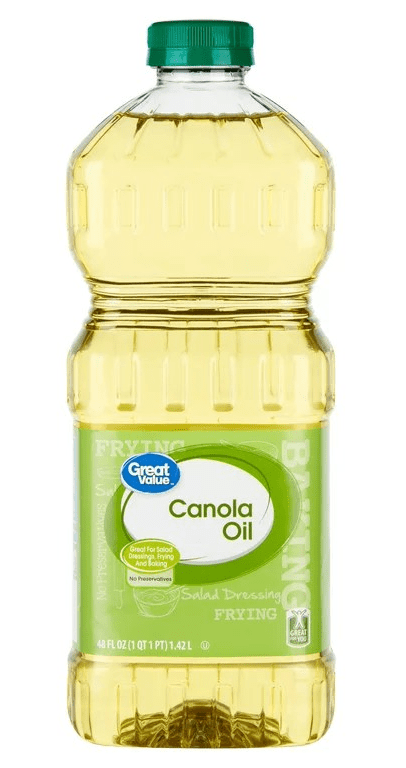 This question has been asked many times and in this article, we’ll seek to discover the unique qualities of this oil; an oil which is now quite frequently used in cooking and prepackaged products. We’ll also examine if this oil has any potentially unsafe aspects. Let’s explore.
Rapeseed Oil vs Canola Oil
Both Rapeseed and Canola Oils are derived from the same flowering plant; the Rapeseed plant. It is a yellow flowering plant that is became commonly planted in Canada, where Canola oil was discovered. Hence, the contraction of the two smaller wordlets “Can” for Canada and “ola” for oil.
From Wikipedia:
Rapeseed, also known as rapeseed oil, is a bright-yellow flowering member of the family Brassicaceae, cultivated mainly for its oil-rich seed, which naturally contains appreciable amounts of erucic acid.
Source: Wikipedia
 “What exactly is erucic acid”, you ask? Good question. According to Wikipedia, “Erucic acid is a monounsaturated omega-9 fatty acid.”
Among scholars and researchers, the debate rages whether erucic acid is toxic to humans. According to the FDA, the amounts of erucic acid in Canola oil have been sufficiently reduced to be labeled as GRAS (generally recognized as safe). Does that mean erucic acid is safe for human consumption? As stated above, the debate still rages.
For example, from Wikipedia’s erucic acid page:
Studies done on laboratory animals in the early 1970s show that erucic acid appears to have toxic effects on the heart at high enough doses. However, more recent research has cast doubt on the relevance of rat studies to the human health of erucic acid. Rats are unusual in their inability to process erucic acid, and the symptoms in rats caused by a diet with high levels of erucic acid have not been observed in pigs, primates, or any other animals. An association between the consumption of rapeseed oil and increased myocardial lipidosis, or heart disease, has not been established for humans. While there are reports of toxicity from long-term use of Lorenzo’s oil (which contains erucic acid and other ingredients), there are no reports of harm to people from dietary consumption of erucic acid.
Breaking the above down, there have apparently been multiple studies going as far back as the 1970s. However, apparently more recent studies have concluded that erucic acid may or may not be toxic to humans in the same way it has been shown to be toxic in rats. This is allegedly supported by the fact that pigs, primates and “any other animals” (left undefined in this Wikipedia article [and study?]) have not been associated with the same effects as those observed in rats.
Clinical Studies
The above clearly opens more cans of worms than it closes. Studies that conflict with one another generally mean something is up with one or more of the studies. What this generally means is that either the test conditions were not the same and/or the testing protocol was substantially altered between one study and the next. Studies, like many things in life, are created, implemented and, most importantly, paid for by humans with an agenda.
Many of these erucic acid studies are actually produced by money-making food producers with a vested interest in ensuring their products remain viable, saleable commodities in the marketplace. How that typically manifests in clinical studies is by performing clinical tests with extremely narrow constraints so as to eliminate potential conflicting data from surfacing during the testing protocol.
Specifically, new studies have learned from the older more broad studies, which the newer studies then typically exclude testing for factors that would conclude negative outcomes. In other words, it’s not what they’re saying to you about their test conclusions, it’s what they hide from you about the operation of that clinical test outcome. Excluding negative testing outcomes from the testing method only serves to mislead the public.
This hiding of information is tantamount to lying. Testing methods shouldn’t be so narrow focused that they allow consumers (and researchers) to jump to the wrong conclusions about the test results. Yet, that’s the state of clinical testing being performed today. It’s not about performing clinical tests that produce broad results, but about producing clinical tests that produce very specific, very narrow, but very beneficial test results to the benefactor. In other words, the buyer of the clinical test can game the test results in their favor.
Levels of Erucic Acid in Rapeseed vs Canola Oil
In life, all things in moderation. Generally, most consumables don’t kill you… at least not instantly. For example, minuscule amounts of lead and arsenic exist in our food supply. These very tiny amounts aren’t short-term toxic to humans. Thus, this is why the FDA can label foods with these tiny amounts as GRAS. The same likely holds true for erucic acid. In large quantities, erucic acid likely does become toxic to humans, in the same way as ingesting large quantities of arsenic and lead can.
The rapeseed plant contains between 20 to 54% erucic acid. This means that crushing the seeds and extruding the oil directly from the rapeseed plant will produce an oil that contains between 20% to at least 50% erucic acid.
Newer studies attempt to refute the earlier 1970s studies, which generally found that the levels of erucic acid in rapeseed oil was toxic to humans… extrapolated from their rat testing. The newer studies now believe, apparently, that erucic acid in the percentages found in rapeseed oil are not apparently toxic to humans, because it was not found to be toxic to pigs, primates or “other animals” (whatever those are) even though rats exhibit a different, apparently more toxic outcome.
Let me just say that erucic acid is an acid. Acids in larger quantities are generally not great for the human body when consumed. If you want to know erucic acid’s chemical formula or other sciency details, feel free to head on over to Wikipedia to check it out.
The Business of Science
Consumer products are a business; a very lucrative business to be specific. When that business falls into consumables such as foods, supplements and drugs, the United States government gets involved. Such oversight involvement includes agencies like the FDA (Food and Drug Administration), USDA (United States Department of Agriculture) and even such agencies as the CDC (Center for Disease Control). Each of these departments defines protocols for handling certain aspects of how businesses may operate safely with regards to human consumables within the United States.
The FDA, for example, defines specific requirements for food and drug producers when introducing new products to market. Many of these requirements include clinical testing and clinical trials. These clinical studies determine potentially ill effects as well as positive benefits from a food or drug consumption. The requirements of using clinical studies opens up a new business; the business of science.
You might be thinking, “Aren’t such narrow studies which choose to hide important details a form of gaming the system?” You’re not wrong. The problem is, as long as a study is performed in a technically complete way using proper scientific methods, the FDA must accept it as a genuine study. The FDA doesn’t determine if the study was gamed or if the person(s) paying for the study biased the study in a way that misled the FDA (and ultimately consumers).
It gets worse. If multiple studies are needed and each are gamed in the same way, this situation makes it even more difficult for the FDA to claim a problem. In other words, the FDA must accept all studies presented as genuine and valid so long as the studies employ proper protocols, including reaching conclusions… even when those conclusion are intended to mislead or are, indeed, invalid.
Yes, the FDA’s system can and has been gamed. We’ll need to understand how and why it happens. When millions, if not potentially billions of dollars are on the line, gaming the science is the least of that business’s worries. In other words, if a business doesn’t choose to game the science, their product might not ever be sold.
I can hear all of those who work in the scientific testing professions groaning now over “conspiracy theories” in these statements. To those people I say, look around more closely. Are you really that naïve and idealistic? While there are some businesses who actually intend to hold onto business ethics, there are many businesses that absolutely do not and will not. Even for those (plausibly deniable?) naïve CEOs of businesses that claim they are ethical, it only takes one bad actor in the management ranks to ruin all of that. Anyone who truly believes a CEO’s purported “rogue manager theory” did all the scummy business work alone is deluded. The orders for this kind of bad business comes from the top, but this scheme is simply a way to afford the CEO plausible deniability. Swallowing this plausible deniability junk from a CEO is stupid, actually. Who truly believes that any CEO doesn’t know exactly what their underlings are doing? If he or she doesn’t, then he or she shouldn’t be and isn’t a CEO.
Unfortunately, as businesses (or, more specifically, CEOs) put more pressure on managers to produce, managers find ways to cut corners to get things done quicker and faster. That can mean gaming systems to get past certain hurdles to complete processes faster and, more importantly, successfully. Thus, business ethics are entirely at the whim of various managers within an organization. If the pressures of getting something done fast and successfully outweighs the business ethics of the actual situation, then out the window go ethics. No employee wants to be the one to put their job on the line because they were the person who upheld business ethics, choosing to do something in the ‘right way’. When such an employee is slow in producing results, a CEO hears all about it.
In the science world, that likely means gaming a study (or set of studies) to get it (them) done faster and with the intended results. Instead of studying all aspects of a specific food product’s features and safety, the science might be geared to look at only a very tiny part of it. From here, it gets worse. Because study producers are PAID by businesses holding a conflict of interest, studies are likely to be rarely free of tampering and bias in the client’s favor. What service organization taking money for services rendered intentionally chooses to upset a buyer? That’s not good for a business reputation. This is the business of “buying” science.
Theranos as an Example
While Theranos’s tiny blood vial testing idea might seem like an outlier for medical business ethics, the reality is that Theranos simply got caught at it. Many other unethical businesses never get caught, primarily because they pay politicians (to hide their tracks well) to keep from getting caught. Theranos’s execs simply failed to understand the game they were playing; a game that led to their demise.
The one place where Theranos was exonerated was against the patients who had their lives put at risk by Theranos’s unethical and unsafe testing practices. The court said no on that charge, but instead caught Theranos’s executives in a web of fraud against investors. Oh no, mustn’t hold Theranos accountable to patient safety, but by all means let’s pay the investors back. America’s priorities are entirely screwed up. Again, money.
Money vs Safety
And that’s exactly where we are today. The food and drug area of business in the United States is all about making money at the expense of human safety. That’s clear. Watch any of the TV advertisements for any drug. You’ll notice somewhere in the middle of the advertisement, the announcer will list off a litany of dangerous side effects, many including death.
The same goes for foods and supplements. Because the supplement industry is entirely unregulated, anything can be placed into these supplements. There’s no efficacy or safety studies required at all for these products, yet more and more so-called MD doctors are advocating and even advertising for such supplements. Again, money.
As for food stuffs, they fall under the same pitfalls as drugs, but it all unfolds in a different way. For example, if a food contains only sugar alcohols, it can be claimed to be sugar free. That sugar free label is the way the game is played. Even though a sugar alcohol is still a type of sugar and is acted on the body as though it were sugar AND because the product does not specifically contain sucrose, the product, according to the FDA, can be labeled as sugar free. The FDA essentially doesn’t class sugar alcohols as “sugar”. THIS RIGHT HERE is the game.
Because the FDA allows for and endorses deceptive labeling, it allows food producers to play games with their ingredient labels, allowing them to place such deceptive labels that make their foods appear to be more healthy than they actually are.
There are many, many such labeling games available to food producers. Some of these labeling games make it seem like the food product is “organic” or “sugar free” or “healthy”, when in fact the product is none of those things, making the situation quite the opposite.
Why does this game exist? Again, money. Food producers stand to lose millions, if not billions, if these ambiguous labeling games were to become honest instead of snake oil. If the government were truly looking out for public’s safety, these labeling ambiguity games wouldn’t exist for manufacturers to play against consumers. Yet, they do exist… and here we are.
Is Canola Oil Safe?
Because conflicting studies exist, some of those studies conclude that one of Canola Oil’s ingredients, erucic acid, isn’t safe for human consumption. The conflicting studies choose to claim that because negative reactions have occurred only in rats and not in pigs, primates and “other animals”, that erucic acid should be safe for human consumption.
Of course, that conclusion is a leap. If limited human testing has been performed, then the studies are all best guess. Humans are not pigs, not apes, not “other animals” and definitely not rats. Studies tested on animals may suggest the possibility that a causal link exists, but there’s no definitive way to know until or unless adequate testing has been conducted on humans.
Though, testing has been conducted on humans, but not in a study. Because the FDA has granted GRAS status to Canola oil based on these conflicting studies, that means that we consumers of this oil are now a live, real world rats for a study. Unfortunately, because we’re consuming Canola oil without proper or adequate human studies, there’s no way to know how much, if any, erucic acid is safe for human consumption. Again, the previous animal studies only suggest that erucic acid MAY be safe for humans… potentially based on false logic.
For more answers on this topic, we’ll need to reach out to our friends in Australia to read a monograph on this subject:
Rats were fed rapeseed oils at up to 70% of the calorie content of their diet. The rats were reported to have developed myocarditis.
[…]
It has been suggested that the rat is not an appropriate model for determining whether erucic acid may pose a risk to human health (Corner 1983). A number of reasons have been put forward for this. Firstly, most of the rat studies involve feeding oils at a concentration of around 20% or more by weight in the diet. A level of 20% approximates human lipid consumption. It has been suggested that rats are physiologically incapable of metabolising such concentrations of oil in the diet (Grice and Heggtveit 1983).
But, then the monograph makes this assertion:
The toxicity of erucic acid is virtually always considered in the context of the toxicity of rapeseed and mustard seed oils, which can contain high levels of erucic acid. Most humans would be exposed to erucic acid by the inclusion of these oils in the diet.
What this states is that erucic acid is not a natural component of pretty much any other food in the human diet. Meaning, consuming Canola oil is the sole way to actually consume erucic acid. As a result, humans wouldn’t consume erucic acid in any way other than via consuming Canola oil. But, the monograph also goes on to make this sort-of disclaimer:
This, however, can complicate the interpretation of the study results, making it difficult to ascertain whether the observed effects are directly attributable to erucic acid, or to some other component (or combination of components) in the oil.
No, actually what this disclaimer is truly attempting to say, but doesn’t outright say, is that because the oil is consumed with many other foods at the same time as the oil, there’s no way to know what food may have caused any issue in any specific human. In other words, there’s no way to nail down that any specific malady is associated with the consumption of erucic acid.
It’s a standard disclaimer argument made by “scientific” people and more specifically, by businesses when they need to sell their product to consumers. Basically they use weak logic, “Our product is safe because even if you do choose to consume it, there’s no way to ascertain if our product actually caused your malady.” Why is that? Well duh… because it hasn’t been adequately tested on humans using similarly detailed studies applied to rats and other animals.
With that said, of the human testing that has been done, the monograph does state this:
In humans, the digestibility of erucic acid containing oils is 99% (Deuel et al 1949, Vaisey et al 1973). In the adult female rat, however, the digestibility of HEAR oil is only 77% (Deuel et al 1948).
Okay. Human digestion of oil containing erucic acid is 99%, way more than the 77% digestion in rats. That could be an overall bad thing. It would mean digesting more of this oil, faster. Digesting more of the Canola oil means that more erucic acid is now available for potential damage. BTW, the HEAR oil acronym means high erucic acid rapeseed oil. Canola oil is considered low erucic acid rapeseed or LEAR oil.
Canola oil should contain around 2% erucic acid by volume compared to rapeseed oil which contains 30-60% erucic acid by volume. Let’s keep going.
The paper goes on to state:
Erucic acid is poorly oxidised by the mitochondrial β–oxidation system (reviewed in Sauer and Kramer 1980).
[…]
In humans, it has been shown that isolated heart mitochondria metabolise erucic acid more slowly than oleic acid (Clouet et al 1974), confirming that rates of erucic acid oxidation are decreased in humans, similar to experimental animals.
[…]
In [the] liver, the presence of erucic acid appears to induce the peroxisomal β-oxidation system (Lazarow 1994).
What this portion is saying is that because erucic acid is poorly oxidised in some human tissues, particularly in the heart, the erucic acid can hang around longer and potentially cause more damage. Oxidation from tissues means that there are processes to break down and eliminate the component from the human body faster, such as this speed being faster in the liver than in heart tissues, according to this monograph.
The paper concludes, after a lot of discussion around rats, pigs and monkey research, which you can read for yourself, with the following statement:
The heart appears to be the principal target organ for toxic effects following short-term
exposure to edible oils containing erucic acid. The most common observed effect, among
rats, pigs and monkeys, is myocardial lipidosis.
Myocardial lipidosis is a condition where fats accumulate in the heart reducing the force by which the heart can contract… or, in essence, it weakens the heart muscle’s ability to pump blood through the system. Oils containing erucic acid, then, stick around longer in the heart muscle. How long it remains in the heart is a question unanswered by this paper. Some studies do suggest that it does oxidize over time and will eventually work its way back out of the heart. The question is, how long will that take
Is that weeks? Months? Years? Better testing would need to be done.
Fast and Junk Foods
Easy and quick bagged and boxed meals, such as potato chips or mac-and-cheese may contain small traces of Canola oil. Food manufacturers can and do use Canola oils as part of producing bagged, frozen and boxed meals and other grocery store foods.
For these types of prepackaged foods, you’ll need to read the label closely. Most labels are required to list Canola oil as an ingredient. However, because most potato chips today are manufactured with varying oils including soybean, corn, peanut, palm kernel or canola oils, you won’t know which oil was used when the bag or box says “vegetable oil with one of the following:”. Because manufacturers leave the door open to using multiple oils to craft such foods, you don’t know if Canola oil is in the bag.
If you’re buying a bottle labeled as “Vegetable Oil”, you should read the ingredients to find out what it contains. It’s most likely to be soybean oil, but it could be a mix of various oils including corn, soybean and/or canola.
The point is, when you see “vegetable oil” on any package label, you should avoid buying that product if you don’t want to potentially consume Canola oil.
Is Canola Oil Genetically Modified?
One final aspect which hasn’t been discussed as yet, besides the erucic acid potential toxicity, is that Canola oil also exists as a genetically modified organism (GMO) to be herbicide resistant and bug unfriendly. This allows for bigger crop yields and, of course, higher amounts of money when sold.
There is also another GMO aspect, but is used in limited manufacturing use cases. There is also a high laurate genetically modified rapeseed plant version. The high laurate component gives the oil a quality not unlike cocoa butter, which means this version of the Canola oil can be used in replacement where cocoa butter might be used as an ingredient, typically in confectionery uses. If you’re searching to buy candy and the ingredient list shows “Laurical” as an ingredient, the confection contains Canola oil and, by extension, erucic acid.
If you’re concerned over eating GMO based foods and wish to eliminate GMOs from your diet, Canola oil is worth removing for this reason alone, let alone that it also contains erucic acid.
Of course, Canola oils being placed into products for external use purposes, such as in body lotions or cosmetics, these don’t get internally consumed. It’s up to you whether you wish to apply such to your skin. Though, some people have found it very difficult to wash Canola oil out of stained clothing, which may have to do with the erucic acid.
Should I Eat Canola Oil? Is it safe?
As we circle back around to this article’s original question, these answers are really left up to you to decide. Should you choose to consume oils without erucic acid (i.e., peanut, corn, olive, avocado, soybean), you don’t need to worry about possible myocardial lipidosis consequences from erucic acid causing oil build up in the heart tissues. That doesn’t mean that peanut or corn or soybean oils don’t come with their own myocardial consequences. As said above, all things in moderation.
The question is, just how myocardial toxic is erucic acid? Studies are inconclusive. However, studies do suggest that oils containing erucic acid do build up in the heart, which is never a good thing. If your family has a known genetic predisposition to heart conditions, then avoiding Canola oil is probably your best long term health strategy involving Canola oil.
In addition to myocardial lipidosis, other heart affects may as yet be unknown. Building these lipids up in the heart could cause other later issues such as heart arrhythmia or other medical complications over time. There are not yet enough long term human studies on the affects of erucic acid in the body. The lack of these studies is partly due to the intentionally narrow-focused positive-benefit studies produced by Canola oil producers. These same producers have no incentive to produce negative studies; studies which might cause their products to be removed from the market. Thus, any further studies would have to be paid for independently of these food producers. Clearly, no one outside of these oil producers has any incentive to perform these additional erucic acid studies on behalf of the consuming public.
With that said, I choose to avoid Canola oil as much as possible because there are too many unknowns with this oil product, including the fact that can be a GMO product. In other words, if it has Canola oil on the ingredient list, I don’t buy the product. Unfortunately, many popular potato chip manufacturers these days list Canola oil as a possible ingredient. The same goes for many prepackaged food items found in the grocery store.
The best choice is to buy the oil you prefer to use, such as olive oil, and make your own foods from scratch at home using your own choice of oil. When I fry or bake, I prefer to use olive oil.
When buying from fast food restaurants, there’s no real way to know for sure if a food contains Canola oil. You can ask a staff person for the oils the restaurant uses to fry its foods, but there’s no way to know if Canola oil may used in other ways. For example, when you buy a salad and they hand you a packet of salad dressing or even when they hand you extra packets of mayonnaise. These packets might contain Canola oil. If the salad dressing comes already on the salad, then you really won’t know what’s in it. The ingredients lists on these packets are so small as to be practically unreadable without a magnifying glass. While fast food restaurants are now beginning to offer up calorie amounts, they are not yet listing ingredients for the foods they serve.
As non-Canola oils do not contain erucic acid, cooking with these oils is one less potential health problem to worry about. The issue, though, is that it can be difficult to avoid consumption of Canola oil entirely as it is becoming more and more ubiquitous, with prepackaged foods and with fast food restaurants. With that said, the less often you consume Canola oil containing products and then only in very small quantities, such long term health consequences may be drastically reduced or possibly even avoided.
Why risk your health over conflicting studies and a questionable oil when you don’t have to?
↩︎
Is it safe to drink soda left in a hot car?
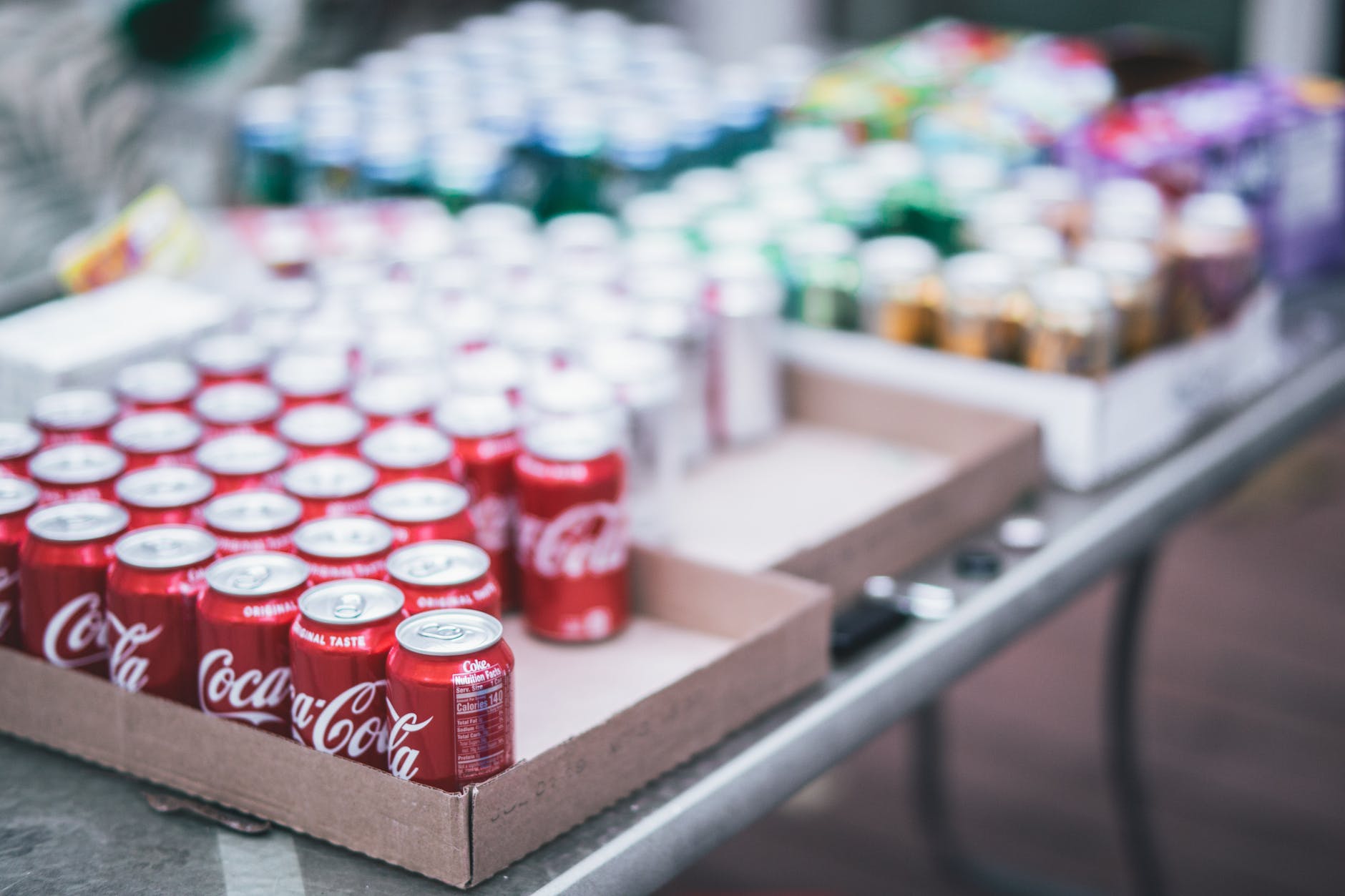
This question seems like it should have a simple answer. However, the answer is more complicated than it would seem. Let’s explore.
Canned Soft Drinks and Beverages
Canned sodas are hermetically sealed and are bottled with bacteria free water. This means that high heat won’t grow anything undue. However, sodas have flavorings, artificial and sometimes natural colors and sugar or artificial sweeteners. Depending on these ingredients, sodas can deteriorate if left in hot conditions.
Canned sodas are “bottled” (or canned) in aluminum cans. While aluminum is heat safe, think about the aluminum foil you use to bake with, there is no problem with the aluminum itself. In fact, because the drink is fully sealed and not exposed to UV light, this method of storage with heat probably offers your best chances of retaining a drinkable beverage even after being exposed to excessive heat. If the aluminum were the only problem, this section would be over.
However, we must also consider the ingredients. The good news here is that artificial and natural colors are generally heat stable. Again, think about baking with food coloring. Colors don’t degrade under 350ºF / 176.7ºC baking temperatures, which is far higher than the heat your car interior should ever reach.
The same goes for soda flavorings. Most flavorings are designed for baking purposes which also reach high temperatures needed for baking.
What’s ingredients are left?
Sweeteners and preservatives. Depending on the sweetener, it might or might not be high heat stable. For example, it is known that Aspartame (aka NutraSweet) is not high heat stable. As temperatures increase, Aspartame begins to break down into components such as methanol. Keep in mind that Aspartame is made up of 10% methanol, 40% aspartic acid, and 50% phenylalanine.
Methanol is a highly toxic substance that, when heated above 86 degrees F (as it is in your body), is metabolized into formaldehyde (embalming fluid) and formic acid (the poison in fire ants).
https://www.downtoearth.org/articles/2009-03/13/aspartame-potential-risk-lurking-your-cabinets
As the above quote states, at 86ºF / 30ºC is when methanol begins to break down into formaldehyde and formic acid. This temperature is well lower than the temperatures which can be reached inside of a hot car. During a hot summer day, temperatures in a car can reach temperatures 20-30ºF / 5-10ºC hotter than the outdoor temperature. For example, a 90ºF / 32ºC ambient outdoor temperature can see temperatures rise to between 110ºF-120ºF / 43.3ºC-48.9ºC inside of a car.
If a beverage you’ve left in the vehicle contains Aspartame, it may not be safe to drink if the can has reached these high temperatures. For canned drinks, it takes between 30 minutes up to 1 hour to heat a can up to these high temperatures once in a vehicle.
Beverages that contain other sweeteners, such as saccharine, sugar, stevia or agave, are considered heat safe sweeteners. Sucralose (aka Splenda) claims to be heat safe, but may or may not be. If a drink contains Sucralose, you might want to taste it first. If the drink is no longer as sweet as you expect, a portion of the sweetener may have broken down in the heat and it’s not recommended to drink.
Bottled Drinks
There are two different types of bottles: glass and plastic.

Glass
Glass bottles are safe to drink so long as it contains heat safe ingredients. However, if the bottles have been exposed to UV by sitting in direct sunlight, some of the coloring might have faded and flavors may have changed. I’d be cautious if the bottle has been sitting around for hours in sunlight. I’d strongly suggest a smell and taste for any bottle which has been sitting in UV light for longer than 1 hour. If the bottle has been sitting for an hour, then it shouldn’t be problem. Always use the nose and taste test to determine suitability for drinking. If it doesn’t taste right, spit it out, then toss it out.
Plastic
Plastic bottles are different beast. Plastic bottles can leach plastic and chemicals into the beverage after sitting in a hot car. This goes for water bottles and flavored beverages. If your beverage has been sitting for hours in direct sunlight in a super hot car, toss it out. Don’t risk it. It doesn’t matter if the ingredients are heat safe. It’s the plastic leaching that becomes the problem with plastic bottles.
Wine, Beer and Spirits
Wine is a drink that is best kept at room temperature (i.e., at or below 78ºF / 25.6ºC). If wine bottles are exposed to higher heat, such as 85ºF / 29.4ºC or hotter, the bottle of wine can be ruined. By ruined, the flavors change, the subtle aromas are lost and the bottle may increase tannins, making the wine unpalatable. The longer the wine remains at a high temp, the more the wine may turn into a flavor resembling vinegar. If you open a bottle and it tastes of vinegar, the bottle is bad. This goes for all wines including white, red, rose and bubbly.
Beer, like wine, will also sour and go bad when stored above room temperature for long periods. Unlike wine, beer is carbonated. This goes for sparkling wine and Champagne as well.
If you’re paying a lot for your wine or beer, you want to keep it in your car near an air conditioning vent, then remove from the car as soon as you arrive home. If it’s an especially hot day and you need to do a lot of running around, I’d suggest bringing a cooler with you and placing these into a cooler with ice. That, or shop for these items last.

Spirits, such as Tequila, Vodka and even Liqueurs can go bad in high heat. This is especially true for liqueurs like Bailey’s Irish Cream, which does contains dairy cream. Anything containing dairy should always be stored refrigerated once opened. However, Bailey’s Irish Cream remains shelf stable if unopened and is stored under room temperature conditions.
Changing Flavors
Regardless of whether a drink contains high-heat safe ingredients, sitting in super hot conditions or subject to UV exposure for long periods isn’t good for any food or drink. If you accidentally leave a case of soda cans in your car for three days or longer, I’d suggest tasting one first. By tasting, I mean just that. Taste and spit. If it tastes at all funny, then the cans are bad.
When buying drinks, it is suggested to take them into an air conditioned climate as soon as possible. Sure, you can run around for a little while shopping, but be cautious for how long. If you know you plan to shop the entire day for hours, then plan to bring a cooler and place beverages and food items into the cooler to keep them stored properly and safely.
Explosions
Carbonated beverages have one other problem with high heat. As more and more manufacturers reduce costs, they tend to make their product containers (cans and bottles) as thin as possible. These containers are safe when stored in appropriate conditions. However, under high heat conditions, these containers can weaken and burst.
As high heat creeps in, this weakens a plastic bottle or can, which can lead to an explosion. Safety is a concern when buying a case of cans or plastic bottles and choosing to leave then in a hot car. Glass bottles should be safer in regards to exploding, but the beverage itself may not survive high heat conditions.
Summer Safety Tips

Always store cans and bottles in a cooler, if at all possible. If you know you plan shopping at a number of stores, plan to bring a cooler with ice. This way, you can store cans and bottles in the cooler while remaining out and about. As our summers seem to be getting hotter and hotter each year, carrying around a cooler becomes ever more important.
If you’re buying expensive beer, wine and spirits, then you definitely want a cooler. There’s no danger in storing wine at ice temperatures for a short time, but there is definitely a danger from wine becoming too hot. Same for beer and spirits. For soda or bottled water, it’s fine to remain in the car for a 20 minute drive home, but if it needs to remain in the car for hours, then you’ll want plan a cooler for these as well.
As we move into the hotter days of summer, plan to spend for and use a decent cooler for those days when you need to be out and about for longer than a few hours.
↩︎
2021: The COVID Paradox

Many people, including the news media, are under the belief that COVID-19 is permanently subsiding in the spring of 2021. This is borderline delusional. There are solid reasons why this is likely not the case. Let’s understand why and explore.
Vaccines
Yes, the vaccines are a cause for hope. Unfortunately, the design of these vaccines doesn’t warrant celebration that the virus is going away any time soon. While the vaccines may help reduce symptoms and mortality rates, the vaccines likely won’t stem the tide of the virus spread (at least not instantly). Why? We’ll need to understand the mechanism of action for these vaccines.
The vaccines have been designed to teach the body’s immune system how to respond to this virus invader, or at least the portions that do the damage. It does that by taking certain portions of the virus’s genetic makeup and have the body respond to these genetic markers as though the virus were present. However, it does this by not having the immune system take a severe response, but instead only a mild response. This teaches the body about this foreign invader without having to become infected or have severe symptoms.
That’s a great design, but it also has one humongous flaw (and several others, which I’ll circle back to). That major flaw is that it still allows the virus to infect the vaccinated person. More than this, the vaccinated person can still spread the virus to others should they become infected. While the vaccine purports to reduce the effects of the virus’s symptoms, because portions of the virus are already understood by the immune system due of the vaccine’s method of action, the vaccinated person can still become contagious and transmit the virus. This contagious transmission is one of two big flaws that threaten to undermine the vaccine’s usefulness (at least in the short term while the United States attempts to distribute the vaccines to everyone). The second being…
Vaccine Longevity
Each vaccine’s duration has been assumed to last between 9 and 12 months in duration. That means that a vaccinated person can expect reduced symptom effects (after COVID-19 infection) for between 9 and 12 months, assuming this suggested manufacturer longevity holds true. By comparison, it has been typically found that a person who survives a natural infection from COVID-19 without having been vaccinated has antibodies that last about 3 months. For natural infections, 3 months after survival of COVID-19, antibody tests may no longer find antibodies present. Whether 9-12 months for the vaccine or 3 months after a non-vaccinated COVID-19 survival, the body is likely once again capable of a full blown severity COVID-19 infection.
With that said, we have a bigger problem looming. Before I jump into the looming problem, let’s discuss what’s happening today.
Spring 2021 COVID-19 infection rates
During the spring and summer of 2020, infection rates drastically dropped after winter had passed. There are a number of reasons for this fact, but suffice it to say that the pattern we saw in 2020 we are now seeing again in 2021. States (and news media) now believe that the vaccines are the reason. However, in spring 2020 we had no vaccines available and the virus infection rate went down just as dramatically.
While I know that state officials want to believe that the vaccines are playing a big part in this reduction of cases, the real answer is that the vaccines likely aren’t contributing much to this decline at all. The reduction in 2021 is most likely due to the same reason(s) we saw in 2020, without vaccines. The vaccines may contribute a tiny bit, but logic dictates that the reduction is simply because a warmer, sunnier outdoor season is upon us. Once the spring rolls around, people are outdoors more often, instead of huddling in stores, in restaurants or in their own homes. Less indoor huddling means less mechanisms of transmission. Thus, lower infection rates. Weather may also be a factor in the reduction, such as rain, humidity and storms which may reduce COVID-19 air transmission and surface longevity. Whatever the combination of reasons, it’s clear that what happened in spring and summer of 2020 is again repeating in the spring and summer of 2021. Yet, I hear crickets for news media discussing this.
Because this is most likely a repeating pattern, the fall and winter of 2021 will again bring more infections. The question is, how many? Will the vaccine make a dent by the fall? That’s a double-edged sword. Let’s now jump into the looming problem I mentioned above.
First Vaccinations
The first person vaccinated in the US for COVID-19 was December 15, 2020. Nine (9) months from December 15th is September 15th, 2021. That means that if the antibodies have worn off by September 15th, all of those first responders, elderly and those early vaccinated will again be ripe for infection by the fall and winter of 2021… assuming they don’t receive a booster vaccination sometime in mid-to-late summer.
Looming Problem
Because of all of the above, the COVID-19 infection rate is likely to go back up to record numbers by the fall if those early vaccinated don’t receive a booster shot soon. It also means that those who received a shot in late spring or summer of 2021 are more likely to endure a COVID free fall and winter than those who received their shot in December 2020 or January 2021.
Remember, though, the vaccine doesn’t prevent virus spread. It only reduces symptoms after infection. Those who are infected, but vaccinated can still spread COVID-19 to others around them while they remain contagious. Worse, because symptoms are drastically reduced, some people might not even know they have been infected other than a runny nose, itchy eyes, a slight fever or some other easily ignored symptom. Those vaccinated could even assume a mild cold or even allergies.
What that all means is that those who are vaccinated can easily keep the spread going unknowingly, particularly to those early adopters who may lose their antibody protection as early as September, possibly even earlier.
CDC Planning and Pattern Recognition
While the CDC has been intensely focused on getting the first round of shots into people’s arms, the CDC, CNN, New York Times and all the rest have completely ignored this looming threat that is but only a few months away. Worse, the optimism of this seasonal downslope is once again tricking people into a false sense of security. We were tricked into it in 2020 and the fall of 2020 was the worst in our history. Here we are again being sucked into this trickery a second time. It seems that the United States is entirely ignorant of its own recent history repeating.
This situation is as plain and obvious as the nose on the proverbial face. Anyone who can see patterns can see this is a repeating pattern. This repeating pattern, unfortunately, has an unexpected twist: the antibodies will be subsiding in the earliest vaccine adopters by the time December hits… which means that the 2021 holiday season may shape up to see one of the worst COVID death rates on record. Not only are we entirely ignoring the downslope pattern of the spring and summer, we are ignoring the fact that the vaccine antibodies will be expiring in the earliest adopters just at the time when COVID will be ramping up transmission rates again.
Can this juggernaut be stopped?
Unknown. The vaccines don’t halt the spread, unfortunately. If all of the United States can be vaccinated (and boosted) before September, maybe. Eventually, the virus will burn itself out because every vaccinated person will have been infected and survived. Once there’s no one left to infect, the virus will cease to exist. That’s herd immunity.
However, the United States is under a ticking clock. Because the health departments, the White House and the CDC are so focused on simply getting first vaccinations completed, they are entirely forgetting about those early vaccinated whose clock is ticking down to the holiday season.
Keep in mind that being vaccinated in December 2020 or 2021 January, February, March or even April, the antibodies will not carry you through the entirety of Winter 2022. Which means that a vaccine’s effects may start waning in the middle of a new pandemic surge.
States and Reopening
Because states have decided it’s time to reopen in full, that middle seats are again open for sale on airplanes, that movie theaters, pubs and restaurants are back to 100% seating, we are opening the United States up to an even worse seasonal pandemic in fall and winter of 2021, particularly without taking into account the longevity of the vaccine. Without boosters for those who received shots in December through April, the virus will again have fully vulnerable hosts to infect by winter.
States which have chosen to reopen in full are simply feeding into this pattern and into this false sense of security. They are also setting each state up for a particularly bad holiday pandemic season.
Alarmist
Some might call this article alarmist. I disagree. I call it being a realist and being able to recognize patterns. No one can really know the longevity of a vaccinated person. We won’t know until we know. The vaccine designers can make guesses, but that’s as good as it gets. We could find that the vaccine longevity is 6-8 months. We might even find that some who’ve received the vaccine might last as long as 3-5 months, in similar form to a non-vaccinated infection survival. We’re guessing about longevity. Even I am guessing based on the numbers given by the vaccine manufacturer.
Still, a booster is a must. To be completely safe, we must assume that 9 months is the limit. Meaning, those already vaccinated will need to have a booster prior to 9 months to make sure the antibodies remain active for another 9 months. This, at a time, when most of the population hasn’t even had a first shot.
The White House
Joe Biden and team have stated they are making the pandemic response a priority. Yet, you can’t make the virus a priority when you aren’t planning for ALL eventualities… even those listed in this article. Planning to stop this virus means not only inoculating first timers, but keeping those who are already inoculated valid. I can’t even recall one single news service like CNN, MSNBC, CBS, ABC or any other large audience news service discussing this potential looming crisis.
Unfortunately, too many of these news services are far too optimistic and wish to bury their collective heads in the sand as if the vaccine is the end-all-be-all. That once we have a vaccine in our arms that it’s all over. Optimism has its place, but not when discussing a pandemic. A pandemic needs a realist, not an optimist. It needs someone who identifies patterns, calls them out and helps prevent that pattern from recurring. It also needs someone who understands exactly how these vaccines work and calls out gaps in when and how these vaccines might fail us.
The White House needs a better set of persons managing the pandemic instead of Dr. Fauci and the CDC. Optimists won’t stop a virus. Only doing the right things will. Unfortunately, the White House is allowing states to reopen in full without warning of these looming conditions.
Is the Pandemic Over?
While a lot of people seem to think so, I’m very cautiously optimistic. Instead, I’d rather look at all of the problems that can occur and see that unless these problems are handled before September, the fall and winter could see very bleak times again. In fact, I’m so cautiously optimistic about this, that’s why I’m writing this article. It’s easy to get caught up in this spring downslope as a sign that it’s ending. Unfortunately, we saw this same downslope in 2020 (as I stated above). Because of these repeating patterns and because of the (lack of) longevity of the vaccines, that’s exactly why I’m cautiously optimistic and exactly why I’ve written this article.
It’s too easy to get caught up in a false sense of security and then as October rolls around, we’re seeing a huge uptick in admissions to hospitals once again. I’d prefer to not see that occur, but unfortunately the United States and the expiration of the vaccines is setting us up for exactly this scenario.
Maybe I’m wrong. If I am wrong, I’ll be the first to admit that I was wrong. I’ll also be very happy if I am wrong, because that means far fewer deaths. Unfortunately, it’s not me who’s controlling these situations. It’s the vaccine makers, the state legislators, the White House, the CDC and even the news media who are making these decisions. It is these people who may be setting us up with a false sense of confidence that the virus is subsiding.
However, I don’t believe the virus is quite yet done… and it will find a hole to work its way into. The COVID-19 virus doesn’t care about human rhetoric, news programs, politics or optimism. It cares about one thing only, replication. That’s what it does. If the vaccines begin expiring just at the time when the holidays roll around, the viruses will find that weakness and exploit it. That’s what a virus does.
What can I do?
If you have already been vaccinated, you need to discuss getting a booster shot around August 2021 to reinforce your antibodies going into the fall and winter. If you have elderly loved ones, you will need to make sure they also get a booster. Remember that the vaccine doesn’t prevent infection or transmission. That means that having the vaccine, you can still bring COVID-19 home and infect those around you. If their vaccine antibodies have expired, but yours is still active, that means they could be in for a more severe infection or possibly death.
Additionally, you still need to wash your hands thoroughly before touching loved ones. You need to wear a mask. If you work in a high risk job interacting with lots of people in a public space, you will need to be cautious when you arrive at home to loved ones… taking all precautions. Precautions like washing hands, taking a shower, washing clothing immediately and wearing masks in close proximity to those who are more vulnerable.
At a workplace, you should avoid face to face contact when necessary and avoid small conference room gatherings with others. Instead, you should request your manager to adopt at-desk virtual meetings (i.e., Zoom or similar) to allow for minimal interaction and contact with other face-to-face workers. The phone is also your friend. Use it to contact workers instead of walking to their desk. If people like to swing by your desk for drop-in requests, ask them not to do this. Instead, ask them to email you or call you on the phone instead. Email and texting are additional options.
Workplace environments also tend to be petri dishes, including toxic air conditioning systems which can easily spread coughs and sneezes around the entire office. If it’s a multi-story building, the air flow handling system can carry particles from other office spaces into yours. This means you should step outside as often as you can. Get out of the building and away from a crowded work environment. Unfortunately, stepping outside probably means enduring smokers. You’ll want to avoid smokers as well, unless you smoke.
Finally, you should contact your healthcare provider to determine how to get a booster going into the fall. Without a booster of those early vaccinated, the fall of 2021 can easily turn into something worse than 2020’s death toll. A false sense of security is a very real thing. Let’s not get trapped into it again this year.
Unmasking the Vaccinated
The CDC just today (May 13, 2021) issued new guidance that the vaccinated no longer need to wear masks indoors or outdoors, nor do they need to follow distancing guidelines. On the surface, this seems like happy news. Let’s understand why it is not happy news and why it plays directly into what could be a terrible pandemic winter.
Masks do little to protect the wearer from receiving the virus. If someone without a mask coughs or sneezes, wearing a mask is of little protective value. A mask, on the other hand, prevents a cough or sneeze from traveling beyond a few inches, thus preventing spread via long and wide air transmission.
Without a mask, a sneeze can travel 8-15 feet. With a mask, a sneeze might travel just a few inches away from the person wearing the mask. Let’s apply this to those who have been vaccinated or even to those who claim to be vaccinated (more important distinction).
The CDC has opened the door to allow basically everyone to remove their masks. Why? Because there’s no way to tell who has been vaccinated and who hasn’t. There isn’t some magical instant mechanism to see who has and who has not been vaccinated. Worse, the COVID hoaxers are real. They’ve been patiently hiding behind the scenes waiting to pounce on the day when the mask mandate is lifted. Here we are. Effectively, the CDC has told everyone they can remove their masks… not just those who are vaccinated, but everyone. Since there’s no way to tell who has been vaccinated, it’s now a free-for-all.
Worse, because the vaccinated can easily spread the virus far and wide, because they can become contagious, this is the first salvo towards another much more wide and deep pandemic surge. The CDC is supposed to be the Center for Disease Control, with “control” being the operative word. Yet, here we are. The CDC’s guidelines have given the United States a free-for-all open door pass to remove masks… this at a time when only 32% of the United States population has had only one shot. Less, if you consider those who have had a full two shots and have waited through the build-up period.
The reality is, it’s way too early and too fast to be mandating mask removal. Worse, this now opens the door to massive spreading by the vaccinated to those who have yet to be vaccinated. It’s a bad situation now being made worse. Sure, the numbers are dropping, but not because of vaccinations, but because of the repeating pattern we saw in 2020. While I know the CDC believes that the vaccines are responsible, that is a mistaken, almost deluded belief. Yet, here we are.
How this all plays out is as yet unknown. However, I’d expect to see infections begin ramping up by mid-july with hospitalizations increasing all throughout August and September. By December, we’ll likely once again be so deep in the middle of deaths that the CDC will have to reverse all of this guidance and realize, too late, that the vaccines haven’t made a dent. Oh well, I guess we now get to see just how bad it can really get even with vaccines in play.
↩︎
Countdown: 100 days of Mask Wearing
Let’s count down President Biden’s National 100 days of mask wearing. Incidentally, it also counts down the first 100 days of Joe Biden’s Presidency.
days
hours minutes seconds
until
President Joe Biden’s National
100 Days of Mask Wearing ends.
Is the COVID-19 vaccine safe?

If you’ve watched CNN, Fox News or CNBC, you’ve probably seen a number of medical correspondents like Dr. Sanjay Gupta or Dr. Leana Wen who consult for CNN during this pandemic. Let’s explore their lack of fiduciary responsibility to the general public.
Medical Doctor or M.D.
To get a license to practice medicine, a person must not only obtain a preset amount of medical training and gain experience in the form of internships, they must also agree to the Hippocratic Oath. This oath originated with Hippocrates (born 460 bc). This oath essentially states, among other information, “First, do no harm”, however, this exact wording does not exist in the oath in its original Ionic Greek form. Instead, it has been translated with levels of interpretation necessary to be understood by an English speaking audience. One might say that the original Ionic Greek form has been altered and updated to modern society standards.
The difficulty with revisionism by third parties is that these revisions were not by the hand of Hippocrates. Regardless, the sentiment of what Hippocrates wrote still essentially remains.
With the phrasing of “First, do no harm”, this runs quite a bit counter to the COVID-19 vaccine. Let’s dive in and understand exactly why.
Mouth Piece
One thing you have to understand about the medical industry, particularly for “celebrity” medical doctors is their level of sway they have with the general public. With a brand like Dr. Sanjay Gupta, he has built his celebrity reputation on seemingly good and sound medical advice over the years. As he has so carefully built this brand, he has been careful to ensure that his messages are in keeping with his brand message and also doesn’t run counter to his medical training or, in general, the medical industry. The same can be said for Dr. Leana Wen, though her brand image is far less solidified than Dr. Gupta’s.
Unfortunately, during this pandemic, these medical “doctors” have taken an odd turn, staking their own personal brands and reputations on a rushed vaccine.
Instead, these medical correspondents, not just for CNN, but all of these news networks, have simply become talking head mouthpieces for the medical industry as a whole. While the pandemic rages and gets worse, killing ever more and more people, these mouthpiece medical practitioners sit in front of cameras spewing the rhetoric of an industry that really hasn’t proven itself to be harmless. More specifically, the pharmaceutical industry.
The Medical Cycle
The medical industry is, unfortunately, a bunch of collusive teams all working together to create a whole. I’m not here to say that each of these industries are bad in and of themselves; it’s just that when combined, they create a whole that’s not completely without “First, do no harm”. It’s very difficult to regulate disparate industries that have only minimal relationships with one another.
Below is an image that demonstrates both the collusive and parasitic nature of each of these industries. With that big $ sitting in the middle, it represents an industry that makes trillions every year. Let’s understand exactly how much money is at stake:
“How much money is in the healthcare industry? In 2018, the global healthcare sector’s revenue was $1.853 trillion, an increase of 4.5% on a year-on-year basis. When it comes to healthcare expenditures, the US tops the list, spending $10,224 per person.”
https://policyadvice.net/insurance/insights/healthcare-statistics/

Over $10,000 per person per year! Wow! What other industry in HISTORY makes this much money per person per year? Yeah, collusion.
What the above image says is that Hospitals rely on both Doctors and Pharma companies for their continued monetary success. Note that I didn’t include equipment manufacturers in this graph, but know that they are out there. Medical equipment manufacturing is a tertiary industry that is needed to supply all 3 of these industries with similar equipment. In fact, the equipment manufacturers are probably the only industry that are mostly outside and don’t act in collusion, but instead, they sit to the side and feed above monetary cycle. However, these equipment manufacturers also make more than their fair share of money from this industry.
Also note that the arrows flow in both directions because money flows both ways. Doctors feed the pharma companies by prescribing. In return, pharma companies grease the Doctors via kickbacks, residuals and free medicines. Hospitals pay their Doctors, in return Doctors act as sales persons for the Hospital by using their expertise and brand reputation to bring repeat business to the hospitals. Pharma and Hospital relationships are entirely obvious and money flows both ways buying and using medicines.
There’s also the research arm of this industry, but most of the drug research resides within the pharma companies. There are also the insurance companies that, while not directly part of the medical industry, act as the glue between the public and this entire industry. Without this “monetary glue” the entire medical industry would fail and couldn’t exist. Should insurance companies be included in the above? No, because they do not practice medicine in any way. They believe they should by making medical decisions based on when to cover and not cover illnesses, but they are firmly outside of that industry.
I don’t wish to digress into the scammy and unnecessary nature of the insurance industry, so I won’t. However, I may write a follow-up article to discuss just how much of a leech, a scam and an unnecessary burden is the insurance industry on pretty much every part of life. I’ll leave it at that. Let’s continue.
Industry Acceptance, Coercion and Blackmail
Doctors are practically held over a fire to keep their license. Instead of being about altruism, it ends up being about falling into the trap of someone bigger than you. A doctor’s practice is held over the fire by their license. Without a license to practice, doctors can’t make a living. It’s basically a legal form of coercion.
What that means is that unless a doctor practices social restraint and, in fact, continues to tow the industry accepted lines of thinking, the doctor may find themselves out on their ass without not only their job, but without a way to make a living. This means that a doctor is almost constantly “coerced” into towing both big pharma ideals, but in towing hospital ideals. They must make sure their opinions don’t run afoul of either of these two entities, either one of which could see to it they can’t make a living.
Either of these “big brothers” may coerce and collude to keep the doctor in line, just like a parent keeps their petulant child in line. Threats of being fired or, worse, losing their license is a strong incentive not to make waves in the industry and to tow the sometimes distasteful practices that have been tossed at their feet.
Medical Correspondents and News Channels
As we circle back around to news channels, we now begin to understand why both Dr. Gupta and Dr. Wen mostly pretend that the COVID-19 vaccine is entirely safe and effective. If they don’t do this pretending, particularly with their powerful celebrity status, this could torpedo the entire vaccine acceptance strategy (and their own personal careers).
I’m not here to say that these vaccines aren’t safe or effective, but I’m cautiously optimistic… the exact stance a medical professional should take. When Dr. Gupta got his shot on camera, I could see a fair amount of trepidation in his eyes. However, his words (and forced expressions) overrode his eye and body language. Just watch the video below and notice his wide eyed expressions closely:
What this says to me is that while he does in some way believe the safety and efficacy, he also realizes the dangers of this mostly untested vaccine. In fact, I got the distinct impression that he felt like an unwitting pawn in this situation.
Levels of Desperation
With the amount of deaths per day, the medical industry feels a tremendous amount of pressure coming from every angle. There’s pressure coming from politicians (and the President) to come up with a solution to the pandemic. There’s also internal pressures coming from pharma companies towards doctors to push their latest “vaccine” as efficacious and safe.
With this measure of not only industry pressure, there’s the level of desperation by the public into wanting a fix and wanting it yesterday. The economy is failing. Businesses are closing. Unemployment is spiking. The pandemic is taking a huge toll on our current way of life. It’s digging deep into every industry, every person and into every single aspect of our current social existence.
Because of all of these levels of desperation, pharma felt pressured to delivery something, anything. They did. The difficulty is not that pharma delivered, but what they delivered.
Prudent or Reckless?
There’s a fine line between being prudent and being reckless and sometimes it’s difficult to see when that line has been crossed. Unfortunately, desperation is never the reason to jump into something that appears to be a miracle. That miracle might, in fact, turn into hell.
The doctors claim that the medical technology used in the vaccine (messenger RNA) is something that’s been in existence for years. The difficulty is that this technology has never been used in vaccines, at least not until today. Even while the technology may have been known for years, putting it into practice is an entirely different thing.
From concept to vaccine delivery was a total of about 9 months, the time it takes to conceive a baby and deliver it. Those 9 months included a rapid clinical trial of a month or two at most.
Most drugs that hit the market have had years of clinical trials (i.e., plural… more than one). This vaccine had a total of one clinical trial. Sure, the amount of participants was large, but it was still only one clinical trial. In fact, the trial excluded certain at-risk groups of individuals, such as pregnant mothers and other at-risk people. In effect, the trial utilized only healthy adults without preexisting risk conditions. Unfortunately, that leaves the vaccine at risk of causing harm “in the wild” because it won’t just be put into the arms of those non-risky individuals. It will be inserted into the arms of pregnant women, children, asthma sufferers, COPD sufferers and all manner of people with diseases of the mind and body.
In short, the quick trial skipped key tests… test that may negatively impact those at-risk folks who were not represented during the clinical trial. It’s risky and it’s disturbing.
Let’s come back to Dr. Gupta and Dr. Wen on CNN.
When these correspondents appear on CNN, their banter about the vaccine is one-note. It’s almost as if what they’re saying is entirely scripted by the pharmaceutical companies and not of their own words. I’ve yet to hear ANY cautionary warnings or verbal trepidation from either of these “doctors”. As I said, “Scripted”.
It all seems so contrived and canned as if to “reassure” the public how safe and efficacious the vaccine is.
Exercise Caution, Restraint and Critical Thinking
While these TV news doctors continually spout almost 100% positive rhetoric that these vaccines are perfectly safe, I’m not convinced… yet. I’m firmly still in the “wait and see” camp. The clinical trial was way too quick, provided way too convenient results and hasn’t in any way been challenged by doctors who should be challenging how the trial was handled.
Instead of challenging anything about the trial, these doctors are being shown given a literal shot in the arm (see above). Even politicians are doing this.
Is the vaccine efficacious AND safe?
The theory behind the vaccine formulation has merit, to be sure. It forces the body to create and replicate antibodies against alleged innocuous portions of the virus. The difficulty is that the mRNA is a foreign invader. It’s something the body hasn’t seen before. The body’s immune response may be somewhat calculated, but there’s no way to know long term effects on the body.
Could the vaccine lead to disruption in key functioning of other body functions either now or in the future? These are thing we can’t know. Because the clinical trial wasn’t able to test any portion of it long term, we simply have no idea what long term effects the vaccine may have on the body’s systems. We simply don’t know what the vaccine may cause 1, 2, 5 or 10 years later.
Compared to getting COVID-19, it’s a toss-up. COVID-19 may also produce these same effects in the future. We can’t know what we haven’t tested… and that’s exactly where we are with the vaccine. Injecting portions of this foreign invader into the body with a minimal tested trial, we simply don’t know long term effects.
We aren’t even sure just how efficacious this vaccine technology will be against the virus in the future. We might find that even after the second dose that the vaccine’s effects wear off 6 months later. The vaccine’s effects may not even be effective against future mutated strains of COVID-19. Again, because the clinical trials couldn’t test long term ANYTHING, we simply have no information. This is the reason why critical thinking is important. We must use our brains and realize that without proper testing, this vaccine may not be all of what it is claimed to be.
Not only might it not be effective, it might cause more side effects than giving us the immunity it was intended.
Wait and See
If you’re thinking, “I work on the front line so I need it”, think twice. That’s desperation talking, not critical thinking. You can’t jump on board simply because you fear getting the virus. You must take the vaccine because it has proven itself useful, not because someone says that it is. Believing hearsay is the quickest way to problems.
I’m not saying the vaccine isn’t efficacious. What I am saying is that the vaccine hasn’t yet proven itself efficacious other than under very specific and controlled circumstances. The world doesn’t work like a controlled clinical trial. There are far too many unknowns when giving shots to people who are not under controlled conditions. This falls under the safety factor. These unknown safety issues can lead people to injury and death. These are possible consequences from these vaccines. It seems that the clinical trial was mostly focused on efficacy over safety. That’s not to say that safety wasn’t a factor in the trial, but it wasn’t the primary motivation in its formulation.
Injecting an unknown substance into your body always has risks, from infection, to allergic reactions to unforeseen consequences, such as Bell’s Palsy, injury or death. We simply can’t know what we don’t know.
Money
Let’s come back to that big $ hanging out in that image above. Money is how the world works. No one does something out of 100% altruistic intent. No, money is how the world-goes-round. Big pharma companies aren’t in it for the altruism. They are in it for how much money they can make. While those who receive the shot may not pay for it, make sure you understand that pharma companies are well paid for producing these vaccines. Without money, these vaccines wouldn’t have been made. It is about how much money pharma can make off of it with as few negative consequences as possible.
Unfortunately, drugs aren’t without side effects. Pharma companies are well aware of that fact. Therefore, for every drug they introduce, they have not only insurance, but also lawyers to work through injury and death lawsuits.
With the pandemic, we really don’t know if suing Pfizer, Moderna or AstraZeneca will even be allowed. Because of the pandemic, the government might give these pharma companies complete immunity from prosecution or lawsuits. What that means is that these pharma companies might have been given carte blanche by the government to produce whatever they want with impunity… no matter how damaging it may become.
Future Vaccines
There’s also a danger in the manufacturing process. As the first batch of vaccines might be somewhat effective, future produced vaccines might not fare as well. As the manufacturers find cheaper materials, faster processes and more efficient manufacturing, that can cause errors to creep into the formulation. That could also mean that vaccines made in February might be less efficacious and more dangerous than those produced in December.
We simply don’t know what Pfizer, Moderna and AstraZeneca might introduce, alter or change in a few months or even next week. It’s extremely hard for me to jump right into this “vaccine is safe” argument and state that the vaccines are 100% anything. There are way too many unknowns to make blanket statements about this vaccine.
For this reason, I’m firmly in the wait and see group. I want to allow others to have first dibs at the vaccines to see how well they fare and what possible outcomes might result from their experiences. After I see how that works out for them, I can then look at those side effects and make a better informed choice.
Right now, we simply don’t know enough. We are flying mostly blind. We need to be able to see exactly how bad the vaccine’s effects may get to judge it against what we know about COVID-19. Only then can we make an informed choice. You don’t want to jump into the vaccine only to find yourself in the hospital clinging to life because the vaccine had a severe consequence on your body. COVID-19 is a bad disease, but the vaccine’s long term consequences could ultimately be worse. We simply don’t know… which is why waiting at least some time is prudent.
Vaccination Confusion
As we move into the vaccination process, comes confusion and, in some cases, sabotage. The confusion stems from many different reasons and from different directions. The first confusion is the two dose schedule. Some people will assume one dose is enough and skip the second dose. Worse, some patients may not be told that there is a second dose (or will forget due to memory issues) and will end up skipping the second dose not knowing it is required to receive full effect from the vaccine.
The second problem stems from multiple vaccines from different manufacturers. As of this article, there exist two approved vaccines in the United States, including the Moderna and Pfizer COVID-19 vaccines. There are three more are on the horizon including AstraZeneca, Janssen and Novavax. Because each of these vaccines have different storage requirements and likely different administration schedules, this puts the onus of which virus vaccine you receive on you. If you get a first dose of the vaccine, but you don’t remember which manufacturer’s vaccine you received a few weeks later, you won’t know which follow up dose to get. That leads to…
If you get the Pfizer vaccine initially… then for the second required dose, you can’t switch and get the Moderna vaccine. The two don’t work together. Because each vaccine has a different mechanism of action and formulation, the vaccines are not interchangeable from the first to second doses. You must get the same vaccine for the second dose that you got in the first dose. Some people will conflate this, take the wrong second dose, assume they are protected and then get COVID-19.
The next problem is vaccine administration practices and vaccine authenticity. A hospital has already gotten mixed up and administered the wrong medicine instead of the vaccine. While this may seem to be a clinical error, it goes way deeper than that. As administrators of smaller and smaller hospitals and medical clinics become responsible for buying vaccines to administer to their patients, inevitably these mix-ups will become intentional. For example, I wouldn’t be surprised to hear that some clinics are intentionally injecting plain sterile water into the arms of individuals instead of the authentic vaccine. It could be that the clinic simply can’t get a supply or it could be the administrator is unscrupulous and is selling the vaccines out the back door for real money while injecting patients with fake product.
Speaking of intentionally doing things, we have already seen a hospital worker allegedly intentionally sabotage a supply of the vaccine by taking it out of the fridge overnight. That hospital worker has since been fired (and now arrested), according to many sources, but all of the above is just the tip of this unsettling iceberg.
Counterfeit Product
This last problem, keeping in mind that this is not an exhaustive list, is grey and black market product. As vaccines slip out the back door of hospitals and medical facilities, unscrupulous scalpers may attempt to sell and inject this grey and black market product into people who are way, way down the list. These products might range from authentic to plain sterile water to dangerous drugs. You don’t know what you’ll receive when you go the grey market route. Keep in mind that even reputable hospitals might even fall prey to injecting grey market or counterfeit vaccines into people. There is a wide range of ways that all of this can manifest.
Right now, we’re at the very start of this process. By the end, we’ll have heard of most of the above, if not a lot more shysters, scams and hucksters trying to make a quick buck off of the vaccine.
For safety precautions, always ask to watch the medical worker pull the vaccine from a properly labeled vial. If you can request them to show you the vial beforehand so you can read the label, all the better. Make sure that the label appears genuine and that the product appears authentic. While fakes can sometimes appear better than a genuine product, in a hospital medical setting, one would always hope that everything dispensed is entirely genuine. If you’re visiting a urgent care clinic or a small medical facility, like a doctor’s office, make sure that you ask when they received the vaccine, how old it is and if it was properly stored.

If you’re injected with an improperly stored vaccine or, worse, a fake product, it might do nothing at all or it might have negative health consequences. So, to the best of your ability, request to inspect that the vaccine is authentic and ask all of the right questions about storage and handling. If your doctor suddenly says they have vaccine doses at a time when hospitals are unable to obtain them, this should be a huge red flag. A doctor’s office may have gotten counterfeit product from a scammer.
Scammers abound and these are people who are more than willing to take advantage of small doctor’s offices for their own scamming benefits. They will pretend to be medicine distributors only to sell the office cheap and fake products. By the time the doctor’s office realizes and potentially injects some patients, it may be too late.
When considering your turn at the vaccine, be exceedingly cautious as the vaccinations progress into the future. Scammers WILL find ways to scam this entire process if not outright sabotage it. You must be diligent and ask the right question before they jab that hypodermic needle into your arm.
↩︎
COVID-19: Should I help out?
Here’s a solid question that may appear to not have a clear answer, but it really does. Let’s explore.

Emergency aboard a plane
Imagine you’re flying on a plane to get somewhere. Imagine that the person across the aisle from you appears to be having trouble breathing and is sweating. Then, imagine that same passenger begins having a seizure which turns into a medical emergency. Now imagine another medically trained passenger steps up and begins performing CPR on this now stricken passenger and continues performing this activity until the plane lands (i.e., over an hour).
This scenario just played out on a United Airlines flight on Monday December 21st. A scary situation to be sure. Is jumping in to aid a possibly COVID-19 infected passenger wise? Could this situation have been avoided?
COVID-19 has familiar symptoms including shortness of breath, sweating, fever, chills and other outward signs of infection. These symptoms, particularly when this severe, should be easily spotted. Yet, no passengers, none of the flight attendants, none of the airport or airline attendants did anything to question this clearly ailing man before boarding, while boarding or during the flight. How does this happen?
Airline Negligence
Before I get into the meat of this article, let’s discuss the side dishes. This side dish is negligence. When you’re flying on a commercial jet, it is the airport, TSA and airline staff’s responsibility to properly vet passengers all along the way for who may be showing outward symptoms consistent with COVID-19. How does an airport and an airline miss his condition? This is the job of those who run airports and airlines. This is partly why they get paid.
Clearly, this man should have been coughing and having trouble breathing even sitting in the terminal. COVID-19’s symptoms don’t appear at a moment’s notice. Clearly, not only is the airport itself, but so is United Airlines entirely remiss in spotting this ailing passenger at the many touch points of passenger check-in. Even the TSA failed to spot his condition!
How does an airport and a wide array of airline and airport staff miss seeing a sweating, ailing, coughing passenger in their midst? I’m at a loss here.
Passenger Due Diligence
It’s not really on the passengers to do an airline’s or an airport’s job. However, it is on every passenger to stay aware and vigilant of their surroundings. We’ve all been taught to stop, look and listen. During a severe pandemic, it is firmly on ALL of us to be aware of our surroundings. With the pandemic, we need to become even more vigilant and hyper aware of those around us by listening to and watching everyone around us. If someone is coughing, sneezing, wheezing or appears in any way distressed, you should not only move away from them, you should get as far away as possible.
However, when we’re sitting in an airport waiting for a flight, we’re trapped at that terminal. What that means while we can move away from someone who appears to be ailing, we must also notify those in charge that a specific passenger appears to be in a problematic state. At that point, those in charge would need to step up and determine whether that person is ailing, has a fever or appears to have any outward signs of COVID-19 and to pull that passenger aside and deny them access if necessary.
In other words, there were so many touch points that failed to identify this distressed United Airlines passenger, it really throws into question just how diligent and effective airlines and airports really are to screen infected passengers. It’s clear that they missed this passenger. It’s also clear that the passengers themselves missed notifying those in authority.
Passenger Aids COVID-19 Passenger
When the distressed passenger moved into a medical emergency aboard the flight, another passenger aboard that flight decided to jump in and perform CPR. The aiding passenger wasn’t entirely sure if the passenger was COVID positive. However, it has been reported that the wife of the passenger had later stated he had tested positive. This means that this aiding passenger should have known he had tested positive before performing CPR. Here’s Face’s tweets on this subject:


He claims that the distressed passenger’s wife never mentioned that her husband had tested positive. However, it has been reported that she had stated that he had tested positive. I’m not sure of this conflicting information, but it’s possible Face never asked her before jumping in to perform CPR. Unfortunately, his efforts to perform CPR didn’t succeed and the passenger succumbed to his COVID-19 medical fate and died.
As a result, this helping passenger has now tested positive himself. Should he have jumped in to help? Let’s understand this question a bit more in detail. It is also the meat of this article.
Helping in a post-COVID world
While Face may seem like a hero at a time when this passenger needed CPR most, the difficulty in performing this medical intervention is ultimately COVID-19. Coughing, sweating and fever don’t indicate a condition that warrants CPR. It indicates COVID-19. CPR may be required IF the person goes into cardiac arrest. However, let’s understand the position this distressed passenger was actually in.
This situation occurred aboard a flight while in the air. Flights have limited access to medical equipment, but planes do have a defibrillator… a defibrillator which should have been used first to attempt to resuscitate this patient before attempting CPR. Planes may have small oxygen canisters aboard for flight attendant use. It is unknown if this was used.
COVID-19 is an illness that can escalate into a life threatening situation quickly, particularly aboard an airliner where air pressure and oxygen saturation is reduced at 30,000+ feet. That means less oxygen is available when flying on an airliner. For someone with trouble breathing under the throes of COVID-19, boarding an airliner, as in this case, could end up a death sentence.
As I said, there is very limited medical equipment aboard a commercial jet. Let’s understand that even as hospitals get inundated with massive amounts of COVID-19 patients, even their ability to handle these patients is limited and in many cases fails leading to death. Why then would a good Samaritan think they can save a COVID-19 patient clearly requiring access to hospital equipment and oxygen?
Lending Aid
While I applaud Face’s willingness to jump in, the effort ultimately proved entirely futile. Worse, not only did it prove futile, Face became infected with COVID-19 by performing his good Samaritan routine. I applaud good Samaritans willing to self-sacrifice to help out another person, but at some point, you have to logically deduce the odds of success.
For example, if the wife had been forthcoming about her husband’s COVID-19 positive test, it would have been perfectly clear that this passenger was afflicted with COVID-19 and that almost no means could impact his survival short of a hospital visit. That means this first responder would know his odds. Considering that there is very little medical equipment aboard a plane, performing CPR alone would not be enough to stem the tide of what COVID-19 is doing to this person’s body. Logically, he should have assumed COVID-19 (based entirely on this person’s symptoms) and deduced his efforts would fail. Helping is great, but not when the risk far outweighs the reward.
Let’s better understand this logical dilemma. If hospitals with access to their best doctors, best procedures, best medicines and best equipment can’t save severe COVID-19 patients under that level of distress, what makes a basic trained first responder think that performing CPR alone can?
At some point, you have to calculate the odds of success and deduce when the risk is greater than the reward. For Face, this means the unknown of how COVID-19 would impact his health. Will he survive his own infection? Could he end up in a similar situation clinging to life?
That’s what we all face in a post-COVID-19 pandemic world. We must make critical decisions that can impact our own survival.
However, this situation could have been prevented if even one person had stepped up at the airport prior to boarding, recognized his symptoms and called an ambulance to get him to a hospital. Seeing how far along that he was with COVID-19, it’s possible that even a hospital couldn’t have changed his fate. However, that everyone missed recognizing his so obvious symptoms not once, but many times all along the way is disconcerting… no, horrifying.
Ever Vigilant
As we move further and deeper into this pandemic, regardless of the vaccines, we must acknowledge this virus’s effects on the world. We must remain vigilant to those around us no matter where we are and what we are doing. What that means is that if we’re at a grocery store or restaurant or at Target (or aboard a plane), we must remain hyper aware of those around us. We need to stop, look and listen. If someone is coughing, sneezing or appears to be sweating or having any other outward signs of illness or distress, we must move as far away from that person as we can get. You must always look out for you in this pandemic. No one else is.
If you can leave the building and come back later, even better. There’s no reason to stay and risk your own health or those of your family by bringing COVID-19 home. COVID-19 is clearly a devastating illness with severe consequences. Denying that these consequences exist is a recipe for exactly what happened to both Face and that distressed passenger aboard that United Airlines flight.
Worse, every single passenger and crew aboard that same flight could potentially face testing positive for COVID-19 following that flight. There’s no telling exactly what may have flown around in the air while that passenger performed CPR. That situation is a danger to everyone aboard that flight… which means that everyone aboard that flight can now become super spreaders unless the passengers are forced to self-quarantine for at least 14 days. Yet, I haven’t heard anything about this. I’m not even sure that everyone aboard that flight is even aware of what happened. Has United Airlines contacted the CDC with the passenger manifest? Has the CDC contacted every passenger to ensure quarantine? Doubtful.
Not only did United Airlines ignore this aspect of this COVID-19 positive man’s ride aboard the flight, the airline acts like everyone who was aboard is now perfectly safe.
This is why we must ALL remain vigilant. We must step up and call out people who appear to be ill. We must stop them from boarding flights or trains or entering stores. If an airline (or manager) refuses to take action, we must refuse to board the flight and choose to take another flight. Is it really worth risking your own health for the possibility of becoming infected while on a flight, all while knowing that a coughing and sneezing passenger is three rows up from you?
Air Travel During a Pandemic
With the pandemic quickly spiraling out of control, is it the best of ideas to be hopping aboard a plane? While I know that sometimes we must travel for family emergencies or other situations out of our control, we must also acknowledge when not to travel.
Right now, traveling aboard any airliner, train or other means and which affords contact with members of the public, isn’t the smartest of ideas. Worse, many airlines have been reducing their responses to COVID-19 by increasing passenger load aboard planes while the pandemic escalates into the highest infection rates and deaths we have seen so far. While I realize a lot of people don’t believe the pandemic is real, the above United Airlines story is a stark reminder of how very real COVID-19 is.
If you don’t need to travel during the pandemic, don’t. There’s no reason to sit next to other people who may not be as vigilant or as concerned about the pandemic as you are about your health. Unfortunately, our illustrious President has entirely downplayed the seriousness of this pandemic… even going so far as to ignore the worst surging portion of the pandemic entirely over the last several weeks since the 2020 United States Presidential election. This apathy has been taken to heart by many people who believe just as our lackadaisical President.
While we can’t control what others do, we can control what we ourselves do and how we respond. That means avoiding public transportation, avoiding eating at restaurants, avoiding shopping in stores, avoiding doing outdoor activities where we come into contact with the public in close proximity and choosing to not go out unless absolutely necessary. If you need to invite someone into your home, like cleaning staff, baby sitters, plumbers or electricians, require that they wear masks the entire time they are in your home.
Quarantine Period in the Home
For anyone entering into your home whom you don’t know, such as plumbers, electricians or even maid services, they can easily bring COVID-19 into your home. It’s important that you ensure that you protect your home and family. After someone has entered your home, you should avoid the room they have visited for at least 24 hours (if possible) and open the windows to allow it to completely air out. If you can’t avoid using that room, then you may want to use Lysol or another disinfecting product to clean the surfaces they have touched. If you can wait an hour or two for the air to settle, then you can use disinfectant on surfaces to kill any viruses they may have left behind.
For maid services, you should request limited services to limit their exposure around your home. Better, suspend maid services or limit them to once a month. It can be difficult to stop emergency home services, but optional services should be limited or eliminated.
It’s difficult to foresee every single possible exposure in your home, so just use your best judgement. If someone wants to enter your home and it’s not critical for your home, reschedule for them to come back after COVID-19 has passed.
Where do we go from here?
The pandemic is not going away. It’s also very real. Should we bank on the vaccines? No. It is a stop-gap measure. At first glance, it may appear to be the pin that punctures the COVID-19 balloon, but it may simply be a small bandage. That small bandage may prevent the balloon from popping when the pin is inserted. Instead, it may allow a very slow deflation which could take years to ultimately deflate.
Ultimately, the vaccine has promise, but it has not yet proven itself to be the single thing that halts this virus in its tracks.
The only person who can keep you away from infection is you. Taking the vaccine may help and is something that may be required eventually, but only you can prevent you from becoming infected. You have to decide when and how often to go out. You must decide whether you wish to attend a gathering where the vast majority of people are not wearing masks. You must decide how important your health is to you.
For example, the distressed passenger above took it upon himself to subject hundreds of other people to COVID-19 aboard a flight knowing that he tested positive. Who in their right mind does this? It’s clear he wasn’t in his right mind. This is the mind of, at best, a sociopath… someone who puts their own goals above all else and above all others. Karma had other plans for him. Many people don’t believe in Karma and Fate. Good on them. That doesn’t mean Karma doesn’t exist.
While movies like Final Destination take Karma and Fate to ridiculous levels by setting up highly elaborate Rube Goldberg machines that ultimately result in the death of a character, Karma doesn’t work like that. Karma is the act of making the unexpected happen at the most inopportune times, mostly as a result of a careless act by the individual.
For example, if a person is in the throes of COVID-19 and is already in severe breathing distress, the reduced oxygen and pressure on a plane at a high altitude is likely to cause a cardiac episode. Why? Because the body cannot get enough oxygen to support the body’s systems. While one might not think that Karma is at work, it is. Anyone who understands how planes operate must recognize this situation. If this man had realized his own level of lung distress, he would have turned around and checked himself into a hospital, not boarded a plane. By not understanding exactly how well a plane’s oxygen functions at high altitudes, he sealed his own fate (and potentially those he infected along the way).
His stupidity coupled with Karma sealed his fate aboard that airplane. There was literally nothing that anyone could have done to prevent that situation from unfolding. You can’t resuscitate someone with that low of an oxygen saturation level. Planes do have small oxygen tanks for flight attendants to wear in case of emergency, but it is unknown if those tanks were used or even if they were enough to help. Regardless, that passenger’s fate was sealed when he stepped onboard that flight.
What this all means is that you need to know what you don’t know. In this case, what he didn’t know about how oxygen levels work on a jet ultimately killed him. As I said above, even with the best of medical care in a hospital, survival of this virus can be a problem, particularly if the body becomes that level of distressed. There was no way a random trained individual could provide the level of care necessary for a COVID-19 infected person who was that far gone. No, that distressed passenger sealed his own fate by entering that plane. He may have also callously sealed the fate of all aboard that flight by infecting them. However, Karma stepped in to intervene, but not before allowing everyone aboard that flight to potentially become infected.
Ultimately, that man will no longer be able to spread COVID-19 to others, but unfortunately at the price of he himself dying.
Denying COVID-19
COVID-19 is a real and dangerous virus. It is at least 6 times more deadly than cold and flu viruses combined. For those who continue to deny that COVID-19 is a real, I feel for you. I don’t understand that level of delusion, but I can feel for you and pity you. The phrase “Ignorance is bliss” only holds true when that ignorance leads to something other than death. When death is involved, ignorance is most definitely NOT bliss.
However, for those folks who are willing to attend rallies and gatherings without masks, who visit bars and party like it’s 1999 and who choose to “Throw caution to the wind”, then there’s an award for that… The Darwin Award. If you bring COVID-19 down upon yourself by choosing to ignore your own personal safety and then subsequently die, then a Darwin Award waiting for you on the other end. Too bad you won’t be able to accept it when you’re pushing up daisies.
As the author of this blog, I’m perfectly okay with that. In fact, I wholeheartedly endorse allowing these folks to become infected. If they can survive, fine. If they die for their own stupidity, then the gene pool has been cleansed of yet another stupid person.
People can be kept from their own folly for only so long. Eventually, people succumb to their own bias and prejudices and will do whatever they feel they must. If that means hanging out at a bar with others drinking and cavorting in close proximity, well then “Hello, Mr. COVID”. If that leads to a Darwin Award, so be it.
I don’t wish harm on others, but I also won’t keep people from their own fate and folly. It’s not my place to tell people how to live their lives. However, I can write advice articles like this to inform. How someone utilizes this knowledge is entirely on them. If that knowledge is ignored, that’s perfectly fine.
I write these articles to relay my own knowledge and experience. My blogging goal is to use my knowledge and experience to help others become just even the wee bit wiser. If that happens for even one person, then I’ve done my job. I can’t save the world, but I can help save those who wish to read these articles and learn from my experiences on this earth.
Anyone who chooses to deny and ignore COVID-19 as though it doesn’t exist deserves whatever fate befalls them… that fate which has arisen from that ignorance. I shrug and walk away from those people. There’s nothing I can do for those who wish to remain ignorant. Darwin has other plans for them.
Full Circle
To circle back around, if you are a medical professional or a trained first responder, you need to rethink your own involvement with COVID-19 distressed individuals outside of a hospital setting. The only exception is ambulance drivers. These are not only trained professionals, they have a mobile hospital at their fingertips. They can then transport the distressed individual to the hospital quickly for further treatment. Outside of an ambulance setting, attempting CPR on a distressed COVID-19 patient at 30,000 feet up is not likely to succeed.
Everyone must be smart enough to calculate the odds of a COVID-19 breathing distressed patient. Even hospitals with their vast array of medicines, equipment and expertise can’t save every COVID-19 patient in distress. At some point, the patient must be left to see if their own body will overcome the illness. In the case of the distressed COVID-19 patient aboard the United Airlines flight, there was almost no way to save that person with the extremely limited amount of medicines, medical equipment and expertise aboard that airliner.
↩︎
The rise and danger of private fat loss infomercials
Recently, a number of seemingly trustworthy individuals have arisen from who-knows-where to put out very long form infomercials (around 40-50 minutes or longer), which ultimately espouse some kind of fat loss product. The dangers with these infomercial claims lie within. Let’s explore.
Dr. Amy Lee
While I despise calling out specific individual web hucksters, here’s one who claims to be an M.D. or medical doctor. While she may have an M.D. degree (though, I can’t easily confirm this), she is clearly misinforming the public with her long-form video.
In her exceedingly long form video, she calls out 3 harmful foods and then proceeds to describe why these foods are so harmful, in her opinion. The ‘in her opinion’ is exactly why this video is so dangerous to watch.
Let’s closely examine one of these three “damaging” ingredients, high fructose corn syrup, otherwise known as HFCS.
While I’m not going to state that eating HFCS is good for you in any way… and it isn’t, Dr. Lee is sadly and completely misinformed with this substance. She claims that HFCS is treated as an unknown substance by the brain and body. This claim is entirely and 100% patently false. The body knows exactly what fructose is and how to process it. It is NOT “unknown” to the body or the brain. Fructose is a simple sugar (unless bound to glucose as a complex sugar), one of many forms of sugars available in foods. High Fructose Corn Syrup is just as it sounds… a syrup that contains a high amounts of fructose. How it gets that high level concentration of fructose is in how this syrup is produced.
Fructose is a naturally occurring sugar in nature and occurs in all fruits in combination with sucrose and glucose (other forms of sugars). The body knows exactly how to process and break down sucrose, lactose, maltose, maltodextrin and, yes, even fructose. The digestive tract has enzymes ready to break these substances down into glucose for use by the body. Glucose is sometimes also called dextrose. To be fair, fructose (when not bound to glucose) is considered a simple sugar which is broken down in the liver, which is the reason it can cause liver problems if eaten to excess (more on this below).
The body cannot utilize complex sugars (sugars with multiple molecules bound together). It must break these into the simplest sugar, glucose. The body utilizes enzymes for this process. Only glucose can be used by the body within the blood stream.
Dr. Lee is entirely misinformed and is then misinforming you when you watch her video. She doesn’t seem to understand that fructose is not an “unknown” substance. It is very much a known substance to the body.
Let’s get down to the reason why HFCS is bad for the body. High fructose corn syrup is ultimately processed by the liver (at least the fructose portion) in ways that can lead to liver damage and liver disease. It is this liver damage which leads to further reactions by the body, such as insulin problems leading to obesity which can lead to diabetes. It is this liver damage and potentially other organ damage from consumption of high levels of fructose that can lead to these problems.

The body can tolerate levels of fructose consumed from fruits. One orange may contain ~12g of sugar with about 3.2g of that being fructose (about 27% of all of the sugar in that orange). One can of soda may contain up to 36g of sugar when sweetened with HFCS and may contain at least 18g of fructose (half of all sugars in that can). It would take consuming 5.6 oranges to consume the same amount of fructose in one can of HFCS sweetened soda. If you consume 5 cans of soda in a day, you’ve consumed the same amount of fructose as eating at least 28 oranges during that day. Who eats 28 oranges a day?
While it’s easy to consume 5 cans of HFCS soda, it is indeed much more difficult to consume 28 oranges in one day. That doesn’t take into account additional sources of HFCS that can also be found in ketchup, bread, cereal, yogurt (yes, that fruit at the bottom may contain HFCS), jelly / jams, peanut butter, candies (Snickers, Mars Bars, etc), salad dressing, juices, cereal bars, baked goods (cookies, cakes, pies) and the list goes on. Just read the ingredient label to see if a specific food contains HFCS. If it does, you might want to steer clear.
However, Dr. Lee suggests HFCS interferes with hormones, particularly the hormone that regulates hunger. It might do this, but more likely it interferes with liver function which leads to other problems within the body. The liver is designed to weed out toxins from the body, but if HFCS is interfering with or blocking that process, toxins may be getting into the body to interfere with the hormones, the pancreas and other organs in the body. It may not be HFCS directly causing these issues, but instead the fructose overload causes the organs of the body to fail their functions, such as the liver and pancreas.
Additionally, overloading the body with sugar is never a good thing, no matter the type. Fructose is but one sugar. Keep in mind that HFCS contains approximately 42% fructose with the remaining 68% made up of sucrose and glucose. It’s not necessarily just the fructose doing the damage here. The remaining 68% of sugar is still acting on the body in ways that may be triggering other problems. Sure, fructose is there, but it’s entirely disingenuous to ignore the remaining 68% of sugars in HFCS as if it weren’t there and as if weren’t potentially problematic.
When you’re watching videos like hers, use caution and do some research to find out if what’s she’s saying makes any sense at all. Don’t blindly follow a person like her without doing research. Doctors may seem intelligent because of that degree hanging on their wall, but it’s clear that many don’t do their home work. Dr. Lee clearly hasn’t been doing her homework.
“I’m Full” trigger

Further, Dr. Lee suggests blame on HFCS for interfering with the “I’m Full” signal after eating. It’s not just fructose that triggers that response in the body. Any sugar (or even high starch food) does this. Consuming massive amounts of sugar or starch in any form automatically interferes with the “I’m Full” sensation. Why? Because consuming sugar triggers this response early, but it doesn’t last.
After the consumed sugar, which is entirely devoid of vitamins and minerals, is done being processed, the body realizes it hasn’t received any nutrition. From that sugar intake, the body has simply received a quick energy boost. That’s great if you need that energy boost to run or perform exercise. That sugar is used by the muscles to function. However, that sugar, once processed and done, leaves the body wanting actual sustenance. It wants vitamins and minerals that were not in that sugar. So, the body triggers the hunger sensation to force you to eat food again hoping that you’ll eat something meaningful this time. Something that satisfies the body’s need for vitamins and minerals.
This is why when you eat a meal that’s healthy and nutritious, you feel satisfied for far longer than when you consume a can of soda or a candy bar. A soda can satisfies the hunger craving for a very short time… perhaps 30 minutes. After that, the body then asks for food again, the actual chewable kind.
Processed Food vs Whole Natural Food

Here’s where we come to the crux of the problem. The body was designed to process whole natural foods, not highly processed, concocted food items from industrial machines.
By pulverizing ingredients into tiny, but concentrated powders, then reconstituting them into baked goods, pies, cakes and candies, the body wasn’t designed to handle foods with these levels of ingredient concentrations. The body was designed to handle and process naturally occurring concentrations as they were grown in nature. When these items are pulverized, powdered and highly concentrated, then reconstituted, the body doesn’t handle these overly concentrated foodstuffs well at all. Oh, it will process much of this highly concentrated food, but it will also just as easily put it on your hips.

This is why cakes (and breads), which rely on concentrated processed flour and concentrated processed sugars aren’t always considered the healthiest of food choices. Healthy foods come from nature, directly from nature. We all know that. Foods that don’t come from nature and which are manmade are typically considered less healthy food options. Though, bread has its place when consumed in moderation.
Olean
Here’s where Dr. Lee’s video takes a huge weird turn. Now she begins harping on a product that is not only not a carbohydrate (which she clearly states it is), it’s almost non-existent in the market. Olean was a type of oil or fat. Dr. Lee is clearly misinformed about this product. It’s also exactly when I rolled my eyes and turned her video off as pointless.
Olean or Olestra was a type of alternative oil that was briefly introduced into the market for commercial use. Some potato chip makers adopted this new oil in hopes that it would be a miracle baking product. Unfortunately, this oil product turned into a literal nightmare for potato chip producers and any other company that chose to use it in baked goods.
This oil is not at all digestible by the body. Most oils are fully digestible as fat. Olean isn’t. Whenever it is consumed within foods, the body excretes this product 100% through the bowels. The trouble is, at the time, it caused many problems with many people. Because this “new” oil was touted as a low fat alternative, people bought and ate these chips with all of the careless abandon you might imagine.
The trouble is, eating foods to this level of excess, particularly this food ingredient, led to many problems including anal leakage and major bouts of explosive diarrhea. Because too many people chose to eat Olean-fried potato chips to excess, this is how Olean got such a bad wrap. As a result and because of all of the complaints, about 6 months after introduction, potato chip makers stopped using this oil completely. This all happened in the span of about 6-9 months in… get this, 1996.
This product hasn’t been widely used in commercial food products in over 20+ years. Yes, that’s 20+ years! Apparently, though, Olestra may still be in limited use in certain products in very small quantities and it may go unlabeled due to its small quantities. Why Dr. Lee has decided to dredge up a 20+ year old oil food product that is effectively no longer on the market to harp on as though it were still being sold in products today, I have no idea. Sure, it was a bad product at the time, but it was off the market in around 6-9 months after introduction and hasn’t been used in any substantial way since!

Again, Dr. Lee ends up way off on a tangent that has no practical value in the fat loss or nutrition industry today. There are basically no food products today that contain Olestra / Olean. Even at the time, you couldn’t purchase this oil for use at home. The only oils available on the shelves then were those that are still available today, like peanut, olive, safflower, corn, vegetable and, yes, even Canola (introduced in 1978). While coconut, avocado and olive oils were burgeoning during the 90s, they have since become much more ubiquitous and commonly available in regular supermarkets. Olean / Olestra was never made available to consumers, only to commercial food producers. I know from first hand experience. I attempted to buy Olean in supermarkets, but it never appeared on the supermarket shelf during its short time on the market.
History of Products
It’s important to understand the history of food products that a would-be huckster uses to entice you to buy into whatever thing they end up hawking. Once you know the history of a product like Olean, you can easily spot when someone is trying to pull the wool over your eyes with their lies.
Doctor or not, she has a fiduciary responsibility to understand what’s she’s saying. If she’s trying to pull some bullshit on you, you need to be able to recognize that quickly and easily.
Hucksters Abound
This isn’t the only private web site infomercial like this. I’ve seen several others about this length in duration. Typically, they’re hosted by either a seeming professional, like a doctor or they’re hosted by a 20something male or female bodybuilder in near perfect shape.
It’s these tricks that video producers use to lead you in and then foist a bunch of garbage on you to make you think the host is intelligent and knows what the hell they’re saying. In fact, if you dig deep, you find that it’s a script written by someone who just threw together random unrelated “facts” (which usually aren’t facts at all) and then use that rhetoric to entice you into some supplement product that they plan to sell you for $40 to $100 per bottle.
Once you get to the end of the video, if you even last that long, I urge you to take the name of product and Google it. Look and see if that same product is being sold on Amazon and, if so, look at Amazon’s reviews closely. Most times, you’ll find the product doesn’t work. Sometimes these products don’t make it onto Amazon by name. Instead, find the ingredients and look for a similar product on Amazon containing the same ingredients and look for those reviews.
You might be surprised to find that people using a supplement with those same exact ingredients have found it not to do anything other than make a hole in your wallet. It’s wise to be cautious when watching these purported self-proclaimed authorities when the whole goal is to hawk some product at the end.
Fat Loss
If you’re really intent on losing fat, you’ll need to do three basic things and none of these rely on taking “magic” supplements:
- Choose whole natural foods that will fill you up and leave you satisfied
- Eat less foods throughout the day (i.e., monitor your calorie intake)
- Eat smaller, but more frequent meals throughout the day.
Number one keeps your hunger in check. You can keep your mind occupied on other tasks for longer and have the energy needed to maintain those tasks.
Number two reduces the amount of calories you eat. By eating properly following number one, number two may sort itself out naturally. But, you may still need to count your calories for a period of time to be sure you remain on track.
Number three keeps your metabolism at full steam throughout the day. If you have a slow metabolism, you will need to increase the frequency of meals, but reduce their size. Around 250 calories per meal is enough. This keeps the furnace lit and the body’s metabolism high enough to burn fat.
The best type of food to eat is the food you make yourself. Why? Because you know exactly what goes into that food. You made it, you added the ingredients, you chose what went into it. When you eat out at restaurants, you have no idea what they choose to add to the foods. Could they use Olestra? Doubtful, but it isn’t outside the realm of possibility. Unlike store bought foods which require Nutrition Facts labels, restaurants are under no such obligations to tell you exactly what goes into their menu items. If you want your best option for fat loss, you need to control the foods you eat and you can only do that by making your meals yourself at home from whole fresh ingredients.
The final thing that you need, which isn’t in the list… is to know your resting metabolism. This is important to know what calorie level you need to remain in fat burning mode. Additionally, you may need to stop drinking alcohol of any kind for a period of time. Alcohol consumption may halt fat loss and put a stopper on it for several days. If you’re intent on losing fat, you’ll need to make the necessary dietary changes to ensure your body remains in fat loss mode. That only happens by eating under your resting metabolic rate (RMR) and by eating in an appropriate way with healthy nutritious meals.
Typically, an average adult’s RMR is somewhere between 1700 and 2000 calories per day. You can get your RMR measured at many gyms and fitness centers. Your doctor or a nutritionist may also have access to such a device. Knowing your resting metabolic rate is key to understanding how much food is too much or too little per day.
↩︎
Will there be a second COVID wave?

This seems to be a burning question on everyone’s mind. Unfortunately, the information on this front will not be good news. Let’s explore.
CDC and WHO Guidelines
Both the Center’s for Disease Control (CDC) and the World Health Organization (WHO) have fairly stringent guidance as to how the world should reopen during this pandemic. Even the White House has come up with its own 3 step plan. Unfortunately, the world’s leaders are far too anxious for their own good. I fully understand why. The economy is tanking, unemployment is now at an all-time high, and many business are on the verge of collapse.
With that level of pressure, any political leader would be anxious to want to reopen. The problem with reopening is not the reopening itself. It’s the second wave that’s looming. We’ve already seen, numerous times (here, here, here and here) that people can’t be trusted nor do they have any discipline to stay home, when given an inch. The only way this can happen is strictly by forced closure. It’s unfortunate that people feel the need to defy closure orders and safety advice, but here we are.
When restaurants open, when bars open, when stores open fully, when beaches and parks open, throngs will (emphasis WILL) head out in droves. It’s not a matter of IF it’s a matter of WHEN. There are many reasons for this defiance, but many who turn out believe that the whole COVID-19 problem is either a hoax or isn’t serious… or they are self-centered and simply believe it does not apply to them.
Whatever their deluded mentally deranged reasons, they head out in droves… and they will again. This is why reopening will lead to a second wave.
Second Wave Deaths and Reopening
Because many people are fed up with staying indoors at home, tired of being around their kids day in and out and eating the same home cooked meals, this sows the seeds for wave 2. After all, many people erroneously and foolishly believe, “It doesn’t apply to me. I’m healthy. I won’t get it.” Additionally, many also justify their actions by, “I’m healthy, why should I stay home?”
It is for all of these irrational thoughts that people flock to flea markets, beaches and other large gatherings… New York City Blue Angels flyover anyone? The point is, people cannot be trusted to stay home. If a crowd gathering event opens, people will come. It’s inevitable.
The point is, reopening of ANY sort will automatically trigger, in many people’s deranged minds, that it’s now okay to go hang out with the masses ignoring social distancing, ignoring face masks and ignoring any guidelines whatsoever. It’s clear, as I’ve shown above, there’s no way any early reopening ends well for the public. The public is not at all well disciplined enough for that.
Double Whammy

The bigger problem is the double whammy effect. People are fed up at staying home. Any chance they have to get their kids back into school or head back into the office, they’re going to take it like a kid grabbing candy from a stranger. That anxiousness will be on overdrive. It will override many sensibilities of health. People will be grasping at ANY straws that lead them into a feeling of comfort and safety when none actually exists.
At this level of desperation, people will begin congregating together in masses simply because the government leaders have relaxed the requirements even just a little. For many, “A little ain’t enough.” In fact, the other adage that applies is, “Give an inch and they’ll take a mile.” And yes, people WILL most definitely take that mile, and then some. Many people have no self-control at all. They’re social creatures and must live in the moment with other people around, regardless of their own safety or the safety of others (if they are infected).
It’s not a matter of IF, it’s a matter of WHEN. When is coming and very, very soon. With both the White House and the state governors feeling the pinch, not only are they feeling that pinch with their own state economies, they are getting the pinch from businesses too. It’s just a matter of time before the states, counties and cities succumb to these pressures and reopen out of desperation to placate businesses, but not to satisfy public safety.
Is COVID-19 subsiding?
In short, no. It is not subsiding. Distancing measures and stay-at-home orders have slowed its progress, but all of that will be entirely undone by reopening. Once people can travel, shop, stay at hotels, visit beaches and generally bunch up together like lemmings, COVID-19 will not only break out again, it will do so with a vengeance the second time around.
It won’t be a sparse set of cases in specific locales, it will be all over the country. Lifting stay-at-home orders is tantamount to ordering a second wave on a platter. In fact, COVID-19 may very well arrive on a literal platter for some.
Let’s consider the infection rate in the US. There are around 330 million people in the US. If 3.3 million people have been infected, so far, that means the United States has only seen a 1% infection rate. That means that 99% of the population of the United States remains susceptible to infection.
While some of those 1% who’ve already been infected may be out and about feeling confident about their ability to withstand another COVID infection, 99% have no immunity at all (assuming a past survivor has any immunity). That means that the vast majority of those who are out and about will be people who’ve never had COVID-19. It will be these people who will strike up the second wave.
Brutal

While the first wave was somewhat brutal with potentially up to 3.3 million infected and around 80,000 deaths (and counting), this death rate will skyrocket come reopening day.
Just like 1918’s pandemic, people are now being lulled into a false sense of security because the numbers are dropping. Many justify that the lower numbers are because the virus is not intense, but that simply isn’t true. The virus is not only highly contagious, it’s extremely virulent and, to many, deadly. This is why the second wave will be brutal.
Because of the callous disregard for safety, people will chance their own lives in an effort to get back to some semblance of normal social interactions with their friends, co-workers, clubs, gyms and faith. It’s a chance that will end up in death.
For this reason, the second wave will be even less forgiving than the first. Partly, this will be because of the carelessness of individuals, but partly it’s because this virus has mutated 12 times in 3 months. The virus strain that has been going around Europe has made it onto US soil and believe to be what’s causing most of NY’s cases. It is this strain that may even see even those who have even survived an earlier strain back in bed again, let alone the remaining 99% who’ve never been infected who now get sick.
Hard Lessons and Death Statistics
Death is never a lesson that people should have to learn. Unfortunately, it is a lesson that many are learning, at least via their surviving loved ones. Even seeing the White House is not immune to close colleagues becoming infected, it proves just how easily transmissible this virus really is. If the White House can’t keep it out of their doors, then no one can.
Unfortunately, I believe we are now firmly following down the same path as the 1918 Pandemic which struck and killed somewhere between 20-50 million people worldwide. Yes, you read that correctly: 20-50 million people. The first wave of COVID-19 will seem like small potatoes next to the next wave that’s coming… and coming, it is.
Protecting Yourself
Unfortunately, many of us need to work. At the same, we need to protect ourselves. Many business owners / executives are not amenable to people working from home. For this reason, they may mandate people back into the office earlier than is safe. This is likely to be the first salvo for the virus. Workplaces are communal environments. There’s no way you can avoid becoming infected in such a communal environment. Worse, many rented office spaces utilize recirculated air. These systems can pose a risk to everyone in the building. It only takes one COVID infected individual to cough, sneeze or otherwise expel their bodily fluids and some portion of the building can become infected. This is the reason that people in one part of the building can become infected by others in that same building, but without having any personal contact.
Closed recirculated ventilation systems and other communal office spaces can see to the transmission of COVID-19 across individuals in buildings. You might even get infected by performing something as simple as using the copy machine or drinking from the water fountain or water cooler or touching the faucet handle. Though, transmission through the ventilation system is still a big problem in many, many commercial building structures.
As a personal example, I worked in a 6 story building for 5 years. In that time, I’d had maybe 2 colds the entire time I worked there. These illnesses were within the first year. The remaining years I got sick maybe once. I moved on from that business and hired into another company that rented office space in a 16 story building. I worked on the 11th floor. In the first year that I worked there, I’d had several colds, the flu and an extremely long bout of bronchitis. That building’s A/C system was incredibly bad and seemed to circulate air not only from our floor, but apparently it also circulated air between multiple floors through a common shaft.
This ventilation system left everyone in the building vulnerable to sickness. I’ve never been sick that often in any other business where I’d ever worked. This building was so poorly engineered and because the company encouraged sickness in the office via its exceedingly poor sick leave policy, I had considered leaving the company just from this alone. Even when I attempted such things as social distancing, avoiding the kitchen, bringing my own food, washing hands often and staying at my desk as much as possible, none of it helped. I still got sick too often. There was truly “something in the air”. I finally left that company and I’ve not been sick since. That building was just one big petri dish.
Sick Leave Policies

The whole building situation was made worse by, you guessed it, HR’s sick leave policies. Many corporate sick leave policies are less than ideal. For example, some businesses choose to gang up sick time onto paid time off (PTO). This is a bad, bad idea.
This means that your allotment of PTO must cover for all out of the office situations, including when you’re sick. This means you have to use up precious PTO to be at home nursing a cold or the flu. Not many people are willing to give up their PTO (i.e., their vacations) to be at home sick. Hence, people arrived into the office sick and worked sick at their desks. This crappy sick leave policy actually encouraged people to come to the office while contagious, thus infecting everyone around them. This company also took no steps to send people home if they appeared to be sick.
Companies which choose to separate PTO from sick days off tend to have less problems with people working sick at the office. The company where I worked prior to this poorly ventilated building company had an “unlimited” sick time policy. Keep in mind that “unlimited” isn’t truly unlimited. What that means is that if you’re sick, stay home and get well and take however many days is needed to get better. However, if you’re at home sick often, your job is in jeopardy. This meant that as long as you were truly sick and your boss can see it (or hear it), staying home is an option. Although, even though you’re at home, that doesn’t mean you’re not working. While you have claimed a sick day, you could still be called to work on projects or issues while in the throes of the flu. While an “unlimited” sick time policy is novel, it still has limits and requires manager approval every time you’re sick. Getting this time off can be tricky with many managers.
I’d prefer companies give realistic hard set amounts of sick time off per year. Just define an amount (5 days per year) and hold us to it. Because it’s hard sick time, you don’t need approvals. Just use it when you need it. You will need to inform your boss that you’re at home sick to avoid “no show” problems, but you can use that sick time when you need it. If you run out of the allotted amount of sick days, you may need to consider disability leave or PTO instead. That’s a separate issue from ganging up sick time onto PTO up front, which is not a good idea and encourages the wrong behavior.
COVID and Corporations
Corporations are difficult slow boats. What I mean is that trying to get stick-in-the-mud executives to change corporate standards to help reduce or eliminate sickness in the office can be a real challenge. Human Resource staff might have a better time at steering that slow barge than those of us not in HR. The difficulty is, many executives don’t really care. They want butts in the office. They don’t care about people being sick. In fact, many executives don’t care about the welfare of their employees specifically. That’s left up to the HR team to handle. Many times, the HR team operates benefits from the cost perspective. If it costs too much, it won’t get implemented. This can leave situations like the above, where sick time is ganged up on PTO time. Yes, the HR team came up with that idea and implemented it.
Unfortunately, the costs outweigh the fact that such a policy encourages people to horde their PTO time at all costs. That means seeing people at their desks wheezing, sneezing, coughing, with runny noses and contagious with the flu. Staff simply won’t give up their vacation days to stay at home sick. They value that summer Hawaii trip way more. In fact, many of these people may even show up to work sick facetiously in an attempt to “get back” at the rest of the office for its asinine sick time policy. They are willing to let their co-workers, boss and other office staff become sick just to fulfill a vendetta against a perceived corporate injustice. Yes, this does happen.
COVID won’t be different

With many corporations, they can be exceedingly slow barges that simply can’t or won’t course correct their corporate culture and policies for something like COVID. Some might, but many won’t. If it’s going to cost the corporation even more money in benefits, then you can bet it won’t get implemented. This means that such antiquated sick time policies, such as the one stated above, will continue to be enforced in a post-COVID world.
Some corporations do legitimately care for their staff. Other companies really don’t give a damn. Only you can review your corporate policies to see if your company is trying to make positive changes with COVID or not.
Unfortunately, many corporate policy changes are simply for show. What I mean is that corporations appear to make policy changes simply to get free press from the industry. However, internally, these corporate changes are mere window dressing. This means that the policies remain exactly identical as before. What’s stated to the outside is not what’s being practiced on the inside. It’s more about making the company look good than it is about that company actually being sincere. There are plenty of companies that follow this asinine example. Yours may even be one of them.
Ultimately, what this means for COVID is more and faster infection rates. Corporations are itching to get their offices open with employees back at their desks so they can continue to sell and make money. It’s all about the money. Unfortunately, the money motivation can remove motivation from keeping employees healthy. In fact, many corporations see employees as disposable commodities. If a position becomes vacant, they believe they can fill it almost instantly. In an employer’s market, that might be true. In an employee’s market, that’s absolutely false.
Economic Impact and Employer’s Market

Here’s where we are. Because employers have furloughed or laid off millions of workers due to temporary closure, it is now back to an employer’s market. That means that any employer who is now hiring has an unfair advantage. This means the employer can demand less wages, poorer working conditions, longer hours, less benefits, more dedication with less rewards and on and on. Because people are now firmly out of work, this means employers who have positions to hire hold the upper hand.
While once we had days where employers were bending over backwards to get new talent in the door, we now have the reverse situation where there’s too much talent looking for work. This means that employers can write bad sick time policies forcing employees to use their PTO as sick time… or even worse, reduce PTO days.
As a result of the poor economy, we have now firmly moved back to an employer’s market where they can treat their staff with all of the careless disregard they so rightfully wish. That can only last for so long, but it’s here for now. The problem is, COVID can easily infect not only staff in the office, but the executives. Unfortunately, we’re likely to see most executives board themselves into their offices and never come out to see anyone. That assumes that many executives choose to even come into the office at all. Many executives may not even show up and, instead, choose to work from home. While those executives practice stay-at-home, they firmly will not allow their staff to do so. It’s a, “Do as I say, not as I do” situation. Unfortunately, these truly one-sided executive privilege situations occur with much more frequency in high unemployment markets, just as we face in 2020.
Worse, these callous self-centered greedy executives will treat their bottom end employees as entirely disposable. Because of the high unemployment rate, this gives them the opportunity to treat employees poorly while tossing them aside with frequency and impunity. If a few of their employees die to COVID, they don’t really care. This also means that COVID will spread with all of the careless abandon it needs to usher in wave 2. These poor corporate decisions will also be one of the primary reasons why wave 2 starts, though it won’t be the only reason why it continues to propagate.
That will be thanks to public transportation, beach gatherings, public gatherings, shopping in stores, restaurants and so on. All of the standard social fare that everyone has become accustomed to every day and on weekends, these will be the method of propagation of COVID-19. It may start in the office, but it will transmit through “open channels”. Though, as I said, it will also transmit due to poorly conceived office spaces combined with executives treating staff as dispensable in a high unemployment market. If someone in a corporation gets COVID, executives won’t necessarily take swift action. They might disinfect the workplace, they might not. It all depends on the corporation. Many corporations, as I said, don’t really give a damn about their employees’ health.
 Worse, far too many executives are sociopaths. They really don’t care one wit about anyone other than themselves. They put on a good face, but behind that is someone who doesn’t actually care. If someone gets COVID, they don’t really care as long as it doesn’t impact them directly. As long as they continue to practice stay-at-home, they won’t be affected. If half of their office staff gets COVID, they’ll simply fire them and get more staff. However, that might only work for so long until they have a huge lawsuit pending against them for improper staff treatment (and a number of COVID deaths). OSHA won’t take too kindly to sociopath executives playing games with their office staff in this callous and reckless way.
By the time any kind of litigation is forthcoming, the damage will already have been done. This means that COVID-19 will be firmly partway through its second much larger and deadlier wave. Those executives might be fired or the company might have to shut down, but not before the damage to the population has been done.
Second Wave Part II
Don’t kid yourself. The second wave is coming. As soon as the politicians decide that we need to reopen the US (and, indeed, the world) is the day the seeds for the second wave are planted. It only takes 14-28 days to incubate COVID-19. Within that period of time, we’ll see a ramping up, again, of the number of cases. Within 30 days, assuming the politicians keep the economy open, the cases will skyrocket. Unfortunately, we’re presently in the lull just before the storm. That 14-28 days will seem like everything is status-quo. That we’ve gone back to our older days. People will be out and about, happy, content and oblivious. All the while, COVID-19 is transmitting between many people. You can’t see it transmitted. You can’t feel it. It’s there, but it’s invisible. The only way to know is 1) getting tested or 2) getting sick.
Because we, as a nation, seem to have opted to go with #2 as a primary means of detection, this means that we have to wait until its far too late before understanding just how badly the whole situation is screwed up. The numbers of dead in wave 2 will far exceed the numbers of dead we’ve seen so far.
Grim Statistics
Here we come to how this may all pay out. It’s also the place where we need to review numbers. If numbers aren’t your thing, then it’s a good thing I saved the best for last. Let’s get going.
My guestimate is somewhere between 2% – 5% of the nation dead assuming an infection rate totalling at least 50% of the population (165 million).
At a 2% death rate at a 50% infection rate, that’s 3.3 million dead… and that’s just for starters. If the death rate reaches a whopping 5% (likely once hospitals reach capacity), that’s 8.25 million people dead. Those numbers are still less than the total number of dead from the 1918 pandemic at 20-50 million dead worldwide, though it’s much higher than the ~700,000 dead from the 1918 pandemic in the US. Keep in mind that in 1918, the population of the US was around 103.2 million people or roughly 1/3 of the population in 2020. Extrapolating the death rate from 1918 using 2020’s population of 330 million, the 1918 pandemic would have claimed 2.1 million people in the US alone. With COVID, we’re no where near that death rate yet. We’ve got a long way to go, which is why reopening now WILL only lead to a much more severe wave 2 death rate.
The sheer fact that we may not yet have even reached a 1% US population infection rate should be wildly concerning. We’ll need to reach an 85-95% infection rate across the entire US population before COVID-19 is considered “done”. We’re no where near those numbers. Opening the economy at this moment invites many, many more infections. You don’t even want to consider about the numbers of dead once we reach an 85% US population infection rate. Though, we’re quickly heading down this road.
Steps to Reopening
Unfortunately, we can’t stop the tide that is now turning. Politicians are going to do what they’re in the process of doing. If that’s reopen the economy, then that’s it. Come hell or high water, we’re reopening. That means that any published steps for how to safely achieve that reopening are mere suggestions. There’s no way that any leader will follow every step to the letter. Indeed, we’re likely to see some state governors open their entire state back up simply out of fear of political reprisal. Some deluded people have even called for recall of some governors. Governors are doing what they are doing to protect that state’s citizens, not because, as some people have put it, that those governors are “drunk with power”. It’s not a Kool-Aid issue. It’s an issue of public safety.
Though, some people don’t seem to get this. I get it. They’re out of work. They have no income. It’s difficult to make ends meet. I get that wholeheartedly. The problem is, what are we opening back up to if we do it now?
If “you” want to go to back to work face-to-face with the throngs of the COVID-bearing public, go for it. If you get COVID-19 and perish, that’s your choice. That’s a Darwinian Award level choice. While it’s fine to make such decisions for yourself, don’t drag other people into your quagmire along with you. If you have a death wish, that’s yours alone. Leave other people’s lives, health, safety and livelihoods out of it. If we choose to stay out of the public, that’s our choices. Don’t attempt make choices for or force choices on others. We all can make choices for ourselves. If the rest of the country chooses not to have a death wish, you must respect that choice.
If your employer chooses not to have that death wish, you must also respect their choice. If your company wants you back to work tomorrow and you’re willing, that’s also your choice. If your company wants you back at work and you’d prefer to stay-at-home as ordered, that’s a choice companies also need to respect without ramifications. If you can safely and effectively work from home, then a company needs to allow that choice. So long as stay-at-home orders remain, companies should be required to abide by those orders regardless of whether their business is now allowed to reopen.
Corporations and small businesses alike will do whatever is most cost effective to operate their business, rather than operate in the public’s best interest. The difficulty, with both business and government alike, is having a death toll approaching 3 million is catastrophic to any economy. If it gets to has high as 8 million (this is entirely possible), the economy will be way beyond problematic. It is, unfortunately, where we are presently heading with the early reopening that both the President and the governors are pushing hard, regardless of their documented steps.
↩︎
Is loosening Social Distancing a good thing?

I know a lot of people are going stir-crazy being stuck in without much to do. Movie theaters are closed. Beaches are closed. Concerts are canceled. Work is performed at home. Kids are home schooled. All of the normal social things we do every day, like shopping and restaurants are not really available (other than grocery shopping, of course). Let’s explore what it means to loosen social distancing.
Viruses
Like the Flu or Colds, a virus is a virus. No, we don’t yet have inoculation for even the common cold or the flu. For the flu, we have the once a year flu shot. This shot is formulated to contain a very specific set of inactive flu strains that “someone” deems as the “most likely” to hit the population. When you get a flu shot, the body acts on these inactive flu strains like they would live flu, which teaches the body how to fight off each specific strain.
Unfortunately, the flu mutates regularly and often. This means that it’s easy for the flu shot formulation to miss one or two or many strains that might hit during a given flu season. This is why taking a flu shot can be hit-or-miss. It means that even if you do take a flu shot, you can still get the flu. Why is that?
It’s because flu strains are not all alike. The body can only recognize specific flu strains to combat. If a new flu strain comes along, the body won’t recognize it as something it has fought before. This allows that flu strain to get a foothold and make the body sick before the immune system response learns and kicks in against this invader.
Enter COVID-19 / SARS-CoV-2
Two names for the same virus. SARS-CoV-2 is actually the virus strain name. The difficulty with SARS-CoV-2 is mutation. Like the flu, a mutation could be ignored by the immune system as a past infection. Meaning, if you have had SARS-CoV-2 and SARS-CoV-3 comes along, the antibodies created for SARS-CoV-2 may not be recognized or used against this new virus. This means you could get COVID again. If you’ve recovered the last time, this time it might result in death. Even the strain on the lungs from a previous infection might damage the lungs enough to cause a new infection to kill. This virus is difficult to handle and even more difficult to know exactly how it might mutate.
Yes, it could mutate into an even more virulent and deadly strain. This is why a vaccine against SARS-CoV-2 might be an impossible task. What I mean is that it may be next to impossible to create a vaccine that covers not only SARS-CoV-2, but every possible strain that could follow. If the medical community hasn’t been able to create a flu vaccine that functions against ALL flu virus strains, how are they going to create a COVID vaccine that covers all current and future COVID virus strains?
The answer to this question is uncertain. What does this have to do with relaxing social distancing requirements? Everything.
Herd Immunity
Considering the above regarding the flu, there is no such thing as herd immunity against the flu or even the seasonal cold virus. We regularly get these viruses even after having had previous flu or colds in the past. It’s inevitable and we understand how this works. Some of us are more lucky than others and rarely get these. Some people get colds and flu frequently, like every single virus that rolls around. Logically, we must apply this same behavior to COVID.
Opening the World
Eventually, the world must reopen. That’s a given. The question is, when is the best time to do that? Given the realities of how viruses operate, there’s no “best” time to do it. This virus is here to stay. It will continue to infect the world. At least SARS-CoV-2 will. Unfortunately, herd immunity isn’t likely to work with this virus. It might for a short time, but we all know that any immunity we may have for past colds and flu last, at most, one season. When the next season rolls around again just a few months later, we’re again susceptible, perhaps even to a strain we’ve previously had. We’re never tested for the exact strains of colds and viruses that we get to know for sure if we’re being reinfected by the same strain.
With COVID following the same patterns as the cold and flu viruses, it’s inevitable that the world must reopen. Yes, perhaps to a new more cautious reality. Perhaps we can’t ever go back to the throngs of people crowding together into a mosh pit, club or similar body-to-body crowds. Even large sporting events which formerly drew large crowds, like football and the Olympics, may find it hard to operate in this new reality.
One thing to realize is that simply because the world reopens doesn’t mean people will venture out in it. Just because parks or beaches or concert halls or Broadway have reopened, doesn’t mean the crowds will come.
COVID is still dangerous
Simply because the world has reopened doesn’t mean that COVID has magically disappeared. It is still very much being passed from person to person. Worse, not even 1% of the US population has been infected as of the numbers being released today in late April. The population would have to see at least 3.3 million infected before we’ve even reached 1% of the population. Consider that we must see at least 80-90% of the rest of the population infected before this virus may ever be considered “over”.
Second Larger Wave is Coming
Considering these above grim statistics, relaxing social distancing requirements WILL lead to a second even larger wave of infection. It’s inevitable. If at least 90% of the population is still uninfected, that means this virus has a lot more work to do before this situation can be called “over”…. let alone consider relaxing shelter-at-home requirements.
These states which are relaxing social distancing are doing so at their own peril and without any reason for doing so. They’re relaxing requirements because of social and economic pressure, not because it’s prudent or in the interest of public safety.
This is where things get grim… very, very grim. As I said, since 90% of the United States population has not been infected, relaxing shelter-at-home is only likely to “stir the pot” causing an even larger second wave.
Depending on how much gets relaxed, it could get much worse much, much faster this second time around. Why? Because any relaxing of requirements indicates to many people that the situation is over… that they’re now safe… that the virus has been contained… and such similar thought rationales. These are all false assumptions made based solely in irrational actions by local government leaders. Basically, these leaders are leading many to their deaths by these reckless actions.
Milestones
The only two ways we can ever be safe from COVID is to know that 99% of the world’s population has had this strain or that it has been eradicated 100% from the population. Unfortunately, the former assumes there are no other strains out there. The latter is almost impossible to achieve at this time. With any virus, we know there are other strains. In fact, with COVID, there were, at the time of the Wuhan outbreak, 2 strains. An earlier strain and a newer strain. It was this newer strain that jumped into humans and began its deadly trek around the world.
It will again be a new strain that jumps around the world. How many strains will there be? No one knows. Will those new strains be as deadly, more deadly or less deadly than the current strain? Again, we don’t know.
We also don’t know that someone who has survived one strain of COVID has any protection from any future strains… and this is the problem with relaxing any social distancing or, indeed, reopening the world.
How can we proceed?
This is the basic problem to solve. So, how exactly do we proceed? As much as it pains me to write this, we may have to open the world and let the chips fall where they may. Whomever dies, dies. Whomever doesn’t, doesn’t. The Herbert Spencer adage (usually attributed to Darwin) of “Survival of the Fittest” may have to win this situation in the end.
Whomever is left after COVID-19 does its dirty deed may be the only outcome available to the world. It’s not an outcome without major ramifications, however. If we can’t eradicate the virus from the world in another way, then letting it play out in the population as a whole is the only other way to handle it. There are two choices here:
- Find a reliable and quick testing methodology. Require everyone to be tested, then force isolate anyone who is found infected until either they die or they recover. Isolate any recovered persons for another 30 days to ensure they are no longer contagious. Rinse and repeat until no one else left in the world has it. Difficulty level: 10
- Allow the virus to run its course through the entire world’s population infecting everyone it can and let the chips fall where they may. This is the “Survival of the Fittest” approach. Whomever lives, lives. Whomever dies, dies. Difficulty level: 1
While scenario 2 is the easiest, it’s also the most costly to the world’s population, and indeed the economy. All told, if everyone in the world becomes infected and 1.25% is the average death rate holds steady (hint: it won’t), that means up to 96 million people dead across the globe or up to 4.13 million dead in the United States.
This assumes status quo and that the virus doesn’t mutate into a second deadly strain with an even higher death rate. If the virus mutates into a single deadlier strain, scenario 2 will lead to even more millions dead. If it mutates into multiple deadlier strains, then it could end up with a billion or more dead.
Yes, scenario 2 might be the least difficult, but it is the scenario that leads to an untold number of dead not only in the US, but around the globe.
Scenario 1, on the other hand, has a high difficulty factor. It will lead to not only a high economic toll, but it could change the world economy forever. Though, with scenario 1, we may be able to contain COVID-19. We may even put the genie back into the bottle (i.e., eradicate it from the population). Attempting this one could could save many, but at a huge economic cost.
Economic Impact
Either scenario affords major economic impact across the board. Billions of dead means much lower tax base for all countries. The US had been relying on 330 million people in tax revenue (the estimated population of the US). If 10 million die, that’s 320 million in a new tax base. Assuming any of those 10 million who died were high contributors to the tax base, that revenue has dried up. That’s a lot of money to lose and a lot of economic impact.
If under Scenario 2, multiple mutations sweep the world and kill 10x more than expected, that’s 100 million dead in the US. The new reality could see the United States at 230 million… the same population that the US saw in 1981. If the population gets to 200 million, that’s the number the US saw in 1968. The more who die, the worse the economic impact for the United States and the farther back in time we go. Millions dead means many empty houses, a huge mortgage crisis and the list of economic problem goes on and on.
Flattening the Curve
This concept is important for one specific reason. What does it mean, though? By attempting to slow the infection rate through stay-at-home measures, this keeps hospitals above water for patient load. Relaxing the stay-at-home orders means more people out and about and more people getting infected. More infections means more people sick at once.
This is the exact opposite of flattening the curve. Relaxing social distancing will have an inverse impact of flattening the curve for an already overtaxed hospital system. What that means is that those who become infected during a higher demand hospital period are more likely to die at home. Hospitals have limited numbers of beds, limited staff and limited means to treat very limited numbers of people in a given area.
In densely populated urban areas, hospitals will become overloaded quicker. This means densely populated urban areas like Los Angeles, San Francisco, Houston, New York City, New Orleans, Atlanta, St. Louis, Detroit and so on will see significantly higher death rates under scenario 2. The death rate will climb and never stop if stay-at-home orders are lifted AND people venture out in the expected droves that they always have.
Ultimately, scenario 2 will likely lead to a much higher death rate than the currently estimated 1.25% simply due to the saturation of patients with not enough hospitals to cover the load. This scenario playing out is inevitable with an early relaxing of distancing requirements by reopening of social areas, shops and businesses.
What can I do?
You can say, no. Basically, if the United States (and the world) adopts a “Survival of the Fittest” approach to handling this crisis, then your health is left up to you. If you want to believe that everything is safe and you can venture out into the world without a care, then that’s your choice. If you get COVID-19, expect that you may end up trapped at home in your own bed without any means or access to medical care. Hospitals will likely be over-saturated with patients. You’ll be left to fend off the virus yourself. If your body can survive, it will. If it can’t, you’ll die.
This also means you can end up bringing the virus home to your children, your parents, your friends and your partner. You could end up infecting them as well. They, like you, will take their chances with the virus… at home… and very likely not in hospital care.
“Survival of the Fittest”
This may end up being the approach that governments are forced to adopt in the end. The world economy can’t survive without a population to operate it. Unfortunate, this catch-22 situation of opening up the population also means a much higher death rate once the dust settles. It’s effectively a no-win scenario for any government leader. Scenario 1 is almost impossible to achieve without some severe military measures enacted (see China’s handling). Scenario 2 is the easiest to achieve as it takes little to enact. Scenario 1 likely leads to death from people starving and unable to live due to economic impact. Scenario 2 leads to death from an overburdened hospital system while the economy flounders along at a snail’s pace, along with exponential growth in infections.
Unfortunately, death is an entirely inevitable as an outcome under either scenario. Unless the government leaders step up and halt the concept of money and the transfer of money between businesses as a metric of success and instead ask businesses to operate their businesses without quid-pro-quo for an extended period of time, this no-win situation will see to the deaths of millions of people in time no matter which path is chosen. Money flow must halt while society heals and the virus is eradicated from the population. This is the only way scenario 1 works.
Money and its Continued Necessity
The root of this situation is money. In fact, it is the single thing that’s leading our entire situation. If our economy was founded on something other than money, we might have had a chance to survive this situation with a minimal death toll.
Unfortunately, money is driving the need to reopen the economy which is driving the “Survival of the Fittest” scenario. No one can predict how the world will look in 2 years. We simply can’t foresee the number of deaths that might result. The higher the number of deaths, the worse the economies will fare. It’s a vicious cycle being driven by the insatiable need for ever more money… a silly metric when world survival in at stake.
Instead, survival in this world should never have been about money. It should have been about the positive benefits that humans can offer to one another without the driving need for acquisition of a piece of paper.
We are put on this earth to learn, grow and understand our universe. That’s the driving need why we are here. Knowledge is the currency. It’s what keeps our society functioning. It’s the scientists, architects, mathematicians, engineers and thinkers who keep our society flowing, growing, moving and functioning. It’s not money. Money is a means to an end, but is not the end itself. The end goal is the acquisition of knowledge, not money.
That’s where society needs to rethink money’s place in this world. Does money help acquire knowledge? No. It helps acquire sustenance and material possessions. Do we need jets or fast cars or million dollar houses? No. That’s unnecessary luxury. What helps humanity is the acquisition of knowledge and using that knowledge to progress society and humanity further. In that goal, computers are important, but only from the need for access to and for acquiring knowledge.
Money, on the other hand, doesn’t have anything to do with the acquisition of knowledge. Sure, higher learning institutions take money and, in quid-pro-quo form, teach you something. Though, technically, you could learn that something on your own. You don’t need to pay an institution to learn. You can read the books for yourself.
Sounds like Communism
I’m not advocating communism here. I’m actually advocating something beyond communism. I’m advocating that we need to learn to rebuild a society based on the currency of knowledge and the acquisition of knowledge rather than of money. The more “wise” you are, the more you contribute to the world’s betterment, the more you are afforded and the more you are revered. That’s what the world needs to achieve. This is the ideal a prosperous world needs to grow well into the future. Those who do and learn and give back are afforded the riches of the world. Those who choose not to learn are afforded much less.
Money, at this point, is an antiquated measure of success that COVID has clearly shown is the world’s Achilles heel. Success should not be measured by how much you have in the bank, it should be measured how much you’ve contributed to the world in problem solving. Let’s use the brains we have been given to solve societal problems and better our world condition, instead of trying to acquire and throw silly printed pieces of paper at it.
How would a new society work?
This is where this article must diverge. Such a new society would need a fully realized manifest across all sectors describing how to accomplish such a transition away from money. That’s way beyond the scope of a few paragraphs. Perhaps I could write this manifest in a book entitled, “How to transition society away from money”. I might even write such a manifest. Unfortunately, that goes way beyond the scope of this article. I’ll leave that manifest for another day. Suffice it to say that it is possible for society to exist in a new state without money as its primary motivation. Let’s get back to the topic of relaxing social distancing.
The World’s Ills
Unfortunately, our leaders are very much constrained by the ills of our economy revolving around pieces of paper. As such, our leaders are now constrained to look for solutions based on this ill conceived narrow situation of our own making. None of these leaders are attempting to think outside of the box. They are firmly rigid in their thought processes regarding how to restart our economy “as it once was”.
Our economy as it formerly existed is over. It will take full eradication of this virus from every person in the world, coupled with about a decade for this situation to recover the world back to where we were just a few months ago. A decade. Yes, I said a decade… and that’s a conservative estimate. It could take several decades.
Consider that if we lose 10% of the United States population, we’ve taken our economy back to the point where we were 38 years ago, in 1981. 20% of the population lost and we’re back over 50 years ago, in 1968. 50% of the population lost and we’re back to an economy that ended 64 years ago, in 1955. Don’t think that losing even 10% of the population is enough to cause major widespread problems in the United States, let alone throughout the world.
Losing a vast number of people in a short period is enough to send ANY economy into a tailspin. Because this virus is not at all selective towards whom it targets, it will kill anyone indiscriminately in any age group and in any economic status from young to old to male to female to rich to poor. It may even kill animals. Granted, poor people may fare worse living in closer proximity to one another, but this virus doesn’t care about age groups, race, gender, economic status or, indeed, anything else. It only seeks a host to survive and that’s exactly what it is doing.
Reopening
At a less than 1% infection rate while planning to reopen the world, Wall Street, main street or any other street is a guarantee for a second even deadlier wave. It’s a fool’s errand and foolhardy. These reckless actions will trick many people into believing that they are safe, when in fact our leaders are setting themselves (and the population) up to be a death statistic.
This article serves as both a cautionary tale and as a solemn warning to world leaders. Opening up the world at this point is effectively looking down the barrel of a gun while playing Russian Roulette.
When the second COVID wave hits, and it will, it will leave hospitals with zero space while the death toll catastrophically soars well beyond that of the statistically averaged 1.25%. Perhaps this hard lesson is what the world leaders need as a wake up call? Unfortunately, this lesson learned will be on the backs of so many who died.
If you’re reading this article, don’t fall for this reopening trick. Stay at home and urge your workplace to remain closed. If you value your health and, indeed, your own survival and your family’s survival, stay at home even after reopening. We’re still only at the beginning of this… there is still a much, much longer and deadlier road ahead.
↩︎


 Random Thoughts - Randocity!
leave a comment