I’ve heard that song before!
 There comes a time when listening to new songs that you’ll hear a song and think, “I’ve heard that song before… or at least something very close to it.” You’re not wrong about that. There have been many songs that have either fully or partially ripped off aspects of previous hit songs. Some of these ripoff songs have landed some artists in court battles. Some ripoffs have been created at the blessing and permission of the previous artist. Some ripoffs have yet to be discovered. Let’s explore.
Rock, Pop, Country and even Classical works
No genre has been immune to these rip off works. Note that this author lumps all works whether by permission or not under ripoffs. Why? Because there’s no way to know WHEN the permission was obtained (i.e., before or after the fact). Some songs have only gotten permission when they’re found out. Others artists have attempted to hide the fact that their song is a ripoff of another artist.
A note to artists. When you’re caught at ripping off something from someone else, come clean and admit it. Don’t hide behind bogus arguments trying to gaslight fans and make them think yours was an original work. That’s so degrading, underhanded and disingenuous. Be honest and fess up.
Sampled Music?
This article won’t include artists who have intentionally sampled musical beats or sampled full out original recordings and then included those samples within their own works. This author classes sampled music as a direct form of plagiarism, one that is blatantly obvious to anyone who listens. Such notable sampled songs include, but are not limited to, Vanilla Ice’s Ice Ice Baby (vs Queen), Nicki Minaj’s Anaconda (vs Sir Mixalot) and The Verve’s Bittersweet Symphony (vs Rolling Stones). If you’re planning to sample someone else’s stuff, then you better get permission before you use that sample.
The songs included below are artists who either unintentionally rewrote a song they had heard in the past or intentionally ripped off portions from a past popular song, but rerecorded them again solely to improve the odds of having a radio hit. Sampling is obvious. Rerecording a backing track leaves ambiguous the interpretation of the artist’s ripoff intentions.
List of works?
Let’s get started. Below are some songs that this author is aware of, but these songs are not listed in any particular order.
Heart and Led Zeppelin
 It’s no mistake that Heart started out attempting to play and sound like Led Zeppelin (or at least a more pop-rockish version). However, Heart has ripped off Led Zeppelin on at least one occasion and landed a smash hit on the radio as a result. Unfortunately, Led Zeppelin’s original tune did not fare quite so well on the radio.
Led Zeppelin song: Achilles Last Stand (1976)
Heart Song: Barracuda (1977)
Heart wholesale lifted almost all of the entire backing track from Led Zeppelin’s Achilles Last Stand (from the 1976 album Presence) including drums, bass and guitar riff and placed it directly into Heart’s Barracuda (from the album Little Queen). Heart did at least update the sound quality and sonics to sound more like Heart and less like Led Zeppelin, but the backing track is unmistakable.
Status: Unknown. Since Heart has had some of Led Zeppelin members occasionally tour with them, it is assumed that the remaining members of Led Zeppelin may have given permission to Heart. Either that or Heart may be paying royalties to the Led Zeppelin boys.
The Beatles and The Sylvers
It took a decade for this ripoff to manifest, but here it stands. While the Sylvers song Boogie Fever was a chart topping disco success in 1976, it seems to have been thanks to the Beatles. With an almost identical opening guitar riff, this song’s undertone is unmistakable. While the production sound quality was somewhat better in 1976 when the Sylvers recorded this track when compared to the 1966 track from the Beatles, the near identical lifted guitar work most definitely hearkens back to Day Tripper.
Beatles song: Day Tripper (1966)
Sylvers song: Boogie Fever (1976)
Just have a listen to this one for yourself.
Status: Unknown
The Emotions and Mariah Carey
In 1991, a budding R&B singer, Mariah Carey, burst onto the scene with her chart topping success single Emotions. The odd thing is, this ripoff was hidden in plain sight. With Mariah’s song name being identical (Emotions) to the artist name from which the song was ripped (the Emotions), how could anyone NOT see this one.
Almost the entire backing track and melody including the background chorus was lifted from The Emotion’s Best of My Love to drive Mariah’s 1991 song Emotions.
The Emotions song: Best of My Love (1977)
Mariah Carey song: Emotions (1991)
It was later publicly revealed that the track borrowed from Maurice White’s “Best of My Love“, written for the band The Emotions. This situation led to an out-of-court settlement between both sides.[4]
Status: This one didn’t go unnoticed. In fact, it eventually became known that much of The Emotions’s 1977 song Best of My Love was lifted to craft Mariah’s 1991 Emotions. This act of plagiarism resulted in a lawsuit which was settled out of court for an undisclosed sum of money… which likely means The Emotions band not only got a windfall payment from Mariah, but they likely continue to receive royalties whenever Mariah’s song plays.
The Pointer Sisters and Journey
Even big named established pop rock acts can fall prey to ripping off the works of others. In 1986, Journey was involved in a number of various band personnel issues resulting in band lineup changes, along side Steve Perry’s own personal family medical issues involving his mother’s health. Unfortunately, this band trouble left the writing and recording of a big portion of Journey’s 1986 album Raised on Radio in a quandary.
One song that came out of this difficult recording period is the Journey song entitled Suzanne, with portions of this song sounding very much lifted from The Pointer Sister’s 1982 hit, I’m So Excited.
Pointer Sisters song: I’m So Excited (1982)
Journey song: Suzanne (1986)
The drums and some of the keyboard parts are almost identical. The guitar and Steve Perry’s vocals overlaid don’t sound much like I’m So Excited, but ripping the backing track is still ripping the backing track.
Status: Unknown
The Chiffons and George Harrison
When George Harrison (and the rest) split from the Beatles to go solo, one of George’s first radio hits was 1970’s My Sweet Lord. It later become apparent that much of the sound of this song could be attributed to (or was lifted from) a 1962 hit by the Chiffons entitled He’s So Fine.
The Chiffon’s Song: He’s So Fine (1962)
George Harrison song: My Sweet Lord (1970)
Status: This comparison didn’t go unnoticed. After being noticed, George Harrison attempted to buy out the Chiffon’s catalog from its then record label owner to quash the problem. When that purchase didn’t initially work out, George was found guilty of “subconscious plagiarism” and was fined around $1.5 million. Later, the amount was reduced to around $500k after George was finally able to acquire their music catalog and renegotiate the payment.
Andy Stone (Songwriter) and Mariah Carey
Once again, Mariah Carey is alleged to have ripped off material to produce her 1994 song “All I Want For Christmas Is You”. Mariah Carey collaborated on this song with Walter Afanasieff.
Andy Stone wrote a 1989 song of the same title “All I Want For Christmas Is You”. The melody and lyrics are somewhat different, but the “vibe” of the song is mostly the same as Mariah’s, at least so Andy Stone claims. It is possible that Mariah or Walter had heard this song and decided to collab on something similar for release in 1994, or at least so Andy Stone surmises. There’s really no way to know. Both Walter and Mariah argue the recollection of this song’s origination in a way that doesn’t include having heard Andy Stone’s version. Of course Mariah is going to say that. Why would any artist choose to freely admit to ripping off someone else?
Vince Vance and The Valiants: All I Want For Christmas Is You (1989)
Mariah Carey: All I Want For Christmas Is You (1994)
Status: Lawsuit is still in progress.
Marvin Gaye Estate and Robin Thicke + Pharrell Williams
Speaking of “vibe”, here’s the song that set the vibe precedent. No longer do songs have to have notes, chords and obvious plagiarized sounds, this song (and its court result) now allow lawsuits against artists who lift the overall vibe of a song. This is a slippery slope, but let’s vibe into this one.
Marvin Gaye song: Got To Give It Up (1977)
Robin Thicke and Pharrell Williams song: Blurred Lines (2013)
Status: The estate of Marvin Gaye argued that the vibe contained within Got To Give It Up was wholly reused within Thicke’s Blurred Lines. The court agreed and awarded the estate of Marvin Gaye $7.4 million, which was reduced down to $5.3 million and then reduced again on appeal to $4.9 million plus all future royalties.
This lawsuit and its subsequent court precedent opened the door allowing “vibe” (aka. similar sounding) music cases into court. This case’s court precedent, unfortunately, has opened the door to a whole lot more music plagiarism lawsuits.
Gustav Holst and John Williams
Star Wars was both a big blockbuster experience and a phenomenon. By the time The Empire Strikes Back released into the theaters in 1980, Star Wars had fully solidified itself as a pop phenomenon. The soundtrack music for this film was no exception. In fact, it would be Star Wars that would forever change the “summer blockbuster”, striking each into the stratosphere with each and every classical beat matched to film visual cues.
John Williams not only produced some of the most recognizable themes with Star Wars, these musical themes are so closely matched to each visual film beat, such film soundtracks would become the standard by which composers must comply if they choose to score a summer film blockbuster. Before Star Wars, music was mostly an afterthought for film, something that helped carry the film, but that remained loosely tied when compared to film visual beats. After Star Wars arrived, musical and visual beats became one-in-the-same. Not only do the musical themes need to be instantly recognizable, like Star Wars and Harry Potter, but the scores need to be perfectly married and timed to each scene to maximize that scene’s visual power.
Unfortunately, there’s always a fly in the ointment. The Empire Strikes Back introduced the Imperial March which, unfortunately, seems to have been almost wholesale lifted right from Gustav Holst’s Mars, part of Holst’s The Planets suite of music. When Holst released his symphonic suite in 1918, most audience members were flummoxed. They didn’t understand what they were hearing. Thus, it received mixed to negative reviews. In fact, Holst’s Planets suite was far, far ahead of its time. Listener’s couldn’t understand it because it needed a vehicle like Star Wars visuals to carry it. That wouldn’t happen until 1977.
Once again, nabbing a theme from a past space themed composition seems an almost obvious choice for a science fiction space film. Yet, there are still many who debate this fact. Seriously, you’re going to debate the fact that the John Williams’s Imperial March sounds like Holst’s Mars? It does. There’s no way around it. There is absolutely no debate involving this track.
Gustav Holst song: Mars (1918)
John Williams song: Imperial March (1980)
Status: Holst’s Planets Suite of music is now in the public domain in the United States (and most other countries) because it was published before January 1, 1928. Still, that doesn’t make ripping material from other artists “acceptable.” Plagiarism is still plagiarism.
Spirit and Led Zeppelin
One of the most iconic and popular rock songs to emerge from the early 1970s was Stairway to Heaven by Led Zeppelin. This song inspired many guitarists. In this Led Zeppelin song, the opening acoustic guitar riff and vocal ballad slowly gave rise to a rocking powerhouse of an ending in true Led Zeppelin form.
In 1968, a band named Spirit released a track entitled Taurus. This instrumental track opens to what sounds like violins followed by an acoustic guitar riff with an uncanny sameness to the riff that opens Stairway to Heaven. Unfortunately, the song Taurus never progresses beyond that mellow acoustic, almost symphonic track. Taurus also sports no vocals. Unlike Led Zeppelin’s multipart track which begins as an acoustic ballad and slowly progresses into a heavy rocking anthem complete with vocals, drums and lyrics, Taurus as a song doesn’t take on this extended structure.
Spirit song: Taurus (1968)
Led Zeppelin song: Stairway to Heaven (1971)
Status: While the estate of the late Randy Wolfe of Spirit claimed that Stairway to Heaven was ripped from Taurus, apparently the estate found that claim difficult to prove. Led Zeppelin won the case on appeal and the court found that Stairway to Heaven did not infringe on Taurus. The estate’s appeal to the Supreme Court was denied.
However, a discerning ear can definitely tell that the acoustic riff played in Taurus to be almost identical in structure to the riff played in the opening of Led Zeppelin’s Stairway to Heaven almost note for note. Either the court has a tone deaf ear or they intentionally chose to side with Led Zeppelin for some odd reason. Additionally, it is widely known that Led Zeppelin drew near plagiaristic inspiration from many rock and blues artists from the 50s, 60s and even from those directly around them to craft many of Led Zeppelin’s hits.
To compound matters over this situation, Led Zeppelin even opened shows for Spirit on Spirit’s 1968 tour, which would have allowed Led Zeppelin to see and hear how Spirit performed Taurus. The acoustic riff between these two songs being so uncannily similar and when combined with Led Zeppelin touring with Spirit, this being a coincidence is far too improbable. With that said, the fact that Led Zeppelin took Stairway to Heaven so far beyond where Taurus went musically is likely what confused the court. Still, a riff is a riff and plagiarism is plagiarism no matter how much or for how long it was used in a song.
Alexander Cardinale + Morgan Reid and Jake Owen
As stated earlier, even Country hits are not immune to plagiarism. In 2020, Jake Owen released his song Made for You, which became a hit country song on Billboard’s country charts in 2020.
Alexander Cardinale song: Made for You (2014)
Jake Owen song: Made for You (2020)
TMZ reports that songwriters Alexander Cardinale and Morgan Reid have filed suit in Nashville, alleging that Owen’s No. 1 hit “Made for You” lifted significant portions of its structure and lyrics from their song of the same name, which dates back to 2014.
Source: Taste of Country
Once again we see that the 2014 songwriters of their earlier release Made for You claim that Jake Owen ripped off significant portions of their 2014 song to drive his 2020 release, also entitled Made for You. The duo from the 2014 song are seeking a court trial.
Status: Unknown
References
- The Biggest Music Copyright Cases in History
- Mariah Carey sued for copyright infringement over All I Want for Christmas Is You
- Wikipedia for Mariah Carey Emotions
- Songs on Trial: 12 Landmark Music Copyright Cases
- Country Star Jake Owen Sued This Legal Mess is ‘Made For You’ !!!
This article is by no means a complete list. This is just a sampling of the most visible of many of these ripped off songs. Unfortunately, now with the “vibe” precedent firmly allowed in courts, many more lawsuits will commence claiming “vibe” theft. That “vibe” ideology is that a song “feels”, but does not necessarily sound or rip off notes or ideas from a previous song. Claimants simply need to show enough proof that “vibe” was a factor.
Allowing the “vibe” idea as a defense is now a big legal risk for the music business. Any Tom, Dick or Harry can claim their insignificant little track written 5 years ago and was barely even heard, but is now being infringed by a big name star who never even heard the track. There are only so many notes on the musical scale (12 major notes to be exact, with 5 more sharp/flat notes) and only so many ways to arrange all of these. Eventually, even coincidentally, it’s far too easy to arrange those limited numbers of notes in a similar fashion without even having heard anything prior. But, there are definitely unscrupulous and greedy people willing to capitalize on and at the expense of the the hard work of others.
↩︎
Holiday Moments: Blue Christmas
As a single artist can elicit a number of excellent hits, Kelly Clarkson is no exception on her Wrapped in Red Christmas collection. Here is, once again, Kelly Clarkson singing Blue Christmas. Enjoy!
Holiday Moments: Rockin’ around the Christmas Tree
This Christmas standard has been in vogue for quite a while. With LeAnn Rimes’s rendition of Rockin’ Around the Christmas Tree, she brings a fresh rock vibe to this Christmas Standard. Let’s take a listen.
Holiday Moments: Deck the Halls
Jennifer Paige’s amazing voice brings us this fun and fresh holiday classic, Deck The Halls. Enjoy!
Is it safe to drink soda left in a hot car?
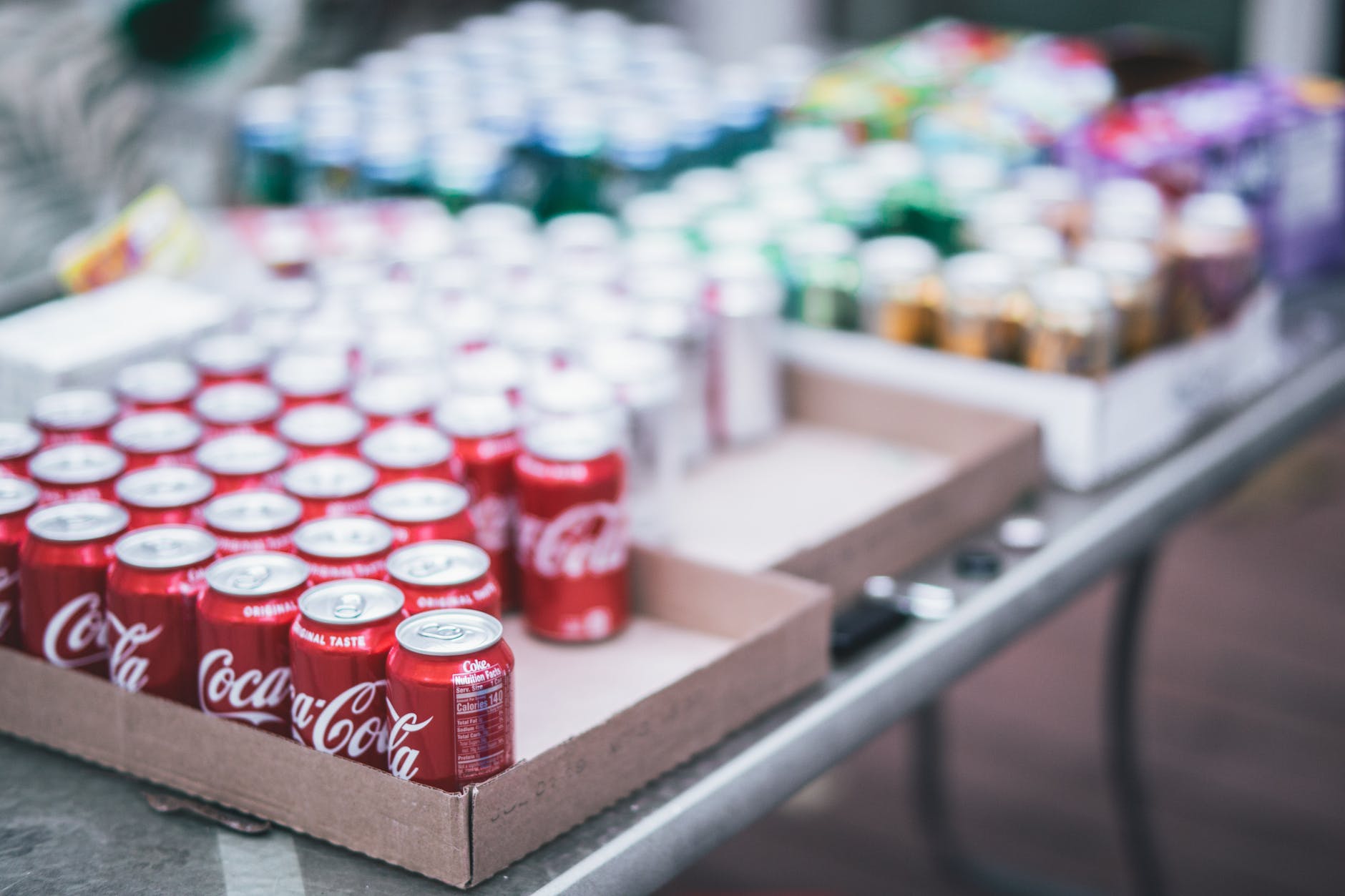
This question seems like it should have a simple answer. However, the answer is more complicated than it would seem. Let’s explore.
Canned Soft Drinks and Beverages
Canned sodas are hermetically sealed and are bottled with bacteria free water. This means that high heat won’t grow anything undue. However, sodas have flavorings, artificial and sometimes natural colors and sugar or artificial sweeteners. Depending on these ingredients, sodas can deteriorate if left in hot conditions.
Canned sodas are “bottled” (or canned) in aluminum cans. While aluminum is heat safe, think about the aluminum foil you use to bake with, there is no problem with the aluminum itself. In fact, because the drink is fully sealed and not exposed to UV light, this method of storage with heat probably offers your best chances of retaining a drinkable beverage even after being exposed to excessive heat. If the aluminum were the only problem, this section would be over.
However, we must also consider the ingredients. The good news here is that artificial and natural colors are generally heat stable. Again, think about baking with food coloring. Colors don’t degrade under 350ºF / 176.7ºC baking temperatures, which is far higher than the heat your car interior should ever reach.
The same goes for soda flavorings. Most flavorings are designed for baking purposes which also reach high temperatures needed for baking.
What’s ingredients are left?
Sweeteners and preservatives. Depending on the sweetener, it might or might not be high heat stable. For example, it is known that Aspartame (aka NutraSweet) is not high heat stable. As temperatures increase, Aspartame begins to break down into components such as methanol. Keep in mind that Aspartame is made up of 10% methanol, 40% aspartic acid, and 50% phenylalanine.
Methanol is a highly toxic substance that, when heated above 86 degrees F (as it is in your body), is metabolized into formaldehyde (embalming fluid) and formic acid (the poison in fire ants).
https://www.downtoearth.org/articles/2009-03/13/aspartame-potential-risk-lurking-your-cabinets
As the above quote states, at 86ºF / 30ºC is when methanol begins to break down into formaldehyde and formic acid. This temperature is well lower than the temperatures which can be reached inside of a hot car. During a hot summer day, temperatures in a car can reach temperatures 20-30ºF / 5-10ºC hotter than the outdoor temperature. For example, a 90ºF / 32ºC ambient outdoor temperature can see temperatures rise to between 110ºF-120ºF / 43.3ºC-48.9ºC inside of a car.
If a beverage you’ve left in the vehicle contains Aspartame, it may not be safe to drink if the can has reached these high temperatures. For canned drinks, it takes between 30 minutes up to 1 hour to heat a can up to these high temperatures once in a vehicle.
Beverages that contain other sweeteners, such as saccharine, sugar, stevia or agave, are considered heat safe sweeteners. Sucralose (aka Splenda) claims to be heat safe, but may or may not be. If a drink contains Sucralose, you might want to taste it first. If the drink is no longer as sweet as you expect, a portion of the sweetener may have broken down in the heat and it’s not recommended to drink.
Bottled Drinks
There are two different types of bottles: glass and plastic.

Glass
Glass bottles are safe to drink so long as it contains heat safe ingredients. However, if the bottles have been exposed to UV by sitting in direct sunlight, some of the coloring might have faded and flavors may have changed. I’d be cautious if the bottle has been sitting around for hours in sunlight. I’d strongly suggest a smell and taste for any bottle which has been sitting in UV light for longer than 1 hour. If the bottle has been sitting for an hour, then it shouldn’t be problem. Always use the nose and taste test to determine suitability for drinking. If it doesn’t taste right, spit it out, then toss it out.
Plastic
Plastic bottles are different beast. Plastic bottles can leach plastic and chemicals into the beverage after sitting in a hot car. This goes for water bottles and flavored beverages. If your beverage has been sitting for hours in direct sunlight in a super hot car, toss it out. Don’t risk it. It doesn’t matter if the ingredients are heat safe. It’s the plastic leaching that becomes the problem with plastic bottles.
Wine, Beer and Spirits
Wine is a drink that is best kept at room temperature (i.e., at or below 78ºF / 25.6ºC). If wine bottles are exposed to higher heat, such as 85ºF / 29.4ºC or hotter, the bottle of wine can be ruined. By ruined, the flavors change, the subtle aromas are lost and the bottle may increase tannins, making the wine unpalatable. The longer the wine remains at a high temp, the more the wine may turn into a flavor resembling vinegar. If you open a bottle and it tastes of vinegar, the bottle is bad. This goes for all wines including white, red, rose and bubbly.
Beer, like wine, will also sour and go bad when stored above room temperature for long periods. Unlike wine, beer is carbonated. This goes for sparkling wine and Champagne as well.
If you’re paying a lot for your wine or beer, you want to keep it in your car near an air conditioning vent, then remove from the car as soon as you arrive home. If it’s an especially hot day and you need to do a lot of running around, I’d suggest bringing a cooler with you and placing these into a cooler with ice. That, or shop for these items last.

Spirits, such as Tequila, Vodka and even Liqueurs can go bad in high heat. This is especially true for liqueurs like Bailey’s Irish Cream, which does contains dairy cream. Anything containing dairy should always be stored refrigerated once opened. However, Bailey’s Irish Cream remains shelf stable if unopened and is stored under room temperature conditions.
Changing Flavors
Regardless of whether a drink contains high-heat safe ingredients, sitting in super hot conditions or subject to UV exposure for long periods isn’t good for any food or drink. If you accidentally leave a case of soda cans in your car for three days or longer, I’d suggest tasting one first. By tasting, I mean just that. Taste and spit. If it tastes at all funny, then the cans are bad.
When buying drinks, it is suggested to take them into an air conditioned climate as soon as possible. Sure, you can run around for a little while shopping, but be cautious for how long. If you know you plan to shop the entire day for hours, then plan to bring a cooler and place beverages and food items into the cooler to keep them stored properly and safely.
Explosions
Carbonated beverages have one other problem with high heat. As more and more manufacturers reduce costs, they tend to make their product containers (cans and bottles) as thin as possible. These containers are safe when stored in appropriate conditions. However, under high heat conditions, these containers can weaken and burst.
As high heat creeps in, this weakens a plastic bottle or can, which can lead to an explosion. Safety is a concern when buying a case of cans or plastic bottles and choosing to leave then in a hot car. Glass bottles should be safer in regards to exploding, but the beverage itself may not survive high heat conditions.
Summer Safety Tips

Always store cans and bottles in a cooler, if at all possible. If you know you plan shopping at a number of stores, plan to bring a cooler with ice. This way, you can store cans and bottles in the cooler while remaining out and about. As our summers seem to be getting hotter and hotter each year, carrying around a cooler becomes ever more important.
If you’re buying expensive beer, wine and spirits, then you definitely want a cooler. There’s no danger in storing wine at ice temperatures for a short time, but there is definitely a danger from wine becoming too hot. Same for beer and spirits. For soda or bottled water, it’s fine to remain in the car for a 20 minute drive home, but if it needs to remain in the car for hours, then you’ll want plan a cooler for these as well.
As we move into the hotter days of summer, plan to spend for and use a decent cooler for those days when you need to be out and about for longer than a few hours.
↩︎
Favorite song of the week: Nuclear by Mike Oldfield
Song to be featured in the game Metal Gear Solid 5: The Phantom Pain
American Idol: Failure to launch (artists)
While I understand the hype about this series (the competition and all), I don’t really understand why this show continues to exist. Yes, we go through each season and whittle down contestents to the final two. But, after the winner is chosen, then what? Oh yeah, they get a recording contract. What happens after that?
Spotting Commercial Viability
The ‘judges’ (and I use this term loosely) seem to think they know what’s best in the ‘pop music biz’. Frankly, if they could discover real talent, they would be working for a record company locating and signing talent right and left and not hosting a silly variety hour show. But, here we are… and here they are. So, I must honestly question the sincerity and realism of this show. The whole thing is staged, yes, to find someone who can sing. But, it’s really there as a money maker for whomever is producing that show. The underlying values aren’t to get someone signed to a contract. The real point is to put on a show. And, thats what they do, for better or worse.
Judges
It’s funny that they pick judges who are has-been recording artsts and supposedly A&R people like Simon Cowell. What’s funny about Simon is that his ability to pick talent has been extremely spotty. For example, he signed and produced Westlife. Westlife is a boyband that’s a meager shadow of N*Sync and The Backstreet Boys at best. What’s even more funny is that THAT is really his BEST claim to talent selection outside of Idol. Every other artist beyond that isn’t even worth mentioning.
So, how do these washed-up has-beens end up judging a show that supposedly prides itself on selecting quality talent? Well, let’s examine Idol more closely.
Winning Contestants
Since 2002, there has been (in order), Kelly Clarkson, Rubin Studdard, Fantasia Barrino, Carrie Underwood, Taylor Hicks, Jordin Sparks, David Cook and Kris Allen (most recently). Arguably, the biggest name to come out of the Idol circle is Kelly Clarkson with Carrie Underwood as a solid second. The rest, well, what about them? They may have produced records, but few appear to be listening. This isn’t a good track record for Idol.
Let’s consider Kelly Clarkson for a moment. Even she has had her ups and downs (mostly downs). While Kelly has a resonably strong voice, the question remains just how commercially viable it is. With a name like American Idol, you’d think that Kelly Clarkson would have taken the pop crown away from the likes of Madonna and Britney. Yet, while Madonna’s star is fading, Britney has taken the crown over and firmly holds it as far as pop acts go. Britney wasn’t even ‘discovered’ on Idol. More than this, Kelly has a stronger voice than Britney, yet you see what that gets you. Kelly isn’t even close to being in Madonna’s league and, while Britney has her own personal issues, her music producers provide a much better music experience than most of Kelly’s efforts.
Outside of these ‘winners’, we also have non-winners like Jennifer Hudson (who’s at least as well known as Kelly Clarkson and she wasn’t even a runner-up) and she’s also an overall more complete ‘star’ than Kelly. Then there’s David Archuletta, Chris Daughtry and Clay Aikin. These four people are the proof that the judges cannot pick winners. In fact, these 4 people should have won Idol, but didn’t. Yet, they are still successful on their own.
Track Record
Just looking at Idol’s track record, you can see more of the Idol winners have failed to be commercially viable than have been successful (Fantasia who? Jordin who? David who? Rubin who? Taylor who?). The point here, that the judges clearly are not capable of spotting talent. Even when someone has real singing talent, is young and good looking, clearly that’s not everything that’s needed. Otherwise, everyone graduating from Idol would have become an instant success… which, of course, has not happened.
I understand the fervor over this show and I understand that the point in watching is more about the competition than the outcome. But, isn’t the outcome why we come to watch? Don’t we actually expect the winner to become popular, make great music and usurp the pop crown from Britney? After all, that’s what Idol started out promising.
Idol is Flawed
The premise of Idol is flawed. The barometer by which they choose winners is in versatility in singing already commercially successful songs. The real barometer of talent is both in songwriting and performing. Even though someone has a great singing voice, that doesn’t automatically make them a pop sensation. Becoming a ‘Pop Idol’ comes with singing unique new songs. Songs that have not been heard before. Better yet, it proves talent when the person can both write and sing their own music. Artists like Prince and Sarah McLachlan are capable of this. To me, this is talent worth finding. But, today, commercial pop music is more about the look and voice than it is about songwriting. Music producers are far too prone to run to Taxi and buy a song or commission their favorite songwriter to write a song rather than having the singer write something.
For me, Idol would be a much more rounded show if they actually required the singers to also write all of their own material. This would be a lot more time consuming, but requiring this would also show the true talent of the artist. This premise would show a contestant’s ability to write music under pressure and, at the same time, perform that music admirably. Using this model in the show would likely have changed both the contestants in the show and the outcome of the winners. I would also have a lot more respect for the winners of the show. I also believe the winners would have been far more commercially viable as artists than anyone Idol has, so far, produced.
Idol’s days are numbered
We are now going into the 9th season and I believe this show is wearing out its welcome. Talent shows like this do come and go, so I expect this show go packing probably in one to two seasons. If it lasts beyond 10 seasons, I’d be highly surprised. I’m honestly surprised that it has survived this long with its dismal track record of spotting viable commercial talent. Yes, the winners can sing, but can they produce an album that people want? In 8 seasons, I’d say the answer to that question is unequivically no. The spectacle of the live performance is great, but it doesn’t mean the contestant has what it takes to succeed in the music business. Clearly, Idol has failed at it’s primary goal.


 Random Thoughts - Randocity!
leave a comment