Facebook Puzzle: 6÷2(1+2)
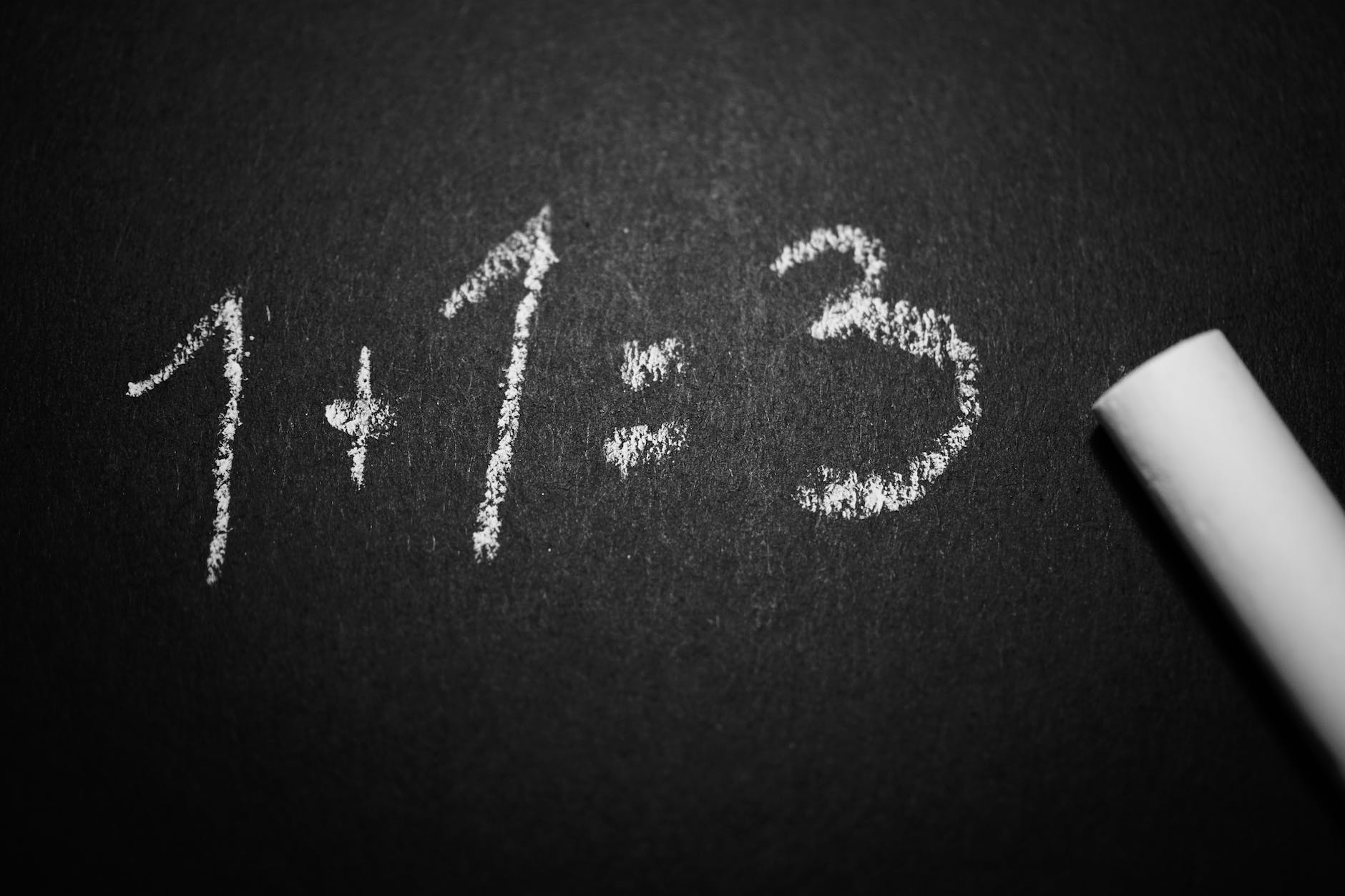
Many puzzles that pop up on many social media networks are math problems. One of these older math “problems” is 6 ÷ 2(1 + 2). Let’s explore the difficulties and controversies surrounding this math problem.
PEMDAS, BODMAS, BIDMAS & BEDMAS
These are all acronyms for more or less the same ideology. This ideology is intended to help students solve math problems logically. Unfortunately, PEMDAS and its similar ilk all have problems when it comes to certain advanced mathematical constructs… constructs that are, in fact, intentionally ignored in PEMDAS for the sake of simplicity.
PEMDAS stands for Parenthesis, Exponents, Multiplication and Division, Addition and Subtraction. BODMAS, BIDMAS and BEDMAS all utilize this same ideology, using alternative words to describe these approaches to logical math problem solving. Interestingly enough, BODMAS, BIDMAS and BEDMAS all seem to place division before multiplication, unlike PEMDAS. However, multiplication and division, at least according these problem solving helpers are supposed to be equal and performed strictly in order from left to right. In effect, the ‘DM’ order in BODMAS (and similar) or ‘MD’ order in PEMDAS make no real difference because the math problem itself dictates the order in which to solve the problem, left to right. In other words, the order takes precedence, so the ‘DM’ or ‘MD’ order listed in these helpers don’t matter.
Why PEMDAS or similar?
The PEMDAS and similar helpers were created to help grade school students solve basic math problems. This would include simple math problems like 10 ÷ (5 – 3) or (5 + 2 – 1) x 2. For those unfamiliar, the ⇝ symbol should be read as “which leads to.”
For the first problem 10 ÷ (5 – 3) that would be solved by the helpers with the following:
Parentheses first: (5 – 3) = 2 ⇝ 10 ÷ (2)
Next drop the parentheses, then solve for MD/DM: 10 ÷ 2 = 5
Answer: 5
For the second problem (5 + 2 – 1) x 2
Parentheses solved first with + and – solved inside parens l-to-r: (5 + 2 – 1) = (6)
Drop parens, multiply 6 x 2 = 12
Answer: 12
These above are simple math problems that don’t involve one key concept included in the somewhat more advanced math problem 6 ÷ 2(1 + 2). The key math concept included is …
Multiplication by Juxtaposition (aka Implied Multiplication)
Multiplication by Juxtaposition adds a level of complexity that PEMDAS and BODMAS can’t always resolve. Let’s understand why.
Multiplication by juxtaposition is a concept that gets introduced during a student’s first Algebra class. Prior to taking algebra, the concept of implied multiplication isn’t involved. PEMDAS wasn’t designed to adequately support this advanced math concept. PEMDAS, thusly, isn’t the whole truth. PEMDAS is a ruleset that works for many math problems, but not for ALL math problems. This is why PEMDAS trips up many people when attempting to use it on problems like 6 ÷ 2(1 + 2).
Before getting into this specific math problem, let’s understand a few more implied multiplication examples. An implied multiplication example is 



The point here is not to get deep in the weeds of algebra, but instead to understand the intricacies of multiplication by juxtaposition when used in combination with PEMDAS. Juxtaposition is illustrated in problem like 
Juxtaposition is a method of writing equations without the need to include the * or x symbols which explicitly state multiplication. When choosing to use juxtaposition instead of explicit symbols, this is what is called using a “style guide” for mathematical equations.
Like map legends are used to describe such information as color coding and distances on maps, style guides in mathematics describe the proper order that an equation needs to solved. Why is a style guide important? Because of the ambiguities and disparities between PEMDAS and writing equations using these shorthand methods, such as juxtaposition.
Juxtaposition is intended to help simplify the printing of equations in printed texts as well as reduce the clutter when building such complex equations. When complex equations are written, then, a style guide reference discussing precedence, levels and order of operation is imperative. Without this information printed alongside a text book, this would leave the reader in the dark, forcing the reader to utilize their own knowledge to attempt to solve the written problem.
This is exactly the problem with the Facebook problem in 6 ÷ 2(1 + 2). Because no style guide is offered, this math problem has two valid solutions; solutions that depend on which style guide you are familiar. If you subscribe to only the PEMDAS helper style guide, the answer is 9. If you subscribe to the vast majority of scientific and technical literature style guides used by STEM professionals, the answer is 1.
Let’s understand why
6 ÷ 2(1 + 2) can be written in effectively two different ways depending on which style guide you choose. The PEMDAS style guide implies the following style should be applied:
6 ÷ 2 * (1 + 2), alternatively written as 
Mathematical professional style guides would apply the following:
6 / (2 * (1 + 2)) (adding another set of parentheses for clarification)
Let’s understand these styling differences.
Under PEMDAS styling, the equation is understood as:
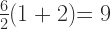
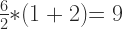
Using scientific and engineering style guide rules, the equation is understood as:

These two equations are markedly different both in their appearance, but also in how they are solved. Under PEMDAS styling, the answer is clearly 9. Under scientific styling the answer is obviously 1.
The question is, why are there two different style guides here?
Two Style Guides?
PEMDAS (et al) is a rudimentary style guide intended to teach grade school children mathematic basics. PEMDAS is not intended to carry the child’s mathematical knowledge all the way through their life. Think of PEMDAS like a set of training wheels on your bike. The training wheels keep you upright to get the hang of balancing on your bike. Once you’ve mastered the art of balancing, the training wheels are removed.
PEMDAS is simply a set of training wheels that eventually need to be removed.
To be perfectly fair, PEMDAS should really be written as 

This updated 4 component notation means MD are at the same level and equal priority, but evaluated in order left to right. AS follows the same logic as MD, but only after MD have been resolved.
The difficulty with PEMDAS is that it was designed to be used by students NOT working with either multiplication by juxtaposition (implied multiplication — an algebra concept) or by using a slash (/) in place of the division (÷) symbol (also an algebra concept). PEMDAS expects the primary four simple operators to be explicitly used: + – ÷ x. PEMDAS breaks down when advanced operators are used because PEMDAS has no proper solution when these advanced mathematical concepts are included.
The reason for these existence of these two style guides goes back to the history of order of operations, long before even PEMDAS was coined. Most engineering and mathematics texts define that multiplication by juxtaposition is to be handled BEFORE division. In PEMDAS terms, that means the acronym becomes 
instead of the PEMDAS understanding as
What does the division symbol ÷ mean exactly?
If you look at the ÷ symbol, it has a dot on the top and a dot on the bottom. As an abstract visual, it means “divide by”. As a literal symbol, it means move the left argument to the numerator and the right argument to the denominator. This turns 6 ÷ 2 into 

The ÷ symbol also has a sibling, the forward slash (/). This slash symbol can be used as a drop-in replacement for the ÷ symbol. When a slash is used, this then represents the two numbers as a sort of sideways or horizontal fraction, like 6/2. In STEM professional circles, both the ÷ and the x symbols are exchanged for alternatives when writing equations. Think of these changes as mature upgrades to mathematics. As we grow and learn, we adopt shortcuts which make life easier. In mathematics, juxtaposition and slash are two mature “shortcuts” in the way that equations get written. Instead of writing an equation as 6 ÷ 2(1+2), it would be written as 6/2(1+2) or if using TeX, it would appear more formally as 
Why are there TWO answers?
Good question. One that needs all of the above understanding to address. Style guides vary. The PEMDAS style guide given to early grade school students is intended to be used as a loose style guide only. Meaning, given our rudimentary understanding of mathematics at the time, PEMDAS is a helper tool that “guides” us in the right direction. PEMDAS isn’t an end-all be-all idea. It is simply a helper tool. If mathematical equations ended at the type given to us in grade school, PEMDAS is all that we would ever need.
However, moving into Algebra and higher mathematics like Trigonometry and Calculus, mathematical nomenclature must become more refined and mature… and so it does. In that goal, what PEMDAS taught us was basics. What we learn in advanced mathematics classes overrides what we learned with the basic PEMDAS logic.
Because math style guides acknowledge that there are more priority levels than the simple PEMDAS understands, our knowledge of PEMDAS must expand into that bigger understanding of more priority levels. We must take off the PEMDAS training wheels and let go of the past. We must acknowledge that there is more to mathematics than PEMDAS.
PEJMDAS is a good first step, but it doesn’t explain everything. For example, why does PEMDAS view the equation 6 ÷ 2(1+2) as 
The answer to this is really pretty simple. PEMDAS places ALL multiplication at the same level and priority as under the M. Because PEMDAS isn’t really aware of juxtaposition rules, it mistakenly moves even juxtaposed multiplication under M. PEMDAS then mistakenly turns the equation into
The problem is that PEMDAS is taught at a time in school when juxtaposed multiplication isn’t even a concept in mathematics. As a result of juxtapositioning not being understood at that moment in a student’s mathematical learning, the student would then assume, based on PEMDAS, that ALL multiplication must roll up under that M… that’s assuming the student even understands or had been previously explained about implied multiplication. Most students learning early mathematics would likely have to ask what 6 ÷ 2(1 + 2) means. More specifically, why is a 2 sitting directly next to the (1 + 2) parentheses without an operator symbol and also what it means in this equation? This is where juxtaposition multiplication would have to be explained to the student.
In reality, in many advanced academic mathematical style guides, something that a grade school student would not be aware of, these documents state that multiplication by juxtaposition must be calculated BEFORE division. With this academic rule in place, that changes 6 ÷ 2(1 + 2) into the more widely understood and accepted
Why is there even a question here?
Many insist that 9 is the correct answer. Yet, just as many insist that 1 is the correct answer. The disparity between these two camps comes because of one simple disagreement in math priority; a math priority that is defined by many academic and professional texts. Even many calculators have adopted this math priority rule as genuine and valid. The disparity whether multiplication by juxtaposition happens BEFORE division or whether it happens only when all general multiplication occurs in an equation is what gives rise to this equation’s dilemma.
When equations are not written in a left to right format, such as in
Why? Because many academic style guides adopt the rule that when using a slash (/) to describe division in an equation, equations like 6 / 2(1 + 2) become the same as
For example, 6 / 2 * (1 + 2) translates into 
Standards in Mathematics
What this article all boils down to is a failure to create a common ruleset of standards that everyone across all mathematical areas agree to. Thankfully, all areas of STEM professions agree by including style guide information when applicable. These style guide rules prevents confusion and misinterpretation on how to read and solve equations in a professional setting, such as in engineering, architecture and other critical areas.
What 6 ÷ 2(1+2) uncovers is the lack of generally agreed upon standards outside of professional environments. Grade school teachers and students believe that 9 is the correct answer because they’ve never been taught and have never used the style guides used by STEM professionals. On the flip side, STEM professionals don’t use PEMDAS as their leading style guide ever in their professional careers. Instead, because academia has defined specific priorities and rules regarding multiplication by juxtaposition, rules which many calculator manufacturers have adopted, this Facebook math problem only serves to uncover who was taught what.
Someone probably realized the disparity between the guide a STEM professional uses and the PEMDAS (et al) style guide(s) grade school teachers use. Then, this person decided to exploit this situation by creating this equation dilemma as a joke.
In reality, this equation only serves to show us all that consistent standards don’t exist even in mathematical circles. More than this, it shows that grade school math alone isn’t enough understand that there are two answers to this equation, with both answers being completely correct. In other words, this equation intentionally serves to disclose who follows PEMDAS and who follows more advanced mathematical style guides.
Calculator Dilemma
Some calculator manufacturers support PEMDAS, but many more support PEJMDAS as described above. As a result, unless you explicitly read the calculator user manual before you buy it, you may not understand why your calculator seems to be giving you the wrong results. In reality, it’s not giving you the wrong results. It’s giving you those results because of the disparity between the two differing style guides in use within different mathematical circles.
What does this all mean?
It means that there is no consistent teaching of the order of operations rules across all math classes across the globe. Because there are effectively two camps of people who were taught different orders of operation at differing priorities, your best bet is to write unambiguous math problems; problems that can’t have two potential answers. To do this, you’ll need to be aware of the above disparity in how order of operation is taught in mathematics in differing locations and under various instructors. Until you acknowledge that there is inconsistency in this area of mathematics, you can’t work around this problem.
The way to avoid such ambiguous problems as 6 ÷ 2(1 + 2), you can either write the problem more specifically like
If you are one of those stubborn folks who believes that there is and can only ever be once correct answer. Sorry to pop your bubble, but in this reality, there are technically two answers based entirely upon which style guide you adopt and/or which teacher taught you mathematics.
Are you a student?
A small disclaimer here for students. If you’re a student still in school reading this, know that there are two answers…. but also know that you need to follow your teacher’s lead. If your teacher is teaching you the “answer is 9” approach, always follow your teacher’s lead. The same goes for teachers who adopt “the answer is 1”. You want to get the best marks and that means catering to your math teacher’s approach. Know that there are two approaches that can work here, but don’t use the counter approach with your teacher unless you enjoy fighting with your teacher over your marks. As a general rule of thumb AND to make your school life a whole lot easier, always cater to your teacher’s wants, requests and whims to get the best marks and make them happy… even if you recognize those whims to be stupid.
As a student, be comfortable in your knowledge that you have recognized there are sometimes multiple ways of doing things. Know that there is absolutely nothing wrong in recognizing and booking this alternative knowledge. However, there is also no reason to fight with your instructors over knowing this information when it’s absolutely not necessary to get good marks in your class. Yes, you can be smart and know something your teacher may not. It’s also not necessary to pick a fight with your teacher over that knowledge. You never know how a teacher may respond when presented with information that’s contrary their lesson plans. You may find that many respond adversarially. It’s simpler to avoid this adversarial problem and go along with the lessons as written.
This is the trick to getting through school unscathed while also acknowledging the downsides and limitations of school curriculum. If you’re really interested in the above topic, wait until you’re in college to write and publish a paper on this very topic. Doing it this way, you can get college credit for disclosing such problems in your paper, but you can also get good grades from your teachers at the same time without being adversarial involving their teachings. Just make sure to write it for your English writing class and not as a paper for your math instructor, who might end up taking the paper far too personally or as an insult. It’s never a good idea to insult instructors, even if it’s through a well written, well researched paper.
Recap
To recap this article, the two answers for 6 ÷ 2(1 + 2) are 1 AND 9 respectively depending on which style guide you choose to adopt. Both style guides are entirely valid. Like map legends define what a map is telling you, a math style guide tells you how to solve any specific math problem.
If you are a student taking a mathematics class, only use the style guide your teacher permits. If you follow their style guide, you will always solve problems they give you with the correct answer. As for calculators, make sure the calculator you choose to buy also follows your instructor’s style guide. That means reading the calculator manual and, if possible testing the calculator. If the calculator doesn’t work as expected, return it for one that follows your teacher’s style guide.
↩︎
Rant Time: Twitter vs. Tucker Carlson
 Tucker Carlson, the former derisive, divisive and dishonest Fox News host and puppet for right wing extremists, is now seeking to set up shop on Twitter with Elon Musk’s blessing. Let’s explore.
Twitter’s Demise
Elon Musk paid $44 billion for Twitter! That’s a substantial number. While shareholders and the former Twitter board got to laugh all the way to the bank, Twitter users and the Twitter platform itself got the shaft.
There was (and still is) so much wrong with this deal, I don’t really even know where to begin. Suffice it to say that Elon Musk, a self-professed so-called slightly right-leaning independent (according to his own words), is now running Twitter. However, just today, May 12th, 2023 and after this article was published, Musk announces a new CEO in Linda Yaccarino, a former advertising executive with NBC Universal (more about this at the bottom of the article). Unfortunately, what Musk is doing with Twitter does not at all jibe with this own professed political leanings. In fact, Musk has ultimately made Twitter a completely safe haven for right wing extremists, letting them run roughshod all over everyone on the Twitter platform.
While Jack Dorsey’s team tended to kick any and all extremists (of any persuasion) to the curb by suspending and banning them, Musk has fully welcomed each and every one of them back with arms open wide. That doesn’t say slightly right-leaning behavior. It is most definitely not an example of someone who is an Independent. That behavior shows Musk to be has hard right leaning as just about any other right wing extremist MAGA Republican, I’m looking at you Marjorie Taylor Greene.
It doesn’t end with politics, though. Musk ousted massive numbers of Twitter staffers, leaving only a very small skeleton crew to actually keep Twitter alive. There’s definitely not enough staffers to keep up with abuse complaints or kicking extremists off, let alone properly manage Twitter Blue. With as few staffers as are left, I’m surprised Twitter is even online and working.
Twitter Blue
That tiny infamous Blue Check mark  next to someone’s name formerly meant that that person is who they say they are. Musk’s move to the $8/mo plan lets anyone buy a without any verification. This means that the formerly trustworthy check mark today means absolutely nothing, other than someone is forking over $8/mo to Twitter. The no longer states anything about trustworthiness. In fact, that mark is now more likely to mean the person isn’t actually who they say they are.
Twitter Blue under Musk has done almost everything to dissolve Twitter’s trust. Under Dorsey, trust was everything. Under Musk, trust means absolutely nothing. Why?
Twitter’s Insolvency is Looming
Musk has already predicted that a bankruptcy is still likely with Twitter. With that looming bankruptcy, Musk is trying anything and everything to make money in any way possible. From that $8/mo check mark to the now $42,000 a month fee for API access. For every money making opportunity that Musk attempts to dream up, each “idea” (ahem) results in ever more people and businesses abandoning the Twitter platform. For example, WordPress has dropped Twitter from its social media sharing connectors due to this price hike. What business in their right mind would pay Twitter $42,000 a month to access Twitter’s API? When it was free, sure. At that kind of money? No way, Elon!
It is then no surprise that as rats continue to leave that sinking ship, insolvency for Twitter looms hard on its horizon. One thing is certain, $8/mo can’t sustain Twitter after Musk literally saddled Twitter with billions in debt. Worse, how many businesses are likely to fork over $42k a month for an API? Very few. Exactly how many billions in debt is Twitter? Possibly as much as $30 billion, perhaps more. A company that relies almost 100% on ad revenue for income can’t possibly pay down $30 billion… pretty much ever. Twitter Blue and API fees won’t work. Twitter’s days are most definitely numbered.
Desperation Level: High
All of the above is the exact pretext needed to understand how and why Tucker Carlson can take advantage of Twitter’s and Musk’s desperation. Musk is desperately wanting Twitter to survive. Unfortunately, Musk can’t afford to continue to throw infinite money at this albatross indefinitely. Enter, Carlson.
Carlson is now dangling a huge carrot in front of Elon Musk, a carrot that Musk seems unable to avoid chasing. I’ll give Tucker Carlson one thing here. He’s definitely a master manipulator. If he can manipulate Musk into endorsing a new Tucker Carlson show, that’s tantamount to a partnership with Twitter. Talk about kicking someone when they’re down.
Because Musk is now so incredibly vulnerable AND desperate to have Twitter make money in any way possible, Musk is seriously considering bringing one of the foulest, lying, distasteful, sack of 💩 entertainment hosts to his own platform. It would be one thing if Tucker Carlson had worked for the Onion. At least you’d know that Carlson’s rhetoric was supposed to be funny and satirical. Unfortunately, Carlson’s crap is just that, absolute crap. He lies incessantly, yet claims it all in the name of truth. Perhaps Carlson lies even more than Donald Trump? 🤷♂️ I know that that would be difficult, but Tucker Carlson is definitely giving Donald Trump a run for his money when it comes to spewing lies.
Yet, here we are. Elon Musk is seriously contemplating allowing this sack of 💩 entertainment host to continue his old Fox News show, now right on Twitter. Let’s just hope that Fox News sues the 💩 out of Tucker Carlson over breach of contract and prevents that.
Let’s be perfectly clear. Tucker Carlson is about as far right wing of a MAGA extremist as an entertainment host can get. By Musk endorsing and allowing such a right wing extremist onto Twitter, which further allows Carlson to continue his pro-Russian propaganda along side his insane MAGA rhetoric, this gives this man a voice who absolutely 100% DOES NOT deserve it. Disinformation never deserves a platform. Tucker Carlson wholly embodies disinformation. He didn’t deserve having this voice on Fox News and he most certainly doesn’t deserve to have it on Twitter now.
Sullying Twitter
Twitter, the once shining star of reasonably high quality trusted social media has, as of Tucker Carlson’s first show, devolved into a 100% right wing MAGA extremist pro-Russian propaganda platform. All that’s left is to get Donald Trump back over there to spout his lies.
It’s surprising to me that Twitter has any users at all at this point, other than MAGA Republican extremists. Twitter wasn’t even supposed to be a political platform, yet Twitter has now become a 100% political shit pit. You can’t even be on the platform without MAGA Republican extremist bullshit appearing in your stream nearly every other tweet. You can’t even block that bullshit. You are forced to see it whether you want it or not.
Let’s hope that BlueSky Social, Jack Dorsey’s burgeoning social app (currently in Beta testing), will take over where Musk’s Twitter has now completely failed. Let’s hope that BlueSky Social can also manage to put all of this political bullshit back into its proper place, like Twitter formerly did before Musk’s meddling.
Right Wing Extremism
Some readers might be thinking that I’m only calling out right wing extremism here. I’m not. Left wing extremism is just as major of a concern on social media. Both extremist viewpoints need to be tempered and tamped down. Extremist viewpoints need to be kicked to the curb on EVERY SINGLE social media platform. These extremist viewpoints tend to bring out the problem children and cause problems for everyone, everywhere.
So then you may be asking, “What about the 1st Amendment — Free Speech?” What about it? These platforms are privately owned by non-governmental entities. Free speech doesn’t apply to corporations. Free speech provisions of the U.S. Constitution only apply to the government, government workers and government operated entities. What does apply to these privately owned corporations and applications is the Terms and Conditions and Acceptable Use Policies. If you breach these agreements that you agreed to when you signed up, you are banned. That’s the end of it.
If you want to practice extremism in any form, do it somewhere else. I, and many others, certainly don’t want to see your lies, propaganda and conspiracy theories. This applies to ANYONE in any capacity, whether a government worker, a congressional representative, a celebrity or a nobody. You breach the agreement, you get banned.
Let’s hope that BlueSky Social takes a hard line on this because if they don’t, BlueSky will devolve into the same problem that Twitter has right now, save the huge monetary debt from Musk. Social media needs to remain open and accessible to all, not just those with extreme political leanings. If you want to rant political, go find a site devoted to politics. I don’t want to hear it on social media.
Tucker’s Show
Once Tucker launches his new show on Twitter, that’s ultimately the end of Twitter. It firmly also says that Musk and Twitter are both now in business as pawns for right wing MAGA pro-Russian extremism. Of course, Musk doesn’t care. He just wants money and he hopes that the 3 million viewers that Carlson had regularly on his Fox News program will appear and draw people to Twitter. Yeah, that’s not going to happen.
Even if Carlson does manage to draw some of his former Fox News viewers in, advertisers don’t want to be associated with right or left wing extremists. This likely means that Twitter’s remaining advertisers will dry up. Whatever revenue that Twitter is now seeing from its advertisers will likely evaporate after Carlson begins his stupidity. That’s fine, though. Let Musk and Carlson waddle in each other’s filth. If these two want to perpetuate and perpetrate that kind of right wing extremism on whatever Twitter users remain, I say go for it. I just won’t be there to see it and neither will many others. You can’t sell stuff when no one is watching.
However, I’m all for allowing Musk to let Tucker Carlson hammer in the remaining nails on Twitter’s coffin. This is the most likely outcome. If Fox News, the bane organization to nearly every other organization attempting to offer legitimate news, is unwilling to keep Carlson employed, then it must be really bad. Putting Carlson back in front of a camera to spout ever more lies on Twitter… yeah, that’s likely to see Musk head to bankruptcy court even faster.
Linda Yaccarino as CEO?
This news was dropped by Elon Musk today, May 12, 2023 after this article was published. Let’s talk a bit about this questionable move by Musk. One thing that’s absolutely certain is that Musk is a highly controlling micro-manager. It’s guaranteed that Ms. Yaccarino and Twitter will be 100% remotely micromanaged. Meaning, Ms. Yaccarino won’t be free to do whatever she wants as CEO. Musk will remain in firm control over Twitter through Ms. Yaccarino as his puppet. It was clear in this choice that Musk was looking for a puppet and a puppet is exactly what he got.
How exactly a person who headed up NBC Universal’s advertising department can leapfrog into a CEO position is beyond me. I understand why he hired her, though. Her job will be to bring advertising revenue back to Twitter. She likely claimed in her interview to have many, many contacts in her Rolodex to accomplish this. In reality, Ms. Yaccarino will most likely fail at this task solely because of Twitter’s current trajectory… to become an extremist right wing playground. It is highly unlikely Twitter can recover from this trajectory. Musk may not even want it to recover. Yet, for advertisers, they don’t want to have their products placed next to talk of death threats, insurrection, lies, alleged vote rigging, conspiracy theories and disinformation.
No matter how much Yaccarino wants advertisers to embrace right wing extremism, there is absolutely no way Twitter will gain back advertising revenue by allowing right wing extremists to become the sole reason for Twitter’s existence. Advertisers want calm, mostly peaceful, neutral places to see their advertising work. They don’t want their products to appear to endorse political rhetoric, propaganda and violence. Prediction: Yaccarino will fail as CEO. Twitter is ticking down to bankruptcy anyway. It’s surprising ANY executive would jump on board with that clock ticking down. Ms. Yaccarino is most certainly not a turnaround specialist, which is exactly what Twitter needs right now. An advertising executive cannot possibly turn Twitter around.
Even the best professional turnaround specialist likely could not turn Twitter around, of which Twitter is now drowning with billions in debt. What hope does a former advertising executive turned CEO have to turn around Twitter? None. Musk simply needs the appearance of stepping away from Twitter so that he doesn’t lose Tesla and SpaceX both. In reality, she’s likely CEO in name only and will remain firmly a puppet for Musk. She’ll be tasked to build advertising revenue, exactly what she was doing at NBC Universal. Musk will call the CEO shots and she will implement them as he prescribes. Effectively, this makes Musk an unnamed co-CEO.
This arrangement doesn’t mean good things for Twitter, however. Twitter is still on course to self-implode probably within 6-12 months. There’s almost zero chance that Twitter can pay down around 30 billion in debt in any timely fashion with or without Musk at the helm, and most definitely not with Ms. Yaccarino at the helm.
Twitter is Dead
Musk, do whatever you want. If you think Carlson and now Yaccarino will be the saviors of Twitter, we’ll have to agree to disagree on that. Musk, it seems you like learning lessons the hard way. And with that Elon Musk, don’t let the door hit you on the way out.
Buh-Bye Twitter! 
↩︎


 Random Thoughts - Randocity!
leave a comment