Do sunscreen chemicals cause cancer?
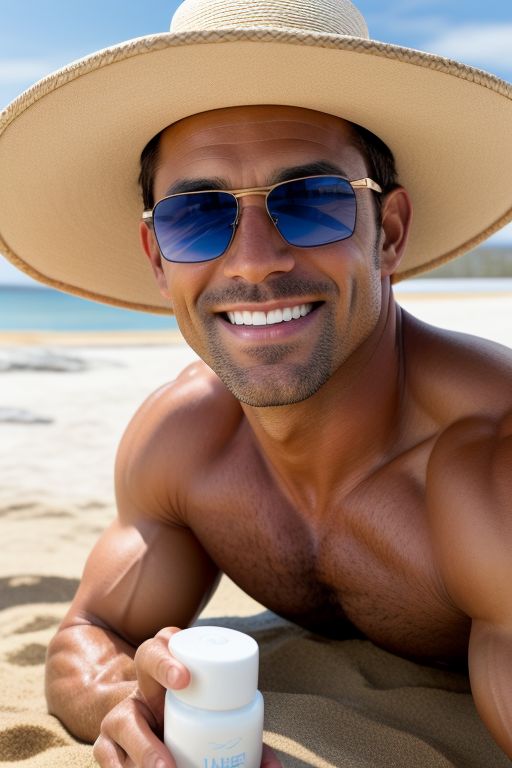 As we move into the heart of summertime, let’s check out sunscreens once again. While many medical professionals including a notible cancer hospital, the sunscreen industry and researchers all purport that the artificial compounded chemicals included and used within sunscreens do not cause cancer, the question remains, do they actually cause cancer? Let’s explore.
Which chemicals are used in sunscreen?
There are many compounds and chemicals that can be added to a lotion base that can reduce and absorb exposure to UV rays, but the chemicals don’t just stop there.
Here is a list of lab created chemicals:
- Avobenzone†
- Bemotrizinol†
- Bisoctrizole
- Cinoxate
- Dioxybenzone
- Ensulizole
- Homosalate†
- Meradimate
- Methylisothiazolinone†
- Octinoxate†
- Octisalate†
- Octocrylene†
- Oxybenzone†
- Octyl Methoxycinnamate
- PABA aka 4-Aminobenzoic
- Padimate O
- Sulisobenzone
- Trolamine Salicylate
Are there any “organic” or mineral sunscreen formulations?
Yes, but these mineral formulations may not do your long term health any favors, either. These mineral formulations have not been tested for long term repeated exposure just as the chemicals above have also not. Here’s a list of these mineral formulations:
- Retinyl Palmitate† (a form of Vitamin A — can be naturally or artificially derived)
- Zinc Oxide
- Titanium Dioxide
What else is in sunscreen?
Some sunscreens contain fragrances and other skin conditioners and oils that help the lotion smooth onto the skin and feel nice. These additional non-UV absorbing inactive ingredients may also increase the problems of …
Skin Absorption: The Trouble with Sunscreen Chemicals
The biggest difficulty with slathering any type of lotion onto your body is that the chemicals placed into the lotion can and do get absorbed into your body. The skin is not solid holdout barrier. The skin is porous and allows any substances placed onto it to eventually be absorbed into the skin, some ingredients absorb faster than others. The smaller the particles in the lotion, the easier it is for the skin to absorb.
Because sunscreen chemicals are finely milled and/or lab created, these particles can be as small as 100 nanometers in size or possibly smaller. When the sizing of such particles reaches 100 nanometers or less, this size is well small enough to transmit through the skin into the bloodstream and even cross the blood brain barrier. By comparison, a human hair is between 80,000–100,000 nanometers in width. These sunscreen chemical particles are very, very small… way smaller than the size of a hair.
Because those minerals can show up in your sunscreen in two ways: in nano form (teeny tiny particles smaller than 100 nanometers), or non-nano form (particles bigger than 100 nanometers)… A particle that minute can penetrate cell walls, breach the blood-brain barrier, and slip into the lungs. And. The smaller the particle, the more it reacts to UV radiation, forming free radicals…
Basically, the smaller the particle, the more easily it is absorbed by the body and the more it interacts with UV light, breaking those particles down into potentially problematic and/or toxic components that can also be absorbed into the skin and into the body. Once a particle is small enough to slip into the bloodstream, all bets are off for long term safety. What this means is that once these particles are swimming in your veins, they can land and deposit anywhere…. in your lungs, in your brain, in your muscle tissues, in your liver… literally anywhere.
Even in 2020, the FDA readily admitted that sunscreen chemicals do absorb into the skin (based on prior AMA research). As the FDA always does, it stops short of stating that there’s a risk posed with skin absorption. However, the FDA’s lack of risk confirmation DOES NOT state that there’s NOT a risk. It simply means the FDA has chosen not to investigate whether there IS a risk. Here’s a quote from the FDA’s statement:
[T]he FDA’s newly-published research in the Journal of the American Medical Association (JAMA) provides much-needed additional information about the absorption of the active ingredients in sunscreens into the body’s bloodstream after they are applied to the skin. It’s an important follow-up study to prior research … that showed when certain sunscreens were used at their maximal recommended use … , their active ingredients were absorbed through the skin and into the body.
The findings in these studies do not mean that the FDA has concluded that any of the ingredients tested are unsafe for use in sunscreens, nor does the FDA seeking further information indicate such.
Internal Consumption
Because sunscreen chemicals are not intended to be consumed internally, there’s no way to know the long term safety risks posed once absorbed. It’s entirely possible that some of these chemicals, like many heavy metals, never leave the body. Some of these sunscreen chemicals can even cause hormone disruption. Some of these chemicals may also break down under UV light or via other mechanisms into more dangerous particles that can be absorbed and which can disrupt the human body function.
The sunscreen industry has, unfortunately, predicated its product safety assumptions entirely on the fact that its lotion products do not enter the body or the bloodstream. That assumption has now been proven wrong. While the sunscreen industry has a large number of studies describing how effective and efficacious its lotions are when applied to the skin when wanting to avoid and limit UV exposure, there is a complete dearth of studies on whether these sunscreen chemical formulations enter the bloodstream OR whether the absorption of these chemicals lead to future long term chronic diseases. Yet, we already understand (and it has even been proven) that these very small chemical molecule sizes are able to penetrate and traverse into the bloodstream?
After all, no product manufacturer wants to point out that its products are dangerous. By remaining completely silent on whether sunscreen products do long term damage to the body, these manufacturers can continue to state that they are perfectly safe… that is, until someone produces a study that proves they aren’t safe. So far, no independent researcher has yet been willing to step up and call out the sunscreen industry on this safety fact involving skin absorption.
For this reason, this is why hospitals like MD Anderson can write articles espousing the safety of such sunscreen chemicals. In part, they’re willing to do this because if people don’t use sunscreen, we also know that risk of UV exposure causes skin cancers. However, using sunscreens for their short term UV blocking benefits can easily trick the user into thinking their skin is safe and covered, when it is not. More on this below. The question remains…
Are we trading in a single solution for more health risks?
Skin exposure UV reduction = ???
This equation is the question that needs to be answered. While using sunscreen is a short term solution in helping reduce skin exposure levels to harmful UV, it also leaves the other side of the equals sign empty. The sunscreen industry doesn’t want you to know that the other side of the equals sign likely contains a whole passel of long term diseases down the road and years later in life, simply because you slathered on sunscreen nearly every single day. Then, much much later in life, ended up with cancer anyway much later… or maybe even a worse debilitating disease? Who really knows?
You may not even be able to correlate your disease to the use of sunscreen if the two happened more or less in isolation and years apart. That’s exactly what the sunscreen industry hopes.
Here’s a recent example of such a product correlation. The talcum powder industry purported its short term health benefits of drying and preventing chaffing when used every day. People believed that assumption. Because talcum powder does offer limited short term benefits, the long term health tradeoff came once we fully realized that many brands of talcum powder also contain asbestos. Asbestos is a carcinogen and when exposed over and over, it increases the likelihood of cancer wherever that asbestos is applied or inhaled.
One might want to argue that this talcum situation was considered a matter of product tainting. Unfortunately, this is not tainting of a product. When talcum powder is mined, inevitably it is found where asbestos deposits also exist. Inevitably, manufacturers had to accept that their talcum could be laced with asbestos simply because that’s how the mines produced talc. You might, again, argue that the manufacturer could remove the asbestos, but that’s almost impossible at talcum powder particle sizes. For the manufacturer to sell talcum powder, they had to accept that it also contained asbestos. Of course, some manufacturers also denied that asbestos fact simply so they could say their product was safe. Sound familiar? I digress.
As in the talcum example above, sunscreen is now in a similar position. The short term health benefits of sunscreen obviously include preventing UV exposure over a several hour period. In that time, you’re required to reapply sunscreen every 2 hours or less depending on factors. This means, incidentally, a frequent amount of exposure and re-exposure to sunscreen chemicals continuously throughout a day. If you’re doing this for days on end, those repeated exposure sessions may cause these small nano particles to build up in your bloodstream, on your skin and within your body to unknowingly wreak havok internally.
The more often you use sunscreen, the worse it’s likely to get. This means that for the short term benefit of reduction in UV, you are very likely trading your future long term health to gain those short term skin benefits. Because no studies have been produced involving long term exposure to sunscreen chemicals, we simply have no idea what diseases might lurk in our future. Is the sacrifice of potential long term health worth the risk simply to prevent UV exposure? Only you can answer this question.
For those future diseases, will it involve cancer? Will it be mesothelioma? Will it become other chronic pain and disease we haven’t yet encountered? We simply do not know what is ultimately on the other side of that equals sign. There is definitely something on the other side and it’s not going to be pleasant, rest assured. Aging already takes a toll on the body. There’s no need to compound aging by slathering chemicals all over the largest organ on your body and then think nothing will happen.
Sunscreen in Every Day Products
This entire absorption issue is even more compounded because many daily wear products, such as cosmetics, lip balms and even regular lotions include SPF chemicals in their formulations. For women wearing makeup, these SPF formulations might offer minimal UV production, such as level 4 or 10. They might not even be broad spectrum. The problem isn’t in the UV protection factor, but the fact that women wear foundations and other makeup daily.
Makeup products also tend to stay on the skin for way longer than an average sunscreen you might wear at the beach across a day or two. Women might even refresh their makeup throughout the day adding even more exposure to SPF chemicals.
Adding SPF to regular health and beauty products adds even more to the risk of long term toxicity with these sunscreen chemicals and incidental ingredients. Yet, the cosmetic and sunscreen industries have both embraced these chemicals as if they’re some kind of health saver… when, in fact, the long term problems with these chemicals are actually unknown. Why are they unknown? Because long term studies simply don’t exist. Simply search Google for the terms ‘long term sunscreen chemical studies‘ and you’ll see for yourself that none exist. If a study exists, Google will find it.
If you’re not planning on being out in the sun for no more than 15-30 minutes in a day, there’s no need to wear SPF chemicals at all. You’re exposing your body to chemicals all with effectively no short term benefit. The only reason to wear SPF is if you need to be out in the sun for longer than 30 minutes. Even if you have a sun allergy, it’s best to cover up with clothing rather than relying on sunscreens to do that work. Clothing is much more protective than sunscreen. Incidentally, sunscreen begins breaking down the moment you put it on your skin. Clothing doesn’t break down and works so long as your skin remains fully covered.
Mineral Sunscreen vs Chemical
At this point, you might be thinking that you can avoid the chemical use situation by using mineral sunscreens instead; sunscreens which include Titanium Dioxide or Zinc Oxide. Unfortunately, while these mineral formulations aren’t lab created in the same way as a chemical like Octyl Methoxycinnamate, there’s no way to know the long term problems in the bloodstream when using these minerals sunscreens either.
Minerals are needed for a healthy diet. However, consuming too many minerals can become toxic to the body. Slathering on these mineral sunscreens regularly and constantly, you could find your body having negative reactions over time; reactions that could range from allergies to diarrhea or even worse health conditions.
With repeated exposure to sunscreens over many years, it’s entirely possible that the constant irritation to the skin from these chemicals and minerals might even trigger skin conditions up to and including skin cancer. The problem, however, with sunscreens is that it’s far too easy to blame any skin cancer that you might get on UV exposure and not blame on the chemical formulation used in the sunscreen. That’s exactly how sunscreen manufacturers play this legal situation, too. It’s super easy for sunscreen manufacturers to blame the UV for your cancer, not THEIR chemicals. Be cautious.
Best Answers?
The best answer to the above use of sunscreen is to stay out of the sun. Unless you absolutely need to be in the sun for some purpose, don’t. If you do need to be in the sun, wear high SPF clothing, hats and coverups, and even SPF umbrellas if laying out. For skin portions that do need to be exposed, use sunscreen only on those parts. That might include portions of your face and your hands only. Less sunscreen used means less problems to worry about later.
Yes, I realize that summertime is hot and wearing lots of clothing makes it even hotter. The problem is, slathering on sunscreen is a risk every time you do it. Wearing coverup clothing lets you avoid wearing sunscreen.
Again, the only reason to even put on SPF is if you intended to be out in the sun for longer than 30 minutes. If you’re only outside for 10 minutes, putting SFP lotion on is not only a waste of time and lotion, it’s a waste because you won’t get burned in 10 minutes.
Having a Tan
A lot of cancer alarmists believe that tanning is the bane of being exposed to the sun. In fact, tanning is actually just the opposite. Having a tan is actually a natural sunscreen barrier that your body produces naturally to protect your skin, assuming that you can tan. Getting the tan is where the damage occurs. Having that tan is what protects you. The faster you can get that tan, the faster that that skin melanin can begin absorbing UV to protect help your skin. Having a tan means you can remain in the sun longer than without a tan. It’s just that getting this tan is what leads to skin damage. Unfortunately, there’s still no way to activate a tan for many people without having this damage.
For those with naturally dark skin, consider yourself lucky in this regard. For those with light skin and who rely on being exposed to sunlight to get a base tan, that’s when the damage happens most.
Because every person’s tan is slightly different in intensity, each person needs to understand how long they can stay out even with their specific tan.
Tanning and SPF
One thing that’s not really well discussed is that wearing SPF works against getting a tan. While a portion of the UV does filter through even the strongest sunscreen, the point in using an SPF 50, though is to halt the tanning process. If you think you’re getting tanned safely while wearing an SFP 50, think again. Since the SPF 50 stops the tanning process, you will not get a tan wearing SPF 50. Yet, even at SPF 50 and because it’s a sunscreen, meaning some UV is still getting through, you’re still at risk of skin damage even wearing SPF 50. It’s actually worse for you because you’re not tanning and the UV is slightly getting through the sunscreen barrier to damage your skin. Yes, much lower risk than without wearing any sunscreen at all, but still the risk is not zero.
If you have a tan and wear sunscreen, your tan combines with that sunscreen to block even more UV rays than without a tan. However, obtaining that tan is the risky problem because it incurs sun damage to get that tan.
Are Tanning Beds Safer?
Unfortunately, there is no truly safe way to get a tan; not by laying out in the sun and not by using a tanning bed. Both are equally damaging in the same exact ways. However, unlike sunlight, tanning beds offer timed exposure. In the sun, it’s impossible to gauge UV rays exactly and how many you’ve absorbed. However, tanning beds offer timed and limited exposure for the duration of a session. Because a timer allows for short amounts of UV exposure, it’s much much easier to build a gradual tan without burning or peeling. Sunburn is what needs to be avoided most as a sunburn is actual visible sun exposure skin damage. Sunbeds are typically set to a time just short of burning you, giving you enough rays to trigger tanning, but not enough to actually burn.
Sunbeds, unlike uncontrolled sunlight, offer slow and steady progress without the burning… as long as that UV exposure is limited correctly and handled professionally by the operator. For this reason, tanning beds do offer a better alternative when compared than laying out in direct sun. Laying out in sunlight is problematic for a lot of reasons, the least of which is not knowing how many rays you’ve absorbed. In cloudy outdoor conditions, it’s even trickier to gauge.
It’s very easy to be outdoors for excessively long periods and remain unaware of exactly how much UV exposure you’ve received. Sun skin exposure is tricky and easy to misjudge when outdoors. A burn doesn’t show up for between 3 and 6 hours after exposure… at which point the skin gets hot, turns red and the pain and swelling begins. Before that, you may think you did just fine outdoors.
The point is, by the time you realize you’ve been sunburned, it’s already too late. Tanning beds, however, don’t usually offer enough time on the clock to burn you. It is possible to get a burn from a sunbed under certain abuse conditions (back to back sessions and/or salon hopping), but a trained operator will be able to assess your skin tone and know how much time you need in a single session. They also shouldn’t allow back to back sessions unless you’re choosing to hop between multiple tanning salons in the same day or by also sitting outdoors after having used a tanning bed…. note that you shouldn’t ever do this!
When tanning in a tanning bed, don’t use SPF lotions at all. The point to tanning in a sunbed is to expose your skin to the UV in a time limited and controlled fashion. There is no need to wear SPF when in a tanning bed. If you wear SPF in a tanning bed, you have just thrown your money away. The light effectively bounced off of your SPF and did nothing to help you gain a base tan. A professional tanning bed operator will be able to properly assess your skin tone and set the sunbed timing appropriately each tanning bed session. Many salons may even offer less intense beds and more intense beds. They will choose which sunbed is correct for you. You can always get out of the tanning bed early and stop the session if you feel that your skin isn’t reacting correctly.
These points above are all pluses when using a tanning bed in a tanning salon. Even though tanning beds are not any more safe than sitting in sunlight in terms of skin damage and exposure, sunbeds at least offer timed and controlled exposure, something that’s difficult to do when outdoors.
SPF Safety
The primary takeaway from this article should be to avoid the use of SPF lotions formulated with chemicals when at all possible. Even the use of mineral sunscreen is not a perfect alternative, but these lotions may be somewhat overall better when used in moderation. You should also avoid using sunscreen when you are not planning to be outdoors for longer than 30 minutes. Instead, cover up with clothing.
Slathering SPF lotion over your whole body is way more of a problem than using it only on your hands, neck and face when wearing sufficient SPF clothing coverups elsewhere. The best overall solution to being outdoors is to coverup as much as possible and minimally use SPF only where absolutely needed. Stay outdoors only the minimum amount of time needed. Wash the SPF lotion off thoroughly the instant you get back inside.
This article intentionally does not include naming any specific SPF lotion brands as this author believes all SPF lotions are problematic. Because there are many SPF lotion sellers out there who want to hawk their products, I will leave it up to you to research which SPF lotions might be best choice for you and your family. However, know that any use of sunscreen chemicals may be one step closer to a future disease.
SPF Lotion Failure
One thing that few ever discuss is the primary failure point of sunscreen. Sunscreen has the uncanny knack at deceiving and tricking you into thinking you’re protected when you, in fact, aren’t. What is meant here is that because SPF lotions apply and dry invisibly, there’s no way to know how well you’ve applied the lotion or how effective that lotion is at protecting you or even if you’ve missed spots.
Worse, not all SPF lotions are created equal. Some lotions require thick application and some don’t. Some use higher quality ingredients, some don’t. Because of all of these variables in lotion manufacturing, in lotion quality and, indeed, even in how well you apply the lotion to your skin, you may think you’re better protected than you actually are.
Because it takes 3-6 hours before the telltale signs of sunburn begin to show, it’s way too late to do anything about it when the sunburn begins. You can only tend to the sunburn itself using other remedies. That bottle of SPF won’t do you any good after-the-fact.
The point is, no one is perfect at applying lotions when they apply and disappear invisibly. Inevitably and invariably with sunscreen, you’re going to miss one or more spots and burn there.
It gets worse. Because the lotions break down in the sun as the UV strikes the particles, the lotions become less and less effective over time. The effectiveness wanes not just because of UV, but also because of sweating, heat, swimming and wiping your skin off. The more you do outside, the faster the sunscreen wears off. That means reapplication frequently, perhaps even more frequently than the 2-4 hour reapplication guidelines. You might need to reapply as frequently as every 30 minutes.
Reapplication
Most articles state that SPF lotions need reapplication after every 2 hours because the effectiveness of the product begins to wane due to chemical UV exposure and chemical breakdown. The difficulty is, lotions contain separate blockers for both UVA protection and UVB protection using separate chemicals. This makes a lotion known as broad spectrum. The thing that isn’t mentioned is that UVA chemicals break down at a much faster rate than the chemicals used to block UVB. This author recalls reading an article describing the exact breakdown times between UVA and UVB chemicals, but was unable to find that article to cite when penning this article.
Still, that SPF chemical break down article included a chart illustrating that UVA chemicals do break down in as fast as 15-30 minutes compared to UVB chemicals which break down at around the 2 hour mark. While the UVB chemicals keep you from burning, after 15 minutes your skin is being exposed to as much as 50-75% more UVA than when you first applied it. After the 30 minute mark, your skin might be exposed to as much as 90% of the UVA rays… where UVB might still be blocking in the 95% range. What that means is that while your skin won’t burn, you’re still receiving critical UVA damage if you don’t reapply as frequently as every 15 minutes.
UVA chemicals are apparently more volatile when exposed to sunlight than UVB chemicals. At least, that was the gist of the aforementioned article. If this author can find that article again, this article will be updated to cite it.
What this all means is to keep your SPF blocking at maximum protection for both UVA and UVB, you will need to reapply more frequently than what is recommended, perhaps as frequently as every 15 minutes when outdoors between the hours of 10AM and 4PM and especially on high UV index days. Because UVA chemicals are way more sensitive and way more volatile, you’ll need to keep this in mind as you wear SPF.
Chemical Blockers as Oxidants
Because UV chemical blockers break down as UV rays hit them, it releases heat as a result and the chemicals may turn into free radicals. As a result, these free radicals may enter your system as oxidants. What this means is that as these oxidants leach into the bloodstream and into the body, your body will need to fight off these with antioxidants. Some lotions include antioxidants to help thwart the breakdown of these UV chemicals into oxidants to bind with and help prevent them from becoming a problem.
The problem is that these included antioxidants may not be effective at catching all of the oxidant breakdown of UVA and UVB chemicals as they age and get struck by UV rays.
What this all means is that oxidants leading into the bloodstream may end up causing disease or other chronic problems. The more you use SPF lotions, the more likely these problems are to come to exist.
SPF Lotion Quality
The final issue that needs to be addressed, at least in the United States, is that SPF lotions are loosely regulated; very loosely. What this means for you as a consumer is that when you pick up a tube, bottle or spray, you have no idea if what’s included will be effective. Because of the loose regulations, lotions can be as cheap and ineffective as not wearing anything, to very effective because they’re made by reputable, honest companies.
The point is, big name brands are usually safer SPF lotion purchases than heading to a dollar store and buying their random brand names you’ve never heard of. While those lotions might be fine, they might not be. Do you want to trust your skin or the skin of your child to an unknown brand?
It’s better to stick with large name brands when buying SPF lotion. These large companies have reputations that they must uphold. They can’t risk putting out garbage, ineffective products, unlike the brands that show up at dollar stores where there’s zero accountability involved. Sure, the FDA is supposed to be regulating these, but we know how well regulation works in these industries. Everything the government does is reactive. Meaning, they wait until a company offends, then they go after them after-the-fact. That means that garbage, fraudulent, mislabeled, misleading and ineffective products can hit store shelves. With SPF sunscreen, choose wisely by sticking with known reputable brands.
Behind the Times
One additional problem is that the United States lags way behind the curve on SPF technology advancements. While the rest of the world is way ahead of the United States for SPF lotion technology improvements, the United States now lags behind because of its slow barge, antiquated approach at approving new sunscreen components. That’s partially because the United States classes sunscreens as an over-the-counter drug.
The last time the Food and Drug Administration approved any new active ingredients for sunscreen that helped to block our skin from ultraviolet rays was 1999.
Conclusion
SPF lotions have in place in blocking UV rays. However, they are not a cure-all, nor do they reduce or eliminate sun damage or skin aging as a result of sun exposure. SPF lotions are there to reduce your chances for a sunburn and to reduce your chances of get deep level tissue damage which might lead to skin cancer. However, because these SPF lotions are suncreens and not full out sunblockers (as they are sometimes called), sunscreens (as any kind of screens do) allow limited amounts of light through.
These problems eventually become apparent because these chemicals break down as a result of UV exposure and may turn into free radicals and other harmful or toxic chemical by-products on the skin. Some of these nasty by-products as well as the chemicals themselves may leach into the blood stream and into the system to cause longer term systemic damage.
Because both the SPF industry and the FDA refuse to investigate the systemic damage from skin absorption, consumers are left with no answers on how safe these lotions are for long term use. What this means is that it is entirely possible that some or many of these chemicals might, in fact, cause not only direct skin cancer, they might enter the body and cause internal cancer of organs, tissues and other types of cancers. These chemicals might be precursors that aid or encourage diseases to appear in the presence of other oxidants present in the system.
Because these SPF chemicals have not been tested once ingested, there is no way to know what level of damage they can cause once inside the body.
The safest approach to practicing sun safety is to wear high SPF clothing instead of lotions. Cover up exposed surfaces as much as possible. Use minimal amounts of SPF on exposed surfaces like the face and hands, if not wearing gloves on the hands.
Because regulators fail to provide us with adequate information regarding long term safety, not wearing SPF lotion on your body is the safest choice for long term health. Use it sparingly and only as needed. If you’re heading out for 15-30 minutes, even in midday sun, you might not even need it. If you’re planning on driving for hours on the road in a vehicle, wearing clothing to cover up might or might not work. In cases like this one, wearing SPF while traveling might be the best choice.
When choosing an SPF lotion, the mineral varieties might be the best alternative over choosing the chemical versions. Unfortunately, the mineral versions typically leave a white cast on the skin surface. Honestly, I’d rather have a white cast on my skin than worry about the long term consequences of wearing Oxybenzone on my skin.
Keep in mind that when driving in a vehicle or if you’re behind glass, UVA makes it through glass surfaces. You’ll want to find the best UVA protection you can find when you’re behind glass either in an office or in a car. Note that UV rays make it through clouds and bounce off of the blue sky itself. You don’t need to be exposed directly to sunlight. Even bounced light from the outdoors gives UV exposure.
Circling back around to answer the original question posed, “Do sunscreen chemicals cause cancer?”, there is no way to determine if long term use of SPF chemicals may cause cancer. Why? Because no studies have been produced. The reality, though, is that with enough repeated exposure to the chemicals, it is entirely possible that these chemicals may be just toxic enough to cause cancer because of years of exposure. Once again, it is recommended to rely on clothing and coverups rather than on artificial chemicals to protect your skin to support long term health. Everyone needs to consider their health not only in the now, but also in the years to come.
You don’t want to reach your 50s, 60s and 70s (and beyond) with chronic problems related to the use of SPF chemicals you used earlier in life. It’s easy enough to avoid this problem early in life by using clothing as coverups instead.
Citations
For the chemicals listed and marked with a †, check out the article 11 Toxic Sunscreens to Avoid for more information on these specific chemicals. This cited article is well written and offers much information regarding these chemicals as well as other ingredients used in sunscreen formulations.
In addition to those links included within the article, here are some additional sites to visit:
↩︎
Inside Job? Suspicious Shooting at Trump’s Butler Rally
 As the investigation into what went on at Trump’s Butler, Pennsylvania rally progresses, one question that should be on everyone’s mind is, “Was this shooting was an inside job?” There are too many suspect things involving this shooting, least of all the 20 year old suspect.
Disclaimer: This article is intended to be speculative in its nature and in handling this sensitive topic as this situation is still unfolding. Not all information is yet available. This article is not intended to accuse or defame any individual person or entity stated. This article is only intended to ask the pertinent questions that need to be asked based on what we know so far.
Let’s explore.
What happened?
Trump, as he does on the campaign trail, was holding a political rally in Butler, Pennsylvania on July 13th. Trump was at the microphone at the time speaking. Several shots rang out and Trump’s ear was allegedly grazed by a bullet along with a bullet striking and killing one rally attendee.
Secret Service then stepped in to protect the former President by attempting to hold him down. Before that happened, he defiantly raised a fist, displaying his bloody ear.
Election and All Stops
Trump will pretty much stop at nothing to secure the Presidency. He’s already made that abundantly clear with the January 6th event using his failed attempt at halting the counting of the state electoral vote. Then, as a part of that, setting up and fomenting a violent riot that followed at the Capital.
The question then remains, “Was the shooting at Trump’s Butler, Pennsylvania rally an inside job?” Let’s see if we can at least understand better why this is even a question.
Inside Job?
Again, this is a speculative article in its nature. It’s not intending to accuse anyone. It is intended solely to ask questions. Let’s get right to the meat of this article. There are so many suspicious activities involving this Butler, Pennsylvania Trump shooting that we need to understand them all. Let’s make a bulleted list:
- The CIA and FBI are primo at sniffing out early notifications of possible mass shootings. Yet, they missed this one? No social media ramblings at all?
- The Secret Service didn’t scope out the crowd in advance or even during the event?
- The Secret Service didn’t wand or otherwise run the crowd through metal detectors?
- The Secret Service seemingly didn’t have close building rooftops covered to prevent someone from taking pot shots at Donald Trump or the crowd? Hmm…
- The Secret Service was able to neutralize the shooter in seconds? Even more, hmm…
- Donald Trump fist pumps for the camera with a bleeding ear after a supposed gunshot. Yeah, that’s a big hmm…
- That a 20 year old is able to circumvent Secret Service’s security measures? Okay, hmmm.
- Donald Trump’s sends up a defiant fist while Secret Service is attempting to secure him. Uh, nokay.
- Let’s label this what this really is, another a mass shooting.
Let’s break this all down. Neither the CIA nor the FBI had any advanced notice of a possible shooter at this rally? That’s suspect. It’s like no one said anything prior to the rally. I find it difficult to believe that a 20 year old doesn’t have a social media presence, let alone have potential discussions about what went on. Alone, this one miss isn’t a problem if other safeguards catch a would-be assailant. They didn’t.
It’s unclear if the Secret Service was able to properly vet the entire crowd through Magnetometers or by wand device, but it seems that at least one person slipped through that process. The question then is, what happened here? How did this happen? Did this assailant remain far enough away from the event to not need to be vetted by Secret Service?
The building where the shooter camped was not too far from the rally site to fire a weapon reliably, but also it was also not too close to be detected, apparently. I’m guessing that because of this distance, the Secret Service didn’t require vetting people at this distance? Really? Below is the alleged building involved where the suspected 20 year old shooter allegedly camped.
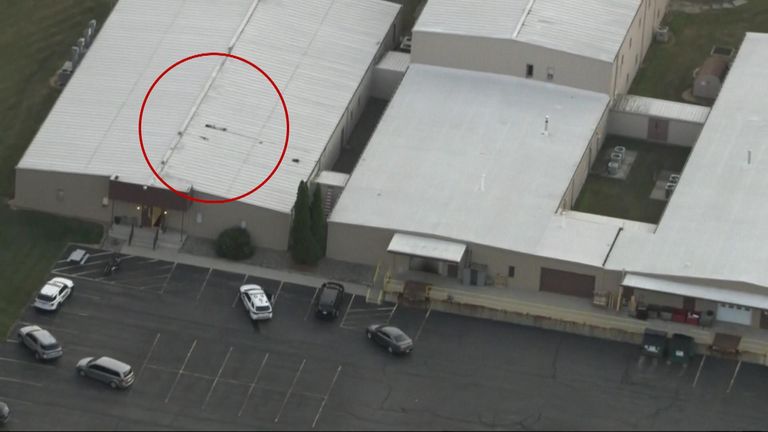
Unfortunately, there is yet another metric that supports that this may have been an inside job. It seems highly unlikely that this building wouldn’t have been fully secured (even the rooftop) in advance of the rally by the Secret Service, including either having SS staff on the rooftop or at least standing outside of this building location to prevent trespassing.
Clearly, at least according to various news media reports, the shooter was neutralized moments (seconds?) after the shots rang out by a Secret Service agent, with one of the suspect’s earlier shots allegedly grazing Trump’s ear while killing a rally participant.
Suspicious
This whole building security situation is highly suspicious. How did a shooter manage to get on top of a building that should have been fully secured by the Secret Service? That either means that Secret Service was not securing that building properly or, this is an even worse thought, that Secret Service ignored the individual as they traversed onto the rooftop with their weapons.
Yet, clearly the Secret Service was able to neutralize this rooftop target in moments after the shots rang out? Secret Service apparently had that rooftop covered as it has been reported that a Secret Service sniper was able to locate, take aim and shoot at the assailant all within a matter of seconds. All of this action by the Secret Service implies that this building was, indeed, being fully covered by Secret Service protection. Yet, a 20 year old shooter can manage to get past that security, pull out a weapon, take a position on the roof and begin firing shots… all without being detected? Yeah, this author is not buying that idea.
The question remains, how would such a shooter manage to get past Secret Service and traverse onto a rooftop of a building that was apparently so well secured? Yes, this is A really big and suspicious question.
Inside Job Part II
As we delve into all of the above, we come to realize that either the Secret Service was highly inept at performing their security responsibilities (doubtful) or that this was an inside job.
Donald Trump and all of his closest confidants, particularly the ones participating in the rally, would likely have known of the Secret Service’s plans (or at least many of them) to secure the rally site. Information that could potentially “leak”.
If the rooftop building was so well covered so as to neutralize the target in moments, it’s inconceivable that a random person could randomly and with extreme luck happen upon a Secret Service blind spot to infiltrate and make their way onto the rooftop all without being seen or, more importantly, heard by Secret Service. Again, either Secret Service was ignoring this situation or it seems likely that something else was going on here. It’s all too suspicious and this author is not buying it.
Why not a Lone Wolf Shooter?
For a person to cart a weapons bag onto a rooftop that is being actively secured by Secret Service and not be seen or heard doing this is infinitesimally small. By infinitesimally, I mean the chances are next to zero. Clearly, if Secret Service were able to neutralize this shooter as rapidly as they did, the Secret Service had coverage on or near the building involved. Having that level of coverage implies that the shooter may have had help to get around the Secret Service detail.
This means that the shooter would have needed to get help to find a blind spot in Secret Service coverage, a blind spot that only an inside person would know. That means that the shooter may have been fed this information prior to traversing onto the rooftop, which allowed that person to avoid being detected by Secret Service, arm up and then take the shots.
Fist Defiance
One highly suspect issue during this whole event is Trump’s behavior immediately following the shot where he realized a bullet had allegedly struck him. Instead of going into panic mode as one might do, he decided to stand up with a fist in the air for a photo opportunity. It’s almost like Trump knew that the threat was over, somehow. That’s not a normal behavior after having been shot and nearly assassinated. Instead, he should have wanted to leave the rally as quickly as possible to secure the safety of his person. Instead, he seemed willing to defy his Secret Service detail as they attempted to pull him to safety.
Seriously, who thinks about photo opportunities when someone is shooting a weapon in your general direction?
Trump involved?
This is a question, not an accusation. We already know that Trump is not avert in taking drastic and unusual steps to make a point and in his attempt to win and/or hold the Presidency. Just look at January 6th as an example. Disclaimer: this is question that must be asked. It is not intended to accuse.
Democrat Involvement?
Clearly, Trump’s sycophant Republicans are going to play the lone-wolf must-be-a-Democrat card, even though it has been confirmed that the now deceased 20 year old shooter was a registered Republican. It also seems like almost every time something happens involving Trump, it is inevitably Trump who had a hand in its outcome. Yet, Trump (and his sycophants) will inevitably and hypocritically blame it all on the Democrats in one breath, while calling for unity in another. Because of all of the suspicious goings on involving this shooting, the entire situation does seem highly suspicious and dubious.
Trump’s Repeated Calls for Violence
Trump has repeatedly used veiled words and rhetoric to call his “troops” into action. What troops you ask? Well, obviously troops like the Proud Boys and the Oath Keepers and other Republicans. Trump is willing to and understands that through various broad rhetoric, it will call “his” troops into action. His veiled words tell these various groups to do things up to and including performing violence when necessary. Again, look at January 6th as a prime example. It’s not the only example (e.g., NY trial), though.
As a person with the amount of public sway that Donald Trump holds, his seemingly innocent words are put into sometimes threatening and violent actions by his followers. Just look at the rhetoric that Trump used against various judges and various court staff and what ultimately resulted onto those people after Trump’s words were unleashed. His words even went so far as to force a judge to issue a gag order against Trump during his New York Trial. Rudy Giuliani, one of Trump’s biggest hired sycophant lackeys at the time of Trump’s Presidency, was even sued and lost a defamation suit against election workers as he spread many lies about those workers involving the 2020 election; lies that fomented negative action towards these workers by Trump followers. Rudy Giuliani has even been disbarred as a lawyer over his 2020 election lies.
While what Rudy Giuliani said didn’t personally result in threats and violence against those people, at least not by Giuliani’s own hand, it did foment many, many uncomfortable situations for these election workers by others from within Trump’s “troop” camp; well-meaning workers who were simply hired to do a job during an election. Fomenting these kinds of unchecked threats and violence against others is clearly something Trump (and his lawyers) shouldn’t be doing. And yet, perhaps one third to one half of the nation want to reelect this man?
Fomenting violence, regardless of how veiled the rhetoric may be, is still fomenting violence. It’s no wonder that eventually Trump’s own veiled words would turn back around on him. Trump likely knew that this would be an eventuality. Based on all of the suspicious goings on above, it seems more likely that what occurred may have been an inside job, taken as a step to quell that violence by potentially doing it as an inside job; one that looks like it isn’t? We just don’t know.
Unfortunately, one rally goer died as a result.
Is Trump, the Secret Service or his inner circle involved?
There’s no way to know, yet. But, this question must be asked and answered. This situation is still unfolding and we don’t yet have all of the details. This article is written solely using logical speculation based on the details known at the moment of this article and it is based solely on the logical deduction around these rather dubious situations so far. This article is not intended to accuse anyone. It is simply here to ask pertinent questions. After all, even as infinitesimal as it is, a 20 year old lone-wolf shooter managed to slip through Secret Service’s grasp and gain access to an unsecured rooftop to take shots at Trump? It’s not likely he did this without help.
Is it possible it could be done? Yes. Is it probable? No.
Secret Service is way too meticulous in planning its security details involving the former President. Either the Secret Service lapsed in its responsibilities for security at this rally or this was an inside job designed to circumvent the Secret Service.
Unfortunately, even if it was an inside job, the Government will likely squash all evidence of that to make it seem like it was strictly a lone-wolf operation. Only time will tell if the Government will be honest with us over what really happened.
↩︎


 Random Thoughts - Randocity!
leave a comment