2024: America’s First Fraudulent Election!
 America has run its most recent election in November of 2024. However, unlike past elections where the candidates were fully eligible to be on the ballot, this time around we had one Presidential candidate who was placed onto the ballot illegally and fraudulently. Let’s explore.
January 6th, 2021
It is widely understood that January 6th, 2021 was in insurrection. What is an insurrection? The definition according to the Oxford Dictionary is as follows:
in·sur·rec·tion
/ˌinsəˈrekSH(ə)n/noun
noun: insurrection; plural noun: insurrections
a violent uprising against an authority or government.
Let’s examine the events and the reasons behind January 6th, 2021:
- Donald Trump fomented, incited and encouraged people to march to the capitol, knowing he had full well invited The Proud Boys and various other similar groups who are known to have violent tendencies.
- Donald Trump arranged and fomented this event solely to halt the counting of the electoral votes in hopes of preventing the transition from Trump’s administration to Joe Biden’s (the winner of the election)… all so that Trump could stay in power beyond his legally elected term.
- Once the march to the Capitol began, barricades soon began to fall, people rushed into the Capitol building, broke windows, assaulted police officers with all manner of weapons, leading to the deaths of several.
- During the 4 hours of continual rioting, not once did Donald Trump step outside in an attempt to quell or urge the rioters to stop.
- The counting of the ballots was temporarily halted so that Congressional members could be moved to safety while the building was temporarily occupied by marchers; marchers who were there solely because of Donald Trump.
- After 4 solid hours of solid violent rioting, Trump finally emerged from his hole and effectively rewarded the rioters with an oddly sardonic message, “Go home. We love you.”
Don’t have to believe me, here’s one in hundreds of YouTube videos about it. Go watch them for yourselves. The above is only intended as a short synopsis.
Insurrection Proven
Many people, including Donald Trump have attempted to gaslight and whitewash that this event was a “peaceful demonstration”. You don’t exhibit peaceful demonstrations by bashing police officers with flagpoles and breaking windows.
More than this, many, many, MANY of the Capitol participants have been charged with violent crimes related to the insurrection that day.
Here’s a small sampling from this DOJ article:
- Approximately 452 defendants have been charged with assaulting, resisting, or impeding officers or employees, including approximately 123 individuals who have been charged with using a deadly or dangerous weapon or causing serious bodily injury to an officer.
- Approximately 140 police officers were assaulted on Jan. 6 at the Capitol, including about 80 from the U.S. Capitol Police and about 60 from the Metropolitan Police Department.
- Approximately 11 individuals have been arrested on a series of charges that relate to assaulting a member of the media, or destroying their equipment, on Jan. 6.
- Approximately 1,186 defendants have been charged with entering or remaining in a restricted federal building or grounds. Of those, 116 defendants have been charged with entering a restricted area with a dangerous or deadly weapon.
- Approximately 71 defendants have been charged with destruction of government property, and approximately 56 defendants have been charged with theft of government property.
- More than 332 defendants have been charged with corruptly obstructing, influencing, or impeding an official proceeding, or attempting to do so.
- Approximately 57 defendants have been charged with conspiracy, either: (a) conspiracy to obstruct a congressional proceeding, (b) conspiracy to obstruct law enforcement during a civil disorder, (c) conspiracy to injure an officer, or (d) some combination of the three.
I refer you to the above definition of insurrection: a violent uprising against an authority or government. Every single one of these charges above PROVES beyond a shadow of a doubt that what Donald Trump fomented and incited was ABSOLUTELY an insurrection.
The 14th Amendment of the Constitution was passed by Congress on June 13, 1866 and ratified on July 9, 1868. This amendment is entirely designed to qualify ALL candidates who wish to hold an elected office. The qualifications include such things as age and citizenship. In addition to these basic qualifications, Section 3 includes language regarding actions that DISQUALIFY candidates when certain conditions are met. Let’s examine this language:
Section 3
No person shall be a Senator or Representative in Congress, or elector of President and Vice-President, or hold any office, civil or military, under the United States, or under any State, who, having previously taken an oath, as a member of Congress, or as an officer of the United States, or as a member of any State legislature, or as an executive or judicial officer of any State, to support the Constitution of the United States, shall have engaged in insurrection or rebellion against the same, or given aid or comfort to the enemies thereof. But Congress may by a vote of two-thirds of each House, remove such disability.
The 14th Amendment Section 3 language above is crystal clear. To paraphrase:
If someone who has held an office in the past and has previously taken an oath of office for said position AND has ENGAGED in insurrection or rebellion against the same (i.e., Government), given aid or comfort, they are DISQUALIFIED from holding ANY future office.
This section even takes this disqualification language one step further and gives Congress a new power: “But Congress may by a vote of two-thirds of each House, remove such disability.”
Meaning, if a candidate has become ineligible to hold office due to having engaged in insurrection, Congress has the power to remove that disqualification by voting in a 2/3rds majority to lift that disability and allow the person to become eligible.
This last part is EXTREMELY important to understand. Because the 14th Amendment has given Congress a new and explicit power to override the 14th’s disqualification rules, this means that this is absolutely the ONLY method that can be used to override any of the 14th’s disqualification rules. Why? Because this power was explicitly granted to Congress! Not to the SCOTUS. Not to the Executive branch… to Congress, the Legislative branch.
What Constitutes Disqualification under the 14th?
Many have argued this point. The 14th Amendment doesn’t explicitly have language stating who makes the determination of what constitutes disqualification. Rather, the 14th seems to leave this aspect up to obviousness rules. Meaning, when someone has engaged in insurrection, that fact should be extremely obvious. As in the case of Donald Trump, it IS extremely obvious.
If anyone needs something more obvious than that above, the January 6th committee spent from June until December of 2022 describing EVERY SINGLE DETAIL of the January 6th Capitol attack in brutal, unflinching detail. This information described Donald Trump’s behavior during the entire Capitol attack. That information even included testimony from people who were close to Donald Trump on insurrection day.
If you didn’t have enough information to leap to insurrection before the Congressional hearings, these obviousness rules would 100% apply after. By the time the January 6th committee had completed its findings, it was crystal clear that January 6th was not only an insurrection because of the Committee’s findings, but also because so many participants have been found guilty of participating in a violent uprising against the government (fomented BY Donald Trump himself).
By the time ALL of this information came to light, it was 100% certain and, here’s that word again, obvious that Donald Trump had engaged in insurrection through his actions on insurrection day.
Even Congress was so taken aback that they had to consult with the Supreme Court on if what Donald Trump had done constituted engaging in insurrection. Let’s be clear here. The Supreme Court has no power or authority to disqualify or qualify a candidate. That power has been given explicitly to Congress and Congress alone. If Congress had questions regarding Donald Trump’s eligibility under the 14th Amendment, it was Congress’s authority alone (granted by the 14th Amendment) who needed to have made this determination.
Because Donald Trump had both fomented and had taken part in January 6th, having engaged in insurrection is absolutely 100% crystal clear. What that means is that it became Congress’s job alone to qualify Donald Trump as a candidate in any future elections via a vote. This action did not happen.
Because the 14th describes who is qualified, it also means that if they are not qualified (i.e., disqualified), they cannot be added to ANY ballot for any elected position. Adding such a disqualified candidate to a ballot is considered illegal under the 14th Amendment. Any such person added to a ballot illegally makes any election involving an illegal candidate also invalid and, ultimately, fraudulent.
Fraudulent Election
Like entering any contest where qualifications are required, if a person entering is considered disqualified for entry (at any time… before, during or after), the person’s involvement and benefits are forfeit and the contest void.
If you enter a contest and you must be 18 years of age, yet you’re 17 and you enter and win, the prize that you win will be forfeit and you will not receive it. Additionally, you will be publicly admonished by explaining that that person entered the contest illegally. In these situations, if there is a runner up winner, that winner is typically to whom the prize is ultimately awarded. However, some contests may choose to cancel the entire contest, forfeit the prize making no winner at all. The result of participating illegally in a contest is entirely up to the contest creator and rules governing the contest.
In the case of a Presidential Election contest / election, there can only be one outcome under fraud. If it is found that a contestant participated in the contest illegally, the contestant must be publicly admonished and removed as the winner. Because the 2024 Election requires citizens of the United States to vote, handing the winner to the runner-up under a fraudulent participant condition isn’t considered fair to the voters. Awarding to the runner up would exclude whatever amount of people who voted for the fraudulent candidate.
Instead, the United States would need to perform the following actions:
- Announce that the election was fraudulently operated
- Announce that any results from the fraudulent election are abandoned and void
- Announce that the reason for the fraud was due to an ineligible person participating
- Announce that a new election will be held on [insert new election date]
- Then, disqualify said fraudulent candidate
At this point, the election process would start anew as if the previous election never occurred. All candidates would submit for participation in the election as they previously had.
Requalifying ineligible candidates
Under the 14th Amendment section 3, Congress may choose to hold a vote (both houses) on whether a disqualified candidate is to be qualified. This vote must occur before the new election date is reached. If Congress fails to pass the resolution, then that candidate remains ineligible to participate. Only eligible candidates are allowed on the ballot.
That means that, for example, if Donald Trump’s vote for re-qualification in Congress were to fail, he would remain ineligible to participate in any future election. Only candidates that qualify would be allowed to participate. The former candidates in the previous fraudulent election are still able to participate in the new election IF they were then and now remain qualified.
Trump, Riots and Election
One thing is certain, if those in the Government made an announcement that the 2024 election contest had been fraudulently operated because it included a disqualified candidate (Donald Trump), an uproar would ensue. I get that. To thwart that, time would need to be given to allow for a new election to be held and a new count to be tabulated for the then qualified candidates. Additionally, police would need to be coordinated around the country in case of such riots.
Many would blame the Democrats for “doing this”, but in reality, it is the Constitution “doing this”. All Americans need to understand that the Constitution is the law of the land, not the Democrats and not the Republicans. The parties are simply participants in the system, they are not the owners of it. The Constitution is the owner.
We all either accept that the Constitution says the Election was fraudulent or we don’t. Per the 14th Amendment, the 2024 Election is considered fraudulent. The President Elect under this fraudulent election is not valid. Because a participant was included in the election illegally and fraudulently, the election results stand as null and void. No one won because it’s as if the election never took place.
The Democrats didn’t disqualify Donald Trump. Donald Trump disqualified Donald Trump the day he chose to foment, encourage and engage in insurrection. The Democrats had no hand in Donald Trump’s actions and activities on January 6th. He did that all to himself. He disqualified himself in 2021.
Oaths of Office
Both Democrats and Republicans alike need to uphold their oaths of office and call for a new Constitutionally VALID and LEGAL election, one that doesn’t contain a disqualified candidate. Donald Trump absolutely is NOT the President Elect. He’s not anything at all other than a cheat. He illegally entered an election and took advantage of the fact that Congress failed to qualify him via the 14th Amendment. That’s called CHEATING.
All duly elected representatives must STAND UP and call the 2024 election for what it is, fraudulent.
If we don’t do this and accept a disqualified candidate under the guise of a “President”, we have subverted the will of the Constitution and EVERY SINGLE ELECTED OATH HOLDER has violated their oath to uphold the Constitution. Yes, EVERY SINGLE ONE.
Call to ALL elected Officers, Senators and Representatives
We have limited time before this election deal is done. However, we do have time for every person who has sworn an oath to protect the Constitution to do the right thing. We need each and every one of you to stand up and state that this election is fraudulent and invalid. We need you to denounce Donald Trump as an ineligible candidate placed onto the ballot illegally.
Only then can we move forward with creating a new election day and time and asking voters to step to the polls and vote once again, THIS TIME on eligible candidates only.
We’re all wanting to talk about voter fraud, but no one is talking about candidate fraud and we need to be talking about this. Let’s call this election for what it is. Fraudulent. Let’s rip this bandage off and start anew.
↩︎
Trump: America’s first illegally elected President
 America is about to make a massive mistake! The U.S. Constitution has a lot of words. I know, it’s seems difficult to read. It’s not. Let’s explore the constitutional problems with Donald Trump as President Elect and why the 2024 Election results are invalid. Let’s explore.
The 14th Amendment to the U.S. Constitution is a curious beast. It says a lot of things, but none more important than section 3 below:
No person shall be a Senator or Representative in Congress, or elector of President and Vice-President, or hold any office, civil or military, under the United States, or under any State, who, having previously taken an oath, as a member of Congress, or as an officer of the United States, or as a member of any State legislature, or as an executive or judicial officer of any State, to support the Constitution of the United States, shall have engaged in insurrection or rebellion against the same, or given aid or comfort to the enemies thereof. But Congress may by a vote of two-thirds of each House, remove such disability.
Highlights have been added for brevity and clarity. The 14th Amendment describes ALL of the qualifications necessary for a person to run for any elected office. Failing any of these requirements means that the candidate is INELIGIBLE to run. Note this previous statement because it becomes very important to America and the 2024 Election.
January 6th
… is widely understood as an insurrection. It fits all of the qualifications for it. It was violent. It was an uprising. The uprising was against the United States government. The uprising was intended to subvert the will of the voters. The uprising was intended to aid Mr. Trump in remaining in office past his term. The uprising was fomented and incited by Mr. Trump at the ellipse the morning of January 6th.
More than this, Mr. Trump decided to sit idly by for 4 hours and do nothing to stop it. This is aiding and abetting… the very definition of what’s written in the 14th Amendment.
As a result, even Congress was forced to consult with the Supreme Court on whether what Mr. Trump did was considered an insurrection. The problem is, it doesn’t matter what the SCOTUS believes, it only matters what Congress believes.
If Congress was required to ask another authority in the government about Trump’s conduct, then it’s clear that Congress is unclear on Trump’s eligibility. This means that Trump is and should be considered ineligible to run for office until this question is 100% cleared by using the 14th’s prescribed VOTING mechanism. Trump is now considered a “grey area” candidate at this point.
The 14th Amendment is CRYSTAL CLEAR on what is required to ensure any “grey area” candidate is eligible. “But Congress may by a vote of two-thirds of each House, remove such disability.”
It says it right here in the 14th’s text. Congress may choose by a 2/3rds vote to lift such a disability and make any such “grey area” candidate eligible to run for office. Until such a vote, the candidate must remain ineligible.
Congress failed to vote on this! (IMPORTANT)
Keep in mind that nowhere in the 14th Amendment does it allow or authorize the SCOTUS to chime in on such and make any definitive choices. The ONLY choice given by the 14th is to have Congress VOTE on it. Any questions involving any candidate’s eligibility automatically means that a Congressional VOTE is REQUIRED.
2024 Election
What does all of the above mean for the 2024 election? Let’s break it down.
Since Donald Trump was then and is now an ineligible candidate per the 14th Amendment and because Congress failed to vote on Trump’s eligibility because of his “grey area” status, that means Trump is and remains an illegal candidate on the ballot.
Trump shouldn’t been on the ballot because he’s ineligible due to the failure of Congress to follow the procedures outlined in the 14th Amendment; procedures that are quite crystal clear in their intent and in their required actions.
But the SCOTUS…
The SCOTUS doesn’t play into this. Nowhere in the 14th does it say that the SCOTUS can intervene and offer up their opinion. Think of it this way. The SCOTUS’s opinion is tantamount to you having committed a crime, then asking a judge if they believe you are innocent of the crime.
If a judge gives you their opinion as “innocent”, that doesn’t mean you aren’t still responsible for having committed that crime. That judge’s opinion absolutely DOES NOT let you off of the hook for having committed that crime. It’s just an opinion. What matters is what the LAW says is required.
If the law says you should be indicted and charged, that judge’s opinion absolutely 100% WILL NOT get you out of that predicament. You will still be held accountable for what you did in whatever way the law requires. Talking to a judge absolutely does not get you a “get out of jail free” card no matter what that judge says. The same for the SCOTUS. An opinion is just an opinion. It is 100% not binding. What is binding is what the written law requires.
Election 2024 continued…
Because Trump is a “grey area” candidate due to his involvement in January 6th AND because Congress had questions involving his conduct on January 6th AND because Congress did not rule on Trump’s eligibility, Trump remains ineligible to run for ANY office… period.
Until or unless Congress votes on Trump’s eligibility as the 14th Amendment requires, Trump remains ineligible to be on any ballot.
Let’s break this down further…
Because Trump was on the 2024 ballot as an ineligible candidate, the results of the election are, likewise, invalid. This means that the 2024 Election technically has no winner because the Election results must be tossed out in their entirety. Trump is not the President Elect because the 14th Amendment is clear on this matter. Trump is ineligible.
Kamala Harris is not the winner either because the entire election results must be tossed out entirely. It’s a fraudulent election because an ineligible candidate participated.
Re-Run the Election
Because the 2024 Election results are 100% invalid, the election must be rerun with 100% ELIGIBLE candidates. Trump can only be made eligible by a Congressional vote in both houses. That would need to be done BEFORE any Re-Run election. If the vote fails or if Congress is unable to hold such a vote, then Trump must remain off of the Rerun election ballot.
Accepting an Illegal President
If America moves forward with this illegal Presidential charade, then we are complicit in breaking down the will of the Constitution. The Constitution is completely clear on how candidate eligibility matters need to be handled.
If we accept Donald Trump as President Elect under these ineligible circumstances and accept the results of this invalid election, America will have voted in its first ILLEGAL President in U.S. History. It also means the Constitution is null and void. Democracy is dead if we proceed here.
Technicality
Technicalities matter and this one matters a great deal to both America and the United States Constitution. Do we stand with the Constitution and uphold it? OR, do we stand with Donald Trump and vote against our Constitution?
Because Congress made a procedural faux pas in this matter, it is on Congress to right this wrong. In fact, it’s on the entirety of the United States Government leaders to stand up for our Constitution and call the 2024 Election invalid and require a re-run election.
Let’s do the right thing here! OR, there’s no stepping back from this precipice! We are at America’s decision gate and most of us don’t even know it. There is a short amount of time to correct our course here, but it requires ALL Americans and all American Leaders to bring attention to this situation regardless of their partisanship.
Trump can still be America’s President, but it must be voted on in the Constitutionally correct way.
↩︎
Are Trump’s final Pardons legal?
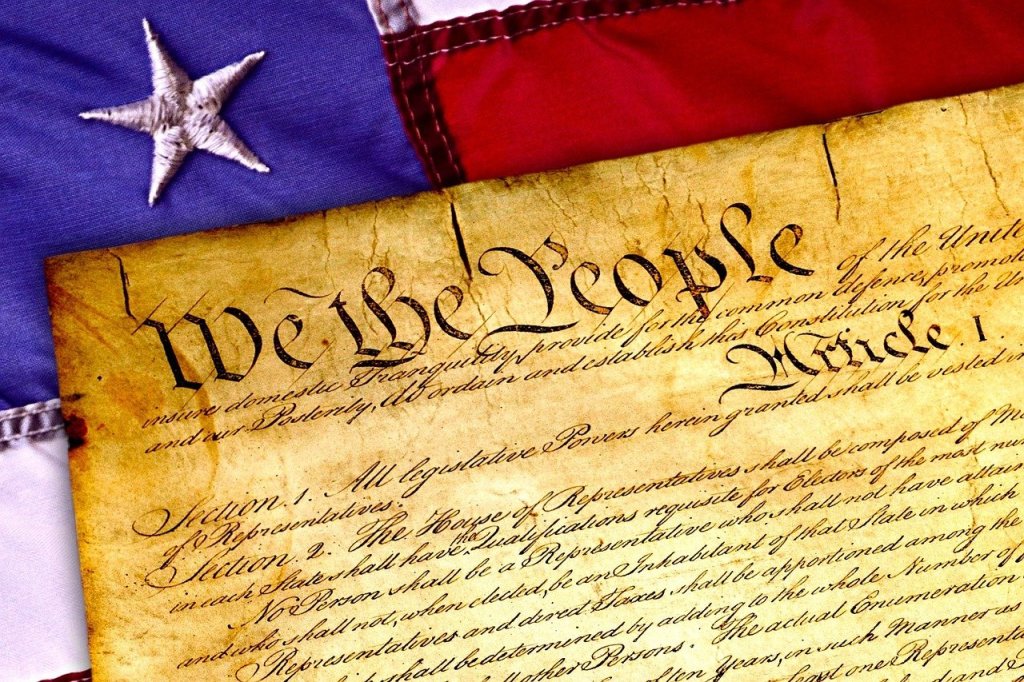
The United States Constitution has very specific language defining how and when the Presidential power of pardons and reprieves can and cannot be used. Let’s explore.
Constitutional Language
From Article II, Section 2, here is the language that defines the President’s powers. Note, styles have been added for clarification purposes.
The President shall be commander in chief of the Army and Navy of the United States, and of the militia of the several states, when called into the actual service of the United States; he may require the opinion, in writing, of the principal officer in each of the executive departments, upon any subject relating to the duties of their respective offices, and he shall have power to grant reprieves and pardons for offenses against the United States, except in cases of impeachment.
U.S. Constitution => Article II => Section 2
At the end of this paragraph, we have an exception to and limitation of the previous power, “grant reprieves and pardons”. Some might argue that this exception covers the entire paragraph describing his powers as a whole, but this exception immediately follows the definition of the President’s aforementioned “grant reprieves and pardons” power. While the exception may cover all of his power in a logical sense after full impeachment AND conviction and having been removed from power, it doesn’t make sense to cover all of his powers while he still holds office after impeachment, but before the trial. He must still remain commander in chief of the Army and Navy of the United States, for example.
Instead, I believe that this specific language, because it appears directly after the “grant reprieves and pardons” language is intended to narrowly apply solely to the power of granting reprieves and pardons, not to the entire paragraph.
Logically, this interpretation makes the most sense because you wouldn’t want a President who is in the process of being impeached to flurry pardon both himself and those who might have been involved, thus nullifying the entire impeachment proceeding. Meaning, the power given to Congress to impeach the President must not be allowed a loophole by the President to avoid impeachment.
Trump’s Pardons and Reprieves
While the language of the constitution is clear on what powers the President has, it has exclusions when specific powers are unavailable to the President as defined just above.
Let’s examine Trump’s flurry of pardons on the way out of office. Because of the way the constitution language is written, it seems that Trump’s final flurry of reprieves and pardons on the way out, but which occurred after his second impeachment on January 13, 2021 may not be constitutionally valid or legal. According to the constitution, the President forfeits the power of reprieves and pardons “in cases of impeachment” or, more specifically, during impeachment proceedings.
One can argue that Trump lost this power during his first impeachment. He did. However, that impeachment ended in acquittal… thus restoring all powers to him that he would have lost between the House’s impeachment, but before the Senate trial concluded in acquittal. If he had made any pardons during that impeachment period in 2019, those would also be constitutionally invalid.
Our Framers’ Logic
The framers of the constitution would have logically understood the impeachment process fully. After all, they designed it. The framers understood that impeachment is a two step process requiring both the House and the Senate to participate. They also understood that because these two houses must work together to complete the process, there could be delays between the time the House approves their impeachment resolution and the time the Senate begins and concludes the impeachment trial.
These same framers also understood that because of the time required to complete the impeachment process in full, the President could use his power of pardons and reprieves to nullify the very reason for the impeachment itself. To avoid this design flaw in the process, the framers included the clause ‘except in cases of impeachment‘ to limit the use of this Presidential power during impeachment proceedings and thus avoid the possibility the President could pardon himself or others and nullify the entire impeachment.
Legal vs Illegal Pardons
The point to all of this is that President Trump, at the time before he left office, was still under impeachment proceedings. This clause in the constitution would then suspend Trump’s power of reprieves and pardons until the impeachment had reached full conclusion: acquittal or conviction.
Because Trump’s impeachment is still ongoing as of this article (and was at the time of his exit from office), any reprieves and pardons he signed after the House passed its Article of Impeachment would be constitutionally illegal and thus, null and void.
If Trump had remained in office after conclusion of the Senate’s impeachment trial AND if the trial resulted in his acquittal, his power of reprieves and pardons would be restored. He could have then reissued those reprieves and pardons to make each of them legal and valid. However, Trump is no longer President as his term has ended. His ability to reissue those reprieves and pardons has ended. This means that all of the reprieves and pardons that Trump issued after January 13th, 2021 are constitutionally invalid and must remain invalid in perpetuity.
President Joe Biden, the now current President, could reinstate those reprieves and pardons on Trump’s behalf if he so chooses, but that would require Joe Biden to agree to reissue those specific reprieves and pardons on behalf of Donald Trump.
↩︎
Should the Senate conclude Trump’s Impeachment Trial?
Now that Donald Trump has left office, some Trump fans believe the completion of the impeachment process is now “unconstitutional” and “null and void”, since Trump is no longer President. Let’s explore if this is true.
In or Out of Office?
Let’s understand the laws of our land to understand better the constitutionality of the impeachment process. While the constitution is mostly clear on impeachment, it’s not 100% clear on when and how impeachment may occur under ALL possible circumstances and conditions. This is why interpretation must occur in these special cases. However, interpretation doesn’t mean pulling conclusions out of the air. Instead, it means looking for existing precedents of law in which to guide that interpretation to logical and legal conclusion.
Constitution Excerpts
Let’s look to the United States Constitution (link to a PDF version) to read its language regarding impeachment:
Note that any italics, bold, highlights or <sic> have been added by this author for clarification purposes.
The House of Representatives shall chuse <sic> their Speaker and other Officers; and shall have the sole Power of Impeachment.
U. S. Constitutution => Article I => Section 2
The above section defines which arm of the government handles Impeachment… The House of Representatives. So let’s learn about the Senate’s role in the impeachment process.
The Senate shall have the sole Power to try all Impeachments. When sitting for that Purpose, they shall be on Oath or Affirmation. When the President of the United States is tried, the Chief Justice shall preside: And no Person shall be convicted without the Concurrence of two thirds of the Members present.
U.S. Constitution => Article I => Section 3
Judgment in Cases of Impeachment shall not extend further than to removal from Office, and disqualification to hold and enjoy any Office of honor, Trust or Profit under the United States: but the Party convicted shall nevertheless be liable and subject to Indictment, Trial, Judgment and Punishment, according to Law.
The above section defines the Senate, its powers and how the Senate handles cases of Impeachment. Clearly, the Senate is defined to ‘try‘ (or perform a Trial) for all Impeachments. It also explains how the affected Party will be handled by law upon conviction. This section also defines the requirement of a two-thirds agreement in the Senate for the Senate to convict an Impeachment. Less than two thirds agreement and the trial concludes in acquittal. The two-thirds is strictly for agreement on removal of the President. A simple majority is required to agree on whether the person can hold office again. Both votes are separate. This does mean, then, that it is possible to acquit for removal, but convict for preventing the person from ever holding office again.
To recap so far, the House of Representatives is given the power of Impeachment solely. The Senate is given the power to preside over the Trial of that Impeachment solely. To clarify further, the House performs the impeachment and the Senate performs the Impeachment trial AFTER the House adopts the Articles of Impeachment and hands those approved articles to the Senate. The Senate puts forth and votes on the remedies should conviction occur.
These excerpts above describe the overview of Congress’s responsibilities and role for impeachment, but not the exacting details of how the process operates. We’ll dive into the details shortly below.
Just below, these excerpts describe Presidential responsibilities, powers and, yes, impeachment.
The President shall be commander in chief of the Army and Navy of the United States, and of the militia of the several states, when called into the actual service of the United States; he may require the opinion, in writing, of the principal officer in each of the executive departments, upon any subject relating to the duties of their respective offices, and he shall have power to grant reprieves and pardons for offenses against the United States, except in cases of impeachment.
United States Constitution => Article II => Section 2
The above section and article is intended to describe the President’s extent of powers… “except in cases of impeachment“. This means that the President’s powers do have constitutional limits “, specifically in cases of impeachment.
Because this is both the United States Constitution and a legal body of law combined, it must be interpreted not only by constitutional standards, it must also be interpreted by legal standards. Unfortunately, the above isn’t the only mention of the term impeachment within the United States Constitution. Thus, we must press on to better understand how all of the sections together both combine and define what impeachment is, but also the extent to which it functions. With that in mind, I’ll come back to describe more about the constitutional language after all articles and sections have been quoted both above and below.
The President, Vice President and all civil officers of the United States, shall be removed from office on impeachment for, and conviction of, treason, bribery, or other high crimes and misdemeanors.
U.S. Constitution => Article II => Section 4
This section describes to whom impeachment applies and under which specific circumstances.
The Trial of all Crimes, except in Cases of Impeachment; shall be by Jury; and such Trial shall be held in the State where the said Crimes shall have been committed
U.S. Constitution => Article III => Section 2
The above section describes to which Trials a jury applies and where those Trials should be conducted. Clearly, impeachment is excluded from trial by jury and also excludes holding it in a state venue, choosing to hold Impeachment Trials in the Senate chambers. Note that this language incidentally also defines powers of the Judicial branch of government by describing the Executive and Legislative branches. Because all three sections of government are so interlinked in each other’s processes, it would be impossible not to describe portions of the Judicial branch when discussing the powers and responsibilities of those in the Executive and Legislative branches, which is why this Judicial language is included in these sections.
This clear intent here is that the framers did not hold any branch of government above the laws of the land, but instead chose to institute a separate trial process when the President has willfully broken laws. One can argue the ultimate intent of the framer’s wishes here as “special treatment”, but the constitution is specific on these matters.
Before I continue quoting sections from the Constitution, let me stop here and discuss this “special treatment”. The framers clearly missed here. I understand that they felt that the best Trial by the President’s peers was via Congress, but “special treatment” does, in fact, tend to hold the President above the laws of the land. Where an ordinary citizen is granted no such special treatment, the President is given this “special treatment” after having broken laws of the land. Not only can’t the President be held to the laws of the land, the only power with which to uphold the laws of the land on the President is solely through the House’s Impeachment and Senate’s Impeachment Trial powers. Barring these specific actions and remedies, the President’s actions cannot be held to the general laws of the land, thus the President is essentially given prosecutorial immunity while he holds office, “except in cases of impeachment“. Impeachment is, then, the only legal action and remedies afforded the Legislative branch to remove a willfully criminal President.
Let’s keep in mind that the House’s successful Impeachment and the conclusion of the Senate’s Impeachment Trial are both separate, but part of the same process. The Senate’s Trial portion is simply an extension of the House’s Impeachment resolution. The Senate’s Impeachment Trial cannot exist without the House’s Impeachment. Likewise, the Impeachment process is incomplete without the Senate voting to convict or acquit. In other words, it is a misnomer to call successful Impeachment of a President when the Senate’s conviction has not yet occurred… only half of the process has been completed. Impeachment means both the House’s portion of Impeachment AND the Senate’s Trial to convict or acquit. Only after completion of both houses together is this considered successful Impeachment (regardless of outcome).
However, many believe that completing the successful adoption of the House’s Articles of Impeachment alone is enough to call the President Impeached. No. You can’t call the President Impeached when only half of the process has been completed. The term, Impeached should only be used to describe a President after both portions of the impeachment process (the House and Senate) have successfully fulfilled their duties and obligations to the constitution and both the House and Senate have agreed and Convicted (or Acquitted) the President, thus removing him from office and voting to rescind that person’s ability to ever hold office again or, alternatively, allowing him to continue to serve acquitted. That is what both Impeachment and Impeached should mean. Anything less degrades the Constitution and dilutes its power as a Constitutional body of law. Unfortunately, even the framers have chosen to ambiguously use the term “impeachment” within its text, such as the ever-vague “except in cases of impeachment” phrase.
Dictionaries, however, believe that it is enough to “charge” (accuse) someone of wrongdoing to use the word Impeach. I disagree with this Dictionary viewpoint. The United States was founded on “Innocent until proven Guilty”. Accusing someone of something is tantamount to “Guilty until proven Innocent”. Without successful completion of the Senate’s portion of an Impeachment Trial, the person is being stated as guilty without having been given a fair trial.
Let’s also understand that for a trial to be fair, it must also be expedient. Our constitution requires not only Trial by Jury (“except in cases of impeachment“), there is no specific definition in the Constitution of how fast the Trial must be conducted, just that it is “speedy”. However, we already know that without verbiage stating exceptions in the Constitution, everyone has the right to an expedient trial, which is guaranteed by the Sixth Amendment.
In all criminal prosecutions, the accused shall enjoy the right to a speedy and public trial, by an impartial jury of the State and district wherein the crime shall have been committed, which district shall have been previously ascertained by law, and to be informed of the nature and cause of the accusation; to be confronted with the witnesses against him; to have compulsory process for obtaining witnesses in his favor, and to have the Assistance of Counsel for his defence. <sic>
United States Constitution => Amendment VI
As we know from far above, Impeachment is given certain legal exemptions. However, barring specific exemptions, the rest of the Sixth Amendment’s provisions still apply to the Impeachment trial. This is a basic tenant of law. Thus, this Amendment specifically includes the right to a “speedy” and “public” trial. These provisions are not explicitly excluded in any of the Articles above. As we know from Articles above with regards to Impeachment, a “Trial by an impartial jury of the state and district wherein the crime shall have been committed” IS excluded by Article III, Section 2, which empowers only the Senate to perform this Trial. All else remains in full force and effect.
As for “speedy”, as I’ve said above, there is no specific amount of time set by the framers. This is left up to interpretation. Speedy might be a month or two tops. After six months, that would be considered by most as no longer speedy. No one wouldn’t consider ‘years’ as speedy. Common sense here must prevail. Speedy should be defined as whatever it takes to conduct the trial in a fair manner so long as the process is not interrupted by unnecessary and foreseen procedural or logistical delays. It is then on the Court, or in the case of Impeachment, to perform and conduct a Senate Impeachment Trial expediently once all conditions have been satisfied to begin the trial.
Constitution Verbiage
Here we end all the constitution’s language regarding Impeachment. From here, we must consult the House’s and the Senate’s rules to learn more. Here are the House’s rules. Specifically, here’s the preamble of the House’s rules on impeachment…
Impeachment is a constitutional remedy to address serious offenses against the system of government. It is the first step in a remedial process–that of removal from public office and possible disqualification from holding further office. The purpose of impeachment is not punishment; rather, its function is primarily to maintain constitutional government.
Deschler Ch 14 App. pp 726-728; 105-2, Dec. 19, 1998, pp 28107-9.
Lewis Deschler admits that the House’s portion of Impeachment is the “first step” in the Impeachment process. Because there are multiple steps, that means that until all steps are completed, the process is and should be considered incomplete. It also states that Impeachment is not intended to be punishment, but to uphold (and protect) the constitution.
I’d additionally argue that no one is above the law. Impeachment firmly placed within the Articles upholds that viewpoint. The bar for Presidential crime is obviously much higher than those of ordinary citizens, but Impeachment is a power given by the framers to Congress to remove someone who is willfully criminal while holding the office of President.
Some might consider this a naïve point of view. To some extent it is. Assuming that a person elected President won’t and can’t willfully damage to the Constitution is naïve. To diverge a little, the framers are overly trusting. They believe that people placed into these higher levels of power won’t do damage to the very voters who voted them into office. As I said, naïve. The constitution isn’t, by any stretch, a perfect document. The framers were also well aware of this fact, thus the reason it can be amended. The point wasn’t to make the initial document perfect, but to make it passable by those in power at the time. Viewpoints, even then, made it difficult to achieve consensus. Thus, the Constitution is the very definition of a set of compromises which all of those compromises achieved the signing of the Constitution. That’s why it’s not a perfect document. That’s why there are holes. That’s why some aspects are left ambiguous and left open to interpretation.
Lewis Deschler
So, you’re probably asking, “Who exactly is Lewis Deschler?”. Wikipedia describes him best:
Lewis Deschler (May 3, 1903 – July 12, 1976) was the first, and longest-serving, Parliamentarian of the United States House of Representatives. He started his term on February 1, 1927,[1] during the 70th United States Congress following the retirement of Lehr Fess. Prior to Deschler becoming Parliamentarian, the position was referred to as the Clerk at the Speaker’s Table.
https://en.wikipedia.org/wiki/Lewis_Deschler
Wikipedia goes on to say:
Deschler served as the Parliamentarian from 1927 until his retirement on June 27, 1974, during the 93rd United States Congress.[2] He was an important advisor to many congressmen during his employment, including advising House Speaker Carl Albert on the tax fraud investigation of Vice President Spiro Agnew[3] and the impeachment of President Richard Nixon.
https://en.wikipedia.org/wiki/Lewis_Deschler
While in office, Lewis Deschler authored and modified many of the House’s rules on impeachment and how the House conducts the Impeachment process… which has significantly influenced this process and how our present House today manages and conducts Impeachment proceedings. I’ll leave you to search for and find out more about both Lewis Deschler and his contributions to see how the U.S. House manages not only Impeachment proceedings, but other House proceedings.
Senate Rules
Now that we’ve reviewed the House Rules (you have haven’t you?), we need to review the Senate Impeachment Trial rules. More specifically, this section from the document, RULES OF PROCEDURE AND PRACTICE IN THE SENATE WHEN SITTING ON IMPEACHMENT TRIALS:
Upon such articles being presented to the Senate, the Senate shall, at 1 o’clock afternoon of the day (Sunday
https://www.govinfo.gov/content/pkg/SMAN-104/html/SMAN-104-pg177.htm
excepted) following such presentation, or sooner if ordered by the Senate, proceed to the consideration of such articles and shall continue in session from day to day (Sundays excepted) after the trial shall commence (unless otherwise ordered by the Senate) until final judgment shall be rendered, and so much longer as may, in its judgment, be needful.
This is the section that discusses a speedy trial… or, at least, how quickly the Senate must act after receiving the Articles of Impeachment from the House of Representatives. It doesn’t state how fast the trial must progress, but it at least states when the Article of Impeachment must be acted on by the Senate.
Double Jeopardy
Someone asked me, “Why isn’t there double jeopardy on impeachment?” Let’s understand double jeopardy. Double jeopardy excludes a person from being tried twice for, and here’s the important point, the same or a very similar crime.
Trump’s first and second impeachments are not for the same crime nor are they similar. So, even were double jeopardy applicable to the impeachment process, double jeopardy wouldn’t apply in this case. Both impeachments are for entirely separate crimes.
Though, I’m not sure why Congress would ever vote to impeach a president twice for the same crime in two separate impeachments. It doesn’t make sense why this would ever happen. I’m not even sure that congress would ever attempt to do this simply because of double jeopardy.
Congressional Failure
With the above said about double jeopardy, part of the problem that leads to this thinking is the failure of congressional leaders to do their own jobs. For example, if the Speaker of the House fails to submit the Article(s) of Impeachment to the Senate, the process cannot conclude.
This leaves the impeachment process incomplete. Such a failure doesn’t allow the accused to prove their innocence on the charges. Not only may this violate the right to a speedy trial, it leaves the accused effectively marked as guilty. That’s not how our system is supposed to work.
If Congress is serious enough to bring Article(s) of Impeachment against the President, then they should be serious and professional enough to see the process through to conclusion. By not completing the process, those responsible should be held liable and penalized for their failure. Specifically, if the Speaker of the House fails to submit the successfully passed impeachment documents, that should jeopardize their Speaker of the House standing. Meaning, they should be deposed and see another representative appointed. If the Speaker of the House fails to do their job, then it’s important to replace that person with someone who will do the job. It is every representative’s responsibility (and oath of office) to uphold the constitution. Failure to uphold the oath of office means the representative needs to be held accountable for that failure including censure or removal from office or position.
Unfortunately, because congress tends to vote on their own matters to affect how they perform their own jobs, checks and balances tends not to apply in these types of votes. This means we usually see Congress fail to apply such penalties that would ensure people do their jobs while in office. Yet another constitutional failure by the framers to prevent conflict of interest problems like this. I digress.
Exceptions, Pardons and Interpretation
Here’s one big last thought before I end this article. Above, there is an excerpt that defines Presidential powers. Specifically:
… [The President] shall have power to grant reprieves and pardons for offenses against the United States, except in cases of impeachment
United States Constitution => Article II => Section 2
This portion is mostly self-explanatory. Again, the President is given the power to grant reprieves and pardons… except in cases of impeachment. Again, unfortunately, the framers left this statement mostly ambiguous. There are several possible interpretations of this verbiage:
The first interpretation suggests that a successful House impeachment alone rescinds the President’s power to “grant reprieves and pardons”. This means that ANY pardons or reprieves that the President attempts to grant AFTER a successful House impeachment is no longer legal. In other words, the President forfeits his power of pardons and reprieves after a successful House impeachment. I believe this interpretation is only partially correct, so let’s continue.
The second interpretation suggests that the text “except in cases of impeachment” suggests the word impeachment to mean that it requires both the full House and Senate processes to conclude in both impeachment and a conviction. The constitution is unclear on this usage and definition of the word ‘impeachment’, but this is also where logic fails.
The second interpretation then suggests the following conditions must be met:
- A house impeachment must occur
- A senate conviction must occur
- Once a conviction occurs, the sitting President will be removed from office
- A conviction might also prevent the then former President from running for office again
Once a President is convicted and removed from office, there’s no need to request surrender of the pardon power.
This third even more narrow interpretation of “except in cases of impeachment” applies only to offenses covered by the impeachment itself. That’s not specified in this clause. That’s an interpretation and that interpretation seems incorrect. Applying the second interpretation to the third, a President who is fully impeached and convicted can no longer issue pardons and reprieves anyway because they will have been removed from office. Therefore, there is no logic to this interpretation. Again, the framers would have realized this glaring logic error. So…
A fourth interpretation strongly suggests that the framers did realize the above logic error in the second and third interpretations AND they further understood that there is a delay between the time the House passes the impeachment article(s) to the Senate. The framers understood this two house setup can cause delays in the process. This delay leaves the President in power to continue office duties until the Senate Trial begins and concludes. A trial is a trial and can last weeks mulling over evidence. Thus, forfeiture of the power of pardons and reprieves is intended not narrowly for offenses related to the impeachment itself, but for all pardons and reprieves of any kind until the Senate trial concludes. This logic makes the most sense from the framers perspective to prevent the President from passing a flurry of pardons of any kind, which may conceal pardons and reprieves related to the Impeachment. This surrender of power also renders self-pardons for any reason impossible. It the trial acquits, there’s no need for self-pardon. If the trial convicts, the President is removed from power.
This clause’s verbiage then fully implies that the power to grant pardons and reprieves is entirely surrendered after a successful House impeachment. I believe that this is truly what that the framers had intended. Why? Because without this clause, an impeached President can pardon not only themselves for their impeachable offense(s), they can pardon anyone else involved in the action that caused the impeachment. The point here is to stop the President from using pardons and reprieves to avoid Senate prosecution for themselves and their accomplices, regardless of whether the pardon or reprieve appears related or not. This clause additionally prevents “out of sight, out of mind” and “flurry” pardons and reprieves after the House successfully impeaches, but before the Senate trial concludes. The House and Senate should be focused on the Impeachment process, not on reviewing every pardon and reprieve for relationships to the Impeachment. Halting all pardons and reprieves until the Senate’s trial concludes makes the most logical sense and keeps Congress’s focus on the Impeachment, not on Presidential diversions.
Clearly, if the Senate trial concludes in acquittal, then the impeachment is nullified and all powers are restored to the President. If the Senate trial concludes in conviction, then the President is removed from office thus preventing any further pardons and reprieves by that action.
Currently, I believe that the “except in cases of impeachment” verbiage is being taken too literally to cover only and narrowly such pardons and reprieves that appear directly related to the specific “case” of the impeachment itself. I don’t believe that this extremely narrow interpretation was the framer’s intention. Instead, as in the fourth interpretation, I believe the framers intended this phrase to see the President fully surrender the power pardons and reprieves until both the House and Senate conclude both portions of the impeachment and conviction process. This does two things:
- It forces congress to abide by a “speedy trial” to…
- Quickly give the President back all powers afforded the position or remove an offending President from power
One last word for this verbiage. This verbiage appears intended as a forward looking statement. Meaning, it halts future pardons and reprieves from the date the impeachment is passed by the House. It isn’t intended to touch past pardons or reprieves issued prior to the date of successful impeachment. This makes logical sense because it is assumes that the President’s actions prior to successful impeachment are sincere and trustworthy. That means all past pardons and reprieves should be left standing. Nullifying past pardons and reprieves prior to impeachment could be exceedingly difficult to “undo”. I don’t believe the framers intended for this exception to encompass past actions and/or retroactively apply to all past pardons and reprieves.
Putting it all Together
What does all of the above really mean for Donald Trump’s second impeachment? Some have theorized that because Donald Trump is no longer president that the Impeachment proceedings should be dropped and/or isn’t constitutional. That’s not how legal agreements work. They don’t just disappear because one small piece is unenforceable. Typically, if a condition presents that nullifies a portion of an agreement, the remaining portions of the agreement remain in full force and effect. To extrapolate that to the constitution, stating that because Donald Trump is no longer President means that the impeachment section is no longer valid. Let’s understand why this argument might or might not apply.
That argument would be true if the impeachment proceedings were to begin AFTER his exit from office. However, even though Donald Trump’s presidency has ended, this fact doesn’t nullify the impeachment proceedings that constitutionally began while he was still in office. Because the two constitutional remedies for impeachment include 1) removal from office and 2) prevention of holding future office, only one of these two remedies is nullified by Donald Trump’s exit from office.
What that means is because the process began while Donald Trump was still President, the process is still valid after his exit from office. To say otherwise is like saying that because you ran a red light and because that condition no longer exists, you aren’t in violation. No, you’re not presently in violation, but you WERE in violation at the time you ran the red light. Not being in violation now doesn’t absolve you from having been in violation at the time that you ran that red light. If law allowed for a “now” concept only, no one could ever be held accountable for past deeds. This is why this legal precedent, usually defined by a statute of limitations, is applicable in nearly every legal circumstance. Not all crimes have statute of limitations, however. Those that don’t usually mean you can be tried for that crime at any point in time. Thus, this legal concept is applicable to Donald Trump’s impeachment.
Additionally, law doesn’t allow for the “now” argument. This argument doesn’t apply to running a red light (unless the statute of limitations has expired) and it doesn’t apply to Donald Trump’s change in President status. He WAS President at the time when his “high crimes and misdemeanors” occurred. That’s what matters. His change in status does NOT matter. Further, because “step one” of the Impeachment began while Trump was in office as President, Congress must now do their duty and complete this process regardless of Donald Trump’s change in status. This process is now (and was then ) already underway .
Sure, Trump can no longer be removed from office as one of the two remedies, but the remedy to prevent him from ever holding office again must still be decided by the Senate. For the Senate to not to do their duty to uphold the remaining “in force” portions of the Constitution means those Senators are not upholding their constitutional oath and duties of office. Regardless of the Senate’s outcome of the Impeachment trial, it must be urged to complete this process. Without completion of this process, the constitution is weakened. The point to the constitution is to empower those who are tasked to do the will of the people to uphold the will of the people and simultaneously uphold the statutes defined by the United States Constitution.
To do otherwise, such as not completing the impeachment, only diminishes the power of and serves to dilute the function of the Constitution as the heart and soul of our democracy.
Flurry of Pardons on the Way Out
As for Donald Trump’s over 100+ pardons on his way out of office, these pardons and commutations should be considered invalid based on the fourth interpretation (above) of Article II, Section 2’s “except in cases of impeachment” clause. Since he had been impeached by the House prior to his final flurry of pardons and reprieves, all of those pardons and reprieves should be invalid because this clause sees to his surrender of that Presidential power for the duration of the Senate’s impeachment trial. Further, since Trump is no longer in office, he won’t be able to redo those 100+ pardons and reprieves, even should the Senate trial conclude in acquittal. I won’t get into what this interpretation means for his first impeachment as that only serves to heavily muddy these already extremely muddy waters.
↩︎


 Random Thoughts - Randocity!
1 comment